Songs By Doyle Lawson and Quicksilver
"Rejoicing All The Way" (acapella) (here)
"Help Me Lord To Stand" (acapella - an old favorite - here)
"The Touch Of His Gentle Hand" (acapella - PBs sing this - here)
"Let My Life Be A Light" (here - acapella)
"When Life Is Over" (here)
"Lead Me To That Fountain" (here - love this one!)
"Calm The Storm" (here)
"I'm Gonna Be Moving" (here)
"Sailing On The Waves Of Glory" (here)
"We Should Walk Together" (here)
"Calling From Heaven" (here)
"Happy On My Way" (here)
Songs Sung by the Heritage Singers
I've Got Peace In My Heart"(here)
"Because He Lives" (here)
"Sheltered In His Arms" (here)
Note: Most of the songs I like are up tempo happy songs. However, the ones above by the Heritage Singers are just wonderful!
Monday, July 29, 2019


Friday, July 26, 2019
The Ultraist Response?
What did the "ultraist" Two Seed PBs say to Elder John Clark's apologetic for means, for preaching faith and repentance to the spiritually dead, etc.?
Before answering that important question, let us review the foundation principles of Clark's arguments against the "ultraist" no means view.
Clark's Principles
1. Faith and repentance are evangelical, produced by the preaching of the gospel.
2. Faith and repentance are what is necessary for salvation from hell and damnation.
3. Dead sinners are to be commanded to believe and repent for salvation.
4. The commands to believe and repent do not imply any ability in sinners.
5. The ancient mode of preaching (both in scripture and old Baptist history) shows that God's ministers addressed the spiritually dead and told them what they must do to be saved.
6. The preaching of the gospel is not merely intended as food for sheep, for those already saved, but also for the quickening of sinners.
7. Preaching to the spiritually dead is not "Arminianism."
8. The anti means view is what actually is "sublimated Arminianism," ironically.
What Will Be Our Retort?
What did the ultraist do in response to these principles?
He was forced to argue one or all of the following propositions:
1. Deny that the ones commanded to believe and repent were actually unregenerate.
(Stated affirmatively - only the regenerated are commanded to believe and repent)
2. Deny that the faith and repentance were evangelical (Beebe, Potter, etc.).
(Stated affirmatively - it is a legal or national repentance)
3. Affirm that evangelical commands imply ability to obey.
(Stated negatively - no unregenerate person has ability and so is not commanded)
Now, what do we find in the historical records?
What actually resulted from the means vs. anti means debate that began to be widely discussed in the 1850s? Where did the debate lead? What was the state of the ongoing debate in the 1860s? 1870s? 1880s? etc.? How many clinged to Clark's view (which was the original view)? Did they stay in the denomination, in general association with the anti means wing, until the more formal division in the time of the Mt. Carmel church division (and later court trial)? How did the debate finally end? Was it not in the division "over the means question" in the 1880s? The debate that Elder Lemuel Potter, leading the charge for the anti means wing of the denomination, had with Elders W.T. Pence, Yates, McInturf, E.H. Burnam, and others, leading the means side, represents the climax of the debate. It was debated for some thirty years before the anti means wing took over.
They continued their tradition of using "resolutions of non fellowship" and various "intimidation tactics" to scare the means side to either submit, or leave the denomination. The means churches, I am certain, went various ways once they saw the incalcitrant and intolerant spirit of the "ultraist" wing. The name or title to being "Old School," "Primitive," was not so valued by the means side that they felt like they could or should keep such titles painted on their houses of worship. Many writers, like Clark, in seeing so many false and diabolical doctrines being taught under the banner of "old school" or "primitive, concluded that continuing with such a title could be harmful due to the fact that such words were fast becoming nomenclatures for novel and cultic teachings.
The means churches are still around today, as we have shown in previous postings, such as concerning the several postings available here, but many did not retain the name "Primitive" or "Old School." Also, many of the 19th century PBs called themselves "Regular Baptists," including men like Potter. These churches no doubt joined other Calvinistic groups (Landmarkers), and semi Calvinistic groups (Southern Baptists), etc.
We find that the debate that was heating up in the pages of Zion's Advocate in the 1850s not only led to the separation of the means brethren from the anti means (ultraists and innovators - Watson), but did lead the ultraist Two Seed no means wing to false doctrines that men like Elder Sylvester Hassell would detail in the early 1890s.
Hassell's Articles (see here) delineating errors that were under the "Two Seed" umbrella:
"The Literal Interpretation of Scripture"
"The Spiritual Interpretation of Scripture"
"Strifes of Words and Hobby Horses"
"The Danger of Applying All Scripture to the Children of God"
"The Two Seed Heresy"
"The Error of Fatalism"
"The Error of Denying the Existence and Fall of Angels"
"The Error of Eternal Vital Unionism"
"The Error of Denial of a Change of the Soul in Regeneration"
"The Error of Conditionalism"
"CAN A CHURCH IN DISORDER DO THINGS IN ORDER?"
"FALSE AND DANGEROUS PROFESSED SPIRITUALIZATIONS OF THE PROPHESIES OF SCRIPTURE"
Like Crowley said in his book "Primitive Baptists of the Wiregrass South," you can still hear Two Seed ideas and expressions in Hardshell preaching, especially if one knows what to listen for.
The means folks, like Watson and Clark, in fighting with the ultraist PBs, forced the ultraists into further extremes. Perhaps more of today's PBs will see it and confess the truth.
Before answering that important question, let us review the foundation principles of Clark's arguments against the "ultraist" no means view.
Clark's Principles
1. Faith and repentance are evangelical, produced by the preaching of the gospel.
2. Faith and repentance are what is necessary for salvation from hell and damnation.
3. Dead sinners are to be commanded to believe and repent for salvation.
4. The commands to believe and repent do not imply any ability in sinners.
5. The ancient mode of preaching (both in scripture and old Baptist history) shows that God's ministers addressed the spiritually dead and told them what they must do to be saved.
6. The preaching of the gospel is not merely intended as food for sheep, for those already saved, but also for the quickening of sinners.
7. Preaching to the spiritually dead is not "Arminianism."
8. The anti means view is what actually is "sublimated Arminianism," ironically.
What Will Be Our Retort?
What did the ultraist do in response to these principles?
He was forced to argue one or all of the following propositions:
1. Deny that the ones commanded to believe and repent were actually unregenerate.
(Stated affirmatively - only the regenerated are commanded to believe and repent)
2. Deny that the faith and repentance were evangelical (Beebe, Potter, etc.).
(Stated affirmatively - it is a legal or national repentance)
3. Affirm that evangelical commands imply ability to obey.
(Stated negatively - no unregenerate person has ability and so is not commanded)
Now, what do we find in the historical records?
What actually resulted from the means vs. anti means debate that began to be widely discussed in the 1850s? Where did the debate lead? What was the state of the ongoing debate in the 1860s? 1870s? 1880s? etc.? How many clinged to Clark's view (which was the original view)? Did they stay in the denomination, in general association with the anti means wing, until the more formal division in the time of the Mt. Carmel church division (and later court trial)? How did the debate finally end? Was it not in the division "over the means question" in the 1880s? The debate that Elder Lemuel Potter, leading the charge for the anti means wing of the denomination, had with Elders W.T. Pence, Yates, McInturf, E.H. Burnam, and others, leading the means side, represents the climax of the debate. It was debated for some thirty years before the anti means wing took over.
They continued their tradition of using "resolutions of non fellowship" and various "intimidation tactics" to scare the means side to either submit, or leave the denomination. The means churches, I am certain, went various ways once they saw the incalcitrant and intolerant spirit of the "ultraist" wing. The name or title to being "Old School," "Primitive," was not so valued by the means side that they felt like they could or should keep such titles painted on their houses of worship. Many writers, like Clark, in seeing so many false and diabolical doctrines being taught under the banner of "old school" or "primitive, concluded that continuing with such a title could be harmful due to the fact that such words were fast becoming nomenclatures for novel and cultic teachings.
The means churches are still around today, as we have shown in previous postings, such as concerning the several postings available here, but many did not retain the name "Primitive" or "Old School." Also, many of the 19th century PBs called themselves "Regular Baptists," including men like Potter. These churches no doubt joined other Calvinistic groups (Landmarkers), and semi Calvinistic groups (Southern Baptists), etc.
We find that the debate that was heating up in the pages of Zion's Advocate in the 1850s not only led to the separation of the means brethren from the anti means (ultraists and innovators - Watson), but did lead the ultraist Two Seed no means wing to false doctrines that men like Elder Sylvester Hassell would detail in the early 1890s.
Hassell's Articles (see here) delineating errors that were under the "Two Seed" umbrella:
"The Literal Interpretation of Scripture"
"The Spiritual Interpretation of Scripture"
"Strifes of Words and Hobby Horses"
"The Danger of Applying All Scripture to the Children of God"
"The Two Seed Heresy"
"The Error of Fatalism"
"The Error of Denying the Existence and Fall of Angels"
"The Error of Eternal Vital Unionism"
"The Error of Denial of a Change of the Soul in Regeneration"
"The Error of Conditionalism"
"CAN A CHURCH IN DISORDER DO THINGS IN ORDER?"
"FALSE AND DANGEROUS PROFESSED SPIRITUALIZATIONS OF THE PROPHESIES OF SCRIPTURE"
Like Crowley said in his book "Primitive Baptists of the Wiregrass South," you can still hear Two Seed ideas and expressions in Hardshell preaching, especially if one knows what to listen for.
The means folks, like Watson and Clark, in fighting with the ultraist PBs, forced the ultraists into further extremes. Perhaps more of today's PBs will see it and confess the truth.
Tuesday, July 23, 2019
Zion's Advocate Affirms Means
"To ELD. JOHN CLARK, DEAR BRO--I see in the 12th No. of the present Vol. of the Advocate an extract taken from "True Union," containing the following query "Does God, in quickening men 'dead in tresspasses and sins,' employ any instrumentality, or does he perform this work directly by the influence of his spirit, upon their hearts," I would answer, he does it by the direct influence of his spirit upon their hearts. But, that he does not use instrumentality in quickening the dead, I dare not say, and I will tell why I dare not. I take it for granted, that no man has power to give life to the dead. But God has used men in giving natural life to the dead--Proof:--Read the case of the widow's son restored to life by Elijah (I Kings iv. chap.) Read the case of Tabatha, brought to life by Peter (Acts 7th chap. and last paragraph) Also, read the case of Eutychus restored to life by Paul, (Acts 20th chap 9th to the 12th verses inclusive). We here see, that agencies and instrumentalities have been employed in ministering to the dead, whether we can tell how or not, it is God's truth. I believe that the Baptist generally understand the dry bones in Ezekiel's vision, to represent God's elect, dead in tresspasses and sins. What effect the preaching of Ezekiel had upon the dry bones, I am unable to tell, but it looks to me very much as though God did employ the preaching of the Prophet to bring the dry bones to life. God did not command the prophet to preach to them because they had life, and were free moral agents, and therefore were able to arise, and stand up an army of living men; nay, verily; but I think that was God's way of giving them life; it was God that done the work, and not Ezekiel. If we come on down to the day of Pentecost, it looks very much as though God did preach through Peter to the convincing of those wicked Jews of their rebellion against the Messiah. "Now when they heard this, they were pricked in their hearts." Nothing said about their being pricked in their hearts until they heard. Now let us turn to the 26th chapter of Acts and 16th, 17th and 18th verses. The 18th verse reads--"To open their eyes and to turn them from darkness to light, and from the power of Satan unto God, that they may receive the forgiveness of sins, and inheritance among them which are sanctified by faith that is in me." Could Paul do the wonderful work described in the foregoing verse? I answer no. But God done the work through or by Paul. God healed the man that was lame from his mother's womb, by Peter, and Peter let the people know that it was not by his power that the man was healed. (Acts 111:12) Jesus told his disciple when they were brought before kings and earthly rulers, to take no thought to what they should say, then added--"For it is not ye that speak, but the spirit of your Father which speaketh in you." (John 10th chap. and 20th verse). That God has spoken through men to men, and to men dead in sin, is clearly taught in the scriptures, to my mind at least. If Jehovah speaks through me to the dead sinner, the dead sinner will hear: but if it is me that speaketh, the dead will not hear my voice and live."
Comments and Observations
This was the position of the Primitive Baptists for the first few decades of their existence.
The writer continued:
"Believing that God has sometimes spoken through me to the dead, I exhort the dead sinner to repent of his wickedness; not because I think he has power to repent but hoping that God may speak through me to him, and cause him to believe what I say, and give him repentance. But some one may say, is it the duty of the Lord's ministers, to call upon the ungodly to repent?--To the law and to the testimony. Paul at Athens, (a city wholly given to idolatry) said--"But now commandeth all men everywhere to repent." Peter to Simon the sorcerer said--"Repent, therefore, of thy wickedness." Paul and Barnabas at Lystra, where the people were so ignorant they did not know a worm of the dust from a God, said to those people, "We are men of like passions with you, and preach unto you that ye should turn from those vanities unto the living God." John the Baptist said unto men whom he termed a generation of vipers--"Bring forth, therefore, fruits meet for repentance." He also said, "Repent ye, for the kingdom of heaven is at hand."--"And they went out and preached that men should repent" (Mark vi. 12) Again, to the wicked Jews at Jerusalem Peter preached, "Repent ye therefore and be ye converted." That the Apostles did tell the unconverted to repent, I think I have abundantly proved; and that is authority enough for me to preach to the same kind of men to repent. Let repent mean what it will, it appears to be the duty of the minister of the Lord, to say to the ungodly, repent; which I understand to be, sorrow for sin, and a turning from it. If I knew a sinner does repent, I say, Jesus gave that sinner repentance; for it is written--"Him hath God exalted with his own right hand to be a Prince and Savior, for to give repentance to Israel and forgiveness of sins." I have heard preachers in their preaching, tell what is not preaching repentance; well, whether it is, or not, the Apostles did tell them to repent. If you, brother Clark, or any of the readers of the Advocate, see anything wrong in the letter, point it our; I want to get right, if I am wrong."
Samuel Williams, Lebanon, Ohio July 9, 1858
Amen!
Note: Lebanon Ohio is where Wilson Thompson preached for many years! Father took me to the old Hardshell church building in Lebanon years ago.
Comments and Observations
This was the position of the Primitive Baptists for the first few decades of their existence.
The writer continued:
"Believing that God has sometimes spoken through me to the dead, I exhort the dead sinner to repent of his wickedness; not because I think he has power to repent but hoping that God may speak through me to him, and cause him to believe what I say, and give him repentance. But some one may say, is it the duty of the Lord's ministers, to call upon the ungodly to repent?--To the law and to the testimony. Paul at Athens, (a city wholly given to idolatry) said--"But now commandeth all men everywhere to repent." Peter to Simon the sorcerer said--"Repent, therefore, of thy wickedness." Paul and Barnabas at Lystra, where the people were so ignorant they did not know a worm of the dust from a God, said to those people, "We are men of like passions with you, and preach unto you that ye should turn from those vanities unto the living God." John the Baptist said unto men whom he termed a generation of vipers--"Bring forth, therefore, fruits meet for repentance." He also said, "Repent ye, for the kingdom of heaven is at hand."--"And they went out and preached that men should repent" (Mark vi. 12) Again, to the wicked Jews at Jerusalem Peter preached, "Repent ye therefore and be ye converted." That the Apostles did tell the unconverted to repent, I think I have abundantly proved; and that is authority enough for me to preach to the same kind of men to repent. Let repent mean what it will, it appears to be the duty of the minister of the Lord, to say to the ungodly, repent; which I understand to be, sorrow for sin, and a turning from it. If I knew a sinner does repent, I say, Jesus gave that sinner repentance; for it is written--"Him hath God exalted with his own right hand to be a Prince and Savior, for to give repentance to Israel and forgiveness of sins." I have heard preachers in their preaching, tell what is not preaching repentance; well, whether it is, or not, the Apostles did tell them to repent. If you, brother Clark, or any of the readers of the Advocate, see anything wrong in the letter, point it our; I want to get right, if I am wrong."
Samuel Williams, Lebanon, Ohio July 9, 1858
Amen!
Note: Lebanon Ohio is where Wilson Thompson preached for many years! Father took me to the old Hardshell church building in Lebanon years ago.
Monday, July 22, 2019
New Web Page
I now own the domain name www.oldbaptist.org. I have titled the site "The Old Baptist Messenger" for the present, but could change it.
I will be working on this site, hopefully with the help of others, over the next year. It will have all my writings and e-books. Also, it will have much more material and be directed towards the Christian world in general. It will also have articles of interest to those who are seeking salvation.
I will keep "The Old Baptist Test" blog and keep my writings on Hardshellism restricted to this web page.
Pray for us as we enter a new phase of ministry,
"The Old Baptist Messenger" at www.oldbaptist.org
I will be working on this site, hopefully with the help of others, over the next year. It will have all my writings and e-books. Also, it will have much more material and be directed towards the Christian world in general. It will also have articles of interest to those who are seeking salvation.
I will keep "The Old Baptist Test" blog and keep my writings on Hardshellism restricted to this web page.
Pray for us as we enter a new phase of ministry,
"The Old Baptist Messenger" at www.oldbaptist.org
Elder John Clark On Repentance (4)
The following is an article by Isaac Sperry (1858) from Frankfort, Ohio, in Zion's Advocate (highlighting mine):
"Dear Brother Clark:
There has been much said about the union of the Baptists. Eld. G.M. Thompson seemed to be very desirous that it should take place, and for which he has been, by some of the brethren, spoke ill of. I want to know who it is among the Baptists who would not rejoice accordingly to see it come to pass?--I must confess, my brother, though I know I am very ignorant and short-sighted, that I never saw anything but an union upon the true doctrines and principles of the gospel. But, my brother, I fear that there is spirits amongst some of our dear brethren, rather calculated to debar than to unite--making as it were baptism a test of fellowship. Let us take heed, my brethren, lest we should be found amongst those who strain at a gnat and swallow a camel. I, for my part, never yet found anything in the New Testament, to say whether the old ministration should be an Old School or New School, or no school. The word says, He that believeth and is baptized shall be saved, &c. If the candidate is a believer, and the ordinance is administered according to the word, we are bound to receive him, if his walk is good. And I am confident you cannot find a thus saith the Lord to the contrary. And from the record of the Old Regular Baptists many years ago, we find that the question was brought before the Ketoctan Association for advice, and it was decided; that where the candidate was a believer, and the ordination was administered according to the word, it was considered to be valid baptism. That was their decision. And also the Kehukee Association decided in the same way. We read of no re-baptism, unless it was those twelve disciples which Paul found when going up in the church at Ephesus; and the greater part believe they were not re-baptized.--Now brethren, if we retain the name of the Old Regular Baptists, let us also retain the substance; for I feel confident we shall never, while in this militant state, arrive any nearer to the truth than they were in that age or time. I believe that old Dr. J. Gill was a true specimen of the Old Regular Baptists, also an able defender of the truth. We should be very careful not to be too positive on any point of doctrine, until we examine on any point of doctrine, until we examine well first, to see if it is clearly revealed in God's word; if not, throw it away, for I verily believe that everything that is necessary for the children of God to know, is clearly revealed in his word; but it is like hid treasure, it requires to be searched after and dug after, in order to find it. We are told to search the Scriptures, for they are they which testify of Christ. It is the book with the seven seals which the lion of the tribe of Judah alone was able to open and loose the seals thereof: the book of knowledge--the book of life."
Comments and Observations
Most people do not realize how the debate about a baptism's administrator, or validity, was hotly debated by various Baptist groups in the 19th century in America, especially among those known as "Landmark Baptists," and among the "Primitive" "Old School" or "Hardshell" Baptists. I have begun a series on this (one introductory post by Spurgeon) and plan to continue it soon. The citation above, though it does not directly relate to the "means question," yet I include it here now and will include it later when we complete the series on ordination practices. It shows that many PBs were not extremists on rebaptizing new converts from other orders when that baptism was in all points correct except that it was performed by Baptist churches not in the PB denomination.
The writer continued:
"Another thing, the Baptists have been meddling with to their own injury. That is, the means and anti means question. That God makes use of means or instrumentalities in the bringing about his purposes in the salvation of sinners; some being in favor, and some against it."
Comments and Observations
"Meddling with to their own injury"! This testimonial is so revealing historically speaking.
The writer continued:
"To be satisfied of the fact, that God does use means in bringing about his purposes, it is only necessary for one to divest himself of preconceived opinions, as much as in him lies, and he will be compelled to acknowledge the truth. I could produce a host of Scriptures to prove it out clearly to any rational, unprejudiced person, but I shall leave it for the honest enquirer after truth to search and examine for himself. I do not name this subject to provoke controversy by any means. But as I conceive it a very important point of doctrine in theology, and one the Old Baptists hold most sacred. Because if we think God raises up, qualifies, and sends forth his ministers into all the world to preach the the gospel to every creature, and not at the same time design to accomplish anything thereby, we had better stay at home; because all out of faith is sin. Did not God send Paul to the Gentiles, where Christ had never so much as been named? Did not Paul go down to Athens where they were wholly given to idolatry? God's purposes and designs are special and particular. If God designed that the walls of Jericho should fall down by the blowing of the ram's horns, in strict obedience to this command, do you suppose they would or could have fallen by any other means? We do not limit the Holy One of Israel; he can work with and without means, when and where he pleases.
Another thing, can we rationally suppose God will accomplish anything through the foolishness of preaching, if we have not faith to believe he will do it? We are told, that, "without faith it is impossible to please God." God has a place, and a use, for all the material in his building, and it is our privilege and duty, as lively stones, built up a spiritual house, to offer up spiritual sacrifices; to seek after the Lord if haply we might feel after him and find him. Do we not see what wonderful works God hath wrought by his ancient worthies? Believing then that God has made nothing in vain, but that he has a use for, and purpose in, everything made under the sun, what kind of persons then ought we to be? Then let us be diligent in business, fervent in spirit serving the Lord; lifting up holy hands, without wrath and doubting. "Knowing, brethren, beloved, you election of God." Bro. Clark, I am an old Predestinarian Baptist from the beginning to end, and can be nothing else--it is certain that I would be any and everything else if I could, whether it is from tradition or the Bible, God knoweth, and I am what I am. Not long since I thought I should never write another line for publication, feeling that I had neither part nor lot among the brethren, but was one alone, despised and hated by all, and even by myself, I wish you all well, highly favored of the Lord.
Well, amen to that! A "host of scriptures" that prove that God uses means in his purpose of salvation! Only a biased mind (like we see among today's PBs) would fail to see that proof!
Clark, in the same issue, wrote the following as an addition to what Sperry wrote. Under the heading "The Gospel And Quickened Sinners" he wrote:
"In this No. will be found a communication from Bro. Sperry, upon the subject of the preached gospel in connection with the work of God in quickening sinners dead in tresspasses and sins. Although direct reference is made to what we had written upon that upon that subject, and our views, without being understood, represented as HERESY, yet we have now neither time nor inclination to write anything more upon the subject, and only wish to say that a little more reserve would have been more becoming, especially in one who does not profess to be called of God to the work of the ministry, and therefore cannot be supposed to know what are the feelings and experience of a minister of the gospel, nor what at any time God may have bidden him to preach.
In answer to the request of brother Sears and others that we should publish our views again upon this subject, or review the article we published in the first Vol. of the Advocate, we have simply to say, that whilst we are aware that we did not, in the views then advanced, give satisfaction to the ultraists on either side, yet upon a careful review of the whole ground, and all that we then wrote, we can say, WHAT WE HAVE WRITTEN, WE HAVE WRITTEN: we would not, should we undertake to write it over again alter a single word in it. These who may be particularly anxious to see these articles can send up for the first Vol. bound; and if hereafter it shall be thought advisable or necessary to republish them, it shall be cheerfully done."
Clearly Clark believed in means!
Here is what I wrote in Chpt. 43 - Addresses To The Lost II (see here) in my book "The Hardshell Baptist Cult."
In the last chapter Elder Watson appealed to his Hardshell brothers, saying:
Elder Clark saw clearly that Jesus and the apostles preached to those who were clearly not regenerated or born again and that they called upon them to repent, believe, come to Christ for salvation, etc.
He then wrote:
"But some object and say, Why preach repentance to dead sinners? They can neither hear, see nor understand. That is true; that they hear not, see not, understand not, so far as the preacher is concerned or is able to effect them; but why did the prophet call upon the dry bones to hear the word of the Lord? He answered, “And I prophesied as I was commanded.” That was authority then for all who feared God, and it is still the authority for all such. This objection, however, will lie against all the exhortations and admonitions to the saints as it does against addresses to the ungodly, for the Christian has no more power than the unbeliever."
He is hammering the same thing as did Elder Watson! He is fighting the "Ultraists" and the "Antinomians" too! It seems very clear to me that Elder Clark believed in means, did not believe what Hardshells (and the "Gospel Standard Strict Baptists" of England in the mid 1800s) did on this matter of whether the gospel is to be preached indiscriminately to all men.
Clark wrote again:
"The theory that we must preach to men according to the power they possess to obey is sublimated Arminianism, and yet; the advocates of it are very fraid of being called Arminians. Christians know, however, by the word of his grace, and by the revelation of that word in their hearts, when it comes in power and in the Holy Ghost, and in much assurance, that Christ’s word is true which says, “Without me you can do nothing.” The Spirit takes the word of Christ and shows it to his people, and thus it is verified in the experience."
Again, this just echoes what Elder Watson wrote. But, let us hear Elder Clark further.
"To preach to men upon the ground that they have power to do what is commanded, or to refuse to preach to them because they have not the power, shows that the confidence is in the flesh and not in God; that they depend upon the will of the flesh and not upon the power God, and that is the very essence, double refined, of Arminianism."
And again, he said:
"The minister of Christ does not preach to any class of men upon the consideration of their ability or inability."
("What To Preach and How To Preach" in Zion's Advocate--August 1875)
And again he writes:
"When many of our people ran wild, a few years ago, in support of a great many institutions, which we considered as innovations in the house of God, our churches and ministers that remained seemed to have pressed very far to the other extreme, and so many have settled down upon the plan of not doing anything whatever to promote the cause of Christ and display the glory of God. Hence, when a minister exhorts to the performance of works of faith and labors of love, and is himself diligent in business, fervent in spirit serving the Lord, and insists upon the prompt compliance with all that Christ has commanded by those that love him, those hyper straight-laced brethren become alarmed, lest he should run into Arminianism." ("Correction In Churches" in Zion's Advocate--November 1869)
Were Elder Clark around today, in 2007, what would he see among those who put "Primitive Baptist" over their doors? He would see them as nothing but what he called "hyper straight-laced brethren"! He would be disappointed, like Elder Watson, could he also return, for he would see that the "Ultraists" and "extrmists"won out! It is a truly sad epitat to write on the tombstone of the "Hardshells."
Notice how we have terms (labels), other than "Hardshell," of course, or "anti-mission" Baptist, or "Old School," for these people, and from their own too! The are "Ultraists," and "Antinomians," and "Parkerites," and "hyper straight-laced"!
Now let us hear from one whom nearly all Hardshells acknowledge as truly "one of their own," a veritable "founding father." I do not cite these words from this founding father to prove that he believed in the use of "means" in regeneration, for that question will be dealt with later when I take up a more extended look at the first Hardshell founding fathers, but to show that he, like many of the first "anti-mission" Baptists, believed in preaching the gospel to all men, saint or sinner.
Also, in "Hardshell Antinomianism II" (Chapter 176 - see here) I wrote:
Samuel Trott, one of the first leaders in the anti-mission movement, and a founding father of the "Primitive Baptist" denomination, gave the general belief of the first Hardshells on the subject of "duty faith,"In an article in the "Signs of the Times" periodical for 1839, titled "Duty Faith & Repentance. An enquiry concerning the duty of the unregenerate to believe, repent or pray," (see here) Trott wrote: (emphasis mine)
"On the other hand, I understand the Old School doctrine to be, that it is the duty of all rational beings to believe all God has spoken in the scriptures as they have access to them directly or indirectly, and to believe the testimony of the works of creation and providence, where the scriptures have not come. To disbelieve the record, which God hath given of His Son, is to make God a liar (I John 5:10;) and surely no person can do this and be guiltless. The obligation man is under thus to believe God, arises, not from any demand which the gospel as such peculiarly makes upon him, but from the nature and fitness of things, and from what God is. It is a law of our creation."
Trott also wrote:
"The "duty of the unregenerate to repent," comes next under consideration."
"My own mind I confess has been much difficulted to draw a clear line of distinction between the different relations and senses in which the idea of repentance, is presented to our view in the scriptures, and between the idea of its being a duty incumbent on men at large, and that of its being a free gospel blessing bestowed by the exalted Saviour on the spiritual Israel of God."
Trott struggled with the same issue that Hyper Calvinists have traditionally. How can faith and repentance be both commanded and a gift. Today's Hardshells, sadly, think that they cannot be both, that for something to be commanded excludes it from being God's gift, and vise versa. They do not understand, for instance, the words of Augustine:
"O Lord, command what you will and give what you command."
I have on previous occasions written against the Hardshell notion that men are not commanded to become regenerate. See "Make You A New Heart". It seems the Hardshells would have sided with Pelagius rather than Augustine.
It is good that Trott and the first Hardshells did not reject in toto the truth of duty faith and repentance, as do today's Hardshells.
Wrote Trott:
"On the other hand I have never been able to receive in all points as correct, the explanations which Doctor Gill and other sound brethren have given of it. There will be found some difference between the explanation of this subject which I have to give, and that given by Brother Beebe in No.14, more particularly in relation to John's preaching repentance; this difference I trust is not such as to break any bones."
Wrote Trott:
"If on the other hand we suppose that the unregenerate are under no obligations to repent, we must consider them as justifiable in continuing on in their sins of whatever grade they may be. This I think none will admit; for there certainly are instances in the scriptures of unregenerated persons being exhorted or admonished to repent. The query then arises, Whence does this obligation to repent arise?"
Good admission by Trott! Would to God that our modern PBs would admit it!
"Dear Brother Clark:
There has been much said about the union of the Baptists. Eld. G.M. Thompson seemed to be very desirous that it should take place, and for which he has been, by some of the brethren, spoke ill of. I want to know who it is among the Baptists who would not rejoice accordingly to see it come to pass?--I must confess, my brother, though I know I am very ignorant and short-sighted, that I never saw anything but an union upon the true doctrines and principles of the gospel. But, my brother, I fear that there is spirits amongst some of our dear brethren, rather calculated to debar than to unite--making as it were baptism a test of fellowship. Let us take heed, my brethren, lest we should be found amongst those who strain at a gnat and swallow a camel. I, for my part, never yet found anything in the New Testament, to say whether the old ministration should be an Old School or New School, or no school. The word says, He that believeth and is baptized shall be saved, &c. If the candidate is a believer, and the ordinance is administered according to the word, we are bound to receive him, if his walk is good. And I am confident you cannot find a thus saith the Lord to the contrary. And from the record of the Old Regular Baptists many years ago, we find that the question was brought before the Ketoctan Association for advice, and it was decided; that where the candidate was a believer, and the ordination was administered according to the word, it was considered to be valid baptism. That was their decision. And also the Kehukee Association decided in the same way. We read of no re-baptism, unless it was those twelve disciples which Paul found when going up in the church at Ephesus; and the greater part believe they were not re-baptized.--Now brethren, if we retain the name of the Old Regular Baptists, let us also retain the substance; for I feel confident we shall never, while in this militant state, arrive any nearer to the truth than they were in that age or time. I believe that old Dr. J. Gill was a true specimen of the Old Regular Baptists, also an able defender of the truth. We should be very careful not to be too positive on any point of doctrine, until we examine on any point of doctrine, until we examine well first, to see if it is clearly revealed in God's word; if not, throw it away, for I verily believe that everything that is necessary for the children of God to know, is clearly revealed in his word; but it is like hid treasure, it requires to be searched after and dug after, in order to find it. We are told to search the Scriptures, for they are they which testify of Christ. It is the book with the seven seals which the lion of the tribe of Judah alone was able to open and loose the seals thereof: the book of knowledge--the book of life."
Comments and Observations
Most people do not realize how the debate about a baptism's administrator, or validity, was hotly debated by various Baptist groups in the 19th century in America, especially among those known as "Landmark Baptists," and among the "Primitive" "Old School" or "Hardshell" Baptists. I have begun a series on this (one introductory post by Spurgeon) and plan to continue it soon. The citation above, though it does not directly relate to the "means question," yet I include it here now and will include it later when we complete the series on ordination practices. It shows that many PBs were not extremists on rebaptizing new converts from other orders when that baptism was in all points correct except that it was performed by Baptist churches not in the PB denomination.
The writer continued:
"Another thing, the Baptists have been meddling with to their own injury. That is, the means and anti means question. That God makes use of means or instrumentalities in the bringing about his purposes in the salvation of sinners; some being in favor, and some against it."
Comments and Observations
"Meddling with to their own injury"! This testimonial is so revealing historically speaking.
The writer continued:
"To be satisfied of the fact, that God does use means in bringing about his purposes, it is only necessary for one to divest himself of preconceived opinions, as much as in him lies, and he will be compelled to acknowledge the truth. I could produce a host of Scriptures to prove it out clearly to any rational, unprejudiced person, but I shall leave it for the honest enquirer after truth to search and examine for himself. I do not name this subject to provoke controversy by any means. But as I conceive it a very important point of doctrine in theology, and one the Old Baptists hold most sacred. Because if we think God raises up, qualifies, and sends forth his ministers into all the world to preach the the gospel to every creature, and not at the same time design to accomplish anything thereby, we had better stay at home; because all out of faith is sin. Did not God send Paul to the Gentiles, where Christ had never so much as been named? Did not Paul go down to Athens where they were wholly given to idolatry? God's purposes and designs are special and particular. If God designed that the walls of Jericho should fall down by the blowing of the ram's horns, in strict obedience to this command, do you suppose they would or could have fallen by any other means? We do not limit the Holy One of Israel; he can work with and without means, when and where he pleases.
Another thing, can we rationally suppose God will accomplish anything through the foolishness of preaching, if we have not faith to believe he will do it? We are told, that, "without faith it is impossible to please God." God has a place, and a use, for all the material in his building, and it is our privilege and duty, as lively stones, built up a spiritual house, to offer up spiritual sacrifices; to seek after the Lord if haply we might feel after him and find him. Do we not see what wonderful works God hath wrought by his ancient worthies? Believing then that God has made nothing in vain, but that he has a use for, and purpose in, everything made under the sun, what kind of persons then ought we to be? Then let us be diligent in business, fervent in spirit serving the Lord; lifting up holy hands, without wrath and doubting. "Knowing, brethren, beloved, you election of God." Bro. Clark, I am an old Predestinarian Baptist from the beginning to end, and can be nothing else--it is certain that I would be any and everything else if I could, whether it is from tradition or the Bible, God knoweth, and I am what I am. Not long since I thought I should never write another line for publication, feeling that I had neither part nor lot among the brethren, but was one alone, despised and hated by all, and even by myself, I wish you all well, highly favored of the Lord.
Well, amen to that! A "host of scriptures" that prove that God uses means in his purpose of salvation! Only a biased mind (like we see among today's PBs) would fail to see that proof!
Clark, in the same issue, wrote the following as an addition to what Sperry wrote. Under the heading "The Gospel And Quickened Sinners" he wrote:
"In this No. will be found a communication from Bro. Sperry, upon the subject of the preached gospel in connection with the work of God in quickening sinners dead in tresspasses and sins. Although direct reference is made to what we had written upon that upon that subject, and our views, without being understood, represented as HERESY, yet we have now neither time nor inclination to write anything more upon the subject, and only wish to say that a little more reserve would have been more becoming, especially in one who does not profess to be called of God to the work of the ministry, and therefore cannot be supposed to know what are the feelings and experience of a minister of the gospel, nor what at any time God may have bidden him to preach.
In answer to the request of brother Sears and others that we should publish our views again upon this subject, or review the article we published in the first Vol. of the Advocate, we have simply to say, that whilst we are aware that we did not, in the views then advanced, give satisfaction to the ultraists on either side, yet upon a careful review of the whole ground, and all that we then wrote, we can say, WHAT WE HAVE WRITTEN, WE HAVE WRITTEN: we would not, should we undertake to write it over again alter a single word in it. These who may be particularly anxious to see these articles can send up for the first Vol. bound; and if hereafter it shall be thought advisable or necessary to republish them, it shall be cheerfully done."
Clearly Clark believed in means!
Here is what I wrote in Chpt. 43 - Addresses To The Lost II (see here) in my book "The Hardshell Baptist Cult."
"Let those undertake it who are able to convince the gainsayers from the word of God, that such preaching was commanded by the Lord; and that the preaching of his servants as long as we have a Scriptural history of it furnishes a practical example of this mode of preaching the gospel."
From my studies of the history of the Hardshells since Watson uttered those words, in 1866, I can testify that none among them were "able" to do so. Rather, the slanders increased among the "ultraists" against those, like Watson, Thompson and others, who preached evangelistically. The charge of "Arminianism" by the "ultaists," by those who felt no duty to preach to "every creature,"against those who preached after the apostolic example, as did Watson, Grigg Thompson, John Clark, was indeed a slander and what Watson called, an "attempt to find Arminianism where there is none."
There are three things worth noting from the above words of Dr. Watson as this chapter is introduced.
1. "Such preaching was commanded by the Lord."
2. "We have a scriptural history of it."
3. "Scriptural example of this mode of preaching."
This chapter will begin to prove these things and ironically, from one who has been and is yet a true "Old Baptist," yours truly. I feel confident that Dr. Watson, Thompson, and Clark, were they alive today, would countenance this work I am doing.
Watson also said, in the previous chapter's citations:
"A gospel without exhortation; and without a call on the sinner to repent and believe; a gospel which does not in word address itself to all; is not the gospel which Christ ordained subordinately for the bringing in of his “other sheep.”" (Pages 84-86)
No Hardshell, in this day and time, can read these words and not feel indicted! And it was uttered by one of the founding fathers of Hardshellism, a founding father who is everywhere claimed as "one of their own"!
They do not preach the gospel! That is Dr. Watson's indictment. Yea, today's Hardshells are even suppressors and hinderers of this kind of gospel preaching! What does this say about their own state of salvation?
Said Watson further:
"...a gospel which does not in word address itself to all; is not the gospel which Christ ordained."
Again, this is an indictment of Hardshellism as it has evolved today. It is a clear case of "leaven being introduced into the meal till the whole was leaven." He could hope for "reform," for a back tracing of their steps, but it was too late, and Dr. Watson held on to a vain hope in believing that the leaven could be expelled.
Elder John Clark
As I have researched more in depth the history of the Hardshells I have discovered several additional surprises. I say "surprises" because I was (and continue to be), amazed at the false information I was fed from the Hardshells about their history. During those years, when I was a young minister among them, when I "sat at the feet of the elders," the Hardshell kind of "seminary," I was often told of the old preachers, who stood opposed to the "missionaries," men like Elder Wilson Thompson and his son Grigg, of Elder John Clark and Elder John Watson, were "one of their own," and that they believed and practiced things just like the Hardshells do today. I have since discovered how many falsehoods the Hardshells have put forth relative to their own history, how they believe things without the least shred of evidence, and even continue to believe those falsehoods no matter what historical records and facts are brought to their attention. It is just more proof that they indeed are a "cult," as I have already shown and demonstrated.
I have already called forth two "anti-mission" Hardshell Baptist, men who are recognized as being "Primitive." Many Hardshells who will read this work will be amazed at the information contained in it, information which has been conveniently withheld from the general assembly of Hardshells. They will learn things about their founding fathers and revered leaders that they will not want to readily acknowledge is true. I have already seen this with regard to my own father. I regularly talk to him about these things and he is very, very reluctant to acknowledge facts which he has extreme bias against believing.
So, before I go further in this look at "Addresses to the Lost," in the Scriptures, let me call forth some more witnesses on this matter, from more of the Hardshell "founding fathers."
Elder John Clark was a widely recognized leader among the Hardshells in the mid 1800's, being editor of one of their leading periodicals, in Virginia, the "Zion's Landmark." This paper was, many years later, taken over by Elder John R. Daily (whom I have already mentioned more than once, and will have more to say). Here is what Elder Daily said about Elder Clark.
"Zion's Advocate is a magazine dear to the hearts of many of the Lord's children. To hundreds of them it has long been a precious, welcome visitor. The name of its founder, Eld. John Clark, is still a household word in many homes. We hope to continue to make it what its name imports and what its respected and beloved founder intended it to be an advocate of the cause of Zion."
In a book recently published again by the Hardshells, "Biographical History of Primitive or Old School Baptist Ministers of the United States," we find Elder Clark mentioned in these favorable words.
He was born in 1804 in Orange county, Virginia. He was "baptized by Elder Daniel Davis in 1829. He was ordained in 1831 by Elders R. B. Semple, L. W. Battle and A. H. Bennett and commenced the work of the ministry..."
It is also said, in this biography, that he "commenced the publication of Zion's Advocate in 1852 and was editor over twenty eight years, and has left behind him a vast amount of solid information."
And, it is said that Elder Clark "was looked upon by some as theleading minister of the Old School Baptists in Virginia."(Pages 64,65)
Now, today's Hardshells will not want to give up Elder Clark, as they are willing to do with Elder Watson (although Hassell and Grigg Thompson had high regard and fellowship with Elder Watson), nor will they be at all willing to hear the things that will be presented by Elder Wilson Thompson either. It will become evident that today's Hardshells would not fellowship a large majority of the first Harshells because they believed in means and in calling upon all men to repent and believe the gospel, for salvation, although they did protest heavily against much of the "mission methodology" of the Baptist denomination.
But, let us now hear from Elder Clark now that his Hardshell credentials have been substantiated.
He wrote:
"The question is settled, that preaching, which is the Gospel of Christ, is what is in harmony God’s revealed will, and in strict accordance with the word of his grace. Upon the question of how this work is to be performed, we have the examples of Christ and his apostles for our guide."
This is exactly what Elder Watson said in the citation given at the outset of this chapter. All one has to do, to answer the question as to whether the gospel is to be preached to all so that all might have opportunity to be saved, is to look at all the preaching done by Christ and the apostles. Can we see them preaching to any who are not regenerated? What did they tell them? Well, Elders Watson, Thompson, and Clark all knew the results of that look. We will do this too in the next chapter.
He wrote further:
"The apostles were men of like passions with us. They had the same class of persons to preach to that we have. “The beginning of the Gospel of Jesus Christ the Son of God,” was in the ministry of John the Baptist." In those days came John the Baptist, preaching in the wilderness of Judea and saying,"Repent ye, for the kingdom of heaven is at hand.” After the baptism of Jesus and the forty days’ conflict with the Devil, and after John was committed to prison, Jesus came into Galilee, preaching the Gospel of the kingdom of God and saying, “The time is fulfilled, and the kingdom of God is at hand: repent and believe the Gospel." The apostles preached after this example, and according to the command of Christ, repentance and remission of sins among all nations."
Elder Clark saw clearly that Jesus and the apostles preached to those who were clearly not regenerated or born again and that they called upon them to repent, believe, come to Christ for salvation, etc.
He then wrote:
"But some object and say, Why preach repentance to dead sinners? They can neither hear, see nor understand. That is true; that they hear not, see not, understand not, so far as the preacher is concerned or is able to effect them; but why did the prophet call upon the dry bones to hear the word of the Lord? He answered, “And I prophesied as I was commanded.” That was authority then for all who feared God, and it is still the authority for all such. This objection, however, will lie against all the exhortations and admonitions to the saints as it does against addresses to the ungodly, for the Christian has no more power than the unbeliever."
He is hammering the same thing as did Elder Watson! He is fighting the "Ultraists" and the "Antinomians" too! It seems very clear to me that Elder Clark believed in means, did not believe what Hardshells (and the "Gospel Standard Strict Baptists" of England in the mid 1800s) did on this matter of whether the gospel is to be preached indiscriminately to all men.
Clark wrote again:
"The theory that we must preach to men according to the power they possess to obey is sublimated Arminianism, and yet; the advocates of it are very fraid of being called Arminians. Christians know, however, by the word of his grace, and by the revelation of that word in their hearts, when it comes in power and in the Holy Ghost, and in much assurance, that Christ’s word is true which says, “Without me you can do nothing.” The Spirit takes the word of Christ and shows it to his people, and thus it is verified in the experience."
Again, this just echoes what Elder Watson wrote. But, let us hear Elder Clark further.
"To preach to men upon the ground that they have power to do what is commanded, or to refuse to preach to them because they have not the power, shows that the confidence is in the flesh and not in God; that they depend upon the will of the flesh and not upon the power God, and that is the very essence, double refined, of Arminianism."
And again, he said:
"The minister of Christ does not preach to any class of men upon the consideration of their ability or inability."
("What To Preach and How To Preach" in Zion's Advocate--August 1875)
And again he writes:
"When many of our people ran wild, a few years ago, in support of a great many institutions, which we considered as innovations in the house of God, our churches and ministers that remained seemed to have pressed very far to the other extreme, and so many have settled down upon the plan of not doing anything whatever to promote the cause of Christ and display the glory of God. Hence, when a minister exhorts to the performance of works of faith and labors of love, and is himself diligent in business, fervent in spirit serving the Lord, and insists upon the prompt compliance with all that Christ has commanded by those that love him, those hyper straight-laced brethren become alarmed, lest he should run into Arminianism." ("Correction In Churches" in Zion's Advocate--November 1869)
Were Elder Clark around today, in 2007, what would he see among those who put "Primitive Baptist" over their doors? He would see them as nothing but what he called "hyper straight-laced brethren"! He would be disappointed, like Elder Watson, could he also return, for he would see that the "Ultraists" and "extrmists"won out! It is a truly sad epitat to write on the tombstone of the "Hardshells."
Notice how we have terms (labels), other than "Hardshell," of course, or "anti-mission" Baptist, or "Old School," for these people, and from their own too! The are "Ultraists," and "Antinomians," and "Parkerites," and "hyper straight-laced"!
Now let us hear from one whom nearly all Hardshells acknowledge as truly "one of their own," a veritable "founding father." I do not cite these words from this founding father to prove that he believed in the use of "means" in regeneration, for that question will be dealt with later when I take up a more extended look at the first Hardshell founding fathers, but to show that he, like many of the first "anti-mission" Baptists, believed in preaching the gospel to all men, saint or sinner.
Samuel Trott, one of the first leaders in the anti-mission movement, and a founding father of the "Primitive Baptist" denomination, gave the general belief of the first Hardshells on the subject of "duty faith,"In an article in the "Signs of the Times" periodical for 1839, titled "Duty Faith & Repentance. An enquiry concerning the duty of the unregenerate to believe, repent or pray," (see here) Trott wrote: (emphasis mine)
"On the other hand, I understand the Old School doctrine to be, that it is the duty of all rational beings to believe all God has spoken in the scriptures as they have access to them directly or indirectly, and to believe the testimony of the works of creation and providence, where the scriptures have not come. To disbelieve the record, which God hath given of His Son, is to make God a liar (I John 5:10;) and surely no person can do this and be guiltless. The obligation man is under thus to believe God, arises, not from any demand which the gospel as such peculiarly makes upon him, but from the nature and fitness of things, and from what God is. It is a law of our creation."
Trott also wrote:
"The "duty of the unregenerate to repent," comes next under consideration."
"My own mind I confess has been much difficulted to draw a clear line of distinction between the different relations and senses in which the idea of repentance, is presented to our view in the scriptures, and between the idea of its being a duty incumbent on men at large, and that of its being a free gospel blessing bestowed by the exalted Saviour on the spiritual Israel of God."
Trott struggled with the same issue that Hyper Calvinists have traditionally. How can faith and repentance be both commanded and a gift. Today's Hardshells, sadly, think that they cannot be both, that for something to be commanded excludes it from being God's gift, and vise versa. They do not understand, for instance, the words of Augustine:
"O Lord, command what you will and give what you command."
I have on previous occasions written against the Hardshell notion that men are not commanded to become regenerate. See "Make You A New Heart". It seems the Hardshells would have sided with Pelagius rather than Augustine.
It is good that Trott and the first Hardshells did not reject in toto the truth of duty faith and repentance, as do today's Hardshells.
Wrote Trott:
"On the other hand I have never been able to receive in all points as correct, the explanations which Doctor Gill and other sound brethren have given of it. There will be found some difference between the explanation of this subject which I have to give, and that given by Brother Beebe in No.14, more particularly in relation to John's preaching repentance; this difference I trust is not such as to break any bones."
Wrote Trott:
"If on the other hand we suppose that the unregenerate are under no obligations to repent, we must consider them as justifiable in continuing on in their sins of whatever grade they may be. This I think none will admit; for there certainly are instances in the scriptures of unregenerated persons being exhorted or admonished to repent. The query then arises, Whence does this obligation to repent arise?"
Good admission by Trott! Would to God that our modern PBs would admit it!
Cayce Promotes Hardshell False Premise
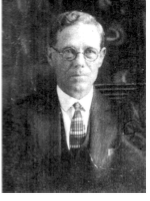
Elder C. H. ("Claud") Cayce
1871-1945
Wrote Elder C.H. Cayce:
"He does not tell us to do what He has promised to do for us, and He does not promise to do for us what He commands us to do."
(Editorial in "The Primitive Baptist" on John 11:39; May 22, 1906; from Cayce's Editorials)
What an anti scriptural proposition is this! Easy to refute, is it not?
Saturday, July 20, 2019
A Transition?
I have been feeling for quite some time that my videos and writings against hardshellism (going on now since about 1993) are wrapping up. I have spent much labor during those years, especially the past two decades, examining thousands of historical documents relative to the history of the Baptists, particularly of the "anti mission movement" of the early 19th century. I have been tremendously blessed by all this labor and now enjoy the fruit of that labor.
I have already discovered all I need to know about that denomination that has called itself "Primitive" or "Old School" or "Regular" Baptists. I know their history, better than they know it themselves. I have proven that the Hardshells have fabricated their own history and see themselves through blinders. I have shown that they are deceived about themselves, about their history, and about their standing in the truth or faith once delivered unto the saints.
In the future I will be writing less on PB history and more on scripture and bible topics. My plans are to spend the next several months, and perhaps years, publishing my numerous books (on various subjects) and making them available on a new web page I am hoping to create where all the writings can be on one web page.
This will take an enormous amount of time as all these books will take time to complete, edit and revise, and publish. So much to do and little time to do it! Pray for us. A transition to another phase of my religious life is about to begin, I sense.
I have already discovered all I need to know about that denomination that has called itself "Primitive" or "Old School" or "Regular" Baptists. I know their history, better than they know it themselves. I have proven that the Hardshells have fabricated their own history and see themselves through blinders. I have shown that they are deceived about themselves, about their history, and about their standing in the truth or faith once delivered unto the saints.
In the future I will be writing less on PB history and more on scripture and bible topics. My plans are to spend the next several months, and perhaps years, publishing my numerous books (on various subjects) and making them available on a new web page I am hoping to create where all the writings can be on one web page.
This will take an enormous amount of time as all these books will take time to complete, edit and revise, and publish. So much to do and little time to do it! Pray for us. A transition to another phase of my religious life is about to begin, I sense.
Friday, July 19, 2019
Elder Clark On PB Condition In 1854

On page 1 Vol. 1 (no. 7) for April 1, 1854, Elder John Clark wrote the following in his periodical "Zion's Advocate" (emphasis mine) under the title "The Old School Baptists"(emphasis mine):
"We belong to that order called Old School, and by that we understand, in regard to salvation, all that is embraced in the doctrine of grace--and a strict construction of the scriptures throughout. But when that cognomen is sought to be used as a cloak and shelter for errors of the worst kind, we eschew it, we protest against it, appropriated to such a purpose."
As an historian of the "primitive" or "old school" Baptists, I say that this citation is extremely valuable. In my recent posting of Clark's articles on "Repentance" I mentioned how the fight with the "ultraist" Two Seed wing of the denomination (calling themselves "Primitive" or "Old School") had begun to effect men like Clark and Watson, who began to wonder whether it was worth continuing to fly under such a "banner" (name or title) when so many false and absurd teachings were being promoted under it. In the above words we have Clark stating that fact clearly.
Several years ago I counseled PBs, or those among them that wish to reform by returning to the faith of their fathers and of the scriptures, and thus save themselves from further decline and death, to no longer call themselves "primitive" or "old school." Just call themselves "Baptists" (the name used by their forefathers) or "Old Baptists," or "Predestinarian Baptists," or something similar. The reason is that the name "primitive Baptist" has become a "shelter for errors of the worst kind." And, for this reason we should "eschew" the name, yea, even "protest against it"! And why? Because the banner has been "appropriated to such purpose."
We can be real old school, primitive (original) without using such words to describe our denomination. There is simply too much "baggage" now associated with the banner (name) to continue to operate under it. I am primitive or old school theologically, but I don't need to fly under a banner with those exact words on it.
Clark continued:
"We never understood, in taking a stand 20 years ago against new measures in religion, that all who should enlist under Old School banners were to have the unbridled license to introduce and propagate any or all of the exploded dogmas of the dark ages, and it would all be sanctified by the wonderful charm imparted by the Old School colors under which we are sailing."
Amen to that!
Clark continued:
"We get up excitement upon a particular question, parties are formed, and we get fully under way in our march against opposing interests, and ere we are aware, we have been led or driven to an extreme far beyond the error we commenced battling against. Such is precisely the condition in which we consider some of the Old School Baptists at present."
Every student of the history of the PBs will be interested in the historical value of this citation!
Clark continued:
"The leaders, who have caused them to err, have kept up such a noise, such a hue and cry, both from the pulpit, and the press, against "New School," and extolling the "Old School," as being in many things far in advance of the apostles (that is a proper use of sarcasm - SG), that many brethren have not halted long enough to see what they were teaching all the while; have not examined whether their doctrine is any better than what they are laboring to put down."
I love the sarcasm of Clark! Who are these "leaders"? Beebe and Trott, no doubt, but others too of the "ultraist" or Two Seed element in the denomination.
Clark continued:
"But, brethren, is it not time now (1854 - SG) for reflection? Have we not reached a crisis, when it becomes necessary, and of the utmost importance, that we should pause and see, not only to what we are tending, but what many are already involved in?"
We live 165 years after Clark wrote these prophetic words. To what did it all lead to as respects the "Primitive Baptist" denomination? What we see is what we have for years, in thousands of posts, shown is the present sad state of the denomination. It has literally become a cult!
Clark continued:
"Many of the saints can witness that, instead of the sincere milk of the word, the precious gospel of Christ with which alone they can be fed, they have for years been confined to stereotyped harangues against Arminians and New School men, for no matter what text, the sermon is generally the same substantially. We would not be understood as maintaining that these and all other errors should not be criticized and exposed, but the incessant clamor against these and nothing else of consequence is what we condemn; and the consequences of this injudicious mode of warfare is apparent in many cases, and its legitimate effect visible within our borders: Leanness of soul, a worldly-minded spirit, neglect of reading the scriptures, and of prayer and those whom we have so severely handled have not been at all benefited by our ministrations and reproofs."
What was the "legitimate effect," the "consequences," of the "warfare" over the purpose of the gospel, begun by the ultraist Two Seed wing the newly formed denomination? Again, we have fully described those effects and consequences in our writings.
Clark continued:
"Such cunning craftiness has been displayed in introducing the wild doctrines among us, that the strange anomaly is frequently witnessed, of seeing brethren, sound in the faith when they express their own sentiments, actually affirming that they are not aware of the existence of any sentiment among professed Old School Baptists inharmonious with their own!"
"Introducing the wild doctrines among us"! Is not the no means view of the ultraist one of those "wild doctrines"? The idea that only the regenerated were to be preached to and exhorted to believe and repent? Clark knew that these were new ideas among the PBs.
Clark continued:
"...for we are well assured that but a small fraction of the Old School Baptists, proper, believe in the created Son of God scheme. It is one of the strange things in nature that persons should see no difference between the zenith and the nadir, and should imagine that the antipodes are dwelling with us; and no less strange is it that there should be any who have not seen what has been so fully written, and therefore so clearly manifested to all."
I think it was "but a small fraction" in 1854, but by the end of the century, that small fraction took over the denomination!
Subscribe to:
Posts (Atom)