Sunday, November 30, 2025

A Guaranteed Bonanza (follow up)

A dear brother in Christ wrote the following, which I believe was in response to my recent post titled "A Guaranteed Bonanza."

"...we should beware of serving God from mercenary motives. We should beware of the attitude that says to God, “I have done this for you; what shall I get in return?” Such a question betrays a fundamental ignorance of God and what he has done for us in the person and work of Jesus Christ. It displays an ignorance of God’s sovereign grace. It elevates the merit of our efforts and displays a mistrust and misunderstanding of God’s goodness and generosity."

It seems that this brother reacted differently to Peter's inquiry about what he would obtain from the Lord in return for his sacrifice for him, than did Christ. Jesus did not react by scolding Peter, but rather assured him of rewards that far exceeded his investment.

So, what does "mercenary" mean? The dictionaries say it means to be "primarily concerned with making money at the expense of ethics" or denotes "one that serves merely for wages" or is "interested only in the amount of money that you can get from a situation." I don't believe that I implied such a thing, nor that I am one who "betrays a fundamental ignorance of God and what he has done for us in the person and work of Jesus Christ." If it does, then it condemns many of the Bible writers themselves. I also don't believe that what I wrote "displays an ignorance of God's sovereign grace" nor that "it elevates the merit of our efforts and displays a mistrust and misunderstanding of God's goodness and generosity."

I left a couple comments to my own post after reading the brother's commentary. Here they are:

I should add these passages:

“Ho! Everyone who thirsts, Come to the waters; And you who have no money, Come, buy and eat. Yes, come, buy wine and milk Without money and without price. Why do you spend money for what is not bread, And your wages for what does not satisfy? Listen carefully to Me, and eat what is good, And let your soul delight itself in abundance. Incline your ear, and come to Me." (Isaiah 55: 1-3)

"I counsel you to buy from Me gold refined in the fire, that you may be rich; and white garments, that you may be clothed, that the shame of your nakedness may not be revealed; and anoint your eyes with eye salve, that you may see." (Rev. 3: 18 nkjv)

"Buy the truth, and do not sell it, Also wisdom and instruction and understanding." (Prove. 23: 3)

These scriptures, along with many others, tell us to buy of the Lord the things mentioned. They also imply that these would be wise and profitable investments. Is God appealing to a mercenary motive? Or that this is the only thing that should motivate one to serve the Lord? Now let us notice a few more texts that bear on this point.

"Now godliness with contentment is great gain." (I Tim. 6: 6 nkjv)

"By faith Moses, when he became of age, refused to be called the son of Pharaoh’s daughter, choosing rather to suffer affliction with the people of God than to enjoy the passing pleasures of sin, esteeming the reproach of Christ greater riches than the treasures in Egypt; for he looked to the reward." (Heb. 11: 24-26 nkjv)

Was Paul guilty of the things the brother says when he, like I did, said that great gain comes from being godly? Was Moses guilty of mercenary motives and of the things associated with that motivation when he "esteemed" that suffering reproach for the sake of Christ (a cost to him) would bring him a bonanza of "greater riches"? Or, that he was a mercenary disciple because "he looked to the reward"?

Here is another text to consider:

"But when you give a feast, invite the poor, the maimed, the lame, the blind. And you will be blessed, because they cannot repay you; for you shall be repaid at the resurrection of the just.” (Luke 14: 13-14 nkjv)

Was Jesus promoting serving him from mercenary motives and that alone? What about Paul when he tells believers to sow (which costs us labor and investment of our time) in order that they might reap a plentiful harvest? (Gal. 6: 9) Notice these texts:

"For the Son of Man will come in the glory of His Father with His angels, and then He will reward each according to his works." (Matt. 16: 27 kjv)

"If anyone's work which he has built on it endures, he will receive a reward." (I Cor. 3: 14 kjv)

Were Jesus and Paul appealing to mercenary motives? And if so, were they ignorant of God's sovereign grace? Were they elevating merit at the expense of grace?

In the parable of the talents, the "good (profitable) and faithful servants" were profited by their having been good stewards or investors for their Lord. (Matt. 25: 23-30) In fact Jesus says: "For to everyone who has, more will be given, and he will have abundance" (vs. 29). Again, I ask the same questions.

Above I cited Paul's words where he said "godliness with contentment is great gain." The words preceding that statement are these:

"who suppose that godliness is a means of gain. From such withdraw yourself. Now godliness with contentment is great gain." (I Tim. 6: 5-6 nkjv)

Does Paul contradict himself? No, for when he condemns some for thinking that "godliness is a means of gain" he alludes to those who think that living for the Lord and a godly life will make them rich in this world's goods, as many "Pentecostal" preachers have taught, being that "prosperity gospel." However, Paul is not denying that godliness does bring great gain, but not necessarily in worldly goods in this life. That is not to deny, however, that a man who serves Christ and follows the bible's advice on stewardship and handling money will not be better off than otherwise. Notice how Paul writes further in the same chapter:

"Command those who are rich in this present age not to be haughty, nor to trust in uncertain riches but in the living God, who gives us richly all things to enjoy. Let them do good, that they be rich in good works, ready to give, willing to share, storing up for themselves a good foundation for the time to come, that they may lay hold on eternal life." (17-19)

What Paul advised Timothy to say to those who are rich in this world was to be rich in faith and good works, thereby storing up or laying up true riches in heaven and for eternity to come, just as did Moses, as we have seen. They should "esteem the reproach of Christ" to bring "greater riches" than the "treasures" of this age. 

Was Lord God appealing to mercenary motives alone when in Deuteronomy chapter 28 he promised material well being and blessings for faithfulness to God and promised bankruptcy and curses to those who refused to obey him? And if so, does that mean that God was ignorant as the brother I cited seems to think? 

Paul told the Corinthians to "be steadfast, immovable, always abounding in the work of the Lord, knowing that your labor is not in vain in the Lord"? (I Cor. 15: 58 nkjv)

One of the motivating factors of my working for the Lord is that I might hear him say "well done good and faithful servant, enter into the joy of your Lord." (Matt. 25: 21) If that makes me a religious mercenary, then count me guilty. Recall that I cited these words of the Lord to Peter:

“Assuredly, I say to you, there is no one who has left house or parents or brothers or wife or children, for the sake of the kingdom of God, who shall not receive many times more in this present time, and in the age to come eternal life.” (Luke 18: 28-30 nkjv)

Was Jesus a mercenary when he promised such rewards for serving him? Rather than rebuke Peter for asking what will be his gain for sacrificing much to serve Christ, Christ rather "assured" him of great reward. Let us be like the man who found good treasure in the field and went and "sold all he had" to buy that field and to obtain its treasure. (Matt. 13: 44) That does not make us mercenaries, nor deny sovereign grace, but is the wise thing to do.

Two Seed Baptist Ideology (XXVII)


Elder Matthew Grigg Thompson
(1811 - 1888)

In this chapter we will look at what Elder Grigg Thompson wrote in opposition to Two Seedism. As I have shown in previous chapters, his father, Elder Wilson Thompson believed in one of the key tenets of that heresy, the idea of "eternal vital union" or "eternal children." I have also stated that Grigg (this was his mother's maiden name) stated that his father did not believe in Two Seedism. I have not been able as yet to find where he said this, but I do remember reading it somewhere in years past. I don't believe that Grigg agreed with his father on the Trinity either, for Wilson was a Modalist or Sabellian and I don't believe that Grigg believed this. I know what it feels like to disagree with your father, as I disagreed with my father too, although we both claim to be "Primitive" or "original" Baptists. Grigg's book "The Measuring Rod" was published in 1860. In it he calls the Two Seeders "Arian Baptists" and "Beebeites," just as others called them "Parkerites," and I have cited from this work in previous postings on the subject, but I wish now to cite further from it and make some observations thereupon. The title of his book was a long one, being --

"The Measuring Rod, Or, Principles and Practice of the Primitive Baptists Stated and Defended Against Modern Arianism, Two Seedism, &c. ; with an Appendix, in which the Writer Has Met and Refuted the Many False Charges Made Upon Him by Elders T.P. Dudley, G. Beebe, & W.C. Cleaveland"

Here is the cover of that book and it can be read (here).


In Chapter Two Thompson writes (all highlighting mine):

"I Now come to that part of my investigation, in which I shall have to apply the Measuring Rod, for each party claims the name of Primitive Baptists, and as far as I know, are the same in their church government. Their difference is doctrinal, and each professes to get his views from the Scriptures, and to them they make their appeal. I shall call one party, Two Seed, or Arian Baptists, because that name seems to indicate some of their leading doctrinal views, and as both claim the name Primitive Baptist, the reader might become confused if we did not distinguish them by different names; and, I think, that before we are done, the reader will not think that I have done them injustice, in giving them the name I have." (pg. 36-37)

I have written quite a lot in my Old Baptist Test blog about how the first Hardshells had disagreements over the doctrine of the Trinity. Wilson Thompson was a Modalist or Sabellian. I have several articles where I cite from Wilson on that point. Elder Sylvester Hassell in his church history acknowledges this fact about Wilson Thompson. Wilson was also accused of believing in Two Seed doctrine, and as we have seen, he did believe it, even though his son Grigg later would deny this about his father. The late Dr. R.E. Pound used to have a web page where he documented a lot of the controversies around the doctrine of the Trinity that existed among the first "Primitive Baptists," a fact of history that today's Hardshells are not aware of. From his Web page (which is not now available) I cited him in my article titled "Dr. R. E. Pound on Hardshell Factions" (See here). He wrote:

"In those days the Old School brethren were in three groupings on theology: 1. The Delaware River and the Warwick, Samuel Trott, grouping, the deniers of Nicenism; 2. The Ketocton association, with John Clark, the followers of Niceinism; 3. The followers of Wilson Thompson, a Sabellian, who denied that the Father and the Son entered into an eternal covenant because these were not two distinct Beings, but only personalities of the One Divine Being. It seems to me that at the first, these divisions among the old schoolers was not over absolute predestination, but OVER NICENISM."

Dr. Pound's Web Page before he passed away was pbl.oldfaithbaptist.org. You can find some of Dr. Pound's writings (here).

Elder John Clark began to publish his periodical "Zion's Advocate" in 1854 out of his home state of Virginia and he frequently attacked the editors of the "Signs of the Times" for advocating Two Seed ideology and for affirming that Jesus was not divine because of his being the Son of God, or because he was begotten by the Father. However, as we saw in preceding chapters in writing about Elder T.P. Dudley, Dudley's biographer (Taylor) said that Clark had written to Dudley and stated that he believed much of what Dudley had written in his book on "The Christian Warfare" which promoted Two Seed tenets. Elder Beebe, like both the Hardshell Sabellians and Arians, argued that if Jesus was begotten of God in his divinity, then he would be inferior to God who begat him, would not be eternal but a creature of time. Wilson Thompson, the Sabellian (or Modalist) argued this way. Beebe and Trott, the semi-Arians, argued the same way. Christ being a begotten Son of God was an act that had a beginning. 

Elder John Clark in his book "Exposure of Heresies Propagated by Some Old School Baptists," published in 1873, wrote against the Arianism involved in the Two Seedism of many of his fellow Hardshells from the 1830s till the early 1880s when he passed away. So, both Grigg Thompson and John Clark referred to Two Seed Primitive or Old School Baptists as "Arians." John Clark's book is not available on the Internet. I was able to get the book years ago by using the benefits of the inter-library loan program, so that my local library had the book sent to them from another library in another state, and I was able to read it in my local library (but not take it home), and I did so and took some notes. I wrote about that in 2008 in my blog "The Baptist Gadfly" in a post titled "On Clark's Book." Here is my summary of what I read (See here).

"Back a couple months ago I posted an entry wherein I asked where a lost book could be found, one written by Elder Clark in 1873 (a crucial time period in the history of the Hardshells) and titled - "Exposure of heresies propagated by some "old school Baptists," from their own publications: showing their doctrines to be not according to the Gospel of Christ."

I can now report that I have read this short book and have taken some notes from it.

The book shows that many of the first Hardshells were Arian in doctrinedenying the eternal Sonship of Christ as an expression of his divinity.

In this book Elder Clark attacks the "no change" view of regeneration, a view prevalent among first generation Hardshells, or what has come to be called the "Hollow Log" doctrine. Those who generally held to this doctrine were they who retained the view of Elder Parker and his belief in "eternal vital union," or "eternal children," believing that the elect were in existence in Christ, by a creation before the world began, and that they simply, like Christ"come down from heaven" and take up their abode in an "Adam man," like a rabbit would run into a hollow log and stay there, yet without effecting any change in the log.

Elder Clark found it absurd and a false doctrine worse than Arminianism. He did not believe that anyone existed before he was born into the world."

Thompson wrote:

"The Word is the infallible standard, and I intend to let the Two Seed, Arian party, express their doctrines in their own words, and then apply the Measuring Rod, or the Scriptures, to them; and, I think, that before I am done, the reader will see that, if possible, they have less claims to be the Apostolic church, than either of the parties already decided against." (pg. 37-38)

The "two parties" he alludes to are the "Campbellites" and "Missionary Baptists." Grigg believes that Two Seedism is a worse heresy than those. Elder John Watson said something similar, saying in his book "The Old Baptist Test" that in many ways "Parkerism" or "Two Seedism" was worse than the "New Schoolism" of the "Missionary" Baptists from whom they had separated. 

Thompson wrote:

"Before taking the subject up, I have another remark to make. Sometime past, I published an “Appeal to the Primitive Baptists,” in which I labored to expose the errors of the Arian party; in it I marked all my quotations, but, notwithstanding that, I have heard of some who have read the quotations from the stand, and affirmed it to be my doctrine, and made war upon it. In this work, I shall put every quotation from them in a different type from the body of the book, so that no one can be mistaken, but will know that they are reading their views, expressed in their own words." (pg. 38)

This shows either the gross ignorance or sinister doings of some "Primitive" or "Old School" Baptists. You have to be pretty ignorant not to realize what quotation marks mean. In a posting I made years ago titled "Duke Research Results (1)" (See here), I showed where Elder W.H. Crouse did what Grigg said others had done to his writings, attributing citations he gave of what others believed as being his beliefs. In that post I wrote the following:

In the book "Regeneration or the New Birth" by William H. Crouse in 1925 (see here), a book upheld by Sonny Pyles as stating things accurately, Crouse wrote:

"Elder John Clark, a recognized leader among Primitive Baptists, for years editor of Zion's Advocate (afterwards edited by T.S. Dalton, C.H. Waters, John R. Daily, and now by R.H. Pittman) in an editorial on this subject in June 1858, said:

"We can conceive how agencies and instrumentalities can be employed in ministering to the living, but what place they have in giving life we cannot so readily conceive.***Is it scripturally true that God uses instrumentality in quickening, or giving life, to sinners dead in tresspasses and sins. The burden of proof, we know, rests upon these who affirm this, but let us see a moment what saith the revelation of God upon the subject.***(John 5: 21; 25; Born 4:17, 2 Cor.3:6, Eph. 2: 4,5,10; Col. 2:13, I Tim. 6:13; Heb. 4:12.) This array of scriptural testimony is sufficient, we should think, to establish the proposition that God quickens the sinner independent of means."

Now, here is what Clark actually wrote (I have the copy right in front of me)..."

What Crouse said Clark wrote is not what Clark wrote, but were citations from his opponents that Crouse said were the words and beliefs of Clark. The above citation is not what Clark wrote but is what his opponents had written and which he disagreed with. You can read the entire citation that I gave in that post. So, what does this say about some "Primitive," "Old School," or "Hardshell" Baptists?

Thompson wrote:

"The Two Seed, or Arian Baptists, in common with all professed Christians, believe that there is one God, who is the Creator, and who exists in, and of himself; who is omniscient, omnipresent, all-wise, and unchangeable, a most pure and holy spirit.They also believe that this God exists, or is revealed in the Scriptures as Father, Son, and Holy Ghost, and that these three are one; so that there is not three Gods, but one. In this article of their faith I believe them, and the Primitive Baptists are identical, for the first article adopted by all the Primitive Baptist churches, with which I am acquainted, reads about as follows: “We believe in one only true and living God, and that there is a Trinity of persons in the Godhead, the Father, Son, and Holy Ghost, and yet there are not three Gods, but one God.” To sustain this article, they refer to Isa. xliv, 6: 1 John v. 7, and a variety of other Scriptures." (pg. 38-39)

This is not all quite true, however. Not all Two Seed or Arian Baptists believed in the Trinity. As we have seen, Grigg's father, Wilson Thompson, denied the Trinity and yet held to Two Seed views. So too did Samuel Trott. Also, how can Grigg say that Two Seeders were sound on the Trinity and yet call them "Arian Baptists"? Further, we have cited from Daniel Parker in previous chapters where he denied that Satan or his seed were created by God, calling the children of the Devil "the products" of Satan. That makes Satan a creator. He also taught that Satan was "self existing" and so did many Two Seeders, and so what Grigg says is not true. So, why did Grigg say these things? I can only guess. Why did he deny that his father was a Two Seeder or not say that he disagreed with the Modalism of his father?

Thompson wrote:

"The Two Seed, or Arian Baptists, believe that the Son of God, or second person in the Trinity, is a created, inferior existence, that he was created before the visible heavens and earth, and was the first thing God ever created. To show that I have not used a misnomer in calling them Arians, I will give the Arian faith, as given by Buck, and I will then give their faith as expressed by themselves. “Arians,” says Buck, “maintained that the Son of God was totally and essentially distinct from the Father; that he was the first and noblest of those beings whom God had created; the instrument by whose subordinate operation he formed the universe; and, therefore, inferior to the Father, both in nature and dignity; also, that the Holy Ghost was not God, but created by the power of the Son.” (pg. 39-40)

Here Grigg seems to say just the opposite of what he said in the previous citation. He says Two Seeders believed in one God in three persons and yet says that they believed that the second person in the Trinity is a created and inferior being. Of course, men like Beebe and Trott believed that Christ was God, and believed in a Trinity of persons (disagreeing with Wilson Thompson), yet they believed that Christ being the Son of God had nothing to do with his being God, but had to do with him being begotten as a Mediator, which involved him being a composite person of three natures, from some point in eternity past when he was begotten or created as such. We have even seen where Joshua Lawrence, though not a Two Seeder, also believed that Christ being the Son of God did not mean Christ was God, but his being the Son of God denoted his being born a human being.

Thompson wrote:

"Eld. G. Beebe, of New York, Eld. S. Trott, of Virginia, and Eld. T. P. Dudley, of Kentucky, stand at the head of the Two Seed, or Arian party, in fact, they have given the party birth in the United States, and their views are received by their followers without a dissenting voice, as far as I know, and from them I shall quote largely." (pg. 40)

Why did Thompson leave out Daniel Parker or his own father? Why did he leave out Daniel Parker? Yes, I know that Parker died in 1844, several years before Grigg wrote the "Measuring Rod," and this may be the reason. He does give the leading apologists for Two Seedism, and we have cited extensively from these apologists in preceding chapters. However, he says that the men named had "given the party birth" and so he should not have left out Daniel Parker.

Thompson wrote:

"Eld. Beebe, in a pamphlet published in 1843, on page 17, and second column, says: “By the spiritual creation, I mean the creation in Christ Jesus, and by natural creation, all that properly belongs to this world, including the creation of all the human family, as such in Adam. . .The same spiritual creation which set up our Day's-man, our spiritual Head, gave actual being to all the elect of God in him.” 

This is quite interesting in lieu of the fact that in chapter XXIV we cited the words of Beebe from the "Signs of the Times" for 1838 (Vol. 6, No. 25, page 198) where Beebe said:

"That the words of divine revelation declare two seeds among the family of Adam, viz: the children of promise, which are accounted for the seed, the chosen generation, &c', and also of the seed of the serpent, the generation of vipers, the seed of evil doers, &,c., we fully admit; but that the former of these actually and personally existed in eternity, in any other sense than that their life was children with Christ in God, and that the latter had an actual existence in the bottomless pit before they existed on earth, is a doctrine which neither the word nor Spirit has ever revealed unto us;..."

So, Beebe is on record as both affirming and denying the "actual being" or existence of the elect in Christ before the world began. The denial was made in 1838 but the affirmation was made in 1843.

Thompson then cites these words of Beebe from that pamphlet wherein he cites Trott:

“I will, in candor, answer the questions put to me. The first is ‘Whether the quickening and life-giving Spirit of God is a created existence? I answer decidedly, YES. They again ask “If the Scriptures give any information of any thing being created before the beginning?" If they mean by the beginning, the creation of God, I answer No, for Christ is that beginning; but if they mean by it, the beginning of time, as in Gen. 1st chap. and 1st verse, I say Yes; for in that beginning God created the heavens and the earth; but Christ being the beginning of the creation of God, must in this sense, have been created, or brought into existence before these, and therefore before time.”— Signs of the Times, Vol. 17, No. 16, Aug. 1, 1849. s TROTT." (pg. 41)

This is what the Arians taught and is the reason why Thompson and Clark both accused Beebe and Trott and some other Two Seeders as being such.

Thompson wrote:

"As far as the creatureship of the Son is concerned, their views are identical, and the name Arian is appropriate." (pg. 42)

Well, not exactly, and that is why I prefer to call the Two Seeders "semi-Arian." Arius and Arians denied the Trinity, but Beebe and Trott did not. 

Thompson then writes:

"Arius says, that the Holy Ghost is a creature, and was created by the Son. Elder Trott says, that the quickening and life giving Spirit of God, is a created existence. The only difference between him and Arius, is that one ascribes the creation of this quickening spirit to the Son, and the other simply calls it a created existence, without telling us whether it was created by God or the Son."

That is not the only difference between Trott and Arius, for Trott did not deny the Trinity as did Arius. The likeness between both is in how they understood Christ being the begotten Son of God.

Thompson wrote:

"I have now showed that they are Arians, in their views of Christ, and the quickening spirit of God, and hold them both to be creatures in a sense that is in palpable contradiction to God’s word. I shall now examine their Two Seed notions, and try them by the infallible rule." 

However, we will save Thompson's refutation of Two Seedism for the next chapter.

Saturday, November 29, 2025

A Guaranteed Bonanza


A "bonanza" is defined as an "an exceptionally large and rich mineral deposit" or "a situation from which large profits are made." In becoming a follower of the Lord Jesus Christ, and living a godly life for him, there is promised a true and lasting bonanza. That is what the above text tells us. Yes, there is a little profit in bodily exercise, and in some other earthly pursuits. But, the profits that come from being a Christian are superlatively lucrative, being a great return on the investment. "Godliness" is "profitable unto all things." There is no limit to the profits of living a godly life. It yields great rewards for both the present life and for the coming life in eternity; a great bonanza of blessings indeed. Jesus said something similar to Peter and the other disciples when Peter began to count the cost of following Christ. So we read:

"Then Peter said, “See, we have left all and followed You.” So He said to them, “Assuredly, I say to you, there is no one who has left house or parents or brothers or wife or children, for the sake of the kingdom of God, who shall not receive many times more in this present time, and in the age to come eternal life.” (Luke 18: 28-30 nkjv)

Peter thought of what he had invested in his decision to follow Christ, and of what it cost him. He wondered what kind of return he would get for it. Jesus assured him that he would reap "many times more" from his investment, bringing a bonanza of blessings "in this present time and in the age to come" as well. Jesus did speak of "counting the cost" when it comes to deciding to follow Christ. Wrote Luke:

"25 Now great multitudes went with Him. And He turned and said to them, 26 “If anyone comes to Me and does not hate his father and mother, wife and children, brothers and sisters, yes, and his own life also, he cannot be My disciple. 27 And whoever does not bear his cross and come after Me cannot be My disciple. 28 For which of you, intending to build a tower, does not sit down first and count the cost, whether he has enough to finish it— 29 lest, after he has laid the foundation, and is not able to finish, all who see it begin to mock him, 30 saying, ‘This man began to build and was not able to finish’? 31 Or what king, going to make war against another king, does not sit down first and consider whether he is able with ten thousand to meet him who comes against him with twenty thousand? 32 Or else, while the other is still a great way off, he sends a delegation and asks conditions of peace. 33 So likewise, whoever of you does not forsake all that he has cannot be My disciple." (Luke 14: 25-33 nkjv)

Notice the words "count the cost." What "cost"? 1) Having friends and family shun you for deciding to follow Christ, and 2) hating (rejecting) not only one's family but one's own life, and 3) bearing the cross of shame and reproach, and 4) forsaking all to be Christ's disciple. So, what do we judge to be the outcome of this "cost-benefits analysis"? We see what it may cost us. What will it benefit us? Some sadly judge the cost too high, and don't have faith in profiting by the expenditure. Thankfully, others see that the profits far surpass the cost. Recall these words of our Lord:

"For what profit is it to a man if he gains the whole world, and loses his own soul? Or what will a man give in exchange for his soul?" (Matt. 16: 26 nkjv)

Here Christ calls upon all to consider the cost of choosing not to follow him. You may gain the whole world, but you will eternally lose your soul. Friend, make the right choice. Choose Christ and godliness and you will find a true bonanza that will be an eternal residual profit. What following Christ may cost you now is little compared to what profit you will receive now and forever.

Grigg Thompson on Mode of Baptism


Elder Grigg Thompson wrote in his book "The Measuring Rod" (pg. 159-160; See here)

"There is no resemblance between immersion, and sprinkling, and pouring; one is something done with the person, the others are something done to the person. If sprinkling means something done with the person as does immersion, then our Pædo-Baptists do not sprinkle or pour, for they sprinkle or pour the water, and not the person."

I saw this fact many years ago. When you read in the Bible that a person was "baptized" it cannot mean that the person was sprinkled with water or that water was poured upon that person. Why? Because that would mean that the person was sprinkled or poured. But how can you sprinkle or pour a person? You would have to grind him to powder or liquefy him in order to sprinkle or pour him. The word "baptize" is a verb and the direct object of that verb is a person (his body). So, when an administrator of baptism says "I baptize you" he cannot mean "I sprinkle you" or "I pour you." If sprinkling or pouring were the mode of baptism, the administrator would need to say "I sprinkle (or pour) water upon you." In that case the direct object of the verb is water, and not the person. So, baptizing a person cannot mean sprinkling a person with water. Notice this text:

"Then I will sprinkle clean water on you, and you shall be clean; I will cleanse you from all your filthiness and from all your idols." (Eze. 36: 25 nkjv)

The direct object of the verb "sprinkle" is "clean water," and the indirect object is "you." 

Not only that, but water baptism is a picture of being "buried" as Paul said:

"Therefore we were buried with Him through baptism into death, that just as Christ was raised from the dead by the glory of the Father, even so we also should walk in newness of life." (Rom. 6: 4 nkjv)

Baptism pictures being buried (a liquid grave) and being raised out of it, an immersion and an emersion. But, sprinkling or pouring is no burial. I recall John Wesley, in response to this line of reasoning, say "yes, but in burial dirt is sprinkled on the body." Ridiculous. Paul says that the ancient Israelites, when leaving the land of Egypt, were "baptized in the cloud and in the sea" (I Cor. 10: 2), meaning that they were immersed in water, water being above and all around them.

Thursday, November 27, 2025

Cognitive Dissonance


Cognitive dissonance is the mental discomfort experienced when holding two conflicting beliefs, values, or attitudes, or when one's behavior contradicts his beliefs. This feeling of unease motivates people to reduce the tension by 1) changing their beliefs or behaviors, or by 2) rationalizing or downplaying the inconsistency. For example, a person who knows smoking is unhealthy, but who continues to smoke anyway, may experience such dissonance and be motivated to 1) quit smoking, or 2) change belief about the health risks, or 3) rationalize his behavior. 

It is a state of psychological discomfort that arises from holding contradictory thoughts or when your actions don't align with your beliefs. This internal conflict can cause feelings of guilt, anxiety, or regret. How people reduce it is by changing behavior or beliefs, or by rationalizing it, or by simply trying to avoid the new and conflicting information (that smoking is dangerous, for instance).

When a people's beliefs are shown to be illogical, they experience cognitive dissonance, a state of mental discomfort and psychological tension. This tension arises from the conflict between a person's original belief and the new, contradictory information. To relieve this discomfort, the person is motivated to either change his or her belief, reject or ignore the new information, or rationalize his or her original belief. We see this happen when a person in debate is caught in a clear and apparent contradiction. The above image reflects how people often react to being "caught" in a logical fallacy or contradiction. We see this in courtrooms where a witness is caught in a contradiction.

When caught in a contradiction, people often react with psychological discomfort or cognitive dissonance, which often leads to defensiveness, rationalization, or attempts to change the topic. Some become angry, deny the contradiction, refusing to believe the obvious, while others feel confused, anxious, or trapped. Depending on the individual and the situation, reactions can range from emotional responses to a more thoughtful and analytical process of reconciliation. 

I have seen such cognitive dissonance in many debates when debaters have been shown the falsity of their beliefs. Oftentimes the reaction of those who have been shown their fallacies and contradictions becomes laughable. I used to watch Charlie Kirk's debates every day, oftentimes just for a laugh. Seeing people's reactions to being caught by him in a logical fallacy or contradiction was often humorous, laughable, or a "folly." Likewise, I watch a lot of videos where Christian apologists debate with Muslims, Jews, Jehovah's Witnesses, Modalists, Unitarians, etc., and I see how those apologists, when presenting evidence to these folks that contradicts their beliefs or practices, causes such cognitive dissonance and which makes me laugh. Just go on YouTube and watch Avery of "Godlogic" debate with Muslims. Or watch Sam Shamoun or David Wood, or others, do the same. It makes me think of that famous line "you can't handle the truth" from the movie "A Few Good Men."  

I also have seen the cognitive dissonance that many Hardshell Baptists experience when they receive information that overthrows their beliefs and suppositions. They become uncomfortable, uneasy, jittery, nervous, agitated, defensive, unable to relax, etc. I often hear Avery or Sam or David tell the Muslims they are debating "calm down brother," or "relax brother," or "take it easy brother," etc. The fact is, truth can make one feel very uncomfortable. Think of the many times in the preaching and teaching of Christ and his apostles where they gave truth evidence to people and which made those people uneasy, or made them squirm. Listen to some of these YouTube debates and watch the cognitive dissonance and get a laugh. It is often quite hilarious.

For instance, when Muslims are shown things in their Quran or in Islamic history that are unpleasant, or which they did not know were there, they become quite a spectacle to behold. Ask them if they are okay with Muhammad marrying a six year old and having sex with her at nine and see their reaction, how they try to deal with that fact, how they try to rationalize it, or avoid it. Watch them when they try to deal with Islamic dilemmas. 

Example, ask these questions:

1) Are the original Torah and Gospel (Injeel) the revelation or words of Allah?

2) Can the words of Allah be corrupted by addition or subtraction?

Most will say "yes" to the first question and "no" to the latter. When that occurs, ask them - "why then do you say that the Torah and the Gospel (Bible) have been corrupted?" See them react to being put in this state of cognitive dissonance.

Tuesday, November 25, 2025

Elder Grigg Thompson on Necessity of Conversion


Elder Matthew Grigg Thompson
(1811 - 1888)


Elder Grigg Thompson, oldest son of Elder Wilson Thompson, in his book "The Measuring Rod" (1860), wrote:

"If none can enter Christ's kingdom without being born of the Spirit, of course none can enter his church without being born of the Spirit. The birth of the Spirit begets in the heart repentance towards God, and faith in our Lord Jesus Christ. Faith and repentance are fruits of the Spirit, and evidences of regeneration..." (pg. 151; and can be read here)

What do we learn from these words of Thompson? 

First, it seems that Grigg probably agrees with his fellow "Primitive" or "Old School" Baptists of that time, and like his father, that regeneration and rebirth are not the same. However, that is not certain because some in 1860 were beginning to see regeneration and rebirth as being the same, and Grigg may be the same.

Second, he believes in the ordo salutis of his brethren, and of all Hardshells and Hyper Calvinists since, that faith and repentance follow regeneration.  He put regeneration prior to faith, as do "Reformed" Presbyterians and Baptists, men like R.C. Sproul and James White, do today. Thompson plainly says that faith and repentance are "evidences of regeneration." But, are they also evidence of rebirth (follow after), or conditions thereunto?

Note: Those of Thompson's brethren who believed that regeneration and rebirth were different, the former preceding the latter (oftentimes by a long period of time), believed that regeneration happens instantly, without the knowledge and awareness of the one being regenerated,* and that it produces a sense of guilt, conviction of sin, and belief that one was lost and in need of salvation and forgiveness (or else be forever damned), and that such a regeneration was the result of the Spirit of God "implanting" the divine life and nature (like in conception) into a person, or divine "incorruptible seed" (I Peter 1: 23), and conviction of sin corresponded to time in the womb, which would in time be followed by the new birth, and that this occurred by faith and repentance (and corresponded to the child in the womb "coming forth" from the womb to be "delivered" ). So, Thompson's statement that faith and repentance follows both regeneration and rebirth, rather than being conditions thereunto, is a little bewildering. He and his brethren did not mind putting a gap of time between regeneration (implanting, conception) and rebirth (conversion, deliverance), but did they also put a gap in time between rebirth and faith/repentance? Or affirm that many of those who were born of the Spirit would never come to evangelical faith and repentance?

Third, Thompson seems to say that being regenerated or reborn instantly begets (or produces) faith and repentance. I guess it is possible that he may have thought that a person who has been "begotten to faith and repentance" might not have it in actual possession at the instant of the begetting, but until some time later. Most Reformed or Hyper Calvinistic Bible teachers will say that faith and repentance are instantly produced when a person is regenerated by God, so that there is no gap in time between regeneration and penitent faith. Is this the view of Thompson in the above citation? It surely seems so. But, it is not what his denomination has come to believe in this day.

Fourth, many "Primitive Baptists" today who are of the "Hardshell" variety, will say that they believe "that God gives faith in regeneration." But, when you question them, they will deny that they mean evangelical faith in Jesus and the Gospel is meant. They say millions of people are regenerated who never come to believe in Jesus. See my posting titled "Chapter 13 - Hardshells On Faith (Conclusion)" where I cited from several leading Hardshell elders who say that this "faith" is non-cognitive, not on a conscious level,** or will say that it is a belief in a God or gods or some Creator. (You can read that here) However, it is clear that the "faith" Thompson is speaking about is evangelical cognitive faith in Jesus, which faith requires hearing the Gospel, as Paul said: 

"How then shall they call on Him in whom they have not believed? And how shall they believe in Him of whom they have not heard? And how shall they hear without a preacher?...So then faith comes by hearing, and hearing by the word of God." (Rom. 10: 14, 17 nkjv)

So, the view of Thompson, reflects the general view of the first "Primitive" or "Old School" Baptists, who believed that the new birth instantly made a sinner a believer in Jesus and a penitent. He seems to clearly affirm that evangelical faith is begotten when a person is born of the Spirit, and so denies that one can be born of the Spirit and lack faith in Jesus. Here are some of Thompson's contemporaries who taught such:

Elder J. R. Respass wrote:

"When a man is born again, he, the man, becomes a new creature...but as woman in pangs of travail is delivered by birth, so he is delivered by faith, and rejoices in the truth." (Elder J. R. Respass in The Gospel Messenger, 1883, pg. 57)

Respass says "delivered by birth" is "delivered by faith" and so would disagree with Thompson.

Elder John Rowe wrote:

"Not, however, without repentance and faith, though some have been so full of folly, as to affirm that if sinners are saved upon the principles we maintain, then repentance and faith are needless things....Whereas none ever have, or will repent and believe, evangelically, except under the influence of special grace applied to them." (Elder John Rowe, "My Grace is Sufficient for Thee," in the Gospel Messenger, 1881, pg. 9)

Elder W. M. Mitchell wrote:

"In conclusion, let us not overlook the fact that in order to salvation, it is necessary that we be born again; that we have faith, repent and believe in the Lord Jesus Christ; but as salvation is of the Lord, these things are as much of him as our redemption, calling or justification, for his “divine power hath given us all things that pertain unto, life and godliness.” 2 Pet. i. 4." ("The Southern Baptist Messenger," Oct. 1, 1880)

It was not till the end of the 19th century that we began to see "Primitive Baptists" say that most of God's born again children do not know about the God of the Bible or Jesus, and could be in fact believers in false gods and yet "regenerated." 

* If a person can be regenerated, born again, or saved, and not know it, then he could lose it and not miss it. 

** How can people believe in or love someone that they do not know cognitively? 

Another Islamic Dilemma


Islam says that the Christian Bible, especially the new testament, can't be true because:

1) there are so many different Bible translations, and

2) some translations leave out verses that others retain.

Yet, the dilemma lies in the fact that the Quran itself has many English translations that differ from one another, and in the fact that there are several versions of the Quran, each differing from what is written in each other (in Arabic), some adding more chapters and verses than the others. Some sentences are not even the same, with the subject being changed.

So, if the Muslim invalidates the Bible, for the reasons given, then he must also invalidate his own Quran.

The third Caliph Uthman (who reigned from AD 644-656) even ordered the burning of copies of the Quran he thought were not accurate. He did this because the various copies of the Quran existing in his time had differences in the manuscripts and discrepancies. How do we know that Uthman didn't burn the true Quran? However, even today we still have many differing versions of the Quran.

Monday, November 24, 2025

Two Seed Baptist Ideology (XXVI)


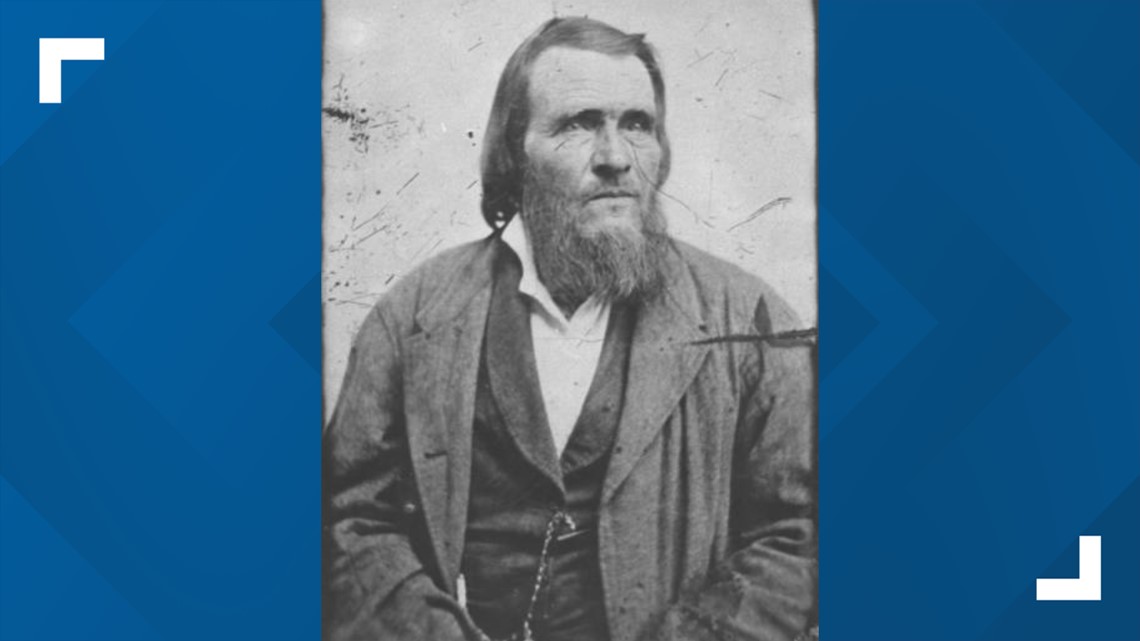
With this chapter we will begin to focus our attention upon the writings of those "Primitive" or "Old School" Baptists who rejected Two Seedism. We will begin with the writings of Elder Joshua Lawrence in the original "Primitive Baptist" periodical, the paper he was the foremost originator of, and who asked Elder Mark Bennett (son of Elder Philemon Bennett) to be its first editor. Philemon was the moderator who presided at the meeting of the Kehukee Association in 1827 that drafted the "Declaration and Address" that declared non-fellowship against mission societies and other things. I have not been able to find a portrait of Lawrence. The above image does give his name in regard to the old church mentioned. 

As I recently stated, it seems that the "Signs of the Times" was the voice for the Two Seed wing of the newly begotten denomination and the "Primitive Baptist" was the voice for those who opposed the Two Seeders. So, let us begin with these words of Elder Mark Bennett taken from a letter he wrote to Thomas Meredith, editor of the "Biblical Recorder" for March 23, 1844 (See here).

"In the summer of 1835, I was consulted by bro. Joshua Lawrence, to know whether I would edit a religious news paper, to be printed in Tarborough, N.C. I consented to do so..."

The paper he is alluding to is "The Primitive Baptist" of which he became the first editor, and which I showed the image of the first issue in the heading of chapter XXIV. Interesting is the fact that Bennett in his letter said that the "Primitive Baptist" periodical was "principally intended to defend the Old School United Baptists." The United Baptists was a term denoting those Regular and Separate Baptists who chose to come together and recognize each other. The articles of faith of the United Baptists in Kentucky, and elsewhere too, says (See here at the Baptist History Homepage) the following under article #9:

"And that the preaching Christ tasted death for every man, shall be no bar to communion."

These are the terms of the union as given by Benedict in his history (page 821) and are from the committees of the Elkhorn and South Kentucky Associations.

Bennett wrote further:

"Towards the close of that volume, Elder Lawrence gave us his first two articles on "The two seeds." In the front of the fourth volume, stands his second. The sentiments contained in those two articles met a dissent in and some strictures from "The Signs of the Times." For this, he denied the editor of the "Signs" an identity with Old S. Baptists, and rejected him from their confidence."

So, it is clear that the "Primitive Baptist" represented those anti-mission Baptists who were opposed to Two Seedism and who seemed to be less Calvinistic, opposing Hyper Calvinism. They certainly believed that the preaching of the Gospel or word of God was a means in the eternal salvation of sinners. However, those who supported the "Signs of the Times" began to more and more oppose that idea, though many of them believed that "regeneration" was accomplished apart from evangelical faith, yet they believed that in order to be "delivered" or "born again" faith was necessary. My blog "The Old Baptist Test" gives several citations from Lawrence that show he believed that the Gospel or word of God was a means in being born again and in the perseverance of the saints.

Now let us give some of the things that Elder Joshua Lawrence wrote in "The Primitive Baptist" for October 27, 1838 (See here), wherein he gives his views on Two Seedism. Lawrence wrote (emphasis mine) the following about the parable of the wheat and the tares, one of the chief scriptures that Two Seeders used to support Two Seedism:

"Thus, brother Editor, I have given you a hurried running shoot at this parable. Think on my ideas. Now believing I should not have been written to from the west, had it not been for Elder Parker's two seeds that have made such a noise in the Western States among the churches, I will for the satisfaction of my beloved brother Fort and others, offer a few thoughts on the two seeds, which it is thought stands connected with the parable. And here let it be understood, that I have read in two or three of Elder Parker's papers called the Church Advocate, some of his ideas on the two seeds; but yet do not remember one single sentence in them, only that of the subject discussed, which was on the two seeds."

Obviously Lawrence wanted people to know that he thought Parker's writing and ideas regarding Two Seedism were not worth much. He also suggests that it was primarily in "the Western States" where Two Seedism found fertile ground. That is true, with but few exceptions. This reveals much. It was on the Western frontier where there was much illiteracy among both ministers and congregations. It was also among such people and demographics where Hardshellism and Anti-Missionism found its success. Very few churches and ministers in the east fell prey to these systems. Daniel Parker even boasted of the fact that he was uneducated and when asked how he learned to read he said "only as his Bible has taught me."

Citing page 48 of Daniel Parker's "Public Address to the Baptist Society..." Anna Holdorf, author of "GALVANIZED BY THE GOSPEL: NINETEENTH-CENTURY BAPTIST MISSIONS AND THE ANTI-MISSION RESPONSE," wrote (See here emphasis mine):

"Daniel Parker boasted, as did many other anti-missionists, that he was uneducated. He wrote that he had “no knowledge of the English grammar, only as my bible has taught me.” Parker further noted that the doctrinal “errors” that marked the beliefs of pro-mission Baptists “nearly all originated amongst the wise and learned.”

However, the doctrinal error of Two Seedism marked the beliefs of anti mission Baptists and came from their unlearned elders and was quickly accepted by their simple minded congregations. 

Lawrence wrote further:

"Now, question: Were these righteous good seed before they were born of the Spirit, or not? I let you pause. I say no, in no sense of that word. To the Book. Conceived in sin, and shapen in iniquity; go astray from the womb; none righteous; all gone out of the way; dead in sin. Now put on the cap stone: We (saints) were children of wrath by nature, even as others. Then the righteous are not good seed, before being born again of the Spirit, but are as bad as the tares; for God hath included all under sin, both Jews and Gentiles."

This was a direct denial of the doctrine of "eternal children," the idea that tares had always been tares and wheat had always been wheat. Lawrence rightly taught that people do not become the children of God until they are born of God, and denies that being born of God is what took place in eternity when Christ was begotten of the Father.

Lawrence wrote further:

"The tares are said to be sown by the devil, as well as the good seed was by Christ. Now I would ask, were the tares bad seed before they were naturally born? I answer, that the very spirituous humor of man's body that is the life of generation or the part of the male, is sinful and corrupt; or how else was David conceived in sin, and brought forth in iniquity? And the righteous men and women of all ages are born in the same way, and are equally as corrupt in their conception and birth and practice as the tares. So then I put it down, that, in point of natural birth all men are born sinners; for by one man sin entered the world, and death by sin, and so death hath passed upon all men, in that all have sinned in Adam the first — both the tares and good seed. Then there is no such thing as good seed in the world, nor no children of the kingdom until made so by the Spirit and grace of God out of wicked men, or call them tares by nature if you will, for there is no good seed in the loins of men,, all bad, bad — too true."

Again, Lawrence gives not only his position on Parker's Two Seedism, but of the "Primitive Baptist" periodical and of its supporters.

Lawrence wrote further:

"Matthew, 13. 38: But the tares are the children of the wicked one. Then of course, the tares are the seed; for if children, then the seed of the serpent. Now the question arises again: are, or are not, all mankind the children of the wicked one, by the fall of Adam, by their first birth? Say. I say they are, as I have shown above. I ask, has God any children by their first birth — I mean their natural birth? Why you must answer, no; for God has all his children by their second birth, born of the word and Spirit of God, and thus they become his children and not before; thus born of the water, (which means a natural birth,) and then of the Spirit, this makes them children of God; nor are they so before, in any sense of that word. Then I put it down, that all mankind by nature and practice, are the children of the wicked one; and may thus be accounted in the text the serpent's seed, or thy seed; and that God has not a child among all the millions of the world, until born of his Spirit. What say you to this? Again: I put it down that you may not forget it, that all mankind as they come into this world, are the serpent's seed, and leave it here."

Of course, Lawrence does not deny that the elect are predestined to become children of God even before they are born into the world or born again from above. But, he is correct in affirming that all sinners, before they are born again, are children of the Devil. Notice how the apostle John confirms this when he writes:

"He who sins is of the devil, for the devil has sinned from the beginning. For this purpose the Son of God was manifested, that He might destroy the works of the devil." (I John 3: 8 nkjv)

Of course, the apostle does not mean that all men, including God's born again children, are of the Devil because they sin. This is because he is speaking of those who make sin their practice, who love sin, and who have not repented. But, the apostle does affirm that even those who are born of God were once "of the Devil" when they "once walked according to the course of this world, according to the prince of the power of the air (Satan), the spirit who now works in the sons of disobedience, among whom also we all once conducted ourselves in the lusts of our flesh, fulfilling the desires of the flesh and of the mind, and were by nature children of wrath, just as the others." (Eph. 2: 2-3 nkjv)

Lawrence is giving his thoughts on the parable of the wheat and tares for it was the chief text used by Two Seeders to teach their views. They were often heard saying that the tares could never become wheat and the wheat could never become tares, that the wheat had its origin in God from eternity and the tares had their origin in the Devil from eternity. They taught that the Lord first sowed grains of wheat in Adam and following doing that, Satan then sowed tares in Adam. 

Lawrence writes further:

"Then the sum of all is, God makes saints out of sinners, righteous men out of wicked ones, and makes his children out of the devil's children; by being born of his Spirit, or created in Christ Jesus unto good works. And thus the good seed are the children of the kingdom; and the remainder are the tares, or children of the wicked one, left to be burnt."

This of course was denied by the Two Seeders. Their belief was that the children of God were never children of the devil. However, if those who are children of God ever sinned, then John says that they were "of the Devil." Many who opposed Two Seedism also said that this is why becoming children of God involved "adoption," for God takes from those who are of the family of the Devil and adopts them into his own family.

Lawrence writes further:

"Although Christians are sons and daughters of God, yet they are not begotten of a woman; but through the gospel by the same Spirit that begot the body of Christ by Mary; therefore he is not ashamed to call them brethren."

From this statement and others which will follow, we see that Lawrence believed that people were born again by means of the gospel. This was the position of the first "Primitive Baptist" periodical and of those who supported it. It was even the position of many Two Seeders at the first, even of Daniel Parker, as we have seen, but as time went on, it became one of the leading tenets of Two Seedism to deny means in God's begetting children.

Lawrence writes further:

"Then I put it down, that the serpent's seed are all mankind in a state of nature, from Adam to the end of the world; and that Christ, and he only, is the seed of the woman by the power of the Highest, and overshadowing of the Holy Ghost. I also put it down, that the seed of Christ, or his people, are those born again; and that, by nature there is no difference in men to make one good seed, and the other tares or children of the devil, or the serpent's seed; that they are all bail seed, the serpent's seed, until born of the word and Spirit of God. Then he that is born of God cannot sin, for his seed remaineth in him: born of the word of God, which is an incorruptible seed. Then men and women thus born become children of the kingdom, good seed, Christ's seed, holy seed, thy seed, children of God, sons and daughters of God, &c. and not until then."

That is indeed what the Bible teaches and what Baptists of prior times had believed and taught.

Lawrence writes further:

"Then God foresees even the saints corrupt, and needing sanctification or cleansing, and to believe the truth to make them free from sin."

Notice again Lawrence's affirmation that "the truth" is the means God uses to free sinners from the slavery of sin.

Lawrence writes further:

"So then I set it down as a point that cannot be overturned from the Book, that the foreknowledge of God, the choice of God, and the predestination of God before the world began, and the appointment of God to obtain salvation by Christ, and his ordination to eternal life of any sinner, does not make him good seed before he is born of the Spirit of God; but that he is bad seed. So all must end here: God makes good seed out of bad seed, saints out of sinners, and his children out of the devil's children, and Christ's seed out of the serpent's seed; and all this is done by being born again, or born of his Spirit, or of the word of God that liveth and abideth forever." 

Again, all this is contrary to Two Seedism. Notice also once again how Lawrence affirms that sinners are "born again, or born of his Spirit," by the word of God.

The next article written by Lawrence on Two Seedism was in "The Primitive Baptist" for Feb. 23, 1839 (Vol. 4; See here). In that article he refers to his previous article of Oct. 27, 1838, which we have been citing from above. In this latter article he intends to address "The objectionable parts...are in vol. 3, No. 20, page 309, as follows..." He then cites what he said from that article and then adds further remarks in his attempt to answer those who objected to his denunciation of Two Seedism. Wrote Lawrence:

"The above quotation from the Primitive, contains all the objectionable parts that have yet come to hand, although there may be some who have objections to other parts. Without further remarks on my creeds, or in self claims, I now come to argument by the Book on the above quotation, and think I can comprehend all your objections under three general points: 

First, I have asserted that God makes all his children out of the devil's children. 

2nd. I have asserted that God has no child among all the millions of the world until born again, 

3rd. And that no man is a child of God until born again, in no sense of that word. 

This last I think is the bugbear. Knowing, brethren, you have been professors for years and are wise men, men well skilled in the scriptures and the doctrine of Old School Baptists, I shall be the more short in my explanation, as thinking a word to the wise is enough. Then on the first point: God makes all his children out of the devil's children. And I might as well take in the second point as they are so nearly allied to each other, and as the proof of the one point will confirm the other: That God has no children among all the millions of the world, until born again. These two points I believed when I wrote them, and I now believe them with all my heart, whether you do or not. And I will give you a few of my reasons for so doing, but shall not cite chapter and verse, because you are well skilled in scripture and will know them as soon as mentioned...We (saints) were children of wrath by nature, even as others; (that is such as had never been made saints, or children of God, or never will.) All clay of the same lump, and it is God the potter's hand that maketh one man to honor and another to dishonor; one a vessel of mercy and another part of the clay left to be a vessel of wrath fitted for destruction. All is owing to the hands of the potter that maketh the difference, and not a difference in the clay. Hence them he foreknew he predestinated to a conformity to his Son. Then they that he foreknew and predestinated were not in the clay conformed to his Son's image, so in the clay or first birth they were not children; for God foresaw they needed. In order to make them his children, a conformity to the image of his Son. Then he passed the act of unchangeable predestination, that they should be conformed to his Son, with every provision to effect it. And this conformity takes place in regeneration, and thus they are made his children, or like his Son. And they are not his children before, but the devil's children. Again: Chosen us in him before the foundation of the world, that we should be holy and without blame, &c. So then when he made his choice before the world began, he saw his chosen unholy and full of blame, (in nature and practice, and without love to him;) yet he chose them lying in the common mass, dead in trespasses and sins, without hope and a God in the world. Yet this foresight of their unholiness and blame did not hinder his choice of them, to fulfil his own purpose in making them holy, without blame, and in love, before him the chooser."

Again, this is contrary to Two Seedism, as we have seen. The "Parkerites" taught that the "new man" was a man who was created in Christ Jesus before the world began, being begotten in eternity when the Son was begotten by the Father, or when he became a Mediator, having a human soul in addition to his divinity. They taught that God's children were literally "in Christ" from eternity and never were out of Christ. However, if that is true, then they never were lost.

Lawrence wrote further:

"These few reasons, dear brethren, I have given you out of the thousands I could give, for your satisfaction of my faith. So then I put it down again as my faith, that all men come into the world sinners and are equally depraved by nature, Jacob as well as Esau, Isaac as well as Ishmael; and that the grace of God only maketh the difference as respects salvation, or children, of God and devil; and that God has no children without being born againI mean actual children, that can be called so personally by the church of God, or claim the right to call himself a child of God, without he is born of God, and then he has the witness in himself, bearing witness with his spirit he is a child of God, and not before. I hope this you will understand — meditate upon and compare with| the Bible."

Lawrence wrote further:

"I will now come to the third point proposed, as I consider it the bugbear of all your objections, and drive it from before your sight if I can. 3rd. Here it is: And that no man is a child of God until born again, in no sense of that word.

If you say God has children before they are born again, then the argument will stand thus: What kind of children are they which are unborn? To which I answer on your side, as you may think: first, God has predestinated children to adoption; secondly, he has promised children; thirdly, he has children conceived in the womb yet not born; and those born of his Spirit. These four kinds of children will comprehend all sorts of God's children, whether foreknown children, elect children, or any else besides."

Beebe and Trott and the Two Seeders would say that being "born" of God follows having been previously "begotten" of God in eternity. Beebe would say "birth is not the origin of the child." This is quite interesting in light of the debate over abortion today. As we have seen before, many of the first "Primitive" or "Old School" Baptists believed that "regeneration" corresponded to being begotten or conceived in the womb, and "birth" corresponded to being brought forth, or delivered from, the womb. Sometimes Beebe would say that the child was "begotten" in eternity past when Christ the Son was begotten by the Father. Other times he would say that being begotten occurred in time when a sinner had God's seed implanted in the heart (regeneration), which produced conviction of sin and a belief that one was in need of salvation, and which would later bring about the birth (conversion) of the begotten child.

Lawrence wrote:

"So then when you speak of predestinated children, speak of them as such; and when you speak of born children, speak of them as such: for the one may be called a nonexisting, only in the mind and purpose of God; the other, a fulfilled purpose of mind and an existing child."

This is what later opponents of Two Seedism and its "eternal children" doctrine would strongly argue. The only sense that one could be a child of God prior to being born of the Spirit was in a predestinated or chosen sense, just as Isaac was prior to his birth, being the "promised child." So today when a husband and wife are planning on having a child, they will often speak of that child even before that child is either conceived or born. We may say that the child was first "conceived" in the mind before it was actually conceived or born. Though many first generation Old Schoolers taught that one was "regenerated" (conceived) prior to being "born" (delivered), this does not equate with being begotten in eternity past.

Lawrence wrote:

"Now, brethren, here stand before us millions of Jews by God's promise, and it was surely his will and purpose to make the seed of Abraham such. Acts, 7. 5. Yet he promised that he would give it to him for a possession and to his seed after him, when as yet he had no child. (Mark that word, no child.) Now a question here: Was Isaac a child before he was born? Yes, you will say, he was a promised child. Agreed. How then comes Paul to say, while as yet he had no child? If a promised child is a child, he could not have said so."

I am not sure what verse from Paul's writings that Lawrence refers to, but we do read this verse in Acts from the sermon of Stephen:

"But even when Abraham had no child, He promised to give it to him for a possession, and to his descendants after him." (Acts 7: 5 nkjv)

Yes, Abraham had a child promised to him, but that child was not yet in existence. If Abraham's children already actually existed in Abraham's seed or loins, then what Stephen says is not true. 

Lawrence wrote:

"Isaac was a promised child, yet Abraham has no child. So Christ and the church has promised children, yet she has no children but promised children until they are born. At this time will I come, and Sarah shall have a son. Say, was he a son before that time, of his conception and birth? When born then a son actually, and not before."

Lawrence wrote:

"Recollect in the laws of Moses, God commanded that if a man died childless, his brother should marry his widow and raise up children to his deceased brother; but there was one man who knew if he begat a child by his brother's widow, that that child would not be his; so he refused to give her seed and spill it on the floor. Now say, whether this spilt seed was a child or not? I pause for you to think. 1 say it was not a child."

Here Lawrence shows the folly of saying that children actually exist in the sperm of their fathers.

Lawrence wrote:

"For if...seed, be a child, then all bachelors are murderers of children; all that shed their seed in sleep are murderers of children, to a man."

Again, Lawrence is showing how ridiculous is the idea of someone preexisting in seed.

Lawrence wrote:

"So then, neither seed nor promised seed are children, until begotten and born. For will you call a seed a plant?"

This rebuttal argument we have noticed before. 

Lawrence wrote:

"These texts show to me, Jesus Christ was not actually entitled to be called the Son of God, until he was born of his mother Mary. In his divine nature he is not son, but God; and no other God but he, a three-one God — the Christian's God in all ages. For if in his divine nature he be son, then he is not God; for one God cannot beget another God, for he who is begotten cannot he God, for to be a God he must be self-existing."

"So then Jesus Christ is son of God in his human nature, and not in his divine; nor was he actually son of God until born of Mary. Was he son of God before he was conceived? I answer, no; except in the purpose, ordination, and determination of God, who speaketh of things by the mouth of prophets that should be as though they were."

Of course, Lawrence's view on the Sonship of Christ is not orthodox. In his denial that Christ is God by his being the Son of God he is in agreement with Beebe, Trott, and other Two Seeders. Many of the first "Old School Baptists" were in error on the Trinity and on the eternal Sonship of Christ.

Lawrence wrote:

"Was Jesus Christ a born child of God, when he was conceived by his mother Mary. I answer no, because conception is not born, nor born again, in no sense of that word. Born is a very different word from conception; conception means a child in embryo, but born, or born again, means a child brought forth in full perfection. Then conception is not a born child; in this sense of a born child I used that word, that no man is a child of God until born again, in no sense of that word; that is, the word born again was the design to apply the words no sense of that word to. Or, to make it plainer, a predestinated child, a promised child, a conceived child, is not an actual child, is not a born child; what say you to this?"

Though many "Primitive Baptists" at first believed that regeneration and rebirth were not the same, there was disagreement over when a child came into existence. Beebe would say "birth is not the beginning of the child." Lawrence says that scripture teaches that birth is the beginning of the child. Of course, a child is a child when in the womb prior to birth, and is why abortion is murder. However, there is no scripture that says that the birth of the Spirit is divided into conception (seed planting) and delivery (birth proper). To impose this upon scripture leads to theological problems and absurdities. Lawrence does acknowledge that a person is a "child in embryo" prior to being born from the womb. 

Saturday, November 22, 2025

John 8: 47 and Hyper Calvinism


This writing is a follow up to my recent posting titled "Because You Are Sons?" (See here)

Back in 2008 I dealt with this text in my series of writings called "The Hardshell Baptist Cult." (See here) It is one of the chief texts used by those Hyper Calvinists who put regeneration or rebirth before faith. They are convinced that Jesus is saying that a person must first be "of God" by regeneration before he can hear and believe the word of God. However, that is certainly not what the text is intended to teach us.

"He who is of the male species, has XY chromosomes, you have not XY chromosomes because you are not of the male species."

This sentence does not tell us that being of the male species precedes having XY chromosomes, nor vice versa. It simply is saying that being male and having male chromosomes are essentially related. We can either say "he who has XY chromosomes is a male" or say "he who is a male has XY chromosomes." Both are true. That being so, we may say -- "he who hears God's word is of God, you are not of God because you are not hearing his word" in addition to saying "he who is of God hears God's word, you hear not because you are not of God." 

We can do this because hearing God's word and being "of God" are essential to each. In other words, you cannot have a person who is "of God" but who is not hearing God's word, and you cannot have a person who is hearing God's word but who is not "of God." We can therefore say "you are not of God because you are not hearing God's word." So, both statements are true. We can say "People don't hear God's word because they are not of God" and also say "people are not of God because they don't hear God's word" for both are true. Notice this sentence again:

"He who has XY chromosomes, is a male, and you have them not because you are not a male."

That sentence does not tell us which comes first, being male or obtaining male chromosomes. When the existence of two things depends upon each other, we can say either "you don't have X because you do not have Y," or "you don't have Y because you don't have X."

This being true, the words of Christ may be paraphrased as follows:

"Whoever is of God hears God's words, you do not hear God's words, therefore, you are obviously not of God."

Further, John 8: 47 cannot contradict what Jesus elsewhere taught about becoming "of God," i.e. being born "of God." Jesus did say that one had to hear the word of God before being born "of God." In John 5: 25 Jesus said that the "dead" must "hear" the voice of Christ in order to come to life. Many other verses of scripture teach the same. Said the Lord to Israel: "Incline your ear, and come to Me. Hear, and your soul shall live." (Isa. 55: 3) So, John 8: 47 cannot contradict such verses. 

Friday, November 21, 2025

Two Seed Baptist Ideology (XXV)


Elder Daniel Parker
1781 - 1844

In this chapter we will review some of the things that are written in a book titled "DANIEL PARKER'S DOCTRINE OF THE TWO SEEDS" by 0. Max Lee (1962) in his Thesis Paper (See here), from which we previously cited. Following this we plan to begin a few chapters giving the rebuttals that some "Primitive Baptists" made against the Two Seeders. We have already in earlier chapters cited from Elder John M. Watson and his book "The Old Baptist Test." We will have some more citations from him, along with Elders Joshua LawrenceGeorge Stipp, Lemuel Potter, Grigg Thompson., S.F. Cayce, C.H. Cayce, Hosea Preslar, etc.

Wrote Lee, referring to what Parker wrote on page 4 of his book "Views on the Two Seeds" (all emphasis mine):

"It disturbed Parker to think that a creature made by God might suffer eternal punishment. Baptists believed, so Parker contended, that God chose his elect in Christ before the world began. But what about God's relationship with the non-elect? Surely God would not condemn those whom he had created in his own image." (pg. 25)

In Parker's case, he believed his Two Seed doctrine was the only answer to the problem of evil and to how a benevolent and loving God could send anyone to Hell forever. One wonders why he did not simply become a Universalist like some "Primitive Baptists" did in later years. Perhaps he felt like the scriptures so plainly taught eternal punishment for some so that did not become an option. Why then did he reject the belief that God sends some men, who are created in the image of God, to Hell, seeing that this is what divine justice demanded? This is somewhat bewildering. Why did his brethren not educate him on this point? 

His conviction that "God would not condemn those whom he had created in his own image" must have been why he also denied the creation and fall of the angels, or of the fall of Satan. The view Parker accepts as the solution was no real solution, for it involved a denial that all men, those who are elect and those who are not, are created by God and in his image. He must deny that all men were created by God, and if not created by God, then by who? This no doubt is why some Two Seeders denied that those of the seed of Satan had souls, were not really humans created by God. So, not only does his solution force him to believe that Satan was not created by God, but so too were most of the human race. The scriptures are clear that all men, whether they be children of Satan or children of God, are God's creation.

Lee wrote further, alluding to what Parker wrote in the Volume II of his paper "The Church Advocate" in 1831 (pg. 279):

"As Parker continued to ponder the problem, a possible solution presented by an "old brother" continued to come to him, only to be rejected each time as heretical. The scriptural basis of this possible solution was found in Genesis 3:15: "And I will put enmity between thee and the woman, and between thy seed and her seed." Was it possible that two kinds of offspring were implicit in the verse? Could it be possible, then, that those who were eternally punished were not God's creation after all, but were a product of Satan? When Parker became convinced that such was the case, he marveled that this scripture had been used so infrequently by preachers. As he read other scriptures, it seemed obvious that there were two eternal principles, good and bad, as seen in God and the Devil. The two seeds in Genesis must indicate the two lineages from which had originated the people of the earth. Thus, the elect, God's children, came from God's seed, which resided first in Adam and later in Eve. Satan's children, the non-elect, sprang from Satan's seed which also came through Adam, but only after God had multiplied Eve's conception that she might bear the non-elect in addition to bearing the elect." (pg. 25-26)

How could he deny that God made all men when it is so plainly taught in scripture? Paul, while in Athens, Greece, said: "And He has made from one blood every nation of men to dwell on all the face of the earth." The Two Seeders often say that Cain was of the seed of Satan, therefore not created by God, but this is absurd. God created Cain and Abel, so the difference in them was not owing to their original creation but due to their acceptance of God and his redemption or rejection of it. In Colossians 1: 16 Paul says that "all things were created" by the Lord, but Parker and the Two Seeders must deny this plain truth. Notice also these texts:

"Whoever sheds the blood of man, by man shall his blood be shed, for in the image of God has God made man." (Gen. 9: 6)

"With the tongue we praise our Lord and Father, and with it we curse human beings, who have been made in God’s likeness." (James 3: 9)

Would it not be absurd for a murderer to say in court -- "Judge, I killed him because he was a child of the Devil and therefore not a human being who was made in the image of God"?

Parker says that Satan created those humans who were his children, being his product. He therefore believes in two creators. So, not only is Satan uncreated as is God, but he is a creator like God

Wrote Lee, citing from both the "Church Advocate" vol. II for November 1830, page 41 from "Views on the Two Seeds" for December, 1830, page 64:

"Parker emphatically declared that God did not create Satan. Furthermore, he stated that Satan was self-existent: "There is an existing opposite to Jehovah, which never did receive its origin from God, the fountain of perfection. If the Devil were not self-existent, Parker held that God must have made him; if such were true, Parker said that he "would as soon believe that there was no god. To hold that God was responsible for the creation of Satan, Parker surmised, would make God the author of both good and evil." (pgs. 40-41)

This teaching of Parker is a heresy of the worst kind. To deny that God is the creator of all is so clearly against what the Bible teaches. Not all Two Seeders would affirm such, most of them avoiding the topic of Satan's origin.

Wrote Lee:

"Having proved to his own satisfaction that Satan was self-existent, Parker insisted that Satan, although powerful, was not equal with God." (pg. 42)

However, if Satan is uncreated and self-existent, then he is equal with God in those respects.

Again alluding to Parker's "Church Advocate" vol. II for June 1831 (pg. 210) Lee wrote the following under the title "A Doctrine of the Non-Elect": 

"Parker's concept of the two-seeds, then, is a doctrine of the non-elect. But instead of contending that the children of Satan are eternally damned, as has been charged, the doctrine teaches that they may come to salvation. For the non-elect stand on the same ground that the Armenian [sic] says the whole world stands on, for Christ rejects none that comes to him for salvation on gospel terms, and those that seek shall find. And since the non-elect may come to Christ for salvation, their condemnation, if they are condemned, will be their own responsibility. They will be justly condemned, not because they are the serpent's seed, or that God had reprobated them to destruction before they were born, but because of their sins and acts of wicked rebellion against God, for they shall be judged according to their works. In order that the non-elect might be without excuse, Parker urged every Christian to witness to the lost." (pg. 26-27) 

All this is quite interesting. Parker shows how inconsistent and contradictory he was. He says on the one hand that because they are children of Satan that they will undoubtedly go in the way of Satan, and yet says on the other hand that they may be saved and become children of God. Truly "the legs of the lame are not equal" in his views.

Lee writes further about Parker's belief that the children of Satan may be saved, citing again from page 38 of Parker's book "Views on the Two Seeds":

"And notwithstanding the doctrine of election is true, it is the duty of christians [sic] to exert themselves to show sinners their need of Christ, as though it was in their power to do it--while they should engage at a throne of grace, that God may bless their labors, for God works through and by his people; and all that christians [sic] can do is to obey...And the preachers of the gospel should realize that it is their business to preach Christ, the Saviour of sinners, and urge the necessity of repentance towards God and faith in Christ...And each saint, though ever so small, should know that there is something for them to do in the church of Christ; if they cannot preach they can pray--for the preacher is wholly defendant [sic] on the Lord for the success of his labor."  (pg. 27)

Some Two Seeders agreed with Parker. Others however began to say that God does not use people or preachers to urge sinners to believe and repent in order to be saved. This is the opinion of nearly all "Primitive" or Hardshell Baptists today. Not that it was always so, for most of the first generation of anti mission Baptists believed that God did use means to bring about the new birth. For instance, Elder W. M. Mitchell of Alabama, a leading elder of "Primitive Baptists" in the early to mid 19th century, also insisted on the necessity of faith and repentance for salvation, as did Beebe and Trott. I have previously cited from Mitchell on this in a post I made in the "Old Baptist Test" blog (See here). He wrote the following in the paper "The Southern Baptist Messenger" that was begun by Gilbert Beebe's son William L. Beebe and was a periodical that promoted Two Seed ideology. Wrote Mitchell:

"The saving of sinners from their sins with an everlasting salvation is a great work, but God is a Great God and all his works are great. When it is said that “salvation is of the Lord” it is thereby declared that everything pertaining to salvation from first to last is of him. There is no salvation without the choice of God in Christ. He hath therefore from the beginning chosen us unto salvation through sanctification of the Spirit and belief of the truth...In conclusion, let us not overlook the fact that in order to salvation, it is necessary that we be born again; that we have faith, repent and believe in the Lord Jesus Christ; but as salvation is of the Lord, these things are as much of him as our redemption, calling or justification, for his “divine power hath given us all things that pertain unto, life and godliness.” 2 Pet. i. 4. “He that spared not his own Son, but delivered him up for us all, how shall he not with him also freely give us all things ?”"

You can read that issue of that periodical (here).

Lee writes further, still citing from Parker's book "Views":

"Then if children of Satan may be saved, and if the preachers are urged to exhort sinners to repentance, what good has election done? Parker answers very simply, "It has saved thousands..." (pg. 27-28)

When Parker says that the children of Satan may be saved by faith and repentance, he obviously means that they may be saved hypothetically.

Wrote Lee, still referring to Parker's book "Views":

"Another obvious question arises. If both the elect and the non-elect may be saved, what is the difference, if any, in the process of salvation for the two groups? The difference is that for the elect, God prompts their hearts to repentance through the working of his Divine Spirit. This Spirit is brought to bear on the life through the medium of the preached word. God not only ordained that the Divine Spirit would work on the individual heart; he also ordained that the Divine Spirit would gain its entrance to the heart through preaching. The non-elect receive no such prompting, however, from God's Spirit. As they were the product of sin, and not included in the covenant of grace, the sovereignty of God is not bound to bring them to the saving grace in Christ, but consistent with his divine perfections, can let them alone under the common calls of the gospel." (pg. 28)

A few things need to be pointed out in regard to these remarks. In believing that God used "the medium of the preached word" to save sinners Parker was in league with nearly all of the first "Primitive" or "Old School" Baptists. It would later change, as many Two Seeders began to deny means in the eternal salvation of sinners. Further, we can see where Parker speaks out of both sides of his mouth. He says the children of the Devil may be saved, but then says such things as the above, which affirm that they cannot be saved.

Wrote Lee further, still citing from Parker's "Views on the Two Seeds":

"The question then arises, "Will the non-elect be saved, even though their salvation is possible, if God's Spirit does not prompt them to repentance?" Parker would answer that they follow the will of their father, the Devil. Now if they (the non-elect) will, they may come, and it is their duty to obey the gospel and come; and if they will not, they are justly condemned, for God is as willing to save them, as they are to be saved, by Christ. Then why should they complain of injustice in God, when the fault is in themselves. But will they come? What is their will, but the will of their father, the Devil? And God is not bound to bring them, but consistent with his divine perfections--can let them alone to fill up their cup of wrath, against the day of wrath, etc. And thus let alone, their will is to follow their father, which they do." (pg. 28-29)

Parker believed it was the duty of all to obey the Gospel. Most "Primitive Baptists" today do not believe such, saying it is "Fullerism," believing rather the view of Joseph Hussey who denied that it was the duty of all to believe the word of God and that God does not offer salvation to all through the Gospel. Samuel Trott, who we have cited much in earlier chapters, did believe as Parker. I showed this in a post I made a few years ago (See here). In that post I wrote:

In an article in the "Signs of the Times" periodical for 1839, titled "Duty Faith & Repentance. An enquiry concerning the duty of the unregenerate to believe, repent or pray," (see here) Trott wrote:  (emphasis mine)

"On the other hand, I understand the Old School doctrine to be, that it is the duty of all rational beings to believe all God has spoken in the scriptures as they have access to them directly or indirectly, and to believe the testimony of the works of creation and providence, where the scriptures have not come. To disbelieve the record, which God hath given of His Son, is to make God a liar (I John 5:10;) and surely no person can do this and be guiltless. The obligation man is under thus to believe God, arises, not from any demand which the gospel as such peculiarly makes upon him, but from the nature and fitness of things, and from what God is. It is a law of our creation."

So, for today's "Primitive Baptists" to reject this belief and declare non-fellowship for those who believe like Parker and Trott, they show that they are not "Primitive" at all. I have written on this subject several times over the years. For instance (See here). I showed that if it is not a duty to believe the word of God, then it is no sin to disbelieve it. Many of the Two Seeders who would follow Parker, however, would both deny means in salvation and duty faith.

Again, notice the contradiction. Parker believed that the children of the Devil can be saved, and ought to be exhorted to believe and repent, and yet says that the children of the Devil will invariably follow their father the Devil.

Wrote Lee, citing from Parker''s "Supplement or Explanation of MY Views on the Two Seeds"

"However, being a child of Satan does not, of itself, bring condemnation. As the non-elect spring into existence by the power of God through the express creation of God, although they are the seed of the serpent, yet they are human beings, and no less accountable to God, nor no more doomed to eternal wo [sic], than if they had been the express creation of God in the display of his sovereign goodness, and not elected or chosen in Christ." (pg. 29)

Here is more contradiction. He doesn't believe God created the Devil or his children (the  non-elect) and yet says that they "spring into existence by the power of God through the express creation of God." Then, after saying that, he says just the opposite, saying "IF they had been the express creation of God." 

Wrote Lee, citing from Parker's "Second Dose...":

"In contrast with the failure of the non-elect to come to Christ for salvation, the elect will be brought by God to salvation so that not a single one of them will be lost. Eternal life will be enjoyed by all the elect; eternal punishment will be endured by all the non-elect. This destiny of the non-elect was not determined by a decree of God which foreordained each of them in particular to condemnation; rather it will be self-imposed in that each of the non-elect will refuse to believe in Jesus Christ. By such an explanation, Parker provided what to him was a logical and biblical understanding of the elect and the non-elect." (pg. 29-30)

"Each of the non-elect will refuse to believe in Jesus Christ." If that is true, then again he contradicts himself, for he has said that they may be saved, as we cited his words earlier when Lee wrote: "Then if children of Satan may be saved, and if the preachers are urged to exhort sinners to repentance, what good has election done? Parker answers very simply, "It has saved thousands..."

Of interest in the above citation is the fact that Parker seems clearly to affirm that people must "believe in Jesus Christ" to be saved. How can today's "Primitive Baptists," with few exceptions, say that their forefathers taught as they do, that believing in Christ is not necessary for salvation? 

Wrote Lee:

"Parker's actual writing of the two-seed views came after his anti-mission efforts had been successful in both Tennessee and Illinois. While declaring the certainty of God's election and while preaching against the mission efforts of the day, he became increasingly dissatisfied with the current doctrine of the non-elect. How could it be honorable for God to condemn some of his own creation to eternal damnation?" (pg. 37)

Does the above indicate that Parker did not believe and preach Two Seedism when he lived in Tennessee, and prior to moving to Illinois? 

Citing from William Warren Sweet, The Baptists, 1783-1830, Vol. I: Religion on the American Frontier (Chicago: The University of Chicago Press, 1931), pp. 75-76, Lee wrote:

"According to Parker, "the nature and certainty of the relationship or union which exists in Christ with his Church" was a crucial issue in his two-seeds doctrine. Parker said that an eternal oneness existed between Christ and His Church." (pg. 55)

He then cites these words of Parker:

"I wish to be understood as believing, and now aiming to prove, that Christ and his Church are one; and if they are now, or ever will be one, that, that oneness has existed as long as Christ has existed, as it is as impossible for a head to exist without a body, as for a body to exist without the head." (pg. 55)

This is the core tenet of Two Seedism. Christ, as a Mediator, was a begotten or created being, composed of both human and divine natures, and his Church was begotten or created in him at that same time in eternity past. Other tenets of Two Seedism are by-products of that chief tenet. 

Lee then writes:

"This oneness or union, while existing prior to God's creation, was demonstrated in the creation itself." (pg. 55)

This is exactly what the article of faith of the Bear Creek Association stated in their 1832 articles of faith, as we have seen. 

Wrote Lee:

"Having come into the world, the Church sinned. Adam, who stood with the Church (the elect) in him, partook of the forbidden fruit, causing him and the Church to deserve God's wrath. But because of Christ's union with and love for the Church, he married her human nature, assumed her debt of sin, and redeemed her from the curse of the law. Such a manifestation of love, while having no equal, was a logical outgrowth of the eternal union which existed between Christ and his Church." (pg. 56)

If the elect or church actually existed with Christ in eternity past, and was in union with Christ then, why the need to be united to him now? If their sins "separated" them from Christ or God (Isa. 59: 2), then they were no longer united to him. Such a doctrinal view denies that sinners are united to Christ by faith, or when they are regenerated or born again. If the elect were already married to Christ from eternity, why the need to exhort them to become joined to Christ in marriage? Did not Paul say, as we have previously shown, that he had "espoused" the Corinthian believers to Christ? (II Cor. 11: 2)

Lee wrote:

"The only extant attempt to refute the two-seed view was written by John Watson in 1855. However, this refutation was not of Parker's two-seed views; instead it was the refutation of a distorted form of the two-seed views as embodied in certain churches." (pg. 62)

I don't believe that is accurate, as a reading of Watson's book "The Old Baptist Test" shows. I agree that many of those who later embraced Two Seedism included other heretical ideas into the system that Parker did not originally believe, such as not believing in means and in preaching to and exhorting the lost, and denying the resurrection of the body, etc. Watson does show that Parker and many of his followers did believe that the Devil was not created by God, an idea that some Two Seeders would later not affirm. 

Lee wrote:

"Of all the secondary sources, Watson's description of the two-seed views most nearly coincided with Parker's actual writing. However, it reflected many of the misunderstandings current in the 1850's." (pg. 62-63)

Again, I don't think Lee is right in what he says about what Watson wrote in "The Old Baptist Test." Watson accurately described the views of Parker and of those in Tennessee who became Two Seeders.

Lee wrote:

"In seeking to refute the two-seed views, Watson understood the doctrine to include (1) the denial of the resurrection of the bodies of the just and unjust, (2) the absence of souls in the non-elect, and (3) the rejection by God of the use of any kind of means to bring about salvation. Parker had explicitly taught the opposite in his two-seed views." (pg. 63)

Watson never did say that Parker himself denied the resurrection, nor that the souls of the non-elect had souls, nor that God used means in salvation, but he did say that this is what Two Seeders who followed Parker added to the Two Seed system of Parker.

Lee wrote:

"Some groups which held generally to the two-seed views rejected certain portions of the doctrine. One such group, the Old School Baptists of Bethel and Muddy River Associations (Illinois), strenuously denied that the proclamation of the gospel had anything to do in bringing sinners to a knowledge of the truth. Daniel Parker had declared just as strenuously that God used such means to bring sinners to repentance." (pg. 63-64)

I agree that Daniel Parker did not teach what later Two Seeders would teach, for they came to deny that God uses means in salvation. Elder Hosea Preslar, who lived in middle Tennessee where Elder Watson lived, and who was a close associate of his, wrote a book titled "Thoughts On Divine Providence" which says that Two Seeders, with the exception of Parker himself, did preach that God uses no means in the salvation of sinners. I cited extensively from him in this posting (here). Here are some of the things Preslar said in that book about the Two Seed views:

"And as to their views of the use and design of the gospel being for nothing but for the edification of the Church, and believers being the only subjects of gospel address, I believe it not." (Page 186)

"But some object (the "ultraist" Hardshells - SG) to these ideas and say all this is the work of the spirit of God; and the gospel has nothing to do with it. Ah, a gospel without a spirit! Well, God save me from a gospel that has not His spirit. God says His word is quick and powerful, and He says by Peter, This is the word which by the gospel is preached unto you; I Peter 1: 25. And as to the subjects of Gospel address, it is to every creature the disciples were commanded to preach the gospel; and Paul said, Whom we preach warning every man, and teaching every man, in all wisdom, etc.; Col. 1: 28. So we see that their idea on that point is false as the balance, and we will now give their last, but not least error a passing notice."

He then states his view, and the view of Watson, and of most of the "Primitive Baptists" in the 1830s who were not Two Seeders, writing:

"...the other is the child of God, that was begotten by the word of truth; James 1: 14; I Cor. 4: 15; I John 5: 1." (Page 112)

"This is the new man begotten by the word of truth; yea, begotten of God; I John 5: 18." (page 185)

So, those "Primitive Baptists" today who deny means are not in league with Parker, but are in league with most Two Seeders who followed Parker. Recall that I cited from Lawrence Edward's history of Tennessee Baptists who wrote this about the Two Seed division in the Powell Valley Association:

"At the 1879 meeting of the Powell Valley association the tenth item of business said: Committee appointed to draft advice to the churches in regard to the Two-Seed doctrine, who reported as follows:

We as an association advise our sister churches to have no fellowship with what is generally known as the two-Seed Heresy or those who teach the doctrine of an Eternally damned or Eternally Justified outside of the preaching of the gospel of the Kingdom of God and teach that the unbeliever is no subject of gospel addressWe believe that God makes use of the Gospel as a means of calling his Elect and this means is the work of the Spirit in the church."

So, it was pretty well established as a fact that it became a leading tenet Two Seedism to deny means in the eternal salvation of sinners. That being true, we can say that that aspect of Two Seedism still survives in nearly all "Primitive Baptist" churches today.