Wednesday, March 10, 2021

Giving What He Commands

"O Lord, command what you will and give what you command" — Augustine.

Our modern "Primitive Baptists" (with few exceptions) have failed to accept this maxim and the ideas inherent in it. They have the idea that what God gives cannot be commanded. This also involves the idea that what is commanded cannot be a gift from God. They do of course, while maintaining these premises, often contradict themselves in regard to them.

Here is what I wrote some time ago on this point:

It is not uncommon for God to command the people to do what he promises to do himself. For instance, God promises, and actually does, "circumcise" the heart (Rom. 2: 29; Phi. 3: 3; etc.), yet he also says to people - "Circumcise yourselves to the Lord" (Jer. 4: 4: Deut. 10: 16). Also, he promises to give a "new heart" and to put a "new spirit" within people (Eze. 36: 26-27), yet he also says to them - "make you a new heart and a new spirit" (Eze. 18: 31). Only Hardshells see these things as contradictory. Because of their unscriptural presuppositions and false premises they cannot admit that the same thing is being denoted. Doing so would force them into giving up their anti means view. (Hermeneutical Problems for Hardshells VIhere)

In another posting titled "Hardshell Antinomianism II" (here) I wrote:

Trott also wrote:

"The "duty of the unregenerate to repent," comes next under consideration."

"My own mind I confess has been much difficulted to draw a clear line of distinction between the different relations and senses in which the idea of repentance, is presented to our view in the scriptures, and between the idea of its being a duty incumbent on men at large, and that of its being a free gospel blessing bestowed by the exalted Saviour on the spiritual Israel of God."

Trott struggled with the same issue that Hyper Calvinists have traditionally. How can faith and repentance be both commanded and a gift. Today's Hardshells, sadly, think that they cannot be both, that for something to be commanded excludes it from being God's gift, and vise versa. They do not understand, for instance, the words of Augustine:

"O Lord, command what you will and give what you command."

I have on previous occasions written against the Hardshell notion that men are not commanded to become regenerate.  See "Make You A New Heart".  It seems the Hardshells would have sided with Pelagius rather than Augustine. 

What think ye? Am I not right?

Resignation To The Will Of God


 "nevertheless not my will, but thine, be done" 

"And when he would not be persuaded, we ceased, saying, The will of the Lord be done." (Acts 21: 14)

"Saying, Father, if thou be willing, remove this cup from me: nevertheless not my will, but thine, be done." (Luke 22: 42)

It is a mark of a mature Christian to be always resigned to the will of God. I don't mean resignation in the sense of throwing up our hands and giving up. I don't mean being resigned to circumstances we can and ought to change. The kind of resignation I am talking about should be coveted and is described in the famous "serenity prayer." It says:

"God grant me the serenity to accept the things I cannot change; the courage to change the things I can; and the wisdom to know the difference."

Resignation involves accepting things that cannot be changed, not a giving up or quitting under fire. It does not involve resigning oneself to circumstances that can be changed. We need to change the things we can, all the time trusting in God's promise to provide strength of will and means to do so. Of course, this takes wisdom to know the difference between things we can and ought to change and things that we cannot change.

Resignation to the will of God is opposed to murmuring and complaining. Resignation involves contentment, of being satisfied, and having a mind free of worry. A heart and mind resigned to the will of God confesses: 

"LORD, my heart is not haughty, nor mine eyes lofty: neither do I exercise myself in great matters, or in things too high for me." (Psa. 131: 1)

Resignation to God's will involves learning and accepting our limitations. It means setting realistic goals for ourselves and not having goals that are unreachable. In doing so we save ourselves from unnecessary disappointment. 

Henry David Thoreau said: "The mass of men lead lives of quiet desperation. What is called resignation is confirmed desperation." 

I certainly do agree that people often resign themselves to circumstances that they think cannot be changed for the better and thus become despondent or in "confirmed desperation." Let us ask God for the wisdom to know what we can and ought to change and know also when to quietly accept the things we cannot change. 

Dr. John Gill provided an excellent treatise on "Resignation To The Will Of God" in chapter 16 of his Body of Practical Divinity. He defined resignation to the will of God as being "submissive to his will, both to do and suffer whatever is his pleasure to call them to."

"And Samuel told him every whit, and hid nothing from him. And he said, It is the LORD: let him do what seemeth him good." (I Sam. 3: 18)

Tuesday, March 9, 2021

Double Drawing

"Draw nigh to God, and he will draw nigh to you. Cleanse your hands, ye sinners; and purify your hearts, ye double minded. Be afflicted, and mourn, and weep: let your laughter be turned to mourning, and your joy to heaviness. Humble yourselves in the sight of the Lord, and he shall lift you up." (James 4: 8-10)

Sometimes it is good to look beyond all the arguing about all the intimate details in the salvation experience, such as occurs between Arminians and Calvinists, as it relates to such verses as the above. In other words, let us just encourage each other to draw near to the Lord in view of the promised blessing thereby (draw near to you). If we desire to know God, to enjoy God, let us then draw near to him in our hearts and minds knowing that he has promised to draw close to us. 

Christians, those who know God and who have experienced his presence in conversion, and in times of praise and prayer, nevertheless experience times when they and the Lord seem so far apart, times when they cannot sense or feel the "presence" of the Lord. To them the words of the apostle James are appropriate. The Christian needs to "come to the Lord" in his thoughts and prayers. 

"God is not far from anyone of us" said the Apostle (Acts 17: 27) to lost Pagans, who knew not the one true God and the way of salvation through Christ. The Christian should know this and therefore should not rely upon his feelings in ascertaining whether the Lord is still "with" him. What all need, whether saved or lost, is to realize this truth. Sometimes God is only a prayer away. Sometimes the things that are blocking the way to God need to be removed. 

Now think just a minute about how profound an experience it is for us to come to God, to truly know and realize his presence and Spirit. To use a vernacular expression, it just "blows my mind." Said Adam Clarke in his commentary on James 4: 8 - "The delicacy and beauty of these expressions are, I think, but seldom noted."

Doctrinal Thoughts

I do believe the words of our text applies foremost to those who are lost in sin, or to the unconverted. Why? Well, look at the description of those being addressed: the filthy handed, sinners, the impure in heart, the double minded

What is commanded and desired by God is the cleansing of the sinner, the purifying of his heart, thus it is applicable to the unsaved and filthy. The words describe salvation or conversion, of becoming pure and holy.

Conversion first involves being humbled in conviction of sin and there is a call in these words to be "afflicted," and to "weep and mourn." 

Conviction is described as being afflicted in soul, as laughter turned into mourning over one's sin and lost condition. Conversion, on the other hand is described as being purified, cleansed of moral filth. It is described as a being made holy, of having one's sorrow in conviction turned into the laughter of conversion. As conviction humbled the sinner, or brought him down, so conversion "lifts up" his soul and spirit.  

In a nutshell, the command is "Be convicted, repent, and be converted and saved." Let us understand that the apostles and the inspired writers had no reluctance addressing lost sinners in this manner. 

Their belief that salvation was by grace and by the power of God did not keep them from addressing sinners in the fashion of James. So too should it be with us.

Let us be thankful that our God invites us to come to him! How sad that most ignore this gracious invitation!

Monday, March 8, 2021

Acts 14: 27 & Hardshell Premises

"And when they were come, and had gathered the church together, they rehearsed all that God had done with them, and how he had opened the door of faith unto the Gentiles." (Acts 14: 27)

Premise: "when a text says that God (or Christ, or the Spirit) does something, then it means he does it apart from means." 

Hardshells assert this premise and argue this way, in many instances, when defending their no means view of salvation.
 
Paul refers to "all that God had done." What was that work of God? Was it not converting Gentiles to faith in Christ? Did God convert them to the faith directly apart from preaching the gospel? No. The text says God worked "with" or "through" them. Therefore we should no longer hear Hardshells say that a belief in means is a denial that God does the saving.

Who regenerated you, my Hardshell brother? Why God, and God alone you say, and this means God apart from human means or instruments. Who converted you? Brought you to faith and repentance? God alone apart from means? Or, God through means? Surely the latter and any honest soul must agree.

Sunday, March 7, 2021

"Come To That Happy Land"?

Over the years Kevin and I have referred to many old Christian hymns that were sung by the oldest Baptists in this country and that are still in Hardshell hymn books and yet they are no longer in accordance with their teachings. The following song I used to sing when I was with the Hardshells, called "There Is a Happy Land" and is a hymn by Andrew Young (1807–1889), a Scottish schoolmaster, and first published in 1838. It is sung to a tune arranged by Leonard P. Breedlove. It has been sung in many films. It is in the PB "Old School Hymnal." Notice the words "come to that happy land, come, come away." That kind of invitation is not given to sinners by today's Hardshell preachers. Notice too the words of warning given to those who refuse the gracious invitation - "why will ye doubting stand, why still delay." Hardshell preachers do not talk this way to sinners. Notice too the words "oh, then to glory run." And, of obtaining both "crown" and "kingdom" by victory. Do Hardshells teach this?

There is a happy land, far, far away,
Where saints in glory stand, bright, bright as day.
Oh, how they sweetly sing, worthy is our Savior king,
Loud let His praises ring, praise, praise for aye.

Come to that happy land, come, come away;
Why will ye doubting stand, why still delay?
Oh, we shall happy be, when from sin and sorrow free,
Lord, we shall live with Thee, blest, blest for aye.

Bright, in that happy land, beams every eye;
Kept by a Father’s hand, love cannot die.
Oh, then to glory run; be a crown and kingdom won;
And, bright, above the sun, we reign for aye.

There are not too many who sing this well (at least on youtube), though I have heard it sung better on the radio and in church services. Still, here are some samples if you care to listen.

Peggy Duncan Singers (here)

The Lewis Family (here)

By Gadaya (solo with instruments) (here)

Sacred Harp (here)

Drawing Near To God In Meditation


"But it is good for me to draw near to God"

(Psalm 73: 28)

Said Spurgeon (emphasis mine):

How can a man draw near to God?” someone asks. Well, we must begin thus. Draw near to Him by thinking of Him. God is not fixed in any one place so that we need to go on a pilgrimage in order to reach Him. “God is a Spirit,” and the way to draw near to a spirit is, first of all, to think of Him in our own spirit. I shall begin to have hope of any man’s salvation when he begins seriously to think about God, and about his own relationship to God. Will you do so, dear hearer? Take time to think about your Creator, your Preserver, your Provider, your Guardian, your Friend, your Judge, your Savior. To help you to think of Him, read His Word, for Scripture will both give you the best subject for thought and assist you to understand and know more of God." ("THE DOUBLE DRAWING NEAR" - here)

"Take time to think about your Creator"! Is that not what the song "Take Time To Be Holy" is encouraging all to do? That song says "Take time to be holy, speak oft with thy Lord," and "Abide in Him always, and feed on His Word," and "Spend much time in secret, with Jesus alone."

How do we draw near to God? Is it not in our innermost thoughts? In our meditations upon him and his word? So the apostle writes: "let us draw near with a true heart in full assurance of faith, having our hearts sprinkled from an evil conscience and our bodies washed with pure water." (Heb. 10: 22)

Again, the drawing near is in our "hearts," which includes the thoughts of it. Many passages speak of "the thoughts of the heart." (See Gen. 6: 5; Psa. 139: 23; Matt. 15: 19). There is also mention of "the thoughts and intents of the heart." (Heb. 4: 12) Many think "heart" has to do with emotion alone, but this is wrong. The Greek word "cardia" may be used of the physical organ or of man's innermost being, where are his most inner thoughts and feelings.

To draw near or to come to God is to enjoy God's presence within a man's soul, mind, and spirit. This is described in many passages of scripture, such as Rev. 3: 20, where the Lord Jesus Christ says:

"Behold, I stand at the door, and knock: if any man hear my voice, and open the door, I will come in to him, and will sup with him, and he with me." (Rev. 3: 20)

How and when does this supping occur in the inner man? Is it not in times when we are thinking about the Lord? Then, let us think less of carnal things and more of the spiritual.

Saturday, March 6, 2021

Spurgeon on Meditation


"Meditation On God"
 "the couch of the soul"

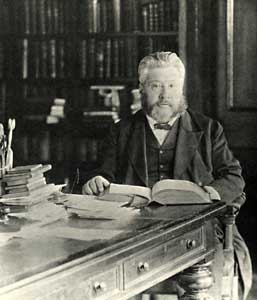
As a follow up to the previous article on "Meditation" I want to provide the reader with some things that the great Charles Spurgeon said (all highlighting mine) on this subject. Said Spurgeon:

"Now, if you equally knew how to count the great profit of meditation, you would deem it a positive gain to yourselves to spend some time therein, for meditation is most profitable to the spirit, it is an extremely healthful and excellent occupation. Far from being wasted time, it is a judicious employment of time." (MEDITATION ON GOD NO. 2690 - here)

That is certainly a raving recommendation to practice meditation! 

Spurgeon continued:

"Do not imagine that the meditative man is necessarily lazy, contrariwise, he lays the best foundation for useful works. He is not the best student who reads the most books, but he who meditates the most upon them...Meditation is thus a very excellent employment."

Again, what a good sale for the practice of both reading and meditating upon God's inspired word!

Spurgeon continued:

"First, I think meditation furnishes the mind somewhat with rest. It is the couch of the soul. The time that a man spends in necessary rest, he never reckons to be wasted, because he is refreshing and renovating himself for further exertion. Meditation, then, is the rest of the spirit."

The "couch of the soul"! Good analogy! That little meditative thought is delightful, is it not? It is the "rest of the spirit" indeed! This is not denying that "study," or deep thought, wearies the flesh, as Solomon says - "much study is a weariness to the flesh." (Eccl. 12: 12) Real lazy people do not generally spend time in deep contemplation about the sciences, or philosophy and theology, and they certainly do not spend their contemplative time for the purpose of recuperating and getting ready to go back to work. Spurgeon speaks of a meditative Christian who "knew how to spend a little time daily in the calm repose of contemplative retirement."

Spurgeon continued:

"At times, tis well to muse upon heaven, or if you are a man loving to revel in the prophetic future, turn over the mystic page, and study the sacred visions recorded in the Book of Daniel, or the Book of Revelation. As you do enter these hallowed intricacies, and do meditate upon these impressive symbols, you will rise up from your study mightily refreshed. You will find it like a couch to your mind."

Well, amen to that! All who have experienced such times of study and meditation can say amen.

Spurgeon continued:

"Again, meditation is the machine in which the raw material of knowledge is converted to the best uses. Let me compare it to a winepress. By reading, and research, and study, we gather the grapes, but it is by meditation that we press out the juice of those grapes, and obtain the wine. How is it that many men who read very much know very little?"

Here is a man who has spent time meditating upon meditation! He was blessed in the meditation! So am I. Are you? 

Spurgeon continued:

"I like, when I have read a book for about half an hour, to walk awhile and think it over. I shut up the volume, and say, “Now, Mr. Author, you have made your speech, let me think over what you have said."

This is a good insight into Spurgeon the man. I too have practiced the same habit many times when reading and contemplating the writings of scripture or of theologians and philosophers.

Spurgeon continued:

"Thus, you see that we need meditation to make use of what we have discovered. As it is the rest of the soul, so it is, at the same time, the means of making the best use of what the soul has acquired."

People need quiet time to deeply consider what they have read or studied. This idea is captured in the famous sculptor of the Thinker.

Spurgeon continued:

"Who are the men that can go into a controversy, and get the mastery? Why, the men who meditate when they are alone. Who are the men that can preach? Not those who gad about, and never commune with their own hearts alone, but those who think earnestly as well when no one is near them as when there is a crowd around them. Who are the authors to write your books, and keep up the constant supply of literature? They are meditative men."

Well said. Spurgeon shows that he is a man like David and other holy men and women in scripture who thought upon God and his word daily. True believers have always been "meditative" men and women.

Spurgeon continued:

"The best and most saintly of men have been men of meditation. Isaac went out into the fields at eventide to meditate. David says, “I will meditate in thy statutes.” Paul, who himself meditated continually on all that related to the Gospel, writing to Timothy concerning the important things needful in a good minister of Jesus Christ, says, “Meditate upon these things; give thyself wholly to them; that thy profiting may appear to all.”"

What a thing to contemplate, ironically! The best and most saintly have been given to the practice of meditation? If that is so, then the least saintly are they who meditate very little? How do you weigh in that balance?

Spurgeon continued:

"To the Christian, meditation is most essential. I would almost question the being of a Christian, and I should positively deny his well being, who lived habitually without meditation. Meditation and prayer are twin sisters, and both of them appear to me equally necessary to Christian life. I think meditation must exist where there is prayer, and prayer is sure to exist where there is meditation."

Oh let us keep these things always in mind!

Spurgeon continued:

"So is it with many of you, after you have caught the sermon, you allow it to run away. How often do you through lack of meditation, miss the entire purpose for which the discourse was designed! Unless you meditate upon the truths we declare unto you, you will gather little sweetness, you will acquire little profit, and certainly, you will be in no wise established therein to your edification. Can you get the honey from the comb until you press it? You may be refreshed while you listen to the sermon, but it is the meditation afterwards which extracts the honey, and gets the best and most luscious savor therefrom."

Oh such good counsel!

Spurgeon continued:

"Let me tell you that there ought to be special times for meditation. I think every man should set apart a portion of each day for this gracious exercise. A Christian will ever be in a lean state if he has no time for sacred musings before his God. Those men who know most of God are such as meditate most upon Him. Those who realize most experientially the doctrines of grace are those who meditate and soar beyond the reach of all sublunary things."

Amen!

Friday, March 5, 2021

The Bible On Meditation


"I remember the days of old; 
I meditate on all thy works; 
I muse on the work of thy hands." (Psa. 143: 5)

Christian meditation, what can we say of it? Is it anything like meditation in other religions? Is it a duty? Is it enjoyable? Is it like "transcendental meditation"? Is it in any way "mystical"? 

Not all meditation is religious. Mathematical theorists are often in deep thought. So too are philosophers, physicists, physicians, many other thinkers and scientists. 

Christian meditation involves thinking upon the word of God. In doing this we are thinking upon God himself. We are thinking about his person and his works. It involves what we may call "the life of the mind." 

Religiously Mystical?

"Mystical," says Merriam Webster: "involving or having the nature of an individual's direct subjective communion with God or ultimate reality."

Some eastern religions practice a kind of meditation where thought is excluded, where one tries not to think about anything, tries to free the mind and spirit of conscious thought (somehow, where the spirit transcends time and thought). Such meditation the scriptures know nothing about

However, there is indeed something mystical or spiritual about meditating as the scriptures describe, for in times of meditation the soul, mind, and spirit enjoys communion with God. In some sense the soul in communion with God, in his thoughts, does "transcend," or become enraptured, and many Christian hymns speak of this heavenly experience. It is where the soul becomes "lost in wonder." It is a kind of "ecstasy." The word "ecstasy" comes from the Greek "ekstasis" which literally means "standing outside oneself." It is in this respect that it is similar in meaning to words like "amazement," "wonderment," "awestruck," etc. In all these mental states the soul does in some ways "transcend," or "stand outside of itself," though not in the same way as those who practice the eastern or Hindu "transcendental meditation." 

Mostly Cognitive

Notice the three words used together in the above Psalm: remember, meditate, muse. Those are cognitive words. Meditation involves thinking. Musing involves deep or studious thinking

It is cognitive, involving thought. The purpose of it is to increase knowledge and understanding and experience God's presence. 

Musement or Amusement?

It is a sad thing that the mass of people spend far more time in amusement rather than in musement. I am not condemning amusement or recreation. All need a degree of this. Families need it. But, it is most often inordinate or excessive. But we all need to muse and meditate also! There are so many things we need to think a lot about! Right? We need to be good thinkers. Let us then be found often musing rather than being amused. It is in this way that we are "making the most of the limited time we have." (Eph. 5: 16) It is in meditation and musing upon God and his word that we commune with God and delight in him.

Commune With & Delight In

"But his delight is in the law of the LORD; and in his law doth he meditate day and night." (Psa. 1: 2)

Notice how in this text "delight" is connected with "meditate." It is unrelated to the physical, being mental, emotional, spiritual, and psychological.

"Delight thyself also in the LORD; and he shall give thee the desires of thine heart." (Psa. 37: 4)

Obviously the "delight" that one has "in the LORD" is connected with delighting mentally in his word. It is what goes on "in heart" or "in soul." Rejoicing and being happy is mental, and though it effects the body, is not what the body experiences. Paul referred to this when he wrote "But let every man prove his own work, and then shall he have rejoicing in himself alone, and not in another." (Gal. 6: 4) "In himself" refers not to something physical in his body, but something in his soul, mind, or spirit. A professing Christian who is not spending time meditating upon God and his word is not delighting in the Lord.

In the new testament the Apostle Paul exhorted Timothy: "Meditate upon these things; give thyself wholly to them; that thy profiting may appear to all." (I Tim. 4: 15) The words "meditate upon" are from the Greek "melatao," and it denotes a "meditative pondering." It means "to take care of, i.e. (by implication) revolve in the mind."

Notice these words from the Psalms:

"Stand in awe, and sin not: commune (speak) with your own heart upon your bed, and be still. Selah." (Psa. 4: 4)

"I call to remembrance my song in the night: I commune with mine own heart: and my spirit made diligent search." (Psa. 77: 6)

Here the Hebrew word for "commune" denotes "to put forth, mediate, muse, commune, speak, complain, ponder." Notice again the connection between meditative communing and the inner man, or the "heart" and "spirit." It is in the heart and spirit, in the mind, that God is enjoyed. A professing Christian who does not commune with God, does not think upon God and his word, shows that he does not enjoy God so much. It seems that those who have truly enjoyed communion with God find it addictive.

Another Psalm to consider on this subject is this:

“I will sing unto the LORD as long as I live: I will sing praise to my God while I have my being. My meditation of him shall be sweet.” (Psa. 104: 34)

Here is the "life of the mind" that we should all covet! Sadly, most would rather think upon carnal things and they are the worse for it. So testified the Psalmist: "The wicked, through the pride of his countenance, will not seek after God: God is not in all his thoughts." (Psa. 10: 4) Sadly, with most today, God is only an occasional thought. People do not want to think upon God. The words of the Psalmist clearly imply that if we are righteous, and not wicked, then we will have God "in all our thoughts." We will think upon him constantly. How do we occupy our minds? The answer would reveal much about us, right? 

Enjoying School

Most people do not realize that our word "school" is from the Latin schola and means "intermission of work" and "leisure for learning"! The Latin is from the Greek word skhole and it denotes "spare time, leisure, rest, ease, idleness"! I used to tell that to students when I spent a couple years as a substitute teacher and they could not believe it. School is intermission from work? Students see school as work! School is leisure? Students see schooling as anything but leisure!    

Throughout history the only ones who enjoyed school or leisure were the rich. They did not have to work and therefore had the freedom to choose how they spent their time. Yes, they spent it in physical pleasures, but they also spent it in learning, in reading, in studying things. 

So many today are blessed with the financial means to have more leisure time than any previous time in history. So sad that few take their "spare time" to think upon God and his word. 

"Finally, brethren, whatsoever things are true, whatsoever things are honest, whatsoever things are just, whatsoever things are pure, whatsoever things are lovely, whatsoever things are of good report; if there be any virtue, and if there be any praise, think on these things." (Phil. 4: 8 kjv)