
Historian and Professor John G. Crowley, author of "Primitive Baptists of the Wiregrass South" (1999) said that one may still find Two-Seed doctrines expounded by Primitive Baptists "if one knows where to go and what to listen for." (page 133) This is true of today's "Primitive," "Old School," or "Hardshell" Baptists. Though they will tell you that they have declared non-fellowship against the heresy of Two Seedism, yet they still have remnants of Two Seedism in their thinking. We have already seen how this is true in regard to their "no change" view of regeneration, of their denial that God uses the gospel or word of God in rebirth, etc.
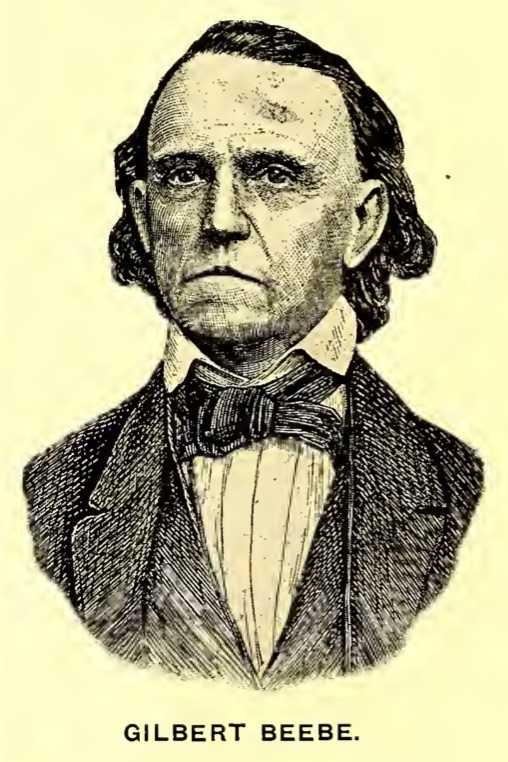
In this chapter we will continue our examination of what Elder Grigg Thompson wrote in 1860 against Two Seedism in his book "The Measuring Rod..." We see how he took aim mainly at Elder Gilbert Beebe whom he considered one of the foremost apologists for Two Seedism. We will also see what Beebe said in response to Thompson.
Thompson wrote in "The Measuring Rod":
"I have now showed that they are Arians, in their views of Christ, and the quickening spirit of God, and hold them both to be creatures in a sense that is in palpable contradiction to God’s word. I shall now examine their Two Seed notions, and try them by the infallible rule. I quote first, from a pamphlet published by Beebe, in 1843, page 11, and 2d column:
“It is not true that the elect, as such, were created in Adam. . . But the elect of God, as such, were created in Christ Jesus, and existed in him before the natural creation took place.” . . . “In his (Christ's) Godhead he is not numbered with, nor compared to creatures, for his Godhead is self-existent, and, therefore, not begotten, created, or derived But in his Mediatorial offices, or Headship of his church, he was set up, created, and begotten; and all his church were set up in him, created in him, and begotten in him, so far as relates to their spiritual life and spiritual condition.” “And thus existing in his Mediatorial character, the fullness of the Godhead, and the fullness of the church were embodied in that Mediatorial existence. And hence it is said, that his people were “created in him, chosen in him, preserved in him, and called with an holy calling, not according to their works, but according to his own purpose and grace, which was given us in Christ Jesus before the world began.' Their origin, as his seed, is simultaneous and identical with Christ as their life.”—Signs of the Times, July 1st, 1849." (pg. 45-46)
Once again we see where Beebe did believe in the actual preexistence of God's elect and that Christ being "begotten" in eternity past was his creation as a "Mediator" and which involved him being possessed of a human soul and nature, and that when Christ was begotten or created so too were the elect begotten and created. So, when Beebe wrote in 1838 (see previous chapter) that he did not believe that the elect actually existed before the world began he was stating what was not true, for he did believe such.
Thompson wrote in response:
"In the above quotations, Eld. Beebe teaches that the elect were not created in Adam, and as such, did not exist in Adam; but that they were created in Christ, in his creation, and were a distinct seed, from Adam and his posterity: that when Christ the Mediator and Head of the church was begotten, created, and set up, all his elect were created, begotten, and set up in him: that their creation and begetting was simultaneous and identical with him. The creation of Christ and his elect before time, he calls the "spiritual creation; " and the creation of Adam and his seed in time, he calls the natural creation." (pgs. 46-47)
These are the chief errors of Two Seedism. The idea that Christ' sonship denoted not his divinity but rather his creation as a "God-man" with both human and divine natures is one error, and the idea that Christ was begotten or created as such before the world began is another error, and the idea that the elect or church were begotten or created at that same time is another error.
Thompson wrote:
"This is their Two Seed doctrine, the true philosophy of which is, that God, before time, created Christ a spiritual man, and his elect in him a spiritual seed; that their existence is simultaneous with Christ their spiritual head and progenitor; for Eld. Dudley says in the same letter: “The bride, and all the spiritual children, were created in, and simultaneously with, the last Adam, that they are of the same nature with him.” This spiritual seed has no real or actual existence in Adam, and is in no way related to him, but belong to another family, belong to a different creation, and have their actual existence in a different head. Eld. J. F. Johnson, in a letter published in the Southern Baptist Messenger, for April 1, 1857, tells us that the children of God by descent, are spiritual children; that they pre-exist in their parent, and of necessity, partake of his nature; and in confirmation of this view, Eld. Beebe says, in the pamphlet above named, page 21, second column:— “As Eve was created in Adam, as identified with and a part of him—the bone of his bones, and the flesh of his flesh: so the church, the elect of God, the Lamb's wife was, as I have before shown, created in Christ—— existed in him, as one and a part of him—bone of his bones, and flesh of his flesh.”" (pg. 50-51)
The paper "The Southern Baptist Messenger" I have mentioned in previous chapters. It was begun by Gilbert Beebe's son William L. Beebe, about 1850 and lasted about ten years. It was, like the "Signs of the Times," a Two Seed Primitive or Old School Baptist periodical. I have read some of the issues of this paper through the years, although the only issues now available on the Internet are from 1860, the year Grigg Thompson wrote "The Measuring Rod." The people who supported both those periodicals were generally Two Seeders. If a person read all the issues of that periodical throughout the decade of its existence, he will see Two Seedism written about and promoted. In fact, the 1850s was a decade where Two Seedism had its most influence and intensest debate with those opposing Two Seedism.
Notice also how Beebe clearly affirms the preexistence of the children of God, though, as we have seen, he denied teaching it in 1838.
Further, as we will see, the Two Seeders not only believed that the preexistent souls of the elect were "in" the mind or heart of Christ, but were actually part of Christ's physical body, that their bones and flesh are derived from the bones and flesh of Christ. This being so, it goes against what they were constantly preaching about the new birth, affirming that the new birth was not a case of flesh begetting flesh, but of Spirit begetting spirit. If the bone and flesh of the children of God are taken out of the bone and flesh of Christ, then they are contradicting themselves.
Thompson wrote:
"In the pamphlet above quoted from, on page 17, 2d column, he (Beebe) says:
"By the spiritual creation, I mean the creation in Christ Jesus; and by the natural creation, all that properly belongs to this world, including the creation of all the human family, as such, in Adam. In the natural creation, not even Adam, in his first estate, was a partaker of the Divine nature. But, in the spiritual, God's chosen people are made partakers of the Holy Spirit. In the spiritual creation, those who are the subjects of it are, after God, created in righteousness and true holiness. Christ, as Mediator and Head of the church, is The beginning of the creation of God, and the first born of every creature." (pg. 47)
Thompson wrote the following in response:
"The true philosophy of this quotation is, that Christ, the spiritual Head, was created before time, and that identical with his creation, was the creation of the church, or elect, that their actual existence was in him, and as soon as he began to exist, they began to exist, that this spiritual creation of Christ and his elect, was before time, and that in this creation before time, they were made partakers of the Holy Ghost, and that it was in this creation before time, that the elect were made a spiritual seed, in righteousness and true holiness, after the image of Him that created them, that Adam was created in the natural creation, and all his seed in him, and that, in that creation, neither Adam, nor any of his seed, were partakers of the divine nature, or, that anything spiritual or immortal pertained to them in that creation, that Adam, and his posterity, are a distinct creation from Christ and his posterity; and that as Adam's seed were made partakers of flesh and blood in him, when he was created, so Christ's seed were made partakers of the divine nature in his creation. Eld. H. G. Fuller, a prominent preacher of this sect, in Ga. , illustrates this idea in the following language, which will throw much light upon the subject, and will prove that I do not misrepresent them:-
"All the human family are nothing but Adam in a state of multiplication, or expansion: and the church, or elect of God, are nothing but Christ in a state of multiplication or expansion." (pgs. 48-49)
Whether the children of God were in any sense created in Adam and represented by him was a point that not all Two Seeders agreed upon. Some say that the physical bodies of the elect were created in Adam, but not their souls or spirits, and these eternal souls were put within Adam when he was created. But, as we have seen, some of them even said that the human bodies and souls of the elect did not get their humanity from Adam, but from Christ. This led many of them to say that the elect were in no sense created in Adam, and that when Adam fell, it did not affect the elect.
Thompson wrote further:
"This is their Two Seed doctrine, the true philosophy of which is, that God, before time, created Christ a spiritual man, and his elect in him a spiritual seed; that their existence is simultaneous with Christ their spiritual head and progenitor; for Eld. Dudley says in the same letter: - "The bride, and all the spiritual children, were created in, and simultaneously with, the last Adam,- that they are of the same nature with him." (pg. 50)
That doctrine makes the elect to be a distinct race of people from the race of Adam, or of humanity. So Thompson wrote:
"This spiritual seed has no real or actual existence in Adam, and is in no way related to him, but belong to another family,- belong to a different creation, and have their actual existence in a different head. Eld. J. F. Johnson, in a letter published in the Southern Baptist Messenger, for April 1, 1857, tells us that the children of God by descent, are spiritual children; that they pre-exist in their parent, and of necessity, partake of his nature; and in confirmation of this view, Eld. Beebe says, in the pamphlet above named, page 21, second column:-
"As Eve was created in Adam, as identified with and a part of him the bone of his bones, and the flesh of his flesh: so the church, the elect of God, the Lamb's wife was, as I have before shown, created in Christ-- existed in him, as one and a part of him-bone of his bones, and flesh of his flesh." (pg. 50-51)
Again, not all Two Seeders agreed on whether the elect were derived from, or in any way represented by, Adam. How Two Seeders believed on such things affected their views on the resurrection of the bodies of the children of God, some believing in the resurrection and others denying it. On this we will have some things to say towards the end of this series.
Thompson wrote:
"I want the reader to keep in mind that this is the spiritual creation, and as such, has bones and flesh; and that it not only exists in life, as we hear some talk, but that it has an actual flesh and bone existence in its spiritual creation, so that it is not connected with Adam's seed, either in life, or in flesh and bones. For he tells us, that as "Eve was quickened, and received life when God breathed the breath of life into Adam, so the church or elect were quickened, or received life, when God breathed life into Christ." The existence of the church or elect, was, de facto, an actual existence in flesh and bone, before Adam was created or before time. The difference between the flesh and bones of Christ and his Eve or elect, and that of Adam and his Eve and seed, was that one was spiritual and the other natural. And that as a spiritual seed, Christ and his elect existed, in life, in flesh, and in bones, distinct from Adam and his seed, and were created before the visible heavens and earth." (pg. 51-52)
The idea that the elect not only received their spiritual existence and life in Christ in eternity past, but also their physical or natural existence too, is the grossest form of Two Seedism.
Thompson wrote:
"Right here a difficulty presents itself, that I think must blow up the whole system, without applying the Measuring Rod to it; and that difficulty is involved in answering this question: How are the elect involved in Adam's sin? If their existence was not in Adam, but were a different family, a different seed, we might just as soon suppose that angels, or God himself, would fall under the curse of the law, and become corrupt through the disobedience of Adam, as to suppose that this spiritual, distinct seed, that existed in Christ, should fall and become sinful by Adam's act: one is just as reasonable as the other. The act of Adam could not be imputed to them, for they were not related to him in their creation; they were a different order of being, for they were spiritual, and he was natural; they sustained no relationship to him, and without relationship, imputation cannot take place. Neither could they inherit his sin, for they were never created in him, never descended from him, and of course cannot receive his corrupt nature by inheritance or descent. The very same rule that would involve them in the guilt of Adam, might involve God, the Holy Spirit, or the angelic hosts; for any of them were as much in union with Adam, according to this theory, as were the church or elect." (pg. 52-53)
Thompson shows the absurd consequences of Two Seedism and how that heresy leads to other heresies.
Thompson wrote:
"3d. They hold that the elect were quickened and made partakers of the Holy Ghost, or divine nature, before time. The Scriptures, however, tell us, that God has given unto us great and precious promises, that by them we might (not eternally were) be partakers of the divine nature. See 2 Peter i. 3, 4. Hence it is, in time, the elect are made partakers of the divine nature, and experience the quickening and life-giving power of the Holy Ghost." (pg. 55)
We have seen in previous chapters where Beebe, Trott, and Two Seeders generally, said that being "created in Christ Jesus" or being made "new creatures in Christ" occurred some time in eternity past, and that the "new man" is that eternal child of God. They were children of God before they partook of flesh and blood. That is what Beebe taught, and yet at other times, we hear Two Seeders say that they partook of the flesh, bone, and blood of Christ in eternity past, and not from Adam. The idea that the elect were partakers of the divine nature in eternity past leads to many absurdities and unscriptural ideas.
Thompson wrote:
"I shall now return to the Two Seeds, for we must not lose sight of that important article in their faith; and if the reader has kept in mind the fact, that they teach that the elect is a spiritual creation, and make no part of Adam's seed; were not created in Adam, and do not descend from Adam; I expect by this time he is growing curious to know how they get under the law, and under the curse: for it is impossible for them to be involved in Adam's transgression, as they were not of his seed, and had no actual, or representative existence in him. The elect must, therefore, be brought under the law and under its curse in some other way be sides, or distinct from the transgression of Adam. In the following extract, made from the pamphlet quoted from before, Eld. Beebe has explained this matter in a way consistent with his system of doctrine, and believing that the reader will be interested in reading it, I make a lengthy extract." (pg. 55-56)
One must wonder what God's purpose was in creating the human race as it respects God's preexisting children. If he deposited these spiritual eternal children in Adam, for what purpose? If they come down from heaven, enter into the human body of a descendant of Adam, and then leave, what was the purpose of it all? Especially if there is no resurrection of the human bodies they inhabited. Was it for the purpose of teaching them?
Thompson wrote:
"Christ was set up, in the council and covenant of God, as the Head and representative of his people, before the highest parts of the earth was formed, or the fountains abounded with water; not as a spiritual Head, embodying a spiritual seed in him, but as a man- "The man of God's right hand." Paul calls him the "heavenly man," (not the spiritual man;) and in the fullness of time, he was "made of a woman, made under the law, to redeem them that were under the law." (pgs. 62-63)
I find this commentary by Thompson somewhat bewildering. Is he saying that Christ, "as a man," was "set up" in eternity past? He seems to speak like a Two Seeder himself in what he says. Is he parroting the view of Joseph Hussey, et al, when he believes that Christ was a "heavenly man" in eternity past? Or, is he simply saying that this being "set up" was in the eternal purpose or mind of God?
Thompson wrote:
"He is called the "Son of man," "the man Christ Jesus," the "man of God's right hand." But it no where speaks of him as a spiritual existence, which is neither God nor man: neither does the Bible make any distinction between the "Son of God" and the "Son of man, "for it was said to Mary that, "that holy thing which should be born of her, should be called the Son of God." But while he was man, we must not forget that he was "God manifest in the flesh." Hence, he was both God and man. As God, he was the "everlasting Father," and as man he was the "child born, the son given." His divinity was the uncreated, self-existent God, while in his manhood he was the mediator between God and men. To deny this, is to negative the Scriptures, for they declare, "There is one God, and one mediator between God and man, the man Christ Jesus." Man had violated the law, and the law looked to "man," and not to some spiritual existence for satisfaction. Christ as man, was set up, or appointed in the covenant or will of God, our "Day's man;" and in the "fullness of time he came," as it is written in the volume of the book, to do the will of God, and as the appointed substitute, to die for, or in the room of, his bride or elect, and redeem them from the curse of the law." (pgs. 63-64)
Here Thompson seems to clarify himself, saying that Christ was set up or appointed to be the mediator, but was not actually so until he took upon himself a body in his incarnation. If he believes that Christ was a mediator from eternity, or in the old testament period, and believes that his being a man was essential to him being a mediator, then he would be affirming Two Seed views.
Thompson wrote:
"There is one more difficulty in this absurd and vain philosophy, that I wish to notice. Eld. Beebe tells us that Adam was not spiritual but natural, which is the truth as testified by Paul. If Adam was not spiritual, how could any thing spiritual be involved in his transgression? and if he was not spiritual, the woman that was taken from him was not spiritual, and it was her "seed that was to bruise the serpent's head. "If Christ was therefore a spiritual man, he could not be the woman's seed, or else the woman had something spiritual about her; and it is not true, that Adam and Eve were nothing but natural beings." (pg. 66)
Again, this is all quite bewildering. Is he affirming or denying that Adam was spiritual? He says that Beebe and the Two Seeders were right in saying that "Adam was not spiritual but natural." But then he says that Adam must have been spiritual for something spiritual was "involved in his transgression," which is what I have previously noticed, saying that if Adam was not in any sense spiritual, then he could not have died spiritually. I think, however, that Thompson is showing the inconsistency in Two Seedism on this point. If Eve, being a type of the church, was "in Adam" as a type of the spiritual seed of Christ, then one must say that Adam had that which was spiritual in him. He also says that since Christ is a spiritual man and has descended from Adam and Eve, then this presupposes that Adam and Eve were spiritual.
Thompson wrote:
"We have now found them to be Arians in their views of the Mediator, and to be Two Seed in their views of the origin of the elect and non-elect. It is true that they believe God created both; but they hold that he created the elect in Christ before time, and that he created the non-elect in Adam in time; that the elect are by creation a spiritual family, and that the non-elect are by creation a natural, or earthly family. These views have led them to deny the doctrine of regeneration as taught in the Bible, and by the Primitive Baptists. For if the elect were created in Christ in eternity a spiritual seed, and were in eternity made partakers of the divine nature, regeneration can effect no change in them, unless it should be a change for the worse; for it is contended that the elect are a “spiritual, holy seed,” therefore a change could not better their condition. But they deny that any change is wrought in the sinner, in soul, body, mind, spirit, or matter, in regeneration, as I shall show before I am done with this point, and teach that regeneration is nothing but the generating or making manifest the spiritual child, which has laid dormant in the loins of Christ, from the time of his creation. Eld. T. P. Dudley says: “Regeneration is not a reforming, remodeling, or working over, like a hatter taking an old hat, and working it over, and making a new hat of it, but that it is the bringing forth of a new hat, or new man.” (pg. 67-68)
First of all, not all Two Seeders believed that God created the Devil and his seed. Daniel Parker did not believe so, as we have seen. It is true that a belief in the preexistence of the humanity of Christ and of the elect in him led Two Seeders and Hyper Calvinists to deny the biblical teaching on regeneration. Our previous chapters have shown this to be true. Thompson, however, because he came to deny that God uses the means of his word or Gospel in the regeneration, rebirth, or eternal salvation of the elect, also altered his views on regeneration from what Baptists before him held to. Though Daniel Parker did not deny means, yet the Two Seeders that he helped to spawn did begin to deny such means. If the word of God is not a means, then neither is faith and repentance, for these are evangelical, being produced by the hearing of the Gospel, and so it led to the belief that you could be totally ignorant of the one true God and Jesus Christ, and the way of salvation through him, and be a heathen worshiper of other gods, and yet be "regenerated" or "born again." However, Grigg Thompson is on record as believing, like many of his Brethren, whether Two Seed or not, that conversion was equated with the "birth" of the Spirit, following "regeneration," and that conversion was necessary for salvation and required hearing the Gospel. In Wilson Thompson's book "Simple Truth" (1821) we have his "Discourse #6 - On the Work of the Spirit After Justification" we have these words:
"This change wrought by the spirit, is called regeneration because it is begetting them unto a divine nature. The first work of the spirit on the heart is regeneration, or the implanting of that incorruptible seed with cleaves to holiness, and so it is sometimes called quickened, because this is a living seed, that causes the motions of life to appear, and this is always followed by the new birth which is effected when the soul is enabled to view Christ by faith, and lay hold of the comfort contained in the gospel, and so they are said to be born again, not of corruptible seed, but of an incorruptible seed, by the word of God."
So, at least in 1821 Wilson believed that the "new birth" followed "regeneration" and involved receiving the Gospel. Was this the view of Grigg as it was of the large majority of "Primitive" or "Old School" Baptists in the 19th century?
In the next chapter we will conclude our look at Grigg Thompson's opposition to Two Seedism.


No comments:
Post a Comment