Dr. Hiscox, in defining new testament ministerial "ordination," wrote:
"In Acts 14 : 23 it is said of Paul and Barnabas,
"when they had ordained (cheirotoneesantes) them
elders in every city," etc. This much-quoted word,
which has been relied on to prove a ritualistic ordination, by the "laying on of hands," the best
scholarship decides to mean the stretching out
of the hand or the lifting up of the hand as in voting. The meaning of which here is, that the Apostles secured the election of elders by the vote of the
churches, with no reference to ceremonial induction
into office."
That is the primitive Baptist view and is what is clearly the meaning of the text. This is what Dr. Gill also said, as we noted in the second chapter.
Hiscox continued:
"The word used in Titus 1 : 5, "ordain elders in
every city," is katasteesees, which means to set, to place, to constitute, to set over. And which Robinson defines, "to constitute, to make;" and Green,
"to place, constitute, set, appoint."
Hiscox then gives "The Testimony of Scholars" of which I will give a sampling, as these (again, all highlighting and emphasis are mine):
Dr. Dexter, with reference to these cases, says:
"There being no hint in either case of any thing of a
character like what is commonly called ordination in our
time." Fairly translated, and unmodified by any coloring
from subsequent unscriptural ecclesiastical usage, these texts
would never have suggested any such act as that which is
called ' ordination' by the common speech of men." Congregationalism, pp. 138, 139.
Dean Alford says:
"The word (Cheirotoneesantes) will not bear Jerome's and
Chrysostom's sense of ' laying on of hands,' adopted by
Roman Catholic expositors. Nor is there any reason for departing from the usual meaning of electing by show of hands."
Comments on Acts 14 : 23.
DR. Hackett renders the phrase:
"Now having appointed for them elders in every Church,"
which he interprets thus; "having appointed for them by
their outstretched hand." Comment in loco.
Dean ALFORD renders the passage, Titus I : 5,
"And mightest appoint, city by city, elders." He sees no
ceremonial ordination in it.
Next, Hiscox says this about the several citations of scholars:
"A want of space forbids further citation of authorities. Nor is it needful. New Testament ordination was an election, an appointment to office,
and had no reference whatever to any formal induction into office; did not imply any ceremonial investiture, or setting apart to the functions of that
office. The New Testament calls an election to
office, ordination; we call the setting apart of those
elected, ordination. Those who are jealous for
New Testament models, should correct their phraseologies by the New Testament standard.
It may be fairly asked admitting that ordination
in the New Testament sense was an election, an
appointment - Were not those, thus elected, set apart
by formal ceremonies to the discharge of their official duties? This we can neither affirm nor deny.
We simply do not know. There is neither precept,
example, nor manifest inference to decide the question. It has usually been taken for granted that the
primitive ministry was inducted into office by formal
services, and that "prayer with the laying on of
hands," was the essential part of such ordination."
So, how did so many Baptists get away from this simple teaching? How did they imbibe episcopal and presbyterian ideas about ordination? In looking at the history of the "Primitive" or "Old School" Baptists one can see how their "associations" were nothing but a kind of presbytery.
Hiscox continued:
"But this has been accepted as scriptural, not because it is found in the Scriptures, but because Prelatical and Presbyterial authorities have interpreted
the Scriptures by their own ecclesiastical usages,
rather than adjusted their usages to the New Testament teaching."
Amen to that! This is what I am seeking to call the attention of Baptists to see.
Hiscox continued:
"They have seen Episcopal and
Presbyterian ordination in the New Testament because they saw it in their Church standards and
practices. Their scholars have largely so interpreted the text, and Baptists have accepted their
conclusions without even their justification."
Yes, and this is a common practice in so many circles, when it comes to bible interpretation. "Baptists have accepted their conclusions without even their justification." This is not "Baptistic."
Hiscox continued:
2. The Laying on of Hands.
But does not Paul expressly declare to Timothy
that he was ordained and set apart to the work of
the ministry by the laying on of his hands and the
hands of the Presbytery? No; he makes no such
declaration. Does he not enjoin Timothy not to
ordain any man hastily by suddenly laying hands
on him? No; he makes no such declaration, as we
shall see.
The subject of "the laying on of hands" must be
treated very briefly in this place. It was an old
Jewish and common Oriental custom, by which
benedictions were conferred or invoked, and other
symbolical acts performed. Our Lord laid His hands on the sick to heal them; on the little children to bless them. The Apostles did the same.
But in the apostolic church this act was chiefly
associated with the special impartation of the Holy
Spirit. The Charismata was thus conferred. Peter
and John laid hands on the converts at Samaria,
and they received the Holy Ghost. So did Paul on
the twelve disciples at Ephesus. Ananias laid his
hands on Saul at Damascus that he might receive
his sight, and be filled with the Holy Ghost. Jesus,
after the resurrection, conferred the Holy Ghost by
breathing on His disciples. And His farewell blessing, when He ascended, was conferred by the lifting
up of His hands.
Now, the apostolic precedents relied on to enforce ceremonial ordination by the laying on of
hands, are the following:
1. The ordination of the Seven as related in Acts
6: 1-6. The true ordination, i. e., the election in
this case was by the "whole multitude," "the multitude of the disciples."
But this case is not in point, and constitutes no
argument; since this setting apart was to a secular
office and not to a spiritual ministry; to the serving of tables and not to preaching of the Word. An
induction into the Diaconate and not into the Episcopate. Moreover, this act was by inspired Apostles, who have no successors. Neither the Diaconate,
the Episcopate, nor the Presbyterate can claim to
be the official successors of the Apostolate. Presumably this act was for their especial endowment by the Charismata. It has no authority unless it
be in the ordination of deacons."
But, do not our Hardshell brothers often say that "the ministry," separate and distinct from the congregation, are "successors" to the apostles in regard to ordination? Baptists do not believe, however, that the apostles have successors.
Hiscox continued:
2. The next precedent relied on is the case of
Barnabas and Saul, sent forth to the Gentiles by the
Church at Antioch, Acts 13 : 1-3.
But this was not an ordination in any technical
sense. Both these men had been engaged in the
active work of the ministry for years not less than
eight or nine, possibly twelve, according to the best
chronological data. They were not here inducted
into the ministry, but designated to a new field of
work. Moreover, this designation was by the
special and express dictation of the Holy Ghost,
showing that it was not a common and customary,
but an extraordinary and wholly exceptional thing,
and therefore not an imitable example. Also, it is
wholly undetermined who laid hands on them,
whether the prophets, the elders, or the disciples
generally.
The burden of proof is on those Baptists who think the laying on of hands in Acts 13 is an ordination service. It is not an ordination service, however.
Hiscox continued:
3. The next case usually quoted to the same end,
is Paul's injunctions to Timothy; "Neglect not the
gift that is in thee, which was given thee by
prophecy, with the laying on of the hands of the
Presbytery." 1 Tim. 4 : 14. Also, "Wherefore, I
put thee in remembrance that thou stir up the gift of God, which is in thee, by the putting on of my
hands." 2 Tim. 1 : 6.
These passages are held to prove primitive ordination by the laying on of hands. This inferential reasoning is quite of a piece with that which
proves primitive infant baptisms from the fact of
household baptisms. The fact is, the Apostle
makes not the least allusion to ordination in these
citations. He speaks expressly and only of "the
gift of God " (to Charisma tou Theou), which
had been bestowed by the laying on of hands. It
would do no more violence to the text to infer that
Paul laid his hands on the disciples to ordain them,
or that Peter laid his hands on the converts at Samaria for the same purpose, than to say that the
above texts refer to Timothy's ordination.
To say the very most for those who insist that
these passages refer to ordination, it must be confessed the foundation is too slender and uncertain to
allow of resting on them any doctrine, or imposing
any ceremony that shall be regarded as essential to
the validity of ministerial acts. It is not strange
that many interpreters, looking at these passages
through their own standards and usages, should see
ordination recognized where the Apostle seemed to
see nothing but extraordinary spiritual gifts imparted
by the imposition of hands.
4. We come lastly to mention the text much relied on to prove ceremonial ordination as existing
in the apostolic Church; and while it fails to substantiate that doctrine, it is undoubtedly the strongest citation for that purpose that can be made from
the New Testament. It is 1 Tim. 5:22. "Lay
hands suddenly on no man." This is interpreted to
mean, "do not ordain and put into the ministry any
man, hastily." If it does refer to ordination, the
inference would be strong though not conclusive
that a custom prevailed, of inducting men into the
sacred office by the imposition of hands. But does
it refer to ordination? It has generally been so interpreted. But we learn to distrust the scholarship
which interprets the word of God under the bias of
ecclesiastical prepossession.
Well, amen to that!
Hiscox continued:
Dr. Wm. B. Johnson, one of the most honored
of American Baptists, says:
"As there is not a solitary case in the New Testament of
ordination to the ministry by imposition of hands, I cannot
suppose that the direction of Paul to Timothy, to lay hands
suddenly on no man, does refer to imposition of hands in
ordination." The Gospel Developed, pp. 155, 156.
Dr. J. B. Jeter, a man acute, discriminating and
conservative, says:
"In the primitive age very little stress was laid on the
ceremonies attending the induction into office. The Apostles laid on their hands several times to confer the gift of the
Holy Ghost; but never in confirmation of an appointment to
office except in the case of the Seven." "There is no
scriptural proof that any elder or bishop of any Church was
ordained by the laying on of the hands of an Apostle, or of
any Christian minister." "In the apostolic times ordination
was simply an appointment to office." "A formal ordination service is not essential to the performance of ministerial
duties; but it is eminently becoming and useful. The appointment of a Church is the essence of ordination." Religious Herald, editorial of May 21, 1876.
I agree completely. We cannot base the whole ordination practice by presbyteries on "a text so variously understood"!
Hiscox continued:
In the modern Roman Church imposition of hands
is deemed essential in the sacraments of ordination,
confirmation, and baptism. Also in the Anglican and
other Episcopal churches it is similarly used. In other
Protestant churches, our own included, it retains its
place only in ordination, in all of which it is insisted
on with a tendency to sacramental effect.
Ordination, therefore, by public prayer and the
imposition of hands by other ministers, is not essential to the genuineness of ministerial character or
the validity of ministerial acts. It does not make a
minister any more than inauguration makes the
president. He is president, dejure and de facto, by
virtue of his election, with all the rights, powers and
privileges which belong to the office, with or with
out an inauguration. Such is the relation of ordination to the ministry. It is their inauguration, making public the election, with the approval and
commendation of those who take part in the services. And this only.
Isaac Backus, clarum et venerabile nomen among
Baptists, said:
"And ordination of ministers is no more than swearing
them to be faithful in that office. Their being furnished
with grace and gifts for it is the most essential thing in the
affair."—Hist. N. E. Churches, p. in. Phil, ed., 1833.
In our next posting we will continue our citations from Hiscox and our analysis of those NT texts that are supposed to teach ministerial ordination by presbyteries.
Thursday, October 31, 2019


Wednesday, October 30, 2019
This Is How You Counsel The Lost
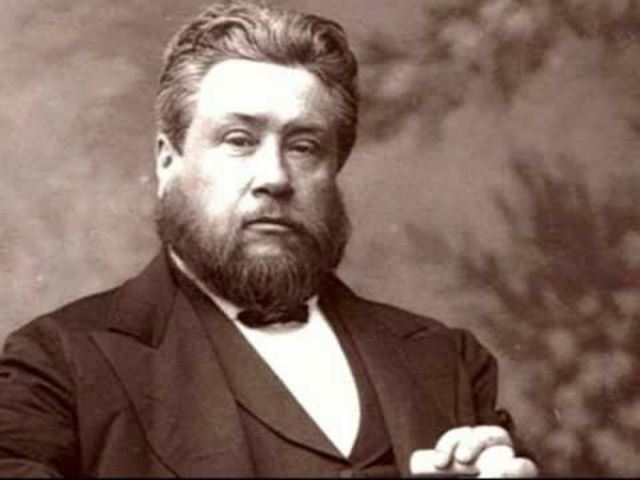
1834-1892
"The harvest is past, the summer is ended, and we are not saved." Jeremiah 8:20
Not saved! Dear reader, is this your mournful plight? Warned of the judgment to come, bidden to escape for your life, and yet at this moment not saved! You know the way of salvation, you read it in the Bible, you hear it from the pulpit, it is explained to you by friends, and yet you neglect it, and therefore you are not saved. You will be without excuse when the Lord shall judge the quick and dead. The Holy Spirit has given more or less of blessing upon the word which has been preached in your hearing, and times of refreshing have come from the divine presence, and yet you are without Christ. All these hopeful seasons have come and gone--your summer and your harvest have past--and yet you are not saved. Years have followed one another into eternity, and your last year will soon be here: youth has gone, manhood is going, and yet you are not saved. Let me ask you--will you ever be saved? Is there any likelihood of it? Already the most propitious seasons have left you unsaved; will other occasions alter your condition? Means have failed with you--the best of means, used perseveringly and with the utmost affection--what more can be done for you? Affliction and prosperity have alike failed to impress you; tears and prayers and sermons have been wasted on your barren heart. Are not the probabilities dead against your ever being saved? Is it not more than likely that you will abide as you are till death forever bars the door of hope? Do you recoil from the supposition? Yet it is a most reasonable one: he who is not washed in so many waters will in all probability go filthy to his end. The convenient time never has come, why should it ever come? It is logical to fear that it never will arrive, and that Felix like, you will find no convenient season till you are in hell. O bethink you of what that hell is, and of the dread probability that you will soon be cast into it!
Reader, suppose you should die unsaved, your doom no words can picture. Write out your dread estate in tears and blood, talk of it with groans and gnashing of teeth: you will be punished with everlasting destruction from the glory of the Lord, and from the glory of his power. A brother's voice would fain startle you into earnestness. O be wise, be wise in time, and ere another year begins, believe in Jesus, who is able to save to the uttermost. Consecrate these last hours to lonely thought, and if deep repentance be bred in you, it will be well; and if it lead to a humble faith in Jesus, it will be best of all. O see to it that this year pass not away, and you an unforgiven spirit. Let not the new year's midnight peals sound upon a joyless spirit! Now, now, NOW believe, and live.
Well, my PB brothers, when you counsel the truly lost (if you ever do), counsel them in this manner. If you do not, you will merely be trying to alleviate symptoms of the disease rather than affecting a cure of the disease itself. Do not tell the lost sinners, who hear you preach, that the remedy for their moral sickness is in keeping God's law. Yet, is this not what you tell them? Is it not because you believe that you cannot preach the gospel to the spiritually and morally dead?
Spurgeon had no problem saying to the most wretched of sinners "believe, and live." Further, he was no "Arminian" in doing so!
If I were still pastoring and had lost people come to me for counsel with their sins and troubles, why would I not go straight to the heart of the problem? Why would I want to alleviate symptoms without going straight at the cause? But, sadly, my Hardshell brothers, because they believe that they cannot preach to the spiritually dead, cannot advise the spiritually dead about how to live! Incredulous!
(From Spurgeon's "Morning and Evening" for evening of December 31)
Tuesday, October 29, 2019
A Gospel Without Exhortation?

Elder (Dr.) John McClaren Watson
1798-1866
Watson wrote:"A gospel without exhortation; without a call on the sinner to repent and believe; a gospel which does not in word address itself to all; is not the gospel which Christ ordained subordinately for the bringing in of his "other sheep."" (page 86 of "The Old Baptist Test")
What made me think again about this citation from Watson was from listening to sermons recently by Elder Bradley. I was happy to see him talk about the reasons lost people give for not accepting biblical truth and I thought about the many unregenerate souls who would be hearing him preach. I was hopeful that he was not going to restrict his address to those who were already regenerate. I was hopeful that he would give some gospel invitations to the lost, to whom at times he seemed to be speaking. But, though he came to places where the opportunity afforded itself for a direct address to the spiritual wretches in regard to what they must do to be saved, giving them direction, he failed to do it. This disappointed me. He had what Watson called a "gospel without exhortation," a message "without a call on the sinner to repent and believe." He seemed afraid to do so. He told how the sinner is lost, how he could do nothing towards his salvation, that it was all of the Lord. That was all good. But, he should not have left the sinner in that state of mind. He should have, like Spurgeon (whom Bradley admires), exhorted him to go to Christ, to receive him, and to submit to his lordship.
Paul said to one lost soul, who came asking "what must I do to be saved?"- "believe on the Lord Jesus Christ and you will be saved" (Acts 16:31)
Watson also said:
"Let us take a practical example. We have it on record in the 13th chapter of the Acts of the Apostles. When Paul and Barnabas preached at Antioch of Pisidia, had any of our ultra brethren been there and heard their zealous appeal to all those present, they would have called them Arminians." (ibid)
"Let us see: The zealous preacher calls on all to repent, earnestly, faithfully and I may add, gospelly, but alas! the old brother whose head has got wrong, whose heart has grown cold, says all cannot repent, some have not the power to do so. How does he know? Peradventure the Lord has given the power to repent to the very ones whom he has in his feelings excluded.." (page 87)
"Who of us are...sinning in propagating Protestant heresies, or Old Baptist ultraisms. We can readily see the absurdities of Romanism, the errors of many Protestant sects, and avoid them, but we do not recognize, as heresies, those hurtful ultraisms which are eating, as doth a canker, upon our very vitals as a denomination-a denomination which very justly boasts of its antiquity, and of having never acknowledged any other rule of faith and practice but that of the Bible. But some of our brethren are interpreting many of its blessed truths in such a way as to lead off their hearers from the Old Baptist platform of principles." (page 300)
My PB brothers, preach to the lost! Yes, tell them they can do nothing without Christ, but know that God will go out with your exhortation, in the case of the elect, and you will be used, like Ezekiel in raising the dead bones, to raise sinners from the grave of sin. But, don't leave the sinner hanging in despair. Tell him he must believe in Christ and become one with him if he would be saved.
The first edition of The Old Baptist Test (1855) can be read here and the revised second edition (with introduction by Elder (Dr.) R.W. Fain, 1867) can be read here.
Monday, October 28, 2019
Wretched Saved?
"...how anyone can legitimately say that such adjectives as "wretched, miserable, poor, and blind, and naked" can be said to be appropriate for only the born again children of God, is truly amazing. It is no "argument" at all either for the Hyperists to say that this letter, and these words, are addressed to church members. This proves nothing unless it can be proven that churches are always composed only of those who are truly regenerate. Clearly the invitation is to those in the visible assembly who did not have Christ within them supping and dwelling with them!"
(From my posting "Anti Invitationalism Gone To Seed?" in The Baptist Gadfly for April 22, 2008 - see HERE)
This indictment of the Hyper Calvinist interpretation of Rev. 3:20 is similar to other interpretations where the Hardshells take texts with such adjectives, describing unregenerate souls, and affirm that they rather describe regenerate souls! See "Them That Are Lost" Are Saved?" HERE and "Was Balaam Saved?" HERE as examples.
If those addressed in Rev. 3:20 are they who had experienced amazing grace, why are they still wretched? Those addressed are denominated "wretched" (among other things). So, they must still be lost, if Newton is right in his famous words "amazing grace that saved a wretch like me."
If you are a wretch, you are lost. If you have been saved, you are no longer a wretch. Newton was saved from his wretchedness by amazing grace at the time of his conversion to the Lord, when he believed in Christ and turned from his sins.
My Hardshell brothers will want to say that the man who "feels" wretched, feels miserable, feels to be poor and blind and naked is really not what he feels to be (by the Spirit's teaching, right?), but is really not wretched, not miserable, not blind, not poor, etc.!
Well, who is telling the truth, the Spirit or the Hardshells? Was the Spirit lying to the sinner who sees himself a wretch and lost as a result of the Spirit's work?
See my postings "Hardshells Make The Spirit A Liar" HERE and "What do you say?" HERE for further elaboration on this point.
Conversion or Regeneration?
Amazing grace! How sweet the sound
That saved a wretch like me!
I once was lost, but now am found;
Was blind, but now I see.
When the infamous sinner John Newton penned the words of this famous song, was he celebrating the grace of God in his regeneration or his conversion, or both? I bet our Hardshell brothers will not want to answer this question! What think ye?
Another good question would be - "is conversion by amazing grace as regeneration?"
(Note: I just listened to a good sermon by Elder Bradley on "Amazing Grace" - listen here)
That saved a wretch like me!
I once was lost, but now am found;
Was blind, but now I see.
When the infamous sinner John Newton penned the words of this famous song, was he celebrating the grace of God in his regeneration or his conversion, or both? I bet our Hardshell brothers will not want to answer this question! What think ye?
Another good question would be - "is conversion by amazing grace as regeneration?"
(Note: I just listened to a good sermon by Elder Bradley on "Amazing Grace" - listen here)
Is Faith The Gift Of God?
The following is taken from my posting in The Baptist Gadfly titled Grudem on Regeneration.
The view of Grudem and semi-Pelagianism is that "ability" is born of God in the sinner, not faith (1 John 5:4).
According to this theory, faith is therefore not the "gift" of God, but is a subsequent act by the "able" sinner who has already been "born again." For all practical purposes, the sinner is already saved and theoretically could do without believing. Faith in Christ adds nothing for his spiritual state, according to this theory.
Is faith or power to have faith the gift of God? What would our Hardshell brothers say? Do they not sometimes give a novel definition of "faith" that says it means "ability to have faith"? Elder Zach Guess said "Faith" is "the ability to believe." (see here) Did I not show how untenable is such a definition of "faith"?
The view of Grudem and semi-Pelagianism is that "ability" is born of God in the sinner, not faith (1 John 5:4).
According to this theory, faith is therefore not the "gift" of God, but is a subsequent act by the "able" sinner who has already been "born again." For all practical purposes, the sinner is already saved and theoretically could do without believing. Faith in Christ adds nothing for his spiritual state, according to this theory.
Is faith or power to have faith the gift of God? What would our Hardshell brothers say? Do they not sometimes give a novel definition of "faith" that says it means "ability to have faith"? Elder Zach Guess said "Faith" is "the ability to believe." (see here) Did I not show how untenable is such a definition of "faith"?
Seasoned Preachers
I have listened to several old PB ministers over the past couple years, preachers who I once knew personally 30-40+ years ago, and I have been amazed at the preaching done by some of these men who have reached their seventies and eighties. Father did his best preaching the last few years of his life, in his seventies and early eighties. So too has Elder Sonny Pyles and Lasserre Bradley Jr. I also recently heard Elders Paul Trautner and Charles Smith, two of my fathers in the ministry when I was with the Hardshells, and they both are up in their eighties and both had an air about their preaching that was different from what they exhibited when they were in their middle ages. I owe this to their seasoning, to them being mellowed by experience. Listen to the old preachers. They have much wisdom to impart to you.
Elder Pyles Battling Cancer

Subscribe to:
Posts (Atom)