Tuesday, January 21, 2025

Common Logical Fallacies (iv)


A formal fallacy is an error in the argument's form, as in a syllogism. All formal fallacies are types of non sequitur. A non sequitur fallacy is where the conclusion does not logically follow the premise. In Latin it means "it does not follow." Or, we might say "it is not deducible from the facts" or from the premises. Red Herring fallacies are not formal fallacies for they do not deal with the structure of an argument. They are rather tactics in persuasion. The Red Herring is rather an informal fallacy. We can also say that some red herrings fall within the genus of ad hominems because personal information about a speaker's argument is irrelevant to the argument.

Red Herrings

AI Overview gives the following about the etymology of the "red herring fallacy." 

"The term "red herring fallacy" originates from the practice in fox hunting where hunters would drag a strong-smelling, smoked herring (which appears reddish) across a fox's trail to deliberately confuse the hunting dogs, effectively diverting their attention away from the scent they were supposed to follow; thus, a "red herring" refers to anything that distracts from the main issue at hand, mirroring the action of the fish in the hunting scenario."

A red herring fallacy is designed to "change the subject" or to redirect the question in dispute. It is designed to distract by bringing into the debate irrelevant facts or information. As stated above, it is a way or means of "diverting" attention away from the issue at hand. It is also designed to "shift blame" and is often used by politicians and trial lawyers. Oftentimes this tactic involves using irrelevant comparisons or false analogies. 

"These distractions can be made in the form of an emotional response, such as an appeal to fear or anger, or an irrelevant piece of information." (from logicalfallacies see here)

It is an example of information being "beside the point." It is an example of what is called "avoiding the issue." 

The very best fox hunting dogs, however, were not distracted by the scent of the red herring. So too those who are familiar with this logical fallacy may be kept from being swayed by it.

Those who intentionally use red herrings only want to win a debate and are not interested in truth or right. That is not to say that everyone who uses a red herring means of persuasion does it intentionally, for some do it out of ignorance or to avoid an issue that one does not want to face or causes dissonance. Sometimes red herrings are not always logical fallacies, as in when a person is simply adding comments to a speech that is somewhat irrelevant. "Red herrings can be used to make a story more interesting or to make a speech more impactful. However, they can also be used to mislead people." (AI) These would be aside comments. Preachers often do this. Sometimes they will get sidetracked from the main message and "chase rabbits." That is not to say that such sidetracks are all bad for they often prepare an audience for the next affirmation, proposition, or explanation. It is a kind of "ad libbing." This is done quite often by those who speak extemporaneously or "off the cuff," or who speak in the manner of ordinary conversation (thus a "homily" or "chat" or "talk"). 

Said one Christian Internet Site (See here - emphasis mine):

"There are a variety of reasons that red herrings are popular, both in the larger world as well as in churches. I am sure there are more, but here are five reasons that red herrings are popular. 
 
1. Distraction: They divert attention away from uncomfortable or challenging topics, allowing the speaker to avoid addressing the main issue directly. They help in evading direct answers, especially when the speaker does not have a strong or prepared response to the original question.

2. Manipulation: They can be used to manipulate the audience by steering the conversation towards a topic that the speaker is more comfortable discussing or that may evoke a desired emotional response. 
 
3. Confusion: Introducing irrelevant information can confuse the audience, making it harder for them to follow the original argument and recognize weaknesses in the speaker’s position. One would hope that this is less prevalent among Christians, but experience tells me this is still a big issue due to pride.

4. Control: They allow the speaker to control the narrative by shifting the focus to areas where they have more knowledge or feel they have a stronger position. Many online debates on social media utilize red herrings to control the situation.

5. Engagement: Sometimes, they are used to engage the audience in a different, potentially more interesting or relatable topic, thus maintaining their interest and attention. This isn’t always a bad thing, but it can be if the main point of discussion is minimized or forgotten." 

When you see a person using red herrings, you can see why. Nearly always it is because he is losing the debate on the merits, or by the logos. 

Examples

Many excuses for sin and erroneous ideas are of the red herring variety. 

Some early church fathers baptized infants. The fact that some early church fathers baptized infants does not directly address whether the Bible teaches infant baptism. Church history is a valuable resource, but it is a red herring when discussing a biblical text or theology. 

If one reads the talks that Job's four counselors gave to him in an effort to discover the cause of his calamities he will then see how they put forth many informal and formal fallacies, including Red Herrings.

Another example is seen in these words:

"Therefore he (Paul) reasoned in the synagogue with the Jews and with the Gentile worshipers, and in the marketplace daily with those who happened to be there. Then certain Epicurean and Stoic philosophers encountered him. And some said, "What does this babbler want to say?" Others said, "He seems to be a proclaimer of foreign gods," because he preached to them Jesus and the resurrection." (Acts 17: 17-18 nkjv)

These Greeks responded to Paul's reasoned discourse (logos) by making an ad hominem attack and by poisoning the well prior to his speaking. Also, this was an example of the red herring fallacy. Notice too the enthymeme implied, i.e. a babbler has nothing useful to say. (See my posting on the Greek word for "babbler" in Thoughts On Acts 17:18)

In my long series titled "God's Elect or World's Elite" I showed how Paul had to confront Sophist ideas that were still retained by the first Christians in Corinth and his letters to the church there show this. As those letters show Paul was criticized by them for being unsophisticated in his public speaking and persuasive skills. Paul alludes to the Sophists when he speaks of "the debaters of this age" (I Cor. 1: 20).

In "Sophistry and the Church: Up to Our Necks in it" by Kirk Durston (See here) we have these words (emphasis mine):

"What is sophistry? ChatGPT defines it as follows, "Sophistry refers to the use of clever but false arguments, deceptive reasoning, or misleading rhetoric to persuade or manipulate others. It often involves the use of fallacious or specious reasoning that may appear superficially plausible but is actually misleading or illogical..."

In the Bible we see many examples where infidels made illogical arguments against God's messengers. In the previous chapter we gave some examples of this. 

Said Durston:

"We are swimming in a world of sophistry and our culture is drowning in it. It is distressing to observe that it is rampant within Christianity as well..."

Got Questions web page (See here) says this (emphasis mine):

"Sophistry is argumentation or reasoning based on falsehood, trickery, or clever wording. A sophism is a fallacious argument, usually relying on a clever method of deception. And a sophist is a person who engages in sophistry; that is, he is skilled in misleading people through circumlocution, equivocation, ambiguity, etc. A sophist has cunning ways of presenting a plausible yet false assertion.

Peter warned against false teachers in the church who would use sophistry to swindle believers: “In their greed they will make up clever lies to get hold of your money” (2 Peter 2:3, NLT). Similarly, Paul warned of divisive people whose goal is to mislead: “By smooth talk and flattery they deceive the minds of naive people” (Romans 16:18)."

That is so true! There is so much sophistry today in the political world. But, if it stayed only in that area it might not be so bad, but today it is seen even in areas where it should never be seen, such as in various scientific fields. It is even true in Christian debates about bible doctrine. 

"3 knowing this first: that scoffers will come in the last days, walking according to their own lusts, 4 and saying, "Where is the promise of His coming? For since the fathers fell asleep, all things continue as they were from the beginning of creation." 5 For this they willfully forget: that by the word of God the heavens were of old, and the earth standing out of water and in the water, 6 by which the world that then existed perished, being flooded with water." (II Peter 3: 3-6 nkjv) 

Can you spot the logical fallacies in the arguments made by the scoffers? Do you see how Peter rebutted them? First, the scoffers argued that since the coming of Christ has not yet come, it will therefore not come. But, that is clearly a non sequitur. One of the premises in the argument said "since the fathers fell asleep all things continue as they were from the beginning of creation." Peter showed how that premise was false. The argument upheld the idea known as "uniformitarianism." But, Peter says this "they are willfully ignorant of," for the truth that is ignored says "no, all things have not continued uniformly" and the proof of that is the fact that catastrophes have occurred and have interrupted the steady uniform progression of history of creation. 

Monday, January 20, 2025

Common Logical Fallacies (iii)


In this chapter we will begin with a very common logical fallacy called the "Ad Hominem Fallacy." That is defined as follows. It is in Latin "argumentum ad hominem." 

"An ad hominem fallacy is a logical fallacy that occurs when someone attacks the person making an argument, rather than the argument itself. The term comes from the Latin phrase ad hominem, which means "to the person." (AI Overview)

The error behind this fallacy is an enthymeme* which says that a bad character or ethos cannot possibly speak the truth or give logically sound arguments. The ad hominem argument (I use the term 'argument' loosely) or persuasive tactic is unreliable as a proof for it is wrongly inferred that only a good and honest character can state a truth. But, even the Devil, the greatest of liars, sometimes speaks the truth. Examples of this is when he tempted Christ in the wilderness. He said Jesus could turn the stones into bread as the Son of God. That was true. He said that if Christ fell off a cliff that the angels would bare him up. That also was true. Not only that, the demons as little devils also have spoken the truth. On one occasion they said to Jesus - "we know who you are - the holy one of God." (See Luke 4: 33-37; Mark 1: 23-24) An ad hominem is fallacious because an argument’s soundness has little to no relation to the character of the person making the argument. Kind, sweet people can be wrong, and mean, vicious people can be right.

(* an enthymeme is an argument in which one premise is not explicitly stated, as in a syllogism)

There are several types of ad hominem fallacies, including: 
 
Tu quoque 

A type of ad hominem fallacy that criticizes the person making an argument by accusing them of hypocrisy 
 
Circumstantial ad hominem 

Also known as an appeal to motive, this fallacy argues that a person's circumstances, like their job or political affiliation, bias their argument 
 
Guilt by association 

This fallacy attempts to discredit a person's ideas by associating them with someone else who has similar views 
 
Poisoning the well 

This fallacy aims to discredit an opponent without addressing the substance of their argument 
 
Ad feminam 

This fallacy is a type of abusive ad hominem that attacks a person's gender 

I recall an instance when I was in my college class to study the "Philosophy of Religion." Most of this small class were preachers in training. I think I said in regard to one point discussed about the Trinity - "oh that is what Jehovah's Witnesses believe" and all at once I realized what I had done and so did the teacher and other pupils. I had used an ad hominem argument. 

We are guilty of ad hominem fallacies when we say things like this:

1) "You can't believe anything he says for he is such a hypocrite"
2) "Your a man (or woman) and so you cannot possibly know what I mean"
3) "He's an idiot, so you can't believe anything he says"
4) "He can't be right for he was an associate of Putin"
5) "He cannot be right in what he says because he is biased"
6) "You can ignore what he says because he is not on our side"

I do not want to make detailed comments about the various kinds of Ad Hominem fallacies above, except that I would like to say a few things about what is called poisoning the well.

Poisoning The Well

""Poisoning the well" is a rhetorical tactic that involves presenting negative information about a person or idea before they can be heard. The goal is to discredit or ridicule the person or idea." (AI)

"A "poisoning the well" fallacy is a logical fallacy where someone tries to discredit an opponent's argument by preemptively presenting negative information about them to the audience, essentially "contaminating" their credibility before they even get a chance to speak, similar to the idea of poisoning a water well to make it unusable for others; it's a form of ad hominem attack." (Ibid)

We see this type of fallacious argumentation by politicians who will say all kinds of negative things about their opponents in order to prejudice the audience against anything their opponents might say. This was certainly true in the last election when president Trump was called all sorts of names and libelous slanders. It was done so that people would be less inclined to listen to his policies and judge them fairly and honestly and by reason alone. People who poison the well are seeking to paint their opponents in the worst light. It is a kind of deception. It is also a kind of appeal to emotion. 

Over the past sixteen years I have had many Hardshell Baptists visit this blog and my other blog, the Baptist Gadfly, and I must say that in nearly every case the Hardshells would take pot shots at my character, motive, and credibility. Only one of them, however, attempted to reply to my logos argumentation, to my reasoning and proofs. That is sad. 

"An ad hominem fallacy is a type of fallacy of relevance, meaning the argument is irrelevant to the discussion. It's a rhetorical strategy that appeals to emotions and prejudices instead of facts. It's also known as a personal attack or name-calling." (AI Overview)

We may therefore say that in this respect some types of ad hominem arguments are examples of the "red herring" fallacy. We will discuss it later, but we simply will now say that it is designed to distract attention away from the argument or idea by bringing in other unrelated ideas and things. In other words "it is beside the point" to say something negative about the speaker (persuader) to persuade people to not accept the argumentation of the speaker, or to ignore the argumentation by talking about something else (changing the subject). In political debate today this is called "pivoting." It is a way to "dodge" the argumentation and the evidence.  Those who do so should be recognized as Sophists, people who only want to win a debate and not to find the truth. Ad hominem attacks are more examples of attacking the messenger rather than the message. 

Though ad hominem argumentation is invalid and against sound logic and reasoning, that is not to say that a speaker's character and credibility are totally irrelevant. A good character and reputation and expertise in the thing being argued, or the idea being promoted or affirmed, can add weight to the testimony or to the logical argument and discourse. It can increase the possibility that the arguments presented by the speaker are not deceitful or a con job. Especially is this true of opinions that cannot be proven to be true, being then a matter of speculation. In such things an educated opinion is esteemed of greater value than that of an uneducated one. Wrote one good source on this point (See here - emphasis mine):

"When is an ad hominem argument valid? An ad hominem argument is not always fallacious. Because ad hominem arguments have been associated with dirty tricks and name-calling, they are usually considered as hits below the belt that do not advance a healthy debate.

However, an ad hominem argument can sometimes be used as a legitimate rhetorical strategy. When the claims made about a person’s character are relevant to the discussion or the conclusions being drawn, and they are properly justified, the ad hominem argument is valid."

Ad hominem arguments can take various forms. In some cases, they are almost always a fallacy, while in other cases they can be valid depending on how they are used. 

Also, we must realize that saying something negative about a speaker's life or character is not itself an ad hominem argument for it is not an argument at all. Jesus and the bible writers often did this in regard to truly wretched and depraved people. It is only when we say an argument is invalid or fallacious because the one making it is bad are we arguing wrongfully. 

If we look into the scriptures we can see all kinds of examples where ad hominem attacks were made against Christ and his apostles, along with the prophets of old.

Again, on this question I got these responses from my search in Google and from "AI Overview."

"Ad hominem" attacks against Jesus Christ and the apostles often involved questioning their character, background, or motivations, dismissing their teachings by claiming they were uneducated, delusional, or even mentally unstable, rather than addressing the substance of their message; examples include calling Jesus a "deceiver," "madman," or "demon-possessed," or accusing the apostles of being illiterate fishermen who were simply trying to gain power or followers by fabricating stories about Jesus." 

"In the Gospels, some Pharisees and religious leaders often used ad hominem attacks against Jesus, accusing him of being a "glutton" or "drunkard" (Luke 7:34), or claiming he was in league with the devil (John 8:48)."

In the next chapter we will look at some other logical fallacies.

Sunday, January 19, 2025

Common Logical Fallacies (ii)


In beginning our look at common logical fallacies, it is good that we mention what are called "the available means of persuasion." This broadens our subject somewhat, for we are not only looking at logical fallacies but also at the right and wrong way to persuade or to be persuaded. 

Aristotle's three means of persuasion are ethos, pathos, and logos. These are often referred to as the rhetorical triangle. Said one good source (See here - emphasis mine):

"The methodical core of Aristotle's Rhetoric is the theorem that there are three 'technical' pisteis, i.e. 'persuaders' or 'means of persuasion'. Persuasion comes about either through the character (ĂȘthos) of the speaker, the emotional state (pathos) of the hearer, or the argument (logos) itself."

For Aristotle, rhetoric was “the ability, in each case, to see all of the available means of persuasion.” 

Notice that Aristotle did not say "all ethical means of persuasion." The fact is, people every day are persuaded of things based upon a speaker's ethos or a speaker's appeal to pathos, or to their emotions. That is not to say that persuasion should lack zeal and emotion by the speaker, nor that a speaker's credibility has no basis in persuasion, only that believing that speaker's propositions and affirmations should rely on the logical and evidential proofs given by the persuader. Over the years in my debates and discussions with others I have had some who would discount arguments I offered that were made by others, saying "that source is not credible because they are wrong on some other things." 

I see this among some Reformed and Hyper Calvinists. I have to respond to them by saying "you should not believe the argument because it comes from a source you discount but should consider the argument (logos) itself that the source makes." If I give an argument on a proposition given by a Catholic and someone who is not Catholic says "it cannot be correct because it was made by a Catholic," they are basing their decision on the argument based upon the ethos or presumed credibility of the speaker. It is also what is called an ad hominem argument, but more on that later in this series.

If I hear a person trying to persuade people of a proposition and say "I just feel that he is right," or "I sense he is right or wrong," then that is believing based upon appeals to emotion. This is not the way to find the truth. Many people have been led astray by experienced Sophists who know how to appeal to emotions. We see this in most commercials and advertising messages. See my posting "Marketers As Persuaders Sophists?"(here) It also includes appealing to people's inner biases and prejudices. Con men are often good persuaders of the Sophist kind.

From another posting (here) I wrote the following on - Ethos, Pathos, & Logos:

Ethos is about establishing your authority to speak on the subject, logos is your logical argument for your point and pathos is your effort to sway an audience emotionally. 

Ethos has to do with the speaker, with his credibility, authority, and character. It involves a speaker's credentials, the reasons why he should be heard or "worth listening to." It also includes dressing appropriately, using a good choice of words, giving the impression that the speaker is sincere and honest by his demeanor, deportment, and the way things are spoken or characterized.

Pathos has to do with the hearers of a speaker and with their emotions, including their prejudices and biases, as we see in "emotional appeals," or when a speaker seeks to "draw pity from an audience," or when he seeks to excite and arouse sentiment. Speakers want people to "experience" and feel the weight and intensity of the discourse, to receive it with the same passion in which it is spoken, to feel a certain way.     

Logos is an appeal to logic and reason, to concrete fact and proof. Words, speech, or argument first reside in the mind of the speaker before it is communicated to the audience. Thus, just as pathos appealed to emotion so logos appeals to intellect. 

In that posting in the series titled "God's Elect or World's Elite" I showed how Paul in his first letter to the Corinthians wrote against the views of the Sophists. I referred to the Sophists in my previous post that introduced this series. I have also mentioned them in several other postings. 

In that same article I wrote:

The Sophists were orators, public speakers, mouths for hire in an oral culture. They were itinerant tutors who claimed to teach all that was necessary for "success in public life," how to "get ahead." They mainly taught rhetoric and related fields such as grammar, history, and literary criticism, psychology, etc., but all for the wrong reasons and ends. They were also in many cases the lawyers of the day, paid advocates, people who could argue either side of a case.  

When cases are tried by public opinion, those who can best sway, via rhetoric and debate skills, the assembly of citizens assembled to try cases, are most desired by defendants, those who have been accused. This was the case with Paul when he stood on the mount in Athens when on public trial for his discourse, for his "logos." (Acts 17) There he gave his "apology," that is, his "rational verbal defense." In this he had to "answer" the charges of his accusers. (I Peter 3: 15, discussed previously) 

In the same article I also wrote:

The Sophists "paid for hire" speakers spawned the word "sophism" as a result of their "artful dodger" type of argumentation. "Sophism" is "a plausible but fallacious argument, or deceptive argumentation in general. In rhetorical studies, sophism refers to the argumentative strategies practiced and taught by the Sophists." (See here) Sophism is what Paul saw in his opponents in Athens and he saw it on many other occasions.

In proving a proposition, and convincing others of its correctness, logos should be the sole authority, the only place where proof is proven. Appeals to authority and appeals to emotion, though they have their place, are not to be relied upon for determining the truth of a proposition. This certainly ought to be true, and often is, in a court of law. If the proposition to be debated is "defendant (accused) is guilty of X crime" there should be only appeal to proof and undeniable evidence of the facts. That is not to say that there is no place for appeal to the emotions, or an appeal to the credibility of the lawyers or "expert witnesses," for both prosecutors and defense attorneys make use of them. After all, they are trying to convince or persuade the judge and the jury and where logic and facts alone are judged to be insufficient to prove or disprove the proposition, the persuaders will make use of appeals to emotion and to authority. This is where the Sophists were often quite successful. After all, appeals to emotion and to the credibility of witnesses are part of "the available means of persuasion." But, reliance should be solely upon the logical argument and upon the evidentiary proofs.

An AI Google response about logos argumentation has this to say:

"A "logos argument" should be considered supreme because it primarily relies on logic, reason, and factual evidence to persuade an audience, making it the most reliable and objective form of argumentation, as it appeals directly to the listener's rational mind and critical thinking abilities, unlike emotional appeals (pathos) or appeals based on personal credibility (ethos)."

I contend that this is what all should agree is right and proper and all persuaders should avoid using unethical means to persuade others. We should be appealing to the rational mind. Said the same source:

"When an argument is supported by strong logos, it enhances the speaker's credibility and persuasiveness."

"While logos is crucial, depending on the situation, effectively using pathos (emotional appeal) or ethos (personal credibility) might be necessary to enhance the overall persuasive power."

"Be cautious of using flawed logic or logical fallacies when constructing a logos argument, as it can weaken the overall impact." 

In the next chapter we will begin looking at common logical fallacies.

Friday, January 17, 2025

Common Logical Fallacies

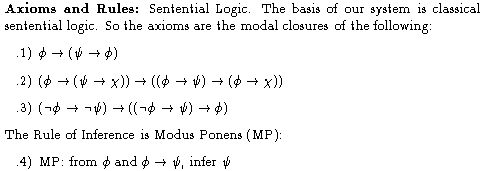
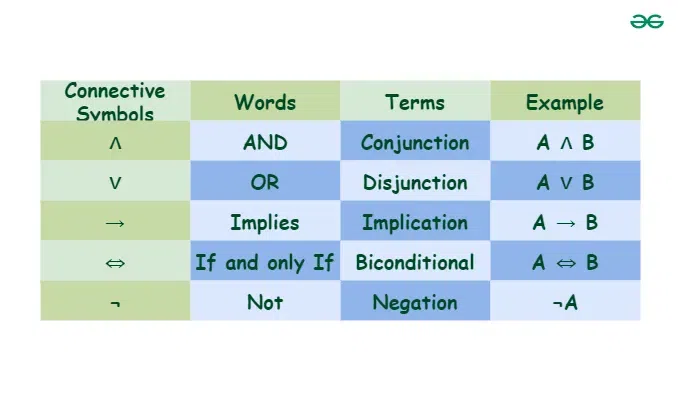
When I was in college I took a class titled "Basic Logic." I thought the class would instruct in the various kinds of logical fallacies but instead it turned out to be a very hard class and was more like Calculus and I was fortunate to have gotten a B grade. Mathematics was never one of my strengths. The above charts show this complexity. This class dealt with what is called "sentential logic" or "propositional logic."  It also includes what is called "predicate logic." It involves itself in analyzing the syntax of logical sentences. AI Overview says this about sentential logic:

"Sentential logic, also known as propositional logic or statement logic, is a formal system of logic that studies how to combine and modify statements to create more complex statements. It's used to express ideas and prove things." 

This is the kind of logic that is used in computer programming. It is the kind of logic used in complex philosophical and scientific formulas. Engineers use it often.

I will not be focusing on this type of logic and reasoning, but will rather deal with the more traditional and less complex logical fallacies. One of those is called "syllogistic logic." Again, AI Overiew says:

"Syllogistic logic is a formal system of logic that uses deductive reasoning to draw conclusions from two or more premises. It was developed by Aristotle in his Prior Analytics around 350 BCE."

How it works 

A syllogism is made up of three parts: a major premise, a minor premise, and a conclusion. 
 
The major premise is a general statement, and the minor premise is a specific statement. 
 
The conclusion is a specific statement that follows logically from the two premises. 
 
The conclusion must be true if the premises are true. 

Example

"All mammals are animals. Camels are mammals. Therefore, camels are animals"

I also took the LSAT exam for entrance into law school. I took it twice and scored just below average. It also tested one's skills in logic, the same kind one sees in puzzle books that have all kinds of logical games and puzzles. In a nutshell, logic studies can become quite complicated. In these cases they go far beyond what the normal person concerns himself with on a regular basis. 

I use syllogistic logic much more in my writings and in debate. It is much simpler. However, it can be abused and I have seen it abused in many debates I have had. One of the chief errors in syllogistic logic is what is called the error of equivocation. Again, AI says this about it:

"The error of equivocation is a logical fallacy that occurs when a word or phrase is used with multiple meanings in an argument. This can make the conclusion seem to not follow from the premises." 

It is also seen where another term is used in one of the premises that is not the same one used in the other premise. When this is done the other term is given as a synonym for the other term but may or may not be such. Valid syllogisms must keep the same terms and not use other terms that are judged to be equivocal. Again, AI Overview says: 

"The fallacy of equivocation occurs when a key term or phrase in an argument is used in an ambiguous way, with one meaning in one portion of the argument and then another meaning in another portion of the argument."

I had a double major in college (which required taking more classes and getting more credits). One was in Sociology and the Other in Speech Communication. In the latter major I was on the debate team and took classes in "Argumentation" and in "Persuasion," and in "Rhetoric," and in basic speech. I had a class called "History and Criticism of American Public Address" too in which we had to analyze and critique some of the most famous speeches or orations. Further, these areas of study I have continued to investigate in my private studies. I have had a dozen or so oral debates with brethren of other denominations (mostly from the "Church of Christ" sect). I have also had many on line debates and discussions, as well as some that are private. In these debates I am often engaged in pointing out where my opponent is making invalid or false reasonings or logic. Bob L. Ross, in his private correspondence with the Hardshells (which I have in my possession), told one elder that he needed to study and know the basic common fallacies that many use (for this Hardshell, like other Hardshells, often put forth invalid arguments). In this study we will focus on some of the more common fallacies. We will begin by citing from an Internet article titled "15 Logical Fallacies to Know, With Definitions and Examples" (See here). That article begins by saying (emphasis mine):

"You’ve seen them on social media. You’ve heard them in movie dialogue. Heck, you’ve probably even used them yourself.

They’re logical fallacies, those not-quite logically sound statements that might seem solid at first glance, but crumble the moment you give them a second thought.

Logical fallacies are everywhere. Once you know how to recognize them, you’ll notice just how common they are—and how they can undermine the point their writer is attempting to make. Being able to identify logical fallacies in others’ writing as well as in your own will make you a more critical thinker, which in turn will make you a stronger writer and reader." 

Being able to recognize logical fallacies or false reasoning is like being able to recognize incorrect grammar. For myself, correct grammar has always been of great importance to me, and has almost become an obsession. When I listen to people talk, even well educated people in news media, government, or by people such as lawyers, people who should know better, I hear such. Even now, I catch myself having used improper grammar in an article when going over the draft and must correct it. I hear educated people all the time speak improperly in saying "He is like me," which is a very common error. The correct grammar is "He is like I (am)." The former sentence, if we supply what is implied but not stated, would read like this - "he is like me is." Another common grammatical error is seen where antecedents of nouns (subjects) and pronouns do not agree in number. People will speak of a single person, and then in the same sentence refer to that single person in the plural number. An example would be - "A Christian praises God, and they do it joyfully." Do you see the error? "A Christian" is singular. "They" is plural. To be correct the sentence would need to change something. They can replace "A Christian" with "Christians" or they can replace "they" with "he" or "she" or "he or she." So, it is true, as the above writer says, that once you become knowledgeable of the most commonly used logical fallacies you will recognize them quickly and easily. The same with knowing good grammar.

The same article says further:

"Greek philosopher Aristotle also wrote about logical fallacies. He identified thirteen fallacies, divided into verbal and material fallacies, in his work Sophistical Refutations. By Aristotle’s definition, a verbal fallacy is one where the language used is ambiguous or incorrect, and a material fallacy is an argument that involves faulty or flawed reasoning." 

Logical fallacies involve errors in reasoning. It deals with contradictions. Let us notice the few times the word contradiction is used in scripture.

"But when the Jews saw the multitudes, they were filled with envy, and spake against those things which were spoken by Paul, contradicting (antilegƍ) and blaspheming." (Acts 13: 45 kjv)

Here contradiction involves opposing and contradicting Paul and not the idea of a person opposing himself by saying opposite things. (See also Heb. 7: 7; 12: 3) The Greek word denotes speaking the opposite of what Paul was saying. Two debaters on each side of a question are contradicting each other. What we are concerned about is how people contradict themselves, how they say one thing that is the opposite of what they said at another time. It is a case where perhaps people speak, as the Indians say, "with forked tongue."  Or, where people "speak out of both sides of their mouths." The latter case is seen in these words of the apostle:

"In meekness instructing those that oppose themselves (antidiatithēmi); if God peradventure will give them repentance to the acknowledging of the truth." (II Tim. 2: 25 kjv)

Of course, they not only contradict themselves, but contradict what the bible says. So, contradicting the truth is similar to what it means to "gainsay." On the words of Isaiah 1: 18 AI Overview says:

"Come let us reason together" is a phrase primarily from the Bible, specifically Isaiah 1:18, which essentially means to engage in a calm, rational discussion or debate, inviting someone to consider a perspective with logic and understanding, rather than just accepting something blindly; it's a call to thoughtfully analyze a situation together." 

Jesus said "the scripture cannot be broken" (John 10: 35 kjv). Why? Because scripture is truth and truth cannot be broken, meaning it cannot be "made null and void; whatever that says is true, there is no contradicting it, or objecting to it." (Gill's commentary) There is no just or legitimate contradiction of it nor any contradictions in it, although on first glance that might not appear to be so. 

The same article says further:

"But keep in mind that they can and often do appear in academic writing, especially in the kinds of writing where the author has to defend a position, like argumentative essays and persuasive writing. They can even show up in expository writing."

True, as I stated earlier. Even learned people often not only use incorrect grammar but incorrect or invalid arguments. It is these that we will be examining in this series.

The same article says further:

"Our brains aren’t perfect, and even smart people can fall prey to making logically inconsistent statements and arguments."

This being so, we need special attention be given to such a study as this. 

The same article says further:

"Usually, people make these kinds of statements because they haven’t taken the time to think through them logically, not because they intend to make flawed arguments. But in some cases, the writer or speaker does intend to make a flawed argument, usually in an attempt to sway readers’ opinions or make their opposition look worse." 

Here the "Sophists" are alluded to or are a good example of people using flawed logic to sway people's opinions and beliefs. When I was on the CEDA debate circuit in college, we had a proposition that every college debated for the semester and when you went into a debate round with another team from another school, you might go in being in the affirmative or in the negative. You had to learn how to win a debate, truth being not important. This is what the Sophists believe. If you want to get ahead in life, in your job or profession, then you must learn how to argue and win the argument, right or wrong. This is why good debaters begin with knowing well who their audience is. How you would preach to the choir or to your supporters might be different than how you would dialogue with opposers. One of the other important aspects of CEDA debate is the time granted for a debater to ask questions of the opposition in what is called "cross examination." We also see this in courtroom debates between the prosecution and the defense. The main point is this; no one should debate like Sophists. Truth is what should be the goal of honest debaters and not personal victory. Sadly, this is not the kind of debate we see today among politicians and by those in the media.

The same article says further:

"The best way to avoid making logical fallacies in your own writing is to familiarize yourself with them and learn how to recognize them. That way, they’ll stick out to you when you’re reading your first draft, and you’ll see exactly where your writing needs thoughtful revision." 

This is what I hope will be the outcome of this short series.

Thursday, January 16, 2025

One Body and One Loaf of Bread (ii)


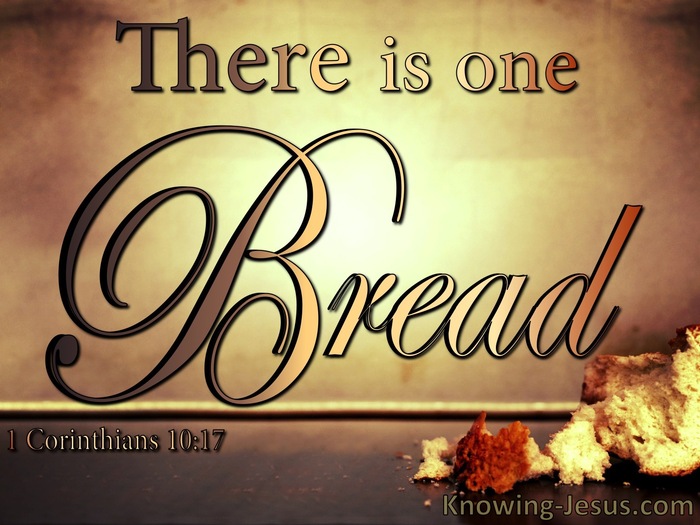
"For we, being many, are one bread and one body, 
for we are all partakers of that one Bread." 
(I Cor. 10: 17 kj21)

One Bread - Unity in the Body

Albert Barnes writes in his commentary on I Cor. 10: 17:

"There is evident allusion here to the fact that the loaf or cake was composed of many separate grains of wheat, or portions of flour united in one; or, that as one loaf was broken and partaken by all, it was implied that they were all one. We are all one society; united as one, and for the same object. Our partaking of the same bread is an emblem of the fact that we are one."

This makes me think of E pluribus unum which in Latin means"Out of many, one" or "One out of many." 

Just as in the marital union, where two become one, so too the union of believers with each other results in each believer having become united to Christ by partaking of him, by partaking of him as the bread of God, by partaking of him as the burnt sacrifice, by partaking of his flesh and body, as we have seen. By their union with Christ they come to be in union with all other believers; Just as the birth of a child brings that child into union with the whole family. Believers do not lose their individuality in becoming one with Christ and other believers, but they also become incorporated into the group and have a group identity. For this union Christ prayed, addressing the Father in these words:

"That they all may be one; as thou, Father, art in me, and I in thee, that they also may be one in us: that the world may believe that thou hast sent me." (John 17: 21 kjv)

Here we see what it means to be in union with God and with other believers. It is for a person to be "in God" and "in Christ" and for God and Christ to be "in" the believer. Think of a cup that is in water. The water is in the cup and the cup is in the water. I also can say to my wife "you are in my heart" and my wife may say "you are in my heart." 

This oneness in its fundamentals is already a reality, as we will see. Yet, in some respects it is not yet a reality, for that must wait till the saints are resurrected and glorified, when they are perfected and completely made into the image and likeness of both God the Father and Jesus Christ our Lord. 

Let us now notice some other texts that speak of the union in diversity among believers. Wrote Paul:

"12 For as the body is one and has many members, but all the members of that one body, being many, are one body, so also is Christ. 13 For by one Spirit we were all baptized into one body—whether Jews or Greeks, whether slaves or free—and have all been made to drink into one Spirit. 14 For in fact the body is not one member but many." (I Cor. 12: 12-14 nkjv)

Not only are believers one with each other but they are also dependent upon one another. So Paul elsewhere said: "For none of us lives to himself, and none of us dies to himself" (Rom. 14: 7). The "us" of this text will be applicable to every member of the body of Christ or family of God. But, it is also true to a great degree that no one human being lives a completely isolated life, a hermit extraordinaire. There is a title of a book or wise saying that says "it takes a village" meaning that the individual is dependent on the larger social community, a human being a social animal. So, every believer needs other believers. The Christian life is not intended to be lived in a vacuum, in isolation from people. But, the church also needs the individuals. 

So, how does the text above indicate how one becomes a member of the body of Christ, or become part of that one bread? We have already seen where it is by partaking of the body of Christ, an act of faith whereby the heart, soul, and mind receives the truth about the sacrifice of Christ and it becomes the believer's constant medication. The body of Christ is received by the mind, not by the mouth. But, the above text adds some additional observations on how this is effected. It is because, as believers, they are "baptized into" that "one body" and because they have "all been made to drink into one Spirit." The words "baptized into" (or "immersed into," or "placed into") denotes this incorporation into Christ, of which water baptism is the symbol or visible representation. They are placed within Christ when they first believe and receive Christ. That happens invisibly within the heart, mind, soul, and spirit but it is pictorially seen in the rite of baptism. When did the believer "drink" into one Spirit? Was it not when he by faith embraced the gospel and received its truth in the "inward parts"? (See Psa. 51: 6) This occurs before the rite of baptism is performed. So too with incorporation into Christ and becoming a member of his body and of the one bread.

All believers become attached to Christ and other believers by partaking of Christ when by faith they receive the good news about Christ and the story of redemption.

"For as we have many members in one body, but all the members do not have the same function, so we, being many, are one body in Christ, and individually members of one another." (Rom. 12: 4-5 nkjv)

Again, a connection with the Son of God, with the incarnate Christ, also entails having a connection with every other person who is united to Christ. It is sad how the present divisions within the body of Christ (sects, denominations, "heresies", etc.) hinder this communion and fellowship. However, we should all as believers try to not be so disagreeable with other believers who we may believe have errors, even serious errors. We are told in the scriptures that the "servant of the Lord must not strive" (becoming quarrelsome) but to be rather "gentle unto all men," and dialogging with other believers with gentility and meekness. (II Tim.2: 24) Further, Paul exhorts all believers to "salute every saint in Christ Jesus." (Phil. 4: 21) We should have a warm spirit towards all who profess to love Christ and believe in his word. 

The Process of Making Bread & The Story of Christ

The "shewbread" that was one of the items in the holy place in the Temple was also unleavened bread, special or holy bread. There was also a golden bowl with a remnant of the manna that fell from the sky to feed the Israelites in the desert. It was a reminder or memorial of the manna bread which came down out of the sky each day (except for the Sabbath day) to feed the chosen people as they journey through the desert wilderness, that "dry and thirsty land." The Hebrew word for "shewbread" means "bread of the face" or "bread of presence." It was called such because the bread in the Temple was placed before the Lord's presence in the Holy of Holies. Both the manna and the shewbread were types of the incarnate body of Christ.

There are steps in the making of a loaf of pure bread. These steps can be seen in the life and death and resurrection of Christ, the one who is called "the true bread," that is, the antitypical bread.

First, there must be wheat (or some other grain like barley) growing and ripe, ready for harvest. Second, there is the cutting down of the wheat by a sickle. Third, the wheat must be beaten or crushed (this separates the wheat from the chaff). This also includes what is called winnowing. After the wheat has been thus separated, it is crushed by grinding it (as in a mill or by hand on a stone or in a vessel). This step makes the wheat into a powder. (See Matt. 21: 44 - "grind him to powder") In this step the wheat is beaten and bruised, pulverized as it were. ("His winnowing fork is in his hand, and he will clear his threshing floor and gather his wheat into the barn, but the chaff he will burn with unquenchable fire" - Matt. 3: 12; See also Numb. 11: 8 -"ground it in a hand mill or crushed it in a mortar") Fourth, the powder is made into a lump by the addition of water into it. In forming this single unit of dough there is often used a rolling pin. This also involves folding and stretching the dough, or what is called "kneading" it. We might say this is where the dough bread is beaten and bruised. Fifth, there is then the baking of the loaf of bread in an oven. Sixth, the bread is ready to be eaten. Finally, the bread must be sliced or otherwise divided so that it can be eaten by several people. 

The fulfillment of this in the life of Christ is seen first in that he was born and became a healthy stalk of wheat (So Jesus, in allusion to this said "except a kernel of wheat fall into the ground and dies, it remains only single seed. But if it dies, it produces many seeds" John 12: 24) He was that kernel of wheat that was "cut down" by the scythe of death (as the prophet said "Messiah shall be cut off" - Dan. 9: 27; "he was cut off out of the land of the living" - Isa. 53: 8). Further, he was born in Bethlehem which means "house of bread." 

Next, his body experienced, in connection with his death, being beaten and bruised, including the time leading up to his Crucifixion and to the crucifixion itself. This was in fulfillment of the words of the prophet who wrote: 

"But He was wounded for our transgressions, He was bruised for our iniquities; The chastisement for our peace was upon Him, And by His stripes we are healed." (Isa. 53: 5)

“Awake, O sword, against My Shepherd, Against the Man who is My Companion,” Says the Lord of hosts. “Strike the Shepherd, And the sheep will be scattered; Then I will turn My hand against the little ones." (Zech. 13: 7 nkjv; See also Matt. 26: 31, Mark 14: 27)

Jesus took bread, “and when He had given thanks, He broke it and said, ‘Take, eat; this is My body which is broken for you; do this in remembrance of Me’” (1 Corinthians 11:24, NKJV).

Christ' body was "broken" but not his bones.

"Of course, there is a sense in which Jesus’ body was “broken”: in the violence of His death, His body was wounded and bruised, and His flesh and skin were torn. Yet Scripture is careful to say that none of Jesus’ bones were broken (John 19:33–36). As the true Passover lamb, His bones had to remain unbroken (see Exodus 12:46 and Numbers 9:12)." (From "Got Questions" see here)

In the making of the dough bread the wheat is beaten, smitten, and roughly handled. But, the bread is smitten immediately before it is eaten. The Jewish priests in the Passover ritual would smite the cracker like unleavened bread in his hand with the fist of his other hand. In this we see a picture of Christ being struck or "smitten" as the prophet Zechariah predicted. 

The "sufferings of Christ" (I Peter 4: 13) in his body, his being wounded, bruised, and beaten is typified in both the crushing of the wheat and the kneading of dough but also in the "breaking" of the baked bread for consumption by the participants in the supper. This is where we see Christ "ground to powder" by his body being crushed by those corporeal sufferings. In the protoevangelium God said that the seed of the serpent would "bruise" the heel of the woman's "seed." Further, the sufferings of Christ was the "oven" and becomes the final step in making bread for eating. Calvary was also the oven where the body of Christ became the antitypical "burnt sacrifice." In Malachi 4:1 we read: "The day of God's judgment will be like a burning oven, and those who are evil will be burned up." Certainly this judgment was experienced by Christ on behalf of every believer. Jeremiah said "Our skin is hot as an oven, Because of the fever of famine." (Lam. 5: 10 nkjv) So too may it be said of the skin and body of Christ in his bodily sufferings. We see this in the Garden of Gethsemane where Christ prayed. The Gospel record says: "And being in agony, He prayed more earnestly. Then His sweat became like great drops of blood falling down to the ground." (Luke 22: 44 nkjv)

Every born again child of God is also, like Christ, likened to harvested wheat in the parable of the wheat and the tares. (Matt. 13: 24-30) They became children by having been born again by believing the word that was preached (seed of the word received into their hearts) as the parable illustrated. The Psalmist long ago spoke in a similar vein, saying:"Those who sow in tears Shall reap in joy. He who continually goes forth weeping, Bearing seed for sowing, Shall doubtless come again with rejoicing, Bringing his sheaves with him." (Psa. 126: 5-6 nkjv) 

These are sheaves of wheat (or similar grain) that are harvested and gathered. This is the first step towards making bread (besides sowing the seed that produced the grain). The grain must be harvested, cut down, and put together as one in bundles. So we read in the old testament: "Take thou also unto thee wheat, and barley, and beans, and lentiles, and millet, and fitches, and put them in one vessel, and make thee bread thereof..." (Eze. 4: 9 kjv) Next, the grain must be beaten, of which we read that "bread flour must be ground" (Isa. 28: 28 nkjv). After the wheat is separated from the chaff, following harvesting, it must be made into powder, where it all becomes one. No longer is each stem of wheat alone, but becomes part of the greater lump, or loaf. Following this the lump is ready for baking. Each piece of wheat becomes incorporated into the one loaf. 

In this we see the unity of all believers with each other illustrated. The family of God is a singular unit, as is the body of Christ. Yes, it is composed of parts, each individual believer being a "member," but it is also one. This oneness is a result of each believer being united to Christ by faith, by "partaking" of Christ "the one true bread." Of every believer it is said - "For we are made partakers of Christ" (Heb. 3: 14 kjv). How did they partake of Christ the one bread? It was by receiving the good news, the word of God. How do we eat the bread, i.e. eat the flesh and drink the blood of Christ? It is by meditating upon it and receiving the truth in regard to it in our innermost parts. 

Oneness in Diversity

"For as the body is one and has many members, but all the members of that one body, being many, are one body, so also is Christ. For by one Spirit we were all baptized into one body—whether Jews or Greeks, whether slaves or free—and have all been made to drink into one Spirit." (I Cor. 12: 12-13 nkjv)

The body is one but it has parts. Each part has its ordained place in the body. Every part works together for the good of the whole body, for the good of the other parts. There is both diversity and unity in the body of Christ. This to some degree reflects God's own unity in trinity. The sameness consists in the common experiences of the members of this one body and one bread. Notice the uses of the word "all" in the above text. All the members have been placed into Christ and drank into one Spirit. They were all initiated into the body, or made partakers of Christ, in the same way. This is why we read of the "common faith" (Titus 1: 4) and of the "common salvation" (Jude 1: 3). Paul also wrote:

"Endeavouring to keep the unity of the Spirit in the bond of peace. There is one body, and one Spirit, even as ye are called in one hope of your calling; One Lord, one faith, one baptism, One God and Father of all, who is above all, and through all, and in you all." (Eph. 4: 3-6 nkjv)

Thus we have not only a common faith and common salvation but a common hope, a common baptism, a common God and Father, a common experience. These commonalities are the essence of "the bond" that ties them together. Each have been born of the Spirit and have a common ancestry and familial ties. Of this bond we also read these words of the same apostle:

"And not holding the Head, from which all the body by joints and bands having nourishment ministered, and knit together, increaseth with the increase of God." (Col. 2: 19 kjv)

By "by joints and bands" is meant the things that binds believers together, that holds them together. They are "knit together" by the common things mentioned already. One old song sung by Christians reflect this truth. It is titled "Blessed Be The Tie That Binds." Here are the first four verses of that hymn:

1. Blessed be the tie that binds Our hearts in Christian love; The fellowship of kindred minds Is like that to that above. 

2. Before our Father's throne We pour our ardent prayers; Our fears, our hopes, our aims are one Our comforts and our cares.

3. We share each other's woes, Our mutual burdens bear; And often for each other flows The sympathizing tear.

4. When we asunder part, It gives us inward pain; But we shall still be joined in heart, And hope to meet again.

Some other verses on our subject that need to be mentioned are these:

"And let the peace of God rule in your hearts, to which also you were called in one body; and be thankful." (Col. 3: 15 nkjv)

"There is neither Jew nor Greek, there is neither slave nor free, there is neither male nor female; for you are all one in Christ Jesus." (Gal. 3: 28 nkjv)

"For He Himself is our peace, who has made both one, and has broken down the middle wall of separation, having abolished in His flesh the enmity, that is, the law of commandments contained in ordinances, so as to create in Himself one new man from the two, thus making peace, and that He might reconcile them both to God in one body through the cross, thereby putting to death the enmity." (Eph. 2: 4-16 nkjv)

"But now God has set the members, each one of them, in the body just as He pleased. And if they were all one member, where would the body be? But now indeed there are many members, yet one body." (I Cor. 12: 18-20 nkjv)

"with one mind and one mouth glorify God, even the Father of our Lord Jesus Christ." (Rom. 15: 6 kjv)

"But if we walk in the light as He is in the light, we have fellowship with one another, and the blood of Jesus Christ His Son cleanses us from all sin." (I John 1: 7 nkjv)

The Greek word for "fellowship" is koinƍnia and denotes joint partnership or participation. They have communion one with another because of their common union with Christ the true bread. 

Said the great English preacher Charles Spurgeon:

"Union lies at the basis of communion. We must be one with Christ in heart, and soul, and life, baptized into His death, quickened by His life, and so brought to be members of His body, one with the whole church of which He is the Head. We cannot have communion with Christ until we are in union with Him, and we cannot have communion with the church till we are in vital union with it." (COMMUNION WITH CHRIST AND HIS PEOPLE" sermon number 3295"

"I am sure that all Christians have fellowship together in their thoughts. In the essentials of the Gospel we think alike, in our thoughts of God, of Christ, of sin, of holiness, we keep step, in our intense desire to promote the kingdom of our Lord we are as one. All spiritual life is one. The thoughts raised by the Spirit of God in the soul of men are never contrary to each other. I say not that the thoughts of all professors agree, but I do assert that the minds of the truly regenerate in all sects, and in all ages, are in harmony with each other—a harmony which often excites delighted surprise in those who perceive it."

Amen! Spurgeon also said:

"When I have put all these modes of Christian communion together, no one of them is so sure, so strong, so deep, as communion in receiving the same Christ as our Savior, and trusting in the same blood for cleansing unto eternal life. Here on the table you have the tokens of the broadest and fullest communion. This is a kind of communion which you and I cannot choose or reject, if we are in Christ, it is and must be ours. Certain brethren restrict their communion in the outward ordinance, and they think they have good reasons for doing so, but I am unable to see the force of their reasoning, because I joyfully observe that these brethren commune with other believers in prayer, and praise, hearing of the Word and other ways, the fact is that the matter of real communion is very largely beyond human control, and is to the spiritual body what the circulation of the blood is to the natural body—a necessary process not dependent upon volition." 

"In perusing a deeply spiritual book of devotion, you have been charmed and benefited, and yet upon looking at the title page, it may be you have found that the author belonged to the Church of Rome. What then? Why, then it has happened that the inner life has broken all barriers, and your spirits have communed. For my own part, in reading certain precious works, I have loathed their Romanism, and yet I have had close fellowship with their writers in weeping over sin, in adoring at the foot of the cross, and in rejoicing in the glorious enthronement of our Lord." 

Those are my sentiments too.

"Behold, how good and how pleasant it is for brethren to dwell together in unity!" 

(Psalm 133: 1 kjv)
Wednesday, January 15, 2025

One Body and One Loaf of Bread


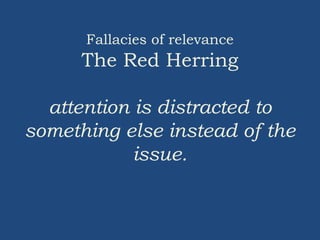
"For we, being many, are one bread and one body, 
for we are all partakers of that one Bread." 
(I Cor. 10: 17 kj21)

The single loaf of unleavened bread of the Passover became a symbol of the body of the incarnate Son of God, or the promised Messiah (or Christ). In the text above, Christ is "that one Bread." This reminds us of these wonderful words of Christ, "the bread of life."

"Therefore they said to Him, "What sign will You perform then, that we may see it and believe You? What work will You do? 31 Our fathers ate the manna in the desert; as it is written, 'He gave them bread from heaven to eat.' " 32 Then Jesus said to them, "Most assuredly, I say to you, Moses did not give you the bread from heaven, but My Father gives you the true bread from heaven. 33 For the bread of God is He who comes down from heaven and gives life to the world." 34 Then they said to Him, "Lord, give us this bread always." 35 And Jesus said to them, "I am the bread of life. He who comes to Me shall never hunger, and he who believes in Me shall never thirst." (John 6: 30-35 nkjv)

As we learn from the new testament, the "body of Christ" has two significations. On the one hand it denotes 1) the physical body of Christ composed of his flesh, bones, and blood. On the other hand it denotes 2) the spiritual or mystical body of Christ, that group of all saved people who are united to him by faith. It is also synonymous with "the church" (ekklesia), the "called out assembly." In this respect the church body may also allude to one of two entities. First, it would be the same as "the family of God" and in this sense would include every believer who has existed from the foundation of the world, everyone who is elect and called. Second, it would refer to single assemblies, churches, as when Paul says "the churches of Christ salute you." (Rom. 16: 16) However, though "churches" are in the plural here, that does not mean that Christ has more than one body, for the new testament always speaks of "the body" of Christ as a singular entity. Perhaps it is better to say that each local congregation is a picture or miniature of that larger assembly. Each church is a living representation of the mystical body of Christ. The church or body of Christ as an entity that includes every saved person from the foundation of the world is seen in these words:

"But you have come to Mount Zion and to the city of the living God, the heavenly Jerusalem, to an innumerable company of angels, to the general assembly and church of the firstborn who are registered in heaven, to God the Judge of all, to the spirits of just men made perfect, to Jesus the Mediator of the new covenant, and to the blood of sprinkling that speaks better things than that of Abel." (Heb. 12: 22-24 nkjv)

That it is synonymous with the whole family of God, or redeemed of all the ages, is seen in Ephesians chapter five where Paul says "Husbands love your wives as Christ loved the church and gave himself for it." (Vs. 25) It is seen also in these words: "...shepherd the church of God which he has purchased with his own blood." (Acts 20: 28 nkjv) 

In the text at the head Paul says to the believers in the church at Corinth that they are "one body" and "one bread." Shortly we will speak more of this unity of believers. But, the text is very clear on identifying just who they are who are a part of this "one bread" and "one body." It is they who have partaken of Christ, the true bread. That is how they became part of this one great loaf of pure unleavened bread. 

"While they were eating, Jesus took bread, gave thanks and broke it, and gave it to his disciples, saying, 'Take and eat; this is my body'" (Matt. 26: 26 nkjv)

In this text the "body" of Christ is his physical body of flesh and blood. But, as the new testament affirms, his body is also identified with that group of people who have believed in Christ, who have embraced him, and who have eaten his body (or flesh) and have drunk his blood. Eating his body is a metaphorical expression and not to be taken literally, even though those who heard him thought not so, for they said "how can this man give us his flesh to eat?" Other Christians also erringly began to take the words of Christ literally when they came up with the Catholic doctrine of "transubstantiation." They believe that when the bread is blessed by a priest that the bread goes through a metamorphoses and literally becomes the flesh of Christ (and the wine turning into the literal blood of Jesus). That is not what it means to partake of Christ, to eat him. It is a metaphor of a person who comes to understand the purpose of the incarnation, including the substitutionary and sacrificial nature of Christ's death, and who places his faith in that sacrifice. 

"47 Most assuredly, I say to you, he who believes in Me has everlasting life. 48 I am the bread of life. 49 Your fathers ate the manna in the wilderness, and are dead. 50 This is the bread which comes down from heaven, that one may eat of it and not die. 51 I am the living bread which came down from heaven. If anyone eats of this bread, he will live forever; and the bread that I shall give is My flesh, which I shall give for the life of the world.” 52 The Jews therefore quarreled among themselves, saying, “How can this Man give us His flesh to eat?” 53 Then Jesus said to them, “Most assuredly, I say to you, unless you eat the flesh of the Son of Man and drink His blood, you have no life in you. 54 Whoever eats My flesh and drinks My blood has eternal life, and I will raise him up at the last day. 55 For My flesh is food indeed, and My blood is drink indeed. 56 He who eats My flesh and drinks My blood abides in Me, and I in him. 57 As the living Father sent Me, and I live because of the Father, so he who feeds on Me will live because of Me. 58 This is the bread which came down from heaven—not as your fathers ate the manna, and are dead. He who eats this bread will live forever.” (vss. 47-58)

Commented Dr. John Gill on this text:

"saying how can this man give us his flesh to eat? which is to be understood, not physically, but as morally impossible and unlawful; since, with the Jews, it was not lawful to eat the flesh of any creature alive, and much less the flesh of man; for the Jews understood Christ of a corporeal eating of his flesh, being strangers to a figurative or spiritual eating of it by faith, in which sense he meant it." (Commentary)

This eating of the bread is not what literally occurs while eating of the bread and drinking the wine of the Lord's Supper (or "communion" or "eucharist"), although it is done in the mind as the participants think upon the sacrifice of Christ or on Calvary. Further, this partaking of the body and blood of the Lord is done daily as the soul muses upon the incarnation and sacrificial death of Christ. That is the literal fulfillment of the words of Christ. The symbolism of the Lord's Supper symbolizes that daily communion with Christ. So we read these words of the apostle Paul:

"Your glorying is not good. Do you not know that a little leaven leavens the whole lump? Therefore purge out the old leaven, that you may be a new lump, since you truly are unleavened. For indeed Christ, our Passover, was sacrificed for us. Therefore let us keep the feast, not with old leaven, nor with the leaven of malice and wickedness, but with the unleavened bread of sincerity and truth." (I Cor. 5: 6-8 nkjv)

Notice again how Christians are "a new lump," that is, a single loaf of unleavened bread. Notice also how the Lord and his mystical body are not only "one bread," but also the true Passover sacrifice. "Keeping the feast" is akin to eating the body and drinking the blood of Christ, for that body is a sacrificial body, and just as people of God under the law of Moses first sacrificed a lamb without spot or blemish and then ate of the burnt sacrifice, so too do the people of God in their thoughts feast upon the story of Christ and the good news of his victory over sin and death. Every time a believer enters into the story of Christ and rejoices in it he is fulfilling what is referred to by partaking of Christ the true bread and keeping the feast of his sacrifice.

Thinking upon the physical body of Christ we call to remembrance these words of holy scripture:

"Therefore, when He came into the world, He said: “Sacrifice and offering You did not desire, But a body You have prepared for Me." (Heb. 10: 5 nkjv)

Notice that it is in connection with "sacrifice" that a body had been prepared for the Son of God. That was a body that the Son of God possessed when he descended from heaven and took up his residence in it and was joined to it. The context is about how the blood of sacrificial animals in the Mosaic ritual were pictures of the sacrifice of Christ, the antitype and how they "take away sins" through atonement (especially during "Yom Kippur"), through substitution and imputation. 

This body must be of one who is perfect in every way, in body, soul, and spirit. Therefore it is only unleavened bread that may be used to represent that body. Leaven in the scriptures is a type of sin and depravity, of a fallen nature. It is also why a lamb or goat had to be without any defects to be an acceptable "burnt offering," and Christ was without sin, though his body was made "in the likeness of sinful flesh." (See II Cor. 5: 21; Heb. 4: 15; I John 3: 5; I Peter 2: 22; Rom. 8: 3-4) So Peter says that sinners were redeemed "with the precious blood of Christ, as of a lamb without blemish and without spot." (I Peter 1: 19) Further, it was through the virgin birth of the Son of God that this body was prepared and was without sin or any moral or physical defect.

In Genesis 2:23, Adam says, “This is now bone of my bones, and flesh of my flesh; she shall be called Woman, because she was taken out of Man.”

The phrase conveys the idea of a close and intimate relationship, such as a perfect union of oneness in heart, mind, purpose, and Spirit. The phrase can also be used to describe the affection and intimacy between Jesus Christ and his bride. So Paul writes: "For we are members of his body, of his flesh, and of his bones."  (Eph. 5: 30 kjv) All who by faith are members of the body of Christ are not only one with Christ but one with every other member of that body. It makes little difference whether one is Catholic, Baptist, Presbyterian, etc. What is important is whether those in those churches actually have by faith placed their hopes and expectations for salvation by the sacrifice of Christ. The language of becoming one with the flesh and body, the blood and bones, of Christ is the same that is used to denote the union of a man and his wife. So we read:

"What? know ye not that he which is joined to an harlot is one body? for two, saith he, shall be one flesh. But he that is joined unto the Lord is one spirit." (I Cor. 6: 16-17 kjv)

This is an indissoluble union, a case where what God has joined together will not be put asunder. The question everyone needs to answer is "am I one with Christ the true bread?" The only way of escaping eternal death and obtaining eternal life and immortality is by putting faith and trust in Christ and in his sacrifice for sin.  Where is your faith placed for escaping judgment for your sins?

We will complete our study of "the one bread" in part two coming next.

Tuesday, January 14, 2025

Rev. 3: 20 & Calvinism

Recently a brother who I have had a few debates with, is having another debate (he has had many) with a Calvinist and he sent me the following as an argument he plans to use against the Calvinist.

Revelation 3:20 - “Behold, I stand at the door, and knock: if any man hear my voice, and open the door, I will come in to him …” 
 
Calvinism’s version – “… Behold, I don’t stand at the door; instead I knock it down: only the elect will be allowed to hear my voice, and they will not need to open the door, as I will already have come in to him …”

"Instead I knock it down" is a hot shot at the Calvinistic doctrine of "irresistible grace," also known as "effectual calling."

"Only the elect will be allowed to hear my voice" is a hot shot at the Calvinistic doctrine of unconditional election.

"they will not need to open the door, as I will already have come in to him" is a hot shot against some Calvinists who teach that one is regenerated, born again, or saved before evangelical conversion (i.e. the "ordo salutis").

First, I must admit that the rewording of the text by this debater shows that he is a skilled debater, or perhaps we might even say a skilled Sophist. His caricature of Calvinism took less than a minute to utter and yet a Calvinist in response would be forced to spend much more time replying to it. 

Second, if I were a novice in bible knowledge my initial reaction would be to reject Calvinism. It certainly paints Calvinism in a bad light, or to use a bible expression, causes "the way of truth to be evil spoken of." (II Peter 2: 2)

Third, in replying as a Calvinist against this caricature I want to make it clear that I will respond as an evangelistic Calvinist, and not as a Hyper Calvinist.

Observations

First, let me address his comments on the doctrine of "irresistible grace." I have heard other similar attacks against Calvinism's doctrine of effectual calling. In all of them the basic idea that is attacked is one where God is seen in Calvinism as "forcing" salvation on those who do not want it. 

First, so what if salvation or spiritual life is in some ways "forced"? Is all forcing wrong? What if we used a similar word to "force," for that word has a negative connotation, being an "emotive" word designed to stir up prejudice. Suppose the one standing at the door of a house is a fireman or policeman, would it be wrong for him to force his way into the house to save the occupants from a fire? Or to arrest the occupants? Suppose a person in the house has "fallen and can't get up"? 

What if we used the words "conquered" or "overcame" instead of "forced," would that make a difference? Instead of forcing a decision, or forcing the will, suppose we said conquering the will? Or, what if we used the word "compelled"? That certainly is a bible word. Jesus said that those speaking in his name to lost sinners should "compel" them to come. (Luke 14: 23) What about the word "constrained"? Is that not a kind of forcing, or compelling? Paul said that "the love of Christ constrains us." (II Cor. 5: 14) People every day say "I was forced to..." That is not always said in a negative way either. Love forces us to do things we would not rather do. Further, think of the word "pry," as in "I pried it loose with a lever or pry bar." Does God not use force (power) in his operations upon the depraved heart and will? 

Does God have any difficulty getting his foot inside the door of a sinner's heart? Good door to door salesmen know how to get their foot in a door and gain entrance into a house. Is God not able enough to do so? Does he lack the wisdom and power to gain entrance into a house? Is anything too hard for the Lord? 

I often point out to Arminians who argue this way how their system has God forcing conviction of sin, or guilt in the conscience, on sinners. Why is that okay but not forcing conviction of other truths, such as conviction of the fact that one is not only lost but that salvation is only in Christ and by believing in him? Did not Jesus say of the Holy Spirit: 

"And when He has come, He will convict the world of sin, and of righteousness, and of judgment: of sin, because they do not believe in Me; of righteousness, because I go to My Father and you see Me no more; of judgment, because the ruler of this world is judged." (John 16: 8-11 nkjv)

The text indicates complete success for the Holy Spirit in this work. The text does not merely say that the Holy Spirit will try (and often fail) in this work. The text says "He WILL," or "He SHALL." The text does not say the Holy Spirit will convict as long as he gets the permission of sinners to do so or does not resist. 

There certainly was a good bit of "forcing" or "over powering" of Saul of Tarsus when the Lord appeared to him on the Damascus Road and brought about his conversion, or a change in his heart and will. In that experience the Lord changed the mind of that persecutor so that he became a firm believer in Jesus of Nazareth. Further, his work on Paul on that occasion was done without the permission of the apostle. The apostle Paul says of the Lord and his working in these words: "according to the working by which He is able even to subdue all things to Himself" (Phil. 3: 21 nkjv). Is he not able to subdue or conquer the stubbornness of the depraved heart? If it is a battle of wills, God's will to save versus the sinner's will to not be saved, who will win? Granted, the Lord often allows the will of the sinner to have the victory. But, who can deny that when the Lord especially wills something be done in the heart of a sinner, when he turns up the amount of force/power applied, that the sinner will be conquered? Do not parents force children to take medicine that they don't want to? Is that wrong? Is there any sinner who has had God to overpower his will who has complained about it? 

Is God in control of the will or not? Is the will free of God's influence and control? Do not the scriptures teach otherwise? Here is what king Solomon said about it: "The king’s heart is in the hand of the Lord, Like the rivers of water; He turns it wherever He wishes." (Prov. 21: 1 nkjv) There are lots of texts that affirm the same thing. Paul is an example of this truth. On the Damascus Road the Lord Jesus turned the heart of the persecuting Saul away from unbelief and impenitence unto faith and repentance. Further, the prophet spoke like a Calvinist when he said to God "turn me and I shall be turned." (Jer. 31: 18). He did not say "turn me and I may or may not be turned." Further, did not Solomon also say:

"Unless the Lord builds the house, They labor in vain who build it; Unless the Lord guards the city, The watchman stays awake in vain" (Psa. 127: 1 nkjv)?

That verse absolutely says that God does not fail and that all success depends upon him. Also, we may apply the sentiments of this text to Rev. 3: 20 and say "unless the Lord knocks on the door they labor in vain who knock on the door." We may also call attention to the words of the apostle Paul who wrote the following: "I planted, Apollos watered, but God gave the increase." (I Cor. 3: 6 nkjv) So, we could say, "Paul and Apollos knocked on the heart's door, but God gave the access." 

I also find it interesting in light of the caricature of Calvinism put forth by this Sophist debater that he misses another verse in the book of Revelation that helps explain Rev. 3: 20. That verse reads as follows:

"These things says He who is holy, He who is true, “He who has the key of David, He who opens and no one shuts, and shuts and no one opens” (Rev. 3: 7 nkjv). 

That is a citation from Isaiah 22: 22 and is stated as being an attribute of Deity. Further, we read in the bible of Lydia "The Lord opened her heart to heed the things spoken by Paul" (Acts 16: 14 nkjv). I don't see where there is any intimation in these texts that the Lord's success in opening hearts is dependent on the will of the sinner allowing God to do so. God changes the will when and where it pleases him. Notice these words of the Psalmist: "Thy people shall be willing in the day of thy power" (Psa. 110: 3 kjv). Where God puts forth "the exceeding greatness of his power" the sinner's heart and will are changed. (Eph. 1: 19) There Paul is emphatic and says that sinners believe "according to the working of his mighty power," the same kind of power put forth to raise up Christ from the dead. Was that not irresistible power? 

The apostle also had the same idea about God's effectual work on the obstinate and stubborn wills of lost sinners, saying "it is God who works in you both to will and to do for His good pleasure" (Phil. 2: 13 nkjv). So, what is the determining factor regarding the success of this work of God? Is it not the amount of power put forth by the Lord? It takes a certain amount of power to pry a sinner away from his attachment to idols. There is a certain amount of power exerted on all men in prying them. Sometimes the amount of power put forth by God is not enough to pry away the sinner. This would be equivalent to what theologians call "common grace" or "common operations of the Spirit." But, where the prying (forcing) is successful, is it not because the force in prying is greater than the power resisting? And, will the Arminians tell us what limits are placed upon God in this area? When will his exertion of power or influence step over the line and become "coercion" according to them? Did the Lord go too far in regard to changing the heart, mind, and will of Saul on the Damascus road? 

Finally on this point, who gets the credit or praise for the sinner's change of will? Is it the sinner or God or both? Also, why does one sinner submit to God's will and another does not? What made the difference? It is not sufficient to say that each had "free will," for that does not answer the question. Why do two people who both have free will choose one way and another chooses the other way? To say that the bible does not tell us is not true. Paul ascribed the change of will to the working of God's mighty power, as we have seen. God alone gets the credit for a sinner's heart and will being changed. 

Another observation to be made is the fact that there are various kinds of door knocking and various kinds of voices uttered by those who knock on doors. Sometimes there is gentle knocking, of the ordinary kind. On the other hand, there is what we call "banging on the door." A fireman may do the latter due to the immanent danger of fire inside the house. They often do this because they want to make sure the people inside hear it and wake up if they are asleep. There is therefore soft knocking and hard knocking. Again, this would be analogous to common grace versus special grace. The Lord certainly knocks hard enough to get the attention of the occupants of the house. Further, what he says to those who come to the door also has a large part in determining whether or not those knocking at the door are invited into the house. Again, there is that common voice which Christ says to all who hear the gospel, but who can deny that there is that special calling of the Spirit which is always efficacious? Did not the prophet say "He speaks and it is done"? (Psa. 33: 9) And did the Psalmist also not say:

"3 The voice of the Lord is over the waters; The God of glory thunders; The Lord is over many waters. 4 The voice of the Lord is powerful; The voice of the Lord is full of majesty. 5 The voice of the Lord breaks the cedars, Yes, the Lord splinters the cedars of Lebanon. 6 He makes them also skip like a calf, Lebanon and Sirion like a young wild ox. 7 The voice of the Lord divides the flames of fire. 8 The voice of the Lord shakes the wilderness; The Lord shakes the Wilderness of Kadesh. 9 The voice of the Lord makes the deer give birth, And strips the forests bare; And in His temple everyone says, "Glory!" (Psa. 29: 3-9 nkjv)

When the Lord speaks in this manner to sinners, they cannot ignore him. Yes, sinners often fail to heed the voice of the Lord. Yet, is that not because of the kind of speaking, or the tone and tenor, of the Lord's words? 

Further, historic Calvinism has always been evangelical, and found no compunction in calling upon the lost to give their hearts to the Lord. I wrote an article on this titled "Calvinist Extremism" (See here). Like our departed brother, Bob L. Ross of Pilgrim Publications, we have a "Calvinist Flyswatter" where we swat the extremist statements of some Calvinists. Keep in mind also that there are Hyper or Extreme Arminians too, and they often make statements that ought to be swatted by other classical Arminians. We plead with sinners, or perhaps more correctly, the Lord pleads with sinners through us. (See II Cor. 5: 20) So, why is his pleading successful in one case and not another? First, regarding the successful cases, is it not because he exerts more than ordinary influence? Second, is it not because God has chosen one to be the recipient of that special grace and omnipotence? 

What I defend is the concept that God can save a sinner any time he pleases to do so. If that is not true, then there is no need for any believer to pray to God and say "Lord, save sinner X." Also, no need to pray "Lord change the heart and mind of sinner so and so." Did not Paul say that his prayer to God was that sinners be saved? (Rom. 10: 1) If Arminianism is true, then God would respond in many cases by saying to Paul - "I would love to save him but he won't let me." Or, "Paul, it is not up to me, but up to the sinner alone." 

I would also ask my Arminian brother who gave us the above caricature of Calvinism whether God knocks on the door of the sinner's heart by means of the sinner hearing the gospel and word of God? Do those who live and die without knowing anything about Christ also experience the Lord's knocking at the door of their hearts? If it is only through hearing the gospel that any can be saved (or hear the knocking and the voice), then it seems that this brother has taught a kind of election, for some God in his providence insures that they will not die without hearing the gospel and yet others he lets die without hearing it. But, more on the election question shortly.

I certainly don't agree with those Calvinists who attempt a rebuttal to arguments on Rev. 3: 20 by saying "the text is addressed to the church, to those already saved, and therefore is not talking about how one is initially saved but is talking about how communion is enjoyed by those already saved." The people addressed were clearly not saved, even though they were members of the church. All must admit that some members of local churches are not really saved. (See my postings on this here and here and here)

I wonder how the above Arminian would respond to a critic of the bible who would give such a caricature of Rev. 3: 20 as this: "Behold I stand at the door and knock, if anyone will hear my voice I will come into him and commune with him, and if he does not open the door I will burn his house down and send him to the eternal flames." Would it not take you a long time to answer that objection? Though it is true, does it not put the truth in a bad light? Further, are these caricatures of Calvinism a case of over simplification of a complex issue? The fallacy of oversimplification is a logical fallacy that occurs when a complex issue is simplified to the point that it implies a single cause is responsible for an event. It's also known as the fallacy of the single cause, causal oversimplification, or reduction fallacy. 

Now, let us say a few words about the Calvinist and bible doctrine of election and the Arminian statement in the caricature that said "Only the elect will be allowed to hear my voice."

First, it is not true that Calvinists believe that only the elect hear the voice of Christ. It is true that the elect hear the voice in a positive way, but it is not true that the unelected do not hear it in a negative way or in a way that does not end with their salvation or faith in Christ. Of hearing it in a saving way, as the elect do, much of the tenth chapter of the gospel of John explains this. Christ said all the sheep will hear his voice and follow him and not hear the voice of strangers. If "sheep" is a synonym for "elect," which it is, then it is true that only the elect savingly hear the gospel or voice of the Lord. On the other hand, those who are not chosen to salvation are described in these words of Christ to them: "Why do you not understand My speech? Because you are not able to listen to My word." (John 8: 43 nkjv) These non elect were hearing the voice of Christ on one level, but not on another. 

What would our Arminian brother say in rebuttal to a caricature of his views on Rev. 3: 20 by saying "only those who hear the gospel will be allowed to hear my voice"? He seems to despise Calvinism because it pictures God as showing favoritism, of being seemingly discriminatory and unfair. How would he respond to the bible critic who says God is not fair because he did not give all a chance to be saved, or at least not an equal chance to be saved? About being elect before one is called to salvation, this is what the bible says. In Romans 8: 28-30 it is the people who have been foreknown and predestined who are called. Also we read these words in the book of Acts: "for I am with you, and no one will attack you to hurt you; for I have many people in this city." (18: 10 nkjv) By "many people" is clearly those who have been chosen to salvation. But, even clearer to the point are these words of Paul:

"Therefore I endure all things for the sake of the elect, that they also may obtain the salvation which is in Christ Jesus with eternal glory." (II Tim. 2: 10 nkjv)

Notice that these people are elect before they hear Paul preach and are saved by him. Further, it is seen in the case of Paul's conversion, for the record says:

"Then he said, ‘The God of our fathers has chosen you that you should know His will, and see the Just One, and hear the voice of His mouth." (Acts 22: 14 nkjv)

Notice that the text does not say that God chose Paul because he knew God's will, and had seen him by an eye of faith, and obediently heard the voice of his mouth. Rather, he was chosen to those things, therefore the choice preceded the effects. The Arminian turns things around, gets the effect before the cause, or the cart before the proverbial horse. The Psalmist also chimes in on this point, saying: "Blessed is the man You choose, And cause to approach You, That he may dwell in Your courts." (Psa. 65: 4 nkjv) Which came first? God's choosing or the sinners approaching? What was the "cause" in the text and what is the effect?

I wonder whether our Arminian brother thinks God discriminates or chooses in anything, in things not dealing with eternal salvation? Listen to what Paul said about the matter: "For who makes you differ from another? And what do you have that you did not receive? Now if you did indeed receive it, why do you boast as if you had not received it?" (I Cor.4: 7 nkjv)

Of course, the implied answer is God. He is the one who makes the difference. And, that is the principle of the doctrine of election. Why did God choose Israel to the special blessings and privileges they had? Listen to the oracle of God:

"6 “For you are a holy people to the Lord your God; the Lord your God has chosen you to be a people for Himself, a special treasure above all the peoples on the face of the earth. 7 The Lord did not set His love on you nor choose you because you were more in number than any other people, for you were the least of all peoples; 8 but because the Lord loves you, and because He would keep the oath which He swore to your fathers, the Lord has brought you out with a mighty hand, and redeemed you from the house of bondage, from the hand of Pharaoh king of Egypt." (Deut. 7: 6-8 nkjv)

Seems like it is clear that the Lord did not choose Israel because of any superiority they had over other nations. There was nothing that Israel did that moved the Lord to choose them. His choice of them was a matter of pure grace and special favor. Though it was not a choice to eternal salvation but to earthly and temporal blessings, yet it was still an act of favoritism. God does not owe any sinner anything. Whatever good he receives is the result of grace. So Paul says:

"But by the grace of God I am what I am, and His grace toward me was not in vain; but I labored more abundantly than they all, yet not I, but the grace of God which was with me." (I Cor. 15: 10 nkjv)

When Paul says "not I," he is saying "not by my will and efforts," not according to my free will decision. Or, "not by my initiation and change of myself by myself." Also, he obviously has reference to special grace and not to common grace.

Finally, let us consider these words of caricature: "they will not need to open the door, as I will already have come in to him"

Well, again, this might be a true representation of Hyper Calvinism, but not true Calvinism. It was certainly not the view of John Calvin. Only Hyper Calvinists say one is born again before faith, before he is converted. But, the bible and true Calvinism says no such thing. A sinner is not saved, not regenerated, before he opens the door of his heart for the Lord to come in to dwell and to save. That does not mean, however, that God does no working on the heart, mind, and will of a sinner before he opens the door of his heart. Also, it is no contradiction to say of the same door opening that the Lord opened it and the sinner opened it. There are many examples in scripture where God is said to do the very thing sinners are said to do. We have already read where the Lord opens and no man shuts, and of how he opened the heart of Lydia to hear the gospel. So, though God works on the heart of the sinner prior to his regeneration, this pre-regeneration work is not regeneration itself. It is putting regeneration too early in the process. So, we can say that the Lord "comes" to every sinner in a sense other than regeneration prior to his regeneration. Even the Arminian must agree with this. In the text under dispute the knocking and speaking of the Lord precedes the opening of the door by the sinner. 

I could say more, but you see how smart a tactic it was for this Arminian brother to give the caricature he gave for it took him little time and yet it has taken me a lot of time to respond to it. It takes longer to clean up a mess than to make one. Needless to say the caricature is in many ways a misrepresentation and gives a biased perspective on the passage and its relation to Calvinism. 

I do not believe Calvinism is the pearl of great price and I do not believe in riding it as a hobby horse. But, that does not mean that I totally avoid the controversy. The caricature sent to me moved me to respond to it. I try to get along with my Arminian brothers, especially those who emphasize evangelism. Historically, evangelicals in both traditions have been able to work together in mission work and in spreading the knowledge of God. Where there is intolerance, and a lack of love and forbearance, such cooperation is not capable.