Monday, April 29, 2019

Absurd Statements From Hardshells

Wrote Elder C.H. Cayce in commenting upon I Peter 4: 17-18:

Them that obey not the gospel of God,” we think, are the Lord's children who hear the gospel, or understand it, but do not obey it."

"The “end of them that obey not the gospel of God” will be in suffering the chastening rod for their disobedience. “For if we sin willfully,after that we have received the knowledge of the truth, there remaineth no more sacrifice for sins, but a certain fearful looking for opf judgment and fiery indignation, which shall devour the adversaries. He that despised Moses' law died without mercy under two or three witnesses: of how much sorer punishment, suppose ye, shall he be thought worthy, who hath trodden under foot the Son of God, and hath counted the blood of the covenant, wherewith he was sanctified, an unholy thing, and hath done despite unto the Spirit of grace? For we know Him that hath said, Vengeance belongeth unto me. I will recompense, saith the Lord. And again, The Lord shall judge His people.” (Hebrews 10:26-30). The Lord judges His people, and punishes them for their disobedience."

In a recent posting concerning how Hardshells have gone to extremes in Bible interpretation in identifying "the saved" with "the lost" ("Them That Are Lost" Are Saved?), we saw that Hardshell leader Ronnie Loudermilk spouted the same kind of nonsense as was put forth by Elder C.H. Cayce in the above citation. Cayce was one who helped to mold the PBs into a cult in the latter part of the nineteenth and in the early part of the twentieth century.

How are saved people described by Cayce? By his interpretation of the passages cited, he believes that saved people are described as

1. "Them that obey not the gospel"
2. "Who shall receive sorer punishment" ("punished with everlasting destruction")
3. "Who sin willfully in rejecting the gospel"
4. "Tread under foot the Son of God"
5. "Insults the Spirit of grace"
6. "Despise the gospel"

Is the judgment merely temporal? Who can believe it except a Hardshell Universalist?

Who of our Baptist forefathers prior to the Hardshells ever taught such a thing?

In spite of the clear description of lost people, Cayce wants to make the words to be descriptive of saved people. On what basis can he so interpret the words of the text? Because the text cited says "the Lord will judge his people." But, by "his people" is meant the nation of Israel, and this included saved as well as lost people. Though even Judas, Jezebel, etc., were Israelites, of "his people," they were not so in heart and spirit. They were Israelites outwardly in the flesh but not so in heart. (See Rom. 2:28-29) So also today we say that believers are "the Lord's people" but we do not mean that all who profess faith are actually saved people. There are many hypocrites.

Still, you can see how Cayce was a quasi Universalist.

Saturday, April 27, 2019

Elder Thomas Meredith & Hardshellism

The following citations from Elder Thomas Meredith of North Carolina are worth sharing. Meredith was a founder of the NC Baptist Convention and a leading opponent of both Campbellism and Hardshellism. He was instrumental in helping Elder Mark Bennett to see the truth and depart from the Hardshells, who at the time were fast developing into a cult.


Meredith spoke of the theological machinations of the "Old Schoolers" as involving being

"initiated into the mysteries of spiritualizalion." (Biblical Recorder, Saturday, July 13, 1839; Page: 3 - here)

(Note: see my posting Hardshell Mysticism & Esoteric Christianity)

On the "ordo salutis" or the relationship of evangelical faith and regeneration, Meredith wrote:

As soon as the sinner is truly regenerated [or made alive ), and thereby becomes in fact a child of God, his sins are in fact forgiven, still the promise is not to regeneration but to faith.” “The idea is, not that the sinner is not forgiven till he believes, but as no one who does not believe can have adequate evidence of regeneration, none but believers can claim the promise.” After showing from Scripture that the regenerated will certainly believe, he says: “It is about as difficult to conceive of regeneration without faith as it is faith antecedent to regeneration.”  

(Ford's Christian Repository & Home Circle, Volume 50, Issue 4, page 256 - SEE HERE)

Well, amen to that!

"Children of Zion"

Many songs sing about being "children of Zion." Who are these people? Our forefathers rightly identified them with those who are believers, who have been "born of God." But, the term shows how both the Lord and his church are involved in begetting children to God. The Lord is the father, and the church is the mother, because it is through her that the Lord will bring about the birth of the Spirit. In other words it is by the Spirit and the word.

"...this man was born there" (Psa. 87:4-7).

On these words Dr. Gill wrote in his commentary:

"...but it designs many persons in each of those countries that should be born again, of water, and of the Spirit, of the incorruptible seed of grace, by the ministry of the word; who, because they should be regenerated by means of the Gospel preached in Zion, therefore are said to be born there; and besides, being born again, they are admitted members of Zion, and to all the privileges of Zion, as true born Israelites; and are brought up there, are nourished with the sincere milk of the word, and nursed with the breasts of Gospel ordinances there administered; and so Zion, or Jerusalem, the Gospel church, is truly the mother of them all, ( Galatians 4:26)."

That is Old Baptist doctrine.

I am so glad to be a child of Zion! Are you?

Hymn

"Glorious Things Of Thee Are Spoken, Zion City of our God" (here)

"But ye are come unto mount Sion, and unto the city of the living God, the heavenly Jerusalem, and to an innumerable company of angels, To the general assembly and church of the firstborn, which are written in heaven, and to God the Judge of all, and to the spirits of just men made perfect..." (Heb. 12:22-23)

Thursday, April 25, 2019

Lecture recommendation

Dr. Michael Kruger, Professor of New Testament and Early Christianity at Reformed Theological Seminary, has an excellent series of lectures on the New Testament available online.  There is a 30-part series on the gospels and another 24-part series on the origin and authority of the New Testament Canon. They are extremely interesting and cover very important material that Christians should be aware of, especially in this day and age.

I highly recommend them.

Lectures by Dr. Kruger

Wednesday, April 24, 2019

The Primitive Baptist Overreaction

In a recent posting by Brother Stephen I was encouraged to read these words by Elder Ben Winslett:

"While controversy often results in precision in how theology is expressed, we must be careful not to rush to the opposite extreme of that which we disagree. There is a ditch on each side of the road. Opposing an idea by swerving to the opposite extreme renders one in just as much error as he initially and rightly rejected.”

This is extremely sound advice, as the Elder is absolutely correct on this.  But sound advice must be heeded, and the unfortunate thing is that the very system which he and those of like mind have chosen to embrace is the epitome of overreacting to error! Hardshellism is an extreme reaction to Arminianism on the left, and an embracing of Hyper-Calvinism on the right!

It did not begin this way however.  The conception of the Primitive Baptist denomination was a reaction to modern missionary methods but it was not initially what we might call "extreme" or an "overreaction", for, as an examination of the historical data will reveal, the early founders adhered to gospel means and those methods which they thought were of God.  This is a point thoroughly documented on this site. The “throwing out of the baby with the bath water” (i.e. anti-means) would come later once the evolution of doctrine began and the missionary movement began to be attacked at the root.

Primitive Baptists rightly see Arminianism as error. Where it becomes an overreaction, however, is by advocating a total rejection of that which gives even the slightest appearance of it.  We say ‘appearance’ of Arminianism, for Primitive Baptists see it in some instances where it really does not exist.  Preaching the gospel to the lost, the necessity upon men to repent and believe, endurance to the end, are examples of the responsibility God has imposed upon mankind.  PBs feel that the enforcement of this responsibility amounts to salvation by works, and is thus erroneously labeled Arminianism.  Dismissing any inkling of human involvement in salvation, a system of doctrine is developed which eliminates responsibility from the outworking of salvation.  To put it in terms consistent with our illustration, the ditch on the left side of the road is avoided, the middle road of truth is passed over, and into the ditch on the other side of the road they sadly plunge.  In other words, Arminianism is denied, the balanced system of Calvinism (so I'm led to believe) is missed, and a form of Hyper-Calvinism is embraced.  The result is an overly simplistic and irreverent proposal of how to reconcile the apparent tension of the sovereignty of God with the responsibility of man by simply divorcing the concepts altogether.

“But the doctrine (of modern PBs – KF) has made it very easy to say, we are completely separate and distinct from kind of a free-will view of salvation. But therein I think is even a challenge itself because what we tend to do in reacting to one error, is do what? Go into another error. Overreact. So our theology can’t be derived from studying an error, and saying, “Now how can I refute that”? That's what happens in debates; you wind up overstating your case because, after all I've got to beat, I've got to win. Okay?

So we’ve got to be cautious, not to just look out there and see the landscape in the religious world and say “How can we refute all those things and here's my arguments”?And so we build them bigger, and bigger, and bigger, and as the generations go on, they get even larger.” (Elder Thomas Mann)

Mann is spot on here.

So we have now cited two elders, Elder Mann and Winslett, both admonishing the propriety of using caution when reacting to error.  Elder Mann, however, sees that it is Hardshell doctrine itself which resulted from failure to exercise this caution!  He is absolutely correct in his assessment. The arguments against Arminianism by PBs are large.  Too large in fact, where they end up overstating their case by a complete repudiation of things which they ought to retain.

"What happened? Probably, we went into another ditch trying to refute an error, right? (Mann)

Went into another ditch?  Yes.

In my mind this happened in the latter part of the 19th century, possibly early 20th, when the discussions surrounding gospel means really began to heat up. The anti-means view gained the supremacy within the denomination, and the doctrine of gospel time salvation was invented along with all the new definitions of words and re-interpreting of certain passages that such a view demanded.

Search this site and you will find tons of evidence showing how the PBs of the 1800s were much more balanced, however, asserting the necessity of faith and repentance, and gospel preaching:  

"In order to salvation, it is necessary that we be born again; that we have faith, repent and believe in the Lord Jesus Christ; but as salvation is of the Lord, these things are as much of him as our redemption, calling or justification..." (Elder W. M. Mitchell, The Southern Baptist Messenger, 1860)


"Not, however, without repentance and faith, though some have been so full of folly, as to affirm that if sinners are saved upon the principles we maintain, then repentance and faith are needless things....Whereas none ever have, or will repent and believe, evangelically, except under the influence of special grace applied to them." (Elder John Rowe, "My Grace is Sufficient for Thee", The Gospel Messenger, 1881)

As one approaches the turn of the century, however, this balance began to be lost.  Take for example the statement of Elder Waters who wrote in 1890 that sinners were 'saved, faith or no faith'.

Take that Missionary Baptists! 

Take that Means Baptists!

Sinners don't even have to believe in Christ so why speak of missions? Why talk of gospel means?

It doesn't get more extreme than that!

It’s important for me to point out that this middle ground of truth for which we contend is understood to be within the context of eternal salvation.  That all talk regarding human responsibility belongs to the Primitive Baptist invention of a second, unnecessary, temporal salvation where the hypothetical ‘already regenerated’ man becomes his own Savior, is not middle ground for there is a changing of context from matters eternal to that of temporal. To shout ‘salvation by grace’ but that men only need to repent and believe for reasons ‘while we live here below’ is a denial of the balance of truth.  To emphasize one side at the exclusion of the other is to lie in the ditch, either to the left or to the right, whereas the truth lies right down the middle.

If any object that Hardshellism is an overreaction to Arminianism (or should I say ‘apparent’ Arminianism), what might I ask would constitute an overreaction?  What could be a more extreme response, for instance, to missionary work than by replying that sinners don’t need to hear the gospel at all?  What more extreme take on the necessity of faith and repentance can there be but to affirm they are in fact not necessary?  With regard to free-will (a true error) what more extreme view exists but to affirm that the will can actually be bypassed in both regeneration and the ensuing life? And what more extreme reaction to the view that salvation necessarily produces changes in our lives by denying that any thing of a subjective nature is required?

What greater overreaction to something can there be but the flat denial of that certain something?

A true, sound, balanced position allows for the use of conditions, necessities, secondary causation, good works, responsibility, etc. when explaining the outworking of salvation.  To the typical Primitive Baptist however, these are distinctive marks of Arminianism, buzzwords which send up red flags as soon as they are confronted. There is little to no deliberation in the mind as to what is actually meant by these terms and in what sense they are necessary but are immediately deemed inadmissible and the result is an overreaction. 

I can tell you this. I have been delivered from Hardshellism for about 10 years now and have since read behind lots of authors. It is absolutely crucial to understand what writers mean when they use these terms for distinctions are to be made. I cannot emphasize enough how important this is. I am absolutely convinced that part of the overreaction of Primitive Baptists lies in a failure to think matters through clearly before immediately discarding it.

Take for instance this statement by Elder Alton Richards in 1956:

"When salvation is mentioned in connection with the acts of men; or man is to perform some action to bring about a better situation for himself, they know it is to be to the child of God (one freed from the guilt of sin), and refers to a timely deliverance, or something that is for man's benefit while he lives here in the world."

Note as well these words from Elder S.N. Redford:

""I told him further that God's Word teaches that the eternal salvation of sinners is unconditional on the sinner's part, and that in every instance where it bases salvation on conditions it has reference to a temporal, or time salvation of God's people."


"This salvation could not mean eternal salvation because it is based on conditions, and we know our eternal salvation depends alone upon what Christ does for us.  Then it must mean a Time or Common salvation."

So there you have it.  Basically, blanket rules that if you confront certain terms such as conditions or the actions of men when reading a salvation text, you immediately infer that it can have nothing to do with eternal salvation.  Notwithstanding the terrible error here, note that there is no deliberation, no pause to consider or think through the plausability of secondary causation, or that there can be such things as conditions of connections. This is careless and demonstrative of great ignorance.

Now contrast these statements with the following, from men who obviously knew how to make certain distinctions:

"All the unconditional spiritual promises of God, from the beginning to the end of the Scriptures, engage to work in His people all the conditions of the conditional promises, and thus ensure their salvation" (Sylvester Hassell).

Likewise, Elder John Watson:

"This doctrine does not stop here, but includes all ordinances, conditions, means, and modes of divine "workmanship." None of these are accidental or fortuitous as we may suppose, Reader, "Is not the Lord gone out before thee" in all these?" (Elder John Watson)

Notice no fear or hesitation on the part of Hassell or Watson to use such terms as conditions and means. Why? Because they were far more learned than their descendants and understood that they could use these terms, as long as they were explained correctly.

In closing, here are a few questions I would like to ask my former friends to ponder, in order to demonstrate the importance of thinking matters through clearly before rebelling to the opposite extreme.

1)     Does denial in free-will mean that God saves APART from the will?

      2)     Can salvation be thought of as conditional if God meets those conditions?

      3)     Are all conditions meritorious?

      4)     Are good works certain fruits of regeneration? If so does this mean that they are in some sense necessary to final salvation?

      5)   Does the inclusion of means in the outworking of salvation render it insecure if those means are guaranteed to come?

Walking the middle road of truth is where I long for you to be.
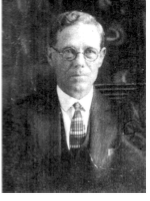
Elder Mark Bennett's Letter (1844)

I continue to find more information and writings by Elder Mark Bennett, the first editor of "The Primitive Baptist," and one who twice debated Elder Grigg Thompson, after he saw the errors of the Hardshells. The following is a letter published in The Biblical Recorder to Thomas Meredith*. The letter can be seen (HERE). Highlighting is mine.

*Rev. Thomas Meredith was beyond question the ablest man who has yet appeared among the Baptists of North Carolina, and as the founder, and for nineteen years the editor, of the Biblical Recorder, probably did more to develop the denomination than any man who has ever lived in the State. Mr. Meredith was born in Pennsylvania in 1797; came to North Carolina as pastor of the Newbern church in 1820; removed to Georgia in 1822; settled as pastor in Edenton, N. C., in 1825; originated the Baptist Interpreter in 1832, which was changed to the Biblical Recorder in 1834; removed to Newbern in 1835, and was pastor as well as editor till 1838, when he removed to Raleigh, and taught a female school in connection with editorial labors.


Mr. Meredith was the author of the constitution of the North Carolina Baptist State Convention, and of the masterly address of that body when organized in 1830. He was elected a Professor of Mathematics in Wake Forest College in 1835, but did not accept the position. He died in Raleigh in 1851. As an editor, he was the equal of any man in the United States in his day. (see here)

Dear Brother Meredith:

It is known to many in various parts of our country, that, a few years ago, I was standing in the front rank of opposition to the plans designed for the spread of the gospel, and for the improvement of the moral, intellectual, and physical condition of mankind. It is likewise known to a number of that many, that I now am considered a warm friend to those plans. And having had it suggested to me by President Wait of Wake Forest College that it would probably be productive of good to lay before the public through the Recorder, the reasons which have brought about this change in my views; and as it may be gratifying to others as well as brother Wait, and, under providence, may result in adding a little strength to the cause which is deemed so well worthy of all the aid it can receive, I proceed to give them in detail.

I will begin with naming the causes which led me to a patient examination of the mission question.

In the summer of 1835, I was consulted by bro. Joshua Lawrence, to know whether I would edit a religious news paper, to be printed in Tarborough, N.C. I consented to do so; but not until I had stated to Elder L. that I should claim the full exercise of editorial discretion; that, whatever I should judge adapted to promote the Old School cause and the cause of truth generally, might be published, but all else I should suppress: that, if necessary, I should trim the communications of our correspondents; and I should not hesitate to apply the pruning knife to his writings, sooner than to any other's. This course appeared at the time to receive his cordial approbation. But first acts of elision upon his writings met with complaints from him and censures against the editor.

Early in the third volume of the Prim. Bap. we published Elder L's "Baptist Associations proved from Scripture." Shortly thereafter we received a communication, in which the writer proposed to show the insufficiency of Elder L's proofs. I was about to publish the communication, when Elder L. expressed his high displeasure thereat, pronounced the correspondent unworthy of his confidence as an Old School baptist; and used language which strongly questioned the fidelity of the editor.

Towards the close of that volume, Elder L. gave us his first two articles on "The two seeds." In the front of the fourth volume, stands his second. The sentiments contained in those two articles met a dissent in and some strictures from "The Signs of the Times." For this, he denied the editor of the "Signs" an identity with Old S. Baptists, and rejected him from their confidence.

These things led me to regard with a more inquisitive eye, the prevailing spirit of our correspondents. And, although I had, in the first vol. first num. Prim. Bap. requested all writers for the paper "to abstain from abuse and ridicule of every kind; as ill comporting with the design of this (Prim. Bap.) paper; and although it was proclaiming in the very introduction that the Prim. Baap. was "principally intended to defend the Old School United Baptists from the many aspersions cast upon them by deluded persons professing their own faith;" and, although I was to sit out with the universal and impartial pruning knife; yet, borne along by the strong current of opposite views and sentiments, I had at length unintentionally and unexpectedly found myself at the head; (or rather at the foot,) of a paper which was celebrated for assailing and abusing other principles and other men.

I felt the awkwardness of my situation, and that of the denomination to which I belonged.--To a discerning public we must have appeared in the outset, either to have been wanting in purpose, or else in firmness to carry it out. I still thought, however, that my brethren aimed well, and were injudicious and indiscreet only in their mode of opposition. But I could not resist the force of this truth, that good aims cannot justify unlawful means.

These facts, added to those named in my valedictory, fixed my determination to be no longer editor, after the 3d vol. was closed. They led me also to examine more closely into the state of our Ministry. The result of this investigation was, a conviction that we had departed in several important points from gospel ground. As the correspondents of the Prim. were unwilling to be contradicted, and to have their opinions thoroughly investigated, under the pretext that all controversy with each other must be avoided, so the ministry. If one of our ministers contradicted or differed with us, we straight regarded him with jealousy and suspicion. What we ourselves said in opposition to other denominations we viewed in the light of sacred duty; what others said against us, we did not hesitate to pronounce persecution.

That spirit that first infected the Hardshells is still present in today's Hardshells. Many things have changed with them in doctrine and practice, but this spirit is the same. We have had to test that spirit many times. Bennett says that the first "correspondents of the Prim. were unwilling to be contradicted, and to have their opinions thoroughly investigated." Still true today!

From this impression, we went a step further. We attached increased importance to faith or belief, and less to works; until almost all practical religion or good works seemed to us like self righteousness. We became afraid to preach up and insist upon practical piety; and our discourses or sermons became almost exclusively doctrinal.

This is still true today of the Hardshells, except now they even decry "belief" as well as works!

This step was followed by another. Those who attached great importance to works, and preached their necessity, were thought by us to be false professors and self righteous hypocrites.

And one of the tactics of these Antinomian and Hyper Calvinist Hardshell "ultraists" was to call any such preaching "Arminianism"!

We stopped not here. We opened an offensive warfare upon all other denominations, and that from the pulpit, which was cried to such length that half our sermons, many a time, was taken up in censuring them. A censorious spirit by this means pervaded our whole sect. And when all the rest, of course, condemned such a practice, we exclaimed that all other denominations were opposed to the O.S. Baptists. We claimed their objections as evidence of our orthodoxy. We published from the pulpit that all christendom was against us, in order to enlist public sympathy.

Whew! How true still! A "censorious spirit"! Yes, indeed. "Pervaded the whole sect."

From being always doctrinal in our preaching, we came to dwell almost entirely on the decrees of God. The believing of election was made indispensable to salvation. If a professor did not believe in that doctrine we did not scruple to dispute his gracious state. We preached it to the impenitent and unbelieving in the same manner as if their salvation depended on believing in that single point. We often appeared to preach it of spite, telling the people we did not care whether they believed it or not. It was the truth and help themselves if they could.

How revealing are these words from such an important witness!

As if we had not gone far enough yet, we tacitly contended for perfection in our ministry.--It was declared as our belief, that God never sent a man to preach the truth, and then sent another to contradict him: that any who contradicted the truth was not sent of God. The consequences of which is, man must be perfect in doctrine, or not divinely sent.

We strongly intimated that, we preached by inspiration. Our objections were pointed and strong not only against reading sermon, but also against notes to assist the memory in preaching. We did not wish our congregations to think we had meditated upon our subjects; nor that we preached by chance. And as there is but one more way, that of inspiration, we must have left them to infer that we preached in that way--Hence it was common to say we would preach just such texts as God gave us, and no other. We wished to impress men with the belief that, learned ministers preach from their knowledge of books; but we had a surer guide.

I have written about the Hardshell idea about what constitutes blessed preaching! "We strongly intimated that, we preached by inspiration." Is that not the thinking of cult leaders?

Finding the Ministry in this condition, I was naturally led to inquire more patiently into that of the church. The latter I found to be as deplorable as the former. Long accustomed to hear works ridiculed, she had become afraid of them, lest she should be liable to the charge of being hypocritical. She thus had a fair opportunity of indulging in sloth, lukewarmness, sleep, and every thing else, that shrinks from the cross.

She had not been reproved for unevenness, nor admonished for disobedience, until she would not bear reproof nor admonition. She would not tolerate a Minister who would describe her true state to her. She was prepared to hear him speak only of her purity, her orthodoxy, and stedfastness.

She had not been reminded of the unhallowed passions, tempers, and desires, which rage within and war against faithfulness and piety, until she had almost forgotten to expect their attack, or to search within for them. This maxim seems to have obtained in her: Sound in belief, sound in christianity.

Hearing her watchmen all the time crying the alarm of remote danger,--from Arminians, from missionaries, etc., she forgot to watch at home. By having her attention so long diverted from herself, and by the consequent neglect of the culture of the heart, appetite and passion gained a dangerous ascendant and hurtful influence over her. The churches were prayerless, negligent and indifferent. Virtue, knowledge, temperance, patience, brotherly kindness, godliness, charity, were daily slighted; worldly-mindedness, coldness, and covetousness prevailed; little communion and fellowship of the spirit, little enjoyment in fellowship with the Father and with his Son Jesus Christ, was felt or sought. They saw their condition was bad yet did not consider it their duty to attempt to alter it.

Among other vices, intemperance in the use of ardent spirits held a powerful sway. There were few churches in my knowledge but that were infested with this evil. And what was worse, where members of the churches had from long habit, nearly or quite lost the power of governing themselves, and needed a brotherly hand gently to draw them back, they were still encouraged and incited both by the example and arguments of their ministers. We were become a reproach and a byword to the world. Mine eye affected my heart; and I mourned for Zion.

I believed something must be done,--and should be done; and I determined to act though I should act alone. In 1840, my Association, the Contentnea, requested me to write a circular letter to attach to her minutes for 1841. In discharging this duty, I wrote on practical piety, and dwelt at some length on temperance. This circular advocated a total abstinence in all cases, provided spirits might be used as a medicine only. The circular passed and was printed, but proved to be very unsatisfactory to the churches, and the next circular was naturally designed as an answer, and warmly advocated the use of spirituous liquors. It was, however, rejected by the examining committee, and was not printed. Subsequently to this, a word was carefully mingled with pulpit discourses to justify and encourage the use.

I determined to make one more effort, though it should cost me the loss of fellowship--but I hoped I should not lose that. I could not help persuading myself that I could approach my brethren in so humble and affectionate a manner as not to incur their displeasure, if I did not gain their approbation. I therefore wrote and had published at a cost of $25, "An Essay on the use of spirituous liquors, etc," and distributed gratuitously.

It is true, I was afraid I should lose my brethren. I knew the rage of appetite when upheld by the power of habit. I knew also the deep and abiding prejudice against Temperance Societies; and jealousy which was constantly awake would be apt to identify the present movement with that Society. Notwithstanding all this, I still hoped to gain them. I thought they were compelled to see and consider the universal mischiefs of drunkenness; and that they would yield to the fact that all abstaining person testify to the unprofitableness and danger of the habit of dram drinking. Thus I hoped on, and wrote on.

Oh the courage and love of brother Mark Bennett! So many others, thankfully, followed him in later years and left this cult, praising God for their deliverance.

The pamphlet, it is hoped, did much good. But the power of habit over that of resolution, soon evinced the necessity of a pledge; and warmly recommended to my reason, my approbation, and my active aid, the Temperance Society. Where the man is immersed in weaker than infant imbecility, and decision has long lost all its tone in him; where he possesses no resistance against invitation, no remedy against derision; the pledge, the stake of his honor, his veracity, his reputation, comes to his relief.

Thus the uncomfortable and relaxed state of our Ministry, and of our churches, weakened in my mind, the claims of our opposition; and my reflections on the necessity and benefits of the temperance cause, led me to question the righteousness of our cause, and to admit the question of Missions to a candid hearing; when I reason with myself in the following manner:

Is it right, or is it wrong, for other nations, and the destitute parts of our own country, to hear the gospel and read the Bible?

I could not say it is wrong. For though the light of the gospel may be now extinct in many places where once it shone, yet we have nothing to show that it shall not be rekindled in the same places. Indeed we are assured it shall be the case to some extent: for Jerusalem, whose house is now left desolate, shall yet say, blessed is he that cometh in the name of the Lord. And yet if I should decided that it is right, I saw plainly I should lose considerable, if not the whole ground I occupied. Recollecting we had all along admitted it to be right, and seeing no cause to dispute it now, unless it was impliedly prohibited in the commission, go ye into all the world, etc.; or rather in the fulfillment of this commission, I turned o examine it after this method:

Was the commission carried out to its full extent during the day of inspiration, or during the Apostle's life-time, or not?

If it was, then under what authority does any man now preach? If that commission ceased with the Apostles, then we have no right or authority to preach under it. But if the obligation of that charge rests in all its force upon us, then is the space still defined into all the world. I answered, it is right, and proceeded to consider,

Will other nations ever receive the gospel in any way, except, either through miracles, or by the reading of the Bible and preaching?

It is not expected they will receive it through any miraculous means. For miracles, though they began the present dispensation, have long ago ceased, (unless we regard conversion as a miracle, but no one who understands the use of words will confound that term with miracles.) Again, if miracles were to precede the gospel, or accompany it to every nation, they would have come with it to America. The gospel, then, must go through the Bible and preaching. This is the only way in which it has spread for eighteen hundred years. The gospel dispensation, therefore, is going on without miracle or inspired men. It spreads its limits to all nations, and stretches out its duration always even to the end of the world. But,

The scriptures are silent, except they answer, Go. In vain shall we expect them to to specify that it is now God's time for America, but not for Asia and Africa. In vain shall we search for the passage that tells us the difference between his time for North Carolina and for Burmah. The gospel dispensation right in every candid ear, and sinks to every honest heart, Behold NOW is the accepted time; behold NOW is the day of salvation. Moreover, I felt it incumbent upon us who denied its being God's time to tell the people when it would be God's time, and how they might know it.--Lastly,

Are the plans now operated for spreading the gospel, justifiable means according to the scriptures?

If the gospel were to spread by miracles only, then were the missionary Institutions unjustifiable. They would then be substituting human agency for divine. But it is to be spread by simple methods and human instrumentalities; as it is to go by printing and reading; by walking, riding, and sailing by eating, drinking, and praying; by crossing rivers, mountains, seas and lakes; by buying food and raiment, and means for travelling; by singing, praying, preaching, and hearing; by building meeting houses, and buying ground for that purpose; by communicating to him that teacheth in all good thinks; by allowing the minister of the gospel a living, and giving the laborer his hire; and seeing that these means were in requisition in apostolic times, they are not only justifiable but commendable; nay, more, they are obligatory. I yielded my hearty assent to missions, as heaven's instruments, and ceased my opposition

As an historian, and so that more information like this may continue to fill this blog's archives, I am happy to share this and like material with our readers, and with all whom the sovereign, Lord God, may direct to read it.

Sunday, April 21, 2019

"When Old, He Will Not Depart"?

"Train up a child in the way he should go: and when he is old, he will not depart from it." (Prov. 22: 6)

Does this scripture have anything to say on the debate over whether converted people can live a Christian life and die in a worse state, spiritually or morally speaking, than when they first became Christians?

Passive Conversion

"I waited patiently for the Lord; and he inclined unto me, and heard my cry. He brought me up also out of an horrible pit, out of the miry clay, and set my feet upon a rock, and established my goings. And he hath put a new song in my mouth, even praise unto our God: many shall see it, and fear, and shall trust in the Lord." (Psa. 40: 1-3 KJV)

This passage has been a favorite with Christians, including our Hardshell brothers. Many times this passage has been quoted by preachers in the midst of emotional discourse and emphasized how this was the experience of sinners when they are saved, when they are regenerated or converted.

Clearly the text describes a conscious conversion experience. It is not describing a secret sub conscious Hardshell "regeneration." Notice how the language of what God does for the penitent when he cries to the Lord, making God his trust, is in the passive voice. He did such and such. I was passive in this work. He brought me up out of the quicksand wherein I was sinking in sin. He set my feet upon a rock, even the rock of scripture, upon the Lord Jesus Christ. He established my goings in converting my heart. He put a new song in my mouth when he converted me and assured me of my salvation.

Recall the last posting where brother Jason Brown and I agreed that conversion is as much the work of God as is regeneration.