Here is what Elder Sylvester Hassell had to say about Daniel Parker:
"Eld. Daniel Parker seems to me to give up his whole system when, in his "Supplement," he says, on the third page, that "sin is the serpent's seed;" and, on the eleventh page, that "the eternal condemnation of the lost will not be because they were of the serpent's seed, or non-elect, but because of their sin against God in His divine law and their unbelief in Christ;" and, on the thirteenth page, that "the Baptist doctrine of salvation by the sovereign distinguishing grace of God stands completely established by the authority of the word of God, as well as by Christian experience, independent of his own views as to the origin of the two seeds." When the author of this system makes these broad confessions, how can a single one of his followers hesitate to abandon forever this worthless human invention--this heathen corruption of the gospel that has, for sixty years, poisoned, hardened, chilled, confused, and divided the Church of God?"
("Interpreting the Scriptures-The Error of Eternal Vital Unionism" - The Gospel Messenger—September, 1894
(see here)
What this citation helps to prove is the fact that though Parker opposed mission and evangelistic methods of those who were called "missionary" Baptists, he nevertheless did not deny that those who rejected the Gospel would be eternally lost. "eternal condemnation" for "their unbelief in Christ." Further, his belief in "two seedism" did not cause him to deny that faith in Christ was essential for being eternally saved, for he knew that such a view would not be in line with "the Baptist doctrine of salvation."
Further, today's Hardshells want people to know that "two seedism" was a temporary problem in the early stages of their formation as a denomination, but notice that Hassell says that the heresy of two seedism "has, for sixty years, poisoned, hardened, chilled, confused, and divided the Church of God." Further, other Hardshells in the 1870s and 1880s were writing against two seedism, so it was still being battled.
Wednesday, October 14, 2015


Saturday, October 10, 2015
Pyles and Oliphant on God Failing
Both Hardshell founding father, Elder J. H. Oliphant, and neo Hardshell Elder Sonny Pyles, both teach that it is okay to believe that God's will for his elect to experience conversion (time salvation) or to persevere, fails, but it is not okay to believe that God's will for his elect to experience eternal salvation fails.
In my classic rebuttal of Elder Pyle's' sermon "Will All The Elect Hear The Gospel?", I reviewed Pyle's' remark on Jesus' words "I would, but you would not" (see here). Here is what I there wrote:
Argument # 6 (Matthew 23: 37-39)
"O Jerusalem, Jerusalem, thou that killest the prophets, and stonest them which are sent unto thee, how often would I have gathered thy children together, even as a hen gathereth her chickens under her wings, and ye would not! Behold, your house is left unto you desolate. For I say unto you, Ye shall not see me henceforth, till ye shall say, Blessed is he that cometh in the name of the Lord."
He says that Christ, in Matthew 23, is "speaking to leaders who are to receive woe, woe, woe." He then goes into affirming that the word "kingdom of heaven" means "where heaven rules" and that there are various "aspects" to the term, saying that sometimes it refers to the "kingdom in your heart" or to the "Old Baptists." He says - "If you try to make this kingdom eternal heaven, you are headed for disaster."
Notice how Sonny has a problem with someone believing that God's eternal purpose to eternally save his elect will fail but not a problem with believing that God's purpose to save his people in conversion and perseverance will fail, and that the former is heresy but the latter is sound doctrine.
He says that "if anyone believes that the 'gathering' is in an eternal sense, then you are forced with the monstrosity that human beings, down here on earth, can prevent the Lord from gathering his people into the heavenly fold."
Again, God's failing to eternally save his elect is a monstrous heresy but God's failing in bringing his people into his visible kingdom on earth is sound doctrine.
In "Perseverance of the Saints" (Chapter 5)
Written by J.H. Oliphant (see here)
"It is said of him, "The Lord of hosts has sworn, saying, surely as I have thought, so shall it come to pass; as I have purposed, so shall it stand." Isaiah, xiv: 24. Reader, did God ever think he would save any one and yet that one fail of salvation? 27th verse, "For the Lord of hosts hath purposed; who shall disannul it? And his hand is stretched out and who shall turn it back?"
If God’s hand is stretched out to save his people, is it not wicked to contend that his hand can be turned back? "Known unto God are all his works from the beginning." Acts, xv.18, "We are his workmanship, created in Christ Jesus unto good works." The work, then, of conversion is God’s work, and not the work of chance or accident; it is one of the works, which he does according to his purpose. "Having predestinated us unto the adoption of sons." So that our being sons is the result, not of chance or human appointment or agency, but of predestination of God.
Our regeneration is an inheritance, which we have, not for our works, but as the end of God’s purpose. "In whom also we have obtained an inheritance, being predestinated according to the purpose of him who worketh all things after the counsel of his own will."
So this eternal purpose, counsel, will, is that all given to Christ shall be saved; and "Thou shall call his name Jesus, for he shall save his people from their sins." Will he fail? Will God’s eternal purpose be defeated, and his will unexecuted?
Now, does God’s faithfulness to his Son demand that his children, redeemed by his blood, shall be saved? Unquestionably it does. He will not suffer it to fail, and...From what we have seen, the salvation of God’s people depends on the success of Christ as the surety of the better testament, and as he can not fail, the salvation of all his people is certain."
Conclusions?
1. It is not God's will for his people to be saved in time from their sins, including their impenitent and unbelieving heart.
2. It is not God's will that his people persevere in the Christian faith, grow in grace, and in sanctification, etc.
3. Or, it was God's will for his people to be saved in time, and to persevere, etc., but he has failed.
In my classic rebuttal of Elder Pyle's' sermon "Will All The Elect Hear The Gospel?", I reviewed Pyle's' remark on Jesus' words "I would, but you would not" (see here). Here is what I there wrote:
Argument # 6 (Matthew 23: 37-39)
"O Jerusalem, Jerusalem, thou that killest the prophets, and stonest them which are sent unto thee, how often would I have gathered thy children together, even as a hen gathereth her chickens under her wings, and ye would not! Behold, your house is left unto you desolate. For I say unto you, Ye shall not see me henceforth, till ye shall say, Blessed is he that cometh in the name of the Lord."
He says that Christ, in Matthew 23, is "speaking to leaders who are to receive woe, woe, woe." He then goes into affirming that the word "kingdom of heaven" means "where heaven rules" and that there are various "aspects" to the term, saying that sometimes it refers to the "kingdom in your heart" or to the "Old Baptists." He says - "If you try to make this kingdom eternal heaven, you are headed for disaster."
Notice how Sonny has a problem with someone believing that God's eternal purpose to eternally save his elect will fail but not a problem with believing that God's purpose to save his people in conversion and perseverance will fail, and that the former is heresy but the latter is sound doctrine.
He says that "if anyone believes that the 'gathering' is in an eternal sense, then you are forced with the monstrosity that human beings, down here on earth, can prevent the Lord from gathering his people into the heavenly fold."
Again, God's failing to eternally save his elect is a monstrous heresy but God's failing in bringing his people into his visible kingdom on earth is sound doctrine.
In "Perseverance of the Saints" (Chapter 5)
Written by J.H. Oliphant (see here)
"It is said of him, "The Lord of hosts has sworn, saying, surely as I have thought, so shall it come to pass; as I have purposed, so shall it stand." Isaiah, xiv: 24. Reader, did God ever think he would save any one and yet that one fail of salvation? 27th verse, "For the Lord of hosts hath purposed; who shall disannul it? And his hand is stretched out and who shall turn it back?"
If God’s hand is stretched out to save his people, is it not wicked to contend that his hand can be turned back? "Known unto God are all his works from the beginning." Acts, xv.18, "We are his workmanship, created in Christ Jesus unto good works." The work, then, of conversion is God’s work, and not the work of chance or accident; it is one of the works, which he does according to his purpose. "Having predestinated us unto the adoption of sons." So that our being sons is the result, not of chance or human appointment or agency, but of predestination of God.
Our regeneration is an inheritance, which we have, not for our works, but as the end of God’s purpose. "In whom also we have obtained an inheritance, being predestinated according to the purpose of him who worketh all things after the counsel of his own will."
So this eternal purpose, counsel, will, is that all given to Christ shall be saved; and "Thou shall call his name Jesus, for he shall save his people from their sins." Will he fail? Will God’s eternal purpose be defeated, and his will unexecuted?
Now, does God’s faithfulness to his Son demand that his children, redeemed by his blood, shall be saved? Unquestionably it does. He will not suffer it to fail, and...From what we have seen, the salvation of God’s people depends on the success of Christ as the surety of the better testament, and as he can not fail, the salvation of all his people is certain."
Conclusions?
1. It is not God's will for his people to be saved in time from their sins, including their impenitent and unbelieving heart.
2. It is not God's will that his people persevere in the Christian faith, grow in grace, and in sanctification, etc.
3. Or, it was God's will for his people to be saved in time, and to persevere, etc., but he has failed.
Monday, October 5, 2015
Was Elder John Clark a neo Hardshell?
In "PRIMITIVE BAPTIST HISTORY WITHIN," Compiled by Hoyt D. F. Sparks (see here)
(November 12, 2008), Sparks makes available Elder John Clark's (editor of "Zion's Advocate") writing "EXPOSURE OF HERESIES PROPAGATED BY SOME OLD SCHOOL BAPTISTS.” (see here) In this work Elder Clark documents many of the doctrinal issues dividing the "Beebe" faction from the "Clark" faction. In this book Elder Clark makes it clear that he believed in the means position, the position of the first generation of Hardshells, the view espoused by Elder John Watson, Clark's friend, in his book "The Old Baptist Test." In former postings I have documented Clark's belief in Gospel means. For example see here.
In this posting I want to present further evidence of the doctrinal views of Clark on this subject.
Clark wrote (chapter six):
"In this chapter the doctrine of regeneration is considered doctrinally and experimentally, and proven to be the work of God."
"...to please Him we must be born of the Spirit – born again, not of corruptible seed, but of incorruptible, by the word of God, which liveth and abideth forever (1 Peter 1:23). In this change, the faith, without which we cannot please God, is given, which is the fruit of the Spirit, and the victory that overcomes the world; and hence those who have faith are not in the flesh, but in the Spirit, for “Whosoever believeth that Jesus is the Christ, is born of God.” (1 John 1.)
The people of God were in Christ before the world was, according to that choice, and they are in him in time by faith – become children of God by faith in Christ; and hence, some are in Christ, in this sense, before others, as the apostle stated on a particular occasion. (Rom. 16:7.)"
How does Clark define "faith"? Like today's Hardshells? Notice how he defines it as connected with believing that Jesus is the Christ. And, he says, like Abraham Booth, that people are children of God "by faith." This is how they come to be "in Christ."
(November 12, 2008), Sparks makes available Elder John Clark's (editor of "Zion's Advocate") writing "EXPOSURE OF HERESIES PROPAGATED BY SOME OLD SCHOOL BAPTISTS.” (see here) In this work Elder Clark documents many of the doctrinal issues dividing the "Beebe" faction from the "Clark" faction. In this book Elder Clark makes it clear that he believed in the means position, the position of the first generation of Hardshells, the view espoused by Elder John Watson, Clark's friend, in his book "The Old Baptist Test." In former postings I have documented Clark's belief in Gospel means. For example see here.
In this posting I want to present further evidence of the doctrinal views of Clark on this subject.
Clark wrote (chapter six):
"In this chapter the doctrine of regeneration is considered doctrinally and experimentally, and proven to be the work of God."
"...to please Him we must be born of the Spirit – born again, not of corruptible seed, but of incorruptible, by the word of God, which liveth and abideth forever (1 Peter 1:23). In this change, the faith, without which we cannot please God, is given, which is the fruit of the Spirit, and the victory that overcomes the world; and hence those who have faith are not in the flesh, but in the Spirit, for “Whosoever believeth that Jesus is the Christ, is born of God.” (1 John 1.)
The people of God were in Christ before the world was, according to that choice, and they are in him in time by faith – become children of God by faith in Christ; and hence, some are in Christ, in this sense, before others, as the apostle stated on a particular occasion. (Rom. 16:7.)"
How does Clark define "faith"? Like today's Hardshells? Notice how he defines it as connected with believing that Jesus is the Christ. And, he says, like Abraham Booth, that people are children of God "by faith." This is how they come to be "in Christ."
Tuesday, September 8, 2015
Elder John Culpepper
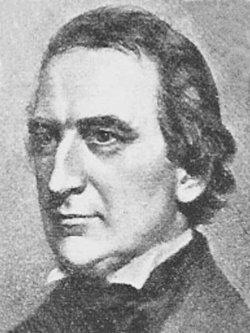
1765 - 1841
"According to Elder Culpepper's History of The Pee Dee Association, Bear Creek Church hosted the session in 1825 but no minutes were available. Meadow Creek and Bear Creek were probably part of the Sandy Creek Association before 1816. Meadow Creek Primitive Baptist Church is a charter member of the Original Bear Creek Association of Churches. Five churches met at Bear Creek Church in November of 1832 and established the Bear Creek Association. They were: Bear Creek, Cold Water, Freedom, Meadow Creek, and Piney Woods.
In 1758, the church at Sandy Creek extended an arm to Little River Church in Montgomery County. Little River grew from 8 members to 500 members in three years. In 1760, Little River Church extended an arm to Meadow Creek.
Elder John Culpepper (The Church’s first official Pastor) It is believed that Elder Culpepper served in the American Revolutionary War. He later served three terms in the United States House of Representatives."
In previous postings I have shown where the Bear Creek Association originally believed in Gospel means. Meadow Creek Church is one of the oldest in the association.
Hardshells want us to believe that their forefathers did not believe in Gospel means, but clearly Elder and Congressman John Culpepper, a leader in the Sandy Creek Association, was a believer in the Gospel means position. Today's Hardshells are not primitive in their beliefs.
"The following is a letter from the Rev. Mr. Culpepper, of North Carolina, to James Yarbrough, of Alabama, Marengo County, who has had the pastoral care of Mount Pleasant Church, in the Flat settlement, for a number of years; but has recently rent himself from her, declaring non-fellowship with all benevolent institutions of the day."
Elder John Culpepper
Beverly, July 5, 1838
Dear Brother:
"I have the pleasure of informing you, that I and my friends in these regions are generally well. My children are scattered to different states: Benjamin, the eldest, is in Tennessee, on the Fork Deer River; he has a wife and seven or eight children, and is said to be doing well. --Nancy is a widow, with five children, and has removed to Sumter county, near you. John is living in Malborough District, South Carolina, and has six children he spends nearly all his time in preaching, and is considered a useful preacher. E.A. Culpeper, I am informed, went to Texas, and returned to Louisiana and has settled himself.
We have had good times in Anson, for several years. The Baptists have increased two or three hundred fold; they have ten framed Meeting Houses in Anson, and have moved on in great love and harmony, until of late; but an unfortunate division has taken place -- perhaps one fifth of the Baptists in North Carolina, have broken off from the rest, and will have no fellowship with any who hold with the Bible Society, Missionary Society, Sabbath School, or Temperance Society". This division, like the "East wind", has blasted some of our prospects. Few have joined them of late. The Bear Creek Association, in Montgomery, Anson, Rowan and Cabarrus, has ten churches. They have baptized but one person in the last year, and that was a negro woman, who lived and professed to have got religion near the Brown Creek Meeting House amongst us. They are really like Pharoah's [sic] lean kine, and come "thin and blasted with the East wind." -- All the old preachers you know in the country and most of the young intelligent young ones, are on the Missionary or effort side, and your brother, William A. Morris, is amongst them. He and myself have a Temperance meeting yesterday at Brown Creek Meeting House; we had ninety members before, and seven joined yesterday, and I hope the cause of God and good morals are gaining though iniquity abounds, and the love of some is waxing cold.
We hear that a division has taken place among you, and it is reported that you are on the Anti-Missionary side. I desire to hope that it is not so, but hear that it is. I now desire to call your attention to a few facts. In 1790 or '92 a few Baptist preachers, John Rippon, John Ryland, Samuel Pearce, Andrew Fuller, and others in England, set apart the first Monday evening in every month as a time of special prayer to God, to revive religion in their own souls and in the Churches, and send the Gospel to the Heathen. In June 1793, they sent out John Thomas and William Carey to Hindostan, to preach to the Hindoos; and others have since followed and joined them. Claudius Buchanan, a young disciple of John Newton's and a preacher in the Church of England some years, went chaplain to the Indies; he there became acquainted with out Baptist brethren, and caught the Missionary flame, and travelled extensively in that country, and then returned to England, and preached and published his "Star in the East".
A few young Prebyterians or Congregationalists, in New England, read his "Star in the East", and caught the same flame, (call it wild-fire, or what you please), and in 1812, A. Judson, Samuel Newel, S. Hall, S. Nott, and Luther Rice, sailed for the Indies. Two of them, A. Judson, and Luther Rice, became Baptists. Judson and his wife traveled to Burmah [sic], and Rice returned to American [sic] and travelled and spread the news; and in 1814, the Baptists met in Philadelphia to the number of perhaps thirty, including Baldwin, Furman, Staughton, and others, (more than two-thirds of whom are gone to reap their reward.) and formed a Missionary Society, and "The Baptist Board of Foreign Missions"; and have been from then till now sending out preachers and raising money to support them. In 1815, the Sandy Creek Association, the oldest in the State, and the third in the Union -- Philadelphia being the first and Charleston the second, and we the third; appointed Robert T. Daniel, corresponding Secretary to the Baptist Board of foreign Missions; John Culpeper, Messenger to the general meeting. In 1816, the newly formed Pee Dee Association adopted the same course and appointed J. Culpeper Corresponding Secretary to the Baptist Board of Foreign Missions, and Messenger to the general meeting. I have been travelling agent for the board some few years, and am well acquainted with the progress of the Missionary cause.
I, last April, went to Philadelphia, when nearly four hundred Baptists met and formed a bible Society. I am now old, and have spent the present year almost entirely in Anson. Our English and American brethren have sent out preachers to Hindoston, to Burmah, and elsewhere, and they have translated the Scriptures into about thirty languages, and they are now printing and circulating the Scriptures in many languages and preaching the Gospel amongst the Hindoos, Burmans, Chinese, Carens, Siamese and in many other nations in Europe, Asia, Africa, and America, and preachers are going to and fro. The use of Missionaries to do the work formerly done by land, require [sic] much time to spend in travelling and preaching, and abandoning the use of ardent spirits, enabled to raise money and spread the Gospel. The Missionary Baptists in America, raise the last year, for printing and distributing the Bible, $35,714.66; for Foreign Missions, more than $63,000; for Home Missions, more than $15,000; for Tracts, more than $10,000, and large sums for building Meeting Houses, Schools, and Colleges -- and as we can now travel by railroads, and steam boats, and ships, so rapidly, we hope the time is near "when the earth shall be filled with the knowledge of the Lord, as the waters cover the sea." Isa. xi ch. "And from the rising of the sun to the going down of the same, God's name shall be great amongst the gentiles; and when in every place incense shall be offered to his name". Mal. I ch. And now my dear Brother, in view of these things, let me say to you, if through the want of information on these subjects, you and any of your family have honestly opposed these benevolent plans, and thought you were doing God's service, recollect Saul of Tarsus, "Verily, thought he ought to do many things contrary to the name of Jesus". If you are on the Lord's side, persevere (for as much as your labor is not in vain in the Lord), for as sure as God is in heaven and his word is true, so sure the effort Baptists are doing God's work. As I never expect to see you again in time, but shall surely meet you at the bar of God; till then, I bid you an affectionate farewell." (see here)
Not only were the first pastors of the oldest Bear Creek churches believers in Gospel means, but also the first Hardshells who formed the Bear Creek Association (1832) were also believers in Gospel means, though they opposed many mission methods.
Monday, August 31, 2015
The Hardshell God - Unable or Unwilling?
For everything that is God must either be willing or not willing that they
are. As
Jonathan Edwards correctly stated:
“Whether God
has decreed all things that ever came to pass or not, all that own the being of
a God own that he knows all things beforehand. Now, it is self-evident, that if
he knows all things beforehand, he either doth approve of them, or he doth not
approve of them; that is, he either is willing they should be, or he is not willing they should be. But to will that they
should be, is to decree them.”
This is both
biblical and logical. But if God is willing that something should be yet it does not transpire, then the only alternative is that He is not
able to bring it to pass.
With that in
mind let me ask my Conditionalist friends within the “Primitive” Baptists a few
questions, worded in such a way that really exposes what it is they are
affirming when they divorce the subjective experience away from the eternal salvation
of the family of God.
Is God unable or unwilling to bring the gospel to all of His
elect?
Is God unable or unwilling to convert all of His elect?
Is God unable or unwilling to convert “regenerated atheists”?
Is God unable or unwilling to convert “regenerated idolators”?
Is God unable or unwilling to impart evangelical faith to all
of His elect?
Is God unable or unwilling to impart evangelical repentance
to all of His elect?
Is God unable or unwilling that all of His elect come to
know His Son?
Is God unable or unwilling to save all of His elect from
their ignorance?
Is God unable or unwilling to give all of His elect a zeal which
is according to knowledge?
Is God unable or unwilling to experimentally sanctify all of
His elect?
Is God unable or unwilling that all of His elect grow in
grace?
Is God unable or unwilling to convert His elect at the
moment they are regenerated?
Is God unable or unwilling to preserve His elect in
holiness?
Is God unable to unwilling to use instrumentality for His
own glory?
Is God unable or unwilling to ordain all which comes to
pass?
Is God unable or unwilling to save His people from the
practice of sin?
Is God unable or unwilling to grant what He commands?
What say ye?
Tuesday, August 18, 2015
Hardshell Devotionalist ignores Ephesians 1:13
A local Hardshell elder sends out a daily commentary (actually more of a devotional) to an emailing group of which I have remained a part for several years. He has lately spent much time in the glorious first chapter of Ephesians. In the past week he has written on verses 4,5,7,9,11, and 12. Curious as to what thoughts would come from verse 13 my hopes were dashed this morning when out of the blue he forsakes this verse-by-verse approach and jumps to the gospel of John and sends out a devotional from there. Wonder why?
Was this just where his mind was leading him? Possibly. Or was he hesitant to confront it, choosing rather to address another portion of God's Word? Even more possible. Did he find it difficult to place this gospel-means passage in a temporal framework, seeing that all verses before and after pertain to eternal salvation? If he did see that eternal salvation was established by the context did he see that it was hard to relegate the sinners' activity therein mentioned to the subconscious level?
Yeah, that hardshell hermeneutic ain't workin' too well here!
It certainly does present a challenge!
Was this just where his mind was leading him? Possibly. Or was he hesitant to confront it, choosing rather to address another portion of God's Word? Even more possible. Did he find it difficult to place this gospel-means passage in a temporal framework, seeing that all verses before and after pertain to eternal salvation? If he did see that eternal salvation was established by the context did he see that it was hard to relegate the sinners' activity therein mentioned to the subconscious level?
Yeah, that hardshell hermeneutic ain't workin' too well here!
It certainly does present a challenge!
Elder Preslar on Two Seedism
In previous writings I have referred to Elder Hosea Preslar who was first of North Carolina (Bear Creek Association) in its early days and later a resident of middle Tennessee and friend of Elder (Dr.) John M. Watson. For instance see my posting "Elder Hosea Preslar & Watson" (see here).
I showed that Elder Preslar believed the Gospel means position, which was the original position of the first generation of Hardshell leaders, including the Bear Creek. Both Elders Watson and Preslar show that the "no means" view of spiritual birth was one of the foundational principles of Daniel Parker's "Two-Seedism."
Today's Hardshells tell their members things about their history that are outright falsehoods (which any serious student of Baptist history will soon discover). When beginning students of Hardshell history ask their Hardshell "historians" about Daniel Parker and his view on the "two seeds," or what was later called "Parkerism," they are told these things (what we might call their "talking points").
1. Parker was one who rightly opposed the "modern mission system" with all that pertains to that term.
2. His views on the "two seeds" was quickly declared as a heresy by the Hardshells and his followers were few, mainly in Texas.
3. The "Primitive Baptist" not only soon disassociated themselves from Parker and his views on the "two seeds," but had no further difficulty with the teachings of Parker.
4. The "two seed" view had one main error associated with it, and that was of an eternal devil.
5. Another serious error of this faction (sub cult) was their belief that only the elect fell in Adam, and that the souls of the elect were eternally created in Christ (as a seed) and that these eternal souls or spirits enter the human body in "regeneration."
Generally this is the limit that the "talking points" choose to go. Further or deeper investigation into the history or "Parkerism" is discouraged. But, some soon discover, if they persist in their historical studies, that there was more involved in Parker's "two-seedism" than at first meets the eye.
Such further research will discover that Parkerism or two seedism spawned these other doctrinal errors.
1. "Hollow Log" regeneration or "no change" view of regeneration.
2. The denial of a physical resurrection of the bodies of both saint and sinner.
3. A denial that the human nature of Christ was a creature of time, or began its existence when conceived in the womb of the blessed mother, Mary.
4. A denial that conversion to Christ was essential to being regenerated.
5. A denial that the preaching of the Gospel is a means in spiritual birth or for final salvation.
6. A denial that the Gospel is to be preached to all men and that they are to be exhorted to believe the Gospel and repent.
Now, the following form the pen of Elder Preslar will help show these things to be true. Here is what Elder Preslar wrote about his meeting Two Seeders upon his move to Henderson county Tennessee from Anson County North Carolina.
"From that time forth I was persecuted by some of those people, but I thought, perhaps that Divine Providence had sent me to Tennessee to defend the truths of the gospel, with others of like calling; and that we should suffer together for His sake. To speak of all the distress this doctrine caused, within my knowledge, would be too tedious. But for the satisfaction of those that are not acquainted with it, I will endeavor to give the reader a short, but plain sketch of their doctrine, though they, among themselves, seem at times to have it almost every way, any way, and as it were, no way at last. Some call them the "Sadducees," some "Non-Resurrectionists," but mostly the "Two-Seeders." Now if there is any system to their doctrine, or if they preach any system, I understand it to be about as follows:
First: they hold that the foreknowledge of God amounts to a decree, because (say they) it could not be any other way, and therefore denounce the idea that Adam was able to stand, but liable to fall.
Secondly: They hold that the Church of God was in eternal union with Him, (not in purpose, but actually so); and that the church is composed of a family of eternal children, that was in eternal union with God.
Thirdly: That when Adam transgressed the law of his Creator, and fell under its curse, that those eternal children fell in him; but not in the same like sense that the children of the devil fell.
Fourthly: That the devil is a self-existent devil, or wicked spirit, and that, after Adam had transgressed the law of his Creator, the devil and his children, through Eve, began to make their appearance; and from them came another set of children that they call the children of the devil, or the seed of the serpent. And that those wicked children are a wicked spiritual family that dwell in mortal bodies; and are therefore called children of the flesh, and that this wicked generation of children constitute the non-elect; and that those eternal children that were in eternal union with God, constitute the elect of God or the church.
Fifthly: And as they had fallen under the law in Adam, that Christ came and redeemed them back again, and that the Holy Ghost makes manifest this to them in time, and that they are now renewed in the spirit of their mind, that is in the enjoyment of that eternal union they had with God; for (say they), there is nothing the soul receives in time, but a manifestation of what did before exist, not in purpose, for purpose (say they) amounts to nothing, but actually so.
Sixthly: That the gospel never was designed for anything else, but for the edification of the body of Christ, and that believers are the only subjects of gospel address.
Seventhly: That everything must return back again to its origin, and hence, these mortal bodies of ours must return to the dust, and never will be resurrected any more. They contend for (what they call) a spiritual resurrection, and a spiritual body, that was eternally prepared of God for them; and that this was the kind of body that Jesus ascended into heaven with, and not in the one that was born of the Virgin Mary, crucified upon the Roman cross, and laid in the sepulcher; adding that it is none of our business what became of that body.
Eighthly, and lastly: They say that all other doctrine outside, or differing from this, is unsound, is Armianism, etc.
"The above is a correct and concise account of the items or tenets of doctrine, I understand them to hold forth. And as I consider their system to be heresy, and having suffered much, as well as many others on account of it, I here give my reasons in a brief way, hoping that Divine Providence may make it a blessing to His church and people hereafter, for of all the systems of heresy that ever I have encountered with yet, I abhor it the most." (pages 179-80)
"Neither has he told us when or how the devil was made or created, but He has let us know there is a devil, and He has let us know he is a murderer, a liar, and the father of lies, and that he sinned from the beginning, and abode not in the truth; John 8: 44. This much God has been pleased to let us know about the devil. He does not tell us he never was in possession of the truth, but that he abode not in the truth...Then away with the doctrine of an eternal, self-existent devil." (pg. 183-84)
"And as to their views of the use and design of the gospel being for nothing but for the edification of the Church, and believers being the only subjects of gospel address, I believe it not." (Page 186)
"But some object to these ideas and say all this is the work of the spirit of God; and the gospel has nothing to do with it. Ah, a gospel without a spirit! Well, God save me from a gospel that has not His spirit. God says His word is quick and powerful, and He says by Peter, This is the word which by the gospel is preached unto you; I Peter 1: 25. And as to the subjects of Gospel address, it is to every creature the disciples were commanded to preach the gospel; and Paul said, Whom we preach warning every man, and teaching every man, in all wisdom, etc.; Col. 1: 28. So we see that their idea on that point is false as the balance, and we will now give their last, but not least error a passing notice." (pg. 187)
"This is the new man begotten by the word of truth; yea, begotten of God; I John 5: 18." (page 185)
"And as to their views of the use and design of the gospel being for nothing but for the edification of the Church, and believers being the only subjects of gospel address, I believe it not." (Page 186)
He says that the gospel "is moreover to be for a witness unto all nations; Matt. 24: 14; and for the awakening of sinners, who are dead in trespasses and in sin." (page 187)
"...the other is the child of God, that was begotten by the word of truth; James 1: 14; I Cor. 4: 15; I John 5: 1." (Page 112)
"About this time there came to hand a work written by Elder Watson of Nashville, Tenn., entitled The Old Baptist Test, or the Bible Signs of the Lord's People. Well, when I read it, I thanked God and took, as it were, fresh courage, for it contained and explained the very things that we were contending about, and I thought surely my accusers will now yield their ground...So along about this time, perhaps in the year 1858, I visited my old native State (North Carolina) again, and had one more opportunity of preaching to the members at my old association (Bear Creek)...I then made my way to the eastern parts of the State, and had good days among the brethren of the old Kehukee Association." (pgs. 190-91)
"It was not long after my return home before I went to Nashville. My sister having been afflicted in a very serious and critical way...I thought, now perhaps, I shall get to see Dr. Watson, the author of the old Baptist Test, as he is an able physician, as well as a minister of the gospel...I at once found him a plain and loving brother. He took to his house and treated me with all the kindness of a father, and he and Brigs commenced waiting on my sister...I made brother Watson's house my home by his request, and he was a father, as well as a brother to us; he did not only board me free of charge, but bestowed much on me and my sister beside." (pgs. 192-93)
Two Seedism in the Bear Creek?
Preslar wrote about his return trip to North Carolina (80 days) in the Feb. 11, 1860 issue of "The Primitive Baptist" periodical. His letter to the editor, Elder Temples, begins on the front page. Here are some excerpts (see here):
"And while in my mother State, (North Carolina) and in my old section (Anson and Union counties) I met with many that seemed greatly to rejoice at my presence among them: and this being the region of my birth country (of both body and soul) and also in the bounds of my old Association (to wit, Bear Creek), I watched things closely...And although this was one view I took of the case, yet in taking another view, perhaps a large majority of that section are the professed followers of Christ."
"But in the midst of all this confusion, my desire and prayer to God was that the Bear Creek Association might be saved,--saved from the many errors by which she was surrounded, (her well known enemies) And also from some erroneous things or principles, that are now in her midst, or in her ranks, going under the name of "Old Baptist;" but when named by those who are better acquainted with its signs and marks, is the old Two Seed Parkerite heresy."
Today's Hardshells, including the Bear Creek, though they may reject some of Parker's "Two-Seedism," nevertheless hold to its "no means" view. Remnants of Parkerism still remain.
I showed that Elder Preslar believed the Gospel means position, which was the original position of the first generation of Hardshell leaders, including the Bear Creek. Both Elders Watson and Preslar show that the "no means" view of spiritual birth was one of the foundational principles of Daniel Parker's "Two-Seedism."
Today's Hardshells tell their members things about their history that are outright falsehoods (which any serious student of Baptist history will soon discover). When beginning students of Hardshell history ask their Hardshell "historians" about Daniel Parker and his view on the "two seeds," or what was later called "Parkerism," they are told these things (what we might call their "talking points").
1. Parker was one who rightly opposed the "modern mission system" with all that pertains to that term.
2. His views on the "two seeds" was quickly declared as a heresy by the Hardshells and his followers were few, mainly in Texas.
3. The "Primitive Baptist" not only soon disassociated themselves from Parker and his views on the "two seeds," but had no further difficulty with the teachings of Parker.
4. The "two seed" view had one main error associated with it, and that was of an eternal devil.
5. Another serious error of this faction (sub cult) was their belief that only the elect fell in Adam, and that the souls of the elect were eternally created in Christ (as a seed) and that these eternal souls or spirits enter the human body in "regeneration."
Generally this is the limit that the "talking points" choose to go. Further or deeper investigation into the history or "Parkerism" is discouraged. But, some soon discover, if they persist in their historical studies, that there was more involved in Parker's "two-seedism" than at first meets the eye.
Such further research will discover that Parkerism or two seedism spawned these other doctrinal errors.
1. "Hollow Log" regeneration or "no change" view of regeneration.
2. The denial of a physical resurrection of the bodies of both saint and sinner.
3. A denial that the human nature of Christ was a creature of time, or began its existence when conceived in the womb of the blessed mother, Mary.
4. A denial that conversion to Christ was essential to being regenerated.
5. A denial that the preaching of the Gospel is a means in spiritual birth or for final salvation.
6. A denial that the Gospel is to be preached to all men and that they are to be exhorted to believe the Gospel and repent.
Now, the following form the pen of Elder Preslar will help show these things to be true. Here is what Elder Preslar wrote about his meeting Two Seeders upon his move to Henderson county Tennessee from Anson County North Carolina.
"From that time forth I was persecuted by some of those people, but I thought, perhaps that Divine Providence had sent me to Tennessee to defend the truths of the gospel, with others of like calling; and that we should suffer together for His sake. To speak of all the distress this doctrine caused, within my knowledge, would be too tedious. But for the satisfaction of those that are not acquainted with it, I will endeavor to give the reader a short, but plain sketch of their doctrine, though they, among themselves, seem at times to have it almost every way, any way, and as it were, no way at last. Some call them the "Sadducees," some "Non-Resurrectionists," but mostly the "Two-Seeders." Now if there is any system to their doctrine, or if they preach any system, I understand it to be about as follows:
First: they hold that the foreknowledge of God amounts to a decree, because (say they) it could not be any other way, and therefore denounce the idea that Adam was able to stand, but liable to fall.
Secondly: They hold that the Church of God was in eternal union with Him, (not in purpose, but actually so); and that the church is composed of a family of eternal children, that was in eternal union with God.
Thirdly: That when Adam transgressed the law of his Creator, and fell under its curse, that those eternal children fell in him; but not in the same like sense that the children of the devil fell.
Fourthly: That the devil is a self-existent devil, or wicked spirit, and that, after Adam had transgressed the law of his Creator, the devil and his children, through Eve, began to make their appearance; and from them came another set of children that they call the children of the devil, or the seed of the serpent. And that those wicked children are a wicked spiritual family that dwell in mortal bodies; and are therefore called children of the flesh, and that this wicked generation of children constitute the non-elect; and that those eternal children that were in eternal union with God, constitute the elect of God or the church.
Fifthly: And as they had fallen under the law in Adam, that Christ came and redeemed them back again, and that the Holy Ghost makes manifest this to them in time, and that they are now renewed in the spirit of their mind, that is in the enjoyment of that eternal union they had with God; for (say they), there is nothing the soul receives in time, but a manifestation of what did before exist, not in purpose, for purpose (say they) amounts to nothing, but actually so.
Sixthly: That the gospel never was designed for anything else, but for the edification of the body of Christ, and that believers are the only subjects of gospel address.
Seventhly: That everything must return back again to its origin, and hence, these mortal bodies of ours must return to the dust, and never will be resurrected any more. They contend for (what they call) a spiritual resurrection, and a spiritual body, that was eternally prepared of God for them; and that this was the kind of body that Jesus ascended into heaven with, and not in the one that was born of the Virgin Mary, crucified upon the Roman cross, and laid in the sepulcher; adding that it is none of our business what became of that body.
Eighthly, and lastly: They say that all other doctrine outside, or differing from this, is unsound, is Armianism, etc.
"The above is a correct and concise account of the items or tenets of doctrine, I understand them to hold forth. And as I consider their system to be heresy, and having suffered much, as well as many others on account of it, I here give my reasons in a brief way, hoping that Divine Providence may make it a blessing to His church and people hereafter, for of all the systems of heresy that ever I have encountered with yet, I abhor it the most." (pages 179-80)
"Neither has he told us when or how the devil was made or created, but He has let us know there is a devil, and He has let us know he is a murderer, a liar, and the father of lies, and that he sinned from the beginning, and abode not in the truth; John 8: 44. This much God has been pleased to let us know about the devil. He does not tell us he never was in possession of the truth, but that he abode not in the truth...Then away with the doctrine of an eternal, self-existent devil." (pg. 183-84)
"And as to their views of the use and design of the gospel being for nothing but for the edification of the Church, and believers being the only subjects of gospel address, I believe it not." (Page 186)
"But some object to these ideas and say all this is the work of the spirit of God; and the gospel has nothing to do with it. Ah, a gospel without a spirit! Well, God save me from a gospel that has not His spirit. God says His word is quick and powerful, and He says by Peter, This is the word which by the gospel is preached unto you; I Peter 1: 25. And as to the subjects of Gospel address, it is to every creature the disciples were commanded to preach the gospel; and Paul said, Whom we preach warning every man, and teaching every man, in all wisdom, etc.; Col. 1: 28. So we see that their idea on that point is false as the balance, and we will now give their last, but not least error a passing notice." (pg. 187)
"This is the new man begotten by the word of truth; yea, begotten of God; I John 5: 18." (page 185)
"And as to their views of the use and design of the gospel being for nothing but for the edification of the Church, and believers being the only subjects of gospel address, I believe it not." (Page 186)
He says that the gospel "is moreover to be for a witness unto all nations; Matt. 24: 14; and for the awakening of sinners, who are dead in trespasses and in sin." (page 187)
"...the other is the child of God, that was begotten by the word of truth; James 1: 14; I Cor. 4: 15; I John 5: 1." (Page 112)
"About this time there came to hand a work written by Elder Watson of Nashville, Tenn., entitled The Old Baptist Test, or the Bible Signs of the Lord's People. Well, when I read it, I thanked God and took, as it were, fresh courage, for it contained and explained the very things that we were contending about, and I thought surely my accusers will now yield their ground...So along about this time, perhaps in the year 1858, I visited my old native State (North Carolina) again, and had one more opportunity of preaching to the members at my old association (Bear Creek)...I then made my way to the eastern parts of the State, and had good days among the brethren of the old Kehukee Association." (pgs. 190-91)
"It was not long after my return home before I went to Nashville. My sister having been afflicted in a very serious and critical way...I thought, now perhaps, I shall get to see Dr. Watson, the author of the old Baptist Test, as he is an able physician, as well as a minister of the gospel...I at once found him a plain and loving brother. He took to his house and treated me with all the kindness of a father, and he and Brigs commenced waiting on my sister...I made brother Watson's house my home by his request, and he was a father, as well as a brother to us; he did not only board me free of charge, but bestowed much on me and my sister beside." (pgs. 192-93)
Two Seedism in the Bear Creek?
Preslar wrote about his return trip to North Carolina (80 days) in the Feb. 11, 1860 issue of "The Primitive Baptist" periodical. His letter to the editor, Elder Temples, begins on the front page. Here are some excerpts (see here):
"And while in my mother State, (North Carolina) and in my old section (Anson and Union counties) I met with many that seemed greatly to rejoice at my presence among them: and this being the region of my birth country (of both body and soul) and also in the bounds of my old Association (to wit, Bear Creek), I watched things closely...And although this was one view I took of the case, yet in taking another view, perhaps a large majority of that section are the professed followers of Christ."
"But in the midst of all this confusion, my desire and prayer to God was that the Bear Creek Association might be saved,--saved from the many errors by which she was surrounded, (her well known enemies) And also from some erroneous things or principles, that are now in her midst, or in her ranks, going under the name of "Old Baptist;" but when named by those who are better acquainted with its signs and marks, is the old Two Seed Parkerite heresy."
Today's Hardshells, including the Bear Creek, though they may reject some of Parker's "Two-Seedism," nevertheless hold to its "no means" view. Remnants of Parkerism still remain.
Wednesday, August 5, 2015
Tennessee Association Originally Espoused Means
In the previous posting I showed where the Powell's Valley Association of Primitive Baptists as late as 1879 still espoused the Gospel means position, which was the position of most "Primitive" or Hardshell Baptists up till the Civil War and was still the position of many Hardshell churches well into the twentieth century.
Most Hardshells who know most about their history will want their fellow cult members to believe that the anti means view was the view of nearly all Hardshells from 1832 till about 1890 when Elders Pence and Burnam (means side) and Potter (anti means side) butted heads in debate over the issue. Then, these Hardshell "historians" want their fellow Hardshells to believe that the split that resulted from this debate showed 1) that the means view was new among the Hardshells, and 2) that those favoring Pence and Burnam represented an extreme minority. But, the historical facts will not substantiate this Hardshell revision of history.
It can be shown that the rejection of the Gospel means position among the Hardshells was gradual, and occurred mostly during the last quarter of the nineteenth century and the first quarter of the twentieth century. In this posting I will cite from the minutes of the Tennessee Association of Primitive Baptists, but first let me cite this from the web page of today's "Progressive" Primitive Baptist Tennessee Association. (emphasis mine)
"By 1843, the Tennessee Association of Primitive Baptist was comprised of 9 churches in Sevier and Blount Counties, Tennessee. These churches embrace the original twelve “Articles of Faith”, or religious principles, that they had in their beginning with the addition of a thirteenth article that states: We believe that the Church of Jesus Christ should have no organic connection to any society or institution of man not authorized by God’s word. The association grew to include churches in North and South Carolina, as well as Tennessee, which totaled 22 by 1912. It was at the 110th annual session of the Tennessee Association of Primitive Baptist held at the Green Brier Church, Sevier County, that Elder William Brickey addressed the association by letter concerning the topics of: Eternal Two-Seedism, or Parkerism, Absolute Predestinarianism, Eternal Vital-Unionism, and Arminianism. At the 1913 session the association recommended that the churches which comprised the Tennessee Association to say by church act whether they adopt or accept the said advice concerning preaching of repentance to unregenerated sinners. Part of the Tennessee Association split off and joined with the Nolachucky Association and remain with them to this day. The remaining seven churches assumed the name The Original Tennessee Association of Primitive Baptist in 1914."
We are progressive in relation to most Primitive Baptists, we preach repentance to unregenerated sinners, have Sunday school, attend worship service weekly, have a mid-week service, and support footwashing meetings and revivals in each church."
When I was traveling among the Hardshells as a young Hardshell preacher, I visited with folks who were members of the "Tennessee-Nolachucky Association of Primitive Baptists." This association was created in 1913 as a result of the Gospel means division. Now, who held to the original view of the old Tennessee Association, the means or the anti means side? Well, we shall see.
In the Association minutes for 1897 we have this circular given to the churches. (emphasis mine)
TO THE CHURCHES OF THE TENNESSEE ASSOCIATION:
Very Dear Brethren
We are glad the time has come when we address you in an epistolary way, for which purpose we have chosen for our subject - "Preaching the gospel to sinners." We are glad to believe that you are a unit upon this subject, but we wish to stir up your pure minds by way of remembrance how "that repentance and remission of sins should be preached in His name among all nations beginning at Jerusalem." (Luke 24-27) This is the language of our blessed Saviour to His Apostles after his resurrection and is today our authority as His ministers for preaching the gospel to sinners." But let us go back a moment to the Old Testament and see if the prophets did not warn the wicked...Jonah preached to wicked Nineveh, and Jesus tell us they repented at his preaching. John the Baptist preached repentance to sinners, and many believed and were baptized. Jesus preached, "Repent ye, and except ye repent ye shall perish. But while he was preaching to sinners and they drew near to Him, there was some murmured against Him, just like some professing Primitive Baptists are going (sic) today, calling us Armenians (sic) for preaching the gospel to sinners. One of them (a preacher too) called the very language of Jesus in Matthew 23:37 Arminianism. So if they call the Master of the house Beelzebub how much more shall they call those of his household. But let us see if it was Baptists, or even Christians, that murmured against Him. Nay, verily, it was the Scribes and Pharisees. Now is it possible, dear brethren, that this same opposing spirit has found its way among Primitive Baptists, if so pray that good Lord to move it away, and show them that Jesus died for sinners, and would have His ministers to tell them so.
In the first commission the apostles were limited to the lost sheep of the house of Israel, but in the second commission, in all the world to every creature, but begin at Jerusalem. Jerusalem at this time was the very sink of sin and seat of hypocrisy, and gulf where true religion was tried to be drowned. The very shambles and slaughter-shop for saints, and, to heighten their crimes, cried for the blood of Christ to be upon them and their children. Paul said they were contrary to all men...and yet they must be the first to have the gospel preached to them. So when the time had fully come that the Holy Ghost was poured out upon them, Peter gets up and goes to preaching the death and resurrection of Christ to some of the very ones that crucified Him, and when they heard his preaching they were convicted for sin and cried out, "Men and brethren, what shall we do?" And Peter again exhorted them, and they gladly received his word and were baptized, and now it does seem to us that any Bible reader could see that the Lord, by His Spirit, make the preaching of the gospel effectual in the conviction and conversion of sinners.
It was the same power that converted Saul of Tarsus that converted those on the day of Pentecost. To Saul it was the word of Jesus without the apostles; to them it was the word of Jesus by the mouth of the apostle Peter. To each it was the power of God unto salvation. Jesus said to dead Lazarus, "come forth," and he came forth. Peter said to Tabitha, "arise," and she opened her eyes and sat up. The same power that raised Lazarus raised Tabitha. The same power that attended the preaching of Jesus to the conversion of sinners attends the preaching of His ministers today to the conversion of sinners, to the extent of His purpose in sending it. It is by his spirit and in His name that His ministers preach the gospel, It is by His spirit their preaching is made effectual to both saint and sinner. The power is His, the work is His, and the glory shall be His.
Stephen died at the hands of those he was preaching to. Paul preached to sinners and he was a minister by whom they believed. Some tell us that the sinner is dead, and cannot therefore hear the word of the Lord when preached to them. But does not the apostle tell us that hearing comes by the word of God. Peter says that we are born by the word of God, which liveth and abideth forever. And this is the word which by the gospel is preached unto you. So then how shall they hear without a preacher. Some tell us that there are two words or gospel - one preached by the spirit, the other by God's called ministers. But unless there had been two Lords crucified, there could be no ground for two gospels, but one Lord, and in Him dwelleth all the fullness of the Godhead bodily. Now the apostles tell us that the gospel is the power of God, the wisdom of God the word of God, the gospel of God, the grace of God-the Son of God, crucified, risen and exalted form poor lost sinners. And now, dear brethren, if this gospel is not sufficient to save poor lost sinners we know that we are all lost world without end.
And now, if the Lord Jesus Himself and His holy apostles traveled and preached this gospel to poor lost sinners and many were converted by their preaching, how can we claim to be His ministers if we do not preach the same thing. John Bunyan, a strong Baptist preacher of the sixteenth century, preached this gospel to sinners, for which he lay in Bedford jail twelve years; not accepting deliverance on the ground that he would not preach it any more. The churches of the Kehuke Association of one hundred years ago maintained that in order to the ordination of a minister, his preaching was to tend to the conviction and conversion of sinners. The Tennessee Association was organized upon the same principle: and her ministers have ever since its organization preached the gospel to sinners in the name of Jesus. And by it the churches have been built up and God's name glorified thereby. We will here give you a brief extract from the pen of Elder Wm. Brickey, in Towaliga Messenger, on which he says, "The apostle Paul thought it necessary that the gospel should first be preached to the unbelieving Jews: How many of us claiming to be Primitive Baptists believe it necessary that the gospel be preached to unbelievers. If we differ from the apostles in faith and practice, how can we claim to be apostolic Baptists." Again he says "How many thousands of the Lord's people in all days past and present have borne testimony that they were convicted and converted under the preaching of the gospel by the Lord's ministers. How can we get up in the face of all these witnesses and say it was all a delusion, and they were all mistaken.
So now, dear brethren, it is the spirit of Christ to weep over poor lost sinners and preach the gospel to them, and we rejoice to know that this spirit is with the churches and ministers of the Tennessee Association today."
Associations in correspondence with the Tennessee Association were the Powell's Valley, the Nola Chuckey, and the Hiwassee, all which previously also held to the means position.
The old and historic Cades Cove church was a member of this association and remained true to the means position of their forefathers, just like the Alabaha Association.
The baptisms of today's Hardshells descend from men who held to the Gospel means view, which is the original view of the "Primitive Baptist" denomination.
Most Hardshells who know most about their history will want their fellow cult members to believe that the anti means view was the view of nearly all Hardshells from 1832 till about 1890 when Elders Pence and Burnam (means side) and Potter (anti means side) butted heads in debate over the issue. Then, these Hardshell "historians" want their fellow Hardshells to believe that the split that resulted from this debate showed 1) that the means view was new among the Hardshells, and 2) that those favoring Pence and Burnam represented an extreme minority. But, the historical facts will not substantiate this Hardshell revision of history.
It can be shown that the rejection of the Gospel means position among the Hardshells was gradual, and occurred mostly during the last quarter of the nineteenth century and the first quarter of the twentieth century. In this posting I will cite from the minutes of the Tennessee Association of Primitive Baptists, but first let me cite this from the web page of today's "Progressive" Primitive Baptist Tennessee Association. (emphasis mine)
"By 1843, the Tennessee Association of Primitive Baptist was comprised of 9 churches in Sevier and Blount Counties, Tennessee. These churches embrace the original twelve “Articles of Faith”, or religious principles, that they had in their beginning with the addition of a thirteenth article that states: We believe that the Church of Jesus Christ should have no organic connection to any society or institution of man not authorized by God’s word. The association grew to include churches in North and South Carolina, as well as Tennessee, which totaled 22 by 1912. It was at the 110th annual session of the Tennessee Association of Primitive Baptist held at the Green Brier Church, Sevier County, that Elder William Brickey addressed the association by letter concerning the topics of: Eternal Two-Seedism, or Parkerism, Absolute Predestinarianism, Eternal Vital-Unionism, and Arminianism. At the 1913 session the association recommended that the churches which comprised the Tennessee Association to say by church act whether they adopt or accept the said advice concerning preaching of repentance to unregenerated sinners. Part of the Tennessee Association split off and joined with the Nolachucky Association and remain with them to this day. The remaining seven churches assumed the name The Original Tennessee Association of Primitive Baptist in 1914."
We are progressive in relation to most Primitive Baptists, we preach repentance to unregenerated sinners, have Sunday school, attend worship service weekly, have a mid-week service, and support footwashing meetings and revivals in each church."
When I was traveling among the Hardshells as a young Hardshell preacher, I visited with folks who were members of the "Tennessee-Nolachucky Association of Primitive Baptists." This association was created in 1913 as a result of the Gospel means division. Now, who held to the original view of the old Tennessee Association, the means or the anti means side? Well, we shall see.
In the Association minutes for 1897 we have this circular given to the churches. (emphasis mine)
TO THE CHURCHES OF THE TENNESSEE ASSOCIATION:
Very Dear Brethren
We are glad the time has come when we address you in an epistolary way, for which purpose we have chosen for our subject - "Preaching the gospel to sinners." We are glad to believe that you are a unit upon this subject, but we wish to stir up your pure minds by way of remembrance how "that repentance and remission of sins should be preached in His name among all nations beginning at Jerusalem." (Luke 24-27) This is the language of our blessed Saviour to His Apostles after his resurrection and is today our authority as His ministers for preaching the gospel to sinners." But let us go back a moment to the Old Testament and see if the prophets did not warn the wicked...Jonah preached to wicked Nineveh, and Jesus tell us they repented at his preaching. John the Baptist preached repentance to sinners, and many believed and were baptized. Jesus preached, "Repent ye, and except ye repent ye shall perish. But while he was preaching to sinners and they drew near to Him, there was some murmured against Him, just like some professing Primitive Baptists are going (sic) today, calling us Armenians (sic) for preaching the gospel to sinners. One of them (a preacher too) called the very language of Jesus in Matthew 23:37 Arminianism. So if they call the Master of the house Beelzebub how much more shall they call those of his household. But let us see if it was Baptists, or even Christians, that murmured against Him. Nay, verily, it was the Scribes and Pharisees. Now is it possible, dear brethren, that this same opposing spirit has found its way among Primitive Baptists, if so pray that good Lord to move it away, and show them that Jesus died for sinners, and would have His ministers to tell them so.
In the first commission the apostles were limited to the lost sheep of the house of Israel, but in the second commission, in all the world to every creature, but begin at Jerusalem. Jerusalem at this time was the very sink of sin and seat of hypocrisy, and gulf where true religion was tried to be drowned. The very shambles and slaughter-shop for saints, and, to heighten their crimes, cried for the blood of Christ to be upon them and their children. Paul said they were contrary to all men...and yet they must be the first to have the gospel preached to them. So when the time had fully come that the Holy Ghost was poured out upon them, Peter gets up and goes to preaching the death and resurrection of Christ to some of the very ones that crucified Him, and when they heard his preaching they were convicted for sin and cried out, "Men and brethren, what shall we do?" And Peter again exhorted them, and they gladly received his word and were baptized, and now it does seem to us that any Bible reader could see that the Lord, by His Spirit, make the preaching of the gospel effectual in the conviction and conversion of sinners.
It was the same power that converted Saul of Tarsus that converted those on the day of Pentecost. To Saul it was the word of Jesus without the apostles; to them it was the word of Jesus by the mouth of the apostle Peter. To each it was the power of God unto salvation. Jesus said to dead Lazarus, "come forth," and he came forth. Peter said to Tabitha, "arise," and she opened her eyes and sat up. The same power that raised Lazarus raised Tabitha. The same power that attended the preaching of Jesus to the conversion of sinners attends the preaching of His ministers today to the conversion of sinners, to the extent of His purpose in sending it. It is by his spirit and in His name that His ministers preach the gospel, It is by His spirit their preaching is made effectual to both saint and sinner. The power is His, the work is His, and the glory shall be His.
Stephen died at the hands of those he was preaching to. Paul preached to sinners and he was a minister by whom they believed. Some tell us that the sinner is dead, and cannot therefore hear the word of the Lord when preached to them. But does not the apostle tell us that hearing comes by the word of God. Peter says that we are born by the word of God, which liveth and abideth forever. And this is the word which by the gospel is preached unto you. So then how shall they hear without a preacher. Some tell us that there are two words or gospel - one preached by the spirit, the other by God's called ministers. But unless there had been two Lords crucified, there could be no ground for two gospels, but one Lord, and in Him dwelleth all the fullness of the Godhead bodily. Now the apostles tell us that the gospel is the power of God, the wisdom of God the word of God, the gospel of God, the grace of God-the Son of God, crucified, risen and exalted form poor lost sinners. And now, dear brethren, if this gospel is not sufficient to save poor lost sinners we know that we are all lost world without end.
And now, if the Lord Jesus Himself and His holy apostles traveled and preached this gospel to poor lost sinners and many were converted by their preaching, how can we claim to be His ministers if we do not preach the same thing. John Bunyan, a strong Baptist preacher of the sixteenth century, preached this gospel to sinners, for which he lay in Bedford jail twelve years; not accepting deliverance on the ground that he would not preach it any more. The churches of the Kehuke Association of one hundred years ago maintained that in order to the ordination of a minister, his preaching was to tend to the conviction and conversion of sinners. The Tennessee Association was organized upon the same principle: and her ministers have ever since its organization preached the gospel to sinners in the name of Jesus. And by it the churches have been built up and God's name glorified thereby. We will here give you a brief extract from the pen of Elder Wm. Brickey, in Towaliga Messenger, on which he says, "The apostle Paul thought it necessary that the gospel should first be preached to the unbelieving Jews: How many of us claiming to be Primitive Baptists believe it necessary that the gospel be preached to unbelievers. If we differ from the apostles in faith and practice, how can we claim to be apostolic Baptists." Again he says "How many thousands of the Lord's people in all days past and present have borne testimony that they were convicted and converted under the preaching of the gospel by the Lord's ministers. How can we get up in the face of all these witnesses and say it was all a delusion, and they were all mistaken.
So now, dear brethren, it is the spirit of Christ to weep over poor lost sinners and preach the gospel to them, and we rejoice to know that this spirit is with the churches and ministers of the Tennessee Association today."
Associations in correspondence with the Tennessee Association were the Powell's Valley, the Nola Chuckey, and the Hiwassee, all which previously also held to the means position.
The old and historic Cades Cove church was a member of this association and remained true to the means position of their forefathers, just like the Alabaha Association.
The baptisms of today's Hardshells descend from men who held to the Gospel means view, which is the original view of the "Primitive Baptist" denomination.
Subscribe to:
Posts (Atom)