Saturday, December 14, 2019

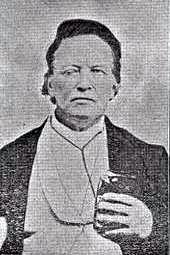
Elder Grigg M. Thompson On Perseverance


1811-1888

"Let no man think that he abides in Christ, or is in vital union with him when he can live in sin and take delight in gratifying fleshly lusts." (Elder Gregg M. Thompson in The Primitive Preacher, 1888, pg. 47)

As we have seen, this is no longer the leading view of those who call themselves "Primitive Baptists"! Yet, Kevin and I, and others, still believe what Thompson here says. Was he not stating in 1888 what had been the position of the Primitive Baptists up to that time?

What was it in the end of the 19th century that led many PBs to forsake this original view?

Is It Proof Of Dissonance?

I keep a watch on how many people visit this blog and which articles are being read. The blog lists the top ten posts for the past month but the traffic information shows much more about which are being read. I am astounded that my post on Hardshell Cognitive Dissonance has been read by only a few comparatively speaking. Why is this? Could it be evidence of the dissonance I spoke of? I think so.

I believe many PBs come here, get some information they didn't have, and then they are forced to make a decision as to what to do with that information, especially seeing how it can create dissonance. I think most deal with the dissonance by trying to ignore it. Well, good luck with that!

Thursday, December 12, 2019

Elder Moses D. Denman


1803-1885

The following statements by Elder Denman show what the "Primitive Baptists" believed in the mid to late 19th century. But, what Denman writes is rejected by today's PBs. So, how and why did they change so drastically after Denman?

"Then those born again are sure to walk in good works, though imperfectly performed; for what God has ordained will not fail. So where there are no good works in one's life, there is no new birth, nor no home in heaven for such a person. Then no good works--no salvation." (Elder Moses D. Denman in late 1800s, pg. 26)

"And God does not forsake his people after their regeneration but still prepares their heart and inclines their will to obey him...Praise the Lord! Jesus gave remission of sins. He gives repentance, He gives faith, and He gives eternal life. God has wrought all our works in us." 

Election or God's choice includes the New Birth and belief of the truth. II Thess. 2: 13. So instead of the elect dying in unbelief cursing God as unfairly supposed, we here find that God has chosen them to be changed to walk in good works...God has chosen you to be brought by the Spirit, through sanctification and belief of the truth of salvation." (Elder Moses D. Denman in late 1800s, pg. 55)

The above were taken from my previous posting here.

Wednesday, December 11, 2019

Baptist Ordination Practices Examined (VIII)

For the previous entries in this series see chapter seven (here), six (here), five (here), four (here), three (here), two (here), one (here)

I Timothy 5:17‐20

"Do not lay hands upon anyone too hastily and thereby share responsibility for the sins of others; keep yourself free from sin."

On these verses Hiscox wrote the following concerning the context surrounding the words "lay hands suddenly on no man," a context which supposedly proves that "laying on of hands" pertains to ordination by presbyteries:

"While it is true that its neighboring context refers to pastors, the immediate context of the verse charges Timothy with the way he is to carry out the instructions contained in the chapter. “Do nothing by partiality” he is told — especially when it comes to the contentious issues of dealing with the widows of the church (young and old) and to accusations brought against pastors. Do not be quick to take sides."

I think the statement "lay hands" denotes giving blessing and approval, or bidding Godspeed (see my entry "Laying On Hands & Bidding Godspeed" - here). This may be done with ministers, of course, but it cannot be made into a ritual of ordination, nor is it to be limited to one time, but is, like the holy kiss, to be done regularly, though not haphazardly.

The chapter where the words occur begin with these words:

"Rebuke not an elder, but intreat him as a father; and the younger men as brethren; The elder women as mothers; the younger as sisters, with all purity." (Vs. 1-2 kjv)

Here elder is not a minister but an aged male disciple.

I see the laying on of hands as being the opposite of the word "rebuke." Notice also the words "preferring" and "partiality." Laying hands on someone to bless and approve of them yet not in a way that betrays prejudice.

Hiscox continued:

"The significance of the laying on of hands as it relates specifically to the Lord’s churches and the work of the Lord is that it has to do with imparting a blessing and/or identifying with a man’s ministry. Nothing more, nothing less!"

I agree with this completely.

In "THE TRUE PRACTICE OF ECCLESIASTICAL ORDINATION" Robert J. Sargent wrote:

"How should the process of ordination work in a Bible‐believing Baptist church? Ordination is the appointing of a qualified man to the office of pastor. The act is effected by a church vote. Whether it is accompanied by a public meeting of the church designed to make it a notable and memorable occasion is of no great matter. A couple may be lawfully married at the courthouse with two witnesses before a judge, or be wed in an elaborate, lavish “church wedding.” Either way, they are married!" (here)

That is Baptist doctrine. Ordination is "effected by a church vote," nothing more, nothing less. Advisors and presbyters can only advise the church, and cannot be the body that approves of the act.

 Sargent  continued:

"Ordination, then, is an election. It is the deliberative vote of a church body to appoint a man to the office of pastor — something that can be done without ceremony in a regular business meeting.

The two scriptures actually relating to the ordination of pastors (Acts 14:23; Titus 1:5) are set in the context of organizing all the churches planted through the evangelistic efforts of Paul and his fellow laborers.

Question: What was needed to “set in order” these assemblies of baptized believers? The answer is leadership, scriptural leadership — and scriptural leadership is always provided through the pastors of a church (I Thessalonians 5:12; I Timothy 5:17; I Peter 5:2‐3).

Question: Were the elders who pastored the churches in Pisidia and Lycaonia, and later on in Crete, first chosen and appointed by Paul and Barnabas (and later by Titus) — then imposed upon those respective churches? To answer “yes” would support the notion that clergymen are ordained by bishops (the Catholic way). Baptists, however, hold to the truth that ecclesiastical authority resides in each church (Matthew 18:17‐18). Undoubtedly Paul, Barnabas, and Titus saw to it that elders were set in the churches they organized, for that is part of the work of an evangelist. But before that could take place, the men who became elders must first have been called of God into the ministry, then trained for the ministry, then chosen by the congregations (no doubt under the guidance of the evangelists) for the office of elder.

Agreed.

Hardshell Cognitive Dissonance


Britannica defines "Cognitive Dissonance" as

"the mental conflict that occurs when beliefs or assumptions are contradicted by new information. The unease or tension that the conflict arouses in people is relieved by one of several defensive maneuvers: they reject, explain away, or avoid the new information; persuade themselves that no conflict really exists; reconcile the differences; or resort to any other defensive means of preserving stability or order in their conceptions of the world and of themselves."

Said another:

"Any person will act so as to reduce conflict between their thoughts, their emotions and their behavior. When these things are at odds with each other a person experiences 'dissonance" (the opposite of harmony). Cognitive dissonance is when what a person knows is right is at odds with either what they feel is right or what they are doing." ("How Cults Manipulate People" - here)

Cognitive dissonance is a state of mental conflict occurring when a person holds contradictory beliefs at the same time. This conflict produces feelings of discomfort and the person then will seek to relieve the conflict by convincing himself that there is really no conflict (denial), or by adopting some other type of defensive maneuver to suppress the reality of the contradiction.

In the above diagram there is dissonance (conflict or lack of harmony) between belief and behavior, but it also may include conflict between various beliefs or facts. When a person faces such dissonance, he will seek to remove it in several ways. Sometimes the person will change the behavior to fit the belief, and sometimes vise versa. When conflict is between beliefs, one will either attempt to deny the conflict (often unsuccessfully), seek ways to harmonize them, or else reject one of the beliefs in favor of the other.

I firmly believe that the "Primitive Baptist Church" experienced such "cognitive dissonance" during her formative years, between the 1830s and the end of the 19th century. How each church and individual dealt with this dissonance is seen in what happened at the end of the 19th century when several divisions over doctrine and practice occurred.

I also believe that the PB psyche is still experiencing this dissonance as they receive new information about their history and erroneous beliefs. I certainly believe that the information we have given to the denomination has helped create this dissonance.

Now, dissonance is inevitable. What we do in reaction to it is what is most important.

Let me close with this little homily on these words of Paul:

"In meekness instructing those that oppose themselves; if God peradventure will give them repentance to the acknowledging of the truth; And that they may recover themselves out of the snare of the devil, who are taken captive by him at his will." (I Tim. 2:25-26 kjv)

The words "oppose themselves" are from the singular Greek word antidiatithēmi (ἀντιδιατίθεμαι) and is a present tense compound verb in the middle voice. I believe that this word involves the kind of doctrinal dissonance of which I have been speaking.

"They who err from right thinking are to be dealt with as tenderly and considerately as they who err from right living." (Expositor's Greek)

Let us not resort to “mental gymnastics,” leading to self deception, often through rationalization, in handling contradictions in our minds about our beliefs and practices, but let us be ever willing to change any belief or practice that is not in keeping with the word of God.

Errors of Elder Michael Gowens

Several times over the years I have critiqued the writings of Hardshell apologist, Elder Michael Gowens. At this time I would like to add some to that critique. In "Questions and Answers Regarding Recent Primitive Baptist Tension" (here) Gowens wrote (emphasis mine):

"That pastoral responsibility necessarily involved me in an effort to challenge the man from outside and the young man within our local church who were sowing seeds of discord within our congregation. These men were ridiculing the practice of distinguishing between eternal salvation and temporal or gospel salvation. They mocked the ignorance of Primitive Baptists who believed this way and expressed how embarrassing it was that we were so different in this regard to other Christians. I saw their desire to remove this classic PB distinction and to push the idea that the present life has eternal significance – that is, to teach only “one” salvation – as the kind of classic reformed theology popularized by MacArthur, Piper, Sproul, Mohler, and Nettles in our day. It soon became evident that an effort to modify PB doctrine, particularly in regard to this distinction between unconditional eternal salvation and conditional temporal salvation, was gaining momentum in a few PB circles and the church that I pastor was under particular attack. That’s how I got involved."

Notice the several heresies and historical errors of Gowens in these words. He says that "the idea that the present life has eternal significance" is not right, not in keeping with what the word of God teaches. Now, that is indeed a "whopper" of a falsehood! I would love for Gowens or one of his Hardshell brothers to come forth and try to defend this idea! Not only do the scriptures condemn this statement, but it was not in keeping with the views of his Old Baptist forefathers. If he thinks it an easy job to defend this statement, then let him come forth and correct us!

How a man can affirm such a proposition, calling it a "PB distinction," and then complain that other Christians "mock" such an idea, identifying it as absurd, is truly astounding. In my posting "Not So, Brother Hassell! (2)" (here) I stated:

The "Primitive Baptist Universalist Church," the "No Hellers," was formed for the same reason as that of the quasi Universalists. What led the PBs in the formative years of their development to begin to apply eternal salvation and damnation passages to mere temporary salvation and damnation?

Was it not because they imbibed a false proposition, springing from Hyper Calvinistic notions, that affirmed that nothing a person did had any eternal consequences?

Is that not what Gowens said? Nothing you do has any eternal consequences! Who can read the bible and see that? Only one blinded by a cult mentality.

Next, Gowens, in answer to the questions "What is the primary issue in dispute?" said:

"Well, most people who have followed this debate understand that there is disagreement over the subjects of Perseverance and the Absolute Predestination of all things. What they may not realize is that the root of the controversy is really a debate between what has been termed “Temporal Salvation” and “Lordship Salvation”. Let me explain.

In the mid-1980’s, John MacArthur published a book entitled The Gospel According to Jesus in which he argued for a position known as “Lordship Salvation”. That book created a firestorm of controversy within evangelicalism, eliciting rebuttals from Zane Hodges, Charles Ryrie, and others, and garnering support from others like Michael Horton, R. C. Sproul, and more. MacArthur’s argument was simply that a person may not have Christ as Savior without also acknowledging Him as Lord. In other words, he objected to what other, lesser-known writers had called “the Carnal Christian heresy”. He claimed that a person who is truly saved will manifest that salvation by believing the gospel and living an obedient and faithful Christian life—that there is no such thing, ultimately, as a disobedient child of God—that the individual who fails to live in submission to the Lordship of Christ demonstrates that he was never truly born againthat only those who embrace Christianity are truly saved. MacArthur argued, in other words, for the old Puritan idea that everyone who is truly saved will persevere in faith and holiness."

Notice that he says that one does not have to embrace Christianity to be saved! The forefathers of the PB church would not accept this idea of Gowens and today's Hardshells.

Gowens continued:

"Now, PB’s have characteristically held, not to “Lordship Salvation” but, to “Temporal Salvation”. That is to say, our position has been that there is a distinction to be made between Sonship and Discipleship—between being a child of God and being a follower of Jesus Christ. In the Lordship Salvation paradigm, regeneration and discipleship are so intertwined that one does not exist without the other. In 2002, a PB preacher in Virginia preached a sermon in which he labored to prove that “belief in Jesus Christ and eternal life are married—you cannot put asunder what God has joined together.” That’s the “Lordship Salvation” position. But Primitive Baptists do not believe that regeneration automatically produces discipleship."

"Characteristically"? It may characterize today's PBs, but it certainly does not reflect the view of their forefathers! The founders of the PB church believed that belief in Jesus Christ and eternal life were joined together inseparably. Which PB wants to come and show us the evidence to the contrary?

What do my PB brothers do with the information, for instance, about the beliefs of Dr. Watson? Do they "put it out of their minds" as a way to deal with the dissonance it causes them?

Monday, December 9, 2019

Can You Believe It?

Wrote Elder Ronnie Loudermilk recently in an article titled "God Shall Take Away His Part Out of the Book of Life" (here)

"Because the children of Israel rebelled against God’s commands, they lost the opportunity to enter Canaan and enjoy the Lord’s bountiful temporal blessings. This does not mean that those people went to hell and torment. Moses was one of those who did not enter Canaan, and we find him in the New Testament with the Lord on the Mount of Transfiguration (Matt 17; Mark 9; Luke 9). The names of those disobedient people were removed from God’s book “under heaven.”"

Who can believe such heresy? Live like the wicked Israelites, fornicate, tempt Christ, murmur and complain constantly, rebel and refuse God and his word, and it does not mean you are lost! Wow! Anyone who preaches this is to be marked as himself a rebel of God and doing harm to inquiring minds. I have answered this nonsense in my debate with Hardshell Jason Brown. In my article "Entering God's Rest" (here), under the heading "What About Moses?", I said the following things (under citations). I welcome all to review what I said in that posting, for it uproots and destroys the Hardshell heresy of Loudermilk.

Citations

Some argue that the fact that Moses was not permitted to enter the promised land proves that the typology of Canaan cannot refer to Heaven and salvation. But, here are some things I said in response.

First, Jason is wrong to affirm that some of those who fell under the wrath of God, in the wilderness, were truly saved people.  He affirms this in spite of all the verses I cited which described them in terms that make it impossible to apply to saved people, to true believers.  They were described as "liars" in their religious profession.  They were stiffnecked and uncircumcised in heart and ears.  They were unbelievers, practicing heathens, idolators.  All those cited texts categorize all who "fell in the wilderness," not just some of them.  They are all put into the same group, the group of those who fit the description given of them.

Second, Jason is wrong to affirm that Moses, likewise, "fell in the wilderness."  The Scriptures never place Moses into that category.  When the NT writers speak of "falling after the same example of unbelief" as those unbelieving Israelites whose carcasses "fell in the wilderness," no reference is to Moses.  In fact, the testimony is rather that "Moses was faithful in all his house."  (Num. 12: 7; Heb. 3: 2)  Moses is thus distinguished from those Israelites who fell under the wrath of God and died in the wilderness, for they are called "unbelievers" and unfaithful

Besides, the case of Moses still upholds the proposition that says "no unbelievers allowed entry."  Moses was forbidden entry for "unbelief."  Those who fell in the wilderness could not enter for unbelief.  Thus, the lesson still remains.  Unbelievers will not enter God's rest nor receive his inheritance.

Not all is correlation or significant between types and antitypes.  Men can make too much out of the parabolic use of types.  What is typical versus what is A-typical (or unique) about the case example of Moses' not entering the promised land?  Does his singular example show that not all those who died in the wilderness were reprobate and died in their sins?  No.  Does his singular exception undermine the general rule?  No. 

It is not inconsistent with sovereign grace theology to teach that the Christian serves Christ with an eye on obtaining eternal life and salvation thereby.  It is no more false than teaching that faith and repentance are for salvation.  Perseverance is as much a gift of God as is faith. 

The NT writers did not see any contradiction in affirming, on the one hand, that salvation was all of the Lord, by his grace alone, and affirming, on the other hand, that the sinner and the Christian must be actively involved in their salvation.  Calling upon Christians to "work out your own salvation" (Phil. 2: 12) was not inconsistent with salvation being the work of God, in the mind of the Apostles.  Even the Lord, though affirming that faith was the sovereign gift of God (John 6: 65), nevertheless exhorts - "have faith in God" (or "have the faith of God").  (Mark 11: 22)  This is an exhortation and implies that the ones addressed have some decisive role in whether they have, or have not, faith.

The story of the Exodus is a picture of Christian conversion and of salvation and redemption from the slavery of sin.  The wilderness wandering is a picture of the life of the professing Christian.  The Israelites who were declared to be "unbelievers" are a picture of hypocritical Christians, or false professors.  The Israelites who persevered, and who did not "draw back," are a picture of true believers.   Canaan's land is a picture of the eternal rest that God will give to his people in the new heavens and the new earth. 


The unbelieving Israelites, though actually saved from the land of Egypt by the Red Sea miracle, were nevertheless not saved from the trials of the various deserts.  The desert wilderness was the means God employed to manifest who was truly an "Israelite indeed" and who was only one externally and in pretense.  It was the trials of life that showed that the shallow ground hearer did not have saving faith.


Perhaps some Hardshell, or even Loudermilk himself, will come and debate this important subject? I am not holding my breath!

Monday, December 2, 2019

Holiness Necessary For Salvation


Elder (Dr.) John McClaren Watson
1798-1866


In "The Correspondent" (Vol. II, June, 1839) Watson prints with hearty approval an article by Toplady titled "Holiness Of Life Absolutely Necessary To Salvation." It reads as follows (emphasis mine):

"The Holy Spirit, making the Apostle's pen the channel of unerring inspiration, thus inspired him to write: according as he (God the Father) hath chosen us in Him (in Christ) before the foundation of the world, that we should (not "be saved do what we will;" but) be holy and without blame before him in love.--Eph. 1:4. Election is always followed by regeneration; when the Apostle adds in the very next chapter, v. 10. We (the elect) are His (subsequent) workmanship, created (anew) in Christ Jesus unto good works, which God hath fore-ordained that we should walk in them. Consequently it does not follow from the doctrine of absolute predestination that "the elect shall be saved do what they will." On the contrary, they are chosen as much to holiness as to heaven; and are fore-ordained to work in good works, by virtue of their election from eternity and of their conversion in time. Yet again: God hath from the beginning (i.e. from everlasting; see Prov. 8: 23. I John 1:1,2) chosen you to salvation through sanctification of the Spirit and belief of the truth: II Thess. 2:13. All therefore who are chosen to salvation are no less unalterably destined to holiness and faith in the mean while. And if so, it is giving God himself the lie to say that "the elect shall be saved do what they will." For the elect, like the blessed Person who redeemed them, come into the world not to do their own will, but the will of Him who sent them: and this is the will of God concerning them even their sanctification: I Thess. 4:3. Hence they are expressly said to be elect--unto obedience: not indeed chosen because of obedience, but chosen unto it: for works are not the fountain of grace, but streams flowing from it. Election does not depend upon holiness, but holiness depends upon election. So far therefore is predestination from being subversive of good works, that predestination is the primary cause of all good the works which have been done and shall be wrought from the beginning to the end of time. It is only the peculiar people that are truly zealous of good works. Tit. 2:11. The rest may profess that they know God, but even amidst all their noise about works, in their own works they deny Him; being abominable and disobedient, and to every good work reprobate. Tit. 1:16. As I have elsewhere observed, they trust in good works, without doing them; while the peculiar people do good works without trusting in them."

Some side notes connected with this posting.

For the Sept. 1839 issue of the "Correspondent" we find this correspondence from Elder Gilbert Beebe and his paper the "Signs of the Times."

The "CORRESPONDENT."--The 2nd number of this paper published at Murfreesborough, Ten. and edited by our Brother John M. Watson, M.D. has just reached us. The first number we have not seen: but by the number now before us we learn that the Correspondent is a continuance of "The Old Baptist Banner." Of the orthodoxy and ability of Brother Watson, we have no doubt: some of his communications published in back numbers of the "Signs of the Times," will satisfy our readers that Brother W. is a thorough going Old School Baptist, and we wish him great success in setting forth truth and opposing error in the far west'.--Signs of the Times

In the same issue is a long letter of support from Elder James Osbourn. Also, Elder Daniel Jewett, editor of Monitor and Advocate, wrote to Watson bidding him Godspeed.