Friday, July 1, 2022

Chicken Little - Politics of Fear


Chicken Little

All the talk about the threat of "climate change" is, I believe, a "Chicken Little" phenomenon. It is designed to scare people into giving more power to politicians. Recall our series on Machiavelli. 

In "Machiavelli and the Politics of Fear" Seth Woodley writes (here): 

"The most famous passage from The Prince is in an answer to the question “Is it better to be loved than feared?” Machiavelli’s answer to this question is quite familiar to modern day readers. He writes, “The answer is that one would like to be both one and the other; but because it is difficult to combine them, it is far better to be feared than loved if you cannot be both.”

Politicians love to scare the citizens they represent. It is their way of maintaining or increasing control. 

Are there legitimate things for us to fear today? Yes, but climate change is not one of them. One of them is the rise of totalitarianism and tyranny in our country and in others. 

We should rather be fearful of the change in the "social climate." (See my posting on that here)

Thursday, June 30, 2022

Elder David Pyles on Hyper Calvinism


Having just posted the entry about Elder Jeremy Sarber and his observations on Hyper Calvinism, it is a good time to post this article wherein I critique the views of Elder David Pyles, son of Elder Sonny Pyles, who pastors a large "Primitive Baptist" church in Pearl, Miss. (See their web page here). I have had this in a draft form for some time and made effort to finish it since posting the post concerning Elder Sarber on the subject.

The writing I will be analyzing is titled "Hyper-Calvinism?" by Elder David Pyles (pdf here). 

Wrote Pyles:

"So it appears that “hyper Calvinism” is sometimes an insult that non-Calvinists and pseudo Calvinists cast against those who are simply Calvinists. The prefix “hyper” is added to stigmatize them as extreme. However, sometimes even Calvinists accuse others of “hyper-Calvinism.” In what follows, I will assume the definition that these usually intend."

Assume what definition of hyper Calvinism? He does not give it. He tells us that many have used it in different ways (and that is true), but which way is he using it? In the sense of Calvinism? That Hyper Calvinism is the same as Calvinism? Or, that Hyper Calvinism is extreme Calvinism? Okay, but what is extreme Calvinism? Which definition is "usually intended"

Pyles writes (emphasis mine):

"The core issue here is whether gospel preachers are agents or instruments in the eternal salvation of those who hear them. Arminians and Calvinists, notwithstanding all their differences, are agreed that preaching and belief of preaching are means to being born again, to being rendered righteous before God, and therefore to being eternally saved. The difference is that Calvinists think the process operates under the forces of election and predestination, and therefore under Divine decision and direction, whereas Arminians believe the outcome finally swings on human decision. Now the much-maligned hyper-Calvinists agree with Calvinists that salvation is a sovereign act of God, but they disagree with both Arminians and Calvinists about the instrumentality of preachers." 

Hyper Calvinism was never, till the rise of the Hardshell anti means faction in the mid to late 19th century, a dispute about means in regeneration. In the 17th through the 19th century "Hyper Calvinism" was never about means in regeneration. It was about the well meant offer of the gospel. The rejection of means did not become a part of Hyper Calvinism till the rise of the Hardshells. Even those Calvinists who denied that means were used in initial regeneration (narrowly defined), men such as W. G. T. Shedd in his Systematic Theology, did not deny that means were used after regeneration in conversion, sanctification, or "broad regeneration," perseverance, and eternal salvation. Only the Hardshells took Hyper Calvinism to its logical conclusion in denying that the word of God is a means in any aspect of eternal salvation

Denial of means was NEVER a "core issue" in historic Hyper Calvinism in regard to eternal salvation. The Hyper Calvinists of the 18th century did not deny that all the elect needed to be converted as well as regenerated, and they saw the gospel as a means in being converted. John Brine, in that century, was a Hyper Calvinist although he believed, like his father in the ministry John Gill, that God used the preaching of the gospel in the regeneration of the elect. Brine was Hyper in the sense that he denied offers of grace to the unregenerate in gospel addresses. 

Notice that Pyles speaks of "the much maligned Hyper Calvinists." This is the way he sees his own group of Hardshell Baptists. But, the Hardshell version of hyperism is an extreme of the extreme. 

If both Arminians and Calvinists agree on the means of the gospel, and only a small group, such as the Hardshells, disagree, then surely anyone must wonder how 99%+ of bible believers could all read the bible and fail to see what the Hardshell few see. Such an extreme minority view requires that the Hardshells be required to show the super majority how all the prima facie evidence for the means position is to be set aside. I would be careful about taking such an extreme minority view on such an important issue. They have surely done a poor job of convincing that 99% of their error!

He continues:

"They say that preaching and belief of preaching are the means of certifying that a man is eternally saved, and serve to bring him into the temporal benefits of this fact, and serve to glorify God for what He has done, but that one man is not in any sense the cause or means to the eternal salvation of another. Rather, they say eternal salvation is the sovereign, irresistible, irreversible and direct act of God alone."

Well, I am willing to stand upon the propositions highlighted and call upon brother Pyles to come and defend his denial of them. His proposition says that no human means are used in the eternal salvation of any person. Have we not destroyed this proposition many times? Who can read the bible and come away saying "God never used human means to save anyone"? Not a single person saved by a human means! Someone has to come along and deceive bible readers into thinking this way. Was Mary a human being? Was she not a means in salvation? The wicked who crucified Christ, were they not means, although unwilling and unknowing means? Please, brother Pyles, come here and show us how we are wrong to see preachers of the word as means too!

Pyles writes:

"The accusers claim that their assets and actions are instrumental in delivering their fellow men from hell to heaven, yet the same accusers oftentimes possess many worldly goods and spend much time in leisure. They can live in domiciles far more luxuriant than those of the poor souls they purport to eternally save. Some have laid up for themselves large retirement accounts and other investments. Indeed, even their places of worship are oftentimes extravagant, and seem to compete with each other to catch the impressionable eye. Add to this that some of them take lengthy vacations, spend much time watching television and commonly attend sporting events. One must wonder how many poor souls will spend eternity in a miserable, burning hell on account of such indulgences? Are we not compelled to conclude that such accusers of hyper Calvinists do not truly believe what they claim or else they have the hearts of crocodiles?"

Against this so called "argument" against means I wrote a chapter in my book "The Hardshell Baptist Cult." It is chapter eleven and titled "Saved by Money?" (See here) Here is what I wrote about this argument in that chapter.

"Our eternal salvation cannot have any means that involve money in any sense." Why not? They will say that God's doing so puts the heathen in a helpless condition, dependent upon missionaries and preachers, and make saviors of men, and takes glory away from God. But, it is a false conclusion to say that because God has made certain acts of men, both saved and unsaved, to be a means in the plan of salvation, then salvation is uncertain, haphazard, and outside the sovereign control of God, and takes away from the glory due only to God.

This is similar to the other false premise I dealt with in the preceding chapter on Hardshell "logic", the premise that affirmed -- "No aspect of eternal salvation can be certain if based upon any kind of human means."

It is interesting that Pyles and his forefathers who made this argument have no problem believing that converting the elect and the already regenerated heathen does in fact depend upon preachers: And preachers require money to travel and eat. Further, did not Joseph and Mary spend money to buy food for our Lord so that he could grow up? In that same chapter I wrote:

Money (or its equivalent) was involved in getting Christ from the cradle to the cross. Money was involved in getting Christ crucified. All the money and goods that Joseph and Mary spent to raise Christ, to send him to school, to buy him food and clothes, was that not all made necessary by the will of God? Did not the money that Christ himself gave to the temple, his own tithes and offerings, as a law abiding Jew, part of the law he had to keep in order to become perfect and be "without sin"?

Such arguments as these are designed to remove guilt from the Hardshell conscience for their failures to use every effort to see that others hear the word of God. Don't they spend money to worship God in a building? So, that means God is dependent upon money for obtaining worship? 

Further, all the money is the Lord's! Wrote Haggai the prophet:

‘The silver is Mine, and the gold is Mine,’ says the LORD of hosts." (Hag. 2: 8)

Pyles writes:

"However, all but the alleged hyper-Calvinists assert that human preaching is a means to this end. Now if the elect are predestined to heaven, and if human preaching is the means by which they are to get there, this would imply that God has predestined all elect to hear preachers. Most Calvinists concede that this conclusion is a consequence of their system because they commonly say that if God has predestined the end then He must have also predestined all means to that end." 

Notice how the words of Pyles lead one to believe that all Hyper Calvinists believe Hardshellism, that they all deny that the gospel or word of God is a means in the eternal salvation of the elect. But, as we have stated, that was not the view of the Hyper Calvinists who preceded the Hardshells. In fact, as I have shown in my historical writings on the history of the Hardshells, the first generation of "Primitive" or "Old School" Baptists did not take this position. They did show some reluctance to "offering" Christ to sinners, but they did not reject gospel means. They believed, contrary to Pyles and today's Hardshells, that God had in fact "predestined all elect to hear preachers." We have proven that in this blog using the scriptures as our proof.

Pyles writes:

“Hyper-Calvinism” is a loathsome label that no Christian should want to wear, but the simple facts are that the accused hyper Calvinists: 1) give more glory to God and Christ for the work of eternal salvation than is done in any other Christian system, 2) are not guilty of the hypocrisy commonly seen in those who represent themselves as being the instruments of eternally saving others, and 3) take responsibility for the commandment to preach the gospel and do not dismiss their failures at such to lack of divine predestination. If this is what is meant by “hyper-Calvinist,” then call me whatever you will, I resolutely declare that I intend never to be anything else! “Let us go forth therefore unto him without the camp, bearing his reproach,” (Heb 13:13)"

This is ironic. Pyles on one hand does not want to be called a "Hyper Calvinist," it being "a loathsome label that no Christian should want to wear," but then he intends to be such! It seems the term "Hyper Calvinist" is like the label "Hardshell." 

If Pyles thinks his proposition is so eminently scriptural, why does he not come and show us the bible texts that uphold his proposition? And, show us how the texts that we believe prove human means do not do so?

Elder Jeremy Sarber On Hyper Calvinism


Elder Jeremy Sarber, former "Primitive Baptist" pastor, with whom we had the privilege of helping him to see the errors of Hardshellism, is doing some good preaching and writing. Though once a North Carolina resident, he now resides in Indiana. You can find a link to his blog writings in a link on this web page. He is an excellent writer and bible teacher. He was also once a contributor to this blog and I consider him a close friend though we have never met in person. 

In a recent e-mail of one of his writings he says (highlighting mine):

"A recent conversation about some of the differences between Calvinism and Hyper-Calvinism motivated me to pull Iain Murray’s book, Spurgeon V. Hyper-Calvinism: The Battle For Gospel Preaching, off my shelf and re-read it. I finished it in only two days.

I still remember the first time I read it. I believe it was in 2015, maybe 2016, as my tenure as pastor of a Hyper-Calvinist church was coming to an end. I no longer agreed with the doctrinal traditions of the church, and I was struggling more and more to preach what I believe is biblical without upsetting the church and causing division. I sensed my time as their pastor was coming to a close. Though I was upset about it—I loved the church and wanted to stay with them—I found a lot of encouragement in Murray’s book."

The Hyper church he means is a Hardshell church.

"Ironically enough, I learned about the book only because a Hyper-Calvinist preacher recommended it to me. Looking back, I’m still unclear why he suggested I should read it. My best guess is that he believed I would see errors in Spurgeon’s arguments against Hyper-Calvinism, but instead, my soul was refreshed to read his quotes. Here’s a man who understands the flaws and dangers of Hyper-Calvinism, I thought. Here’s a man who not only faced criticism from his Hyper-Calvinist brothers, but also thrived through the controversy."

"The entire history of the controversy is fascinating to me because, to some degree anyhow, I feel as though I’ve lived through it. On a much, much smaller scale, I feel as though I’ve walked in Spurgeon’s footsteps. I’ve had to move against tradition and suffer both public and private criticism from fellow pastors as a result."

I too have lived through it. So too has Elder Fralick. So too has Elder Emmons. So too have other Hardshell preachers who we have helped to come out of the Hardshell cult.

"Perhaps you can understand why the book was an encouragement to me six or seven years ago."

After saying these things, under the sub title "Overemphasis on election" brother Sarber writes the following good things. 

"Two points in the debate stood out to me when I first read Murray’s book. The first was Spurgeon’s critique of the Hyper-Calvinist’s mishandling of the doctrine of election. I don’t have the book in front of me, so I can’t cite it, but I certainly remember the thrust of Spurgeon’s argument. He argued that the doctrine of election was meant to be understood by someone only after his conversion to Christ. In other words, election is taught to be a comfort to believers."

Well, a hearty amen to that brother Sarber! I am glad also that you are putting that new focus into practical work! I believe in unconditional election, and in the absolute predestination of all things, but I do not make these the focus of my preaching and teaching. Spurgeon is a good model for us Calvinists.

"Unfortunately, Hyper-Calvinists tend to place the doctrine of election at the front and center of their preaching and thinking. It becomes the emphasis of everything they believe, teach, and even practice. They are constantly thinking in terms of God choosing some for salvation and not others. While that is absolutely true, first of all, election is not where gospel preaching starts. Just observe the preaching of Christ and his apostles to the masses. Yes, they taught election, but it was never the first thing."

Again, amen and amen!

"Second, though the doctrine of election is true and biblical, it should not stifle our evangelism. Frankly, we don’t know everyone whom God has chosen, and we’re not supposed to. We are commanded to preach the gospel. We are commanded to call sinners to repent. We are commanded to evangelize indiscriminately. We are commanded to “preach the gospel to every creature,” as Spurgeon liked to say (Mk 16:15 KJV)."

Amen! That is right!

"This kind of zealous, indiscriminate evangelism doesn’t happen among Hyper-Calvinists. You won’t hear apostolic gospel preaching from them. You won’t hear them call unbelievers to repent and turn back, that their sins may be blotted out, as Peter did (Ac 3:19). That sounds almost Arminian."

This makes me think of Brother Bob Ross and his booklet "The Killing Effects of Hyper-Calvinism." It is a very good read and he too was a lover of C.H. Spurgeon. He was a leading publisher of Spurgeon's works.

"Instead, Hyper-Calvinists narrow their focus on the doctrine of election to such a degree that they essentially reverse the Great Commission in their minds. Rather than Christ telling the church to go and make disciples, they believe the church should wait for sinners to come to them (Mt 28:19). After all, the natural person does not accept the things of the Spirit of God (1Co 2:14). Consciously or not, they wait to see some evidence of God’s work in a person’s heart before they make any effort to evangelize, but that’s not an idea that comes from any plain teaching of Scripture. In fact, it contradicts the most plain teachings of Scripture.

For "evangelize" we should probably use the word "proselytize"! As for their "effort" to evangelize, one of their first labels, besides "Hardshell," was "anti effort" Baptists, and also "do nothings." 

Under the sub heading "Underestimating God’s love" brother Sarber said these things.

"The second issue in Murray’s book that resonated with me years ago was the matter of God’s love for sinners. This is another area where the Hyper-Calvinist’s overemphasis on election leads to misunderstandings—in this case, a misunderstanding about God’s very nature."

I agree and I have written on the grievous error of the Hypers and Hardshells who deny that God has any love for the non elect. God does love all men, but he especially loves his chosen bride. Did not Christ keep the commandment which says "love your neighbor as yourself"? Will the Hyperist deny that Christ loved all men, all his neighbors, even his enemies?

“Jacob I loved, but Esau I hated” is a verse that continually runs through the Hyper-Calvinist’s mind (Ro 9:13). In turn, he thinks of God’s affections and compassion in black-and-white terms. God either loves or hates. He cannot possibly feel something in between, which defies our own experiences as his image-bearers. While we, too, can either love or hate, we also feel degrees of both love and hate. I have friends I love, but I don’t love them to the same degree I love my wife or children. I believe God can love in different degrees as well."

That is right. Amen.

"Re-reading Spurgeon V. Hyper-Calvinism has stirred a lot of emotions from the past, but animosity isn’t one of them. Sincerely, I have tremendous love and respect for my Hyper-Calvinist brothers and sisters. Nothing I’ve said here comes from a spirit of bitterness or resentment. Like Spurgeon, I wish they could see the truth of God more clearly, but I still appreciate the truth they do profess and defend."

The same with me brother! My whole ministry towards the Hardshells has been out of love and concern for their standing with God. I used to be a Hardshell Hyper Calvinist. But, like you, came to see how they had become a cult and had serious errors. You can read brother Sarber's article in full at his web site here:

https://jeremysarber.com/spurgeon-versus-hyper-calvinism

He also has lots of good articles and transcripts of his teaching lessons (sermons) available.

Wednesday, June 29, 2022

What About Those Who Never Hear?


It is not a foolish question to ask what happens to those who never hear the gospel. A common answer to this question is this:

If the heathen (those ignorant of the word of God and the gospel) live up to the light they have from creation and conscience, and seek the Creator, then God will get the gospel and word of God to them.

Those who say such affirm their belief (whether they realize it or not) that 

1) God can get the gospel to a person any time he pleases. 
2) Those who don't have the gospel have it not because they rejected the revelation of nature

These are logical deductions from the premise believed. 

Over the past few weeks I have listened to several videos where bible teachers have dealt with this theological problem. 

In the video titled "Reacting to Reasonable Faith's "What About Those Who Never Hear" (here) Dr. James White is responding to a person who is contending that people can be saved apart from knowing Christ.

At about the 9: 30 mark on the video that person says: "They can be saved through Christ even though they never heard of Christ." Well, that is totally wrong although it is what most Hardshell Baptists affirm today. Dr. White was against that view.

In another video titled "What Happens to People Who Have Never Heard the Gospel?" (here), Dr. Michael Brown says:

"Only God knows what happens to those who do not hear the gospel but the presumption is that they are lost, guilty, and without excuse and therefore we go to the lost to bring them the message." (about the 2: 30 mark)

However, he says God is drawing them apart from the gospel, which is wrong. He says God "can reveal himself to them even on a very basic and fundamental level." But, who denies that? It is not a question of what God can do but of what he has chosen to do. God is able to make children of Abraham out of stones, but who would say that this is what he has chosen to do? (See Matt. 3: 9) In the video Dr. Brown also says:

"Well, how is that fair? Do they have an opportunity? Well, I do believe that God does draw people to himself, John 12: 32...he says he will draw all men unto me, so through the cross God is drawing people to himself even who have never heard the message. The Spirit is at work even where the gospel has not gone and there are people who turn to God without the message though these people are few and far between."

Again, that is wrong. He is hedging his answer.

In another video on YouTube titled "What About Those Who Have Never Heard the Gospel?" and sponsored by Liberty University (here) the apologist answers yes, and affirms that general revelation is sufficient to bring one to saving faith. Again, that is wrong. As we showed in a previous posting, it is what is denied by our brothers who published the 1689 London Confession of Faith. (See here)

What Says The Scriptures?

"Therefore remember that you, once Gentiles in the flesh—who are called Uncircumcision by what is called the Circumcision made in the flesh by hands—that at that time you were without Christ, being aliens from the commonwealth of Israel and strangers from the covenants of promise, having no hope and without God in the world." (Eph. 2: 11-12)

In these words the apostle describes heathen people, or the condition of those who are ignorant of the word of God and Jesus Christ, the Messiah and Savior of the world. They are lost.

The Gospel is "the power of God unto salvation to everyone who believes it" (Rom. 1: 16) and where there is no Gospel there is no salvation.

Notice this text from the Apocalypse that tells us how God can and will preach the gospel to everyone on the planet.

"And I saw another angel fly in the midst of heaven, having the everlasting gospel to preach unto them that dwell on the earth, and to every nation, and kindred, and tongue, and people, Saying with a loud voice, Fear God, and give glory to him; for the hour of his judgment is come: and worship him that made heaven, and earth, and the sea, and the fountains of waters." (Rev. 14: 7)

If God can do this, why has he not been doing it since the world began? Paul spoke of the possibility of "an angel from heaven" preaching the gospel. (Gal. 1: 8) Obviously, God has his reasons for not doing so. What he has chosen is to send preachers with the glad tidings. (Rom. 10)

Are there certain people that the Lord has promised to get the word of salvation to? Yes, they are the elect. That is my view. Others affirm that they are the ones who made the best use of natural revelation, who were genuine seekers. They are the ones that God insures will hear the gospel. But, the bible says "there is none who seek after God." (Rom. 3: 11) Wrote Paul:

"Therefore I endure all things for the sake of the elect, that they also may obtain the salvation which is in Christ Jesus with eternal glory." (II Tim. 2: 10)

How old is the gospel? (v)

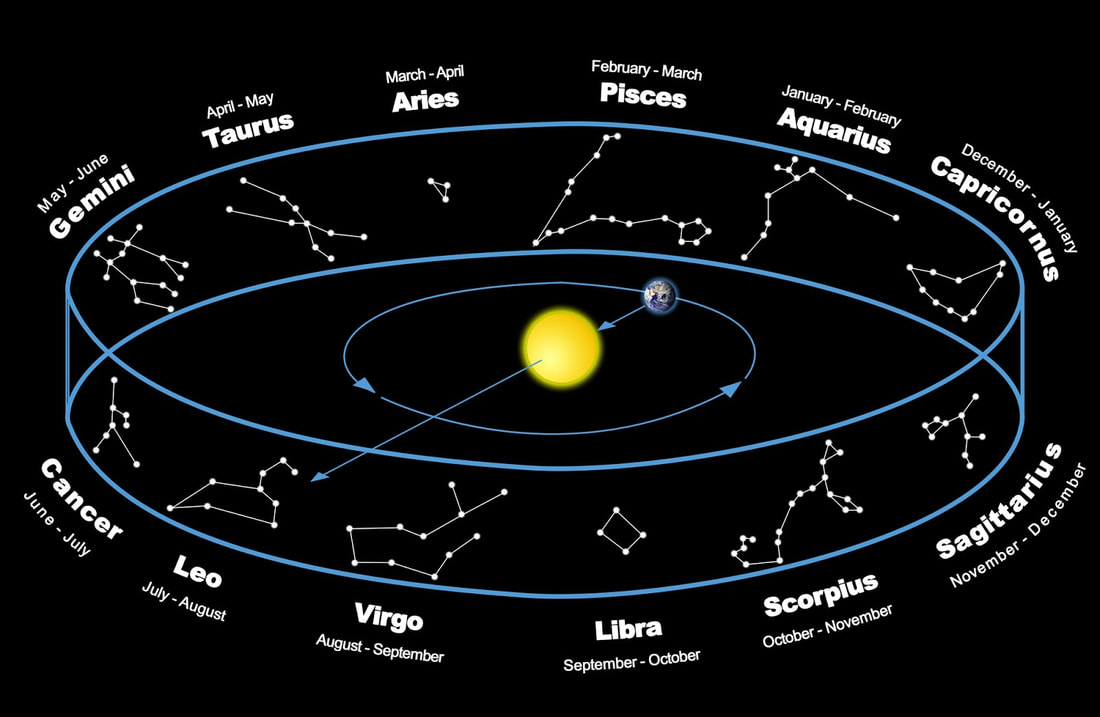
The Twelve Tribes and Their Star Signs


The Ecliptic Path of the Sun

"For “whoever calls on the name of the Lord shall be saved.” How then shall they call on Him in whom they have not believed? And how shall they believe in Him of whom they have not heard? And how shall they hear without a preacher? And how shall they preach unless they are sent? As it is written: “How beautiful are the feet of those who preach the gospel of peace, Who bring glad tidings of good things!” But they have not all obeyed the gospel. For Isaiah says, “Lord, who has believed our report?” So then faith comes by hearing, and hearing by the word of God. But I say, have they not heard? Yes indeed: “Their sound has gone out to all the earth, And their words to the ends of the world. But I say, did Israel not know? First Moses says: “I will provoke you to jealousy by those who are not a nation, I will move you to anger by a foolish nation.” But Isaiah is very bold and says: “I was found by those who did not seek Me; I was made manifest to those who did not ask for Me.” But to Israel he says: “All day long I have stretched out My hands To a disobedient and contrary people.”” (Rom. 10: 13-21)

These words not only show that faith in Christ and calling upon the name of the Lord are necessary for salvation, but they also show that hearing the word of God and/or the gospel is a prerequisite for believing or having faith. What I want to focus upon, however, is the question of the apostle - "have they not heard?" And, upon Paul's answer of "yes indeed." Who are intended by the pronoun "they"? Does Paul say that all men, Jew and Gentile, have heard that word of God that is necessary for producing faith in Christ? Or does the pronoun "they" refer only to the Israelite people? Is he also saying that all the Jews have heard the gospel concerning the Messiah? Or, is he saying that all the Gentile nations have heard the message of the gospel at some point in their national histories? Obviously it cannot mean that every Jew or every Gentile has heard the gospel. History, as well as scripture, shows that this is not the case. 

So, these are the questions facing interpreters.

1. Who are designated as "they" in the question "have they not heard?" Is it all Jews? All Gentiles? Or, all Jews and Gentiles?

2. What is it that is "heard" by the "they"? Is it simply the word/voice that says "God is" and "God is great"? Or, is it the gospel concerning Christ? Is it the voice of natural revelation or of the written oracles?

3. Who is the "Lord" called upon and believed? God the Creator without any knowledge of Christ? 

Another important question that arises from the passage is why Paul cites Psalm 19: 4 as evidence that all have heard the gospel. If that Psalm (verses 1-6) is dealing with general or natural revelation (what is evident from the creation), how does it reveal the gospel? Can one look at the heavens and see or hear the gospel message? Further, if the gospel message is heard from the heavenly bodies, how so? Also, if it is revealed in the heavens, then why is there a need to send preachers and missionaries? If the heavens are declaring the gospel to every human being (who has eyes to see the heavens, which of course the blind do not), then why send preachers to declare it? 

First, let us look at what some of the commentaries have said about our text and the questions it raises in our minds (as numerated above).

Wrote Dr. John Gill in his commentary on the verse:

"The Ethiopic version confines these words to Israel, and reads, "have not Israel heard?" whereas they are to be understood both of Jews and Gentiles; the question refers to each, and the answer is, yes, verily."

I think that is true, but all do not agree. Some think the "they" refers to the Jews. 

Gill also commented:

"...the passage referred to is (Psalms 19:4), which some here, as there, understand literally of the works of nature, the heavens, the firmament, the sun, moon and stars, proclaiming every where the being of God, his perfections, especially his wisdom, power, and goodness; so that the Gentiles were not without hearing of God, even whilst they were destitute of a divine revelation..."

But, what do the heavens, the stars, reveal about God? Surely many commentators go to extremes in telling us what truth about God they affirm is apparent to all by the created heavens. Many would argue that very little is known about God by looking at the heavens. How do they teach that there is one creator (monotheism) over against many creators (polytheism)? Atheists in our day would dispute that the heavens prove that God exists and that only one god exists. Further, if they prove the existence of one God, what kind of God? What attributes of God are discernible from the heavens? Paul, as we have seen in the previous chapter, affirmed that the being of God was evident from the created cosmos, and also the omnipotence and divinity of that Creator. We have also inferred that the Creator must be possessed of great, or infinite, wisdom and knowledge. But, can we infer his goodness and immutability? His omnipresence? His hatred of sin? His call to repentance and faith? His way of salvation through the cross? 

Said Gill again:

"But certain it is, that the apostle is speaking neither of the light of nature, nor the law of Moses, but of the preaching of the Gospel; and what the Psalmist, literally understood, says of the heavens, that the apostle in an allegorical and mystical sense, or by an argument from the lesser to the greater, or by way of allusion, applies to the apostles and ministers of the Gospel, the luminaries of the world, and stars of heaven; whose ministry, by this time, had reached the then known parts of the habitable world; as it was to do, before the destruction of Jerusalem, according to Christ's prediction, (Matthew 24:14), and as the Apostle Paul testifies it had, (Colossians 1:6), and in which he himself had a very considerable share, having preached the Gospel from Jerusalem, round about unto Illyricum."

Gill says it is certain that Paul is not speaking of the light of nature, although this is a common opinion. Does Psalm 19: 1-6 refer to the light of nature, to general or natural revelation? He also says that what all men have heard is not "the law of Moses," or the ten commandments. Can one look into the heavens and see the moral law written? Gill, like other commentators, believes that Paul is not citing the Psalm at all but merely using its language and applying it to the preaching of the gospel. The problem with this view is that Paul speaks in the past tense, affirming that all men had indeed heard the preaching of the gospel by preachers. But, that was certainly not the case, though he cites Christ's prediction that it will have been preached to all before his return. He also cites Colossians 1: 6 as proof that it had been preached to all. But, this cannot be true for in the same Roman epistle Paul speaks of going to places like Spain, where Christ was not known, in order that the people there might hear the gospel. (See 15: 20-28) It is true that the gospel had been preached to all in the sense of preaching indiscriminately to everyone, but it surely had not been preached to the Chinese or native Americans and other such groups.

Some commentators believe that the "sound" that "has gone out to all the earth" is that which comes from the physical creation, or from general revelation. One of the reasons for this is the fact that Paul quotes from Psalm 19: 4 which does seem to apply to the creation. But, if that is so, how do the heavens announce the glad tidings and produce evangelical faith in Christ? 

Wrote Coffman's commentary:

"Here we have another instance of Paul's using an Old Testament text out of context. Psalms 19:4 speaks of the universal knowledge of God through the revelation of nature; but here Paul applied the words to the worldwide preaching of the gospel. As Murray noted: 
 
Since the gospel proclamation is now to all without distinction, it is proper to see the parallel between the universality of general revelation and the universalism of the gospel. The former is the pattern now followed in the sounding forth of the gospel to the uttermost parts of the earth. The application which Paul makes of Psalms 19:4 can thus be seen to be eloquent, not only of this parallel, but also of that which is implicit in the parallel, namely, the widespread diffusion of the gospel of grace."

I don't think that Paul used Psalm 19 "out of context." Others affirm the same thing. 

Said Ray Stedman, bible teacher and commentator (See here):

"There has been a universal proclamation of the gospel through nature. Now, this is not a lot of light about God, but it is light. In the first chapter of Romans, Paul mentioned that very thing (Chapter 1, Verses 19-20)...The answer to the question "What about those who have never heard about God?" is: "There aren't any people who have never heard about God." Everywhere men and women know something about God. He is revealed in nature. There is a universal proclamation that has gone out. And if it is observed, if it is noticed and followed, more light will be given."

I cannot accept what Stedman says about nature proclaiming the gospel. If that is true, then there is no need to send preachers since the heavens are doing the preaching. I do believe that the heavens preach the gospel, but not as Stedman envisions. I believe the message is in the stars only as it is seen by the lens of the ancient Zodiac (or Mazzaroth), in the names of the stars and constellations, and other ways. But, more on that shortly. 

Stedman speaks of how the created heavens testify to God's existence and greatness and that is good, but he does not show how Christ and the cross are proclaimed by the stars. There is a "southern cross" constellation, but no one would know how it speaks of the cross of Christ without seeing it drawn on a map first, and seeing the names of its leading stars. There is a Virgo constellation that speaks of a virgin giving birth to Coma, the "desired one," and of her holding forth an illustrious seed and branch, but that would never be known unless one had a map showing that drawing with the names of Virgo's leading stars.

Wrote Robert Haldane in his commentary:

"Dr. Macknight supposes the question here asked, ‘Have they not heard?’ to be answered by the preaching of the works of creation, according to the words of the Psalm in their literal meaning. This is contrary to the whole train of the Apostle’s reasoning, who is speaking of the preaching of the Gospel."
 
I agree. The apostle Paul has already said that "faith (in Christ) comes by hearing" and "hearing by the word of God" via God sent preachers. For Paul to say "all have heard the gospel by the preaching of the heavens" is to go against what he has been asserting, i.e. that God sent preachers are necessary. Haldane continues:

"Even Calvin makes the preaching spoken of in that Psalm to refer to the ‘silent works of God’ in ancient times, and not in any sense to the preaching of the Apostles. But it is evident that the Apostle is not referring to the former, but to the present state of the Gentile nations. The words of the Psalmist are thus spiritually, as they always have been literally, fulfilled in the preaching of the silent works of God. The description in the nineteenth Psalm, of the sun in the firmament, has, as above noticed, a strict literal and primary meaning, but it is also typical of Him who is called the Sun of Righteousness, who by His word is the spiritual light of the world. Paul therefore quotes this description in the last sense, thus taking the spiritual meaning, which was ultimately intended. This suits his object, while he drops the literal, although also a just and acknowledged sense. It is not, then, as setting aside the literal application of such passages that the Apostles quote them in their spiritual import, nor in the way of accommodation, as is so often asserted, to the great disparagement both of the Apostles and the Scriptures, but as their ultimate and most extensive signification."

I think Calvin and Haldane are on the right track with these comments. There is gospel to be discerned in the movement of the Sun once the Sun is seen as a symbol of God and Christ. But, more on that shortly.

So then, how is the gospel message communicated by the heavens, by the stars and planets? As stated in previous chapters in this series, it is through the drawing and naming of the twelve constellations, their star names, and of their decans. In Genesis, God explains His purpose for creating all those lights in the universe. He said, “Let there be lights in the firmament of the heavens to divide the day from the night; and let them be for signs, and for seasons, and for days, and years; And let them be for lights in the firmament of the heaven to give light upon the earth; and it was so.” (Genesis 1:14 KJV)

The stars were given for "signs." The ancient primeval Zodiac, written by the world's first prophets, gave us the divine names of the stars, and the drawing of the constellations, and if one has the "Rosetta Stone," as it were, of Mazzaroth, the decoder of the star signs, he could get a full gospel. Everyone should read J.A. Seiss's "Gospel in the Stars" book and E.W. Bullinger's "The Witness of the Stars" for then he would see the gospel proclaimed. However, just looking at the stars without the charts of the constellations, along with their star names and figures, would be like trying to decipher Egyptian hieroglyphs without a translation. When we see how extensively the Zodiac has permeated all societies of the world throughout history, we can see how the gospel could have been discovered by it. 

Notice these texts from the book of Job, the oldest book in the bible, concerning the ancient constellations and their names.

“[God] which alone spreadeth out the heavens, and treadeth upon the waves of the sea. Which maketh Arcturus, Orion, and Pleiades, and the chambers of the south.” (Job 9:8-9 KJV) 

Notice the mention of "chambers." This word denotes the twelve "houses" (constellations) that the sun passes through in the course of the year. See the picture at the heading of this chapter. In Psalm 19 there is mention of the sun coming forth from his chamber or house as a bridegroom and strong man who runs a race, and of the circuit or ecliptic, and the path of the sun through each house. In that ecliptic circle there is 360 degrees and divided into twelve segments of 30 degrees each. Each segment is a house or chamber or zodiacal sign.
 
“Canst thou bind the sweet influences of Pleiades, or loose the bands of Orion? Canst thou bring forth Mazzaroth [Hebrew: “The Constellations of the Zodiac”] in his season? Or canst thou guide Arcturus with his sons? Knoweth thou the ordinances of heaven? Canst thou set the dominion thereof in the earth?” (Job 38:31-33 KJV) 
 
Also, from the book of Amos: “Seek him that maketh the seven stars [Pleiades] and Orion . . .” (Amos 5: 8a KJV).

There are early writings from virtually all civilizations describing the major stars contained in the twelve “Constellations of the Zodiac.” The records of ancient Egypt, Persia, Assyria, Babylonia, etc., all mention this ancient zodiac. The chart of the zodiac displays twelve major constellations around the ecliptic, which is the apparent path of the sun through the heavens, caused by the earth’s path around the sun during a year’s time. (See diagram above)

I agree with J.A. Seiss in his remarks on the verses from Psalm 19 cited by the apostle. Here is what Seiss said in his book "The Gospel in the Stars" (page 32 - See here - emphasis mine):

"One of the sublimest of the Psalms, which celebrates the twofold world of Nature and Revelation, begins with the ever memorable assertion, “The heavens declare the glory of God.” What the heavens are thus said to declare certainly includes more than the celestial bodies naturally tell concerning their Creator. Their showing forth of His “handiwork,” His wisdom and power, is the subject of a separate and distinct part of the grand sentence. The chief "glory of God ” cannot be learned from Nature alone, simply as Nature. The moral attributes of Deity, and His manifestations in moral government, are preeminently His glory. In the sending, incarnation, person, revelations, offices, and achievements of Jesus Christ, above all, has God shown forth His glory. We are told in so many words that Christ is “the image and glory of God;" nay, “the brightness—the very out beaming of His glory.” The glory of God is “in the face of Jesus Christ.” There can therefore be no full and right declaring of "the glory of God” which does not reach and embrace Christ, and the story of redemption through Him. But the starry worlds, simply as such, do not and cannot declare or show forth Christ as the Redeemer, or the glory of God in Him. If they do it at all, they must do it as “signs,” arbitrarily used for that purpose. Yet the Psalmist affirms that these heavens do “declare the glory of God.” Are we not therefore to infer that the story of Christ and redemption is somehow expressed by the stars? David may or may not have so understood it, but the Holy Ghost, speaking through him, knew the implication of the words, which, in such a case, must not be stinted, but accepted in the fullest sense they will bear. And as it is certain that God meant and ordained a use of the heavenly bodies in which they should "be for signs,” and as we are here assured that what they have been arranged to signify is “the glory of God,” there would seem to be ample scriptural warrant for believing that, by special divine order and appointment, the illustration of God's moral government, particularly as embraced in the story of sin, and redemption by Jesus Christ, is to be found in the stars, according to some primordial and sacred system of astronomy." 

I believe that this is what Paul means when he affirms that all have heard the gospel from the heavens. 

There is good evidence that the twelve constellations were adopted to represent the twelve tribes of Israel. Wrote one writer (See here - emphasis mine):

"The earliest reference in Scripture to the constellations of the zodiac occurs in the course of the history of Joseph. In relating his second dream to his brethren he said— "Behold, I have dreamed a dream more; and, behold, the sun and the moon, and the eleven stars made obeisance to me." The word "Kochab" in the Hebrew means both "star" and "constellation." The significance, therefore, of the reference to the "eleven stars" is clear. Just as Joseph's eleven brethren were eleven out of the twelve sons of Jacob, so Joseph saw eleven constellations out of the twelve come and bow down to him. And the twelve constellations can only mean the twelve of the zodiac."

Wrote another writer on this subject (See here):

"As has been pointed out in numerous earlier articles, the Book of Enoch records that an angel revealed the constellation figures to the prophet Enoch some 5,000 years ago, and many scholars claim they symbolize the key features of the gospel of Jesus Christ. Last month's article proposed that each of the twelve constellations of the zodiac, through which the sun appears to travel during the year, represents one of the twelve principal roles of the Savior."

I agree with this, and believe Paul is alluding to it in Romans 10: 18 as the Psalmist also did in the first six verses of Psalm 19. The zodiac is implied in those verses just as a pyramid is implied in those texts where Christ is described as the chief or head cornerstone. (See my post "Christ the Capstone" here)

The author says again:

"Satan twists truth and perverts it for his own purposes, which he has clearly done with the zodiac signs. That causes many to avoid the entire subject, but the symbolism of these figures is so rich that it would be a tragedy not to learn of the beauty of their meaning, and the clarity of their symbolism. So my articles on the subject attempt to ignore the perversions and focus on the good. My position is that the sun, moon, and planets are like the hands on a huge clock, with the twelve zodiac constellations through which they move being the 12 numbers on the clock face. The Lord uses his clock to time key events in world history. But when Israel began to worship the hands on the clock, as did the pagan nations, then they were told they had missed the whole point, and to desist. Similarly today, if someone believes the planets are controlling his life, rather than merely keeping time, then Satan could falsely convince him that he is not responsible for his actions."

Again, I agree. As we have seen already, chiefly from Romans chapter one, the Gentile nations "changed" the truth of God, and "became" fools religiously. All this implies that each nation's ancestors, at some point, have heard and known the truth, and that it was corrupted so that their children lost the truth. This is true with the story of redemption as told in the scriptures and in the constellation's original names and designs. Changes were made to the primitive original zodiac and its meaning, so that the story was also changed. Yet, what the results were of those changes nevertheless retained some likeness to the original. Truth became myth in Pagan and polytheistic religion. It is similar to the mono myth theory.

Paul, also in his Roman epistle, also affirms that Israel, above all other nations, had been given revelation relating to God and his works, even though they too, like the heathen, either totally forsook that revelation, or ignored it completely so that children were sometimes born into the community who had no knowledge of the original pure revelation. Wrote the Psalmist:

"He shows his word unto Jacob, his statutes and his judgments unto Israel. He has not dealt so with any nation, neither have the heathen knowledge of his laws." (Psalms 147:19-20)

Israel and her prophets were given the oracles of God. They were to share them with all other nations. Sometimes they did, as we have seen in previous chapters. But, sometimes they experienced cultural or paradigm shifts so that at some times in Israel's history the word of God became virtually extinct, as we see happening in the time when Samuel is called to be a prophet.

"And the child Samuel ministered unto the LORD before Eli. And the word of the LORD was precious in those days; there was no open vision." (I Sam. 3: 1)

By the word of the LORD being precious in those days means that copies of the scriptures were rare, hard to find, and why? Because it was ignored and forgotten. It was like this also in  2 Kings 22 and Nehemiah 8. 

Psalm 19: 1-6 - The Bridegroom & Strong Man

"The heavens declare the glory of God; And the firmament shows His handiwork. 2 Day unto day utters speech, And night unto night reveals knowledge. 3 There is no speech nor language Where their voice is not heard. 4 Their line has gone out through all the earth, And their words to the end of the world. In them He has set a tabernacle for the sun, 5 Which is like a bridegroom coming out of his chamber, And rejoices like a strong man to run its race. 6 Its rising is from one end of heaven, And its circuit to the other end; And there is nothing hidden from its heat."

Many commentators see Christ in the symbolism of the sun. He is the "bridegroom coming out of his chamber" and the "strong man to run its race." Certainly the scriptures warrant us in seeing the sun as a symbol of God. "For the LORD God is a sun and shield," said the Psalmist. (Psa. 84: 11) The coming of Christ is also said to be an antitypical rising of the sun. Wrote the prophet: "But to you who fear My name The Sun of Righteousness shall arise With healing in His wings." (Mal. 4: 2) Said the angel Gabriel of the coming of John the Baptist:

“And you, child, will be called the prophet of the Highest; For you will go before the face of the Lord to prepare His ways, To give knowledge of salvation to His people By the remission of their sins, Through the tender mercy of our God, With which the Dayspring from on high has visited us; To give light to those who sit in darkness and the shadow of death, To guide our feet into the way of peace.” (Luke 1: 76-79)

When Christ came it was as the rising of the sun upon our dark world. Christ said that he was "the light of the world." (John 8: 12) 

Wrote Spurgeon on Psalm 19: 6: 

"His going forth is from the end of the heaven, and his circuit unto the ends of it." He bears his light to the boundaries of the solar heavens, traversing the zodiac with steady motion, denying his light to none who dwell within his range." 

God, like the sun, "walks in the circuit of heaven." (Job 22: 14) That message of the sun's (or God's) journey through the whole circuit of heaven's 360 degrees, or twelve house chambers, gives us the story of both creation and redemption, and is all about Christ. The daily arising and setting of the sun, like the yearly circuit of the sun, does tell us something about our God, for the sun is a symbol of him, and of Christ who is likened to a "bridegroom emerging from his chamber,"  and as "a strong (gigantic - Hebrew) man to run a race." It tells us that the message can only be known by those who know the scriptures and the gospel story, or by having someone interpret it for you, to tell you what it means. 

Do the heavens declare the gospel? Does the earth declare the gospel? Why does the Psalmist say it is the heavens that declare the glory of God, which would exclude the earth, rather than say "all creation declares the glory of God"

Spurgeon, in his notes on this Psalm, said: "So much is this the case that it has been well said that “an undevout astronomer is mad.” 

In closing this series, let us cite these words of the apostle Paul:

"For this reason I, Paul, the prisoner of Christ Jesus for you Gentiles— if indeed you have heard of the dispensation of the grace of God which was given to me for you, how that by revelation He made known to me the mystery (as I have briefly written already, by which, when you read, you may understand my knowledge in the mystery of Christ), which in other ages was not made known to the sons of men, as it has now been revealed by the Spirit to His holy apostles and prophets: that the Gentiles should be fellow heirs, of the same body, and partakers of His promise in Christ through the gospel, of which I became a minister according to the gift of the grace of God given to me by the effective working of His power." (Eph. 3: 1-7)

The additional revelation that the Lord gave to the prophets and apostles of the first century church has increased the degree of light that we have of God and his works, particularly of Christ, the Son of God. We know more of God's "eternal purpose which he purposed in Christ." (vs. 11) 

Monday, June 27, 2022

Co-existing Opinions?

From time to time you see memes floating around Facebook telling us that each man should be entitled to his own opinion, and not try to convince others of their own.  I don't know how often you come across them but I see them all the time.  I suppose it's a popular thing to circulate today, given all the talk about free speech, and the popular conviction that this is the best way for all of us to simply get along.  I can't help but be reminded of how similar this is to how Luther attacked Erasmus for his inherent contradiction; namely, asserting his belief that Christians should not make assertions, but simply go with the flow for the sake of peace.  For those who say we should keep our opinions to ourselves are themselves guilty of asserting this, their opinion!

One particular meme showed up in my feed today:

"You are entitled to your opinion.  But you are not entitled to tell me what mine should be."

And here is my response.  What do you think? Did I get it right?

...

"Ironically, is not this quote an opinion which you're trying to convince me of?  Why are you trying to tell me and persuade me that your opinion on the subject of opinions is the correct one; namely, that everyone should be entitled to his own opinion, and that we should not try to convince others of contrary opinion.

If you really believe this, then you must never make a supposed truth claim for the rest of your existence.  For the moment you make any assertion, you are thus stating an opinion which you are telling to your intended audience, even if your opinion is simply on the subject of opinions. 

And even more ironic, I am now telling you this particular opinion of mine, that your opinion on the subject of opinions is wrong, and you should consider my opinion as an alternative.

Free speech was never meant to lay aside the necessity of telling people the truth. Advocates of truth, upon hearing an opinion not grounded in truth, attempt to convince others of their erring opinion, not simply so they will change their opinion, but in order to win them to the TRUTH.

A society which is content with simply having contrary opinions co-exist, and never attempt to make any advancements for objective truth, is an impossibility.  Eventually truth or error must prevail. If truth, then a nation blessed by God; if error, then one marked for divine judgment."


Wednesday, June 22, 2022

Many Antichrists

"Little children, it is the last hour; and as you have heard that the Antichrist is coming, even now many antichrists have come, by which we know that it is the last hour." (I John 2: 18 nkjv)

If there were many antichrists in the day of the apostle John, there certainly are many now. As the prefix "anti" may mean opposite or opposed to, it may also mean alike but different, we can see how there are not only many anti Christs (who openly reject and speak evil of the Lord Jesus Christ), but many who are more akin to Christ, yet different, as in those who claim to be Messiahs or incarnations of deity, as in Krishna. We have a proliferation of both kinds of antichrists today. There are antichrists among the lawless, openly immoral, elements of society. There are also antichrists among the respectable, and even some who are members of professing Christian assemblies. I don't care for either one of them. They are enemies of the Lord Jesus Christ and his people. Wolves they are. They are enemies of the cross. 

“Brethren, join in imitating me, and mark those who so live as you have an example in us. For many, of whom I have often told you and now tell you even with tears, live as enemies of the cross of Christ. Their end is destruction, their god is the belly, and they glory in their shame, with minds set on earthly things." (Phil. 3: 18-19)

These antichrists are our enemies and they want to kill us. They are of the whore of Babylon, with the blood of the saints in her drinking cup. In America today we see the unleashing of the antichrists, and they are attacking Christian churches and prophesying their destruction. Surely they are to be found among those bombing pregnancy help centers and rejoicing in the slaying of infants in the womb.

Soon, the one true final Antichrist will appear and woe be to all, especially believers, when that happens! Let us watch and be sober.

Monday, June 20, 2022

How old is the gospel? (iv)


"The earth also was corrupt before God, and the earth was filled with violence. And God looked upon the earth, and, behold, it was corrupt; for all flesh had corrupted his way upon the earth." (Gen. 6: 11-12)

For "all flesh" that is "upon the earth" to have "corrupted" God's "way," they must have first known his way. What is denoted by God's "way"? Surely it includes God's word of revelation which instructs man in his behavior and his worship towards his God. But, it also includes his "way" of salvation, which way involves trusting in the promised Messiah. That "way" would have been the way of truth and righteousness and the way of salvation as had been preached by Adam, Abel, Seth, Enoch, and Noah. Of this corrupting of God's way, Paul had these words to say:

"For I am not ashamed of the gospel of Christ, for it is the power of God to salvation for everyone who believes, for the Jew first and also for the Greek. For in it the righteousness of God is revealed from faith to faith; as it is written, “The just shall live by faith.” For the wrath of God is revealed from heaven against all ungodliness and unrighteousness of men, who suppress the truth in unrighteousness, because what may be known of God is manifest in them, for God has shown it to them. For since the creation of the world His invisible attributes are clearly seen, being understood by the things that are made, even His eternal power and Godhead, so that they are without excuse, because, although they knew God, they did not glorify Him as God, nor were thankful, but became futile in their thoughts, and their foolish hearts were darkened. Professing to be wise, they became fools, and changed the glory of the incorruptible God into an image made like corruptible man—and birds and four-footed animals and creeping things." (Rom. 1: 16-23 nkjv)

Two things deserve our focus as it relates to the question of how old is the gospel and how well known it has been by the nations of the world, as well as to the question of the fate of those who have died without ever hearing the gospel and word of God. 

First, what are the mediums of revelation? 
Second, what truth is revealed by those mediums?

In this opening chapter of Paul's epistle to the church at Rome, Paul speaks of certain truths about God that have been revealed to man. Some truth has been revealed through the gospel, the good news concerning salvation through Christ, the long prophesied "seed of the woman," and "seed of Abraham," and "seed of David," to whom all the prophets have born witness since the beginning of the world, and whose prophecies have been recorded in the old testament scriptures. 

Some truth has been revealed in other ways, such as by the created cosmos, which reveals certain things about the Creator (similar to the ways an artistic creation of humans reveals something about their creators). Some truth has been revealed in other ways too, such as through the original drawings of the constellations, along with their names and that of their leading stars. Some truth has been revealed through providential acts of God in the history of the world, such as by the Genesis flood, the destruction of certain cities, such as Jericho, Sodom, Gomorrah, etc., and by the plagues of Egypt and the Red Sea deliverance of the Hebrew slaves, and of such other miracles wrought by God's prophets, and by those miracles connected with the coming of Christ, such as the appearing of the star of Bethlehem, and by his many miracles, and by the earthquake and eclipse that occurred upon his crucifixion, etc. Some things have also been revealed to man's intuition, or to his inner sense of right and wrong, or to his conscience. 

The written revelation, or scriptures of the Hebrew prophets, is called "special revelation" by biblical teachers, in contradistinction to other revelation, such as enumerated above, and is called "general revelation." In the above words the apostle refers to both kinds. In those words we are informed as to what things about God the Creator are revealed through special revelation and what things are revealed through general revelation, through his works, either of creation or providence. 

The gospel and word of God, says Paul, reveals "the righteousness (and justice) of God." It also reveals the way of salvation. These particular truths are not revealed in creation and providence, nor in the moral conscience, as they are in the word of God, particularly in the gospel therein. 

He then speaks about "the wrath of God" being "revealed from heaven." What does he mean by this? He says the gospel reveals the righteousness of God but then speaks of "the wrath of God" being revealed, not in the gospel so much, as "from heaven." The physical creation itself does not bear witness to the wrath of God. This fact alone shows that Paul is not limited to discussing what truth about God is revealed from his work of creation. So, "revealed from heaven" is not equated with "revealed from creation." The former alludes to God's judgments, to his sending of disasters upon wicked peoples, such as we have already mentioned. It is God's witness against "all ungodliness and unrighteousness of men." There is a contrast made by the apostle. The righteousness of God is revealed in the gospel but the unrighteousness of men is revealed from heaven by demonstrations of God's wrath and displeasure against it. The gospel shows us that God is for us, but the displays of God's wrath shows that he is against us. How has "the wrath of God" been revealed to human beings? Does the physical cosmos reveal the wrath of God as it does his power and divinity?

The apostle speaks of "that which may be known of God." Again, we must insist that this is not limited to what may be known by the creation of the physical world. It includes what may be known by God's providence, or intuitively in the conscience. How does the physical creation reveal the wrath of God? We may say that the death and decay of the physical world reveals it. So Paul wrote, saying:

"For the earnest expectation of the creation eagerly waits for the revealing of the sons of God. For the creation was subjected to futility, not willingly, but because of Him who subjected it in hope; because the creation itself also will be delivered from the bondage of corruption into the glorious liberty of the children of God. For we know that the whole creation groans and labors with birth pangs together until now." (Rom. 8: 19-22)

But, it seems more likely that God's wrath is more clearly revealed in particular disasters sent upon man when his ungodliness has been unbridled. Of the deluge the apostle Peter says it was brought "upon the world of the ungodly." (II Peter 2: 5) He then mentions other disasters sent upon ungodly men in divine wrath, saying: "And turning the cities of Sodom and Gomorrha into ashes condemned them with an overthrow, making them an ensample unto those that after should live ungodly." (II Peter 2: 6)

Something indeed may be known of God by such examples of his wrath and judgment upon ungodly communities. Of course, this is only true with those who know of such disasters and are given eyes to see God behind them, who are students of history. Jude likewise writes:

"But I want to remind you, though you once knew this, that the Lord, having saved the people out of the land of Egypt, afterward destroyed those who did not believe. And the angels who did not keep their proper domain, but left their own abode, He has reserved in everlasting chains under darkness for the judgment of the great day; as Sodom and Gomorrah, and the cities around them in a similar manner to these, having given themselves over to sexual immorality and gone after strange flesh, are set forth as an example, suffering the vengeance of eternal fire." (Jude 1: 5-7)

Here are three historical examples that are sufficient to show men what God thinks of sin and ungodliness. He mentions the devastation that the Lord sent upon the land of Egypt in his righteous and just wrath. Moses also testified of it, saying:

"Thy right hand, O LORD, is become glorious in power: thy right hand, O LORD, has dashed in pieces the enemy. And in the greatness of Your excellence You have overthrown those who rose up against You: You sent forth Your wrath; it consumed them like stubble." (Exo. 15: 6-7)

Paul says "that which may be known of God" is "manifest in them." How manifest in them? When Paul says "for he has shown it to them," what does that mean? How has he shown it? Doubtless it is through the various mediums we have already observed. Notice another way. Paul says in this same chapter:

"For this reason God gave them up to vile passions. For even their women exchanged the natural use for what is against nature. Likewise also the men, leaving the natural use of the woman, burned in their lust for one another, men with men committing what is shameful, and receiving in themselves the penalty of their error which was dueAnd even as they did not like to retain God in their knowledge, God gave them over to a debased mind, to do those things which are not fitting." (Rom. 1: 26-28)

The suffering of penalties for immorality bears witness to the wrath of God against such conduct. For instance, sexual immorality (fornication and adultery) often brings venereal diseases. Such consequences are testimonies to the anger of God against such immoral conduct. Of course man's depravity refuses to see how such consequences are testimonies to God's wrath against sin. Though sinners "receive in themselves the penalty for their immoral conduct," they do not always see it as such. They also, if they know about the Noahic flood, or about the destruction of the Egyptians, or Sodom and Gomorrah, and such things, will refuse to acknowledge that they are examples of the wrath of God against sin.

Paul says "since the creation of the world His invisible attributes are clearly seen, being understood by the things that are made, even His eternal power and Godhead."

Notice Paul says that these truths about God have been "clearly seen" by all men "since the creation of the world." This is in keeping with those verses we have already mentioned as affirming that the gospel and prophets of God have been since the beginning. Certain facts about God the Creator are known "by the things that are made." Those facts concern God's "invisible attributes," his "eternal power and Godhead (or divinity)." Of course, included in this revelation is God's infinite wisdom and understanding. The cosmos reveals both God's infinite power and knowledge. But, what other attributes? Surely the goodness and omnibenevolence of God are evident from both creation and providence. Notice these words:

"But when the apostles Barnabas and Paul heard this, they tore their clothes and ran in among the multitude, crying out and saying, “Men, why are you doing these things? We also are men with the same nature as you, and preach to you that you should turn from these useless things to the living God, who made the heaven, the earth, the sea, and all things that are in them, “who in bygone generations allowed all nations to walk in their own ways. “Nevertheless He did not leave Himself without witness, in that He did good, gave us rain from heaven and fruitful seasons, filling our hearts with food and gladness.” (Acts 14: 14-17)

The fact that men do not naturally see God's goodness in giving rain and fruitful seasons, and giving them reasons to be happy, is no evidence that the witness is not present, for men, as Paul said, "suppress the truth," and "did not like to retain God in their knowledge." The evidences for God and his attributes are present everywhere, but men refuse to see them.

Notice the word "became" in Romans chapter one as in affirming that the Gentile nations "became futile in their thoughts" and "became fools." There was a time when the nations knew the truth, both from creation and providence, and from the gospel message. But, they "changed the truth into a lie." (vs. 25) Or, as the text at the head of this chapter says, all flesh "corrupted" God's way upon the earth. When that happened, did God immediately destroy them all? No, he was longsuffering and manifested forbearance. Even though he finally did destroy the nations for this corrupting of the revelation given to them, via the worldwide flood, it was only after giving the world plenty of warning and time to repent. (I Peter 3: 20) In the above text in Acts there is mention of how the Lord "allowed all nations to walk in their own ways." This allowance was not approval of what they were doing but was longsuffering and patient forbearance. In addition to the word "became," there is the statement "although they knew God, they glorified him not as God." 

Many of the attributes of God are known by God's creation and providence, but the gospel message of the Messiah is not revealed in nature. That revelation is available only by his prophets and recorded in the holy scriptures. It is also revealed in the ancient Zodiac or Mazzaroth. But, what happened to that revelation? It was corrupted and perverted. Over time the message was changed, and variations in the ancient or primal Zodiac began to be altered by the nations. However, there is still enough unaltered to reveal the gospel message if a person looks at it without bias. 

All ancient religions had promises of a coming Messiah or Savior. Each nation began to create portraits of their own ideas about such Messiahs, different from the one announced in the Garden of Eden and in the sign of Virgo. Myth began to be mixed with the original first gospel or protoevangelium. Each of the nations invented their own good news message about salvation and a coming utopia. 

It is because of this corruption of divine revelation, including the original gospel message, that many have lived and died in nations where they did not hear the truth and so died without any means of salvation. Think of the American Indians. They existed for centuries without any knowledge of the gospel or of true religion. What is their fate? Did they not have any chance to be saved? Some say that if any of them were true seekers of God, then God would have gotten the gospel to them. But, there are problems with that view of the matter. First, such a statement affirms that God can get the gospel to someone any time he wants. But, if that is so, then why does he not get it to everyone? Second, it leads to the conclusion that no American Indians were true seekers of the one true God and his way of salvation for centuries (until the time when the Pilgrims came to America). It must affirm that every heathen who died without the gospel was not a true seeker or else God would have gotten it to them.

Further, general revelation does not reveal the way of salvation through the Messiah. That knowledge can only come through hearing the gospel message. In the next concluding chapter we will see that this is what the Bible affirms.