Wednesday, September 7, 2022

The Last Convert - Story of a Baptist Hero


  There are many unsung heroes of the faith. Many who we will never hear their name, except when we get to Glory. If we look and listen though, God may reveal some of them to us, to show us the way, give us encouragement, and give us an example of what a true Christian should be. Recently, God has brought one such hero to my attention.

   On May 29, 1872, a boy was born Scotland. He was reared by Christian parents who were enthusiastic Baptists. His name was John Harper. When he was 14, he had a born again experience and never recovered from it. How I wish there were more Baptists who have never recovered from it! When he was 18, he began preaching in the streets to any who would listen. Another Baptist preacher, E. A. Carter was impressed by his "trench preaching" as if he were in battle. Carter placed John Harper in ministry in Govan Scotland and he became pastor of Paisley Street Baptist Church at 25 years old. The church grew from 25 members to over 500. The church was later renamed Harper Memorial Baptist Church in his memory.

   In 1903, John married Miss Annie Leckie Bell, and in 1906, they had their first and only child, Annie Jessie Harper. John's wife died a little later and left him a widower. He continued his ministry and was a much sought preacher, even coming to America to preach at the Moody Church in Chicago. Moody Church was so impressed with him, that they invited him back the following year. The year was 1912.

   Maybe you will recall a very famous event from 1912. It would be the year the famous Titanic would sink on her maiden voyage. Titanic would be the ship that John took to come to America, along with his 6 year old daughter and niece. John would never live to make his engagement at Moody Church. He evidently had another, more important engagement, that only God knew.

      On April 14, 1912, the Titanic hit an iceberg and began to sink. John quickly awakened his daughter and niece and put them in life jackets, and ran with them to the upper deck where the lifeboats were. He put the girls in a lifeboat, kissed them and said "I must stay behind, but remember I love you." As the people began to crowd the decks, John preached to them unceasingly, asking everyone "Have you been saved? Have you trusted in the Lord Jesus?" For two hours and forty minutes he preached. Maybe it was the longest sermon in history. He frantically went higher and higher on any place he could stand as the ship sank lower into the water. As the ship's band played "Nearer My God to Thee" John continued to preach, pleading with the people to trust in Jesus and be saved. He came to one man named Steve Crain, and asked him "Sir, are you saved?" The man said "No, I don't want to hear you sir, keep quiet." But John did not keep quiet, and later gave Steve his own life jacket, knowing it would likely cost him his own life. John told him "I won't need this, but you do since you're not ready to meet God. I am going up, not down." After the ship sank, John was clinging to a piece of wood, and the current brought Steve, who was also floating in the water with John's life jacket, around to John, and once again John asked "Sir are you saved yet?" Then Steve said, I am not but I want to be right with God." Then John led Steve to Jesus right before he sank into the cold, murky waters. This would be John's last convert.

    In New York, once they heard about the sinking, there was a large roster put up. As it was revealed who survived and who perished, they placed the names on a list divided into two categories, SAVED and LOST. The Titanic had 3 classes of passengers, First Class with all the benefits, luxury and special treatment, down to Third Class, with the rats and gruel for meals. However, when it came to who was "saved" and who was "lost" no class was listed, only names. Isn't that how it really is? No matter what "class" or privilege you have in life, all that matters in the end is whether you are saved, or lost.

   Steve Crain, along with John's daughter and niece, survived. Steve gave testimonies of how God saved him the rest of his life, and gave thanks to God always for John Harper. John's daughter married a Baptist preacher and missionary and had two children, serving her Lord all the days of her life. She lived until 1986. 

   Oh how I want to be like John Harper! Do I want to be on a doomed ship that is sinking? No, but I am. And so are you my friends. This ship isn't called Titanic, it is called Time, and it is sinking fast. I want to preach to all whether they are willing to listen or not and ask "Sir, are you saved yet? Madame are you saved yet?" I want to give them the life jacket Christ gave to me, and say as the Apostle Paul said, "Silver and gold have I none, but what I have I give to thee."

   I hope that although some may refuse to hear what I preach, that the waves of time will bring them back around to me, that I may ask, "Are you saved yet?"

                                                                                       Ken Mann


The Impassibility of God (III)


Said one writer on the question we are studying, particularly as to the connection between thought and emotion (See here - emphasis mine):

"A relationship between thoughts and emotions is substantial and complex – our thoughts and feelings profoundly influence one another. For example, if you are in a gloomy mood, you may notice that many of your thoughts are sad, negative, and have to do with hopelessness or worthlessness. In this case, your negative mood or emotions trigger certain types of thoughts. Once the negative thinking floods your mind, the negative mood gets even worse. And vice versa, if you have negative thoughts, they will most likely fuel your lousy mood. Moreover, these negative thoughts can provoke anxiety or keep you locked into a depressed mood."

Thoughts and feelings are interconnected, joined together. Where there is one, there is the other. So, how can one change his mood? Would it not be in changing one's thoughts? In the above article titled "Change How You Feel by Changing How You Think," we also find these profitable words:
 
"It is essential to understand the complicated reciprocal relationship between thoughts and emotions to tackle negative thinking patterns that contribute to stress, anxiety, and depression. One of the ways to change your negative emotions is to shift your attention. Choose to focus on more positive thoughts or aspects of a particular situation."  

Likewise, when we talk of God's feelings and emotions, we cannot divorce them from his thoughts. How God experiences emotion and how creatures experience emotion is not the same in every way. In fact, I question whether I can even say that God "experiences" anything. One author writing on the subject at Crossway wrote (see here):

"Does God Have Emotions? Yes, God does have emotions. Unpacking that truth, however, can be tricky. The discussion touches on an important point of theology: God’s impassibility. If you are familiar with that doctrine, you know the theology can get technical and hard to follow pretty quickly. And, complicating matters, theologians don’t all agree." 

Yes, this question can be quite "tricky" to answer. And yes this is where theology can seem to get too technical. I say "seem" because this issue is not unimportant. The same article says:

"The issue isn’t really whether or not God has emotions but what they are like. Does God experience emotions the way we do? Some theologians argue that he does and that this is basic to his ability to empathize with us. Other theologians argue that he does not experience emotions as we do at all. If he did, his emotions would make him as willy-nilly as we are, and we could no longer consider him reliably stable (i.e., immutable)."

Agreed. So, since we agree that God and creatures do not possess emotions in the same way, how are they alike and how are they different becomes our focus. This is the focus we have had in the previous two postings on this subject. 

Again the Crossway article says further, in stating this very thing:

"Does It Really Matter? This can sound a bit abstract and philosophical already, and you might be wondering, does impassibility really matter? It does. It really matters both that God has emotions and that they are different from ours in important ways."

Does it really matter? Yes, it does. If God is fickle, going from one mood to a next, then he is mutable, and I cannot be assured that he will love me the same tomorrow as he does today.

Again the Crossway article says further:

"We want to know that God relates to us emotionally without having the problems that our emotions create for us."

God does "relate" to us, because he made us and knows us better than we know ourselves, and not because he is experiencing the same changes of state as we. So the Psalmist said - "Know that the Lord, He is God; It is He who has made us, and not we ourselves." (Psa. 100: 3) He also said:

"O Lord, You have searched me and known me. 2 You know my sitting down and my rising up; You understand my thought afar off. 3 You comprehend my path and my lying down, And are acquainted with all my ways. 4 For there is not a word on my tongue, But behold, O Lord, You know it altogether." (Psa. 139: 1-4 nkjv)

Again, God knows all this not because he actually experiences change in emotion, or changes in his emotional or mental state, but because he is omniscient. 

Crossway says further:

"Jesus’s flesh and bone are proof that God has established a deep connection to our emotional experience and he wants us to know about it. In fact, he demonstrates his solidarity with us, in particular, through Jesus’s suffering." 

Jesus was a man and he therefore had emotions as we do, excluding sinful passions. But, he was also God and therefore we can say that the divinity of Christ, being in union with his humanity, knew those passions without experiencing them in the same way as he did humanly. Christ grew in wisdom but this is not true of God. (Luke 2: 52) Christ became wearied (worn out), but God does not experience weariness. (John 4: 6) "He never gets weary or tired" said the prophet. (Isa. 40: 28) And yet the same prophet cites the word of God who said "You have wearied Me with your iniquities." (Isa. 43: 24) How are we to reconcile such passages? Only by seeing in the latter case an example where God is speaking as if he were a man, conveying the idea that he will cease being longsuffering or patient with the sins of the people. We may even translate the words of God as saying "I have had enough of your transgressions." What do we mean as humans when we say such a thing? Besides expressing an emotional state? We mean that our behavior toward another person will change. 

The Crossway article says further:

"So in what sense does God have emotions? Traditionally theologians have made a distinction between passions and affections. Historically passions described the more physical aspect of emotions, which, as we explained earlier, means that to some extent our bodies are always shaping our emotions. We don’t want to say that about God, though, because God doesn’t have a body, and God doesn’t get cranky when his blood sugar drops. The church fathers used the term passions to describe what God doesn’t have in order to defend against heresies which taught that the Father suffered on the cross or that God compromised his divine nature in order to accomplish salvation. In this sense, we ought to deny that God has passions. He is impassible, meaning that the creation or his creatures cannot push him around emotionally."

The view that the Father suffered on the cross was called "patripassianism" stemming from Modalism, the idea that the Father is the Son, and the connected idea that God suffered on the cross. I had to quit supporting a local group of Baptist churches because they had embraced both Modalism and patripassianism. 

So, is there a difference between affections, feelings, and passions? We seem to use these words as synonyms but theologians have traditionally made the distinction described in the above citation. When we refer to the passion of Christ, we are talking about his sufferings, physical, mental, and emotional, that he endured as a man with a human body. So we read - "To whom also he shewed himself alive after his passion by many infallible proofs." (Acts 1: 3) The word "passion" is from the Greek word "pascho" and means "to be affected or have been affected, to feel, have a sensible experience, to undergo." (Strong) The KJV translates the Greek word as suffer (39x), be vexed (1x), passion (1x), feel (1x).

Crossway says further:

"DeYoung goes on to capture the core beauty of God’s impassibility by saying that God “is love to the maximum at every moment. He cannot change because he cannot possibly be any more loving, or any more just, or any more good. God cares for us, but it is not a care subject to spasms or fluctuations of intensity.” Thus, while it might appear at first that the doctrine of God’s impassibility will leave us with a cold, distant, and disconnected deity, instead the exact opposite is true..."

Amen. Very well encapsulated. 

Crossway says further:

"In other words, God doesn’t have passions in that he is not jerked around by creation. God doesn’t have “good” days and “bad” days. The early fathers were not arguing that God is dispassionate but rather speaking in a philosophically credible way about how God is different from creatures. But these impassibility formulations should not compel us to say that God is in no way like us emotionally."

Again, this is the orthodox position and I think this is the way we are to think about the subject. 

The Got Questions article continues:

"The doctrine of the passibility of God has to do with the theology of the “suffering” of God. Does God suffer? Can He truly feel emotional pain? Some theologians see the impassibility of God as one of His attributes, right up there with His immutability, omniscience, or eternality. They see God as “apathetic” in the sense that He exists above human emotion and remains untouched by it. Others see God’s passibility as one of His essential attributes—they insist that God does indeed suffer with us."

Can God be sympathetic? Have empathy? Yes, but not in exactly the same way as we. When we say that God is sympathetic, we are simply saying that he understands and knows what we are experiencing, and not that he actually experiences a change in mood or emotional state. Thus, in one sense we can "hurt" God's feelings, and in another sense we cannot. 

The article continues:

"God does not have moods, nor "mood swings." He does not have changing emotional states. He does not suffer, experience pain, or experience changes in the degree of his happiness. God's happiness, his blessedness, is not affected by anything outside of himself. God cannot be manipulated. One cannot "play on his emotions," so to speak.

As I pointed out in a preceding post, Satan does not agree with this. He believes he can cause God true grief and make his life unhappy. He believes he can irritate God. But, he is wrong. 

The article continues:

"The passions, emotions, and feelings that are ascribed to God in scripture have both a similarity and a difference to human passions."

Exactly, as I have been also affirming in this short series. God is not pictured as a Stoic nor as an overly emotional being. The bible does use anthropomorphisms and anthropopathisms. 

In "The Impassible God Who “Cried” Amos Winarto wrote the following under the heading "Addressing the Problem" (here): 

"Perhaps no traditional Christian doctrine has been subject to greater contempt from modern theologians than the assertion that God is “impassible” by nature. Such a doctrine sounds to many people today as if God does not care about human life."

Thus, this series is the way orthodox believers answer these modern theologians who insist, like Satan, that God can be disturbed, agitated, and lessened in his blessedness (happiness). This is why it is important to know the "sense" of scripture. (See Neh. 8: 8)

Winarto says further:

"Early fathers understood that divine impassibility is closely related to divine immutability. The reason is, as Paul Helm has explained, that “God cannot change or be changed, and a fortiori God cannot be changed by being affected. So that impassibility is a kind of immutability.”

Exactly. Since God is immutable, and ever infinitely blessed, he cannot suffer changes in his mental or emotional state as do humans.

Winarto says further:

"While the Bible attributes to God hands, eyes, and feet, what they depict about God is far different from what they refer to human beings. Similarly, while we can speak of God’s sensations and emotion, they too designate something radically different of God from what they designate of humankind."

Correct. It is well that we keep these things in mind as we read of such anthropomorphisms in the bible.

Winarto says further:

"In other words, for Tertullian divine impassibility does not mean that God is without emotion, rather it means that God possesses emotions in a divine manner."

That is the question to decide. How does God possess emotions "in a divine manner"? How is that manner unlike that of his creatures? Is it not in the way we have been arguing? 

In the next couple postings we will look at how the God of the bible is different from the pagan gods and goddesses as respect passions, and at some scripture that bears upon this point. How does God experience pleasure? 

Attitude Towards Difficulties


"Trials will either make you turn away from God, or they will drive you toward Him." 

Wisdom For Each Day by Billy Graham

Let us pray that God uses our trials and adversities to mold us into his image, that they be means for building our character, rather than destroying us. 

Monday, September 5, 2022

The Impassibility of God (II)


In the Internet article "Does God Experience Emotional Change? Immutability and Impassibility" Samuel Renihan, author of the above book, wrote (here - emphasis mine):

"You may have seen a popular commercial advertising the Snickers candy bar in which grumpy persons are pacified by eating chocolate, nuts, and caramel. The premise of this scene is summed up in the words “You’re not you when you’re hungry.” We can, of course, resonate with this statement. Some people even talk about being “hangry.” They are angry because they are hungry. We have natural appetites (inclinations and disinclinations), and our moods change as our appetites are satisfied or dissatisfied. There truly are times when the difference between being content and irritable depends on a Snickers bar (or double stuf Oreos)."

Is God like this in regard to his emotions? Does he have "mood swings"? Does he get irritated? Can he be "pestered" by pests? Does he experience angst and anxiety? When he is said to be grieved, is this literally so? Does God suffer? Does he experience emotional pain? If so, how can he be the unchangeable and ever blessed God?

Said Renihan:

"We know what we are like, but is God like this? Does God experience emotional change? If we answer this question based on popular Christian music, and even popular Christian literature, we would reply that God does experience emotional change. But the Christian creeds, the Christian tradition of theology proper (the doctrine of God), and the Protestant and Reformed confessions of faith disagree."

Count me orthodox on this point. God sympathizes with us, but this does not mean that he experiences any changes in himself, but simply that he well knows what we are going through and he cares. 

Said Renihan:

"What do the Scriptures teach about emotions and God, and how can we formulate a responsible and faithful answer? We will consider four points, focusing on how God describes himself in the Scriptures, and how God teaches us to interpret his own language regarding himself."

The scriptures are the place to find out about God. We cannot rely upon any other thing. "To the law and to the testimony. If they speak not according to this word, it is because there is no light in them." (Isa. 8: 20)

Said Renihan:

"1. The Bible describes God in the language of human experience and emotion, but denies that those very experiences are in God. In 1 Samuel 15:11, God declares, “I regret that I have made Saul king, for he has turned back from following me and has not performed my commandments.” Later in 1 Samuel 15:29, the same passage, this statement is qualified and controlled. “And also the Glory of Israel will not lie or have regret, for he is not a man, that he should have regret.” Other passages, like Numbers 23:19-20, reinforce the truth that the difference between God and creatures controls the way we read creaturely language about God. It says, “God is not man, that he should lie, or a son of man, that he should change his mind. Has he said, and will he not do it? Or has he spoken, and will he not fulfill it?”

God does not have regret because he is not a creature. That is what scripture affirms. However, it seems to contradict itself when it also says God did regret. Again, in the latter case we must say that the latter is "creaturely language," or a metaphor, used to tell us that something is against the will and mind of God, something that does not have his approval. God does not regret in the same way that creatures regret, but only analogously.

Said Renihan:

"2. The Bible describes God in a way that makes it impossible for him to undergo anything or be acted upon."

James says of God the Father - "with whom there is no variation or shadow of turning." (James 1: 17 nkjv) There is no fluctuation in God's emotions or emotional or psychological states; Or only seemingly or as it seems to us as creatures. God seems to change but does not actually change. Is he angry at your sin? Well, he foreknew your sin and has always known this about you. 

Said Renihan:

"Take Genesis 1:1 into consideration. There is a Creator, and there is creation. God did not create something greater or more powerful than himself, nor did he confine himself within the time and space of his creation. God is eternal and a se, of himself, and all things are “from him and through him and to him” (Rom. 11:36). Consequently, God is always the agent, never the patient. God is always fulfilling his purposes and never changing his mind, as stated in Numbers 23:19-20, above."

Here Renihan refers to what is called "the aseity of God." 

Aseity (from Latin ā "from" and sē "self", plus -ity) is the property by which a being exists of and from itself. It means that God does not depend on any cause other than himself for his existence, realization, or end, and has within himself his own reason of existence.

Said Renihan:

"Similarly, several of the names of God, especially “I AM THAT I AM,” are self-revelation using the word “to be.” God is that he is. He is perfect absolute independent being, the source of all that exists, the Creator of all things. Nothing can add to God who is I AM. Nothing can subtract from God who is I AM. Neither can God make himself more perfect or reduce his perfection."

We cannot ascribe passions to God without undermining his immutability, blessedness, and other of his attributes.

Said Renihan:

"God himself declares his perfect unchanging nature to his people in Malachi 3:6, “For I the LORD do not change; therefore you, O children of Jacob, are not consumed.” And we are told the same in James 1:17, “Every good gift and every perfect gift is from above, coming down from the Father of lights with whom there is no variation or shadow due to change.”"

Yes, God has a "perfect unchanging nature," which would not be the case were God not impassible.

Said Renihan:

"The truth that the Bible describes God in the language of human experience and emotion, yet denies that those experiences are in God, combined with the Scriptures’ description of the perfection of the being of God, provides a firm and certain conclusion."

Agreed. That is what the Bible teaches and is the orthodox belief of bible believers.

Said Renihan:

"3. We must not equate the human language used to describe God with God himself."

Agreed. We must see such language as a means of "accommodation." God is indescribable, so how can we describe him? Language is insufficient, yet for the time being it is all we have. So God speaks to us about himself in human language, in anthropomorphisms and anthropopathisms, in use of metaphors, similes, figures, and analogous language. The bible speaks about divine things that are "inexpressible." (See for instance II Cor. 12: 4; I Peter 1: 8) Said Dr. Henry Morris (here):

"There are three things called "unspeakable" in the New Testament, with each one translated from a different Greek word. However, they all convey the notion of something which is so marvelous that it simply could not be put into words. II Corinthians 12:4 mentions "unspeakable words," I Peter 1:8 refers to "joy unspeakable" and II Corinthians 9:15 speaks of an "unspeakable gift.""

Said Renihan:

"We can no more contain God in our language than you can contain the ocean in a thimble. The finite cannot contain the infinite. Thus, our minds and language can never wrap themselves around God and fully express him. But although we cannot know God fully, we can know him truly. God’s self-revelation may be suited to our creaturely capacities, but it is not false or empty." 

Thus, as we have been contending, bodily parts and emotions are ascribed to God by way of accommodation. 

Said Renihan:

"For example, when Scripture speaks of God repenting, regretting, or relenting, the point of connection is not between the emotional state of a human that repents and some emotional state in God, but in the action taken. When someone repents, they stop doing what they were doing, and they begin to do something else. So also, God created man, then he destroyed man; God made Saul king, then he removed him; God threatened judgment on Nineveh, then he removed the sentence of judgment."

Exactly. Well stated. 

Said Renihan:

"But God is eternal and has foreordained whatsoever comes to pass, accomplishing all his holy will. So, God’s repentance is not an undergoing or a happening to God, but from the creature’s perspective in time it is a reversal of actions, all of which was decreed by God in eternity. God decreed from all eternity both to create man, and to destroy him, to make Saul king, and then to remove him, to threaten Nineveh, and then to deliver it. We see it all play out in time. The sequence of God’s actions in time leads to a fourth point."

Again, this is what I understand the bible to teach. It is the orthodox position, of both Catholics and Protestants. 

Said Renihan:

"4. We need to distinguish between our eternal God in himself, and the outworking of his decree in time and space."

This is so true and bible students need to understand this important fact as they seek to interpret those texts which ascribe bodily parts and passions to God.

Said Renihan:

"God is angry in the sense that he will cause justice and vengeance to be poured out on the unrepentant and wicked. His anger is therefore an eternal perfection, not an emotion as it is in us."

Could not have said it better myself (as they say)!

Said Renihan:

"And though the Scriptures describe God in creaturely language, and though we experience God’s perfections of love, mercy, and justice in temporal sequences, we cannot conclude from our creaturely perspective that God is emotional. Rather, as the Scriptures have taught us, what we call emotions are unchanging essential perfections in God."

God does not weep nor cry. He does not feel pain nor does he suffer (although he identifies with us in our pain and suffering). In the next posting we will continue our look at this most important subject.

Sunday, September 4, 2022

Another Excellent Sermon by Charles Lawson


"What God Says About Himself" (here) is another excellent sermon by this man of God.

About forty minutes long. A great homily! I like the amount of scripture he was able to cram into this short amount of time. I like how he handled "I create evil" in Isaiah. If I were teaching young preachers about preaching and homiletics, I would certainly want them to hear this sermon. He was able to talk about predestination without even using the term! He also was able to weave into the message statements about choices and responsibilities. If you have 40 minutes, listen to this and be blessed.  

Saturday, September 3, 2022

The Impassibility of God (I)


The 1689 London Baptist Confession says in Chapter 2, article 1, "Of God and the Holy Trinity"

"The Lord our God is but one only living and true God; whose subsistence is in and of himself, infinite in being and perfection; whose essence cannot be comprehended by any but himself; a most pure spirit, invisible, without body, parts, or passions, who only hath immortality, dwelling in the light which no man can approach unto; who is immutable, immense, eternal, incomprehensible, almighty, every way infinite, most holy, most wise, most free, most absolute..."

This is the same statement in the Westminster Confession. God is "without passions." Thus, God is "impassible." So, does that mean that God does not have emotions or feelings? How can he know our feelings, passions, and sufferings if he cannot experience the same? How can he have empathy or sympathy? How can he know our feelings? An even deeper question concerns whether God has what we call "experience." Does the Deity experience sensations?

In some sense God is impassible and in another sense he is passionate, that is, he has emotions.

What is the relationship between thought and emotion? Which causes which? Can there be emotion without thought, or a state of mind? What connection is there between emotion and physical constitution? Can spirits feel emotion like corporeal beings? These too are deep things to contemplate.

God does not have to feel pain to know pain. He does not have to have sensual feelings (lusts and desires) in order to know what they are.

In an Internet article titled "Does God Actually Get Angry? Why He Reveals Himself in Human Terms" Mark Jones at desiringgod.org (here) has some good things to say on this subject. He begins by saying (highlighting mine):

"However, we also find that much of what pertains to us as humans is also attributed to God. We read of God’s “face” (Exodus 33:20), “eyes” (and “eyelids,” Psalm 11:4), “ear” (Isaiah 59:1), “nostrils” (Isaiah 65:5), “mouth” (Deuteronomy 8:3), “lips” (Isaiah 30:27), “tongue” (Isaiah 30:27), “finger” (Exodus 8:19), and many other body parts. What’s more, sometimes we read of God possessing human emotions. He is sometimes jealous or grieved (Deuteronomy 4:24; 32:21; Psalm 78:40; Isaiah 63:10). After Adam sins, God, who has just made the world by acts of divine power, wisdom, and goodness, asks Adam, “Where are you?” (Genesis 3:9)."

So, just how are we to interpret such verses? Do we say that God is human like we are, that he has a physical body (as the Mormons teach?). Or do we see them as anthropomorphisms and anthropopathisms? Do we see them as metaphors, as symbolic or figurative language? Is God fickle and mutable? Does he change moods as we do? Does he have temper tantrums as we do? Etc.?

Jones continued:

"What are Christians to make of these declarations of God? Is God eternally unchangeable in his being, or does he, like humans, have the capacity to change? Can God really experience distress or learn something new? What does it mean for God, who is Spirit, to “get angry”? Does God really need to ask Adam where he is, as if he can’t find him?"

Excellent questions! These questions with biblical answers could be part of a catechism or bible study lesson. Of course, God being unchangeable and eternally happy in himself, he is not subject to passions as we are. God feels a certain way because he chooses to have a certain attitude or state of mind towards something. He does not experience new sensations as do humans. So wrote the prophet Job - "But he is in one mind, and who can turn him? and what his soul desireth, even that he doeth." (Job 23: 13) 

God cannot be "turned," which would not be true if he can become altered in his thinking by his passions as we are. God does not change his mind, except seemingly, or analogously. When the bible says that God "repented" (changed his mind), it is not to be interpreted as meaning the same thing as humans changing their minds. Any change in how God deals with men, in reaction to some action of men, was not unforeseen and not predetermined. It denotes a change in God's providential dealings with men.

Jones continued:

"If we are committed to the biblical and theological view that God is unchangeable (see Psalm 102:26–28), we are affirming that in God there is no change in time (he is eternal) or location (he is omnipresent) or essence (he is pure being). God does not change, nor can he change (Malachi 3:6; Isaiah 14:27; 41:4). Thus, there are no “passions” in God, as if in his essence he can be more or less happy or more or less angry. God is what he always was and will be (James 1:17) in the infinite happiness and bliss we call divine “blessedness.”"

I agree with this and so has most of the Christian world, of those who believe in God's immutability. Only people who believe in Process Theology and Open Theism reject this truth (wherein they deny that God has foreknowledge of human choices and knows all things, and thereby denying his immutability). 

The traditional orthodox belief affirms that our sins are not making God essentially unhappy, for that is impossible, because he is the "blessed God," which means that he is eternally and immutably happy. But more on that shortly.

Jones continued:

"An immutable God does not have passions; or, as John Owen famously said, “a mutable god is of the dunghill.” We do not deny that God has affections (for example, wrath or hatred), but affections like wrath in God are either acts of his outward will or they are applied to God figuratively."

Agreed. This is the orthodox view. It is also a truth we should keep in mind. We are not to say that God literally has hands and feet, nor are we to say that God has passions as do human beings, or any other creature with passions. Also, some texts of scripture that speak of God's feelings, are not only to be taken as metaphors and analogies, but as expressions of God's change in the way of dealing with creatures of passion. The change was in mankind which change then alters God's covenantal dealings with mankind. To say God's mood changed would not be precisely theologically correct, but yet such language metaphorically means God's actions towards us is altered, which in human language generally means a change of attitude, mood, or mind.

Jones continued:

"Passions refer to an internal emotional change, which are suitable to humans. Think of our blood pressure rising with anger. God’s jealousy — a metaphorical way to speak of himhelps us to understand outward acts of his will. When God wills for the wicked to be punished, sometimes in the most severe way (like the flood in Noah’s time), we can speak of the “anger of the Lord.” Because God is holy and righteous, he must punish sin. When he outwardly executes his punishment, the Scriptures often speak of his fury or wrath. But to suggest that Achan, for example, could upset God so that God is less happy is to make Achan into God and God into Achan (see Joshua 7)."

The idea that any creature can cause God to experience pain and suffering, can be changed in his degrees of joy and happiness, or pleasure, is to affirm that God was not immutable, and not always perfect. 

Satan in "Paradise Lost" determines to work so that he can at least make God unhappy if he cannot overthrow him. In Book 1 Satan says to his fallen comrades (See here):

"What though the field be lost? [105] All is not lost; the unconquerable Will, And study of revenge, immortal hate, And courage never to submit or yield: And what is else not to be overcome? That Glory never shall his wrath or might [110] Extort from me."

"Fall'n Cherube, to be weak is miserable Doing or Suffering: but of this be sure, To do ought good never will be our task, But ever to do ill our sole delight, [160] As being the contrary to his high will Whom we resist. If then his Providence Out of our evil seek to bring forth good, Our labour must be to pervert that end, And out of good still to find means of evil; [165] Which oft times may succeed, so as perhaps Shall grieve him, if I fail not, and disturb His inmost counsels from thir destind aim."

If God can be altered in his state of blessedness by his creatures, then Satan will be rejoicing in his ability to "disturb" God and thus show that he is mutable, and if mutable then maybe not omniscient, maybe not omnipotent, etc. Maybe God is only conceived of as omnipotent because no one has ever put him to the test. He is just like the one who "holds the title" as in boxing. Just because he is "undefeated" does not mean he may stay that way. Every "contender for the title" believes that he can become "number one." 

God cannot be disturbed in his eternal blessedness. Satan is deluded to think he can make God mad, and to irritate God, so as to make him not so happy. Such thinking manifests the utter hate that Satan has for his Maker, the Almighty.

Jones continued:

"He condescends and, for our sake, sometimes appropriates to himself “passions” that, while not properly true of his being, are ways of speaking that help us to understand how he will relate to us in terms of his purposes and will."

That is why we call such language as anthropomorphisms and anthropopathisms. Human features applied to God is "analogous language." It is saying "it is something like that." They are metaphors and figurative language. These are "the deep things of God" (I Cor. 2: 10). We will continue our homily on this topic in the next posting.

Friday, September 2, 2022

On Defining a Religious Cult


Through the years I have been criticized by some, particularly those who are Hardshell Baptists, for calling them a cult and I have been asked how to define a cult. In my book (blog) "The Hardshell Baptist Cult" I titled chapter three "The Hardshell Cult" and defined what is a religious cult. I cited from Bob L. Ross who wrote extensively against Hardshellism on the criteria for judging whether a church or denomination is a cult. Here are some excerpts from that chapter (see here):

Brother Ross said:

“A group becomes such a cult when it becomes so distinct from other sects within the Christianity cult that it has reason to reject all of the other sects as not being basically Christian. In other words, the group declares "exclusivity" for itself, and theoretically and practically separates as "an island unto itself."

“In declaring its own uniqueness from all other Christian sects, and from all other religions as such, it has "culticized" itself.” When does this happen? It happens when (1) no other sect is regarded as having any "true Christians" in that sect, and (2) no other sect is regarded as preaching the true Gospel which is capable of producing a "true Christian."


Thus, as Baptists and other Christians of the same basic Gospel faith and brotherhood, we do not unilaterally declare "who" is a cult by our own determinations; rather, the cult creates and declares its very own "culticization." The cult REJECTS US. It declares itself to be exclusive from others, and considers itself to be a distinct and unique entity from all other sects, a group wherein, they say, alone, may the truth of God be found, along with the legitimate adherents of that truth."

(From his article entitled "Cult" - emphasis mine)

I believe cult has come to be recognized by the following characteristics.

1) A denial of some fundamental teaching of the Bible. Such a denial being unique to that group (i.e. their “hobby horse” or “unifying principle”).

2) Exclusiveness – the belief that this group consists of the “one and only ones,” the purest religion and the only true representatives of “the faith.” Involved here are bigotry, pride, and egotism.

3) Psychological Entrapment – wherein the individual members are “brainwashed” and “mesmerized.” The leaders manipulate and control the minds of the members. Escape from the group becomes rare. These folks are ruled by intimidation and the fear of man.

4) False Claims – wherein the cult expresses its extravagant view of itself. Many cults believe that they are “special,” yea, in the highest and most restrictive sense, the “chosen” or “favorites” of the Lord. For instance, a cult might claim that their members are the 144,000 of the Apocalypse. They also may claim to have “special revelation” that other groups do not have.

In each of these areas, the Hardshells “fit the bill.” They are by scriptural definition a “heresy”; that is, they are a “schism,” “sect,” “faction,” “party,” “division,” “split,” etc. They are “apostate” because they have “removed,” “departed,” “left,” and “changed positions” from the faith of the apostlesearly church, and of the historic Baptists. They are anything but “primitive,” “original,” or “Old” Baptists.

Now let me add to all this by citing from an article I recently read titled "Character of the Cults Article" (contributed by Probe Ministries) at bible.org (here - emphasis mine). 

"What is a cult? The greatest authority on the cults, the late Dr. Walter Martin, described a cult as “A group of people gathered around a specific person’s misinterpretation of the Bible.” Cults are groups that claim to be in harmony with Christianity but deny foundational Christian doctrines such as the Trinity or the unique deity of Jesus Christ."

The only thing I would disagree with is the limiting of the false novel interpretation to a single person. It could be a group of persons as it is in the Hardshell Baptist cult. Some of those men are Daniel Parker, Gilbert Beebe, Joshua Lawrence, James Osbourn, Wilson Thompson, and Samuel Trott. Further, as I have pointed out before, many of the first PB leaders were anti Trinitarian and Two Seeders. Their novel doctrines led their followers to finally say (in the latter part of the 19th century) that conversion to Christ by the gospel was not a necessity for being eternally saved (for adults). 

Next, the article says:

"The second factor in the growth of the cults is the breakdown of the family. Cults provide the family atmosphere many from broken homes long for; the cult leader often takes the place of a father figure."

From my years spent among the "Primitive Baptists" of the Hyper Calvinist wing I can say that this is true. Many of their churches are made up mainly of a few families and some individuals do join their churches because they long to be part of a family. Many Hardshell churches function as "clans." In some respects they are "tribal." In my book on the Hardshells I mention how they can be much like social clubs and fraternal organizations with exclusive memberships. Cults can fill a social and psychological need, at least superficially. 

Next, the article says the following under the sub heading "Doctrinal Character of the Cults"

"How do you know if a religious group is a cult? Jesus said that you will know false prophets by their fruits. In stating this he was not only speaking of their words and actions but of their doctrinal beliefs as well. Cults deviate from biblical Christianity in several key areas of doctrine."

In my chapter on the cultist nature of the Hardshell church I delineated on those "key areas" of bible doctrine where they fit this description. When you hold to a doctrine that is held only by a very small number of people and churches, then you probably are holding to a wrong view, and if it deals with fundamental doctrine it will be heresy. That fits the Hardshells. 

Next, the article says:
 
"Fourth, there is extra-biblical revelation and the denial of the sole authority of the Bible. Cults claim that extra revelation is given to the leader whose words are seen as inspired by God and equal to the Bible."

Though it might seem not to be such a case with the Hardshells, yet it is really not. Many of them think, for instance, that the views of Hardshell leader C.H. Cayce, leading debater and editor of the later 19th century periodical "The Primitive Baptist" (which is not to be confused with a periodical of the same name that was begun in the 1830s and published in North Carolina), as "the sole authority" for what is authoritative PB doctrine. His "editorial writings" are consulted as if he were inspired. Daniel Parker certainly believed that he was inspired and that his "two seed" doctrine was given to him by God. Many of them think Sylvester Hassell's history is an inspired book without errors. Also, as I have pointed out before, they believe that their novel doctrine of "time salvation" is their cultic secret. (See my posting on this here) Also, Elder Gilbert Beebe, signer of the Black Rock Address and editor of the "Old School" first leading periodical "The Signs of the Times" was the one who came up with the "direct speaking" idea in the 1840s and this too is a key cult doctrine of the Hardshells.

Next, under the sub heading "Sociological Structure of the Cults" the article says: 

"Not only do cults deviate doctrinally from biblical Christianity, they have distinctive sociological characteristics. The first is authoritarianism. The leader or organization exercises complete control over a follower’s life. The words of the leadership are ultimate and often considered divinely inspired. Going against the leadership is equivalent to going against the commands of God."  

I mentioned these things in my chapter on defining cult. They are indeed authoritarian. People are afraid of either being excluded from the cult or shunned and ostracized. They have used "church councils" to threaten preachers and to keep them in line, to keep them from going against the central doctrines of the cults. They do not allow independent thought but pressure all to conform. 

Next, the article says:
 
"The second characteristic is an elitist mentality. Most cults believe they are the true church and the only ones who will be saved. This is because the group believes they have new revelation or understanding that gives them superior standing."

This certainly fits the Hardshells as I have stated and shown many times through the years. They are indeed elitist, believing that they are are "the elect within the elect," or "the very elect." They believe that they and they alone are the true church of Christ and only they dispense valid baptism. They are an extremely exclusivist group. They have also said that they are the only ones who preach the gospel. Like most cults, they make great claims for themselves. 

Next, the article says:
 
"Third is isolationism. Due to their elitist mentality, cultists believe those who do not agree with them are deceived or under the influence of Satan. Therefore, many feel their members must be protected from the outside world, and physical or psychological barriers are created. Members are prohibited from communicating with those outside the organization who do not agree with the teachings of the group."

This is certainly true and I have shown it to be so by citations from their writings. The first periodicals of the PBs were filled with denunciations of all other groups other than their own and which they thought were of the whore of Babylon or Antichrist. They also excluded any member who gave a penny to support a missionary, or sent a child to a Sunday School, etc. Many of them won't even sing songs that are sung by Missionary Baptists.

Next, the article says:
 
"Fourth, there is closed-mindedness and the discouragement of individual thinking. Because of its authoritarian nature, leaders are the only ones thought to be able to properly interpret the Bible. All members are to turn to the organization for biblical interpretation and advice on life decisions. Therefore, individual thinking and questioning is discouraged. There is an unwillingness to dialogue and consider other viewpoints."

Well, that is certainly true of the Hardshell Old School Baptist church! 

Next, the article says:

"Fifth is a legalistic lifestyle. As mentioned earlier, salvation is not based on grace; cults teach a works-oriented gospel. This leads to a lifestyle of legalism. Followers must live up to the group’s standards in order to attain or maintain their membership and hope for eternal life. Followers are required to faithfully serve, and attend meetings, studies, and services. As a result, there is tremendous pressure to live up to the requirements of the organization."

You certainly find a legalistic lifestyle in many Hardshell churches, and this has been true of them historically and traditionally, although there are always exceptions. My father was a very strict Hardshell pastor and he delighted in telling us all how strict the "Old Baptists" have been, especially in the 19th century. He spoke of how they tolerated very little and were quick to "deal with" (exclude) disobedient members. When they threatened exclusion for every member of their churches who supported a missionary of any other church other than their churches, or ever allowed their children to attend a Sunday school or bible class given by Missionary Baptists churches, etc., they manifested their "legalistic" thinking and practice.  

Further, as we have pointed out in this blog many times (brother Fralick and I), the PBs are indeed Arminian and even Pelagian in their views about conversion (their "time salvation"). They even say that this time salvation is by works (but don't worry, say they, time salvation is not essential to eternal salvation). They also teach an Arminian view of "time salvation." Even two of the first leaders of the newly formed "Primitive Baptist Church," Elders John Clark (Luray, Virginia) and (Dr.) John M. Watson (Nashville, Tennessee) spoke out against those who began to say that preaching to dead sinners was Arminianism. These elders said that the real Arminians were those who taught time salvation ideas. Though the Hardshells would deny that they teach salvation by works, they mean that they teach that eternal salvation is not by works (but by grace), but that time salvation is by works. 

Next, the article says:

"Finally there is a difficult exit process. Since salvation is found in the organization, leaving the organization is considered by many to be leaving God. All former members who leave cults are shunned by members which often includes members of their own family. Many are warned that if they leave, they will be condemned to hell, or seduced by Satan. Many ex-members are harassed by the organization even after they leave. Exiting members often end up distrusting any religious organization and end up feeling isolated and alone." 
 
Well, all this well describes the "Primitive Baptist" church (with some exceptions, like in the Eastern District Association of Primitive Baptist churches). I have been shunned by the cult for leaving the Hardshells and preaching against their errors. So too have others, such as elder Fralick, Elder Sarber, Elder Emmons, etc. Elder Ben Winslet even derogatorily said that this blog is for "former" and "disgruntled" PBs, and that it is simply a "gossip" blog. (See Answering Elder Ben Winslet)

I said to my father years ago, in one of our disagreement spats, "when you are a humble obedient member of the Hardshell church, they heap all kinds of love and kindness upon you, but when you get on their bad side, they can be most viciously unkind and unloving." He could not disagree with this assessment and said "well, it was like that in the early church also." (Meaning that the early church had members who behaved like this) 

Yes, if you leave the Hardshell cult, then you will certainly be "harassed." It is interesting that most of my persecution for my faith has not come from unbelievers, but from fellow believers, especially from leaders of the Hardshell cult. The many Hardshell cult leaders who have visited this blog have, with few exceptions, simply practiced taking "pot shots" at us (see the posting Hit And Run?). 

So, yes, by this criteria and standard, the "Primitive Baptist Church" (aka "Hardshell," "Old School") is a cult and those who have left it at some point experience epiphany and say to themselves "I have been in a cult and didn't even know it"; And "How could I have been so wrong, so deceived?" They also go on to say "thank you Lord for delivering me" (which is a good time salvation).

Does this mean that all members of the Hardshell cult are lost in sin? No. However, there are indeed some cults that to be part of would be a sign of lost condition. But, those PBs who truly believe in, love and serve, our Lord Jesus Christ, I have no doubt are elect and called, God's children. I regret that they have accepted serious errors which, ironically, affects their time salvation! Because of their heresies they are not involved in evangelism with zeal, are not exhorting and persuading sinners to believe in Christ, are not supporting their preachers properly, nor missionaries of the church, in not having bible classes (education ministries) for children and young adults, etc. Their errors have made them practically, if not theologically, Antinomians. It has led them to be like the servant who hid his Lord's money (talent) without using it to make money for his Lord and to be styled by other believers as "Do Nothings."  

Thursday, September 1, 2022

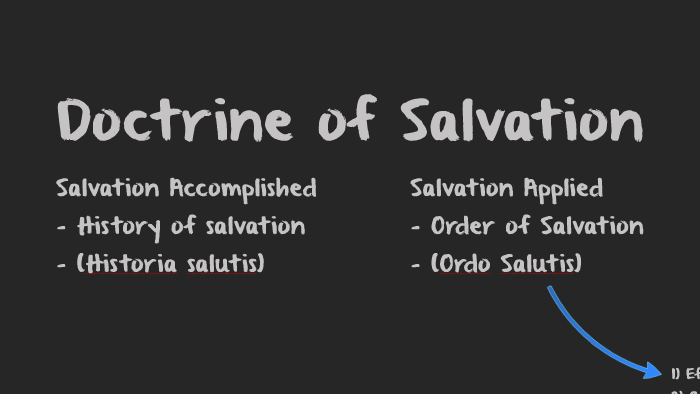
Another Text on the Ordo Salutis


"Wherefore come out from among them, and be ye separate, saith the Lord, and touch not the unclean thing; and I will receive you. And will be a Father unto you, and ye shall be my sons and daughters, saith the Lord Almighty." (II Cor. 6: 17-18)

When will God become a Father to sinners? When will they become his sons and daughters? Answer: When they come out from among them, out from among the dead (Eph. 5: 14), and come to God through Christ. 

These words of God are addressed to people who have not done so, who have not come out (nor come to), who are not separated, who had not yet been received by God. In other words, it was addressed to people who were not yet his sons and daughters, who had not yet been born of God. Becoming God's people requires being born of God. When will people become by birth the offspring of God? When they come out from the world and come to God, and when they are received by God. 

Some of those who promote the born again before faith view might be tempted to say that becoming sons and daughters (of the text) is a reference to being adopted by God and not to becoming sons and daughters by spiritual birth. But, in that case, the address would be towards those who are already his children by birth to come and once again become his children by being adopted. But, as we have seen, the words are addressed to people who are not his people and so not born of God. It is addressed to people who are not yet separated from the world, from sinful society, and who have not come to God and who have not been received by God, who have not been called his sons and daughters.

One must first get a divorce from sin and the world (separate) before he becomes married to Christ. The call to come out and to be separate is a call to a divorce, in order that a marriage to Christ may be effected. (See Rom. 7: 4)

To be "received" (welcomed or accepted) by God and to become children of God is the result of coming to God, as we have already seen (John 5: 40; 20: 31). "You shall be my sons and daughters" is the result of coming to God by faith. 

This text is saying essentially the same thing as Galatians 3: 26 - "for you are all the sons of God by faith in Christ Jesus." It is also essentially saying the same thing as John 12: 36 - “While you have the light, believe in the light, that you may become sons of light.” Since separation from sin and the world, and coming to God, are involved in what it means to "believe," so the passage is saying "be converted and I will receive you and you shall be my sons and daughters." 

To have a familial relationship with God one must leave his earthly connection with the world and with sin. 

To be in agreement with God we must come to disagree with the ungodly world. 

To be joined to God we must be disjoined to sin, self, and the world. In order to live unto God one must die to sin, self, and the world. 

We must be divorced from idols and false gods. 

This is all described when Paul says - "So then you are no longer strangers and aliens, but you are fellow citizens with the saints, and are of God's household." (Eph. 2:19) 

Separatism is implied in the very word “church,” which comes from the Greek word ekklesia meaning “a called-out assembly.” In other words, those born of God, though in the world, are not any longer of it. (John 15: 19; 17: 14; etc.) To become children of God (born of God) one must become separated from the world, from what it values, believes, and practices. That makes regeneration to be the same as conversion and upholds the thesis that faith precedes and is the catalyst for regeneration. 

I argue very simply on this. The bible teaches, as Calvin himself taught, that so long as any sinner is not attached (or joined, connected, united with, etc.) to God and to Christ, he or she is spiritually dead. To be alive the dead must come in touch with Christ. How and when is a sinner joined to Christ? The scriptures everywhere testify that union with Christ is by faith. Ergo, spiritual life comes by union with Christ by faith.

What think ye?