Friday, July 7, 2023

Hardshell Burden For The Lost

The recent posting by brother Mann concerning Hardshell views on having a burden to win souls for the Lord made me think of something I wrote years ago on this. I have written on it many times, but call attention to the following one only. I will highlight a few things however.

"The discussion made me think of the Hardshell Baptists and their belief that God does not use the means of gospel preaching to save sinners from sin and death. They say that they have been delivered from such feelings of guilt by believing that God does the saving apart from their evangelistic efforts. Especially those preachers who came to the Hardshells from Missionary Baptist churches confess to this sense of freedom from being burdened and worried about people going to hell because of their failure to witness to them. It reminds me of that commercial for Alka-Seltzer where the jingle says - "Oh what a relief it is!" However, after I saw the truth of scripture on the means question, I began to feel a burden to evangelize and witness to the lost and yes, there are times, when I feel guilty for not having witnessed to a person when I had the opportunity." (see here)

I remember Elder Bradley of Cincinnati Primitive Baptist church, a preacher, like father (Eddie Garrett Sr.) who came from the "Missionary" Baptists to the "Primitive" Baptists, telling of how he used to worry about whether time spent doing something unimportant, rather than in witnessing to the lost, would make him wonder whether someone will go to hell, who otherwise would go to heaven, because he failed to witness to that person. He was a happy Hardshell when he could finally be free from such worry and guilt because he came to believe that God could and would save sinners apart from his efforts. He was glad to let God do all the worrying, anthropomorphically speaking!

We ought to be burdened with witnessing to the lost and calling them to faith and repentance, and warning them of the coming judgment and of punishment for sin. If we are feeling guilty about not doing so, then confess it and do better. Don't rid your mind of guilt and responsibility by pretending that you have no responsibility. 

Monday, July 3, 2023

The Hardshells and the Burden of the Lord

 A Hardshell wrote the following to me because I said "one who has no burden for the lost, has no gospel to believe". Little did he know, he was doing exactly what the verses he quoted said not to do else there would be judgement. He calls the lost "sociopaths".

The Hardshell said;

"Jeremiah 23 warns against religious people claiming that people need a "burden" from the "Lord" and says that it should be spoken of in such a fashion no more. "34 And as for the prophet, and the priest, and the people, that shall say, The burden of the Lord, I will even punish that man and his house. 35 Thus shall ye say every one to his neighbour, and every one to his brother, What hath the Lord answered? and, What hath the Lord spoken? 36 And the burden of the Lord shall ye mention no more: for every man's word shall be his burden; for ye have perverted the words of the living God, of the Lord of hosts our God. 37 Thus shalt thou say to the prophet, What hath the Lord answered thee? and, What hath the Lord spoken? 38 But since ye say, The burden of the Lord; therefore thus saith the Lord; Because ye say this word, The burden of the Lord, and I have sent unto you, saying, Ye shall not say, The burden of the Lord;" Children of God need no "burden" for the sociopath."

I replied thus;

 Wow. You obviously have no idea how to understand old English, so I suggest you get a modern English bible. Of course you may also be lying, which hardshells have done for decades. The "burden of the Lord" has nothing to do with being burdened for lost souls and preaching the Gospel to sinners. Did not the apostles have a burden to preach to the gentiles? Did not Paul have a burden for the salvation of Israel? Did not the early Baptists have a burden to spread the good news and pray for revival? "Burden" in Jeremiah referred to bad news, judgement, etc. Let me give it to you so you can understand. Here are the verses in modern English "33 When one of the people or one of their “prophets” or priests asks you, “Well, Jeremiah, what is the sad news from the Lord today?” you shall reply, “What sad news? You are the sad news, for the Lord has cast you away!” 34 And as for the false prophets and priests and people who joke about “today’s sad news from God,” I will punish them and their families for saying this. 35 You can ask each other, “What is God’s message? What is he saying?” 36 But stop using this term, “God’s sad news.” For what is sad is you and your lying. You are twisting my words and inventing “messages from God” that I didn’t speak. 37 You may respectfully ask Jeremiah, “What is the Lord’s message? What has he said to you?” 38-39 But if you ask him about “today’s sad news from God,” when I have warned you not to mock like that, then I, the Lord God, will unburden myself of the burden you are to me. I will cast you out of my presence, you and this city I gave to you and your fathers. 40 And I will bring reproach upon you and your name shall be infamous through the ages." ALSO Prophets often spoke of their message as a ‘burden’ from God. It was a responsibility they had to discharge by announcing it to the people. Sometimes people went to prophets, particularly those whom Jeremiah calls false prophets, to ask them for a message, or "burden", that would give them direction or guidance. God tells Jeremiah that if they ask him for a burden, he is to tell them that they ARE the burden. They are a burden so heavy that God will not carry them any longer. He will therefore get rid of them by throwing them into captivity (33). The false prophets misused the word ‘burden’, so that no matter what announcement they made, they claimed it to be a burden from God. For this reason God commands the true prophets, such as Jeremiah, not to use the word any more (34-37). When false prophets persist in using the word, they show their defiance of God and their intention to deceive his people. God’s punishment will be to treat them as a burden and throw them away. As those whom God has cast off, they will be taken captives to a distant land (38-40). So we can see from this, that the hardshell PB's have "God’s punishment to treat them as a burden and throw them away. As those whom God has cast off, they will be taken captives to a distant land " and this is EXACTLY what has happened to the hardshell false prophets. God has closed their churches, divided them and driven them into oblivion. You are oblivious to the fact that Jeremiah is speaking about YOU!

For whatever reason there's been only radio silence since. Was it something I said? (smile)

Sunday, July 2, 2023

Hobnobbing?


"Live in harmony with each other. Don't try to act important, but enjoy the company of ordinary people. And don't think you know it all." (Romans 12:16, NLT)

Jesus was no hobnobber

Hobnobbing is defined as - "mix socially, especially with those of higher social status." Jesus rather mostly associated with the lower classes, with the poor and despised, with criminals (sinners). This is not because he condoned the activities of sinners but was because he wanted to do them good. When he was asked why he was "hanging out with" such low scum of society, he said "they that are in good health have no need of a physician, but they who are sick. I came not to call the righteous but sinners to repentance." (Mark 2: 17; Luke 5: 32) Thus Jesus came to be known as a "friend of sinners." (Matt. 11: 19; Luke 7: 34) Actually, Jesus socialized with both rich and poor, religious and non religious. One such rich high class one was Zacchaeus; And there were others.  

On the above verse in Romans Dr. Richard Trader recently wrote (See here):

"Don't try to act more important than others. If we choose that attitude, others will quickly notice. If we only try to network with the so-called important people, others will quickly notice. Our attempts to get ahead of others by knowing and cultivating friendships with "just the right people" will get our lives out of tune...Enjoy the company of other people, even if you don't agree with them on everything. "

I think that captures the message of the text quite well. In other words, let us not, as Christians, be hobnobbers with the rich and famous, but be willing to socialize with those who are considered criminals, deviants, or misfits. 

There are many bible warnings against hanging out with the wrong crowd. A physician visits the sick, but he does not do it because he enjoys seeing people sick, nor because he encourages unhealthy activities. Likewise many people visit prisons to speak with the prisoners but they do not do it because they condone criminal behavior. We must not go to extremes. We need to hang out with godly people but we should also be as friendly as possible with ungodly people without letting people think our friendliness towards ungodly people is a tacit approval of their ungodliness. There must be good sense used in deciding when and where to socialize with depraved sinners who are practicing their depravity. In other words, we ought not, as Christians, to go to the beer halls to socialize with sinners and give them words of salvation. That would be to do as Jesus warned against, to "cast your pearls before swine." (Matt. 7: 6) 

There are lots of verses in the bible where the wise men of God warned against hanging out with the wrong people. One web page is titled "42+Bible Verses About Hanging Out With The Wrong Crowd" (here). One verse that expresses this idea is this: "Do not be deceived: "Bad company ruins good morals." (I Cor. 15: 33 ESV) You can put a bad apple into a basket of good apples and the good apples will not make the bad apple good. Rather, the tendency will be that the bad apple will spoil the good apples. So, use care with who you hang out with. Remember, as a Christian, you are only being friendly with sinners and the ungodly in order that you might have opportunity of presenting the gospel to them, their only remedy against their destructive depravity. 

It is bad for Christians to be hobnobbers, to inordinately hang out with the rich, the self righteous, and the highminded. Be willing to hang out with the poor and despised, with the criminals, with the morally depraved. Heed the words of the apostle who practiced this as did his Lord - "Mind not high things, but condescend to men of low estate. Be not wise in your own conceits." (Rom. 12: 16)

One man in the bible who was a Christian hobnobber was a preacher named Diotrephes. The apostle John said of him: "Diotrephes, who loves to have the preeminence among them, receives us not." (III John 1: 9) This is true of all hobnobbers. Why do they only socialize with those of the noble or higher classes? It is because they want to ascend the ladder in society and be known and praised. Jude described them, saying:

"These are murmurers, complainers, walking after their own lusts; and their mouth speaks great swelling words, having men's persons in admiration because of advantage." (Jude 1: 16)

The words highlighted above well describe hobnobbers. They network with only those people they think will be of help to them and aid them in their rise to wealth and fame. Such people show how they are guilty of despising the poor and the lower classes, a thing God despises, and how they are guilty of showing favoritism (or being racist or bigoted) or respect of persons. Sadly, some Christians have manifested such a state of mind. Wrote James the Lord's brother:

"My brethren, have not the faith of our Lord Jesus Christ, the Lord of glory, with respect of persons. For if there come unto your assembly a man with a gold ring, in goodly apparel, and there come in also a poor man in vile raiment; And ye have respect to him that weareth the gay clothing, and say unto him, Sit thou here in a good place; and say to the poor, Stand thou there, or sit here under my footstool: Are ye not then partial in yourselves, and are become judges of evil thoughts? Hearken, my beloved brethren, Hath not God chosen the poor of this world rich in faith, and heirs of the kingdom which he hath promised to them that love him? But ye have despised the poor. Do not rich men oppress you, and draw you before the judgment seats?" (James 2: 1-6)

Thursday, June 29, 2023

Garrett vs. Dr. Ligon Duncan

Through the years I have written critical analyses against several men who wrote apologetically for the proposition "regeneration precedes faith." One of those men was Dr. J. Ligon Duncan III and his article titled "UNDERSTANDING THE TIMES Which Came First? Faith or Regeneration," July 20, 2005. I referred to it in my blog when I wrote against his thesis in that article. (See here) I wrote it in 2009.

The credentials of Dr. Duncan are quite well known in Calvinist circles, he being a leading Presbyterian of the Calvinist tradition. Dr. Duncan did communicate with me as I wrote a series on his error. Let me cite a few paragraphs from that analysis. 

To them the whole gospel rests upon this question! To them, if one does not put regeneration and salvation before faith, then he is unsound in the gospel or not preaching the gospel at all.

Duncan continues:

"To begin with, this issue involves the heart of the good news and the grace of God. One’s answer to this question necessarily reflects one’s understanding of the whole of the gospel message. For instance, if you say that belief must precede the new birth, then you must also say (1) that all men are not really spiritually dead before regeneration; (2) that saving faith is not a gift of God; (3) that the natural man does accept the things of the Spirit; (4) that an unbeliever can believe at any time by his own power, apart from God’s regeneration; and, (5) that men can come to Christ without the Father drawing them."

Are these five consequences true logical deductionsreductio ad absurdum, of those who put faith before regeneration?

------------------------

The scriptures do put faith before salvation, including rebirth. This does not mean that there is any gap in time between faith and the new birth. As soon as one believes, he is born again. And, we can say the same thing in the reverse. As soon as one is born again, he believes. Still, when two things are mentioned, one must be put first and the scriptures more often than not put faith before salvation, including regeneration.

According to Duncan, the great Calvinist theologians, such as John Calvin, Theodore Beza, Jonathan Edwards, Archibald Alexander, John Gill, Abraham Booth, Charles Spurgeon, etc., men who did not put the new birth prior to faith, were men who did not understand the basic gospel! Were men who were guilty of the five consequences listed by Duncan? Duncan says John Calvin and Martin Luther, because they did not put the new birth before faith, did not believe men were spiritually dead prior to faith and regeneration! Were men who did not believe faith was a gift of God! Were men who believed that the natural man received the things of the Spirit and could believe at any time they choose! Were men who believed that sinners could come to Christ without being first drawn!

Does putting faith before regeneration cause one to logically deny that sinners are spiritually dead? I have dealt with this accusation before.

But such an argument wrongly assumes that unbelief (or the absence of faith) is not an essential part of spiritual death. Likewise, it wrongly assumes that belief (or faith) is not an essential part of spiritual life.

Duncan continues:

"Now, these are serious contentions, to say the least. Moreover, there is a real danger of losing sight of vital biblical truth in our generation if we do not come to grips with this question. Two of the great emphases bequeathed to evangelical Christians from the sixteenth century reformers by our Lutheran and Calvinist forebears, in their Herculean labor to recover the biblical gospel, are the inability of man and the sovereign grace of God in salvation. These biblical doctrines are compromised by the assertion that faith precedes regeneration."

And what is Duncan trying to do? Is he not trying to be a "reformer" himself? Is he not trying to "refine" the teachings of Luther and Calvin? He apparently doesn't believe that Calvin or Luther went far enough. This is what I hear from Hyperists all the time. They claim to be the refiners of what these first reformers taught! He is wiser than they! He is the corrector of these men! What pride and arrogance!

It is underhanded for Duncan to use the names of Luther and Calvin in such a manner as to leave the impression that these men agreed with him and the Hyperists in putting regeneration before faith. They are really inconsistent and contradictory on this matter. In one breath they will claim agreement with Luther and Calvin on the "ordo salutis," and then, in the other breath, say that they are improving and refining their views! They will in one breath say that these men were in agreement with them, and then say, in the other breath, that these men did not distinguish between regeneration and conversion!

Duncan accuses Luther and Calvin of compromising Biblical truth, yea, the gospel itself, by their putting of faith before regeneration! By Duncan's judgment, these men were in great error, and denied the gospel, all because they did not put regeneration before faith!

Duncan is a Presbyterian and it is ironic that he goes against the great Calvinist leaders of his own denomination! Not only Calvin, but also men like Jonathan Edwards and Archibald Alexander, did not put regeneration before faith, and are thus guilty of denying the heart of the gospel!

----------------

Duncan writes:

"There are many well-meaning evangelicals today who are quite adamant in their assertion that faith precedes regeneration, and it would not be difficult to multiply examples. For instance, one theologian recently insisted that God cannot (and, to say the same thing, God will not) regenerate a heart that will not admit him. More often, though, we hear it put positively: any person who is willing to trust in Christ as his personal Savior and Lord can receive the new birth."

Duncan here is truly ironic, if not hypocritical. It is laughable, that he, as a Hyperist, speaks of his counterparts, those who do not put regeneration before faith, be he a true Calvinist or Classical Arminian, as they who are "quite adamant in their assertion that faith precedes regeneration." I dare say that he and his Hyper Calvinist associates, such as those who participated with him in the T4G conference, far outdo his counterparts in their being "adamant" about regeneration preceding faith! It is Duncan and the Hyperist who say that getting the "ordo salutis" correct is the heart of the gospel! Also, it is the Hyperist view that may best be described as "assertion," not the classical view.

In the first couple of years writing in the Baptist Gadfly I wrote against a lot of the proponents of the born again before faith error. Besides Duncan I dissected the writings of R.C. Sproul, James White, Tom Ascol, and others of the same caliber. 

Monday, June 26, 2023

The Lampstand Warning!

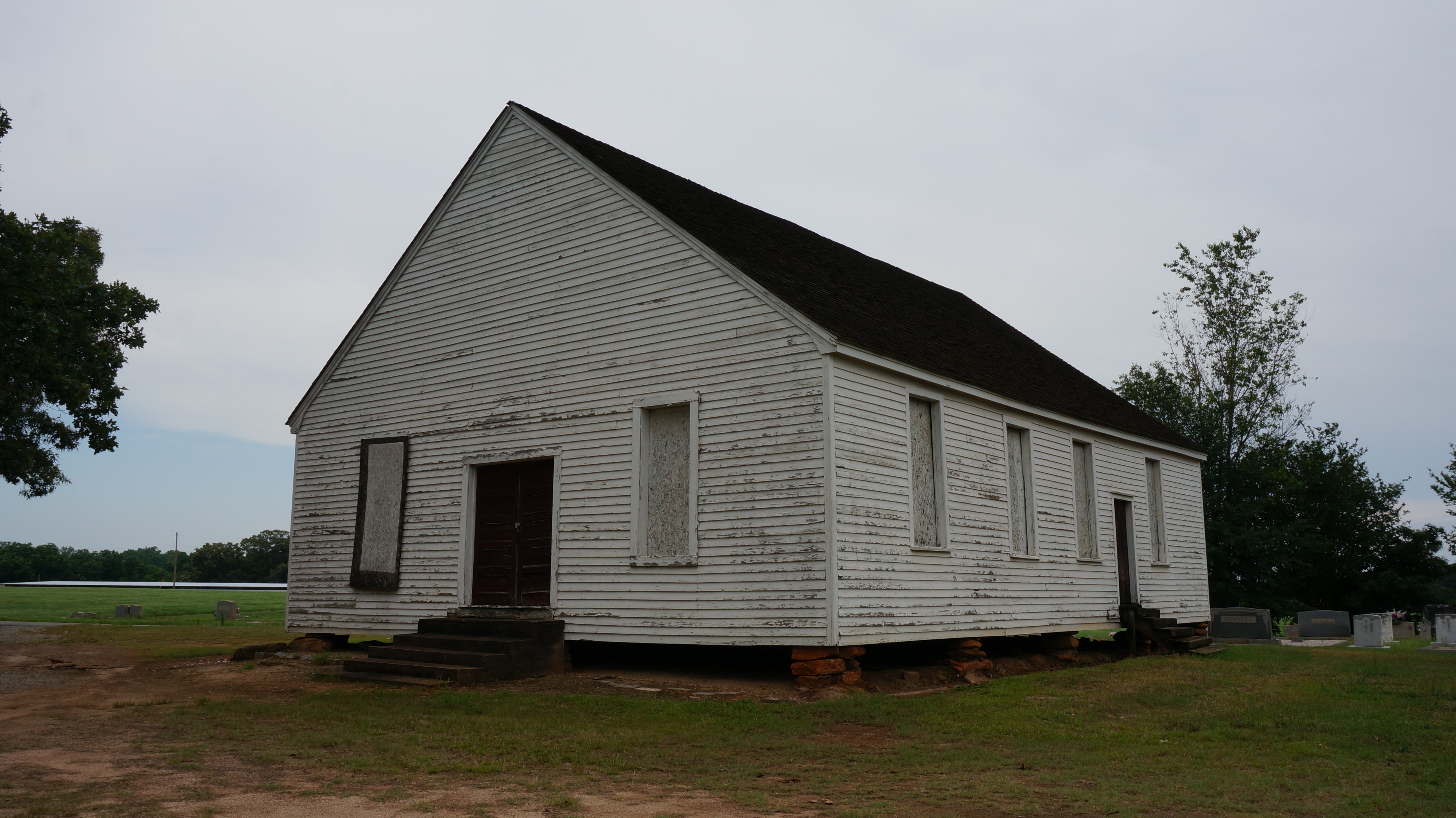
 In searching the history of various Baptist churches in north Georgia, I ran across Union Baptist Church in Hull, Ga. The Union Primitive Baptist Church sits directly across the street. The  churches split over missions and evangelism in the 1800's. Union PB Church closed its doors years ago. Union Baptist is still going strong. The sign on Union Baptist advertises those "unauthorized" activities that the Primitives object to. The Union PB Church is dead, not even having a sign left. The Primitives stress that it is God who "adds to the church". And which church would that be? The Primitives "left things in God's hands", while the Missionary church chose to BE God's hands as the Body of Christ. The pictures speak for themselves. In the first pic we see death, In the second pic we see life and activity. See how desolate the PB church appears when looking at it from the Missionary Baptist church. Let this be a warning to the Missionary Baptists as well. This will be YOUR fate if you take your light and put in under a bushel. Not much else to say.

"Remember therefore from where you have FALLEN, and repent and do the WORKS you did at first. But if you do not, I am coming to you, and I will remove your lampstand from among the churches, unless you repent." (Rev 2:5)

 Union Baptist Church Cemetery in Danielsville, Georgia - Find a Grave  CemeteryUnion Baptist Church


On Regeneration

Carroll as Succinct as Boyce

B. H. Carroll

"...regeneration cannot be complete without faith."

[An Interpretation of the English Bible, Volume 10, pages 293, 294].

http://calvinistflyswatter.blogspot.com/

J. P. Boyce, in writing upon "Regeneration" and "Conversion," says:

"From the Scriptural teaching we see that the whole work of Regeneration and Conversion is included under the one term regeneration."

Let not the "regenerated before faith" people continue to claim Carroll and Boyce as believing what they believe about "regeneration."
The above was first posted by me back in 2008 at the Baptist Gadfly blog (here).

Addendum

CHAPTER XXXII - REGENERATION AND CONVERSION of Boyce's Systematic Theology (See here emphasis mine)

"At the outset of a discussion of these two subjects we are met by the question, whether they are not one and the same thing. They are unquestionably so intimately associated that it is difficult to separate them and point out the distinctions between them. The Scriptures connect the two under the one idea of the new birth, and teach that not only is regeneration an absolute essential in each conversion, but that in every intelligent responsible soul conversion invariably accompanies regeneration. It is not strange, therefore, that they are often confounded. Yet, after all, the Scriptures also teach that regeneration is the work of God, changing the heart of man by his sovereign will, while conversion is the act of man turning towards God with the new inclination thus given to his heart."

"II. From the Scriptural teaching we see that the whole work of Regeneration and Conversion is included under the one term regeneration."

Also, regarding John Gill, whom the Hardshells fail to quote precisely, I have written thusly:

Let me cite once again the words from that disputed section of Gill's Body of Divinity ("Of Regeneration"), words which follow the section Jason and the Hardshells say taught Hardshell views.

"Though after all it seems plain, that the ministry of the word is the vehicle in which the Spirit of God conveys himself and his grace into the hearts of men; which is done when the word comes not in word only, but in power, and in the Holy Ghost; and works effectually, and is the power of God unto salvation; then faith comes by hearing, and ministers are instruments by whom, at least, men are encouraged to believe: "received ye the Spirit", says the apostle, "by the works of the law, or by the hearing of faith": (Gal. 3:2), that is, by the preaching of the law, or by the preaching of the gospel? by the latter, no doubt."

Gill here gives what he believes is the teaching of scripture on regeneration. He defines regeneration as the receiving of the Spirit of God and his grace into the heart. He believes that regeneration, so defined, is by the means of the gospel being believed! These words show that Gill did not believe that "regeneration," narrowly defined, is where the Spirit and grace of God were received! (as cited by me many places, but see here )

Wednesday, June 21, 2023

ALMOST PERSUADED

 David Marks: Sacrificial Ministry – Free Will Baptist HistoryElder David Marks was a Free WIll Baptist preacher (1805-1845), born in Shandaken, Ulster County, N. Y., on Nov., 4, 1805. As I read his story, I was amazed at the maturity he showed while a teenager. Can you even imagine a teenager today being able to articulate as he did, with the fervency he had, and being willing to do what he did? As I read about his life, the word "persuade" or "persuaded" kept appearing. It immediately brought my mind back to a song we sang at church in my childhood, called "Almost Persuaded". I also thought of the Apostle Paul trying to convince King Agrippa that Jesus is the Christ, to which Agrippa replied, "You almost persuade me to become a Christian."

At age 13, he set out on foot for Providence, R. I. He walked 368 miles before arriving at Brown University. However, upon his arrival he was informed that tuition would be free, but no other funds were available for boarding or clothing. He then walked 368 miles back home. On June 11, 1819, he was baptized and became a member of the Freewill Baptist Church in Phelps. The following year he joined the Freewill Baptist Church in Junius. At age 15, he felt the call of God leading him to enter the ministry. He left home and began preaching.

He is mostly known for his sermon called "Nothing".  One day he rode his horse into Ancaster, Ontario, announcing he would preach. A crowd gathered, and Marks asked if anyone had a topic to suggest. A man mockingly said, "Nothing!"  Marks began preaching on "nothing." "God created the world from nothing", he said. "He gave us laws in which there is nothing unjust. There is nothing in us to justify us.There will be nothing to comfort sinners in death. But while Christians have nothing of which to boast, we have Christ. And in Him, we have nothing to cause us grief, nothing to disturb our peace, and nothing to fear in eternity." Finishing his sermon, Marks mounted his horse and left.

Elder Marks wrote this at age 17. "I retired to a grove and dedicated myself anew to the Lord; solemnly covenanting to live near the fountain of goodness that I might know the height and depth of perfect love and more successful in winning souls to Christ. Alas! How many when the Lord calls and makes them sensible of the awful danger of living in sins still harden their hearts and refuse their best, only eternal friend admission...unprepared to meet the awful swelling of Jordan. O Savior help me, teach me to persuade them."

 "Sunday, June 17, I preached to four large congregations in Rushford and Centerville. The power of Emmanuel was present in each meeting, and sinners wept as they viewed themselves in the gospel glass…Wednesday, I preached in China (New York); the day after, walked thirteen miles in the rain, and attended three meetings. My shoes were worn off my feet; and reaching the last appointment in Boston, Erie Co., I was much wearied; my feet were blistered, and so painful, that I was obliged to sit with them on a pillow, while speaking to the people. But amidst my privations and sufferings for the cause of Christ, my heart felt that more than double was rendered, by seeing one sinner this evening persuaded to turn and live."

Who among us have walked 13 miles in the rain, with blistered feet, and amidst such pain, just to preach the Gospel? How many among us have never even walked next door to tell our neighbor about the Savior? What preacher today would preach to a mocking crowd in public? This man walked 13 miles, shoes worn off his feet, blistered so badly, he had to prop his feet on pillows. All this to see only "one sinner persuaded to turn and live."  Was that one sinner worth all the pain? I sense we will hear the answer when we reach Glory. All I can say is how convicted I became while reading his story. O Savior, help ME to teach, to persuade them!

 “He who is almost persuaded is almost saved, but to be almost saved is to be entirely lost.”

ALMOST PERSUADED

 “Almost persuaded” now to believe;
“Almost persuaded” Christ to receive;
  Seems now some soul to say,
  “Go, Spirit, go Thy way,
  Some more convenient day
    on Thee I’ll call.”

 “Almost persuaded,” come, come today;
“Almost persuaded,” turn not away;
  Jesus invites you here,
  Angels are ling’ring near,
  Prayers rise from hearts so dear;
    O wand’rer, come!

 Oh, be persuaded! Christ never fails—
Oh, be persuaded! His blood avails—
  Can save from every sin,
  Cleanse you without, within—
  Will you not let Him in?
    Open the door!

 “Almost persuaded,” harvest is past!
“Almost persuaded,” doom comes at last;
  “Almost” cannot avail;
  “Almost” is but to fail!
  Sad, sad that bitter wail—
    “Almost—but lost!”

 Be now persuaded, oh, sinner, hear!
Be now persuaded, Jesus is near;
  His voice is pleading still,
  Turn now with heart and will,
  Peace will your spirit fill—
    Oh, turn today!


Sunday, June 18, 2023

Biblical Regeneration

The following citations are from my posting titled "Chapter 40 -- Biblical Regeneration" (See here).

I believe that the following words by J.M. Pendleton are appropriate to cite at this juncture. He writes under the heading, "Regeneration, With Its Attendants, Repentance And Faith," saying:

"It is evident that the Scriptures refer to a great change in all who become Christians--a change denoted by such forms of expression as the following: "Born again," (John 3:3); "Born of the Spirit" (John 3:5); "Born of God" (John 1:13); "Created in Christ Jesus" (Eph. 2:10); "Quickened together with Christ" (Eph. 2:5); "A new creature" (2 Cor. 5:17); "Renewed after the image of him that created him" (Col. 3:10); "Dead unto sin,...alive unto God." Rom. 6:11. This change is, in theological writings, usually called Regeneration, and it is inseparable from "repentance toward God and faith toward our Lord Jesus Christ." Acts 20:21. For this reason the heading of this chapter has been selected, and I purposely present in closest connection Regeneration, Repentance, and Faith. Nor is it my intention to dwell on what has been termed "the order of time." Indeed, if the view of Calvin and Jonathan Edwards is correct, regeneration and repentance are in substance the same so that the question as to order of time is ruled out. Calvin says:

"In one word, I apprehend repentance to be regeneration, the end of which is the restoration of the divine image within us; which was defaced, and almost obliterated by the transgression of Adam."

The words of Edwards are these:

"If we compare one scripture with another, it will be sufficiently manifest that by regeneration, or being BEGOTTEN or BORN AGAIN, the same change in the state of the mind is signified with that which the Scripture speaks of as efffected by true REPENTANCE, and CONVERSION. I put repentance and conversion together, because the Scripture puts them together (Acts 3:19), and because they plainly signify much the same thing."


Regeneration occurs when one is converted to Christ by the gospel, when the sinner turns to God and Christ in faith and repentance.

Further, as I have shown in numerous writings (as have others before me), the first and oldest "Calvinists" or "Reformed" apologists saw conversion and regeneration (rebirth) as denoting the same phenomenon. The separating of evangelical conversion (repentance and faith) from "regeneration" makes regeneration a kind of prevenient grace. The words of Pendleton and Edwards are spot on in defining regeneration as conversion.

What say ye?