Monday, January 8, 2024

Gather First The Tares (conclusion)


"13 But I do not want you to be ignorant, brethren, concerning those who have fallen asleep, lest you sorrow as others who have no hope. 14 For if we believe that Jesus died and rose again, even so God will bring with Him those who sleep in Jesus. 15 For this we say to you by the word of the Lord, that we who are alive and remain until the coming of the Lord will by no means precede those who are asleep. 16 For the Lord Himself will descend from heaven with a shout, with the voice of an archangel, and with the trumpet of God. And the dead in Christ will rise first. 17 Then we who are alive and remain shall be caught up together with them in the clouds to meet the Lord in the air. And thus we shall always be with the Lord. 18 Therefore comfort one another with these words." (I Thess. 4: 13-18 nkjv)

This being "caught up in the clouds to meet the Lord in the air" is what is called "the rapture." No one disagrees on what it is, all affirming that it is the catching away of those believers who have not died at the time when Christ appears in the clouds of the air. The disagreement comes over when the rapture occurs in relation to other things, such as the second coming, the resurrection and judgment of the living and dead, and especially of "the great tribulation" spoken of by Christ in the gospels and by Christ in the Book of Revelation. Does the rapture occur before the great tribulation and before the day of wrath? Or during it? Or after it? 

Further, in the text the meeting place is the lower atmosphere, the place where are the clouds; And the Greek word for "air" being "aer" and not "ouranos," meaning the atmosphere where birds fly, clouds roam, where are the peaks of the mountains, where dust is blown in winds, etc. It is not the extreme outermost sphere, nor outer space.

Further, the Greek word for "meet" shows that it means greet, as one who greets someone who is coming to his house at some point before he comes all the way so that he can escort him back the remaining way. The text also says that this rapture of living believers occurs in conjunction with the 1) resurrection of the bodies of all the righteous dead, and the 2) descent of the spirits of the righteous dead from heaven (so as to unite with their ascending bodies in the clouds and then experience glorification, the transformation of their bodies suited for immortality and eternal life, and equipping, etc.)

Notice that the rapture takes away all the saved people on earth and this leaves only unsaved people on earth. Further, it seems that the ones who are "left" on earth are the unsaved. Yet, other scriptures seem to say that it is the wicked who are taken away in the final judgment, thus leaving only the righteous on earth. So, how can both these be true? Who is taken away and who is left on earth? Before addressing that question, let us list some of the leading passages dealing with the rapture and resurrection gathering of believers when Christ appears in the clouds of the sky. 

Texts on the Rapture Gathering

"...but gather the wheat into my barn." (Matt. 13: 30)

We have been discussing that text at length. We have also looked at this text:

"Now we beseech you, brethren, by the coming of our Lord Jesus Christ, and by our gathering together unto him, That ye be not soon shaken in mind, or be troubled, neither by spirit, nor by word, nor by letter as from us, as that the day of Christ is at hand." (II Thess. 2: 1-2 kjv)

Other verses that also speak of the same harvest, and let us begin with this text from the Psalmist:

"Our God shall come, and shall not keep silence: a fire shall devour before him, and it shall be very tempestuous round about him. He shall call to the heavens from above, and to the earth, that he may judge his people. Gather my saints together unto me; those that have made a covenant with me by sacrifice. And the heavens shall declare his righteousness: for God is judge himself. Selah." (Psa. 50: 3-6)

Of course, each time a righteous person dies he is "gathered unto his people" (Gen. 25: 8; Etc.) But, this is a gathering of disembodied spirits in heaven by death that has been going on every day since the beginning of the human race, and is not the gathering (rapture) of the end time harvest of all living believers that occurs when Christ returns. 

Christ spoke of the rapture as occurring when he returns, saying:

"And then shall appear the sign of the Son of man in heaven: and then shall all the tribes of the earth mourn, and they shall see the Son of man coming in the clouds of heaven with power and great glory. And he shall send his angels with a great sound of a trumpet, and they shall gather together his elect from the four winds, from one end of heaven to the other." (Matt. 24: 30-31)

"And one of them, named Caiaphas, being the high priest that same year, said unto them, Ye know nothing at all, Nor consider that it is expedient for us, that one man should die for the people, and that the whole nation perish not. And this spake he not of himself: but being high priest that year, he prophesied that Jesus should die for that nation; And not for that nation only, but that also he should gather together in one the children of God that were scattered abroad." (John 11: 49-52)

Paul also wrote of it when he writes:

"That in the dispensation of the fulness of times he might gather together in one all things in Christ, both which are in heaven, and which are on earth; even in him." (Eph. 1: 10)

Is This The Rapture?

"And as it was in the days of Noe, so shall it be also in the days of the Son of man. They did eat, they drank, they married wives, they were given in marriage, until the day that Noah entered into the ark, and the flood came, and destroyed them all. Likewise also as it was in the days of Lot; they did eat, they drank, they bought, they sold, they planted, they builded; But the same day that Lot went out of Sodom it rained fire and brimstone from heaven, and destroyed them all. Even thus shall it be in the day when the Son of man is revealed. In that day, he which shall be upon the housetop, and his stuff in the house, let him not come down to take it away: and he that is in the field, let him likewise not return back. Remember Lot's wife. Whosoever shall seek to save his life shall lose it; and whosoever shall lose his life shall preserve it. I tell you, in that night there shall be two men in one bed; the one shall be taken, and the other shall be left. Two women shall be grinding together; the one shall be taken, and the other left. Two men shall be in the field; the one shall be taken, and the other left." (Luke 17: 26-36 KJV)

"But as the days of Noe were, so shall also the coming of the Son of man be. For as in the days that were before the flood they were eating and drinking, marrying and giving in marriage, until the day that Noe entered into the ark, And knew not until the flood came, and took them all away; so shall also the coming of the Son of man be. Then shall two be in the field; the one shall be taken, and the other left. Two women shall be grinding at the mill; the one shall be taken, and the other left." (Matt. 24: 37-41) 

Though these verses are often cited as dealing with the rapture and showing that it is the righteous who are taken away and the unrighteous who are left on earth, they show just the opposite. The ones who were "taken away" by the flood were the wicked and the ones left were the eight righteous souls of Noah and his family. 

On the other hand, some make the argument that the text says that Lot went out of Sodom before the destruction fell upon the wicked and so say that this is what happens when Christ returns, i.e. the righteous go out of the world and then comes the great tribulation or day of wrath. 

Again, the main idea is one of separation of those living on earth when Christ comes. Further, there is judgment and destruction for the wicked both before Christ's appearance in the clouds and the rapture of the saints and also afterward. The final destruction of the wicked occurs when Christ descends with his saints from the clouds of heaven. Recall too these words:

"For the upright will dwell in the land, And the blameless will remain in it; But the wicked will be cut off from the earth, And the unfaithful will be uprooted from it." (Prov. 2: 21-22 nkjv) 

So, many of the wicked will be taken away by the judgments of the Apocalypse before the righteous are raptured, but the rest when Christ descends with his people and with the angels. 

Saturday, January 6, 2024

Gather First The Tares (ii)


Barnes in his commentary says this about the above text:

"Gather not my soul with sinners - Margin, "take not away." The word rendered "gather," means properly to "collect;" to "gather," as fruits, Exodus 23:10; ears of grain, Ruth 2:7; money, 2 Kings 22:4. There is the idea of assembling together, or collecting; and the meaning here is, that he desired not to be united with wicked people, or to be regarded as one of their number." 

The Psalmist understood that there would be a complete separation of the righteous and the wicked when each are "gathered" in the end time harvest. He did not want to be gathered with the unbelievers, with the ungodly, with the impenitent, i.e. with the chaff or weeds. In this second chapter in this short series we will further consider both the end time gathering of living saints, via the rapture, and the end time gathering of living sinners. 

In the previous posting we saw that the children of God will be separated from the children of the devil at the end of the present age. We saw that this separation involves those who are alive on earth when Christ comes again and did not involve the separation of the dead. 

There is a "gathering," or a "reaping" or "harvesting" of both the wheat and the tares and the gathering of the tares would be first on the list of things the harvest angels would be ordered to do. The gathering of the wheat is fulfilled when the instantaneous transformation of the bodies of saints occurs in the rapture. The gathering of the tares, or children of the wicked one, occurs prior to the gathering of the wheat and their gathering involves their having been either cut down or pulled up. Following that, the tares are put into bundles for later burning.

If this is correct, and I believe it is, then how and when will the living and growing tares (who are unsaved unbelievers) be 1) gathered together? and 2) tied together in bundles? Also, how long will it take to complete this winnowing and purging of humanity? 

We cannot say that the tares (unbelievers who are alive at the end of the age and who are on earth during the harvest) are gathered in the same way as are believers, i.e., through a catching away to the heavens. Surely the gathering of the wicked involves their being cut down or rooted up and which effects their loss of life and permanent destruction, the very kind that we see in chapters six through twenty of the Book of Revelation (all which deals with what occurs when Christ is revealed from heaven with his mighty angels). This cutting down of the wicked, and gathering and bundling them together, occurs over the several years spanning the Apocalypse, with the final gathering of the wicked and their destruction and burning occurring at the final battle of Armageddon (Rev. chapters 16 & 19 as we will see). 

It is interesting how the book of Revelation speaks of several end time gatherings of the wicked, which may well be the bundling of the tares (children of the wicked one) described in the parable. Further, if the gathering of the wheat in the rapture occurs in Revelation chapter nineteen, as surely seems to be the case, then we ought to find somewhere in previous chapters of Revelation where and when the harvesting and gathering of the tares occurs.

So, let us notice first this text from the Apocalypse and an end time large scale gathering of the wicked:

"12 And the sixth angel poured out his vial upon the great river Euphrates; and the water thereof was dried up, that the way of the kings of the east might be prepared. 13 And I saw three unclean spirits like frogs come out of the mouth of the dragon, and out of the mouth of the beast, and out of the mouth of the false prophet. 14 For they are the spirits of devils, working miracles, which go forth unto the kings of the earth and of the whole world, to gather them to the battle of that great day of God Almighty. 15 Behold, I come as a thief. Blessed is he that watcheth, and keepeth his garments, lest he walk naked, and they see his shame. 16 And he gathered them together into a place called in the Hebrew tongue Armageddon." (Rev. 16: 12-16 kjv)

Is this one of the bundles of tares gathered together by the will and providence of God for their destruction? I believe so. In fact, as we will see, the more we near the "end of the age" and begin to experience the things connected with the return of Christ in the Book of Revelation, the more we see the wicked band together as never before (under the leadership of the Devil and his son the Antichrist). 

There will be numerous gatherings of the wicked (bundles) when Christ returns in judgment upon the wicked. There will also be movement upon living believers at the end of the age to also gather together in groups or bundles for safety and for holiness. But, it is upon the end time gatherings of the wicked that we are focusing now. 

In the above text it is not the angels of God who do the gathering, as in the parable of the tares, but it is "three unclean spirits like frogs" or "the spirits of demons" who do the gathering. However, in response we say that both holy angels and demons may be said to do the gathering. The gathering of the demonic spirits results from God's unleashing them for that purpose. It is a judgment of God for them to become prey of demons and so gathered together in bundles to be destroyed. We see this same thing in the story of Job's afflictions. Satan brought his ills upon him but Job ascribed all to God saying "the Lord gave and the Lord has taken away, blessed be the name of the Lord" and said to his wife "shall we receive good at the hand of God and not evil also?" (Job 2: 10, 21) God may be said to cause Job's calamities because it required the willing permission of God for Satan to be able to do those calamities. In fact, all the awful calamities in the Book of Revelation are ordained of God for the punishment of the wicked who refused faith and repentance, and he employs evil spirits and hellish creatures to effect that punishment.  

Notice also that the text says that "the kings of the earth and of the whole world" are gathered, which is indeed a large gathering or bundle of tares. Recall that Christ said "the field is the world" and here we see an end time gathering of the wicked "of the whole world." And, why gather them together in bundles? To burn them in the fire, i.e. in order to destroy them or get rid of them.

"11 Now I saw heaven opened, and behold, a white horse. And He who sat on him was called Faithful and True, and in righteousness He judges and makes war. 12 His eyes were like a flame of fire, and on His head were many crowns. He [e]had a name written that no one knew except Himself. 13 He was clothed with a robe dipped in blood, and His name is called The Word of God. 14 And the armies in heaven, clothed in [f]fine linen, white and clean, followed Him on white horses. 15 Now out of His mouth goes a [g]sharp sword, that with it He should strike the nations. And He Himself will rule them with a rod of iron. He Himself treads the winepress of the fierceness and wrath of Almighty God. 16 And He has on His robe and on His thigh a name written: KING OF KINGS AND LORD OF LORDS." (Rev. 19: 11-16 nkjv)

I believe this is the battle of Armageddon mentioned by way of anticipation in chapter sixteen. In chapter sixteen the gathering of the wicked, both rulers and armies, commences in a place in Israel called Armageddon and the destruction of them occurs in chapter nineteen which represents what Christ will do when he descends from the clouds and stands upon the earth. In other words, the weeds are gathered in chapter sixteen but they are burned in chapter nineteen. 

Notice that it is a scene where and a time when all the impenitent wicked on earth (who have aligned themselves with Antichrist and Satan) will be destroyed in the manner described. Further, it cannot be doubted that the raptured saints are with Christ in the heavens when the "armies of heaven" gather in the clouds of heaven. It is when these words of the Psalmist will be fulfilled: 

"5 Let the saints be joyful in glory: let them sing aloud upon their beds. 6 Let the high praises of God be in their mouth, and a two-edged sword in their hand; 7 To execute vengeance upon the heathen, and punishments upon the people; 8 To bind their kings with chains, and their nobles with fetters of iron; 9 To execute upon them the judgment written: this honour have all his saints. Praise ye the Lord." (Psa. 149: 5-9 kjv)

Both saints and angels will have roles to play in the various activities connected with Christ's return and the establishment of the Millennial age and kingdom. Saints, as good soldiers of Jesus Christ, will join the "armies of heaven," perhaps being an army distinct from the armies of angels; Christian soldiers. 

Further, this scene in Revelation chapter nineteen is when Christ smites the nations with a rod of iron. That being so, the saints must be present with Christ at that time for they also will be involved in this smiting of the nations for so the record is:

“And he who overcomes, and keeps My works until the end, to him I will give power over the nations— ‘He shall rule them with a rod of iron; They shall be dashed to pieces like the potter’s vessels’[fn]— as I also have received from My Father." (Rev. 2: 26-27 nkjv)

So, as Christ smites the nations completely in Revelation chapter nineteen it is highly probable that the saints descend with him from the clouds, upon their own white horses and chariots, with heaven's weapons. 

Further, notice how the scene in Revelation nineteen has Christ with a robe "dipped in blood." This is the blood of the wicked who the Lord will slaughter when he returns. Again, obviously, this slaughter only involves those who are alive when Christ engages the wicked in this final battle. This slaughter of the wicked is spoken of by the prophets of old. For instance, Isaiah wrote:

"Who is this who comes from Edom, With dyed garments from Bozrah, This One who is glorious in His apparel, Traveling in the greatness of His strength?— “I who speak in righteousness, mighty to save. Wherefore art thou red in thine apparel, and thy garments like him that treadeth in the winefat? I have trodden the winepress alone; and of the people there was none with me: for I will tread them in mine anger, and trample them in my fury; and their blood shall be sprinkled upon my garments, and I will stain all my raiment. For the day of vengeance is in mine heart, and the year of my redeemed is come.” (Isa. 63: 1-4 nkjv)

Also, the Psalmist spoke of this end time bloody destruction of the wicked, how they are cut down by the Redeemer and Avenger, the Lord Jesus Christ at the appointed time. 

"But God shall wound the head of his enemies, and the hairy scalp of such an one as goeth on still in his trespasses. The Lord said, I will bring again from Bashan, I will bring my people again from the depths of the sea: That thy foot may be dipped in the blood of thine enemies, and the tongue of thy dogs in the same." (Psa. 68: 21-22)

So, again, it is Christ, along with the saved of all the ages, who descend from the clouds and smite the nations, slaughter and uproot the wicked rebels and to no doubt protect those few meek and humble people who hid themselves from the Antichrist and helped Christians and Jews (the sheep peoples), albeit without becoming believers of Christ up to that time (much like when Rahab helped the Israelite spies). The saints will have the blood of the enemies of God and of Christ upon their garments in that day as does Christ their Commander. As Psalm 149 says, the saints will "execute vengeance and punishments" and "execute the judgment written" upon the wicked at the end of the age, and will act as military police in binding and chaining the leaders in the rebellion at the end of the age.

"17 Then I saw an angel standing in the sun; and he cried with a loud voice, saying to all the birds that fly in the midst of heaven, “Come and gather together for the [h]supper of the great God, 18 that you may eat the flesh of kings, the flesh of captains, the flesh of mighty men, the flesh of horses and of those who sit on them, and the flesh of all people, [i]free and slave, both small and great.” 19 And I saw the beast, the kings of the earth, and their armies, gathered together to make war against Him who sat on the horse and against His army. 20 Then the beast was captured, and with him the false prophet who worked signs in his presence, by which he deceived those who received the mark of the beast and those who worshiped his image. These two were cast alive into the lake of fire burning with brimstone. 21 And the rest were killed with the sword which proceeded from the mouth of Him who sat on the horse. And all the birds were filled with their flesh." (Rev. 19: 17-21)

Not only does the first part of chapter nineteen speak of the gathering and destruction of the wicked by Christ, by his people, and by the angels, but the latter verses (above) do so more directly. There is also not only a gathering of those who have embraced Antichrist (the beast), and a destruction of them, but also a gathering of the vultures to eat the dead flesh of the wicked in that final day. These wicked ones, these tares, these children of the wicked one, will be "gathered together" to make war against the Lord, but they are nothing but a bundle of weeds readied for either burning in the dump or for the vultures to eat.

This invitation given to the vultures to come eat the flesh and blood of the ones slaughtered by the Lord, to partake of this "supper," is referred to in this oracle of the Lord Jesus Christ, in my view:

"26 Wherefore if they shall say unto you, Behold, he is in the desert; go not forth: behold, he is in the secret chambers; believe it not. 27 For as the lightning cometh out of the east, and shineth even unto the west; so shall also the coming of the Son of man be. 28 For wheresoever the carcase is, there will the eagles be gathered together." (Matt. 24: 26-28)

It is believed by many that in the days of Christ most cities had a common garbage dump called "Gehenna" and into this place dead animal carcasses were thrown and where a constant fire was burning and devouring the combustible things in it. This became a picture of "the lake of fire and brimstone" and which is "the second death." (Rev. 20: 14) It was also described by Christ as a place "where the worm dies not nor the fire is quenched." (Mark 9: 48)  So, what happens to the wicked at the second coming of Christ with his saints and with the holy angels? Their bodies are thrown in the dump to be eaten by vultures or burned in the fires. 

"Then I looked, and behold, a white cloud, and on the cloud sat One like the Son of Man, having on His head a golden crown, and in His hand a sharp sickle. And another angel came out of the temple, crying with a loud voice to Him who sat on the cloud, “Thrust in Your sickle and reap, for the time has come for You to reap, for the harvest of the earth is ripe.” So He who sat on the cloud thrust in His sickle on the earth, and the earth was reaped. Then another angel came out of the temple which is in heaven, he also having a sharp sickle. And another angel came out from the altar, who had power over fire, and he cried with a loud cry to him who had the sharp sickle, saying, “Thrust in your sharp sickle and gather the clusters of the vine of the earth, for her grapes are fully ripe.” So the angel thrust his sickle into the earth and gathered the vine of the earth, and threw it into the great winepress of the wrath of God. And the winepress was trampled outside the city, and blood came out of the winepress, up to the horses’ bridles, for one thousand six hundred furlongs." (Rev. 14: 14-20 nkjv)

Again, we see a description of the end time gathering of the tares and of their separation from the wheat and their being rooted out of the new heavens and earth of the Millennium. What is described above is what will occur as part of the coming Apocalypse and appearing of Christ Jesus the Lord and King and part of that end time harvest of the wicked. 

Now let us look at some old testament prophecies of the end time gathering into bundles the wicked who will be thus bundled for destruction.

“Therefore wait for Me,” says the LORD, “Until the day I rise up for plunder; My determination is to gather the nations To My assembly of kingdoms, To pour on them My indignation, All My fierce anger; All the earth shall be devoured With the fire of My jealousy." (Zeph. 3: 8 nkjv)

That is just what we see in the book of Revelation. The nations are being gathered together so that they may be destroyed by the fire of God's wrath.

"Now also many nations are gathered against thee, that say, Let her be defiled, and let our eye look upon Zion. But they know not the thoughts of the LORD, neither understand they his counsel: for he shall gather them as the sheaves into the floor. Arise and thresh, O daughter of Zion: for I will make thine horn iron, and I will make thy hoofs brass: and thou shalt beat in pieces many people: and I will consecrate their gain unto the LORD, and their substance unto the Lord of the whole earth." (Micah 4: 11-13)

That is a description of the end time gatherings of the wicked generation who will be gathered for destruction and separation from the earth and the righteous who will be left to inherit it.

"Proclaim ye this among the Gentiles; Prepare war, wake up the mighty men, let all the men of war draw near; let them come up: Beat your plowshares into swords, and your pruninghooks into spears: let the weak say, I am strong. Assemble yourselves, and come, all ye heathen, and gather yourselves together round about: thither cause thy mighty ones to come down, O LORD. Let the heathen be wakened, and come up to the valley of Jehoshaphat: for there will I sit to judge all the heathen round about. Put ye in the sickle, for the harvest is ripe: come, get you down; for the press is full, the fats overflow; for their wickedness is great. Multitudes, multitudes in the valley of decision: for the day of the LORD is near in the valley of decision. The sun and the moon shall be darkened, and the stars shall withdraw their shining. The LORD also shall roar out of Zion, and utter his voice from Jerusalem; and the heavens and the earth shall shake: but the LORD will be the hope of his people, and the strength of the children of Israel. So shall ye know that I am the LORD your God dwelling in Zion, my holy mountain: then shall Jerusalem be holy, and there shall no strangers pass through her any more." (Joel 3: 11-17)

This is another prophecy of the end time gathering of the tares. Like the other texts of similar focus it occurs as part of the day of wrath and vengeance, in a day of slaughter, in the day when the Lord separates those who he finds alive on earth when he comes. 

I will post one short concluding article for this series and then work to finish my long series on the afterlife (which is now dealing with these same eschatological questions).

Thursday, January 4, 2024

Gather First The Tares


"Let both grow together until the harvest, 
and at the time of harvest I will say to the reapers, 
First gather together the tares 
and bind them in bundles to burn them, 
but gather the wheat into my barn.” ’ ” 
(Matthew 13: 30 NKJV)

There is to be a harvest of both the wheat and the tares (weeds), said the Lord in the above parable, and he said in his explanation of the parable, that the harvest occurs "at the end of the age." (Vs. 40)

"Therefore as the tares are gathered and burned in the fire, so it will be at the end of this age. The Son of Man will send out His angels, and they will gather out of His kingdom all things that offend, and those who practice lawlessness, and will cast them into the furnace of fire. There will be wailing and gnashing of teeth." (40-42 nkjv)

This harvest is intended to separate out the godly from the ungodly prior to the Millennium so that the wheat only remain to be gathered into barn (or the place where harvested wheat goes). But, who is gathered first? And, is this gathering of wheat and tares a gathering of the dead wheat and tares? Or, only a gathering of the living, either of living believers or living unbelievers? In other words, does this gathering or harvest imply a resurrection? Is the gathering and harvesting of the wheat connected with the resurrection of the bodies of dead believers and the rapture and the transformation of living believers? 

According to Revelation chapter twenty, the resurrection of the righteous takes place a thousand years before the resurrection of the unrighteous. But, if the gathering or harvest of the parable includes the physical resurrection of both wheat and tares, then it seems either that the resurrection of the unjust occurs at or even before that of the just, for the command is specific and direct to the reaping angels - "gather first the tares and bind them in bundles to burn them." So, how do we explain this seeming conundrum? 

There are several reasons why the division of wheat from weeds in the field of this world and age does not comprehend a separation of the righteous and unrighteous who have died

First, the dead, saved or unsaved, as disembodied spirits, are already separated in death and have lost all interaction and commingling with each other when they die, with the saved going to heaven in the intermediate state and the unsaved going to Hades in the same interim state. So, it cannot be that the harvest of people "at the end of the age" is for that purpose. 

Second, the weeds and the wheat are viewed in the parable as growing on earth at the end of the age when Christ returns and sends forth the angels to reap. It is living wheat and tares that are separated and not dead wheat or weeds. So, the division of wheat and weeds is teaching the same thing as the division of sheep peoples from goat peoples as we saw from Matthew chapter twenty five. 

Third, the souls of the wicked dead (representing tares) are not bundled together in bundles by angels when they die. 

Fourth, it is not true that all of the unsaved are gathered together in death before righteous people are gathered in death, for each day throughout the age this separation goes on with some from each group dying, and yet the text says all are harvested "at the end of the age," that is, all at the same time.

It is clear then that the harvest is a harvest of living peoples at the end of the age and that the gathering of the tares will be first, preceding the gathering of the wheat. These two facts are not easy for many to understand or reconcile with their ideas about the end time. 

Many believe that the resurrection of the righteous dead and the instant transformation of living saints via their rapture into the sky to meet the Lord occurs 1) before the great tribulation and day of destruction (generally believed to be seven years and described in the book of Revelation), and 2) before the harvest of the tares in that seven years and destroyed at its end. But, when Jesus says that the angels will "first gather" the tares and bind them in bundles he overthrows that order of things. Thus, the words "gather first the tares" is the death knell for the view that the rapture of believers occurs before the day of trial and great tribulation. Their view would have Christ rather saying "gather first the wheat." 

Wrote Dr. John Walvoord (See here):

"In a word, Matthew 13 does not discuss the doctrine of the rapture at all, and there is absolutely nothing in this passage which would contradict the pretribulational view." (POSTTRIBULATIONISM TODAY; 7. Do the Gospels Reveal a Posttribulational Rapture?)

This is one of the errors of Walvoord and other Dispensationalists. They handle the problem which the words "gather first the tares" gives for their view (that the wheat will be gathered first before the tribulation, judgment, and destruction of the tares) by saying that the parable of the wheat and tares says nothing about the rapture, as does Walvoord above. But, that is simply not the case. The rapture of living believers to meet the Lord in the clouds of heaven is a harvest of them. This is, however, what Walvoord and other such Dispensationalists must deny or else give up their idea that the harvest or rapture precedes the rooting up of the wicked. 

But, there are still some incongruities to deal with. For instance, it seems that the harvesting and gathering of the wheat actually does involve both living and dead saints; But, on the other hand, the gathering of the tares in bundles for burning, occurring prior to that, does not involve the wicked dead, but only of the wicked who are yet living on earth. 

Further, it seems that the harvest is all one in the parable, occurring at once, although two different plants are cut down and reaped. These are not two separate harvests, but one harvest from one field, but having two manners of plants to be separated. It is also clear that the harvesting of the tares cannot involve the resurrection of the wicked dead, for that cannot occur before the resurrection of the saints. The wheat harvest does involve reaping the bodies out of the graves and joining them with their heavenly spirits. But, the weed harvest only involves living people at the time of the end, and no resurrection of the bodies of the wicked dead.

In summation, I think the harvest of wheat and tares concerns only the division of peoples who are alive at the end of the age. It does not even focus upon the resurrection of the dead. The fact that the resurrection of the bodies of the righteous dead are raised at the same time as the gathering or harvesting of saints in the rapture at the return of Christ does not disprove the fact that the separation of saved from unsaved is in regard to those who are alive on earth. 

So, what is involved in this harvesting, gathering, and bundling of the tares? We know it is not the time of the resurrection of the wicked dead, for that occurs after the Millennium and after the harvesting of the wheat. It is, and must be therefore, as we have seen, a harvesting of the wicked who are yet living on earth at the time of the Lord's coming. 

Some Reasons For Hesitancy

Though I believe that the rapture of living saints at the return of Christ occurs towards the end of the Apocalyptic judgments of the day of the Lord, or after "the great tribulation," and have argued that one of the reasons for that view is the affirmation of the words "gather first the tares," yet this argument is not by itself undeniable proof. It could be wrong to connect the word "first" with the gathering of tares alone. It could be that the orders given to the angels by their Commander has a list of many things for those angels to do and yet Christ says "of all the things I have ordered you to do, first harvest both the wheat and tares before you do the other things." In such a case the word "first" does not mean "first" in regard to the wheat, but in regard to the other unspecified things the angels will be charged with doing when Christ comes. 

Also, as we will see, the parable of the fish net seems to show that there is no single order to this harvesting of wheat and tares, and so this argument that the unsaved will be harvested before the saved is not the only possibility. I cannot therefore be too dogmatic on this argument for a post tribulation reaping of saints. 

It is a single harvest but a division in the way each is gathered or collected, or we would say it is a single harvest with two reapings. Further, just as there is both similarity and difference between the resurrection of the just and the resurrection of the unjust, so too there is similarity and difference between the end time separation of the living when comes the day of the Lord, of separating the saved from the unsaved. In exploring that further, we will see what is involved in the harvest and gathering together of living saints at the return of Christ.

Paul, in beginning a series of revelations concerning end times in his Thessalonian epistles (which deal greatly with the doctrine of the second coming or eschatology), said this in his first epistle: 

"we beseech you, brethren, by the coming of our Lord Jesus Christ, and by our gathering together unto him..." (II Thess. 2: 1)

That "gathering together" is what occurs in I Thessalonians chapter four, as we have previously called attention to, where the apostle says that Christ will "descend from heaven with a shout of command and with the voice of the archangel and trump of God" at which time "the dead in Christ will rise first," and when the living saints will be "caught up" (or raptured) into the air along with the resurrected bodies of all dead saints, and when they themselves experience the same change in their physical bodies as did the resurrected bodies of saints. This is that "gathering together unto" Christ that he speaks about in the above text in his second epistle. The Greek word for "gathering together" is episynagōgē and is used twice in Hebrews 10: 25 in the words "the assembling of ourselves together." This is the bundling or gathering together (sheaves) of the harvest of the wheat. 

There is no doubt that we can speak of the resurrection of the dead bodies of saints as a kind of harvest. There is also no doubt that when a righteous person dies, his soul and spirit may be said to have been reaped when he is gathered in spirit into paradise. It is important to understand that the harvest of the wheat and tares is a prophecy of the reaping of those who are alive on earth at the time of the second coming and not of the dead. Therefore, those who espouse a pre-tribulation rapture will respond to the argument that the text says "gather first the tares" by saying the parable does not deal with the rapture at all. But, that is obviously a denial of the plain text. It speaks of the harvesting, reaping, and gathering of the wheat. We have seen that the rapture is such. 

Gather Out Of His Kingdom

"...and they will gather out of His kingdom all things that offend, and those who practice lawlessness, and will cast them into the furnace of fire." (Matt. 13: 41)

Notice how the words above do not say "and they will gather out the wheat from among the inhabitants of the earth," which it ought to say if there is a rapture or snatching away of living end time believers prior to the time of great tribulation and the final gathering and destruction of the wicked (tares). The Greek word for "out" is "ek" and literally means "out from among." Those who practice lawlessness and offend will be gathered or taken out so that only the unoffensive and law abiding may remain. The gathering out of his kingdom such wicked people is identical with gathering out the tares from among the wheat so that only wheat is left. 

Years ago when I debated the question of "once saved always saved" or the doctrine of eternal security or perseverance of the chosen and called, the Arminian who denied it used the above verse to prove that people can lose salvation. He affirmed that "gathering out of his kingdom" meant gathering out from among the people of God those who had apostatized. They were in the kingdom (saved) and then, because of backsliding, were gathered out (lost salvation or membership in the kingdom of saints). But, that is not what the text is teaching. 

First, it is talking about what occurs at the end of the age, and not what is occurring daily throughout the two thousand years of the church age. Second, by "his kingdom" is meant "his wheat" or "children of the kingdom." That being so, the "gathering out from among his kingdom all the lawless" means the same thing as "gathering out from among his wheat all the tares." In this reading the kingdom of God is intertwined with the kingdom of Satan (his seed or children) as are the tares and the wheat. Third, none of the tares ever became wheat and none of the wheat ever became tares. 

Further, Jesus identified the wheat or "good seed" as "children of the kingdom" but the tares are "children of the wicked one." So, we may read the above verse in this manner - "gather out the children of the kingdom from among the children of the wicked one." Thus, there is no statement about a child in the kingdom becoming lost or turning into a tare. 

Another error on this parable is rather common among bible commentators. It is sometimes said that wheat and tares are to grow together within the church. But, that is a gross misinterpretation and has negative consequences for other clear bible teachings. If it were true, then it would be wrong for a church to ever exclude or excommunicate someone who proved to be a tare or of the kingdom of the lawless or children of the wicked one. Further, it is against the plain interpretation that the Savior gave to the parable wherein he says "the field is the world." He did not say "the field is the church." 

The main idea in the parable is prophetic, dealing with what occurs at the end of the age (although with the idea of how the king's children should interact with the children of the wicked one during the age is also of importance). That one fact overthrows several wrong interpretations on the parable. Yes, the growing of the wheat and weeds occurs linearly during the entire age, but not the reaping or harvesting. That occurs at the end of the age. Another leading idea in the parable is the idea of complete separation of righteous people from unrighteous people; And, though there is some separation that occurs in life on earth, between just and unjust, saved and lost, yet there is no complete separation. Wrote the apostle:

"I wrote to you in my epistle not to keep company with sexually immoral people. Yet I certainly did not mean with the sexually immoral people of this world, or with the covetous, or extortioners, or idolaters, since then you would need to go out of the world. But now I have written to you not to keep company with anyone named a brother, who is sexually immoral, or covetous, or an idolater, or a reviler, or a drunkard, or an extortioner—not even to eat with such a person." (I Cor. 5: 9-11 nkjv)

Believers should not "keep company with" certain people, should avoid the company and gatherings of certain people whose behavior is as the apostle described. But, Paul realized that it was not always possible or practical to have no dealings at all with such people, saying it was not realistic, "for then you must go out of the world." But, the idea is this; as much as possible avoid certain gatherings and practices of the lawless. So, Paul recognizes that wheat and tares will stay intertwined in each other's lives, and not fully separated, until the "end of the age." In the same epistle Paul also says: 

"Therefore “Come out from among them And be separate, says the Lord. Do not touch what is unclean, And I will receive you.” (II Cor. 6: 17 nkjv)

So, believers seek separation in some ways from unbelievers. But, they also want to teach unbelievers the gospel and to witness to them, and to warn them of the consequences of their immoralities in view of the coming day of judgment. But, there is coming a day when there will be a complete separation of saved from unsaved, of righteous from unrighteous. Also, keep in mind, as we have already stated, this separation at the end of the age is a separation of those who are alive at the end of the age, i.e. those who compose that generation that shall be last before the end. It is not a separation of the dead, for they are already separated in their disembodied spirits in the intermediate state, with the righteous in paradise and the lost in Hades. 

This final separation is affirmed by Christ in the prophecy of the judgment of sheep and goat peoples and by the parable of the wheat and weeds. It is also what John the Baptist said of Christ.

"...he shall baptize you with the Holy Ghost, and with fire: Whose fan is in his hand, and he will throughly purge his floor, and gather his wheat into the garner; but he will burn up the chaff with unquenchable fire." (Matt. 3: 11-2)

This "purging" involves the separation we have been focusing upon and which takes place at the end of the age. It is separating wheat from chaff (tares or weeds). In the case above, the separation occurs by a farming tool call the "fan," a winnowing fan that made use of the wind to do the separating of wheat from chaff, the wheat being heavier than the tares. However, in the parable of the wheat and tares, it is the angels who do the separating, and there is some order to the process, such as gathering the weeds first, and then bundling them, and then burning them. So too with the gathering of the wheat. In the prophecy of the sheep and goat peoples it is Christ's presence and word to each that separates the two kinds of people. It is also said that he "sets" the sheep on his right hand and the goats on his left.

Companion Parable

"Again, the kingdom of heaven is like unto a net, that was cast into the sea, and gathered of every kind:  Which, when it was full, they drew to shore, and sat down, and gathered the good into vessels, but cast the bad away. So shall it be at the end of the world: the angels shall come forth, and sever the wicked from among the just, And shall cast them into the furnace of fire: there shall be wailing and gnashing of teeth." (Matt. 13: 47-50 kjv)

This parable teaches the same thing as the prophecy of the sheep and goat nations and of the harvest of wheat and tares. It deals with that final separation that will occur among those who are alive when Christ comes at the end of the age and at the start of the Millennial age. 

There is a difference however between this parable and the parable of the wheat and tares. In the latter we saw how the tares were gathered first, and how it was the children of the wicked one who were gathered out from among the children of the kingdom but in the above the order is reversed it seems, for it says that "the good" are first gathered "into vessels" before the bad fish are "cast away." In that parable it does not even indicate that the bad fish were "gathered" at all. It was the good fish that were gathered out of the waters and then out of the net (wherein all fish were harvested at the same time) so that the net only had bad fish remaining to be cast away. 

The solution to this seeming conflict is to say that all three texts focus on how the righteous and the wicked will be forever separated from each other when Christ comes and this separation concerns those who are alive at the end of the age when Christ fully comes. Also, we cannot just cast aside the words "gather first the tares" as if they had no significance. We could say that at the very same time A was separated from B that B was separated from A.

There are problems either way as respects the order of the harvest of wheat and tares. If we say the wheat are gathered first, there are some problems. If we say the tares are gathered first, there are some problems. To go into this matter further would go beyond the scope of this series on the afterlife or hereafter. I do believe that in the rapture and translation of living believers at the time of the resurrection of the righteous dead that the resurrected and raptured believers do not leave this earth and its heavens, for the saints meet Christ in the clouds, in the lower air, as the bible shows. At the time of the rapture will come the final destruction of the wicked, and nearly every human being, and it is the wicked who are taken away or cast away so that they are no longer on earth. This is in keeping with the words of Solomon: 

"For the upright will dwell in the land, And the blameless will remain in it; But the wicked will be cut off from the earth, And the unfaithful will be uprooted from it." (Prov. 2: 21-22 nkjv) 

In the next article in this two chapter (posting) series, we will discuss what is involved in the end time "gathering" and "bundling" of the tares.

Saturday, December 30, 2023

"I Am Glad For Your Coming"

I have stated in years gone by that many bible teachers and students do not understand the amount of time involved in the second coming of Christ. See How Long Is The Coming Of Christ? and the follow up article here. I showed that just as we cannot confine the first "coming" of the Lord as taking in only one minute, hour, or day, so too with his second coming. 

The word often used for "coming" is the Greek word "parousia" and means "arrival" or "presence."* The first coming or presence of the Lord was thirty three years. The second coming also cannot be restricted to a single event occurring in an hour, or a day, or a few years. 

As an example of how we use the word "coming" in the same way, as not denoting what takes place in an instance, but to a longer period of time inclusive of much more, we often say to a guest in our house "I am glad for your coming." We certainly do not simply mean we are glad that he traveled "to" our house, but that he also came and had his presence with us for a period of time. Don't you see?

*"parousia" (translated as "presence") is used by Paul in contrast with "apousia" (translated "absence") in Philippians 2: 12 (KJV). 

Beliefs about the Afterlife (xxxxii)


Who is meant in this oracle from the risen Lord Jesus Christ by "every eye will see him" and "they who pierced him"? Is it only the people who will be still alive on earth when Christ descends from the clouds of heaven? Or, will it mean everyone who has ever existed will see Christ descend, all being resurrected simultaneously (and which must immediately precede his descent, so that they are all on earth and look up to see Christ descending)? It seems clear that it is a description of the eye witnessing of those who are alive on earth, for several reasons.

First, the second coming of Christ will precede the Millennium as the chronology of the book of Revelation shows, especially chapters nineteen through twenty one, and which other scriptures confirm. 

Second, this final descent of Christ from the clouds follows the rapture or catching up of the saints to "meet the Lord in the air" and follows the resurrection of the bodies of the righteous dead, as we saw from I Thessalonians chapter four. But, if they meet him in the clouds, then their eyes will not see his coming as men still on earth do, who are looking upward to see it, but they will be rather participating in his final descent and seeing it from a different perspective. They will then become "escorts" of Christ for the raptured saints will meet the coming King in the clouds, which then become a kind of entry foyer (or greeting room) for redeemed men to greet and welcome Christ to earth, the home of humanity. The Greek word for "meet" in I Thessalonians 4: 17 means to go out to greet someone who is coming to you so that you can escort him the rest of the way to your home. Notice these other places where such a meeting occurs (same Greek word apantesis):

“Then shall the kingdom of heaven be likened unto ten virgins, which took their lamps, and went forth to meet the bridegroom...And at midnight there was a cry made, Behold, the bridegroom cometh; go ye out to meet him.” (Matt. 25: 1, 6)

“And so we went toward Rome. And from thence, when the brethren heard of us, they came to meet us as far as Appii forum, and The three taverns...And when we came to Rome...” (Acts 28: 14-16) 
 
Again, we notice how Paul is journeying "to Rome." On the way to Rome "the brethren" meet Paul at the "Appii forum," at the "three taverns." Do they then leave with him and go back from where he started? Or do they meet him for the purpose of accompanying him the rest of the way to Rome? Likewise, when the saints "meet" Christ in the air, it will not be for the purpose of going back to Heaven with him, but in order to accompany him the rest of the way to the earth. Thus, risen and raptured saints will act as both escorts of Christ, but also are equipped as soldiers in the army of the Lord to execute final judgments. 

Third, it cannot refer to the eyes of the wicked dead who have been resurrected for that does not occur at the time of the rapture and resurrection of saints, at the time of the first resurrection of the righteous, and cannot therefore occur before Christ's descent from the clouds; And it cannot occur till one thousand years after the resurrection of the righteous. 

Therefore "every eye" must mean the eye of every human who is present on earth at the time when Christ descends from the clouds of heaven, and it would exclude every believer who had died in the Lord up till that time so that there are no believers on earth between the time of Christ's descent with the risen saints from the clouds to earth. However, once Christ is standing on the earth, and imprisons Antichrist, Satan, et als., many will repent and believe, both among the Jews and Gentiles, among the few who have survived the great tribulation and the apocalyptic judgments. 

They Who Pierced Him

If every eye of the living inhabitants of the earth shall see Christ descend from the clouds, then how do we understand the affirmation that "even they who pierced him" shall see him with their eyes? If this is a reference to the Roman soldiers who were the unit in charge of Jesus's flogging, torture, crucifixion, and piercing, then this would prove that "every eye" includes all the resurrected dead, for they must have been resurrected prior to Christ's descent in order to see it. Further, we can assume that the soldiers, with but one exception, probably died as unbelievers, and if they are intended by "they who pierced him," then it would prove that these Roman soldiers must have been resurrected prior to Christ's descent so as to witness it from earth. 

Another reason why "they who pierced him" probably does not refer to the Roman soldiers is because the text uses the plural "they" for those who pierced him. But, the gospel record indicates that a single soldier pierced the side of Christ. "But one of the soldiers pierced His side with a spear" (John 19: 34). 

Now, it is possible that "they who pierced him" may include not only the one soldier who did the actual piercing, but all those who participated in the crucifixion, and so this by itself is not all the proof needed to sustain the view that the words allude to the soldiers or to Pilate, and such others. But, when we look at the prophecy of Zechariah chapter twelve, we see clearly who is meant by "they who pierced" the Messiah.

"7The Lord will save the tents of Judah first, so that the glory of the house of David and the glory of the inhabitants of Jerusalem shall not become greater than that of Judah. 8 In that day the Lord will defend the inhabitants of Jerusalem; the one who is feeble among them in that day shall be like David, and the house of David shall be like God, like the Angel of the Lord before them. 9 It shall be in that day that I will seek to destroy all the nations that come against Jerusalem. 10 “And I will pour on the house of David and on the inhabitants of Jerusalem the Spirit of grace and supplication; then they will look on Me whom they pierced. Yes, they will mourn for Him as one mourns for his only son, and grieve for Him as one grieves for a firstborn." (Zech. 12: 7-10 nkjv)

There is no doubt that the "Me" in "they will look on Me whom they have pierced" is, as we know now for certain, was Jesus (or Yeshua) the Christ (or Messiah) and that the "they" are the Jewish people, or more particularly, those of Jerusalem and Judah. Therefore it is very probable that "they who pierced him" in Revelation 1: 7 are the same as those in Zechariah 12: 10. 

So, when was this prophecy fulfilled? In the first coming of Christ? Or, in his second coming? Or, in both, being another example of dual fulfillment?

In both comings of Christ the Jewish people, including Judah and the citizens of Jerusalem, it may be said that they looked upon the Messiah they had slain. But, the national great weeping and grieving, as over the death of a firstborn son, does not find fulfillment in his first coming. Yes, a few individual Jews became Christians after realizing their sin in crucifying Christ (as in Acts chapter two and the day of Pentecost) and grieving over the fact, but that cannot be the entire fulfillment of the mourning of the prophecy.

Further, it is not only the tribes of Israel who will mourn when they see Christ appear (as Zechariah's prophecy says) but, as the prophecy of Christ in Revelation 1: 7 says, then "all the tribes of the earth shall mourn." Second, the text does not say "all the tribes of the earth and under the earth shall mourn." 

Therefore by "every eye" we are to understand "every eye of each person who is alive on earth when Christ descends from the clouds." The wicked dead are not part of this "every eye," therefore. 

On this text John Gill wrote:

"And they also which pierced him; his hands, feet, and side, when they crucified him; both the Roman soldiers, who actually did it, and the body of the Jewish nation, the rulers and common people, who consented to it, and at whose instigation it was done; these, being raised from the dead, shall see him with their bodily eyes, whom they so used, 
 
And all kindreds of the earth shall wail because of him; all the wicked, in the several parts of the world, will lament, and wring their hands, and express the inward terror and horror of their minds, at his appearing; they will fear his resentment of all their wicked words and actions; will dread his wrath, and tremble at his righteous judgment..."

Here, Dr. Gill, though a Premillennialist, totally misses the interpretation and meaning of this oracle of the risen Lord Jesus. First of all, where is the resurrection of the wicked dead even mentioned in this oracle? There is no resurrection of the wicked dead prior to this coming of the Lord from the clouds, which there must be if "every eye" denotes every eye of the wicked dead. 

First, if that were so, then the resurrection of the wicked dead occurs before the Millennium, but Gill believes that the resurrection of the wicked follows the Millennium per Revelation chapter twenty. No, the text is telling us about the wicked who will be alive on earth when he descends from the skies. When that occurs the righteous dead have already been raised and the living righteous will have been instantly transformed, and they then together rise to meet Christ in the clouds. So, the only ones left to see with their eyes are the wicked or lost. However, as we have seen, when Christ actually sets his feet on earth, there will be some who instantly believe in him, among both the Jewish nation and among the Gentile nations

Since only one soldier pierced the side of Christ and the texts in both Zechariah and Revelation say a plurality pierced him ("they"), it shows that the single soldier is not who is intended by the words "they who pierced him."  But, in the same way it could be said of the Jews who said "crucify him, crucify him," especially of the Jewish rulers who condemned him to death and turned him over to the Romans. So, Paul wrote:

"14 For you, brethren, became imitators of the churches of God which are in Judea in Christ Jesus. For you also suffered the same things from your own countrymen, just as they did from the Judeans, 15 who killed both the Lord Jesus and their own prophets, and have persecuted us; and they do not please God and are contrary to all men, 16 forbidding us to speak to the Gentiles that they may be saved, so as always to fill up the measure of their sins; but wrath has come upon them to the uttermost." (I Thess. 2: 14-16 nkjv)

Further, Peter on the day of Pentecost, Peter says to his Jewish brothers:

"22 “Men of Israel, hear these words: Jesus of Nazareth, a Man attested by God to you by miracles, wonders, and signs which God did through Him in your midst, as you yourselves also know— 23 Him, being delivered by the determined purpose and foreknowledge of God, you have taken by lawless hands, have crucified, and put to death; 24 whom God raised up, having loosed the pains of death, because it was not possible that He should be held by it." (Acts 2: 22-24 nkjv) 

When the text in Revelation speaks of people who pierced Christ seeing him when he comes in the clouds and stands upon earth we should not think of its fulfillment occurring by a resurrection of the unsaved dead, whether Romans or Jews, but only of Jews who are living at the time of Christ's return and descends from the clouds. Therefore, "they which pierced him" means "they who killed him," which is laid at the feet of the Jewish nation (ethnicity). 

What we have endeavored to prove is that "the nations" over whom the redeemed of both Israel and the Gentiles are those living people who mourn with repentance when Christ comes and who are allowed to enter the Millennium and be the seed and foundation of a new world. This fact is so important for us to understand if we are to understand life in the Millennium and in the other ages following.

In the next chapter we will look at the Jewish and Gentile conversions which take place when Christ descends from the clouds and stands upon the earth.

Thursday, December 28, 2023

Irony In Moral Advice

"They promise them freedom, but they themselves are slaves of corruption. For whatever overcomes a person, to that he is enslaved." (I Peter 2: 19 ESV)

There is so much irony among those people who tell others how to live when they themselves don't live right. That is seen in the above verse of the apostle Peter. Imagine that! A slave promising to give freedom! A drug addict telling us about how to have self control! A man who has been divorced twelve times giving advice on how to have a lasting happy marriage! Preachers who talk about the need of holiness and yet who get rich preaching and who live ungodly lives clandestinely are cases of situational irony and hypocrisy. Lots of those kinds of preachers around today. 

Today, on the political left, now led by perverts and the ungodly (for the most part), we hear them tell us, or shall we say, dictate to us, how to live our lives, when they don't know how to run their own lives. It reminds me of a song I heard when a teenager, from the song "Sunshine" by Jonathan Edwards, a top hit from 1971, with these lines:

I don't feel much like dancing 
Some man's gone, he's tried to run my life 
Don't know what he's asking

But he can't even run his own life 
I'll be damned if he'll run mine, Sunshine (repeated)

By "some man" we can well mean "liberal person," which in today's political speech denotes someone who is for promoting all kinds of sexual perversions and sin, for commanding us to live by their rules or die (which is what Communists, Fascists, and other authoritarian regimes, dictators and tyrants, do), to call white black, and black white, and call evil good, and call women men and men women, etc. Another example of irony from the ungodly on the political left is the fact that what labels they put on others, with whom they disagree, are more fitting for themselves; such labels as racist, fascist, cult follower, etc. 

Yet, the irony is apparent in that the rich and powerful elites, who are often denouncing Christians and the ten commandments, do not live fuller and richer lives than poor Christians, who know inner peace and contentment, and who attempt to live godly and moral lives. 

Of course, it is not only innocent irony we are talking about, but irony that is seen in hypocrisy. And, there is plenty of that on the part of ungodly who tell us how to live, how to eat, drink, and be merry. 

"How blessed is the person, 
who does not take the advice of the wicked
who does not stand on the path with sinners, 
and who does not sit in the seat of mockers." 
(Psalm 1: 1)

Wednesday, December 27, 2023

S.H. Ford on the Ordo Salutis


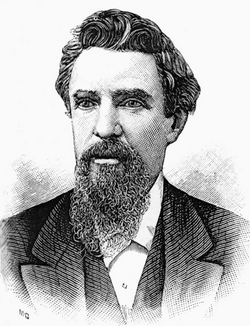
Samuel Howard Ford 
D.D.,L.L.D
1819-1905

For a list of the books that Dr. Ford wrote and some biographical information from those who knew him, see (here). He wrote "The Origin of the Baptists" and "History of Kentucky Baptists," and other historical writings. He was also editor of "The Christian Repository" in the 1850s through the 1880s. 

Dr. Ben M. Bogard, the well known Baptist, wrote the following about Dr. Ford (See here).       

"S. H. Ford was born in Bristol, England, February 19, 1819. He came with his parents to America when he was a child and the family settled in Missouri. His father was a preacher of ability, and soon after coming to Missouri he became pastor at Columbia, where he preached the gospel with good effect for several years. 
 
In early life S. H. Ford was converted and called into the ministry. He entered Bonne Femme College, where he graduated with distinction, and afterwards studied at the State University at Columbia, Mo. 
 
In his senior year at the University he was called to the care of the church at Jefferson City, Mo. Although he was only twenty-five years old, he was even then a great preacher. It was here he began a career which has not been equalled, in many respects, by any other man in America. He has been pastor in Memphis, Tenn., Louisville, Ky., and St. Louis, Mo. 
 
He was for several years editor of the Western Recorder, Louisville, Ky., and for near forty-six years he has been editor of Ford's Christian Repository.

His career as editor, including his connection with the Western Recorder, has been longer than that of any other editor in America. Dr. J. R. Graves had been editor of the Tennessee Baptist for forty-nine years when he went home to Heaven, but S. H. Ford has been doing the work of editor for fifty years and is still wielding an able pen.

He has written two valuable histories. His Ecclesiastical History and his Brief Baptist History are reliable, clear, and strong. His book on What Baptists Baptise For is the best book of the kind which is now on the market. But, perhaps, his greatest work is THE GREAT PYRAMIDS. This is a scientific work and manifests unusual ability.

The best things he has written, however, have not been published in book form. His strong article on current topics in the Christian Repository shows him to be what he is: ready, strong, accurate. Although engaged frequently in heated discussions, he has never lost his balance, and, perhaps, no other man has been engaged so constantly in the discussion of current theological topics. Conservative, logical, safe, and honest, he has nearly always been found on the side of right and truth. No man has stood more constantly and tirelessly for Baptist principles. He has stood like a great stone wall against every attack on Orthodoxy. No other man has so thoroughly exposed and answered this "Invisible, Universal, Spiritual Church" theory as he. His discussion of that question, in part, is published at the close of this sketch, and the reader may judge for himself how thoroughly he has done his work.

During the civil war Dr. Ford was elected a member of the Confederate Congress. His gift as an orator and his happy knowledge of human nature would have made him a power in politics, but like many other men, he sacrificed all of that for the privilege of fighting the good fight of faith in Prince Immanuel's army. In his eighty-first year he is still at work, and he will die in the harness."

Wrote Cathcart about Ford:

"He is a firm Baptist, and he has had discussions with Alexander Campbell, Bishop Spaulding, of the Catholic church, and Dr. N. L. Rice. Dr. Ford is a Hebrew and Syriac scholar; he is well read in general literature, and is specially familiar with the Romish controversy. In his theology he is a Calvinist. In the past twenty-seven years he has written upon almost every subject bearing on the religious issues of the times. He is now sixty years of age, and is as active, energetic, and laborious as ever." ([From The Baptist Encyclopedia, William Cathcart, editor, 1881; reprint, 1988, pp. 404-405; See here

If I live long enough, I hope to read the works of Ford further. I don't agree with Landmarkism (although I agree that we cannot as Baptists recognize infant sprinkling as baptism) and its chief ideas, and don't like it that he supported the confederacy, yet that does not mean that he should be totally shunned in reading his theological works. 

Here is what he says about the ordo salutis. They are from my entry in "The Baptist Gadfly" for April 20, 2009 (See here). All highlighting mine. 

"Whether regeneration precedes repentance and faith, or whether it is the immediate consequence of faith, has long been, and still is, a question debated, often with considerable feeling. The doctrine that the first work done for the sinner, in the process of conversion, is his regeneration, and that he is then, and may continue long, a regenerate unbeliever, appears to many sound Christians an evident absurdity. And yet, if, as is acknowledged, the sinner is "dead in trespasses and sins" how absurd to speak of his exercising living, saving faith, before he has been made alive, or regenerated!

The supporters and opposers of each of these statements or doctrines have unsparingly exposed the inconsistencies or absurdities of the other. The logomachy has been continued and is almost endless. Logic and metaphysics have been brought into requisition to draw distinctions without a difference; and to-day, the introduction of the question in a company of preachers, or a ministers' meeting, will awaken interest and debate sooner than almost any other subject.

Now, the question is,—by what terms are his merciful operations on the soul designated in the inspired word? The result of his agency is, most undoubtedly, a new, holy, and glorious life. But the incipient workings on the conscience, the understanding, and heart—producing compunction, conviction, repentance—what terms shall we use in speaking of these? Now there are serious objections to the use of the word regeneration when speaking of this first awakening of the sinner to a sense of danger and of sin. The principal and most serious objection is, that the Bible never uses this term to describe it. Indeed, this objection is sufficient to lead to an entire abandonment of the use of the word regeneration in this connection.

"We have thus examined the only places where the term palig-genesia (regeneration) occurs, andin neither case does its usage warrant its application to the first work of the Spirit on the awakened soul. From this we conclude that it is incorrect to say that the sinner is first regenerated, that he then penitently seeks Christ, and exercises faith in his finished work.

Dr. Ford was a Calvinist and yet he did not put regeneration prior to conviction of sin (as do the Hardshells) nor prior to faith and repentance, as do "Reformed Baptists" and other Hyper Calvinists.

He states that it is an error, an absurdity, to say that - "The doctrine that the first work done for the sinner, in the process of conversion, is his regeneration."

And he says:

"Now there are serious objections to the use of the word regeneration when speaking of this first awakening of the sinner to a sense of danger and of sin."

I have written on this very thing over the years. "Regeneration" cannot be defined as "the first thing God does internally or externally in an unbeliever to make him a believer" for then there would be no such thing as pre-regeneration divine activity, which is so contrary to scripture that it needs no proof for presentation now. What he says is in direct opposition to Two Seed and Hardshell Baptist ideas about the ordo salutis and what constitutes regeneration (renewal) or rebirth. For instance, "awakenings" of conscience and conviction of sin and lost condition are not instances of regeneration, as Hardshells and Hyper Calvinists affirm, but are what operations of the word and Spirit precede regeneration. Ford understood this as the great old Calvinists of the past.

And, what danger does Ford refer to when speaking of Hardshells and Hyper Calvinists who think that "first awakening" and "sense of danger and of sin" are evidences of regeneration? Well, I have written much on that also. If a man is under conviction of sin, or awakened to his lost condition, and he meets preacher H and meets preacher B and relates this fact, preacher H says "well, this state you are in is evidence that you are already saved." However, preacher B says "well, you need to confess your sins to God, repent of them, turn to the Lord and believe in Christ, and you will be saved." Now, if the man is really not saved, then can you see the danger in Hardshells giving false assurance to a lost soul?

Further, it is absurd and dangerous to affirm that the Holy Spirit is telling an awakened soul that he is lost in sin when in reality he is not lost, for then the Holy Spirit would be affirming a falsehood. I have also written extensively on this point.

Ford also said: "Logic and metaphysics have been brought into requisition to draw distinctions without a difference."

Amen to that brother Ford! I have said the same thing many times in showing the absurdity of Hardshellism. They have done this so many times and in so many ways. I cited from Lasserre Bradley, Jr., Hardshell Baptist leader, from his paper THE BAPTIST WITNESS (March 1997 Volume XLVI Number 3) under the heading "Preachers' Meetings" wherein he said:

"Mysticism has had its influence among our people." (See my former citation here)

I wrote about it in "Hardshell Mysticism & Esoteric Christianity" (See here). In that post I also cite these words from one of the founders or forgers of "The Primitive Baptist Church" (or Hardshell/Old School), from Elder Lemuel Potter:

Elder Potter (Hardshell leader at the end of the 19th century) wrote: 

"About half a century ago metaphysics was introduced among the Old School Baptists..." 

I have also stressed how the Hardshell's soteriological system relies almost exclusively on logic and philosophy for its belief propositions rather than upon the plain declarations of scripture. So many articles on this point. Just ask them to give the scriptures that plainly say

1) a person is born again apart from believing and repenting
2) many unbelievers are born again children of God and have gone to heaven

Use the search box for my series on "Awakenings." 

Further, though they rely on their logical reasoning and deductions for their aberrant theological propositions, yet we have shown how they often reason fallaciously. Ironic. 

Tuesday, December 26, 2023

J.A. Seiss - Importance of Eschatology


The reverend J. A. Seiss, 19th century Lutheran pastor, and author of many fine books on theology, the pyramids, the gospel in the stars, etc., and that great work "The Apocalypse," wrote the following which I heartedly endorse and say "amen."

"That religion which does not look for a returning Saviour, or locate its highest hopes and triumphs in the judgment scenes for which the Son of man must reappear, is not the religion of this book, and is without authority to promise salvation to its devotees. And those addresses to the Churches which have no "Behold he come" pervading or underlying them, have not been indited by "the Seven Spirits of God," nor sent by Him whose Apocalypse is the crown of the inspired Canon. Murmur at it, dispute it, despise it, mock at it, put it aside, hate it, and hide from it, as men may, it is a great fundamental article of the Gospel, that that same blessed Lord, who ascended from Mount Olivet, and is now at the right hand of God the Father Almighty, shall come from thence to judge the quick and the dead, and to stand again on that very summit from which he went up. This is true, as Christ himself is true; and "he that hath an ear to hear, let him hear." Amen." (The Apocalypse, pages 55-56; See here)

Beware of preachers and churches that ignore or neglect the study of eschatology. As I have stated before, when I was a Hardshell I starved to death trying to find preachers who taught about the second coming of Christ and of unfulfilled end time prophecies. What I gained in those days of early bible study I got from reading Premillennialists, including Dispensationalists. Just as there were some in the apostle Paul's day who "despised prophesying" (I Thess. 5: 20), so also in our day. Or as other translations say:

New International Version - "Do not treat prophecies with contempt" 

New Living Translation - "Do not scoff at prophecies" 

English Standard Version - "Do not despise prophecies"

I think that decrying the study of eschatology, or unfulfilled prophecy, or the doctrine of the second coming of Christ, and showing contempt for others who study earnestly those prophecies, is a violation of the command of the apostle.

I also say that any Christian who is disinterested in studying eschatology has something amiss in his or her thinking as a bible believer. Christ wants his people to know the signs of the times. So, let us not be ignorant and let not the day take us by surprise.