Thursday, February 22, 2024

Beliefs about the Afterlife (xxxxvii)


In this chapter we continue to address how and when the present heavens and the earth perish, or pass away, and when they are followed by new heavens and earth. All this is in the context of our study of the afterlife and of life in the ages to come. We are discovering what life will be like for the righteous living and dead when Christ comes and the thousand year period of Christ's rule on earth is realized. We are also speaking of this in the context of what life will be like in eternity for the redeemed of all the ages.

Of the passages which speak of the ending of the present heavens and the creation of the new, Peter gives the most details describing 1) the day and time when the present heavens and earth pass away, and 2) the manner of their destruction or passing away. Before analyzing Peter's prophecy, let us first show some other scriptures that speak of - 

Perishing of the Present Heavens and Earth

"And: “You, Lord, in the beginning laid the foundation of the earth, And the heavens are the work of Your hands. 11 They will perish, but You remain; And they will all grow old like a garment; 12 Like a cloak You will fold them up, And they will be changed. But You are the same, And Your years will not fail.” (Heb. 1: 10-12 nkjv)

"Heaven and earth shall pass away, but my words shall not pass away." (Matt. 24: 35) 

"For truly, I say to you, until heaven and earth pass away, not an iota, not a dot, will pass from the Law until all is accomplished." (Matt. 5: 18)

"Then I saw a new heaven and a new earth, for the first heaven and the first earth had passed away, and the sea was no more." (Rev. 21: 1)

As nearly all commentators affirm, the "passing away," or "perishing," or "destruction," of the heavens and the earth does not mean the entire annihilation of heavens and earth, only that there is a cosmic change in earth and skies. This is clear from the texts cited in the previous chapter that describe the new heavens and earth. It is also clear in the text above from Hebrews chapter one. The perishing of earth and heavens involves they being "changed" so that they are no longer "the same." Yes, there is an annihilation, but it is an annihilation of the previous environment of mankind, not of the physical world itself. 

These verses also suggest that the new heavens and earth begin when the "first heaven" and "first earth" have ended. That leads us to ask the question - "are the thousand years of the reign of Christ part of the first heaven and first earth?" Strictly speaking the very first heaven and earth would have been in the time of Adam and Eve when in innocence in the garden of Eden, or at least of the antediluvian world, for Peter speaks of that world saying "the world (cosmos) that then was perished by the flood of waters." He contrasts that age and world with "the heavens and earth which are now since the flood." The statement in Revelation 21: 1 however seems to suggest the millennial age was not in any sense the promised new heavens and earth of Isaiah. 

It could be that the adjective "first" in "first heaven" and "first earth" means not first in relation to other ages of each, but first in relation to the new heavens and earth of the ages that follow the Millennial Kingdom Age. The word "first" (Greek "protos") may mean "prior" and so it is true that the new heavens and earth of Revelation chapter twenty one will bring to an end the prior or preceding heavens and earth of the Millennial age, but that does not deny that much was new about the heavens and earth of the thousand years. It may mean not only prior, but before or former. Also, the word "renewed" or "renewal" carries the idea of being continuously made new. 

Destruction of Present Heavens & Earth 
in the Apocalypse

As previously stated and affirmed, the destruction or passing away of the present heavens and earth is what occurs as part of Christ's second apocalypse, or his second coming. Ergo, it occurs prior to the Millennium. 

What takes place when Christ acts as a Redeemer in opening the seals of the seven sealed scroll of the Apocalypse corresponds to those things that will occur in conjunction with Christ's coming again, with "the day of redemption" (Eph. 4: 30, etc.), either by way of precursors, accompaniments, or via a vanguard of royal announcers and other attendants who prepare the way for a king's coming and who are part of his entourage. Therefore, the destruction we see occurring in Revelation chapters six through twenty is suffered by the earth and its wicked inhabitants, just exactly as described by Peter in the third chapter of his second epistle, and in what other bible writers also spoke about.

If that is true (and it is), then we can see how the destruction of the present earth and heavens is not all at once, in a single hour, day, week, or month, or year, but is rather what takes place over a period of years, as the narrative of Revelation shows. Even the destruction of the old heavens and earth in the days of Noah did not occur in one hour, day, or week. It rained for forty days and nights and Noah and his family were in the ark for a little over a year, while the old heavens and earth were being remade. 

Yes, it is true that some statements in Peter's prophecy, as in Revelation 20: 11, seem to suggest that the destruction is all at once, as when Peter says that the present heavens and earth will "pass away with a great noise" or John writes about the heavens and earth "fleeing" when the Lord and the great white throne enter the scene. But, things are not always as they seem, and so we cannot affirm that the destruction, like the changing of bodies in the resurrection, occurs "in the twinkling of an eye" (I Cor. 15: 52), from such statements (as we will see further). 

Now let us notice the texts in Revelation that describe the destruction of our present heavens and earth. I will cite them all first, and then make comments and observations thereon. Notice the words in bold type that show end time destruction to heavens and earth.

"12 So I looked, and behold, a pale horse. And the name of him who sat on it was Death, and Hades followed with him. And power was given to them over a fourth of the earth, to kill with sword, with hunger, with death, and by the beasts of the earth...I looked when He opened the sixth seal, and behold, there was a great earthquake; and the sun became black as sackcloth of hair, and the moon became like blood. 13 And the stars of heaven fell to the earth, as a fig tree drops its late figs when it is shaken by a mighty wind. 14 Then the sky receded as a scroll when it is rolled up, and every mountain and island was moved out of its place. 15 And the kings of the earth, the great men, the rich men, the commanders, the mighty men, every slave and every free man, hid themselves in the caves and in the rocks of the mountains, 16 and said to the mountains and rocks, "Fall on us and hide us from the face of Him who sits on the throne and from the wrath of the Lamb! 17 For the great day of His wrath has come, and who is able to stand?" (6: 8, 12-17)

"So the seven angels who had the seven trumpets prepared themselves to sound. 7 The first angel sounded: And hail and fire followed, mingled with blood, and they were thrown to the earth. And a third of the trees were burned up, and all green grass was burned up. 8 Then the second angel sounded: And something like a great mountain burning with fire was thrown into the sea, and a third of the sea became blood. 9 And a third of the living creatures in the sea died, and a third of the ships were destroyed. 10 Then the third angel sounded: And a great star fell from heaven, burning like a torch, and it fell on a third of the rivers and on the springs of water. 11 The name of the star is Wormwood. A third of the waters became wormwood, and many men died from the water, because it was made bitter. 12 Then the fourth angel sounded: And a third of the sun was struck, a third of the moon, and a third of the stars, so that a third of them were darkened. A third of the day did not shine, and likewise the night. 13 And I looked, and I heard an angel flying through the midst of heaven, saying with a loud voice, "Woe, woe, woe to the inhabitants of the earth, because of the remaining blasts of the trumpet of the three angels who are about to sound!" (8: 1-13)

"By these three plagues a third of mankind was killed--by the fire and the smoke and the brimstone which came out of their mouths." (9: 18)

"The nations were angry, and Your wrath has come, And the time of the dead, that they should be judged, And that You should reward Your servants the prophets and the saints, And those who fear Your name, small and great, And should destroy those who destroy the earth." (Rev. 11: 18 nkjv)

"And another angel came out from the altar, who had power over fire, and he cried with a loud cry to him who had the sharp sickle, saying, "Thrust in your sharp sickle and gather the clusters of the vine of the earth, for her grapes are fully ripe." 19 So the angel thrust his sickle into the earth and gathered the vine of the earth, and threw it into the great winepress of the wrath of God. 20 And the winepress was trampled outside the city, and blood came out of the winepress, up to the horses' bridles, for one thousand six hundred furlongs." (14: 18-20)

"1 Then I heard a loud voice from the temple saying to the seven angels, "Go and pour out the bowls of the wrath of God on the earth." 2 So the first went and poured out his bowl upon the earth, and a foul and loathsome sore came upon the men who had the mark of the beast and those who worshiped his image. 3 Then the second angel poured out his bowl on the sea, and it became blood as of a dead man; and every living creature in the sea died. 4 Then the third angel poured out his bowl on the rivers and springs of water, and they became blood...Then the fourth angel poured out his bowl on the sun, and power was given to him to scorch men with fire. 9 And men were scorched with great heat, and they blasphemed the name of God who has power over these plagues; and they did not repent and give Him glory." (16: 1-4, 8) 

"17 Then the seventh angel poured out his bowl into the air, and a loud voice came out of the temple of heaven, from the throne, saying, "It is done!" 18 And there were noises and thunderings and lightnings; and there was a great earthquake, such a mighty and great earthquake as had not occurred since men were on the earth. 19 Now the great city was divided into three parts, and the cities of the nations fell. And great Babylon was remembered before God, to give her the cup of the wine of the fierceness of His wrath. 20 Then every island fled away, and the mountains were not found. 21 And great hail from heaven fell upon men, each hailstone about the weight of a talent. Men blasphemed God because of the plague of the hail, since that plague was exceedingly great." (16: 17-21)

That is certainly, in my mind, the very destruction or passing away of heavens and earth that the prophets of old, Christ, Peter, and the other new testament prophets and inspired writers foretold as occuring in the years wherein the tribulation, wrath, judgment, and vengeance is poured out from heaven, by the Lord, as recorded in the Apocalypse. 

Is fire and burning and intense heat and melting of things, as described by Peter, seen in the above verses? Yes. Are the present heavens (skies, atmosphere, etc.) and earth (land and sea) ruined by the awful judgments that occur in conjunction with Christ's return and initiating the day (years) of wrath? Yes. Are most of the human race destroyed? Yes. Do the above texts in the Apocalypse not say that the earth and sky are destroyed by those judgments and plagues? Yes. 

Further, if we prove that the passing away of the present heavens and earth occurs when Christ returns and prior to the Millennium, then the new heavens and earth must begin immediately when Christ returns (unless there is a gap between the ending of the old and the start of the new - which is not tenable). Thus, our proposition is proven, that both the Millennial age and the ages that follow may be viewed as new heavens and earth, though John, in the Book of Revelation, focuses strictly on the new heavens and earth that follow the Millennium. 

OT Prophecies

“For behold, the day is coming, Burning like an oven, And all the proud, yes, all who do wickedly will be stubble. And the day which is coming shall burn them up,” Says the Lord of hosts, “That will leave them neither root nor branch. 2 But to you who fear My name The Sun of Righteousness shall arise With healing in His wings; And you shall go out And grow fat like stall-fed calves. 3 You shall trample the wicked, For they shall be ashes under the soles of your feet On the day that I do this,” Says the Lord of hosts." (Malachi 4: 1-3 nkjv)

Again, all the texts cited above from the Book of Revelation describe the several years of destruction that will end this present evil age and the present heavens and earth. That being so, who can deny that the burning up of the earth and its inhabitants as described by the prophet Malachi is not one and the same scene as described in Revelation chapters five through twenty? In earlier chapters we saw how the trampling and arresting of the wicked, as promised in the above text and in Psalm 149, and in other places, occurs in Revelation chapter nineteen when Christ descends from the clouds with the angels and with the raptured and resurrected and glorified saints. 

Also, the language of Malachi is in conformity with that of Peter's prophecy of the end of the present heavens and earth. Peter too speaks of fervent heat, and of melting of elements, and how it is all reserved for fire in the day of judgment and perdition of ungodly men. 

Notice how the same day of the Lord's coming is good for the righteous but bad for the wicked. See the words highlighted in red above. Those who fear the Lord will find "the day" that is "coming" a time of healing, growth, and prosperity (denoted by a simile - "like stall-fed calves") but the unsaved wicked man will be burned up, trampled, become ashes under the feet of the saints. 

Of course, such prophecies as the above concern the living and not the dead. It describes mostly what will be done to the world's occupants when the day of the Lord, the day of wrath, begins and ends. 

The above contrast in the effects of the coming of the day of the Lord are also well described in these words of the prophet Amos:

"Woe to you who desire the day of the Lord! For what good is the day of the Lord to you? It will be darkness, and not light. 19 It will be as though a man fled from a lion, And a bear met him! Or as though he went into the house, Leaned his hand on the wall, And a serpent bit him! 20 Is not the day of the Lord darkness, and not light? Is it not very dark, with no brightness in it?" (5: 18-20 nkjv)

For those living people's at the time of Christ's return (and his initiating the day of judgment, wrath, and destruction) who are saved, they will be instantly translated, like Enoch of old, so that they do not see death, they being raptured into the skies (as we have previously written about) and experience their bodies being glorified, made immortal, and made immutable in holiness, and it is a day of final salvation, a time of jubilation, but also a time to participate in the events of the last day and the beginning of the Millennial day. 

For those living at that time who are not saved, they will be left behind, and among them will be the few who survived the great tribulation and day of wrath (that preceded the rapture of believers) and these will be divided as sheep nations from goat nations, as we have observed. The goat peoples still alive when Christ descends to earth and gathers them together will be sent away into their final place of imprisonment, into "everlasting fire" that was originally prepared for the Devil and his angels. The sheep peoples are those who were not saved prior to the rapture and resurrection of the righteous, but saved when Christ descends from the clouds of heaven with his resurrected saints and shows himself to them and rewards them with privilege to enter into kingdom of God and heaven, and with all its newness for them and the environment.

"Wail, for the day of the Lord is at hand! It will come as destruction from the Almighty...Behold, the day of the LORD cometh, cruel both with wrath and fierce anger, to lay the land desolate: and he shall destroy the sinners thereof out of it. For the stars of heaven and the constellations thereof shall not give their light: the sun shall be darkened in his going forth, and the moon shall not cause her light to shine. And I will punish the world for their evil, and the wicked for their iniquity; and I will cause the arrogancy of the proud to cease, and will lay low the haughtiness of the terrible. I will make a man more precious than fine gold; even a man than the golden wedge of Ophir. Therefore I will shake the heavens, and the earth shall remove out of her place, in the wrath of the LORD of hosts, and in the day of his fierce anger." (Isa. 13: 6, 9-13 kjv)

This is the day of the Lord that Peter spoke about, when the heavens and earth will pass away with great noise, and the day described as the day of destruction or day of judgment, wrath, and vengeance. It also testifies that only a small remnant of the human race survive the judgments of that day, and that the judgment of the living who remain will further and finally destroy all the wicked. Only the meek will remain to enter the Millennial kingdom age. That is what is signified by the statement that a man will be more precious than gold, the idea being that human beings are rare (very small population) like gold. This described destruction does not occur after the Millennium as so many affirm, but rather precedes the Millennium. It occurs in conjunction with the "shaking" of heavens and removing of earth out of her place. This shaking is referred to in Hebrews.

"25 See that you do not refuse Him who speaks. For if they did not escape who refused Him who spoke on earth, much more shall we not escape if we turn away from Him who speaks from heaven, 26 whose voice then shook the earth; but now He has promised, saying, “Yet once more I [k]shake not only the earth, but also heaven.” 27 Now this, “Yet once more,” indicates the removal of those things that are being shaken, as of things that are made, that the things which cannot be shaken may remain. 28 Therefore, since we are receiving a kingdom which cannot be shaken, let us have grace, by which we [l]may serve God acceptably with reverence and godly fear. 29 For our God is a consuming fire." (12: 25-29 nkjv)

This shaking undoubtedly occurs in the day of Christ's second coming, associated as it is with the day of wrath or day of the Lord. This shaking is of the heavens and earth. The result of this cosmic shaking is "the removal" of many things, such as the present heavens and earth, a purging which results in the unshakable kingdom of God being received and welcomed by resurrected saints and by the sheep nations. Notice also how the above text puts the time of this shaking with the time when God becomes, to this present evil world, a "consuming fire." The above citations from the Book of Revelation show that the heavens and earth are being repeatedly burned up by literal fire and shaken in the years making up the Apocalypse of Christ. 

The day of God's fierce anger (or shaking) is not what happens at the end of the Millennium, but prior to the start of it. That being so, we cannot help but conclude that the new heavens and earth are to a great degree realized in the thousand years. 

The destruction of Babylon (described by Isaiah and the apostle John), the mega city of end time prophecy, is 

1) an example of the kind of destruction that will come on all the world at the end of this age, and 
2) a destruction of the wicked commercial system of the evil world in existence when Christ returns. 

Those graphic old testament descriptions of the destruction of the tyrannical Babylonian empire in Isaiah and Jeremiah were not all fulfilled in the overthrow of that empire by the Persian Empire. They are, however, all finally fulfilled in the end time destruction of end time Babylon, it being at that time the newly created world trading center (all trade between nations being managed by a central governing agency via becoming an "international city" designed for that purpose). 

So, though the words of Isaiah chapter thirteen, cited above, are in the context of the destruction of ancient Babylon (both city and empire), they are not the final or larger fulfillment of the prophecy. The destruction of the megalopolis city state of the end time political world described by John in the Apocalypse (Rev. chapters 17-18) fulfills it. There was no shaking of the earth and heavens in the day when God destroyed the Babylonian city and empire, at least not as it will be when Christ returns to judge the world. 

In the next chapter, we will continue discussing when the present heavens and earth pass away and when the new heavens and earth are created. We are also getting a clearer picture of what life will be like in the coming first age of eternity, to life in the new heavens and earth of the Millennial Kingdom. 

Monday, February 19, 2024

Beliefs about the Afterlife (xxxxvi)


"The righteous shall inherit the land and dwell upon it forever" 
(Psalm 37: 29 ESV)

In this chapter we will begin to look closer at the several major bible passages that speak of new heavens and earth and see how the accounts are alike and how they are different and then to explain the differences. First, we will begin with the texts in the prophecies of Isaiah (which we have already introduced and made comment and observations). Here are the two from Isaiah:

"17 For, behold, I create new heavens and a new earth: and the former shall not be remembered, nor come into mind. 18 But be ye glad and rejoice for ever in that which I create: for, behold, I create Jerusalem a rejoicing, and her people a joy. 19 And I will rejoice in Jerusalem, and joy in my people: and the voice of weeping shall be no more heard in her, nor the voice of crying. 20 There shall be no more thence an infant of days, nor an old man that hath not filled his days: for the child shall die an hundred years old; but the sinner being an hundred years old shall be accursed. 21 And they shall build houses, and inhabit them; and they shall plant vineyards, and eat the fruit of them. 22 They shall not build, and another inhabit; they shall not plant, and another eat: for as the days of a tree are the days of my people, and mine elect shall long enjoy the work of their hands. 23 They shall not labour in vain, nor bring forth for trouble; for they are the seed of the blessed of the Lord, and their offspring with them. 24 And it shall come to pass, that before they call, I will answer; and while they are yet speaking, I will hear. 25 The wolf and the lamb shall feed together, and the lion shall eat straw like the bullock: and dust shall be the serpent's meat. They shall not hurt nor destroy in all my holy mountain, saith the Lord." (Isa. 65: 17-25 kjv)

"22 For as the new heavens and the new earth, which I will make, shall remain before me, saith the Lord, so shall your seed and your name remain. 23 And it shall come to pass, that from one new moon to another, and from one sabbath to another, shall all flesh come to worship before me, saith the Lord. 24 And they shall go forth, and look upon the carcases of the men that have transgressed against me: for their worm shall not die, neither shall their fire be quenched; and they shall be an abhorring unto all flesh." (Isa. 66: 22-24)

Now, here is what the apostle Peter wrote:

"3 Knowing this first, that there shall come in the last days scoffers, walking after their own lusts, 4 And saying, Where is the promise of his coming? for since the fathers fell asleep, all things continue as they were from the beginning of the creation. 5 For this they willingly are ignorant of, that by the word of God the heavens were of old, and the earth standing out of the water and in the water: 6 Whereby the world that then was, being overflowed with water, perished: 7 But the heavens and the earth, which are now, by the same word are kept in store, reserved unto fire against the day of judgment and perdition of ungodly men. 8 But, beloved, be not ignorant of this one thing, that one day is with the Lord as a thousand years, and a thousand years as one day. 9 The Lord is not slack concerning his promise, as some men count slackness; but is longsuffering to us-ward, not willing that any should perish, but that all should come to repentance. 10 But the day of the Lord will come as a thief in the night; in the which the heavens shall pass away with a great noise, and the elements shall melt with fervent heat, the earth also and the works that are therein shall be burned up. 11 Seeing then that all these things shall be dissolved, what manner of persons ought ye to be in all holy conversation and godliness, 12 Looking for and hasting unto the coming of the day of God, wherein the heavens being on fire shall be dissolved, and the elements shall melt with fervent heat? 13 Nevertheless we, according to his promise, look for new heavens and a new earth, wherein dwelleth righteousness." (II Peter 3: 3-13)

Finally, here is what John recorded in Revelation:

"And I saw a new heaven and a new earth: for the first heaven and the first earth were passed away; and there was no more sea. 2 And I John saw the holy city, new Jerusalem, coming down from God out of heaven, prepared as a bride adorned for her husband. 3 And I heard a great voice out of heaven saying, Behold, the tabernacle of God is with men, and he will dwell with them, and they shall be his people, and God himself shall be with them, and be their God. 4 And God shall wipe away all tears from their eyes; and there shall be no more death, neither sorrow, nor crying, neither shall there be any more pain: for the former things are passed away. 5 And he that sat upon the throne said, Behold, I make all things new. And he said unto me, Write: for these words are true and faithful." (Rev. 21: 1-5)

Literal Fulfillment

The language of these prophecies concerning new heavens and earth cannot be legitimately interpreted in a figurative way so as to deny their literal fulfillment.

In other words, the leading subjects (nouns) of the prophecy, such as heavens, earth, etc., cannot be taken in a non literal way. Consistency and the law of non contradiction will not allow a figurative fulfillment. As I have stated several times in this series, every prophecy that has come to pass was fulfilled literally. It is a shame that so many fail to recognize this self evident fact that a study of prophecy reveals. 

What we are going to focus upon is 1) how Isaiah's, Peter's, and John's description of the new heavens and earth are alike (similarities) and 2) how they are different, and then to address the question as to why they are different.

My thesis has been that the new heavens and earth of Isaiah describe life in the thousand year reign of Christ primarily, but that described by John, and perhaps by Peter, describes life in the endless ages which follow the millennial reign. I have also contended that old testament prophecies of the new heavens and earth, and of the reign of the Messiah on earth, often blended together, like a double exposure in filmography, two comings of the Messiah and two ages of new heavens and earth.

There are things said in Isaiah's description of new heavens and earth that are inconsistent with what John writes about the new heavens and earth in the ending chapters of the book of Revelation. But, there are also so many things wherein they are alike. The Millennial age is a new heavens and earth, although not yet the new heavens and earth of the ages that follow the Millennial age. 

Questions

1. When will the present heavens and earth be destroyed, perish, or end?
2. How will they be destroyed? 
3. When will the new heavens and earth be created?
4. What will be new about the new heavens and earth?
5. Is the Millennial Kingdom age the prophesied new heavens and earth?
6. Why is John's new heavens and earth different than Isaiah's?
7. Does Peter see the Millennial age as the new heavens and earth?
8. Who are "the nations" of the Millennium or of the new heavens and earth?
9. Where will the resurrected children of God live in the new heavens and earth?
10. How will they be involved with the ongoing human race?

Question #1 - "When will the present heavens and earth be destroyed, perish, or end?" 

Let me begin addressing that question with this citation from Dr. John Walvoord (from "The New Heaven And The New Earth" at Walvoord.com - here emphasis mine):

"Only a few other passages in the Bible deal with the subject of the new heaven and the new earth, and these are often in a context dealing with the millennium (cf. Isa. 65:17; 66:22; 2 Peter 3:13). The fact that millennial truths are mentioned in the same context in all three of these major references has often confused expositors. However, it is a common principle in prophecy to bring together events that are distantly related chronologically, such as frequent reference to the first and second comings of Christ, actually separated by thousands of years (Isa. 61:1-2; cf. Luke 4:17-19). In a similar way there is mention of the resurrection of the righteous and of the wicked in the same verse, as in Daniel 12:2, events separated by a thousand years. And Malachi 4:5 speaks of the second coming of the Lord followed by verse 6 referring to His first coming. Second Peter 3:10-13 refers to the day of the Lord beginning before the millennium, as well as to the destruction of the heavens and the earth with fire at the end of the millennium. If all the passages are put together, the sequence of events becomes plain, and the allusions to the new heaven and the new earth are clearly set forth in the book of Revelation as following the millennial kingdom and immediately preceded by the destruction of the old earth and heaven, as previously mentioned. J. B. Smith’s objection to the first heaven and the first earth passing away is not substantiated by any of the proof texts which he cites."

I agree with Dr. Walvoord about how old testament prophecies often blended together two prophetic scenes into one, such as the two comings of the Messiah, and of the new heavens and earth of the Millennium and of the endless ages following. I am not sure that this was the case with the prophecies of the apostles and new testament writers of scripture. I am not inclined to believe that Peter spoke of what occurs both before and after the Millennial reign, blending together two different scenes, as did Isaiah, for instance. One of my reasons for affirming this is because Peter wrote that we have in Christ's coming "a more sure word of prophecy." (II Peter 1: 19) Christ has come and spoken to us more plainly and literally about God's plans, about fulfilled prophecies, and about new prophecies and of prophecies yet unfulfilled. 

So, when is the prophecy of Peter to be fulfilled? Is the destruction of the present heavens and earth fulfilled at the second coming of Christ and prior to the thousand year reign? Or, does the destruction of the present heavens occur after the millennial reign? In either case, Peter sees the new heavens and earth being created after the destruction of the old or present heavens and earth. That point we will address further shortly. 

Peter also connects the end of the present heavens and earth and the beginning of the new with the coming of the day of the Lord, or the day of Christ's coming and reign. In the above passage from Peter, notice the words in red. They speak of the coming of Christ, and "the day of the Lord," and "day of judgment and perdition." That would seem to indicate that Peter sees the coming of Christ and his Millennial reign (that thousand year "day") as the time when the prophecy is fulfilled

If the new heavens and earth that Peter speaks of are the same as the new heavens and earth of John in Revelation chapters twenty one and two, then the prophecy is not fulfilled in the Millennium but in the endless ages that follow (that age whose time is fixed in its beginning, length, and ending). Thus, when Peter speaks of "new heavens and earth wherein dwells righteousness," he is not speaking of the Millennial age, even though it may be characterized as such a place (as did Isaiah). The difference is that the millennial new heavens and earth are Utopian and Edenic, or Paradisaical, but not perfectly so, while the endless ages following the millennial are wholly righteous, a place where there is no lawlessness nor unrighteousness.

The destruction of the present heavens and earth prior to the millennium, as connected with the return of Christ, or with his "apocalypse" (appearing or revelation), seems to be well described in the scenes of the Book of Revelation and the opening of the seven sealed scroll, where we see the earth and heavens being destroyed by the awful judgments of the day of judgment, or day of Christ's return (Rev. chapters 6-19); And, the inauguration of new heavens and earth begins with the millennial age under Christ and his people. That is not to deny, however, that some aspects of the prophecies pertaining to new heavens and earth are not fulfilled in the millennial age. That there is a passing away of the old heavens and earth after the millennium is seen in these words from Revelation chapter twenty:

"And I saw a great white throne, and him that sat on it, from whose face the earth and the heaven fled away; and there was found no place for them." (vs. 11)

This is the time when many commentators place the destruction of the present heavens and earth that Peter foretold us about. But, I doubt that. Perhaps this is another example of dual fulfillment of bible prophecy. Surely the heavens and earth of the Millennium of Revelation twenty are "new" in comparison to the present heavens and earth and surely also the heavens and earth of the ages following the Millennial will also be "new" in comparison to the Millennial heavens and earth. But, if the old heavens and earth end at the end of the Millennial reign, then we must say that the thousand year age will not be the new heavens and earth and also say that the destruction of the present heavens and earth does not occur before the Millennial reign of Christ on earth (which does not seem to be the case) but after it and after the great white throne judgment and the resurrection of the wicked dead. 

Also, by destruction of heavens and earth is meant not only the physical elements that make up the atmosphere and the soil but much more, including the people who live and occupy those heavens and earth. We see this in Genesis where Moses describes the destruction of the old world and its heavens and earth.

"And God looked upon the earth, and, behold, it was corrupt; for all flesh had corrupted his way upon the earth. And God said unto Noah, The end of all flesh is come before me; for the earth is filled with violence through them; and, behold, I will destroy them with the earth." (Gen. 6: 12-13 kjv)

So, the passing away or perishing of the present heavens and earth also signifies the purging away of the present occupants of the land, of those who are "flesh."  Also, the "corruption" was not only physical (involving rust and decay) but moral and spiritual. In making a new earth, or new creation, or new world, a new people must be made for it. So it was with Noah and his immediate family of eight souls. 

Let us quote further from Walvoord (same place). He wrote:

"The eternal state is clearly indicated in the absence of sea, for frequent mention of bodies of water occur in millennial passages (cf. Ps. 72:8; Isa. 11:9, 11; Ezek. 47:10, 15, 17, 18, 20; 48:28; Zech. 9:10; 14:8). The evidence of Revelation 21:1 is so specific that most commentators do not question that the eternal state is here in view." 

Why the new heavens and earth will no longer have "sea," will perhaps be discussed later, but it does show, as Walvoord says, that the new heavens and earth that John describes comes after the Millennial age. It is true that most commentators agree with this view. However, that does not mean that the heavens and earth of the Millennial age and kingdom, as described by Isaiah, are not new. If they are not new, then they are in every respect the same as now. But, from Isaiah we see how this is not so. For now, vipers still bite children, and most people do not live for hundreds of years, and the lion eats the lamb. So, it seems to me that both the Millennial age and the endless ages afterward may be called "new." Also, the word "renewed" or "renewal" carries the idea of being continuously made new.

Further, the destruction of the present heavens and earth, according to Peter, occurs in conjunction with Christ's return to earth and with the day of judgment and perdition. He says the present heavens and earth are "reserved for fire," a conflagration, or baptism of fire. He says this occurs in that time described as "the day of judgment and perdition of ungodly men," that day occurring when Christ comes the second time. 

So, we see one of the glaring difficulties in discerning when and how a prophecy is fulfilled. Just as looking at a "double exposure" requires close inspection to discern the overlapping pictures and to see how each item in the fused picture fits into one or other of the two scenes that have been blended together, so too does looking at the prophecies concerning the coming of new heavens and earth and the destruction of the old heavens and earth. In either case, however, we see nothing but literal scenes.  

By his coming again Christ destroys by fire the existing order of things and sets up a new order. In each case, when one world was destroyed and another created to take its place, the heavens and the earth were not in essence annihilated though dramatically changed. What "passed away" and was no more was the heavens and earth as formerly constituted, not the essence of earth and heavens. We may truly say that the old world of the time between Adam and Noah is not the same world we have today. But, it is still essentially the same earth and heavens. It is the same with those who are converted or born again. They become a "new creation" in Christ so that "old things are passed away" and "all things become new" (II Cor. 5: 17), yet it is still them, they not being annihilated in their essential selves (though what they used to be in character and behavior is annihilated). So too with resurrection bodies. They will be recreated and changed, glorified and made immortal, but it will still be the same bodies that they were born with and in which they lived during their lifetimes (more on the nature of resurrected bodies in future chapters).  

In the next chapter we will analyze the destruction of the heavens and earth that Peter prophesied about and try to discern whether it is what occurs before or after the Millennial kingdom age. But, in ending this chapter of introduction, I want to cite from an Internet article titled "NEW HEAVENS AND NEW EARTH: BEFORE THE MILLENNIUM OR AFTER?" by Douglas Hamp (See here). He wrote (emphasis mine):

"The placement of the new heavens and new earth traditionally comes after the Great white throne judgment. The trouble is there are too many verses that argue against that. In this short expose, we will consider some verses, that if taken literally, prohibit the above interpretation

The typical end-times sequencing is 

1. The great tribulation 
2. The second coming 
3. The judgment of the nations (separation of the sheep and the goats) (Mat 25:31-41, Joel 3:2) 
4. The millennium, Jesus ruling with a rod of iron (Isa 11, Rev 20:1-10) 
5. The Great White Throne Judgment 
6. The new heavens and and the new earth 

Hamp wrote further:

"The first thing we need to consider is that the earth will be in such havoc that the Lord must recreate it at (or shortly after) the second coming because it will be uninhabitable; all the oceans will have been turned to blood and be full of rotting dead corpses of all the sea creatures – certainly not a nice place to live!" (Rev. 16: 3)

Therefore, we see that the heavens pass away and the earth is utterly devastated at the second coming and thus a new heavens and new earth are absolutely necessary." 

If one will simply read of what happens to the earth and heavens during the days of the judgments of the Apocalypse (Revelation chapters 6-20), he will see them and their occupants fairly well destroyed. Such devastation is detailed. However, the fleeing away of the earth and heavens at the time of the appearing of the great white throne and the judgment of the wicked dead (Rev. 20: 11) has no details of any destruction. Also, if the destruction of the present heavens and earth that Peter foretold is what occurs in those chapters in the Apocalypse, and if the new heavens and earth come immediately when the old heavens and earth are destroyed, then that would indicate that the Millennial age is one of the fulfillments of the prophecies of new heavens and earth. It is not, of course, the larger or complete fulfillment of the promise, for that comes in the ages that follow the Millennium and the final riddance of Satan and his seed from the heavens and earth.

Hamp wrote further:

"In Isaiah 65:17 God declares that He will make new heavens and a new earth which from reading the passage is occurring at the beginning of the millennium/messianic age."

My answer is that of "dual fulfillment" of bible prophecy (of which we have spoken of in previous chapters), to see two separate prophetic events merged into one picture.

Recall that the argument is made that since the new heavens and earth follow the Millennium, and the general white throne judgment (per Revelation chapters twenty and twenty one), and since the text in chapter twenty says that the heavens and earth fled away and were no more when the white throne judgment occurs, one must therefore conclude that the destruction or ending of the present heavens and earth does not occur when Christ comes and begins the Millennial kingdom age (an untruth).

Further or rather, the destruction of the present heavens and earth seems to be what is occurring in Revelation chapters six through twenty and this does precede the Millennium; And, if the new heavens and earth come immediately after the destruction of the present, old, or first heavens and earth, then we must say that we see new heavens and earth both at the start and at the conclusion of the thousand year kingdom age

Hamp said further:

"Once we see that the new heavens and new earth must go at the beginning of the millennium so many other pieces of our end-times puzzle fit into place. The key is to take things literally. We also begin to see God’s promises to Israel in a different light. I suggest that replacement theology, which has permeated our theology more than we realize, has gotten us off track on the timing of the new heavens and earth. God promised that he will establish the kingdom and the Jews would be the head and not the tail and that kingdom, would never, ever pass away. (Dan 7:18)"

Prophecies are to be understood literally, at least those prophecies that are given through words (oracles) of God. There are prophetic messages in events and things, in dreams and visions, and these do prophesy by means of figures, symbols, metaphors, similes, etc., and yet they all point to a literal fulfillment. All prophecy that has been fulfilled already has been fulfilled literally. Every animal sacrifice under the direction of God in the old testament carried within that rite a prophetic message. So too with the passing over of the Israelites by the angel of death and all the feasts of the covenant with Israel, and the temple design and rituals. But, the things that they typified in Christ and in his mission into the world were literally what those rituals typified.

Hamp said further:

"The basic chronology therefore is as follows: 

1. The great tribulation 
2. The second coming 
3. The judgment of the nations (separation of the sheep and the goats) (Mat 25:31-41, Joel 3:2) 
4. The new heavens and and the new earth (possibly before the judgment of Joel 3:2) 
5. The millennium, Jesus ruling with a rod of iron (Isa 11, Rev 20:1-10) 
6. The Great White Throne Judgment

Of course, I would add #7 and have the words "the new heavens and new earth after the millennium."

This would accommodate the view I take which says that the new heavens and earth have fulfillment in both the Millennium and in the eternal ages following.

Got Questions web page replies to this question "What does the Bible say about the end of the world (eschaton)?" (See here) saying (emphasis mine):

"The event usually referred to as “the end of the world” (eschaton) is described in 2 Peter 3:10: “The heavens will disappear with a roar; the elements will be destroyed by fire, and the earth and everything in it will be laid bare.” This is the culmination of a series of events called “the day of the Lord,” the time when God will intervene in human history for the purpose of judgment. At that time, all that God has created, “the heavens and the earth” (Genesis 1:1), He will destroy."

My first observation is to say that "the day of the Lord" in the prophecy of Peter is the day of Christ's second coming, which is also the same day as "the day of judgment and perdition of ungodly men," and this is exactly what we see occurring in the book of Revelation in conjunction with that day. That does not seem to be a day that follows the Millennial day, but what precedes it. It also has too many other problems with that view. 

When Peter says that we are looking for the coming of Christ, he connects his coming with the destruction of the present heavens and the beginning of a new heavens and earth. If that does not occur at all until after the Millennium, then even during the Millennium people will still be waiting for the new heavens and earth, and must wait for a thousand years. 

The authors continue:

"The timing of this event, according to most Bible scholars, is at the end of the 1000-year period called the millennium. During these 1000 years, Christ will reign on earth as King in Jerusalem, sitting on the throne of David (Luke 1:32-33) and ruling in peace but with a “rod of iron” (Revelation 19:15). At the end of the 1000 years, Satan will be released, defeated again, and then cast into the lake of fire (Revelation 20:7-10). Then, after a final judgment by God, the end of the world described in 2 Peter 3:10 occurs. The Bible tells us several things about this event."

If Christ is present on earth during the Millennium, then it must in some sense be heaven on earth, his being here in the manner described in scripture (when the earth is full of the knowledge of the Lord so that all know the Lord - see Isa. 11: 9; Jer. 31: 34; Heb. 8: 11) making it a truly new heavens and earth. Yet, as we know, though the millennial age will be in many ways new, it will not be the full realization of new heavens and earth, for that does in fact follow the millennial age and the eternal banishment of Satan and all evil beings from the human world, as the chronology of the Apocalypse shows. Further, it could be argued that Christ was once on earth (for thirty three years) and yet we cannot say that the heavens and earth were made new by his presence. So, that is not an argument by itself. But, when one looks at all the passages that describe the earth and life upon it in the Millennial heavens and earth in the kingdom of God, he must see how it becomes that time prayed for, when God's will is done on earth as it is in heaven. 

The authors continue:

"First, it will be cataclysmic in scope. The “heavens” refers to the physical universe – the stars, planets, and galaxies—which will be consumed by some kind of tremendous explosion, possibly a nuclear or atomic reaction that will consume and obliterate all matter as we know it. All the elements that make up the universe will be melted in the “fervent heat” (2 Peter 3:12). This will also be a noisy event, described in different Bible versions as a “roar” (NIV), a “great noise” (KJV), a “loud noise” (CEV), and a “thunderous crash” (AMP). There will be no doubt as to what is happening. Everyone will see and hear it because we are also told that “the earth and everything in it will be laid bare.”"

But, cataclysmic changes to the present heavens and earth do occur during the time when the judgments of the Book of Revelation are occurring on earth and in the heavens, as the narrative of the book shows. This is what Hamp was affirming in the above citations. It seems apparent that the destruction of the present heavens and earth occurs when the seven seals of the Apocalypse are broken and the trumpet angels and angels of wrath have wrought their destruction upon the wicked world. That time period is called by various terms in scripture, as "the day of Christ's coming again," "the day of Christ," "the day of the Lord," "the day of judgment," "the day of fire and perdition of ungodly men," or as "the hour of testing and trial which shall come upon all the world," "the last day," "the day of wrath," "the day of vengeance," "the day of redemption," etc.

The authors continue:

"Then God will create a “new heaven and a new earth” (Revelation 21:1), which will include the “New Jerusalem” (v. 2), the capital city of heaven, a place of perfect holiness, which will come down from heaven to the new earth. This is the city where the saints—those whose names were written in the “Lamb’s book of life” (Revelation 13:8)—will live forever. Peter refers to this new creation as “the home of righteousness” (2 Peter 3:13)."

That is true, but with a word of explanation. That is not to deny that the heavens and earth of the thousand years will be "new" in so many ways to the present heavens and earth. In the new heavens and earth of the endless ages following the Millennial age the Lord promises to "make all things new" (Rev. 21: 5). All things were not made new in the thousand years, though many things were made new.

In the next chapter we will look at how the destruction of the present heavens and earth occurs in the days of Christ's apocalypse and in the day of judgment or day of wrath and vengeance. We will also address the rest of our questions enumerated above. 

Friday, February 16, 2024

Amillennialism & Prophetic "Incidentals"

I am often bewildered by how many students of bible prophecy, especially among Amillennialists, will say in criticism of Premillennialists, that bible students should not get bogged down in the "incidentals" of biblical prophecy, but stick with the main idea of the prophecies. When I hear this, I am stirred to respond to the criticism with a strong denunciation. 

Yes, I can sum up the Book of Revelation by saying "it teaches that good triumphs over evil," and leave it at that and say "the incidentals are unimportant." But, the incidentals are very important! I realize that some do get too bogged down in the "incidentals" of both the parables of Christ and the prophecies, so as to fail to grasp the main ideas, but I see bible students, especially among Amillennialists, going to the other extreme and ignoring the important "incidentals" of the parable or prophecy. In fact, most people are generally hungry for the incidentals, for the details. I know I am. 

Also, the incidental details are often very important in understanding a parable or prophecy. Who can read the Book of Revelation and then say that God is not disposed to give us too many details? Is it not filled with details and things some might consider incidental? Brother, if it is in the prophecy or parable, then it is judged important and so there is really nothing incidental in the parables or prophecies.

What think ye?

Tuesday, February 13, 2024

Dean Alford on 1st & 2nd Resurrections


"4 And I saw thrones, and they sat upon them, and judgment was given unto them: and I saw the souls of them that were beheaded for the witness of Jesus, and for the word of God, and which had not worshipped the beast, neither his image, neither had received his mark upon their foreheads, or in their hands; and they lived and reigned with Christ a thousand years. 5 But the rest of the dead lived not again until the thousand years were finished. This is the first resurrection. 6 Blessed and holy is he that hath part in the first resurrection: on such the second death hath no power, but they shall be priests of God and of Christ, and shall reign with him a thousand years." (Rev. 20: 4-6 kjv)

When I first settled my mind on the nature of the first and second resurrections of this text years ago as a novice in studies of eschatology, I read the following words from Greek scholar and Bible teacher Henry "Dean" Alford (1810-1871) of England, and I knew he spoke the truth as I was being enlightened on it by the Spirit. It is against the idea that the first resurrection is to be seen as spiritual, alluding to the regeneration or birth of the Spirit in conversion, while the second resurrection is physical. It is clear that both resurrections are of the same kind, i.e. a physical resurrection of corporeal bodies. "The dead" in this text cannot possibly be made to signify "the spiritual dead in trespasses and sins" but to dead physical bodies.  

The following is taken from Alford's Greek Testament, the Prolegomena [book of Revelation], Volume IV, Part 1, p. 252 (as cited here; emphasis mine)

"On one point I have ventured to speak strongly, because my conviction on it is strong, founded on the rules of fair and consistent interpretation. I mean, the necessity of accepting literally the first resurrection, and the millennial reign. It seems to me that if in a sentence where two resurrections are spoken of with no mark of distinction between them (it is otherwise in John 5:28, which is commonly alleged for the view which I am combating),--in a sentence where, one resurrection having been related, "the rest of the dead" are afterwards mentioned, --we are at liberty to understand the former one figuratively and spiritually, and the latter literally and materially, then there is an end of all definite meaning in plain words, and the Apocalypse, or any other book, may mean any thing we please
 
It is a curious fact that those who maintain this, studious as they generally are to uphold the primitive interpretation, are obliged, not only to wrest the plain sense of words, but to desert the unanimous consensus of the primitive Fathers, some of whom lived early enough to have retained apostolic tradition on this point. Not till chiliastic views had run into unspiritual excesses, was this interpretation departed from 

[Alford's footnote: The student will find a good account of the history of opinions on this subject in Herzog's Encyclopadie, the article entitled, "Chiliasmus."]"

The following is taken from Alford's Greek Testament, Volume IV, Part II, his note under Revelation 20:5 ("This is the first resurrection"):

"It will have been long ago anticipated by the readers of this Commentary, that I cannot consent to distort words from their plain sense and chronological place in the prophecy, on account of any considerations of difficulty, or any risk of abuses which the doctrine of the millennium may bring with it. Those who lived next to the Apostles, and the whole Church for 300 years, understood them in the plain literal sense: and it is a strange sight in these days to see expositors who are among the first in reverence of antiquity, complacently casting aside the most cogent instance of consensus which primitive antiquity presents.  
 
As regards the text itself, no legitimate treatment of it will extort what is known as the spiritual interpretation now in fashion. If, in a passage where two resurrections are mentioned, where certain "souls lived" at the first, and the rest of the "dead lived" only at the end of a specified period after that first,--if in such a passage the first resurrection may be understood to mean spiritual rising with Christ, while the second means literal rising from the grave; --then there is an end of all significance in language, and Scripture is wiped out as a definite testimony to any thing. If the first resurrection is spiritual, then so is the second, which I suppose none will be hardly enough to maintain: but if the second is literal, then so is the first, which in common with the whole primitive Church and many of the best modern expositors, I do maintain, and receive as an article of faith and hope."

Friday, February 9, 2024

Beliefs about the Afterlife (xxxxv)


As we have seen, Christ has promised rule over "the nations" to several people(s), such as to the patriarchs, king David, the twelve apostles, to members of the church (body of Christ). We have seen how these nations are the remnant of humanity who were not killed in the judgments of Christ's Apocalypse, and who did not align themselves with Antichrist and who helped Jews and Christians, and includes little children and the meek. These were not saved prior to the rapture and resurrection of the saved, but who become believers after Christ descends to earth and sets his feet on Mt. Zion in Jerusalem. These will enter the Millennial kingdom as mortals and their mortality or immortality being dependent upon their being faithful citizens. 

A Problem Text

"For in the resurrection they neither marry, nor are given in marriage, but are as the angels of God in heaven." (Mattt. 22: 40)

"And Jesus answering said unto them, The children of this world (age) marry, and are given in marriage: But they which shall be accounted worthy to obtain that world, and the resurrection from the dead, neither marry, nor are given in marriage: Neither can they die any more: for they are equal unto the angels; and are the children of God, being the children of the resurrection." (Luke 20: 34-36)

These teachings of our Lord are used by some to teach more than our Lord intended to teach. Some say that this verse affirms the impossibility of angels having sex with or entering into marriages with human females and therefore the idea that the "sons of God" in Genesis chapter six are angels who mated with human females is false. 

Some others say that the words also teach against the idea that anyone who enters "that age" of the thousand year reign of Christ in his kingdom will marry and have children. 

In each of these two cases too much is read into the text. In reply I say that the ones Jesus said will not marry or procreate in the millennial age are they who meet two qualifications: First, they "obtain that age," being allowed to enter into it and enjoy it; And, Second, obtain or experience "the resurrection from the dead." 

But, there are those who meet qualification number one but not number two. They are "the nations" who remain after the coming of the Lord, and who believed in Christ after the resurrection of the just and the smiting of the nations. They "obtain that world" but do not obtain the resurrection of the dead. They will marry and have children as described in the prophecies of Isaiah as we have previously seen. Those who are resurrected and receive glorified immortal bodies will no longer marry, have sexual intercourse, or procreate. 

In regard to Christ saying that the angels of heaven do not marry or procreate, he only affirmed that this was true of "the angels of heaven," which would be those angels which kept their first estate, in contrast to those angels who fell from heaven and took themselves wives of the daughters of men and bore giants, being the same as the Titans of Greek mythology, or in Hebrew the "Nephilim." There is a vast difference between "the angels of heaven," the "holy" angels, who chose not to do what was forbidden of them, i.e. mating with human females, and the angels who fell from heaven by choosing to leave their proper place to do so. (Jude 1: 6-8; II Peter 2: 4) 

Life In The Millennial Kingdom

Recall our previous chapters showing that eternity is made up of both "ages" and "eternal generations." Thus, we can expect to see new generations of children. Recall our text from Isaiah that speaks of children being free of harm. 

"[6] The wolf also shall dwell with the lamb, and the leopard shall lie down with the kid; and the calf and the young lion and the fatling together; and a little child shall lead them. [7] And the cow and the bear shall feed; their young ones shall lie down together: and the lion shall eat straw like the ox. [8] And the sucking child shall play on the hole of the asp, and the weaned child shall put his hand on the cockatrice’s den. [9] They shall not hurt nor destroy in all my holy mountain: for the earth shall be full of the knowledge of the LORD, as the waters cover the sea.” (Isa.11: 6-9)

Zechariah chapter eight also describes life in the new heavens and earth of the Millennial kingdom for the Jews who are allowed to enter it and to enjoy all that was promised to them.

"3 Thus saith the Lord; I am returned unto Zion, and will dwell in the midst of Jerusalem: and Jerusalem shall be called a city of truth; and the mountain of the Lord of hosts the holy mountain. 4 Thus saith the Lord of hosts; There shall yet old men and old women dwell in the streets of Jerusalem, and every man with his staff in his hand for very age. 5 And the streets of the city shall be full of boys and girls playing in the streets thereof. 6 Thus saith the Lord of hosts; If it be marvellous in the eyes of the remnant of this people in these days, should it also be marvellous in mine eyes? saith the Lord of hosts." (8: 3-6 kjv)

So, life in the Millennial age, for the sheep nations, for those who enter the kingdom as mortals on probation, will be much like life in this age, excepting without the evils. In other words, people will still work, play, achieve, educate themselves, have hobbies, go to worship, act as citizens and neighbors, enjoy the arts, etc. Everything that makes life worth living now will be enjoyed in the Millennial age but in a greater measure and without the admixture of all the evils of the present life. 

Imagine being able to do everything a person does while on earth, in his lifetime, and compare that with what he will do in the age to come. Ponder it as a lifetime without all adversities, calamities, and evils in life, so that you continue to work, continue to experience time and space, continue to experience joy, peace, fulfillment, self actualization, bliss, satisfaction and contentment, but all in a surpassing degree but without the evils of life.

As an example of how a sinless and immortal being can live on earth without sinning or suffering, look at Jesus Christ and his life on earth. Yes, he did die and suffer, but it was a choice, in order to identify with sinners and in order to become an atoning sacrifice for them. But, he never in his life suffered as a result of having himself sinned. In the Millennium, the sheep nations who enter that age as mortals will be able to sin and to suffer for it and the immortal and resurrected believers will not be able to sin even though they have to intermingle with mortals and sinners in that age. Further, Jesus enjoyed life. There is no reason to think otherwise. So too will both the resurrected and glorified believers and those living persons of the sheep nations enjoy the Millennium under Christ. 

As stated earlier, the new heavens and earth of Revelation chapter twenty one is not the new heavens and earth of the Millennium, or that described by Isaiah. For instance, the "city of God," called "New Jerusalem," that mega glorious city, descends from heaven when the new heavens and earth that follow the Millennium are created. It does not seem that this city was on earth during the Millennium.  That city descends from heaven after the Millennium and becomes the eternal capital of the new heavens and earth for the ages that follow. In the Millennium, the capital of the world is Jerusalem, the earthly city remade. There will be the Millennial Temple, or house of the Lord, described by Isaiah in these words:

"2 And it shall come to pass in the last days, that the mountain of the Lord's house shall be established in the top of the mountains, and shall be exalted above the hills; and all nations shall flow unto it. 3 And many people shall go and say, Come ye, and let us go up to the mountain of the Lord, to the house of the God of Jacob; and he will teach us of his ways, and we will walk in his paths: for out of Zion shall go forth the law, and the word of the Lord from Jerusalem. 4 And he shall judge among the nations, and shall rebuke many people: and they shall beat their swords into plowshares, and their spears into pruninghooks: nation shall not lift up sword against nation, neither shall they learn war any more." (2: 2-5 kjv)

This has never yet been fulfilled but will be literally fulfilled in the Millennial age. Notice too the things said about that age. We see "the nations," being the same nations over whom Christ and his people rule with a rod of iron. By "mountain of the Lord's house" is intended that Temple of God which will be constructed in "Zion," in "Jerusalem." Notice too how the millennial kingdom will still have citizens needing to be educated in the things of God, showing that there will be an education system for those occupants of the Millennial kingdom age. It is an age when there is no more war, no more military, and where people still farm and plant and eat, and where they still manufacture things, and where they will be reproved for wrong doing and rewarded for well doing. This is in keeping with other old prophecies, such as this word from the prophet Zechariah.

"16 And it shall come to pass, that every one that is left of all the nations which came against Jerusalem shall even go up from year to year to worship the King, the Lord of hosts, and to keep the feast of tabernacles. 17 And it shall be, that whoso will not come up of all the families of the earth unto Jerusalem to worship the King, the Lord of hosts, even upon them shall be no rain. 18 And if the family of Egypt go not up, and come not, that have no rain; there shall be the plague, wherewith the Lord will smite the heathen that come not up to keep the feast of tabernacles. 19 This shall be the punishment of Egypt, and the punishment of all nations that come not up to keep the feast of tabernacles. 20 In that day shall there be upon the bells of the horses, Holiness Unto The Lord; and the pots in the Lord's house shall be like the bowls before the altar. 21 Yea, every pot in Jerusalem and in Judah shall be holiness unto the Lord of hosts: and all they that sacrifice shall come and take of them, and seethe therein: and in that day there shall be no more the Canaanite in the house of the Lord of hosts." (Zech. 14: 16-21)

Those expositors who do not interpret these words literally, as intended, are hard to tolerate. They who try to give a "spiritual" or non literal fulfillment of the prophecy are grossly mishandling the text. 

Also, it must be kept in mind that the scenes described above by Isaiah and Zechariah are not of the lives of the resurrected and glorified saints, but of those of the remnant of the nations who were granted right to become citizens of the kingdom of God and to be the seed of a new human race. We will discuss in another chapter what life will be like for those who are resurrected and have new spiritual bodies with new powers. 

Notice again how a judicial or criminal justice system in the Millennium is referred to in the prophecies. In the iron rule of Christ and his people, nations who do not keep the commandments are punished, with no rain or with plague. No one gets away with transgression in the kingdom age. Both angels and redeemed men will supervise all policing of behavior under Christ. Another verse we called attention to in an earlier chapter that also alludes to the criminal justice system of the millennial age is this prophecy of the new heavens and earth: 

"And it shall come to pass That from one New Moon to another, And from one Sabbath to another, All flesh shall come to worship before Me,” says the Lord. 24“And they shall go forth and look Upon the corpses of the men Who have transgressed against Me. For their worm does not die, And their fire is not quenched. They shall be an abhorrence to all flesh.” (Isa. 66: 23-24)

What a deterrence to crime and evil doing will be the iron rule of Christ and his people! We see a case example of this even in the early church when two professors of Christ lied to the apostles, to God and the Holy Spirit, and were instantly struck dead by the Lord. 

"5 But a certain man named Ananias, with Sapphira his wife, sold a possession, 2 And kept back part of the price, his wife also being privy to it, and brought a certain part, and laid it at the apostles' feet. 3 But Peter said, Ananias, why hath Satan filled thine heart to lie to the Holy Ghost, and to keep back part of the price of the land? 4 Whiles it remained, was it not thine own? and after it was sold, was it not in thine own power? why hast thou conceived this thing in thine heart? thou hast not lied unto men, but unto God. 5 And Ananias hearing these words fell down, and gave up the ghost: and great fear came on all them that heard these things. 6 And the young men arose, wound him up, and carried him out, and buried him. 7 And it was about the space of three hours after, when his wife, not knowing what was done, came in. 8 And Peter answered unto her, Tell me whether ye sold the land for so much? And she said, Yea, for so much. 9 Then Peter said unto her, How is it that ye have agreed together to tempt the Spirit of the Lord? behold, the feet of them which have buried thy husband are at the door, and shall carry thee out. 10 Then fell she down straightway at his feet, and yielded up the ghost: and the young men came in, and found her dead, and, carrying her forth, buried her by her husband. 11 And great fear came upon all the church, and upon as many as heard these things." (Acts 5: 1-11 kjv)

Imagine a world where sin is punished swiftly and appropriately. If liars in the world met with the fate of Ananias and Sapphira for lying, lying would be greatly deterred. If citizens of the age to come rebel against the monarchy of Christ they are instantly killed so that people walk by their corpses and see it as an example to them all. 

We also see the kind of justice system and rule that will be at work in the Millennial Kingdom and of the means used to deter men from evil and to confirm them in well doing. Besides the scriptures already cited above about this policing of the behavior of the occupants of the millennial age, notice this also as it pertains to any would be thieves of that age.

"Then he said to me, “This is the curse that is going forth over the face of the entire land; everyone who steals certainly will be purged away according to the writing on one side, and everyone who swears falsely will be purged away according to the writing on the other side." (Zech. 5: 3 nasb)

So, not only are liars struck dead, along with those who rebel against the monarchy of God, but so too those who steal from their neighbors.

Though some commentators argue that ruling with a rod of iron does not mean rule with an iron fist, yet I think it does. It means that sin will no longer be tolerated as in previous ages, when ignorance is no longer "winked at" by Lord God. (Acts 17: 30) On that expression Albert Barnes commented in his commentary:

"God winked at - ὑπεριδὼν huperidōn. Overlooked; connived at; did not come forth to punish. In Acts 14:16 it is expressed thus: "Who in times past suffered all nations to walk in their own ways" The sense is, he passed over those times without punishing them, as if he did not see them. For wise purposes he suffered them to walk in ignorance that there might be a fair experiment to show what people would do, and how much necessity there was for a revelation to instruct them in the true know edge of God. We are not to suppose that God regarded idolatry as innocent, or the crimes and vices to which idolatry led as of no importance; but their ignorance was a mitigating circumstance, and he suffered the nations to live without coming forth in direct judgment against them." 

However, in "the age to come" sin will not be overlooked. Rather, it will be instantly punished. That is not to say that there will be no leniency and divine patience at all, only that it is not as before in previous ages. In the millennial age of the kingdom, transgression will be punished, and punishments will be both for deterrence and for justice. The Millennial age will not find every human being always obeying the laws of the kingdom, even though it will have little in the environment or culture to promote disobedience but much rather to promote righteous living. In this "present evil age" only a very small minute percentage of the human race lives godly lives, but in "the age to come" it will be the reverse, with only a very small percentage of people living ungodly lives. 

I do not doubt, as some Dispensationalists teach, that the sermon on the mount in Matthew chapters five through seven was given by the Lord as a constitution for the coming millennial kingdom. That is not to say, however, that it is not also a constitution for every individual Christian or church. Notice these words from that sermon which describe the mortal citizens of the kingdom of God in the millennium. 

"Whosoever therefore shall break one of these least commandments, and shall teach men so, he shall be called the least in the kingdom of heaven: but whosoever shall do and teach them, the same shall be called great in the kingdom of heaven. For I say unto you, That except your righteousness shall exceed the righteousness of the scribes and Pharisees, ye shall in no case enter into the kingdom of heaven." (Matt. 5: 19-20)

Status in the age to come depends upon righteous living. Minor violations make one a member of a class styled "the least in the kingdom" while keeping the commandments will entitle one to a higher standard of living. Shaming and shunning will be a strong deterrence to law breaking. Grosser violations of the commandments will be dealt with in the manner the scriptures we have cited describe.

Saturday, February 3, 2024

Beliefs about the Afterlife (xxxxiv)


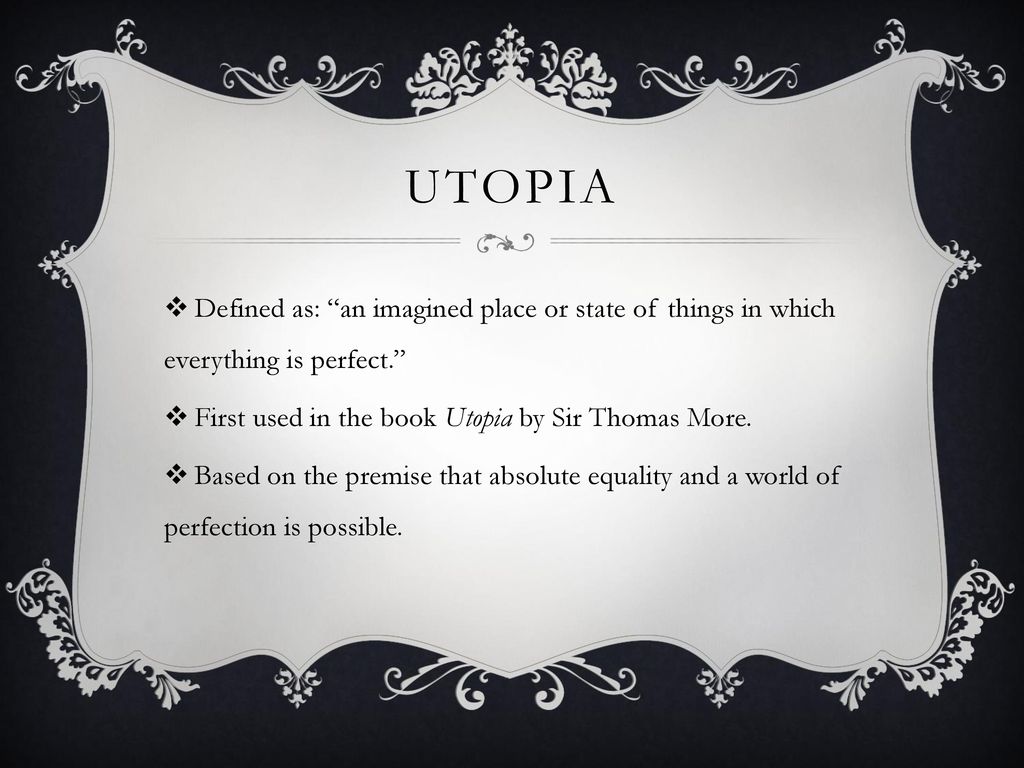
The Millennial reign of Christ and his people, per Revelation chapter twenty, and the heavens and earth of that period of time, will not be a perfect world. How do we know this? Because 1) people sin and suffer instant death (see Isa. 66: 22-24), and 2) nations are able at the end of the Millennium to be deceived so as to rebel against Christ the earth's King (by Satan being loosed from his imprisonment). Further, though death is rare, and people live a thousand years, death still claims its victims. However, in the eternal state following the Millennium there is no more death nor curse and all is made new. We can say therefore, that the next age, the Millennial under Christ and the saints, will be Utopian, but not yet perfect in every respect, at least for those who enter the Millennium as mortals on probation. It will be perfect for the resurrected and glorified children of God, however, as they will suffer no ills nor lack in any age of eternity. Any ills or adversities will be only for those mortals who sin against God. 

Is Utopia Possible?

The brothers at the web page "Got Questions" (See here) wrote (emphasis mine):

"A perfect society is impossible to create in a fallen world. All people are sinners, and we cannot create a “perfect” world because we are not perfect (Romans 3:23). Even if a society were constructed solely of Christians, it would be imperfect because the sin nature is still present in Christians (Galatians 5:17). No individual can perfect himself, so no group of people can perfect society. To create a true utopia would require everyone to be sinless
 
Various groups have attempted to establish utopian societies and thus realize a man-made paradise on earth: the Shakers, the Transcendentalists, the Perfectionists, and others all tried (and failed) to construct the ideal society. Some were motivated by a belief that Jesus’ return was imminent, others by confidence in mankind’s innate goodness—but all were disappointed."

Today we hear much about the creation of a "new world order," or simply, a new world. The ideal world for many is immortalized in the Star Trek movies by Gene Roddenberry, as in follow up series dealing with the same idea. However, in that age of technological advancement, there were still many imperfect things, even death. Though knowledge has so increased that mankind has "replicators" that can produce food or any other thing, and have devices for transportation right out of science fiction, with transporters, and other fantastic vehicles, and have cures for most illnesses, yet evils still remain. Man's evil nature, lust, and desires for what is forbidden are still present.

The brothers continue:

"Scripture informs us that once there was a “utopia” in this world: the Garden of Eden was created for Adam and Eve to tend and enjoy (Genesis 2:15). Everything that God had created was “very good,” and mankind had everything they could possibly need (Genesis 1:31; 2:22). Adam and Eve enjoyed a close and intimate relationship with the Lord, who walked with them in the garden (Genesis 3:8). Sadly, this perfect place that God had created was corrupted when Adam and Eve chose to disobey the Lord. Their sin disrupted their perfect existence and brought death into the world (Genesis 3:11–19; Romans 5:12). No longer would the earth produce abundant crops free of weeds and thorns (Genesis 3:17–18). No longer would the animals live at peace with one another and with mankind (Romans 8:20–22). No longer would Adam and Eve’s relationship with each other be perfect (Genesis 3:16). Most importantly, no longer could Adam and Eve have a close relationship with God (Genesis 3:23–24; Isaiah 59:2). The perfect world had been marred by sin, and the utopia was lost."

And just what made the Garden of Eden a utopia or paradise? And, had Adam and Eve never sinned, would all their descendants have lived lives on earth where Eden is everywhere? 

If Adam and Eve had not sinned, how would that effect their offspring? Would it have prevented Cain from killing Abel his younger brother? Would each human be on probation and born free of original sin? In such a world, would not each person be tempted to sin as was Eve by the Serpent, so that some would sin and die and others not? If there is to be a perfect world free of sin and death, it seems that God must change man, and so make him into a being where sin is not possible.

They continue:

"One day, the Lord will again set up a “utopia,” the new heaven and new earth (Revelation 21:1). Eden will be restored, and “no longer will there be any curse” (Revelation 22:3). Those who have trusted in Christ will live forever with Him, and the “utopia” they enjoy will never end, because they will no longer have a sinful nature."

True, but the new heavens and earth of the Millennial age are not the same as the new heavens and earth of the endless ages to follow. In the new heavens and earth of the Millennium there will still be sinful natures among those who enter it as mortals, and the curse of death. It is not till we reach the endless ages following the Millennial that we find no more curse and no more death. Of course, we will look more closely at these questions in the chapters ahead.

They continue:

"A utopian society is something that mankind naturally longs for. We all sense, on some level, that the world is broken as it is, and we all yearn to fix it. But it takes a perfect Being to create a perfect society, and that is why all man-made utopias are doomed to failure from the start. We need more than careful planning, lofty philosophies, and social reforms; we need our Creator. In humility, acknowledging our own brokenness, we turn to Christ and His perfection. In gratitude, praising the Lord, we trust the One who will someday turn the whole world into a Utopia for His glory."

That is certainly true. However, we are still faced with the question, as yet unanswered; just what will Christ do that will change everything? Will the creation of a Utopia or Paradise on earth require supernatural power? Why can't the Lord just give us now the power and wisdom to create such a utopia? Further, how will supernatural or magical powers be used towards making men and women into people incapable of sinning?  

In "Utopia: Is the Perfect World a Possibility?" by Gabriel Sanchez (See here) we have some things said that are worth citing at this time. She wrote (emphasis mine):

"Politics has always been about making promises to change what's broken. But is it possible to mend all the harm there is? And is utopia a real possibility?"

That is where we are focusing attention. Is utopia a real possibility?

Sanchez says further:

"By analyzing the many utopias that have existed, we will answer the question that everybody has asked themselves at one point or another: is the perfect world a possibility?"

She then says:

"Thomas More, a British philosopher, released in 1516 On the Best State of a Republic and on the New Island of Utopia. The name of the island originates from the forging of two Greek words, “ou” (no) and “topos” (place). Just like that, the term utopia was born. On its surface, utopia describes worlds and cities that aspire to be perfect, but underneath, it cheats itself, as the place that does not exist. As much credit as the Catholic saint deserves, if we are to deep-dive into the perfect society, the island of Utopia must take a step back and allow for the first-ever proposition of nowhere land."

It is an appropriate title to affirm that man has never created a perfect world, a utopia or paradise on earth, for there has never been a utopia and so it is only an ideal, a fiction, or a place in nowhere land (being a "pipe dream"). Yes, Eden was such, but it was only enjoyed a very short while and by only two people. The utopian world of Star Trek and their ilk in cinema is not real, it existing only in the imagination.  

She then says:

"Controversial as it may seem in today’s political climate, it was Plato’s Republic that initially described how a proper society must function. In his utopian vision, Plato constructed an ideal state based on his soul trifecta, which professed every human soul was composed of appetite, courage, and reason. In his republic, there were three categories of citizens: artisans, auxiliaries, and philosopher-kings, each of whom possessed distinct natures and capacities.

Artisans were dominated by their appetites and therefore destined to produce material goods. Auxiliaries were ruled by courage in their souls and possessed the spirit necessary to protect the state from invasion. Philosopher-kings had souls in which reason reigned over courage and appetite, and for that reason, they possessed the foresight and knowledge to rule wisely.

On the other hand, the island of Utopia was much more thorough in its composition and set of rules with a traced map included. Utopia had 54 cities, where all except for the capital were identical. Everything was public, and there was no private property. All houses and towns were of the same size, and to avoid sentimentalism, everybody had to move each passing decade. Everybody made their clothes identically. The only possible difference was between the clothes of men and women.

People were assigned two slaves per household. Everybody worked six hours per day, and if by any chance there were surpluses, labor hours were shortened. At eight past midday, there was a curfew, and everybody had to sleep eight hours. Education was meritocratic. If someone could perform a discipline they did, on the contrary, it was prohibited because they would not be contributing their best to the community.

Both More and Plato presented their utopias more like an essay or trial. They dealt only with the rules and standards of their world but had little regard to how human interactions would be during their perfected societies."

Again, as stated in previous chapters, what the perfect world would look like varies from person to person.

In the introduction to More's Utopia are these words (see here):

"The design of Utopia" was no doubt suggested by the Atlantis of Plato. The intention of Sir Thomas More is to set forth his idea of those social arrangements whereby the happiness and improvement of the people may be secured to the utmost extent of which human nature is susceptible. Experience proves that many of his suggestions are indeed Utopian. In his imaginary island, for instance, all are contented with the necessaries of life; all are employed in useful labor; no man desires, in clothing, any other quality besides durability; and since wants are few, and every individual engages in labor, there is no need for working more than six hours a day. Neither laziness nor avarice finds a place in this happy region; for why should the people be indolent when they have so little toil, or greedy when they know that there is abundance for each? With much that is Utopian, however, the work contains many sound suggestions. Thus, instead of severe punishment of theft, the author would improve the morals and condition of the people, so as to take away the temptation to crime; for, says he, if you suffer your people to be ill-educated, and their manners to be corrupted from their infancy, and then punish them for those crimes to which their first education disposed them, what else is to be concluded from this, but that you first make thieves and then punish them?" 

Notice the words "secured to the utmost extent of which human nature is susceptible." But, what is possible and not possible in regard to human nature? Is it possible for people to live and act each day, in close connection  with their fellowmen, without ever sinning? Could Cain and Abel compete against each other without anger, jealousy, cursing, etc.? Could they each have wives without lusting after the wives of others? 

The introduction continues:

"In Utopia, we are told, war is never entered on but for some gross injury done to themselves, or, more especially, to their allies; and the glory of a general is in proportion, not to the number, but to the fewness of the enemies whom he slays in gaining a victory. Criminals are generally punished with slavery, even for the greatest misdeeds, since servitude is no less terrible than death itself; and, by making slaves of malefactors, not only does the public get the benefit of their labor, but the continual sight of their misery is more effectual than their death to deter other men from crime. It is one of the oldest laws of the Utopians, that no man ought to be punished for his religion-"it being a fundamental opinion among them, that a man cannot make himself believe anything he pleases; nor do they drive any to dissemble their thoughts by threatenings, so that men are not tempted to lie or disguise their opinions among them; which, being a sort of fraud, is abhorred by the Utopians." Every man may endeavor to convert others to his views by the force of amicable and modest argument, without bitterness against those of other opinions."

As asked earlier, what will Christ and the saints do to make the world a better place? If there are still sports, what will keep teams from not giving place to wrath? If people marry and have families, what will keep them from sinning by lust and sexual sin? These are the kinds of questions we will seek to answer in the remaining chapters. 

Things To Do

So, let us ask ourselves as Christians what we will do under Christ to make the world into a garden of Eden once again? What things will be done in preparation for the Millennium? What will be done first when the Lord and his saints are in charge?

1. Rid the world of all wicked souls so that only the meek remain (which would be the children who survive the day of the Lord's coming and his attending judgments and meek older ones who did not give allegiance to the beast or Antichrist and aided Christians and Jews). This division of living people at the end of the day of tribulation and wrath is described in the division of the sheep and goat nations of Matthew twenty five, as we have observed in previous chapters, but is also described in other places, such as in the parable of the harvest of the wheat and the tares of Matthew thirteen. This would be a "purge" much like that which occurred by the flood in the days of Noah.

2. Remove things, such as all harmful things, as nuclear waste, and cleaning up the world of its trash and junk. Clean up the waters. Clean up the cities. How much of this will be effected by workers and how much by divine power is a matter for deeper thought. 

3. Create a new source of energy and transportation. How much of this age's needs will be a result of supernatural powers given to its rulers and used by the inhabitants of the planet? Will there still be airplanes and automobiles and telephones? 

4. Create laws and government and a police force

5. Set up those institutions necessary for society.

Questions

1. How will rust and decay be dealt with? Will bridges, buildings, and streets still need constant maintenance?

2. Will there still be disputes between people? How will they be handled? 

3. What will the education system look like? What subjects will be taught? Will all speak the same language? How will career choices be decided? 

4. Will there be private property in real estate? Will all be equally rich? Will all receive the same wages? Will there be social stratification? Will rewards be based upon meritocracy? 

5. Will there still be exploration, invention, and new discovery, and scientific increase in knowledge?

6. Will children still play games? Will people still do things for fun? Or, for recreation?

7. How will human waste and garbage be managed?

8. How will a single individual live life from day to day?

We will investigate these things in the next chapters.