Friday, June 14, 2019

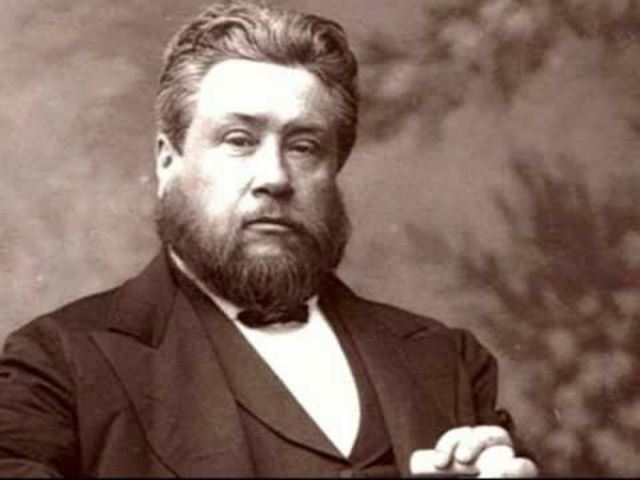
Spurgeon On Baptism's Adminstrator


1834-1892

Spurgeon was no Landmarker. Not only did he oppose (as I do) the practice of "ordaining" men as pastors by a presbytery (and the teaching that this is what constitutes a man an "ordained elder"), but also the idea that only "ordained elders" of a particular sect were the "authorized" persons to either administer baptism or the elements of the Supper.

Notice these words of the great "prince of preachers" (highlighting mine):

"It is very natural that our friends should desire their minister to baptize them, and yet there is no reason why he should do so on account of his office. It does not appear from the Scriptures to have been an act peculiar to preachers; in fact, at least one of them, and he by no means the least, was not sent to baptize, but to preach the gospel. A vigorous Christian member of the church is far more in his place in the baptismal waters than his ailing, consumptive, or rheumatic pastor. Any objection urged against this assertion is another unconscious leaning to tradition, if not a relic of superstition. The usefulness of the ordinance does not depend upon the baptizer, but upon the the gracious meditation and earnest prayer of the person baptized: the good which he will receive will depend upon how far his whole soul is receptive of the divine influence, and in no sense, manner, or degree upon the agent of the baptism. We do not know what Paedobaptists think upon their ceremony, but we fear that the most of them must have the minister to do it, and would hardly like their infants to be left to the operation of an unordained man. If it be so, we do not so very much wonder at their belief, for as it is clear that no good arises to an infant from its own prayers or meditations during the ceremony, there is a natural tendency to look for some official importance in the performer of the rite; but yet we do not and cannot believe that our Paedobaptist friends have fallen so low as that; we make no charge, and hope we shall never have cause to do so. For Baptists to attach the smallest importance to the ordinance of baptism being administered either by a minister or a private member would be to the last degree inconsistent, and yet we are not sure that the inconsistency is not to be found in many quarters. It behooves ministers to break down in time every tendency to make us into necessary adjuncts of the ordinances, for this is one step towards making us priests." ("Ordination and Religious Titles" in the Sword and Trowel, Volume 4, 1874 pages 111-117 - see here)

Do I hear an "amen"?

Thursday, June 13, 2019

The Judgment Seat of Christ (1)

Another topic I have been studying more intensely over the past few months concerns what the bible says about "the day of judgment." I have been studying this subject of course for 47 years, but more deeply of late. Let me again share some of my thoughts on this; And, let me begin by citing one of today's leading young Hardshell apologist ministers, from Elder Ronnie Loudermilk, whose theological errors we have pointed out before.

The Bema Judgment

"Wherefore we labour, that, whether present or absent, we may be accepted of him. For we must all appear before the judgment seat of Christ; that every one may receive the things done in his body, according to that he hath done, whether it be good or bad." (II Cor. 5: 9-10)

Commenting upon verse 9 Loudermilk wrote (see HERE for pdf - highlighting mine):

"The Bible teaches with clarity of a day, the last day, when all will be gathered before the Lord and separated one from another as a shepherd would divide His sheep from the goats (Matt 25:31-46). That final day of judgment and separation is one which will include the declarative judgment of God for His people (Matt 25:34, "Come, ye blessed of my Father, inherit the kingdom prepared for you from the foundation of the world'), and the executive judgment upon the wicked (Matt 25:41, "Depart from me, ye cursed, into everlasting fire, prepared for the devil and his angels").

The Bible also teaches the reader about the temporal judgment seat of Christ. This judgment seat is one from which the Lord judges His children, who live in this world, by the works that they commit, "whether it be good or bad." The temporal judgment seat of Christ does not have eternal consequences, as He has already paid for all His people's sins on the Cross of Calvary by the offering of His precious life in their room and stead. This judgment seat is one that has temporal (intime) consequences for the child of grace.

Since 2 Corinthians 5:9-11 is dealing with "labour"; "things done" (works); and the works done which are "good and bad", we are able to conclude that this portion of scripture is referencing a temporal context of judgment and not an eternal.

We reap what we sow ("receive the things done in his body, according to that he hath done")! Without question, the Lord is merciful to His little children. If we all received the judgment we deserve, in a temporal context, it would be beyond every fear of us all. But the Apostle made it clear in Galatians 6:7, "Be not deceived; God is not mocked: whatsoever a man soweth, that shall he also reap." When we sow tomatoes, we reap and gather tomatoes. When we sow potatoes, we reap and gather potatoes. And so it is, when we sow evil, we reap and gather such. When we sow good works, we reap and gather such."

This interpretation (or misinterpretation) of this passage, dealing with the "judgment seat of Christ" (Greek "bema" of Christ), is a "clear" (a favorite word of Loudermilk) example of eisegesis.

He "twists" the above scripture, and the warning against doing such is "destruction." (II Peter 3: 16). If he wants to take mental comfort in believing that his twisting of scripture will only bring him temporal destruction, and in thinking that this destruction does not have eternal consequences, then he is in a dangerous state and will likely be less careful in how he "handles" the word of God. Heretics might be more careful in how they "handle the word of God" (II Cor. 4: 2) if they believe that the consequences of their heresy extend to the coming day of judgment.

Loudermilk summarizes Paul's teaching by saying "This judgment seat is one that has temporal (intime) consequences for the child of grace." Of course, this is a gross perversion.

He bases his interpretation of the passage because he applies the Hardshell proposition to it. That proposition says - "nothing that the elect do in this life is either a condition for eternal salvation or for rewards after death and in the judgment."  Of course, this proposition is thoroughly taught against in the holy scriptures, the text under consideration being one of them. Yet, in spite of this, the Hardshells still believe that the above proposition is inspired truth! They see all scripture through this self created lens. This is their plumline to which they force scripture to square.

The judgment clearly occurs when a man has exited this life, who is no longer in the body. That is "clear" from the context.

It is a novel view that makes the judgment to be continuously occurring in the life of a person. All commentators to my knowledge (and I have examined many) see the judgment as taking place after one has died and who is no longer "in the body."  Why is it that all commentators have not taught the view of Loudermilk and the Hardshells? Are we to believe that the Hardshells of today are the only ones to properly understand this text (and others like it)? But, this is what we expect from cults.

Contextually, Paul has been talking about being "in the body," as opposed to being "absent" from the body. He does not say that all must give account of deeds done while still in the body, but rather "clearly" indicates that the judgment takes place after one's life has ended and when he is no longer in the body. How in the world can we be judged for what we have done in life, or in the body, if that life is not yet ended? Further, how can we make this judgment linear in the life of believer while in the body?

Loudermilk says that we can "conclude" that his proposition (in red above) is true. But "conclude" from what premise? (A conclusion implies one or more premises) One from the context? Or, one that originated with modern day Hardshells? That proposition says - "nothing a child of God does in time has eternal consequences." But, this proposition, so fervently held to by the Hardshells, is "clearly" against scripture.

Afraid Of What?

Daniel Webster, a great American statesman and orator, once said, “The greatest thought that has ever entered my mind is that I will have to stand before a holy God and give an account of my life.”

It was in view of this coming judgment that Paul "concluded" by saying "knowing therefore the terror of the Lord we persuade men."

There is something frightful about this judgment and anyone who does not fear at the thought of it is "stupidly secure" and "settled on their lees" theologically and spiritually speaking. Does Loudermilk's Hardshell interpretation of the passage evoke fear of God and of future judgment? Or, does it diminish it?

“It is a fearful thing to fall into the hands of the living God.” (Heb. 10:31)

"And fear not them which kill the body, but are not able to kill the soul: but rather fear him which is able to destroy both soul and body in hell." (Matt. 10: 28)

Scripture often appeals to the reality of that day as an incentive to godliness and growth and as a warning against carelessness and spiritual sloth.

Said the great Spurgeon (see HERE):

"Sit down, dear reader, if you are as yet unsaved, and take an hour for this solemn exercise: it may prove the turning-point of your history. In a few years you will be one of that vast assembly, and have to answer for every deed and word of your life. Think of it long; picture it vividly; let it work upon your mind. Though at the first it fill you with fear and trembling, it may conduct you to the Savior's feet, and then, looking up to him with penitential faith, you may hear how to "have boldness in the day of judgment." If you fly to Jesus as your Savior you will not fear to face him as your King. It has been well said, "Thou wilt meet the Great Day well if thou get the Great judge to judge thee every day."

The prisoner who will not even think of his trial is in his conscience assured of a verdict of condemnation. Would he not be far wiser to seek for a Counselor to plead his cause? Will you not seek One? Jesus, the faithful Counselor, asks no fee. Commit your cause into his hand, and you need not fear the Last Assize."

After all, if Loudermilk is right, I may well "conclude" the following:

1) Well, if every day I live I "appear" before "the judgment seat of Christ" and daily give account of my deeds, good and bad, I can see that it is not so fearful a judgment after all! The judgments I have received for sin have not been so bad thus far!

2) There is no literal appearing before the courtroom of Jesus! There is no literal trial! There is no literal prosecution or rewarding (recompensing).

The Judgment Is Future
(After death)

Here is why:

1. There is only one "appearing" before the bema. Yet, if this is a daily judgment that takes place while still alive and in the body, then each day we "appear" for trial. That is simply ridiculous and so contrary to the syntax of the passage.

2. The fact that the trial involves a person "giving account" of deeds "done while in the body" (or done while alive in body on earth) indicates that the judgment takes place after death, or after the life has been lived. How can a trial concerning a person's life be held until that life has been lived?

3. The trial is public, or before all, angels and men. Yet, the daily Hardshell judgment seat appearing is not public! Who else knows of Loudermilks good and bad deeds via his daily appearing before this court?

We will continue this study in the next posting in this series.
Hassell On Interpretation


Elder Sylvester Hassell (1842-1928)

"The Literal Interpretation of Scripture"
The Gospel Messenger--February 1893
Wrote Elder Hassell (highlighting mine):

"It seems to me that there is among Primitive Baptists an urgent need of a recurrence to the true principles of Scripture interpretation. (Boy, is that not true! And, if true at the end of the 19th century, how much more so now with the Hardshells! - SG) The greatest dangers to the Church of Christ have always been those from within, and not those from without. Our enemies cannot really hurt us if we do not hurt ourselves. It is a matter of painful interest to the thoughtful minds among us to notice the widespread and profound operation of the elements of doctrinal and practical disintegration in our ranks. (Notice that - "among us" and "in our ranks"; what does that say about the state of the PBs in the 1890s? - SG) In various sections of our extended country we see--some of these errors more operative in one section, and some in another--a tendency to dualism and fatalism, and to relapse into something like old heathen pantheistic Hindoo, Egyptian, Greek, Gnostic, Cabalistic doctrine of the pre-existence, metemphycosis, or transmigration of souls; to deny the immortality (in the sense of everlasting duration), the regeneration, and even the very existence of the soul, the responsibility of man (all elements of Two Seedism - SG), and the Second Personal Coming of Christ, the resurrection of the body, the general judgment, and hell, and heaven; a tendency to eliminate from the Scriptures the essential distinction between the elect, the believing, the saved, on the one hand, and the non-elect, the unbelieving, the lost, on the other hand; a tendency to evacuate the Scriptures of their future eternal meaning, to confuse the divinely established order of events, to push back all the events of time into the past eternity, and the events of the future eternity into time; to evaporate Christianity into a futile and barren philosophy, and pass it off in a dissolving view; and a tendency to return to the medieval darkness of conditionalism and instrumentalism, and to degrade the religion of pure and living love into pharisaic ceremonialism."

Observations

Again, if Hassell were alive today to see how this "tendency" to pervert scriptures among the PBs who followed him, he would be deeply saddened. We here at the Old Baptist Test blog are calling our PB brothers to return to the place where they have departed and become actually what they pretend to be now in name, i.e. real primitive, old school, or simply "Old Baptists."

Notice again how Hassell links all these errors to the Two Seed element within the PB denomination, even as late as the end of the 19th century. And, although our Hardshell brothers will not concede the obvious, and as I have often asserted, Two Seedism, in some of its several elements, still plagues the "Primitive Baptist Church."

Notice again (as was talked about in Hassell's other words on this subject and posted in the preceding post) that Hassell sees a great danger in how the Hardshells at the time had gone away from the beliefs of their forefathers and had a "tendency to eliminate from the Scriptures the essential distinction between the elect, the believing, the saved, on the one hand, and the non-elect, the unbelieving, the lost, on the other hand." Is that not a common feature of today's Hardshell hermeneutics?

Hassell continued:

"The advocates of these various forms of error, like the two hundred denominations now professing Christianity, claim to derive their views from the Scriptures. The all-important question, therefore, arises, What is the proper interpretation of the Scriptures?

To rescue the true meaning of the Scriptures from the ruinous despotism of Roman Catholic dogmatizers and allegorizers, the Protestant Reformers, Luther, Calvin, Melanchthon, and others, in the sixteenth century, under the direction of the Spirit who indited the sacred volume, insisted upon the critical examination of the original text, (Hardshells of today do not believe this but believe that the KJV is inspired and so there is therefore no need to know the original languages or to second guess the KJV translators - SG) and a faithful adherence to the natural and grammatical sense, (Most of today's Hardshells do not practice a such a "faithful adherence" - SG) and recognized the Bible as "God's message to their souls, as the only rule of faith and life, which was to be interpreted by itself--a message conveyed in historical form, and needing the appliances of language and history in order to read it, and yet a spiritual message, the full reception of which could come only by spiritual enlightenment." Luther says: "Mystical and allegorical interpretations are trifling and foolish fables, with which the Scriptures are rent into so many and diverse senses that silly, poor consciences can receive no certain doctrine of anything. When I was a monk, I allegorized everything; but now I have given up allegorizing, and my first and best art is to explain the Scriptures according to the simple sense; for it is in the literal sense that power, doctrine, and art reside." Calvin says: "The true meaning of Scripture is the natural and obvious meaning, by which we ought resolutely to abide; the licentious system of the allegorists is undoubtedly a contrivance of Satan to undermine the authority of Scripture, and to take away from the reading of it the true advantage." And Melanchthon says: "The one and certain and simple sense of the Scriptures is everywhere to be sought according to the precepts of grammar, logic, and rhetoric." The Protestant Reformation emphasized "the exclusive sufficiency of Scripture, its perspicuity under the use of the ordinary methods and with the teaching of the Holy Ghost, its possession of a sense which is one and not manifold, and its interpretation by itself."

It is right to get true information from any source. The Holy Spirit does not encourage us in our laziness or covetousness or pride by inspiring us with a supernatural knowledge of English, Greek, or Hebrew, or of ancient customs."

Amen!

If one reads the comments and letters that came into The Gospel Messenger after Hassell published these words, he will then see how the words "it is right to get true information from any source" did not set well with some PBs. Poor Hassell! Having to deal with such contentious souls!

Hassell on Interpretation of Prophecy

"In regard to the interpretation of prophesy, I must add, on account of its uniqueness, some special paragraphs.

Anthony Collins (1676-1729), a leading deistical writer of the 18th century, sought to undermine the whole system of revealed religion by arguing that the fulfillment of prophecy is the only valid proof of Christianity, and that, as all the prophecies are allegorical, and not even one of them literal, the whole argument from prophecy, and with it the whole system of Christianity, falls to the ground; just as his successor, Thomas Woolston (1669-1733), assailed the literal truth of the miracles of Christ as incredible and absurd, in order, as he claimed, to vindicate their allegorical and spiritual meaning as representing the course of natural religion in the soul of man--denouncing the opponents of his views as "slaves of the letter," "Baal priests," "blind leaders of the blind."

Of course the literal interpretation of the Scriptures, like all other proper things, may be carried to an idolatrous excess, as was done by the Jewish Rabbis, both before and after the coming of Christ, pretending to find everything they wished to find in the Old Testament, by their subtle, absurd, and outrageous permutations, combinations, transpositions, substitutions, and numerical equivalents and power of letters. But whoever would disparage or deny the proper literal interpretation of the Scriptures should remember the dreadful anathema at the close of the sacred volume:

"IF ANY MAN SHALL TAKE AWAY FROM THE WORDS OF THE BOOK OF THIS PROPHECY, GOD SHALL TAKE AWAY HIS PART OUT OF THE BOOK OF LIFE, AND OUT OF THE HOLY CITY, AND FROM THE THINGS WHICH ARE WRITTEN IN THIS BOOK.--Re 22:19.

We rarely have problems with theologians going too far in "literal interpretation" of the Scriptures, but we have all sorts of problems with those who are allegorizers and "spiritualizers" of God's word. When Paul spoke of those who "handle the word of God deceitfully" (II Cor. 4:2) and who "corrupt (dilute by admixture) the word of God" (II Cor. 2:17) he surely had such theologians in mind.

Prophecy is nearly always given in literal language and is always fulfilled literally.

"The Spiritual Interpretation of Scripture" 
The Gospel Messenger--April 1893

"It is especially in what claims to be the spiritual interpretation of the Scriptures that these ultra, wild, chilling, deadening, bewitching, confusing, dividing, and ruinous errors prevail among us."

"Prevail among us"? Do they still prevail among the PBs? Yes, sad to say.

Hassell continued:

"We have been so inattentive and dormant (what a confession! - SG) that the Lord righteously permits us to be afflicted, deceived, and desolated by false spirits, "transformed as the ministers of righteousness,." {2Co 11:14-15} Hyper, or Pseudo-Spiritualism, denying the truth or the importance of the literal meaning of the Scriptures, and thus sapping the very foundation of Christianity, now threatens, above every other danger, to be our ruin. May the God of Israel speedily arouse us all to a sense of this imminent peril, and restore us to the primitive purity of faith and practice, and preserve us, by His almighty power, from these "destructive heresies," whether heathenish or Jewish, of which we are solemnly forewarned in His written Word, and which are now assailing us. {2Pe 2:1; Col 2:8; 1Co 15:12-58; Ac 17:31; Heb 9:27; Re 20:11-15; 1Th 4:14-18; 2Th 1:7-10; 1Ti 1:4,19; 4:1; 6:3-5,20-21; 2Ti 1:13; 2:14-19,23-26; 4:1-4; Jas 1:13-15; 1Pe 4:17; 2Pe 3:1; Joh 4:1-3; 2Jo 13; Jude 25,25,25,25; Re 22:18-19}"

Again, what happened to the warnings of Hassell? About the same thing that happened to the warnings of Watson?

Hassell continued:

"And who that properly reverences the Divine Teacher will presume to say that there is the slightest falsehood in the past tenses of the verbs that He uses in Lu 16:19-31, wherein He tells of the Rich Man and Lazarus, or in the future tenses of the verbs that he uses in Mt 25:31-46, wherein He tells of His coming in final judgment to the world? In fact, neither of these passages is a parable, nor anywhere called so in Scripture, though misnamed such by a few uninspired men. The passage in Luke is a literal history, and that in Matthew is a literal prophecy--the latter being emphatically distinguished from the preceding parables of the Virgins and the Talents in the same chapter by the adversative conjunction de, but, at the beginning of the 31st verse ("But when the Son of man shall come in His glory, etc."), this conjunction being unwarrantably omitted by the King James translators, but properly expressed by the Victorian Revisers. Some of the parables seem prophetic, or predictive of future events; and I have shown in my article in the March number of the GOSPEL MESSENGER that the prophecies of Scripture are both literally and spiritually true."

Hassell saw that the figurative interpretation of the Rich Man and Lazarus (as being non literal, a parable, and not teaching what happened when these two men died) was a clear violation of proper hermeneutics and symptomatic of the sad state of things with the Hardshells at the end of the nineteenth century. As I recounted in the early chapters of my book "The Hardshell Baptist Cult," Hassell's view, the historic view of his Baptist forefathers, was declared to be heresy, and I was asked my views on it when I was re-ordained as an elder in the Bear Creek Association. Of course, I weaseled my way through it but never did I deny that it taught that the Rich Man went to Hades when he died.

Notice also how Hassell did not believe the KJV was inspired. He even believes (as I do) that there are serious errors in the KJV.

Hassell continued:

"But, in this department of interpretation, we must be careful not to substitute imposition for exposition, not to read our ideas into the Scriptures, but to read their ideas out of them. The ruinous abuses of false methods of spiritualizing the Scriptures, as exhibited for our warning in the Scriptures themselves, as well as in subsequent church history, I propose, with the Divine permission, to consider in the next number of the GOSPEL MESSENGER."

Well, amen to that brother! We have often shown how our modern PBs have been guilty of this very thing. So few of them want to come here and honestly discuss these things because they know that we will uncloak their mishandling of the word.

In Part Two (May 1893) Hassell said:

"Wisely did Elder and Doctor John M. Watson, of Nashville, Tenn., thirty years ago, solemnly warn all Old Baptists of extremists, ultraists, as their worst enemies. Unless checked, the dangerous extremes prevalent among us, in some parts of our country, will, if inspiration and history be true, result in our increasing confusion, division, disintegration, and ruin."

Are you hearing the beloved Hassell, my PB brothers?

Hassell, under "Abuses and Extremes" (The Gospel Messenger--May 1893) wrote:

"I now enter upon the consideration of the ruinous abuses in what falsely professes to be the spiritual interpretation of the Scriptures, as exhibited, for our solemn warning, in the Scriptures themselves, and also in subsequent church history. The present sad condition of the church, which has been brought about by these unwise, unscriptural, and destructive extremes, emphasizes the great importance of this subject, and has been the leading cause of the preparation of this series of articles."

He had to be hitting his counterpart (Elder C.H. Cayce) for leadership among the Hardshells (at the end of the 19th century) hard in this series, for Cayce was a gross allegorizer or spiritualizer.

Wednesday, June 12, 2019

S. Hassell On PB Perils


Elder Sylvester Hassell (1842-1928)

"The Danger of Applying All Scripture to the Children of God" 
The Gospel Messenger-February, 1894

"This most pestilent innovation upon Primitive Baptist faith is perhaps the youngest and weakest of all the errors launched upon us in this conceited and degenerate and unbelieving age; I myself never heard of it nor read of it till three years ago. It is the child of Presumption and Philosophy, treats with equal contempt all the religious views of former generations and the most pointed declarations of the Inspired Scriptures, makes black white and white black by a dexterous system of expository legerdemain, and either makes the Bible a huge lie or inevitably leads to one of these three false and monstrous results-universal salvation, or universal damnation, or universal annihilation. It seems almost incredible that any sane and reverent mind can for a moment be so captivated and deceived by Satan as to believe that Cain, and Balaam, and Judas, and all the most horrible and diabolical criminals that ever lived on earth, were the children of God; that the elect and the non-elect, the penitent and the impenitent, the believing and the unbelieving, the loving and the hating, the obedient and the disobedient, the saved and the damned, are the very same persons; that election, and repentance, and faith, and love, and obedience, and salvation, as well as their opposites, are nothing but empty names; that words have no meaning; that the universe is only a delusive phantasmagory, containing nothing but shadows and dreams. Such false and ruinous systems of interpreting the Scriptures seem to me far more becoming to a lunatic asylum than a Primitive Baptist pulpit."

If Hassell could see just how far the PBs have gone in the errors he condemned in the above words, he would turn over in his grave! He would also be disappointed that his writings in 1893, filled with such warnings as the above, had little effect in stopping the downhill slide of his denomination into the theological perils he described.

Do today's Hardshells not generally do as Hassell warned against? Do they not make characters like Cain, Baalim, Judas, the heathen, etc., into children of God? Have I not, like Hassell, decried this "false and ruinous system of interpreting the Scriptures"? Have we not recently shown how men like C.H. Cayce (Hassell's time) and Ronnie Loudermilk (present day) are guilty of this very thing that Hassell condemned? ("Them That Are Lost" Are Saved?)

Hassell continued:

"In regard to the parables of Christ, I am well aware that a few of our wisest brethren have, for a generation or so, somewhat differed in their views of some of the characters therein mentioned, and of course latitude may be allowed in such matters; but as for myself, I have no confidence in the greatly superior enlightenment of this pretentious century, and I decidedly prefer the plain old paths in religion to the misty new ones, and the old-fashioned, unsophisticated ways of interpreting the Scriptures to the new subtle ways; and I feel satisfied that there is a radical and essential distinction made by Divine grace between the humbled and penitent and returning younger brother and the angry, unforgiving and pharisaic elder brother, in the parable of the prodigal son; {Lu 15:11-32} between the good-ground hearers on the one side, and the wayside, the stony-ground, and the thorny-ground hearers, on the other side, in the parable of the sower; {Mt 13:1-23} between the wheat and the tares, in the parable of the tares; {Mt 13:24-30} between the good and the bad, the just and the wicked, in the parable of the draw-net {Mt 13:47-50} --"the kingdom of heaven" in verses 24 and 47 is plainly the visible and not the spiritual church; between the five wise and the five foolish virgins, in the parable of the virgins; {Mt 25:1-13} between the five and the two talent men, on the one hand, and the one talent man, on the other, in the parable of the talents; {Mt 25:14-30} just as there is certainly such a distinction between the sheep and the goats, the blessed and the cursed, in the description of the last judgment; {Mt 25:31-46} between the believing who are to be saved and the unbelieving who are to be damned; {Mr 16:16} between the elect, and living, and believing, and loving, and obedient children of God--the vessels of mercy of Paul's epistle to the Romans--on the one hand, and the non-elect, and spiritually dead, and unbelieving, and hating, and disobedient children of the flesh--the vessels of wrath--on the other hand, who wilfully, greedily, and inexcusably sin against God, notwithstanding the light of nature which every intelligent and responsible human being has, suppressing and falsifying even the natural evidences, everywhere around them, of the being and perfections of God (read with especial care the first chapter of Romans, and compare it with 2Ti 3:1-5; Ac 14:15-17; 17:22-31; Job 12:7-10; 38; 39; Ps 19:1-4; Isa 40:26), and who shall at last stand justly condemned and silenced before God {Ro 3:19} --with one and a half exceptions (within the last three years) all our writing ministers have always thus explained the first chapter of Romans (by "a half" I mean that this minister applies the 18th and following verses of that chapter to both the elect and the non-elect--only one minister applying these verses entirely to the elect, and severely condemning all who do not agree with him in this novel view); between those who are washed, sanctified, and justified in the name of the Lord Jesus and by the Spirit of our God, on the one hand, and the unrighteous, fornicators, idolaters, adulterers, effeminate, abusers of themselves with mankind, thieves, covetous, drunkards, revilers, and extortioners, excluded from the kingdom of God, on the other hand; {1Co 6:9-11} between those in whose hearts shine the light of the knowledge of the glory of God in the face of Jesus Christ, on the one hand, and the lost and unbelieving, who are blinded by the god of this world, on the other hand; {2Co 4:3-6} between the beloved, believing, and obedient servants of God, on the one hand, and the false, and covetous, and adulterous teachers, who, after a vain and transient profession of godliness, relapsed into the sins from which, like the filthy dog and sow, their inward natures had never been cleansed, and whose last state, like that of the man out of whom the unclean spirit voluntarily went only for awhile, was worse than the first, on the other a hand; {2Pe 1:1-11,14; 2; Mt 12:43-45} between the righteous and holy, the blessed, the saved, who are written in the Lamb's book of life, the servants of God, having His name in their foreheads, delivered from the curse, entering into the Holy City, the New Jerusalem, and walking in its light, and reigning for ever and ever on the one hand, and the filthy and unjust, the false, dogs, sorcerers, whoremongers, murderers, and idolaters, shut out of the Holy City, on the other hand. {Re 21:22} The fundamental and eternal distinction made between these opposite characters--the elect and the non-elect---by the grace of God, should never for a moment be forgotten or ignored. {Mal 3:17; 1Co 4:7; Ec 3:14; Ps 138:8; Php 1:6}"

Notice that Hassell will not allow any to be called "elect" or saved who was not a believer and who was no hypocrite. Also, he condemns the view of Loudermilk and other of today's Hardshells that those "blinded" by the god of this age are children of God! Hassell and I agree that those described by Paul are not children of God!

And, not only do the Hardshells greatly err by making so many unbelievers and wicked men into "children of God"  but they also greatly err, according to Hassell, in

"APPLYING ALL THE SCRIPTURES TO PRESENT EXPERIENCE"

Wrote Hassell:

"This is a most lamentable perversion of the Scriptures, similar to the foregoing, and has been born among us in the present generation. (Notice that - "in the present generation" - that being the second generation of Hardshells, and takes in the last part of the nineteenth century - SG) If carried out to its full extent (It has since Hassell wrote these words - SG), it blots out all the past and all the future. If we are to believe nothing but what we have experienced, we will deny all the literal truth of Scripture history and Scripture prophecies of all the events that have not yet taken place, including the creation of the world out of nothing, the destruction of the world, first by water, and then by fire, the resurrection of the body, and the eternal realities of heaven and hell. It was exactly this species of heresy--pseudo (or false) spiritualism--that the Apostle Paul condemned in Hymenaeus, Alexander, and Philetus, {1Ti 1:19-20; 2Ti 2:16-18} as gangrenous and ruinous. These wise philosophers applied all that the Scriptures said about the resurrection to the mere spiritual rising of the soul from the death of sin, in present experience, and declared that the resurrection was already past--in other words, they, like the ancient Hindoo and Greek heathen philosophers regarding matter as the source of evil, denied the resurrection of the body, and with this denial, they overthrew the whole system of Christianity. {1Co 15:16-23} And in the latter part of the apostolic age, the same spirit of heathen philosophy, considering matter essentially evil, denied that Christ came in the flesh, or was literally incarnate, but represented His birth, and life, and death as unreal and visionary, and this heresy was denounced by the Apostle John as antichrist. {1Jo 4:3} In the self-same manner heathen philosophy in the Primitive Baptist church today seeks to turn all the literal truths--especially all the future eternal truths--of the Scriptures into fables. Under the magic wand of a pretended spiritualization, the tremendous realities of the final resurrection and judgment, the everlasting happiness of the righteous, and the everlasting punishment of the wicked dissolve into the illusory and fleeting picture of the present momentary life. Such a pernicious system of interpretation is but the echo of the voice of Satan in the Garden of Eden, giving the lie to the word of God. {Ge 2:17; 3:4}"

Now, that is a tremendous warning against the state of the PB denomination at the end of the 19th century! Has that state improved by the standard used by Hassell? No. It has gotten much worse! The truth is, excepting Hassell's error on the use of means in new birth, Hassell was quite sound and he would, if alive today, be more in fellowship with us here at The Old Baptist Test blog than with most of those today who call themselves "Primitive Baptists."

"He Shall Be Made To Stand"

"Who are you that judge another man's servant? to his own master he stands or falls. Yes, he shall be held up (Greek σταθήσεται - "made to stand"): for God is able to make him stand." (Rom. 14: 4)

In debate with Campbellites over the years on the subject of the final perseverance of the saints, I have often cited these words of the apostle to prove that all the elect and called would be made by God to persevere. I believe that is what is plainly stated by the apostle. I also believe that God will not only make us stand in our earthly walk, but will also make us to stand in the day of judgment.

Barnes Notes says:

"God has power to make him stand; to hold him; to keep him from error, and from condemnation, and "he shall be holden up." He shall not be suffered to fall into condemnation, for it is the "purpose" of God to keep him; compare Psalm 1:5. This is one of the incidental but striking evidences that the apostle believed that all Christians should be kept by the power of God through faith unto salvation."

Shedd writes:

“It denotes not merely the pronunciation of a favorable judgment, but also support in that course of life and conduct which results in a favorable judgment. The ‘strong’ shall be enabled by God’s grace to stand in faith and obedience, and thereby in the final judgment.”

Agreed.

"Therefore the ungodly shall not stand in the judgment, nor sinners in the congregation of the righteous." (Psa. 1:5 KJV)

Tuesday, June 11, 2019

Nooses Around The Neck

There are several major problems that "Primitive" (aka "Hardshell") Baptists have in dealing apologetically with their history. These problems concern 1) the beliefs of their founding fathers and 2) their confessions and periodicals. The religious views of these men are like nooses around their denominational neck.

"Founding Fathers" of PB Church
(1st generation)

1. Elder Daniel Parker
2. Elder Gilbert Beebe
3. Elder Samuel Trott
4. Elder John Watson
5. Elder James Osbourn
6. Elder John Clark
7. Elder Joshua Lawrence
8. Elder Mark Bennett
9. Elder C. B. Hassell
10. Elder Wilson Thompson
11. Elder Grigg Thompson
12. Elder Stephen Gard
13. Elder William Conrad
14. Elder John Leland
15. Elder John Taylor
16. Elder Lawrence Greatrake
17. Elder Joel Hume
18. Elder Hosea Preslar
19. Elder Richard M. Newport

Observations 

1. These are the "founding fathers" or first generation leaders of the newly formed "Old School" or "Primitive Baptist" denomination.

2. Not one of these men would be fellowshipped by today's "Primitive" Baptists!

3. Most of these men held to serious errors, and to many "Two Seed" heresies, as confessed by later PB histories.

4. Biographical histories are often best when tracing the history of a movement or formation of a separate religious group. What does an examination of the first leaders of the PB denomination reveal about the denomination?

Revelatory Historical Events

1. The Kehukee Declaration (1827)
2. The Black Rock Address (1832)
3. The Fulton Convention and Confession (1900)

Observations

1. Neither the Kehukee Declaration or the Black Rock Address spoke against the belief that the gospel was a means in the new birth.

2. The Fulton Convention endorsed the 1689 London confession and acknowledged that it was the confession of their oldest churches, the historically accepted confession of all Predestinarian Baptists.

3. The Fulton Convention, via its attached "notes" of "explanation," corrupted the confession and pawned off a misinterpretation of it. It condemned both the use of means in rebirth and the predestination (decree) of all things.

First Major Periodicals

1. The Signs of the Times
2. The Christian Doctrinal Advocate and Spiritual Monitor
3. The Primitive Baptist
4. The Old Baptist Banner

Observations

1. These periodicals all taught that all things that come to pass are the result of God's will or eternal decree.

2. These periodicals all taught the use of gospel knowledge in the new birth.

3. These periodicals all taught the certain perseverance of all the elect and called (adult) and that faith in Christ was essential for that perseverance, and perseverance for final salvation.

4. These periodicals all taught that the spiritually dead were to be addressed in gospel preaching and exhorted to believe and repent for salvation.

Second Generation Leaders

1. Elder Sylvester Hassell
2. Elder P.D. Gold
3. Elder R.W. Fain
4. Elder T. P. Dudley
5. Elder S. F. Cayce
6. Elder C.H. Cayce
7. Elder J.R. Respass
8. Elder William Mitchell
9. Elder T.S. Dalton
10. Elder (Dr.) Charles Waters
11. Elder John R. Daily
12. Elder Walter Cash
13. Elder Lee Hanks
14. Elder Silas Durand
15. Elder J.H. Oliphant
16. Elder S.N. Redford
17. Elder J.S. Newman
18. Elder J.H. Purifoy
19. Elder W.T. Pence
20. Elder E.H. Burnam
21. Elder J.M. Thompson

Observations

1. Many of these men, early in their ministries, held to the gospel means position, believed in the predestination of all things, and to the perseverance of the saints, but many changed during the last half of the nineteenth century. This is documented in historical writings of the period.

2. Many of these men held to the view that all the elect would hear the gospel as preached by Jesus via the Spirit apart from human preachers or the written word.

3. Some of these men went further and held that one could be "born again" while in heathendom, and yet remain a heathen in faith (quasi Universalism).

4. This led others to further extremes, denying that all the regenerated (or born again) would be converted evangelically and to deny the historic doctrine on perseverance and predestination.

I have studied the writings and lives of these men and read many of their old periodicals and there is an interesting biographical history in all that information. Perhaps one day I can put it all together in such a form.

2nd Generation Periodicals

1. The Primitive Baptist (Cayce - 1880s)
2. Zion's Advocate (1854)
3. Zion's Landmark
4. The Gospel Messenger
5. The Signs of the Times
6. Herald Of Truth
7. The Baptist Watchman
8. The Messenger of Peace
9. The Primitive Monitor
10. The Church Advocate

Observations

1. You can see the ecclesiastical battles play out in these second generation periodicals and among these leaders.

2. What is known today as the "Conditionalist" faction of PBs (largest), called "ultraists" and "modern innovators" by Elder Watson (Old Baptist Test), won the battle with those contending for keeping to a belief in means, absolute predestination, perseverance, etc., in this period.

3. It was still common in this period to hear the "three stage model" of the new birth taught and believed.

4. It was a time when the doctrine of "time salvation" became a popular apology for neo Hardshellism.

Fate Of The False & Deceived

Said Spurgeon in Commenting upon Matt. 7: 22:

"...they attended to marvels, but not to essentials. They neglected the important things, which should have been done in secret; they did much that could be seen in public, but they failed in the plainer, simpler things that nobody saw. Let me just say to you, brothers and sisters, that herein lies a great part of our danger

- the risk of getting a religious character without having a renewed heart,

- doing religious actions without really being born again,

- learning the brogue of the New Jerusalem without having been born as a citizen of the heavenly city,

- becoming fluent talkers, and earnest workers, but not having confessed sin, or repented of it, or laid hold on Jesus Christ by living faith.

I do beseech you, young professors, to covet most of all secret holiness,

- the holiness that does not wish to be seen,

- plain, honest dealing with God in private,  -

- much secret prayer and meditation upon the Word, 

- in brief, a life of true consecration to God.

You may prophesy if God calls you to do so. Perhaps you will cast out devils, I hope you may; and in Christ’s name you may do many wonderful works; but, first of all, “ye must be born again.” You must become as little children to sit at the feet of Jesus, and to learn of him. You must be obedient to His commands, and yield yourselves up to Him, or else you will be fatally mistaken, whatever profession you may make." (The Disowned - here)

Well, amen to these words! God help us to make our calling and election sure! Let us not be deceived hypocrites!

Monday, June 10, 2019

"Just Beyond The River"

At the 1220 mark of The Primitive Quartet's Album "He is the Light" (HERE)

Just Beyond The River
In The Sweet Forever
Is A Happy Land
Of Bright Sunshine
Sorrows Never More Will Come
Joybells Ever Chime
Some Happy Glad Tomorrow
Free From Sin And Sorrow
I Shall Leave This Sinful World Behind
I'll Cross O'er The Great Divine
To That Home Of Mine

I Shall Go Over Jordan Some Day
Seems I Hear Them Calling
Tones Of Love Are Falling
From The Land Beyond The Tide
Where My Loved Ones Wait
I Shall Walk Ever In The Bright Way
Since The Light Is Shining
I Have Ceased Repining (returning?)
All My Sinful Days Are Gone
Soon I'll Reach The Gate

I Am Finding Pleasure
Given Without Measure
As I'm Walking By The Master's Side
He Keeps Me So Glad And Free
As I Journey On
So I'll Keep On Singing
Ever To Him Clinging
Till I Cross Beyond The Rolling Tide
To That City Built By Love
Where The Saints Have Gone

I Shall Walk Go Jordan Someday...

repeat

Love The Words Highlighted!