Saturday, October 15, 2022

GIVE US MORE PRIESTS!

   So I was thinking today about the Catholic Church and it's emphasis on the priesthood. The Roman Church teaches that priests are necessary for the sacrifice of the Mass, which in their view, is the literal body and blood of Christ offered anew for the sins of the people or laity. Priests are necessary to hear confessions and pronounce absolution of sins they say. Priests say Mass once each day whether anyone else is present or not, for the Mass is offered for the whole Church and persons both living and dead. They teach that this is necessary to shorten the time one must spend in Purgatory. Of course none of this is found in the New Testament, but did Jesus really do away with priests under the new covenant?

   Then I look at the Protestants and their focus on the laity. They for the most part give the laity more power over decisions, yet they still retain certain "priestly" functions still reserved for the ministers, such as presiding over Communion, baptisms, marriages etc, with many still effectively functioning as priests in the Catholic sense. This would include Anglicans, Lutherans, and to a lesser degree Presbyterians and Methodists. After all, George Whitefield and the Wesley's remained ordained Anglican priests until their deaths. To their credit, both Whitefield and the Wesleys went over the heads of other priests and bishops, and went after the lost sheep even outside the bounds of authority of their respective bishops. Perhaps they saw that being a "priest" was not an office to attain, but a calling to be lived.

   So what does the New Testament say about priests? 1 Peter 2:5 says "you yourselves like living stones are being built up as a spiritual house, to be a holy priesthood, to offer spiritual sacrifices acceptable to God..." 1 Peter 2:9 says "But you are a chosen people, a royal priesthood, a holy nation, God's special possession, that you may declare the praises of him who called you out." In Revelation 1:6 it says " and has made us to be a kingdom and priests to serve his God and Father". Also, Revelation 5:10 says "You have made them to be a kingdom and priests to serve our God, and they will reign on the earth.”. And lastly, Revelation 20:6 says "Blessed and holy are those who share in the first resurrection. The second death has no power over them, but they will be priests of God and of Christ and will reign with him for a thousand years."

   So from these verses we can see the whole house of God which we call the Church, are priests. We offer ourselves as a living sacrifice. The apostle Paul says such when he wrote "Therefore, I urge you, brothers and sisters, in view of God’s mercy, to offer your bodies as a living sacrifice, holy and pleasing to God—this is your true and proper worship". (Rom 12:1) We see from the verses above, that we offer spiritual sacrifices, and we are living stones built up as the temple of God. We are to declare the praises of Him who called us out. We are to demonstrate the Kingdom. And lastly, we will be priests of our God and reign with Him for a thousand years. 

   Unfortunately, most Christians either do not know that they have been called to be a priest, or are not living it out. We are to offer sacrifices everyday, by both praising God and by being a living sacrifice. We are to intercede for each other for strength, protection and blessing, as well as the lost, that they may come to faith in Christ Jesus. We are now at the door of the Time of Troubles, in which our priesthood will be put to the test, after which we will reign with Christ our High Priest. 

   Charles Spurgeon once said, "Consider how precious a soul must be, when both God and the devil are after it." Is it not the priests of God, who by offering themselves a living sacrifice, are the ones to intercede to God for such persons, praying that they might be saved? Is it not the job of a priest to show where reconciliation can be found? Is it not for the priests sake, the elect, that those days of tribulation will be shortened?

   One of the greatest errors of Protestants is "elevating" the laity. The error of the Catholic Church, is that the laity need priests to attain salvation. Priests are definitely needed, but not for the laity. The Roman Church needs laity in order to validate its existence. Protestants tried to do away with priests, but Catholics needed laity to survive.You see, in the true Church of Christ, it is the laity that has been done away with. The real church has no laity, and only has priests, with one High Priest, which can be accessed by any priest in God's church. If all those who belonged to Christ could really grab hold of this concept, we would understand that for us, we can go directly to the Father as priests, but for those who are unbelievers, they need a real priest who intercedes for them. Once we realize, that it is up to us, a nation of priests, to bring the lost to God and God to the lost, maybe then we will realize what it is we are here for. Jesus didn't come to do away with priests. He came that we might become one.

                                                                                                                                  Ken Mann

Thursday, October 13, 2022

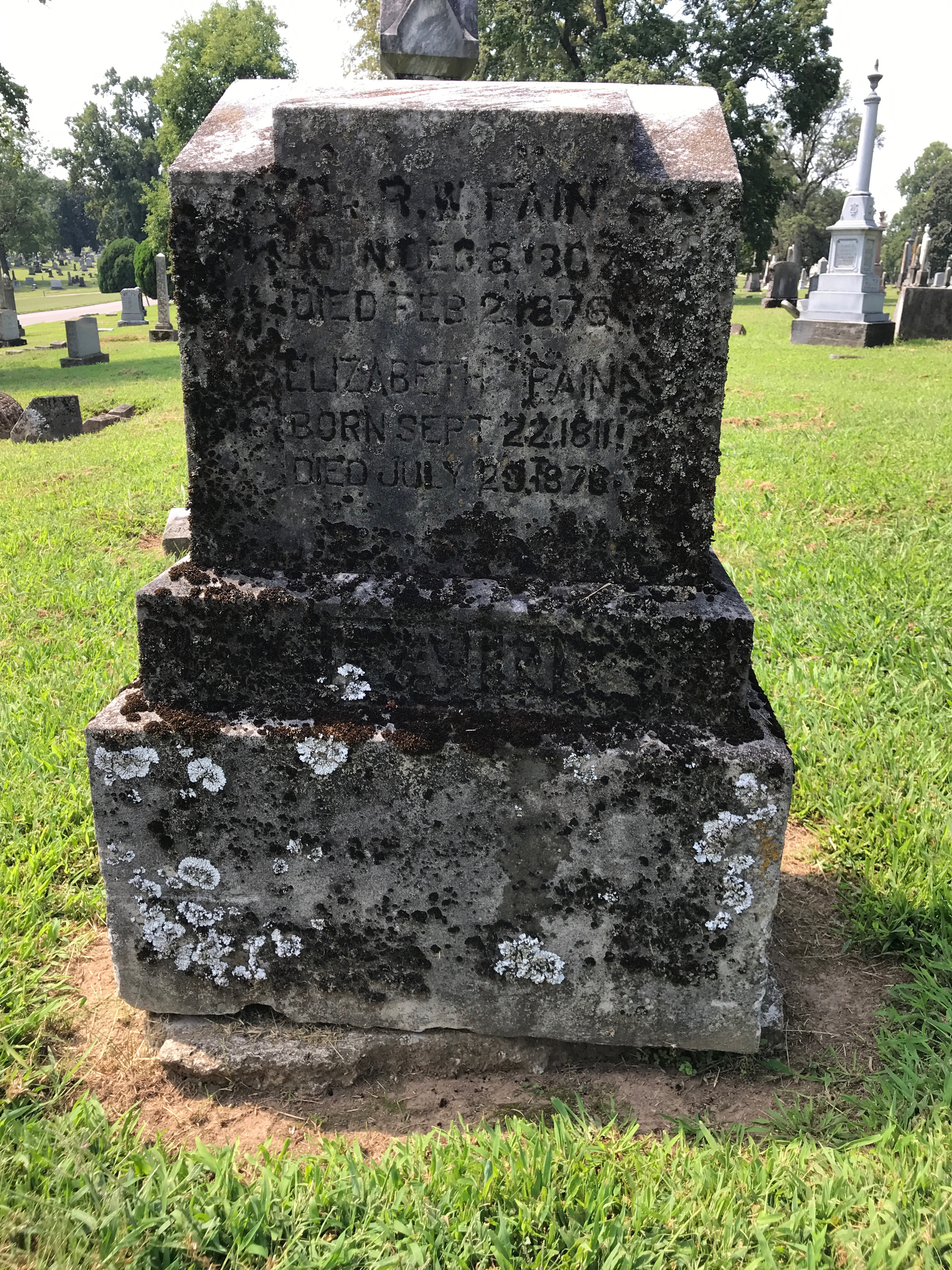
Elder (Dr.) R.W. Fain


1807-1876


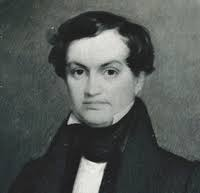
I am happy to have finally found a picture of this PB minister! Of Elder (Dr.) R.W. Fain (Richard). I have been looking for years and have had no success till yesterday. It was the same way with trying to find a picture of Elder (Dr.) John M. Watson. Such is the labor of historians! When we finally find and see what we have been looking for we are exhilarated. 

The above pictures were taken from a genealogical page (See here). There is an error on the second picture as Elder Fain did not die in 1870 but in 1876. The book "Biographical History of Primitive or Old School Baptist Ministers" (See here) also has his death occurring in 1870. But, the tombstone shows 1876. That same history has a short write up of this elder, saying that he was a close friend and associate of Elder John Watson and was the one who wrote the introductory essay to the work of Watson titled "The Old Baptist Test," of which Fain helped to publish after the death of Watson in 1866. 

According to the Primitive Baptist library (here) Dr. Fain was editor of these papers:

HERALD OF TRUTH Elder R. W. Fain, (1807-1876), Shelbyville, Tennessee, founder, in 1858. Elder John M. Watson may have later served as editor of this paper. No issues of this paper have been located yet. 

THE BAPTIST WATCHMAN The Baptist Watchman began at Jasper, Alabama, in 1868. It was moved to Murfreesboro, Tennessee in 1869, then to Nashville, Tennessee in 1872. Elders R. W. Fain (1807-1876) and B. E. Mullens (1831-1895) were editors, and Elder J. Bunyan Stephens (1836-1919) associate editor, in 1872. Publication suspended in the fall of 1880.

THE OLD BAPTIST BANNER The Old Baptist Banner began publication in 1838, at Nashville, Tenn., with Elder Washington Lowe as founder and editor. In 1840 the name was changed to The Correspondent. Elder Lowe served as editor until 1839. Elder John M. Watson (1798-1866) then moved the paper to Murfreesboro, Tennesssee, and probably served as editor until his death. Elder R. W. Fain then served as editor, probably assisted or followed by C. W. Nance at Nashville, Tennessee.

I was able to purchase some copies of the Baptist Watchman from Southern Baptist Historical Library in Nashville several years ago and I have copies of them on a USB drive. I have scanned through much of these copies and have shown how it continued to teach the gospel means position (the original position of the first PBs of the 1830s) and perseverance of the saints (rather than mere preservation). (See my postings showing this here and here and here and here)

I also referred to a written debate between Fain and R.S. Duncan on the issues that divided the Hardshell Baptists from the Missionary Baptists, which debate was published in both the Baptist Watchman and of "The Baptist" which was edited at the time by the famous J.R. Graves (R.B.C. Howell was the original editor and an opponent of Dr. Watson). You can read my initial write up (here). A follow up can be read (here). I have read the debate between Duncan and Fain on the question of the historicity of missions among Baptists and Protestants and of course I believe Duncan showed that the missions being conducted by the Baptists in the early 19th century (which were protested against by the Hardshells) were not new as Dr. Fain asserted. However, I admire Fain for his willingness to debate and also his remaining a believer in gospel means. In fact, let me now cite from Fain's Introduction to Watson's Old Baptist Test.

From "Introductory Essay" by R.W. Fain

"Upon this principle, the Gospel is preached to all, repentance and an interest in a Savior’s blood is offered to all. The charitable invitation "whosoever will" goes out to all inviting them to "take the water of life freely."

"While all Gospel Ministers feel the weight of duty in extending this invitation, yet they know at the same time, that a depraved will is under a wicked influence, and that such a will never leads a soul to Christ. But that God is able to subdue the stubborn will, to change the evil disposition, and to prepare the sinner for salvation, in opposition to the devil and all his unholy influences.

Then, Brethren in the ministry, we should take courage. Let us go forth "with the whole armor of God" and do battle for his cause. Let us preach Jesus Christ our Saviour "the way, the truth, and the life." Let us preach Him a choosing, Electing, and loving Saviour. Let us rear the blood stained BANNER OF THE CROSS, with the blessed and heavenly watchword "whosoever will," inscribed in living letters over its ample folds." (pages 9-16)

Fain also wrote the following in that Introduction:

"The writings of Gill, Flavel, Huntingdon, Elisha Cole, Booth, Boston and Osborne have been a source of great comfort and edification to the writer; and he most earnestly and confidentially recommends their writings to others." 

Well, those men believed in the gospel means position! Further, the words of Fain regarding gospel invitations shows you neo Hardshells are not in agreement with this founding father of your denomination.

My PB brothers, Elders Watson and Fain were recognized leaders of your fellowship and they held to the original position of your denomination. The fact that you no longer believe in means and in perseverance is proof that you are not "original" as you claim.

Wednesday, October 12, 2022

Known & Foreknown


"God hath not cast away his people which he foreknew" 

(Rom. 11: 2)

There is some historic debate on the precise meaning of the words "foreknowledge" (noun) and "foreknew" (verb). The Greek words translated "foreknow" and "foreknowledge" are the verb proginosko and the noun prognosis. The verb has the basic meaning of "to know beforehand," "to know in advance," and the noun simply means "foreknowledge." I believe that in the context of election and predestination the word "know" carries the idea of special intimate knowledge, or to love and regard with favor. The prefix "pro" simply tells us when God knew. That this is the meaning of the word in the context of being chosen and predestined seems clear as it does in the above text, where it does not mean simple prescience or to see before hand. It this latter sense God foresees all creatures, even those who are not "his people." But, in the above passage it is specifically and only "his people" who are foreknown, thus the meaning means loved beforehand. 

Paul in this same epistle had earlier written:

"For whom he did foreknow, he also did predestinate to be conformed to the image of his Son, that he might be the firstborn among many brethren." (Rom. 8: 29)

God has foreknown all men and creatures in the sense of simple foreseeing or prescience. But, in this text, as in the preceding, all those foreknown are also predestined to be saved by being conformed to the image of the Son of God. This cannot be said of all men, for all are not predestined to salvation, thus the foreknowing is not simple prescience but a knowing in love and favor. This is in line with the declaration of the Lord by the prophet who said: "You only have I known of all the families of the earth: therefore I will punish you for all your iniquities." (Amos 3: 2) In the sense of simple knowing, God knows all, for he is omniscient. But, in this text, God only knows his chosen people. The word “know” in the text therefore means “to choose.” Both the New American Standard Bible and the New International Version render יָדַע here as “chosen”.

The apostle Peter also wrote:

"Elect according to the foreknowledge of God the Father, through sanctification of the Spirit, unto obedience and sprinkling of the blood of Jesus Christ: Grace unto you, and peace, be multiplied." (I Peter 1: 2)

Again, this foreknowledge is not a mere seeing something or someone ahead of time, for if it did, then all who are foreseen would be elect. Obviously this is a special intimate knowing, or a loving regard. It is the kind of intimate knowledge that a husband and wife have, so we read that "Adam knew Eve his wife." (Gen. 4: 1, 25 and I Sam. 1: 19 as between Elkanah and Hannah) In these texts the knowledge is love knowledge as seen in sexual union. God does not know any but his chosen, those who are believers. Notice what the Lord said along this line.

“And then I will declare to them, ‘I never knew you; depart from Me, you who practice lawlessness!’" (Matt. 7: 23)

He did not foreknow the reprobate, nor does he know them now, nor will he know them in the future. But, believers, being God's elect, are addressed as was the prophet Jeremiah by God who said:

Before I formed you in the womb I knew you, and before you were born I consecrated you; I appointed you a prophet to the nations.” (Jer. 1: 5)

Notice that Jeremiah was first foreknown, and foreloved, and this knowledge was the impetus for him being predestined and chosen ("appointed"). Yes, Jeremiah would later be born and come to know the Lord, but the knowledge of Jeremiah by God came first. This is what the apostle John also said - "We love Him because He first loved us." (I John 4: 19)

Does God love everyone? Yes, and no. He has a general or common love for all men but a special love for his chosen, for the elect, for the one he has chosen to be his wife. God's general love is born witness to in John 3: 16 - "for God so loved the world." His special love is born witness to in these passages:

"For whom the Lord loves he chastens, and scourges every son whom he receives."(Heb. 12: 6)

"Husbands, love your wives, just as Christ also loved the church and gave Himself for her..."(Eph. 5: 25)

"...having loved his own which were in the world, he loved them unto the end." (John 13: 1)

Thus, in the sense of being known, or foreknown, the idea of being chosen, loved, and intimately known is involved in the meaning. God knows his people in a way he does not love those who are not. Wrote Paul:

"Nevertheless the solid foundation of God stands, having this seal: “The Lord knows those who are His,” and, “Let everyone who names the name of Christ depart from iniquity.” (II Tim. 2: 19)

Christ says in John 10 that he "knows" his sheep and his sheep know him. But, who knew who first? (John 10: 14-15) Notice these words of Paul:

"But now after you have known God, or rather are known by God, how is it that you turn again to the weak and beggarly elements, to which you desire again to be in bondage?" (Gal 4: 9)

Here the apostle mentions both aspects of knowledge, the believer's coming to know God, and of God knowing the believer, and the emphasis and priority is on God's knowledge of the believer or the elect. 

Other Usages of Foreknowledge

It does not seem that foreknowledge always means foreloved. From the Greek words proginosko and prognosis we get our English words prognostication and prognosis. In today's speech the latter means the "indicating of something in the future by signs or symptoms," as in a physician's "forecasting of the probable course and termination of a case of a disease." The former denotes forecasting or predicting, for foretelling. In some limited ways weathermen and doctors are prognosticators, or forecasters. But, they are often wrong in their predictions. God is not. Thus, I do not think that the words always mean foreloved or chosen but may mean simply to foreknow in the sense of knowing events before they happen, a seeing into the future. Let us notice some texts where this seems to be the case.

"Him, being delivered by the determinate counsel and foreknowledge of God, ye have taken, and by wicked hands have crucified and slain." (Acts 2: 23 kjv)

Whatever is the precise meaning of "foreknowledge" in this text, it is what follows "the determinate counsel"(hōrismenē boulē) and is distinguished from it. The Greek word hōrismenē is a form of the word for "predestinated" (proorizō). The word boulē means "will" or "volition." I believe the text is saying that God foresaw occurring what he had predetermined or predestined to occur. It is therefore a similar verse to another in the book of Acts. "Known unto God are all his works from the beginning of the world." (Acts 15: 18) Thus, we may say that the Crucifixion of Christ was both the work of God and the work of wicked men. The wicked who crucified Christ could not have done what they did to Christ had it not been in accordance with God's will and plan.  

Another text where both ideas seem to be included in the usage of the word is in a text by the apostle Peter. He wrote of Christ:

"For He was foreknown ('foreordained' kjv) before the foundation of the world, but has appeared in these last times for the sake of you." (I Peter 1: 20 NASB) 

In this passage the KJV translators thought that both ideas were in the mind of Peter when he spoke of foreknowledge, the idea of being predestined (or foreordained or predetermined) and the idea of prescience, or seeing things before they occur. I think this is correct. God foresees what he first determines shall occur. A couple other texts that speak of seeing future events are in these:

"He seeing this before spake of the resurrection of Christ, that his soul was not left in hell, neither his flesh did see corruption." (Act 2:31) 

"And the scripture, foreseeing that God would justify the heathen through faith, preached before the gospel unto Abraham, saying, In thee shall all nations be blessed." (Gal 3:8) 

In both these passages the words highlighted are from the Greek word prooraō and simply means to foresee. The reason why David could foresee the resurrection was because it was predetermined by God and revealed to David. The reason why the scripture foresaw the justification and salvation of the Gentiles is also because it was first predetermined by God. Said David:

"Your eyes saw my substance, being yet unformed. And in Your book they all were written, The days fashioned for me, When as yet there were none of them." (Psa. 139: 16)

Here again the reason why God foresaw the formation of David in the womb of his mother was because he first determined to create David. 

Sunday, October 9, 2022

Redeemer of all mankind

The following is taken from "Theological Meditations" (see link on this page), a web site I have been following for several years. It gives my views on the extent of the atonement. I believe in special and definite atonement (also called "limited atonement") but this is not to say that I deny that there are universal aspects of the atonement (as I have before stated).

Tony Byrne, the site's administrator, gives this heading for the comments to follow - 

John Mayer’s (1583–1664) Explanation of the Redemption of All Mankind in the Catechism

Here are some things said by Mayer that I can endorse (highlighting mine):

"So according to Saint Augustine’s [Aug. de predest. Sanct. lib. 174.8] like exposition of another Scripture-phrase tending hereto: Christ may be called the Redeemer of all mankind: not because all are actually redeemed by him; but because no man is redeemed by any other but Christ only." (As cited here)

"When we say, he redeemed all Mankind, the meaning is, he is the only Redeemer of all men, who attain this great benefit of redemption and salvation, by no other, according to that memorable saying, There is none other name given under Heaven, whereby to be saved, but the name of Jesus [Acts 4:11]. Such as like better of the distinction (viz. He redeemed all men, that is, in regard of the sufficiency of that he did, and suffered; but not of the efficacy thereof) may follow it if they please: For the passion of Christ was suitable to his person, his person of infinite excellency could not be so abated, without infinite merit, accruing by such humiliation: his dying was more than equivalent to all the world’s perishing everlastingly in Hell. Whereupon in giving himself a ransom for sinful man, he is rightly said to have redeemed all mankind, for so much as he paid the full price of an universal redemption: And this is the same in sense with that saying of John, Behold the Lamb of God that takes away the sins of the world. John 1.29. Wicked men and unbelievers are not hereby secured; but more justly and deeply damned, as treading under foot the Son of God, and profaning his blood."

Again, I have affirmed for many years that the death and sacrifice of Christ was sufficient for the salvation of all men but efficient only for the elect.

Thursday, October 6, 2022

Guilt Over Failure To Witness To The Lost


Recently I listened to another video by Pelagius admiring, Calvinist hating, Leighton Flowers titled - "ROMANS 9 The Urgency Of Evangelism" (here). In that video Dr. Flowers responded to a Calvinist who expressed feeling guilt over his failure to evangelize as much as he could or should have and his confession about how he deals with that guilt was the focus of Dr. Flowers' remarks. 

The discussion made me think of the Hardshell Baptists and their belief that God does not use the means of gospel preaching to save sinners from sin and death. They say that they have been delivered from such feelings of guilt by believing that God does the saving apart from their evangelistic efforts. Especially those preachers who came to the Hardshells from Missionary Baptist churches confess to this sense of freedom from being burdened and worried about people going to hell because of their failure to witness to them. It reminds me of that commercial for Alka-Seltzer where the jingle says - "Oh what a relief it is!" However, after I saw the truth of scripture on the means question, I began to feel a burden to evangelize and witness to the lost and yes, there are times, when I feel guilty for not having witnessed to a person when I had the opportunity. But, I confess such to the Lord and he forgives. That brings relief. I also, similar to the Calvinist being critiqued by Dr. Flowers, take comfort in the Calvinist truth that God will save all he intends to save whether I preach to them or not (not without someone preaching to them, however, as the Hardshells affirm, but without me being the one to do the preaching). I take comfort in such words as these:

"So shall My word be that goes forth from My mouth; It shall not return to Me void, But it shall accomplish what I please, And it shall prosper in the thing for which I sent it." (Isa. 55: 11)

My problem with Dr. Flowers' response was that he thought it wrong to take any consolation in the idea that God will, without fail, save all that he chose and predestined to save. I believe there is comfort to be had in that truth; Not, however, in such a way as to rid us of our sense of guilt over our failures to be used of God in the salvation of sinners.

The problem with the Hardshells is that they feel no guilt over their lack of preaching and witnessing to the lost! Years ago I quoted from Hardshell apologist Bernard Gowens (see here).

Gowens wrote:

"I have to admit that this preoccupation with the question of whether a person is born again or not is completely foreign to my frame of reference. It never even enters my mind when I go to a ball game or a school concert to question whether the person beside me is a child of God or not."

Does not this confession prove that he has no gospel for the lost? No word to speak to them? Does it not show how he has no concern for the lost? He has no gospel for the sick! He is the one who only has a gospel for the righteous, for that one whom he thinks has been born again.

I also wrote to a PB friend of mine relative to what one PB elder said about not worrying about the failure to persevere and being finally saved. I wrote:

He also spoke about being saved from worry about not persevering by believing hardshellism (preservation only). This is the same thing others say about being glad they don't believe in means or the necessity of evangelical faith for salvation. They say it keeps them from worrying about the state of their neighbors. Such vain reasoning! I have a draft posting on this very thing in the future. 

In another entry titled "Preaching Repentance & Faith" (here) I wrote and cited from PB founder Watson.

Elder John M. Watson, who wrote "The Old Baptist Test" (1866), was a founding father of the "Primitive Baptist" denomination but he would not fellowship today's Hardshells who have gone to extremes in deny that hearing the gospel and faith in Christ are means of being eternally saved. These he called "Antinomians," "ulraists," and "modern innovators." He also chided these Hardshell brethren with having "violated" the great commission. He wrote:

"Their connection with each other involves, in the plainest manner, the duty of preaching to every creature "repentance toward God, and faith in the Lord Jesus Christ." The Lord has ordained this way; our violation of it in the 19th century will not cause it to fail; others will do the work; it needs must be done; and this may be the cause why so few are coming into our churches! We have violated our commission. "Let us search and try our ways, and turn to the Lord."" (Pgs. 520)

Notice how Watson says that if the Hardshells won't be a means to save the lost, "others will do the work." 

Of course, as a believer that all that God chose and predestined will be finally saved, I don't worry that God will save them by getting someone to preach the gospel to them. But, I worry about my own failure to preach to the lost and urge them to believe and repent.

Hear the word of God on this matter:

1Again the word of the Lord came to me, saying, 2“Son of man, speak to the children of your people, and say to them: ‘When I bring the sword upon a land, and the people of the land take a man from their territory and make him their watchman, 3when he sees the sword coming upon the land, if he blows the trumpet and warns the people, 4then whoever hears the sound of the trumpet and does not take warning, if the sword comes and takes him away, his blood shall be on his own head. 5He heard the sound of the trumpet, but did not take warning; his blood shall be upon himself. But he who takes warning will save his life. 6But if the watchman sees the sword coming and does not blow the trumpet, and the people are not warned, and the sword comes and takes any person from among them, he is taken away in his iniquity; but his blood I will require at the watchman’s hand.’ 7“So you, son of man: I have made you a watchman for the house of Israel; therefore you shall hear a word from My mouth and warn them for Me. 8When I say to the wicked, ‘O wicked man, you shall surely die!’ and you do not speak to warn the wicked from his way, that wicked man shall die in his iniquity; but his blood I will require at your hand. 9Nevertheless if you warn the wicked to turn from his way, and he does not turn from his way, he shall die in his iniquity; but you have delivered your soul. (Eze. 33: 1-9)

Wednesday, October 5, 2022

PB Anti Means View is not Primitive


Throgmorton, W. P. (William Pinckney) 

1849-1929

In his debate with Elder John R. Daily, Elder W.P. Throgmorton said:

"In denying my proposition, I want to say further, that Brother Daily not only sets himself against the "Old Baptist Confession," but also against noted worthies whom he and his people honored as leaders." (Previously cited by me here)

Note the charge of Throgmorton - "against noted worthies whom he and his people honored as leaders."

This is the same charge Throgmorton made in his prior debate with Elder Lemuel Potter. Throgmorton said to Potter:

"Now I will quote from R. W. Fain, page 15 of the Old Baptist Test. This is in the preface to Dr. Watson's great book: "Upon this principle the Gospel is preached to all, repentance and an interest in a Saviour's blood is offered to all." What was that we heard about offering salvation yesterday? That is neither here nor there of course! Brother Fain continues: "The charitable invitation, whosoever will, goes out to all, inviting them to take the water of life freely."

Dr. John M. Watson: "To show that the will of God is in his word, 'of his own free will,' says James, "begat he us with the word of truth." "Old Baptist Test," page 421.

David Jones' Circular Letter in the Old Philadelphia Association minutes, 1788, endorsed by that association: "The precious gift of faith is a free and sovereign gift of God, conveyed through the power of the Holy Ghost, and the instrumentality of the Word." This is what I want you to hear: "And is co-existent with regeneration if not an essential part of it." Isn't that my proposition?"

"So, Brother Daily, in denying my proposition, is off the old Baptist track and you are going to follow him, are you? He is out of line with the Old Baptist Confession! and will you follow him? He is out of line with the American Baptist Fathers before the great division of 1832, and is at cross purposes with some of the best of the "Old School" Baptists since the division. For instance, Watson and Fain."

In another posting of mine (see here) I cited from PB founding father James Osbourn. I wrote:

Here is what Elder Osbourn wrote about the purpose of the gospel (emphasis mine SG).

"But if so be that the specific object which the Deity had in-view, and designed to accomplish by means of, or in a way compatible with the gospel which he ordained and promulgated, was the eternal salvation of the bride, the Lamb's wife, Rev. 21; 9; we then of course may safely conclude, that that specific object must and will be accomplished, just in that way and manner as infinite wisdom may have dictated. And lo, this is what we do believe and rejoice in; and in the gospel we also believe, every necessary arrangement and provision is made and permanently settled for the effecting the salvation of that church which was the object of God's everlasting love and delight, and which he gave to his Son before time began.

That God ordained the GOSPEL, and promulgated the same, with a settled purpose to save sinners thereby; and hence in this his gospel he says, "I will give them an heart to know me, that 1 am the Lord; and they shall be my people, and I will be their God : for they shall return unto me with,their whole heart." And again says the Lord, 'Zaccheus make haste and come down, for to day I must abide at thy house.' And again it is said, 'As many as were ordained to eternal life believed.' And we are told that the Lord works in men to will and to do of his own good pleasure; and that Christ came to seek and to save that which was lost; Jer. 24, 7; Luke, 19, 5; Acts, 11, 48; Phil. 2, 13; Luke 19, 10. (14, 15)." (pg. 14)

Elder E.H. Burnam, a leading PB minister during the latter part of the 19th century, testified in the famous Mt. Carmel church trial that the no means view was an invention that became prominent in the last quarter of that century. He said (see here):

"It was left to the last quarter of the 19th century to give birth among the Old Order of Baptists to the notion of regeneration without faith, or that it is not necessary that one should exercise repentance, faith, or any spiritual gift, in order to be saved, a heresy than which none more pernicious was ever put forth by any professing to be followers of Christ."

Which PB wants to come forward and show us the historical evidence that Throgmorton and Burnam were wrong? And to give us the evidence that the first PBs (before the Civil War) all denied means and the necessity of faith in Christ for eternal salvation?

Elder John M. Watson's PB Credentials

 Of Watson here is what Sylvester Hassell said:

"Nearly thirty years ago “the beloved physician,” Eld. John M. Watson, professor of obstetrics in the medical department of the University of Nashville, Tenn, wrote in the "Old Baptist Test,' these wise and warning words: "We have become too ultra in most things. How great the change! Watchman! what of the night? I hear one respond, All is not well! another, that strange winds of doctrine are blowing; another, that the sickly dews of heresy are falling thickly around us, many are sickly and weak; another, that the sound of another gospel is heard in our midst, whereby many are being bewitched. I hear something of heavenly origin! Listen: "Though we or an angel from heaven preach any other gospel unto you than that which we have preached unto you, let him be accursed.' O, Israel, to you tents! Gird on the sword of the Spirit! put on the whole armor of God! Set up the waymarks and, in holy boldness and meekness, defend them against all heretical defacers! Above all things, avoid those prevailing ultraisms which are now eating on the Old Baptist Church as doth a canker--dividing churches and Associations, and disturbing the order and peace of the Baptists generally. Rebuke the ultraist whenever you meet with him--reclaim or reject him--let him be regarded constantly as the worst enemy of the Baptists of the present day!""

(As originally cited by me here)

Here is what Elder Gilbert Beebe said of Watson:

"The "Correspondent." - The 2nd number of this paper published at Murfreesborough, Ten. and edited by our Brother John M. Watson, M.D., has just reached us. The first number we have not seen: by the number now before us we learn that the Correspondent is a continuance of "The Old Baptist Banner." Of the orthodoxy and the ability of Brother Watson, we have no doubt: some of his communications published in back numbers of the "Signs of the Times," will satisfy our readers that Brother W. is thorough going Old School Baptist, and we wish him great success in setting forth truth and opposing error in the "far west"."

("The Correspondent" Vol. II, No. 4, for August 1839, published out of Murfreesborough, Tenn. and being copied by Elder Watson from the periodical "Signs of the Times" edited by Elder Gilbert Beebe)

In both the "Old Baptist Banner" and "The Correspondent" we find endorsements and articles from such PB leaders as James Osbourn, Daniel Jewett, William Conrad, and other such men. 

Here is what Elder Lemuel Potter said of Watson (as cited by me here):

"In the first place, I will state that Dr. Watson was an old Baptist. He was one of our brethren."

This was said in his debate with Dr. Throgmorton (See my posting here)

PBs who today read Dr. Watson's book "The Old Baptist Test" always say "I do not agree with him on many things" and by this confession they show that they are not "primitive" at all! What Dr. Watson taught in this book and in his numerous writings in his papers and all the leading PB periodicals of the time is what the majority of PBs first believed. He believed in means and in perseverance. Those PBs who today who do not believe such are therefore not "original" Old Baptists.

What think ye?

Tuesday, October 4, 2022

Watson On Eternal Vital Union or Two Seedism


Elder (Dr.) John McClaren Watson
1798-1866
"In expressing our tenet of the eternal union between God and the Church, we proved that this expression should only be used in a qualified sense, as we then pointed out; but our opponents (Two Seeders - SG) use it in its most unqualified signification, and affirm that the souls of the elect existed eternally with God, and were infused into Adam at the time of his formation, and have always under all circumstances, whether "dead in trespasses and sins" or not, whether defiled with sin or not, before or after the new birth, have been in actual union with God! Moreover: we showed that all the human family, elect and non-elect, were by the fall involved in one common actual union with Satan, and that union only began actually at the fall, and exists on the part of all until "born again," as we fully explained; but they say that there is a different union between Satan and the non-elect; that they did not fall in Adam; that they, contrary to the elect, have a Satanic seed inborn, with which Satan has been eternally and actually united, just as God has been with the souls of the elect." ("Old Baptist Test" page 232 - here)

Recall that pb historian Sylvester Hassell said that Two Seed ideas had been a problem among the "Primitive Baptists" for the entire 19th century (See here). We have also shown how the no means view of regeneration or eternal salvation was promoted by the Two Seeders (for instance see here and here).