Did you know that the southern "Primitive" or "Old School" Baptists in the time leading up to the American Civil War began to vehemently denounce the great Charles Spurgeon because of his opposition to slavery? If one reads the issues of "The Primitive Baptist" periodical during that time he will see many writing in strong denunciation of Spurgeon over this matter. Some said he could not possibly be saved because of his position.
Now, to me, this reveals a lot about the cult.
P.S. Hassell's history quotes Spurgeon often and favorably, but they always call him "Mr." C.H. Spurgeon.
Thursday, June 27, 2019


Research At Duke University
For many years I have been trying to locate copies of "Zion's Advocate" that was started by Elder John Clark of Front Royal, Virginia. I have been hoping that the old issues (1854-1882 when Clark was alive and editor) would be made available by Google Books or some other entity. They have not. Over the years I have found that some of these volumes were at various seminary libraries, but they had but a few of them. SBTS and Southeastern have a few. But, Duke has most all of them! I have these old volumes set aside by the Duke library for me to come and read and copy. I plan to do this on Monday. It is about a 2-3 hour drive to Durham and I expect to be there all day. At last! I get to read all those old issues for that time period. What do I expect to find? More historical evidence to uphold the things we have asserted here in relation to Clark and the Old Baptists regarding means in the new birth, predestination, and on the perseverance of the saints.
Pray for us. I am sure we will have a lot to share with our readers in the future on what is contained in those volumes!
Question: Why have Hardshells not preserved these volumes under Clark's editorship? Was it not because they wanted that information "buried in oblivion"?
I also plan to complete my series on Redemption, on the Bema, and on ordination practices.
Pray for us. I am sure we will have a lot to share with our readers in the future on what is contained in those volumes!
Question: Why have Hardshells not preserved these volumes under Clark's editorship? Was it not because they wanted that information "buried in oblivion"?
I also plan to complete my series on Redemption, on the Bema, and on ordination practices.
Wednesday, June 26, 2019
The Judgment Seat Of Christ (6)
Boldness At The Bema
"And now, little children, abide in him; that, when he shall appear, we may have confidence, and not be ashamed before him at his coming." (I John 2:28 KJV)
"Herein is our love made perfect, that we may have boldness in the day of judgment: because as he is, so are we in this world." (4:17)
These verses uproot one of the leading Hardshell presuppositions (which they take to scripture, rather than obtaining from it). What is that presupposition? That presupposition is contained in the following proposition: "There is no condition for the sinner or saint to meet in order to be finally saved." (It may be stated differently by them, but the essence is the same) It is amazing to me that they can affirm such a proposition when so many scriptures, as the above, refute it.
The first passage says that believers are to "abide in him," which is obviously something they do in response to such exhortations. Why abide in him? To obtain merely temporal good? No, it is "that (Greek "hina"; a purpose clause, meaning "in order that")" believers may:
1) have confidence before Christ when he appears the second time (the positive)
2) not be ashamed (disgraced) before him at his coming (the negative)
Since this is what happens at the second coming of Christ, it therefore cannot be made to refer to what is received now in this life. What Hardshell wants to come and refute it?
What does it mean to lack confidence and to be shamed by Christ at his coming? What did all our Old Baptist forefathers teach on it? Did they all not teach that the verses affirm the necessity of perseverance in order to be finally saved?
Here is what Dr. Gill (a real Old Baptist) said:
"And now, little children, abide in him - The apostle having finished his separate instructions exhortations to the fathers, young men and children, returns to the whole body of the saints in general, whom he addresses, as in ( 1 John 2:1 1 John 2:12 ); under the name of little children; (See Gill on 1 John 2:1); and whom he exhorts to abide in Christ, that is, in the exercise of faith on him, of hope in him, and love to him; and to hold to him the head, and to hold fast his word and Gospel, and abide by his truth and ordinances, and adhere to his cause and interest, and not to be moved away on any consideration."
We ask - is that not what it means to "abide in him"?
Gill comments further:
"we may have confidence; boldness or freedom, as now at the throne of grace, so then at the throne of judgment; where the saints will stand with courage and intrepidity, when the wicked will flee to the rocks and mountains, being filled with amazement, terror, and trembling..."
"and not be ashamed before him at his coming; they will not be put to shame by him; nor will they be ashamed of their confidence, faith, hope, and expectation; their hope will not make them ashamed, for they will now enjoy what they hoped for; and, notwithstanding all their sins and infirmities, they will not be ashamed, for they will have on the wedding garment, the righteousness of Christ, and will stand before the throne without fault, spot, or blemish; nor will Christ be ashamed of them who have not been ashamed of him and his words, but have confessed him, and have been faithful unto death, and have cleaved to him and his cause with full purpose of heart to the end."
Does that sound like Gill was a Hardshell?
"that we may have boldness in the day of judgment...not of men's judgment, when brought before judges, governors, and kings, for the sake of Christ and the Gospel, and stand at their bar, where saints, who have true love to God and Christ and the brethren, have stood with great courage and intrepidity, and shown much boldness, and used great freedom of speech; nor of judgment in this life, which sometimes begins at the house of God, though the saints often have great boldness and presence of mind, and freedom of expression both to God and man in a day of affliction, as Job had; but of the future judgment, which, though it will be very awful and solemn, Christ the Judge will appear with great majesty and glory, and all men will stand before him, and the books will be opened, and the judgment will proceed with great strictness and justice, and will issue in the everlasting perdition of devils and wicked men, yet the saints will have boldness in it..."
In preaching upon having boldness in the day of judgment, Spurgeon said:
"Sit down, dear reader, if you are as yet unsaved, and take an hour for this solemn exercise: it may prove the turning-point of your history. In a few years you will be one of that vast assembly, and have to answer for every deed and word of your life. Think of it long; picture it vividly; let it work upon your mind. Though at the first it fill you with fear and trembling, it may conduct you to the Savior's feet, and then, looking up to him with penitential faith, you may hear how to "have boldness in the day of judgment." If you fly to Jesus as your Savior you will not fear to face him as your King. It has been well said, "Thou wilt meet the Great Day well if thou get the Great judge to judge thee every day.""
"Are you afraid to think of it? Be much more afraid of enduring it! If even to dream of the Last Day is a terrible event, what must it be then to be there in reality? The prisoner who will not even think of his trial is in his conscience assured of a verdict of condemnation. Would he not be far wiser to seek for a Counselor to plead his cause? Will you not seek One? Jesus, the faithful Counselor, asks no fee. Commit your cause into his hand, and you need not fear the Last Assize." ("Anticipating the Last Judgment"; From the January 1884 Sword and Trowel - see here)
For our Hardshell brothers to tell professing Christians that they can live in sin (not abide in him and his word) and yet have confidence and boldness when Christ appears, and when one stands before his judgment seat, is highly destructive and perilous for them.
"And now, little children, abide in him; that, when he shall appear, we may have confidence, and not be ashamed before him at his coming." (I John 2:28 KJV)
"Herein is our love made perfect, that we may have boldness in the day of judgment: because as he is, so are we in this world." (4:17)
These verses uproot one of the leading Hardshell presuppositions (which they take to scripture, rather than obtaining from it). What is that presupposition? That presupposition is contained in the following proposition: "There is no condition for the sinner or saint to meet in order to be finally saved." (It may be stated differently by them, but the essence is the same) It is amazing to me that they can affirm such a proposition when so many scriptures, as the above, refute it.
The first passage says that believers are to "abide in him," which is obviously something they do in response to such exhortations. Why abide in him? To obtain merely temporal good? No, it is "that (Greek "hina"; a purpose clause, meaning "in order that")" believers may:
1) have confidence before Christ when he appears the second time (the positive)
2) not be ashamed (disgraced) before him at his coming (the negative)
Since this is what happens at the second coming of Christ, it therefore cannot be made to refer to what is received now in this life. What Hardshell wants to come and refute it?
What does it mean to lack confidence and to be shamed by Christ at his coming? What did all our Old Baptist forefathers teach on it? Did they all not teach that the verses affirm the necessity of perseverance in order to be finally saved?
Here is what Dr. Gill (a real Old Baptist) said:
"And now, little children, abide in him - The apostle having finished his separate instructions exhortations to the fathers, young men and children, returns to the whole body of the saints in general, whom he addresses, as in ( 1 John 2:1 1 John 2:12 ); under the name of little children; (See Gill on 1 John 2:1); and whom he exhorts to abide in Christ, that is, in the exercise of faith on him, of hope in him, and love to him; and to hold to him the head, and to hold fast his word and Gospel, and abide by his truth and ordinances, and adhere to his cause and interest, and not to be moved away on any consideration."
We ask - is that not what it means to "abide in him"?
Gill comments further:
"we may have confidence; boldness or freedom, as now at the throne of grace, so then at the throne of judgment; where the saints will stand with courage and intrepidity, when the wicked will flee to the rocks and mountains, being filled with amazement, terror, and trembling..."
"and not be ashamed before him at his coming; they will not be put to shame by him; nor will they be ashamed of their confidence, faith, hope, and expectation; their hope will not make them ashamed, for they will now enjoy what they hoped for; and, notwithstanding all their sins and infirmities, they will not be ashamed, for they will have on the wedding garment, the righteousness of Christ, and will stand before the throne without fault, spot, or blemish; nor will Christ be ashamed of them who have not been ashamed of him and his words, but have confessed him, and have been faithful unto death, and have cleaved to him and his cause with full purpose of heart to the end."
Does that sound like Gill was a Hardshell?
"that we may have boldness in the day of judgment...not of men's judgment, when brought before judges, governors, and kings, for the sake of Christ and the Gospel, and stand at their bar, where saints, who have true love to God and Christ and the brethren, have stood with great courage and intrepidity, and shown much boldness, and used great freedom of speech; nor of judgment in this life, which sometimes begins at the house of God, though the saints often have great boldness and presence of mind, and freedom of expression both to God and man in a day of affliction, as Job had; but of the future judgment, which, though it will be very awful and solemn, Christ the Judge will appear with great majesty and glory, and all men will stand before him, and the books will be opened, and the judgment will proceed with great strictness and justice, and will issue in the everlasting perdition of devils and wicked men, yet the saints will have boldness in it..."
In preaching upon having boldness in the day of judgment, Spurgeon said:
"Sit down, dear reader, if you are as yet unsaved, and take an hour for this solemn exercise: it may prove the turning-point of your history. In a few years you will be one of that vast assembly, and have to answer for every deed and word of your life. Think of it long; picture it vividly; let it work upon your mind. Though at the first it fill you with fear and trembling, it may conduct you to the Savior's feet, and then, looking up to him with penitential faith, you may hear how to "have boldness in the day of judgment." If you fly to Jesus as your Savior you will not fear to face him as your King. It has been well said, "Thou wilt meet the Great Day well if thou get the Great judge to judge thee every day.""
"Are you afraid to think of it? Be much more afraid of enduring it! If even to dream of the Last Day is a terrible event, what must it be then to be there in reality? The prisoner who will not even think of his trial is in his conscience assured of a verdict of condemnation. Would he not be far wiser to seek for a Counselor to plead his cause? Will you not seek One? Jesus, the faithful Counselor, asks no fee. Commit your cause into his hand, and you need not fear the Last Assize." ("Anticipating the Last Judgment"; From the January 1884 Sword and Trowel - see here)
For our Hardshell brothers to tell professing Christians that they can live in sin (not abide in him and his word) and yet have confidence and boldness when Christ appears, and when one stands before his judgment seat, is highly destructive and perilous for them.
The Judgment Seat Of Christ (5)
Having dealt with the problem of a seeming contradiction, on the topic of coming judgment for believers (where believers are promised not to be judged and condemned, on the one hand, and yet will be judged at the Bema of Christ, on the other hand), I wish now to address some other difficulties on this subject.
Both Judge & Attorney?
How can Christ justly be both the judge of a person and represent him in the same trial? That is not permissible in human courts. Why then is it allowable in the court of heaven? I expect to be judged by the Lord but I also expect him to represent me as my advocate and attorney. Again, is this just?
Surprisingly, I have not been able to find any bible commentator who addressed this difficulty. Thus, I have no help in attempting an answer to this question.
It will be perfectly legitimate, quite fair and just, for Christ to be both judge over the defendant, and also his advocate/attorney. The reason for this is because Christ is righteous and just and will show no bias or partiality in justice. There is no conflict of interest to eliminate, and so no need of requiring a law forbidding acting both as judge and advocate. Among men it is quite necessary to have such a rule because men cannot help having a conflict of interest in such cases. Further, God is subject to no laws. Justice for God is what he says it is.
Further, not only is Jesus the believer's advocate, but so also is the Holy Spirit. So, we can be certain that the Spirit, being the "Spirit of Christ," will be at the side of the believer as he stands before the judge.
Believers Have An Advocate
“My little children, I am writing these things to you so that you may not sin. But if anyone does sin, we have an advocate (paraklētos) with the Father, Jesus Christ the righteous.” (I John 2: 1)
According to Strong, parakletos means "summoned, called to one's side, esp. called to one's aid" and "one who pleads another's cause before a judge, a pleader, counsel for defense, legal assistant, an advocate," or "one who pleads another's cause with one, an intercessor."
Holy Spirit as parakletos ("Comforter" KJV) as in John 14:16,26; 15:26; 16:7) The words "another comforter" identifies both Christ and the Spirit as parakletos.
Further, Christ, as a believer's attorney, does not wait until the trial to prepare his client for it. The believer now has been fully equipped to stand in the judgment and should know in advance how his case will be decided.
Infants At The Bema?
Infants are of course not involved in this judgment nor even in the "Great White Throne" judgment. What are the ramifications of that?
Both the Bema and the great "white throne" judgment (Rev. 20) find that those who are condemned are condemned on the basis of their works (done without faith), which infants (idiots also) have none. Therefore, when Paul says "we must all stand before the judgment seat of Christ" he must exclude such characters, so that the statement must be interpreted to mean "all men except those who have no works of any kind."
We have the same difficulty in statements about Christ dying for the "sins" (plural) of all those who are finally saved. But, do infants and idiots have sins? We know they have "original sin," but this is not what the judgment is all about. Men have already been judged and condemned as respects original sin. (John 3: 18; Rom. 5:16-18)
So, I conclude that when Jesus and Paul say that "all" or "everyone" will give account for his deeds that they meant "all adults" or "all who are old enough to do good or evil."
As a side note, this point should give pause to our Arminian brothers who often insist that "all men" means all men without exception.
Righteous Dead Awaiting Judgment?
If people now in heaven are awaiting this Bema appearing, or the great white throne judgment, then how can it be for salvation? Likewise, we may ask; if people now in hell are awaiting judgment, then how can it be for damnation?
It seems that a judgment is made in regard to each soul at the moment the body dies and the spirit is sent to either heaven or hell. So Paul writes - "it is appointed unto men once to die, but after this the judgment." (Heb. 9:27) On these words wrote Gill in his commentary:
"...the last and general judgment, which will reach to all men, quick and dead, righteous and wicked, and in which Christ will be Judge. There is a particular judgment which is immediately after death; by virtue of which, the souls of men are condemned to their proper state of happiness or woe; and there is an universal judgment, which will be after the resurrection of the dead, and is called eternal judgment, and to come..."
The judgment made at one's death is preliminary, though it is without error, because God does not need to wait till the final trial to know of one's condemnation or justification. Even men make preliminary judgments about guilt and innocence before trials make final determination. A man murders in plain sight of witnesses. He is locked up in "jail" and is guilty even before it is so stated by a judge in court. Though guilty, and in jail, before his trial, who can deny that the trial itself will be "unto damnation"? Therefore, we may reason, that just as the souls of the wicked are initially judged as guilty, and sent to Hell (in spirit) to await trial, so too are the souls of the righteous initially judged as justified, and sent (in spirit) to Heaven (or Paradise) to await trial at the Bema, and which will be "unto salvation."
Paul's words in I Tim. 5:24-25 uphold this apology on the subject. He said:
"The sins of some men are quite evident, going before them to judgment; for others, their sins follow after. Likewise also, deeds that are good are quite evident, and those which are otherwise cannot be concealed." (NASB)
On this text Dr. Gill wrote:
"Some men are such open and notorious sinners, that there is no need of any inquiry about them, or any examination of them; or any witnesses to be called to their character, in order to pass judgment concerning them; they even prevent and supersede any formal process about them."
Though in context Paul is talking about what is true in regard to human judgment, yet the principle he puts forth is applicable to the final judgment.
As the sufferings of the wicked spirits in Hell are not receiving the full complement of their eternal woes, in their "intermediate state," so the joys of those "spirits of just men made perfect" (Heb. 12:23) that are in Heaven are not complete. Not till the judgment and resurrection, at the return of Christ, do saints and sinners receive their complete recompense.
The intermediate state has much mystery surrounding it, but of what I have stated thus far, we can be sure is clear and comprehensible.
Condemned Already?
If sinners are "condemned" already (John 3:18), why the need for a another future judgment?
Men have been already judged and condemned for original sin, for the sin of Adam. (See Rom. 5) But, they have not yet been judged in regard to their works, or in regard to final salvation or damnation.
Justified Already?
Is there not a sense in which believers will be justified at the judgment? I think so. Though Christians are now justified by faith, yet their justification in court yet awaits. Their justification then will involve vindication.
Jesus said:
"He who rejects Me and does not receive My sayings, has one who judges him; the word I spoke is what will judge him at the last day." (John 12:48 NASB)
Just as rejecting the word of the Lord results in condemnation at the day of judgment, "at the last day," so too does accepting that word result in justification. The words of Christ will either condemn or clear each person at the judgment.
Bema is much more than a mere "awards ceremony." It is not mere formality nor simply pomp and circumstance.
Both Judge & Attorney?
How can Christ justly be both the judge of a person and represent him in the same trial? That is not permissible in human courts. Why then is it allowable in the court of heaven? I expect to be judged by the Lord but I also expect him to represent me as my advocate and attorney. Again, is this just?
Surprisingly, I have not been able to find any bible commentator who addressed this difficulty. Thus, I have no help in attempting an answer to this question.
It will be perfectly legitimate, quite fair and just, for Christ to be both judge over the defendant, and also his advocate/attorney. The reason for this is because Christ is righteous and just and will show no bias or partiality in justice. There is no conflict of interest to eliminate, and so no need of requiring a law forbidding acting both as judge and advocate. Among men it is quite necessary to have such a rule because men cannot help having a conflict of interest in such cases. Further, God is subject to no laws. Justice for God is what he says it is.
Further, not only is Jesus the believer's advocate, but so also is the Holy Spirit. So, we can be certain that the Spirit, being the "Spirit of Christ," will be at the side of the believer as he stands before the judge.
Believers Have An Advocate
“My little children, I am writing these things to you so that you may not sin. But if anyone does sin, we have an advocate (paraklētos) with the Father, Jesus Christ the righteous.” (I John 2: 1)
According to Strong, parakletos means "summoned, called to one's side, esp. called to one's aid" and "one who pleads another's cause before a judge, a pleader, counsel for defense, legal assistant, an advocate," or "one who pleads another's cause with one, an intercessor."
Holy Spirit as parakletos ("Comforter" KJV) as in John 14:16,26; 15:26; 16:7) The words "another comforter" identifies both Christ and the Spirit as parakletos.
Further, Christ, as a believer's attorney, does not wait until the trial to prepare his client for it. The believer now has been fully equipped to stand in the judgment and should know in advance how his case will be decided.
Infants At The Bema?
Infants are of course not involved in this judgment nor even in the "Great White Throne" judgment. What are the ramifications of that?
Both the Bema and the great "white throne" judgment (Rev. 20) find that those who are condemned are condemned on the basis of their works (done without faith), which infants (idiots also) have none. Therefore, when Paul says "we must all stand before the judgment seat of Christ" he must exclude such characters, so that the statement must be interpreted to mean "all men except those who have no works of any kind."
We have the same difficulty in statements about Christ dying for the "sins" (plural) of all those who are finally saved. But, do infants and idiots have sins? We know they have "original sin," but this is not what the judgment is all about. Men have already been judged and condemned as respects original sin. (John 3: 18; Rom. 5:16-18)
So, I conclude that when Jesus and Paul say that "all" or "everyone" will give account for his deeds that they meant "all adults" or "all who are old enough to do good or evil."
As a side note, this point should give pause to our Arminian brothers who often insist that "all men" means all men without exception.
Righteous Dead Awaiting Judgment?
If people now in heaven are awaiting this Bema appearing, or the great white throne judgment, then how can it be for salvation? Likewise, we may ask; if people now in hell are awaiting judgment, then how can it be for damnation?
It seems that a judgment is made in regard to each soul at the moment the body dies and the spirit is sent to either heaven or hell. So Paul writes - "it is appointed unto men once to die, but after this the judgment." (Heb. 9:27) On these words wrote Gill in his commentary:
"...the last and general judgment, which will reach to all men, quick and dead, righteous and wicked, and in which Christ will be Judge. There is a particular judgment which is immediately after death; by virtue of which, the souls of men are condemned to their proper state of happiness or woe; and there is an universal judgment, which will be after the resurrection of the dead, and is called eternal judgment, and to come..."
The judgment made at one's death is preliminary, though it is without error, because God does not need to wait till the final trial to know of one's condemnation or justification. Even men make preliminary judgments about guilt and innocence before trials make final determination. A man murders in plain sight of witnesses. He is locked up in "jail" and is guilty even before it is so stated by a judge in court. Though guilty, and in jail, before his trial, who can deny that the trial itself will be "unto damnation"? Therefore, we may reason, that just as the souls of the wicked are initially judged as guilty, and sent to Hell (in spirit) to await trial, so too are the souls of the righteous initially judged as justified, and sent (in spirit) to Heaven (or Paradise) to await trial at the Bema, and which will be "unto salvation."
Paul's words in I Tim. 5:24-25 uphold this apology on the subject. He said:
"The sins of some men are quite evident, going before them to judgment; for others, their sins follow after. Likewise also, deeds that are good are quite evident, and those which are otherwise cannot be concealed." (NASB)
On this text Dr. Gill wrote:
"Some men are such open and notorious sinners, that there is no need of any inquiry about them, or any examination of them; or any witnesses to be called to their character, in order to pass judgment concerning them; they even prevent and supersede any formal process about them."
Though in context Paul is talking about what is true in regard to human judgment, yet the principle he puts forth is applicable to the final judgment.
As the sufferings of the wicked spirits in Hell are not receiving the full complement of their eternal woes, in their "intermediate state," so the joys of those "spirits of just men made perfect" (Heb. 12:23) that are in Heaven are not complete. Not till the judgment and resurrection, at the return of Christ, do saints and sinners receive their complete recompense.
The intermediate state has much mystery surrounding it, but of what I have stated thus far, we can be sure is clear and comprehensible.
Condemned Already?
If sinners are "condemned" already (John 3:18), why the need for a another future judgment?
Men have been already judged and condemned for original sin, for the sin of Adam. (See Rom. 5) But, they have not yet been judged in regard to their works, or in regard to final salvation or damnation.
Justified Already?
Is there not a sense in which believers will be justified at the judgment? I think so. Though Christians are now justified by faith, yet their justification in court yet awaits. Their justification then will involve vindication.
Jesus said:
"He who rejects Me and does not receive My sayings, has one who judges him; the word I spoke is what will judge him at the last day." (John 12:48 NASB)
Just as rejecting the word of the Lord results in condemnation at the day of judgment, "at the last day," so too does accepting that word result in justification. The words of Christ will either condemn or clear each person at the judgment.
Bema is much more than a mere "awards ceremony." It is not mere formality nor simply pomp and circumstance.
Elder John Clark On Means

1804-1882
"In the first volume of Zion’s Advocate Clark wrote:
“...the gospel ‘is a means made use of by God in quickening dead sinners, enlightening blind eyes, unstopping deaf ears, softening hard hearts, and making of enemies friends’ (Vol. VIII. p. 437)
(comments upon Romans 1: 16. For more citations as the above, see my posting Elder John Clark On Means.
Same volume; page 339, upon Acts XXVI, 18, he says:
"Now, though this is all the work of the spirit, by whom only the eyes of the understanding are enlightened; yet this is ascribed to the apostle, not as the efficient cause, but as the instrument and means, through preaching of the gospel, which the spirit of God would, and did, make use of.’”
Clark also wrote:
"The people of God were in Christ before the world was, according to that choice, and they are in him in time by faith – become children of God by faith in Christ; and hence, some are in Christ, in this sense, before others, as the apostle stated on a particular occasion. (Rom. 16:7.)"
(Taken from my posting Was Elder John Clark a neo Hardshell?)
Clark states what was the original view of the founding fathers of the "Primitive Baptist" denomination. We are the true primitive or old Baptists here. The above is proof of it.
Sunday, June 23, 2019
Pyles On Old Baptist Forefathers
"Listen to me real carefully...In my years of circulating among God's people, several times a year I'll meet somebody that's got a contrary strange idea on "Jacob have I loved but Esau have I hated" (Rom. 9:13) that's totally contrary to what the standards among the Old Baptists have taught for centuries. And I want to say to you this morning in all kindness, if you're ever studying the scriptures and your tempted to get an idea on a scripture that's contrary to what the standards among our people will have taught for centuries, then you be very very careful and study it out very carefully before you advocate it. Somebody says - Well, we're not following those standards, we are following the bible. Just a minute. I did not say your local ministers. I did not say the ministers of my day. I said you get an idea on, uh, you got a position on a scripture out of the top of your head, you reach back and begin to study it and see if the standards among God's people taught that a hundred years ago, see it they taught it a hundred fifty years ago. See if they taught it three hundred years ago. See if they taught it five hundred years ago. What I'm saying to you this morning, I have been in sections of the country all over the USA, where the local ministers have screwball ideas. Somebody says - that's a strange word to use in the pulpit. You got the idea didn't you? What I'm talking about is when we go back and study what our brethren believed fifty years, a hundred years ago, a hundred fifty years ago, two hundred years ago, or a few hundred years ago, somebody says - we're not following men, we're following the bible. That's right. But men read the bible and God gives them the ability to explain what it means to God's people. I want you to consider this, this morning."
"I have a serious question for you this morning. How can a church be the pillar and ground of the truth and be consistently wrong? (long pause) Now then, there have been times, if a man says "I can study church history and I can go back to the days of the apostles and I can find a straight line that men have travelled and preaching straight consistent truth to the present hour, if you're going to advocate that, all you have told me is that you haven't studied church history as much as I have. What you'll find is this; here's the pattern set by Christ and his apostles. You'll find the church from time to time, there will be men in a particular day, or a particular location, they'll vary to the right a little, or they'll vary to the left, then God will raise up a generation of sound men that will take the bible and pull them right back to the middle. They'll move down the middle line a while. Then folks will vary for a little while to the left, they'll vary a little to the right, then God raised up sound men, give them the rule book and pull them right back to the center."
I find it ironic that Sonny can't see how the PBs of today cannot find that their forefathers centuries ago believed what they do! Where is the no means view taught by our forefathers centuries ago? Where can we find where they taught that conversion was unnecessary for final salvation? Where can we find where they denied the predestination of all things? Where can they find where the perseverance of the saints was denied?
He also repeats this line - "church cannot be the pillar and ground of the truth and be consistently wrong."
So, the PBs have been consistent in the truth over the past two centuries? Have we not proved otherwise?
On predestination Pyles said that the PBs "fought Absolutism so hard that they're almost Arminian."
Well, amen to that!
How does that fit in with PB Landmarker views? When the church strayed to the right or to the left, were the baptisms, ordinations, etc., then invalid? When the church came back to the middle, did it rebaptize all those who were baptized when the church was not in the middle?
Has God not raised up me to pull the PBs back? Kevin also? Jeremy also? Others too that I could mention?
The errors of today's PBs on the points just enumerated show that they have not been "consistent in the truth" and have rather had "screwball ideas."
There are other things in this sermon that I hope to review in the near future, the Lord willing. Pray for us.
"I have a serious question for you this morning. How can a church be the pillar and ground of the truth and be consistently wrong? (long pause) Now then, there have been times, if a man says "I can study church history and I can go back to the days of the apostles and I can find a straight line that men have travelled and preaching straight consistent truth to the present hour, if you're going to advocate that, all you have told me is that you haven't studied church history as much as I have. What you'll find is this; here's the pattern set by Christ and his apostles. You'll find the church from time to time, there will be men in a particular day, or a particular location, they'll vary to the right a little, or they'll vary to the left, then God will raise up a generation of sound men that will take the bible and pull them right back to the middle. They'll move down the middle line a while. Then folks will vary for a little while to the left, they'll vary a little to the right, then God raised up sound men, give them the rule book and pull them right back to the center."
I find it ironic that Sonny can't see how the PBs of today cannot find that their forefathers centuries ago believed what they do! Where is the no means view taught by our forefathers centuries ago? Where can we find where they taught that conversion was unnecessary for final salvation? Where can we find where they denied the predestination of all things? Where can they find where the perseverance of the saints was denied?
He also repeats this line - "church cannot be the pillar and ground of the truth and be consistently wrong."
So, the PBs have been consistent in the truth over the past two centuries? Have we not proved otherwise?
On predestination Pyles said that the PBs "fought Absolutism so hard that they're almost Arminian."
Well, amen to that!
How does that fit in with PB Landmarker views? When the church strayed to the right or to the left, were the baptisms, ordinations, etc., then invalid? When the church came back to the middle, did it rebaptize all those who were baptized when the church was not in the middle?
Has God not raised up me to pull the PBs back? Kevin also? Jeremy also? Others too that I could mention?
The errors of today's PBs on the points just enumerated show that they have not been "consistent in the truth" and have rather had "screwball ideas."
There are other things in this sermon that I hope to review in the near future, the Lord willing. Pray for us.
Tuesday, June 18, 2019
The Judgment Seat Of Christ (4)
"Therefore leaving the principles of the doctrine of Christ, let us go on unto perfection; not laying again the foundation of repentance from dead works, and of faith toward God, Of the doctrine of baptisms, and of laying on of hands, and of resurrection of the dead, and of eternal judgment." (Heb. 6: 1-2 KJV)
What is "the doctrine of eternal judgment"? According to the above inspired words, it is part of that body of divinity styled "the principles of the doctrine of Christ."
One cannot teach about Christ without teaching about repentance, faith, cleansing, gifts, resurrection, and about the coming day of judgment. The "doctrine of eternal judgment," of everlasting condemnation, etc., is part of the "doctrine of Christ." It is also part of "the gospel." It is part of preaching the gospel to warn men of this coming day and to exhort them to prepare for it. Wrote Paul: "In the day when God shall judge the secrets of men by Jesus Christ according to my gospel." (Rom. 2:16)
Commented Albert Barnes:
"of eternal judgment...This is the sixth element or principle of religion. It is, that there will be a judgment whose consequences will be eternal. It does not mean, of course, that the process of the judgment will be eternal, or that the judgment day will continue forever; but that the results or consequences of the decision of that day will continue for ever. There will be no appeal from the sentence, nor will there be any reversal of the judgment then pronounced. What is decided then will be determined forever. The approval of the righteous will fix their state eternally in heaven, and in like manner the condemnation of the wicked will fix their doom forever in hell. This doctrine was one of the earliest that was taught by the Saviour and his apostles, and is inculcated in the New Testament perhaps with more frequency than any other; see Acts 17:31. That the consequences or results of the judgment will be “eternal,” is abundantly affirmed; see Matthew 25:46; John 5:29;; 2 Thessalonians 1:9; Mark 9:45, Mark 9:48."
Sobering words! Men may scoff at the idea of eternal judgment, condemnation, and punishment, but the scriptures are quite clear in their affirmation of it.
The Promise For Believers
"Verily, verily, I say unto you, He that heareth my word, and believeth on him that sent me, hath everlasting life, and shall not come into condemnation; but is passed from death unto life." (John 5: 24 KJV)
"Shall not come into condemnation (εἰς κρίσιν οὐκ ἔρχεται)" obviously does not mean that believers will not be judged in the day of judgment. What it does mean is that he will not be found guilty and condemned. The Greek word for "condemnation" in this passage is "krisin" (from which we get our word "crisis") and simply denotes judgment, and is sometimes used in reference to the final judgment. It also may denote the adverse result of such judgment, that is, punishment or penalty. Said Dr. Gill in his commentary: "though he may come into judgment, yet not into condemnation: he shall stand in judgment, and be acquitted by the righteousness of Christ, which he, by faith, receives as his justifying righteousness." Expositor's Greek Testament says:
"Literally this means “he does not come to trial”; but has it not the fuller meaning “come under condemnation”? Meyer says “yes”: Godet says “no”. Meyer is right. This clause is the direct negative of the former: to come to judgment is to come under condemnation."
I have not read all Godet said on this passage, but I find that he did say this, which seems to contradict what was said above about his views.
Godet - "The all is prefixed to remind us that no one will escape from that judge. It is well said, no doubt, John 5:24, that the believer “shall not come into judgment;” but that does not mean that he shall not appear before the tribunal (2 Cor. 5:10). Only he will appear there to be owned as one who has already voluntarily judged himself by the light of Christ’s word and under the discipline of His Spirit."
Another verse on this part of our subject is Romans 8: 1.
"Therefore there is now no condemnation for those who are in Christ Jesus." (KJV)
In this passage the Greek word is different than in John 5: 24, being from the Greek word κατάκριμα (katakrima). This word is used only three times in the NT, two in Romans 5 and the other here. In both passages in Romans 5, "judgment" precedes "condemnation." They say "judgment (krima) was by one to condemnation (katakrima)" (5:16) and "judgment came upon all men to condemnation" (5:18).
Judgment (krima from kríno = to judge; suffix –ma indicates result of judging) denotes the result of the action signified by verb krino and thus is a judicial sentence from the magistrate. It is the sentence pronounced, the verdict, the act of judging. Krima signifies judgment carried out. Strong says it is "an adverse sentence (the verdict):—condemnation." Thayer says it is a "damnatory sentence, condemnation." Barnes writes that krima means...
The sentence; the declared penalty. The word expresses, properly, the sentence which is passed by a judge. Here it means the sentence which God passed, as a judge, on Adam for the one offence, involving himself and his posterity in ruin, Ge 2:17; Ge 3:17-19. (Commentary)
In Greek katá, meaning "down, according to," intensifies kríma and means "the results of judgment." It denotes the sentence of condemnation handed down after due process has established guilt. The idea is of judgment coming down on someone. And, of course, condemnation is essentially the opposite of justification.
Katakrima means to judge someone as definitely guilty and thus subject to punishment, which accounts for the literal translation of "adverse judgment and resultant punishment." It is a legal technical term for the result of judging, including both the sentence and the execution or the sentence followed by a suggested punishment. Katakrima is always an adverse verdict. Stated another way, katakrima (condemnation) relates to the sentencing for a crime, but its primary focus is not so much on the verdict as on the penalty that the verdict demands.
A believer should know that he is safe from condemnation. He carries his pardon in his hand. The Christian's confidence comes from the very Judge himself who sits upon the throne.
What is "the doctrine of eternal judgment"? According to the above inspired words, it is part of that body of divinity styled "the principles of the doctrine of Christ."
One cannot teach about Christ without teaching about repentance, faith, cleansing, gifts, resurrection, and about the coming day of judgment. The "doctrine of eternal judgment," of everlasting condemnation, etc., is part of the "doctrine of Christ." It is also part of "the gospel." It is part of preaching the gospel to warn men of this coming day and to exhort them to prepare for it. Wrote Paul: "In the day when God shall judge the secrets of men by Jesus Christ according to my gospel." (Rom. 2:16)
Commented Albert Barnes:
"of eternal judgment...This is the sixth element or principle of religion. It is, that there will be a judgment whose consequences will be eternal. It does not mean, of course, that the process of the judgment will be eternal, or that the judgment day will continue forever; but that the results or consequences of the decision of that day will continue for ever. There will be no appeal from the sentence, nor will there be any reversal of the judgment then pronounced. What is decided then will be determined forever. The approval of the righteous will fix their state eternally in heaven, and in like manner the condemnation of the wicked will fix their doom forever in hell. This doctrine was one of the earliest that was taught by the Saviour and his apostles, and is inculcated in the New Testament perhaps with more frequency than any other; see Acts 17:31. That the consequences or results of the judgment will be “eternal,” is abundantly affirmed; see Matthew 25:46; John 5:29;; 2 Thessalonians 1:9; Mark 9:45, Mark 9:48."
Sobering words! Men may scoff at the idea of eternal judgment, condemnation, and punishment, but the scriptures are quite clear in their affirmation of it.
The Promise For Believers
"Verily, verily, I say unto you, He that heareth my word, and believeth on him that sent me, hath everlasting life, and shall not come into condemnation; but is passed from death unto life." (John 5: 24 KJV)
"Shall not come into condemnation (εἰς κρίσιν οὐκ ἔρχεται)" obviously does not mean that believers will not be judged in the day of judgment. What it does mean is that he will not be found guilty and condemned. The Greek word for "condemnation" in this passage is "krisin" (from which we get our word "crisis") and simply denotes judgment, and is sometimes used in reference to the final judgment. It also may denote the adverse result of such judgment, that is, punishment or penalty. Said Dr. Gill in his commentary: "though he may come into judgment, yet not into condemnation: he shall stand in judgment, and be acquitted by the righteousness of Christ, which he, by faith, receives as his justifying righteousness." Expositor's Greek Testament says:
I have not read all Godet said on this passage, but I find that he did say this, which seems to contradict what was said above about his views.
Godet - "The all is prefixed to remind us that no one will escape from that judge. It is well said, no doubt, John 5:24, that the believer “shall not come into judgment;” but that does not mean that he shall not appear before the tribunal (2 Cor. 5:10). Only he will appear there to be owned as one who has already voluntarily judged himself by the light of Christ’s word and under the discipline of His Spirit."
"Therefore there is now no condemnation for those who are in Christ Jesus." (KJV)
In this passage the Greek word is different than in John 5: 24, being from the Greek word κατάκριμα (katakrima). This word is used only three times in the NT, two in Romans 5 and the other here. In both passages in Romans 5, "judgment" precedes "condemnation." They say "judgment (krima) was by one to condemnation (katakrima)" (5:16) and "judgment came upon all men to condemnation" (5:18).
Judgment (krima from kríno = to judge; suffix –ma indicates result of judging) denotes the result of the action signified by verb krino and thus is a judicial sentence from the magistrate. It is the sentence pronounced, the verdict, the act of judging. Krima signifies judgment carried out. Strong says it is "an adverse sentence (the verdict):—condemnation." Thayer says it is a "damnatory sentence, condemnation." Barnes writes that krima means...
The sentence; the declared penalty. The word expresses, properly, the sentence which is passed by a judge. Here it means the sentence which God passed, as a judge, on Adam for the one offence, involving himself and his posterity in ruin, Ge 2:17; Ge 3:17-19. (Commentary)
In Greek katá, meaning "down, according to," intensifies kríma and means "the results of judgment." It denotes the sentence of condemnation handed down after due process has established guilt. The idea is of judgment coming down on someone. And, of course, condemnation is essentially the opposite of justification.
Katakrima means to judge someone as definitely guilty and thus subject to punishment, which accounts for the literal translation of "adverse judgment and resultant punishment." It is a legal technical term for the result of judging, including both the sentence and the execution or the sentence followed by a suggested punishment. Katakrima is always an adverse verdict. Stated another way, katakrima (condemnation) relates to the sentencing for a crime, but its primary focus is not so much on the verdict as on the penalty that the verdict demands.
A believer should know that he is safe from condemnation. He carries his pardon in his hand. The Christian's confidence comes from the very Judge himself who sits upon the throne.
Sunday, June 16, 2019
Baptist Ordination Practices Examined (I)
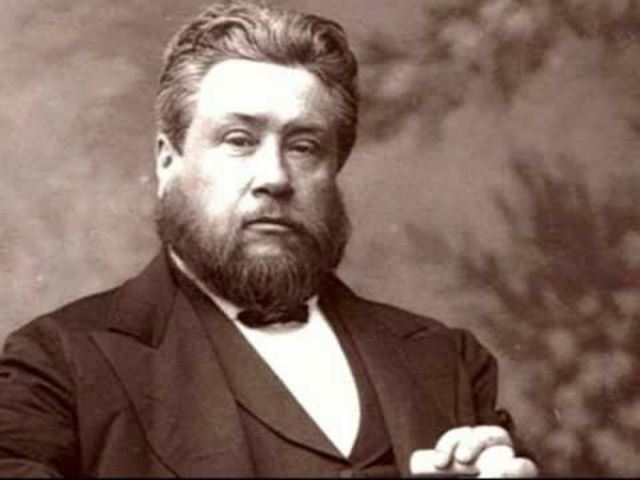
1834-1892
Ordination and Religious Titles
Sword and Trowel Volume 4, 1874 pages 111-117 - see here
"Whence comes the whole paraphernalia of ordination as observed among some Dissenters? Since there is no special gift to bestow, why in any case the laying on of empty hands? Since we cannot pretend that mystic succession so vaunted by Ritualists, why are men styled "regularly ordained ministers"? A man who has preached for years is Mr. Brown, but after his ordination or recognition he develops into the Reverend Mr. Brown; what important change has he undergone? This comes before us in the form of addresses upon letters "Reverend Titus Smith, Mr. Spurgeon's College," or sometimes, "Reverend Timothy Jones, Spurgeon's Tabernacle." Rather odd, this! Here are reverend students of an unreverend preacher, the title being given to the one out of courtesy, and withheld from the other for the same reason. The Reverend Titus has met with a church which will insist upon an ordination, and he is ordained; but the President of his College, having never undergone such a process, nor even that imitation of it called a recognition, remains an unordained, unrecognized person to this day, and has not yet discovered the peculiar loss which he has sustained. We do not object to a recognition of the choice of the church by its neighbors and their ministers, on the contrary, we believe it to be a fraternal act, sanctioned by the very spirit of Christianity; but where it is supposed to be essential, is regarded as a ceremony, and is thought to be the crowning feature of the settlement, we demur."
Good questions!
Continued Spurgeon:
""The Reverend Theophilus Robinson offered up the ordination prayer" has a Babylonish sound in our ears, and it is not much improved when it takes the form of "the recognition prayer." Is there, then, a ritual? Are we as much bound by an unwritten extempore liturgy as others by the Common Prayer? Must there always be "usual questions"? And why "usual"? Is there some legendary rule for the address to the church and the address to the pastor? Mark well, that we do not object to any one of these things, but we do question the propriety of stereotyping them, and speaking of the whole affair as if it were a matter to be gone about according to a certain pattern seen in the holy mount, or an order given forth in trust to the saints. We see germs of evil in the usual parlance, and therefore meet it with a Quo Warranto? Is not the divine call the real ordination to preach, and the call of the church the only ordination to the pastorate?` The church is competent under the guidance or the Holy Spirit her own work, and if she calls in her sister churches, let her tell them what she has done, in such terms that they will never infer that they are called upon to complete the work. The ordination prayer should be prayed in the church meeting, and there and then the work should be done; for other churches to recognize the act is well and fitting, but not if it be viewed as needful to the completion of the act itself. We have noticed many signs of an error in this direction."
Amen to that!
Continued Spurgeon:
"The small matter which we have mentioned leads on to another which is by no means small, namely, the notion in some churches that only an ordained or recognized minister should preside at the Lord's table. Small is our patience with this unmitigated Popery, and yet it is by no means uncommon. Pulpits which are most efficiently supplied on other Sundays by men who are without pastoral charge must be vacated by them on the first Sunday of the month because the friends like a stated minister to administer the sacrament. This may not always be the language employed, but it often is and it is an unsanctified jargon, revealing the influence of priestcraft. Whence comes it? By what scripture can it be justified? "Breaking bread from house to house" does not read very like it. We suppose that the idea of a deacon leading the communion would horrify a great many, but why? If the church should request a venerable brother to conduct the service, a brother of eminent grace and prayerfulness, would the ordinance be any the less instructive or consoling because he was not in the ministry? Naturally enough the pastor, when there is one, leads the way by the respectful consent of all; but would fellowship with Jesus be more difficult, if he were out of the way, and an elder or deacon occupied his place? Our experience has never led us to bemoan, on the account of our people, that the communion was a maimed rite when a beloved deacon or elder has filled our chair. We love to have our brethren sitting with us at the table, breaking the bread as much as we do, and giving thanks aloud as we do, because we hope that by this visible sign men will see that "one is our Master, even Christ, and all we are brethren." Are we the less respected by our church officers for this? Do they take upon themselves lordly airs? Far from it. A more beloved and loving set of men never surrounded a pastor. We magnify our office in the best manner when we do not magnify it beyond the teaching of the Lord."
These are my sentiments fully. I was "ordained" twice by two separate Hardshell "presbyteries." As I have studied this subject over the years I have seen how the whole practice of Baptist having presbyteries being the "ordaining" body smacks too much of both popery and Presbyterianism.
More to come. Spurgeon's words on this issue are a good introduction.
Subscribe to:
Posts (Atom)