Happiness is to know the Saviour,
Living a life within His favour,
Having a change in my behaviour,
Happiness is the Lord.
Happiness is a new creation,
Jesus and me in close relation,
Having a part in His salvation,
Happiness is the Lord.
Real joy is mine,
No matter if the teardrops start,
I've found a secret,
It's Jesus in my heart.
Happiness is to be forgiven,
Living a life that's worth the livin',
Taking a trip that leads to Heaven,
Happiness is the Lord.
Real joy is mine,
No matter if the teardrops start,
I've found a secret,
It's Jesus in my heart,
Jesus in my heart.
Happiness is to be forgiven,
Living a life that's worth the livin',
Taking a trip that leads to Heaven,
Happiness is the Lord,
Happiness is the Lord,
Happiness is the Lord.
Such beautiful Words! To hear it sung listen to the Heritage Singers here)
Another good song by The Primitive Quartet is on their album "When Crossing Time Shall Come" at the 1313 mark (other good songs on this album) and titled
"Wake Up In Glory Land" (here)
I am only a pilgrim and a stranger here
I see trouble on every hand
But my Savior is leading and I have no fear
When I wake up in glory land
Chorus
Some morning I'll wake up and see my Savior (hallelujah)
Join in the chorus grand
And I know that I'll shake hands with old Elijah
When I wake up in glory land
I am homesick for heaven and I soon must go
In the way the Savior planned
I shall leave all my troubles in this world
When I wake up in glory land
Chorus
Some morning I'll wake up and see my Savior (hallelujah)
Join in the chorus grand
And I know that I'll shake hands with old Elijah
When I wake up in glory land
(repeat)
Monday, July 8, 2019


Sunday, July 7, 2019
Two Seeders Produced "No Means" Novelty
These remarks are from Dr. Throgmorton in his debate with Elder Potter. (see here)
Said Throgmorton:
I have another document I want to read to you: -
“Mt. Vernon, Ill., July 7, 1887.
Q. When were you connected with the Hardshell Baptist Church?
A. From February, 1881, to December, 1886, I was a member of Middlefork church, Franklin County, Illinois.
Q. What is the standing of the Middlefork church in the association?
A. It was the most influential church in the Bethel Association and in Southern Illinois.
Q. Who is pastor of that church?
A. Eld. Josiah Harriss has been pastor of that church since February or March, 1877-1879.
Q. What other position of honor does he hold in the denomination?
A. He has been moderator of Bethel Association since 1879.
Q. How is he on “Parkerism?"
A. He teaches that there is an uncreated, self-existent, eternal evil spirit, who was always at enmity to God; and that the non-elect are his children by origin.
Q. How is he on the use of means?
A. He teaches that God uses no means whatever in the conversion of alien sinners, and that the elect are the only subjects of Gospel address.
Q. Does the Middlefork church agree with its pastor in these views?
A. The membership generally accept his teaching as Gospel truth, but a few in my knowledge do not agree with him as to these questions.
Truly yours,
A. C. Webb."
Bro. Webb is a young man 30 years of age, and a son of Elder Elisha Webb, who, in his day, was one of the most prominent and influential Hardshell ministers in Southern Illinois. A. C. Webb was excluded from this Middlefork Hardshell Church on account of free-masonry.
(Elder Potter. Where does he belong now?)
Throgmorton. He is a Missionary Baptist now.
We can add this bit of information to my theory that the "no means" view of regeneration or new birth originated with the Two Seeders.
Said Throgmorton:
I have another document I want to read to you: -
“Mt. Vernon, Ill., July 7, 1887.
Q. When were you connected with the Hardshell Baptist Church?
A. From February, 1881, to December, 1886, I was a member of Middlefork church, Franklin County, Illinois.
Q. What is the standing of the Middlefork church in the association?
A. It was the most influential church in the Bethel Association and in Southern Illinois.
Q. Who is pastor of that church?
A. Eld. Josiah Harriss has been pastor of that church since February or March, 1877-1879.
Q. What other position of honor does he hold in the denomination?
A. He has been moderator of Bethel Association since 1879.
Q. How is he on “Parkerism?"
A. He teaches that there is an uncreated, self-existent, eternal evil spirit, who was always at enmity to God; and that the non-elect are his children by origin.
Q. How is he on the use of means?
A. He teaches that God uses no means whatever in the conversion of alien sinners, and that the elect are the only subjects of Gospel address.
Q. Does the Middlefork church agree with its pastor in these views?
A. The membership generally accept his teaching as Gospel truth, but a few in my knowledge do not agree with him as to these questions.
Truly yours,
A. C. Webb."
Bro. Webb is a young man 30 years of age, and a son of Elder Elisha Webb, who, in his day, was one of the most prominent and influential Hardshell ministers in Southern Illinois. A. C. Webb was excluded from this Middlefork Hardshell Church on account of free-masonry.
(Elder Potter. Where does he belong now?)
Throgmorton. He is a Missionary Baptist now.
We can add this bit of information to my theory that the "no means" view of regeneration or new birth originated with the Two Seeders.
Friday, July 5, 2019
Duke Research Results (4)
(June 3, 1846 - July 30, 1931)
Some Hardshells have argued over the years that the victory in the court proved that the anti means side were right on the question as to who was preaching a new doctrine. Each side claimed that the other was preaching a new doctrine. Now, how hard was that, is that, to decide? Which side has the historical proof to show that their view is the old view and that the other is the new? But, how the court ruled is not the final decider as to who was right on this question. If it was, what will our Hardshell brothers who have argued this way respond to the fact that Elder Wilson Thompson and his anti means side lost in court with the means side back in the 1840s? By the criteria being used, would that not prove that the anti means side was the new doctrine?
Just look at the evidence that each side presented in the Mt. Carmel trial (as also in the 1840s trial) and see who had the proof and who did not. I have looked at it and the anti means side had no evidence to prove that their view was the standard view of their forefathers.
McInturff continued:
"Dr. Purifoy published in Zion’s Advocate in 1879 and here are his exact words taken from it. I can produce the original. Here are his exact words:
“I firmly believe that it is the duty of every gospel minister to preach repentance and remission of sins, in the name of Jesus, to all the unregenerate with whom he comes in contact in his pulpit ministrations. As he does this in the name of Jesus, realizing the utter inability of the sinner to repent until the grace of repentance is given him from on high, he has an assurance from the scriptures, that God’s word will not return unto Him void, but will accomplish that whereunto he sends it, and prosper in the thing he pleases. Thus the gospel ministry is instrumental in God’s hands, through Jesus, in raising dead sinners to newness of life---spiritual life---just as the apostles were instruments in His hands in casting out devils, healing the sick, and raising the dead.”
"Page 153 of The Old Paths for June 1891, the heading of the article is “Elder Dalton on ‘Means’.” This is quoted from Brother Dalton’s paper called The Herald of Truth for May, 1891. Brother Dalton used to publish that paper when he lived in Tennessee. If you will bear with me I will read the introduction to it."
(Reading:)
“In our March number, under the caption, ‘Further Testimony,’ our readers will remember that we quoted from an editorial written by Elder Dalton, and published in his paper of April 15, 1884. In Zion’s Advocate and Herald of Truth for May, 1891, he complains that we did not publish all of his article. We did omit several paragraphs; but with no intention of dealing unfairly with him, or of making him to appear to say what he did not intend to teach. The quotation we made was sufficient for our purpose; and the part omitted was in accord with it, if not positively strengthening to it. Indeed the entire paper is excellent reading, and is a masterly defense of the doctrine as held and taught by us; and if the writer of it still holds the sentiments he then expressed, we are with him heart and soul. In order that our readers may know whether he has just cause to complain, or whether, in omitting several paragraphs, we changed the sense of his article, and made him appear in a false light, we now give the entire paper, verbatim et literatim,---just as he sent it out to the public. The reader will please bear in mind that the article in question was written in reply to an anti-Means letter from one J. R. Hatcher, McEwens Tenn., which letter begins with the words, “If God quickens sinners by the preached gospel, how can it be said that he is an independent God? and if he ever did quicken one through preaching, will some one point out the scripture?”
Here is Elder Dalton’s reply:
“ ‘Oh, that God’s children could see and understand the Bible teaching on the important subject of means and instrumentality, and cease to prescribe boundaries for the Lord. Is God limited? Can he not work when and where, and with whatsoever he pleases? Is he not an absolute sovereign? Who is willing to serve in the capacity of counselor for the Lord, and instruct him when to use an instrument, and when he must not? What are instruments, but so many dormant tools in the hands of the operator, with which he serves his own purpose? What are we, as a people, but so many instruments in the hands of God, by and through which he accomplishes his divine purposes? How came us to have being; was it mere chance, or did God have a purpose in our being? If so, are we not the means to accomplish that purpose? If so, will the purpose be accomplished without the means? Did God ever do anything except what he eternally purposed to do? If God eternally purposed to do a thing, did he not embrace from all eternity the way and means by which he would do it? Will he ever turn aside from the way and means fixed in eternity, and do the work some other way? Did God ever use means and instruments in doing his work? He surely has; could he not have done the work without them? He surely could. Why then did he use them? Because it was so fixed in his eternal counsel. Did not Jesus use clay and spittle when He opened the eyes of the blind man? Surely he did. Could he not have opened them without? He surely could for He had opened the eyes of the blind and used neither clay nor spittle; shall we therefore say, because He opened the eyes of some without either clay or spittle, he must therefore open the eyes of all? Do you not see, brethren, that you prescribe the boundaries of the Lord when you take such positions? If God so fixed in His Divine counsel to open the eyes of one blind man by means of the clay and spittle, and another’s eyes without them, shall we therefore say that God has turned aside from His ordained way, because he did either? Or shall we assume to say that God only ordained, from eternity, to open their eyes without means, and then used means once in a while to try His hand, to see whether he could use them or not? Brethren, can you feed sheep? Study well before you answer. Are you not merely instruments through which God feeds his sheep? Surely you have no food of yourselves to feed sheep; but God only uses you as a means or instrument through which he himself feeds His sheep. Did God ever feed a sheep only through the instrumentality of preaching? He surely has. Shall we therefore say that he must always feed them without? Surely not. Is it not God that feeds the sheep, either with or without the means? Surely it is..."
"Now, brethren, let me say once for all, that all of the preachers that ever have, or ever will, live on earth cannot quicken one dead sinner into divine life; this is solely the work of the Holy Spirit; but for us to say that the spirit never speaks through the minister, and calls the dead to life is surely assuming too much. But be it remembered, that it is not the preacher that uses the spirit, no more than the rams horns used the children of Israel; but it is the spirit that uses the preacher, and thereby makes his words, God’s words, and God thereby accomplishes his divine purposes through the means which be himself has chosen and ordained, and thereby making the means as sure as the end, and the end as sure as the means...Surely in such cases the Lord speaks by his spirit, through the minister, and makes his words God’s words, and thereby sends conviction home to the heart of that poor soul. Brethren these things have been a source of great comfort to me. I can now call to mind many that date the beginning of their conviction under my preaching; and while I have never claimed that it was me that did the work, I have rejoiced in the thought that God has used me as an humble instrument in his hands to accomplish his purposes, and I have received it as one of my strongest evidences, that I was a child of God, and a called minister of the gospel of Jesus Christ. Let us call to mind the case of brother Paul, when the Lord told him that he had appeared to him delivering him from the Gentiles unto whom now I send thee, to open their eyes, and to turn them from darkness to light, and from the power of Satan unto God. What for---because they had received the forgiveness of sins, and an inheritance among them that are sanctified? No sir, but, “that they might receive the forgiveness of sins, and an inheritance among them; them that are sanctified, through faith that is in me.”
"Now, my brethren, how are we to understand such language as the above, unless we admit that Paul was the instrument through which God had ordained to accomplish this grand and glorious work? And yet the ax cannot boast itself against him that heweth therewith, nor the saw against him that shaketh it. For they are only dormant instruments in the hands of the operator, and “of themselves can do nothing,” but can do all things Christ strengthening them, so says brother Paul. But perhaps some brother will say, this is all true enough, but it looks like Arminianism. No, my brother, you are mistaken; Arminianism only looks a little like this, for what truth is there in the world that Arminians have not imitated? Shall we cease to proclaim the truth because Arminians will imitate it? Surely not; but we ought to be the more zealous in setting forth the true principles of the doctrine of Jesus Christ, because Arminians do imitate it. Counterfeits always imitate, or resemble, very much the genuine, but is only the stronger evidence of the existence of the genuine. And the Arminians believing that they use God as an instrument to do their bidding, is only the stronger proof that God uses his ministers as instruments in his hands to accomplish his designs; for Arminians always have the cart before the horse. But while this is true, we are sorry to have to say that there are some of our brethren who will not have the cart at all; they are willing to admit that the horse carries the load, but they are not wining for him to carry it in the cart, but must always carry it on his back; but we have some, thank the Lord, that will not prescribe how he shall carry it, but are wining to admit that he carries it, whether in the cart or on his back. ‘A hint to the wise is sufficient.’ Now, my brethren, let us cease to prescribe boundaries for the Lord, for the Bible clearly reveals to us that God sometimes uses instruments and performed his work, and afterwards done the same kind of a deed, and used no instrument; therefore, let us not say that if God used an instrument in one case he must use them in all. This, my brethren, is assuming to be the Lord’s instructor; but let us submit to revealed facts, and cease to strive above words to no profit. Hoping that this may terminate in good to us all, I am ever yours to serve in the cause of truth.”
(From my posting Dalton And Purifoy Originally Preached Gospel Means)
From these words of Dalton it is clear that he believed in Means, or at least saw that the arguments against them were without weight. He also knew, at the time he wrote the above words, that this had been the view of the Old Baptists up till that time. He must have known that Elder Clark agreed with his sentiments as above expressed. He knew too that it was in keeping with the view of Elder Watson and Elder Fain, frequent writers to both "The Primitive Baptist" and "Zion's Advocate." So, why was he affirming in the Mt. Carmel church trial that 1) the anti means view was the original view, and therefore not new? And, 2) Clark was of the anti means view? He had to know he was lying! I would like to believe otherwise, but it is clear.
It must have been heart wrenching for elders Burnam, McInturf, and others on the means side, to see Dalton sit there in court, holding and supporting the anti means side, when they knew that he knew that they were right!
In the above posting (link) I give the evidence that the Means side presented in their case to prove that Clark believed in Means. They had the evidence. It is there in plain view in the many volumes of Zion's Advocate. Men like Dalton were false witnesses as it respects Clark.
They knew Clark believed in Means and yet, after he was gone, they told their Ultraists followers that Clark denied means! Further, Hardshells will likely keep uttering this falsehood about Clark!
So, we have now three liars or falsifiers of history. First, there is Crouse. Second, there is Potter. And, finally, there is Dalton (and we could include Waters and Purifoy and others).
Thursday, July 4, 2019
Duke Research Results (3)
History of the Debate on Clark
The Older Potter
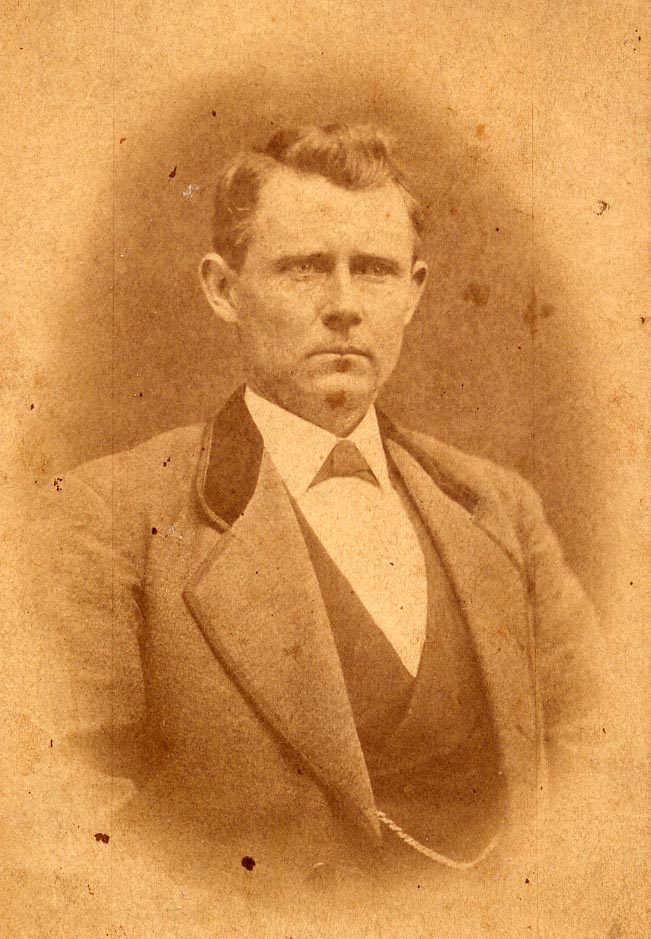
The Younger Potter
(1841-1897)
"Elder Pence claimed that we could not find a single author or commentator, prior to fifty years ago, that took the Anti-means position. He referred to Dr. Watson, and the London Confession of Faith, and to Dr. Gill, and other authors, in order to prove that the Baptists had heretofore believed in the doctrine of means, and that our position among the Old School Baptists was entirely new."
I took the position that none of the Baptists, Gill, the London Confession of Faith, Dr. Watson, or any of the Old School Baptists took the position that he did; that the anti-means position was not a new thing among the Old School Baptists."
Of course, we have shown how Potter told some big falsehoods here! Now, he either did it out of ignorance, or he did it willfully and knowingly. I believe the evidence strongly favors the latter. How could anyone read Gill, the London Confession, and Dr. Watson and then say that they denied means is incredulous. If he said these things out of ignorance, that is bad too, because he ought not to say such things in debate unless he has evidence to prove it. But, there is no evidence to prove his bare assertion.
Potter continued:
"He undertook to show that Elder Clark was agreed with him on the subject of means. In this he gloriously failed, for I showed him from Zion's Advocate, that on the occasion of Elder Booten's ordination, Elder Clark was the moderator of the Presbytery, and that Elder Booten was interrogated on this very point, as to whether he believed in the Spirit's work in the regeneration of sinners, without, and independent of, all means and instrumentalities whatever. A correspondence between Elder J. B. Stephens, of Nashville, Tenn., and Elder Clark, concerning this matter, which was published in Zion's Advocate, shows that Elder Clark emphatically denied the use of any means or agencies outside of the divine Spirit in the regeneration of sinners. I am not prepared to give the date of the Advocate in which this correspondence occurred. In reply to my idea that the gospel was the power of God to the saved, Elder Pence rather made light, saying: "The power of God unto salvation to the man already saved?"
It was convenient of Potter not to give the citation from Elder Clark. In this blog I have cited statements from Elder Clark which showed clearly that he believed that sinners were born again by the preaching of the gospel. Now, it very well could be that Elder Clark agreed with Beebe, Trott, and others, that regeneration was distinct from the birth, and allowed no means in the former but allowed them in the latter. In this case, Clark must be read carefully to see if he is talking about means in regeneration or in birth. However, from what I have read of the writings of Clark and his supporters, they seemed to believe that regeneration and the new birth were the same. When I was going through the volumes of Zion's Advocate for the 1850s the 1860s (did not finish examining all the volumes Duke had) I saw how many writers viewed the three stage model of Beebe and Trott (where regeneration preceded the birth) as too much in support of Two Seedism.
Further, what kind of proof is it (to prove that the anti means had been the standard view of the PBs since 1832) when Potter refers to an ordination service where an Ultraist asked a candidate about means? Is he saying that Clark's non objection was evidence that he agreed that the anti means view had been the historic Baptist view and that all other views were heretical? Are not Clark's several writings over several years not sufficient to establish that he did believe in means? I think that Clark as Moderator did not feel as though the ordination service should be interrupted due to the question, and so allowed it without agreeing with the Ultraist.
Still, the point to be made is that shortly after Clark's death in 1882 men of the "Ultraist" or "no means" faction took over Zion's Advocate and used it as a vehicle to promote their newly invented doctrine. Dalton, who preached means before Clark died, went to the Ultraist side afterward, as did others such as Elders Purifoy and Waters. When the Mt. Carmel church trial finally occurred, Dalton was present and heard Burnam and others of the Means Side cite works proving that 1) Clark believed in Means and so wrote about it in his paper, and 2) Dalton also believed it. And, if Dalton knew Clark's view, and then later reported that his views were in line with the no means view, then Dalton shows he is as much a liar as Crouse was shown to be. But, more on that in the next posting.
I need to go through the other volumes of Zion's Advocate (late 1860s to early 1880s) to find that discussion between Elder Stephens and Clark that Potter references (but could give no date). Perhaps I will still find it. But, even granting that it occurred, what does that prove? It only proves that it was not till after the Civil War that the no means folks started pushing their new found revelation. But, I did see that in the 1850s-1860s that Elder Stephens (Nashville, in Watson's area) wrote frequently to Zion's Advocate and in those years it was constantly upheld as the view of the Old Baptists to believe in means. Maybe Stephens, like Dalton, became a convert to the new revelation of the Ultraist Innovators.
In the account of the Potter-Pence debate Potter says Pence was "...claiming all the time that the anti-means was an innovation of the Baptist not exceeding fifty years."
This was the claim that Elder Potter could not refute, having no evidence to disprove it. The Hardshells may claim to be "primitive" but they are not. Potter simply told a falsehood in regard to Clark. But, he did the same with Watson, Gill, etc., so why not with Clark also?
Duke Research Results (2)
Over the years I have had to correct PB histories numerous times, revealing the bias in them, even at times pointing to blatant falsehoods and distortions of records. We saw a good example of this in my previous posting regarding Elder W.H. Crouse' book in which he attributes to Elder John Clark words that belonged to Clark's opponents on the "means question"; rather than being Clark's words and belief, they are words he denied as being true. Clark was affirming his belief in means, which is what he had taught all his life, not denying them.
His beliefs were the same as those who wrote to "The Primitive Baptist," a periodical to which he often wrote in the 1830s and 1840s. If one reads Clark's periodical "Zion's Advocate" he will see the same supporters of "The Primitive Baptist" supporting Clark and his paper. Elder Temple (who took over editorship of the PB periodical when Elder Bennett left the PBs) gave announcement of Clark's paper in "The Primitive Baptist." The paper that Clark came out to attack, in Zion's Advocate, was "The Signs of the Times" and its main writers, Elders Gilbert Beebe and Samuel Trott.
The doctrines connected with the Signs of the Times that were solidly opposed by Clark come under the umbrella of "Two Seedism" or "Parkerism," and its connected ideas. One of those ideas was that Jesus as "Son of God" was a creature before time (identified as "Arianism" by Clark) and that his "sonship" was connected with his becoming a mediator and redeemer. Christ, when created, was neither divine nor human, but possessed a third nature. And, when this Christ or Son of God was created as a mediator, his elect were also then created in him, and then chosen and saved in him. This aspect of Parkerism came to be known as the doctrine of "eternal vital union" or "eternal children." These, and other ideas, were vehemently opposed by both "Zion's Advocate" and by "The Primitive Baptist."
Frequent writers to Zion's Advocate through the 1850s-1860s
(from my research at Duke).
Elder (Dr.) John M. Watson
Elder (Dr.) R.W. Fain
Elder (Dr.) J. B. Stephens
Elder Grigg Thompson
Elder Mark Temple
All these men, except perhaps Stephens, and Thompson, believed and taught Gospel means. They all believed that the Gospel was to be preached to dead sinners. We can conclude from this that Clark also held these views. Of course, his writings very pointedly aver his belief in means and he contends, like his fellow editors, Burnam and Yates, that this has always been the belief of the Primitive Baptists. Clark, if he were alive here today, would tell our modern PBs that their anti means doctrine is a new and novel doctrine among them and that it did not take over the denomination till after his death in 1882.
It is also apparent from reading the old issues of Zion's Advocate that the first few voices that began to write into the Advocate who denied means were all of the Beebe side, the Two Seed side. This is more evidence of my thesis, formed years ago from my research, that the no means view came from the Two Seed faction of the Hardshells.
It was a famous motto with the Two Seeders to say that the Gospel was for the one object of "feeding the sheep." Those who believed in Means, like Watson, Preslar (who battled on the front lines with the Two Seeders), often spoke of the Two Seeders repeating that motto. They would often counter this motto and say, "we believe it not." They would say it is also for quickening dead sinners. (For more info on this see my posting Biased Interpretation)
In my posting Elder Hosea Preslar & Watson I cited these words of Elder Hosea Preslar:
"And as to their views of the use and design of the gospel being for nothing but for the edification of the Church, and believers being the only subjects of gospel address, I believe it not." (Page 186)
See also Elder Preslar On Two Seedism.
So, just as I have proven how the Hardshells falsely claim Dr. Gill as teaching their views on means in regeneration and rebirth, and proven how they also falsely claim the old London and Welsh brethren of the 17th century, and proven how they falsely claim Elder (Dr.) John Clark and his associate Obadiah Holmes, and proven how they falsely claim every first generation leader of the "Old Schoolers," we now are proving how they have falsely claimed elder John Clark and Zion's Advocate as being in agreement with them in their teachings of today, i.e., no means regeneration, conversion not certain or necessary, denial of perseverance, denial of absolute predestination, etc.
The foreword to Crouse' work was written by Elder David Montgomery (with whom we have had many things to say) to the edition that I linked to in a previous posting, and which was published by Montgomery and the Hardshells, and it has some words that I want to quote. (I have an older copy around here somewhere - highlighting mine).
Wrote Montgomery (see here):
""Regeneration and the New Birth" by Elder William H. Crouse, was published in 1928 and has been out of print since that time. (I think my edition was published later - SG) It is my opinion that this book is one of the best ever defenses against the "Gospel Means" heresy. This heresy is the belief that the gospel is the means by which eternal salvation is brought to the Lord's people. Sound Primitive Baptists do not believe this doctrine. The leaders of this doctrinal advocacy were Elders Burnham, Pence, Screws, Yates and others."
The work by Crouse, though highly recommended by today's Hardshells, is hardly worth the paper it was first printed upon.
I have in previous writings fully analyzed this book and discovered its numerous errors. See here, and here, and here. See also my posting Hardshellism's Fundamental Tenet.
Crouse and his anti means Hardshells are the ones guilty of teaching heresy. Further, if believing in means makes one a new schooler, then all the founding fathers of the PB denomination were New Schoolers! Heretics!
Montgomery continued:
"In the book Trial and Decision of Mt. Carmel Church, Elder R.H. Pittman gave the background of the "Gospel Means" movement:
In the latter half of the nineteenth century the spirit of unrest began to be manifested. Dissatisfaction with the old way of the fathers was evidenced in the public and private service of some.
Improvement on the old way of teaching is urged. The children of Baptists must be saved, and the New Testament plan is not thought sufficient. The "Heathen" must have the Gospel preached to them, and the old Baptist system of depending entirely upon the Lord is not considered the proper one. And so a fireside campaign is put on foot to prepare the Baptists for the public introduction of the things thought to be needed. And the result of all this was that a party within the church was being formed, tutored, and nourished by certain local ministers within the bonds of the Ketocton and Ebenezer Associations, but led mainly by Elder E. H. Burnam, a minister of talent and influence that finally divided churches where peace and fellowship had long been undisturbed. This party showed their hand..."
No, the "fireside campaign" came from the anti means faction! They were the ones who pushed their new doctrine off by first labeling their opponents as "Arminian"; And, by oral communication among individual members they pushed the matter, and began to call the believers in means "heretics"; And, they pushed it further by asking questions of candidates for ordination to state their views, and if you wanted to be ordained you answered as the "Ultraists" expected and denied means. Elder Clark wrote about this in regard to himself in the 1850s and 1860s, where he was labeled a "heretic" for his belief in means! And, as we will see, Elder Lemuel Potter used as an argument, to prove that Clark denied means, the fact that Clark in later life was moderator of an ordination service where the candidate was asked if he believed in means. How is that proof? But, not to delve into that matter too much in this connection, let us rather point out the tactics used by the Ultraist anti means trouble makers, which was to use "fireside" chats to stir the issue, and then to push it in ordination questioning. As a side note, I have written about this tactic in my book "The Hardshell Baptist Cult" (chapter three - personal experiences).
Pittman's account is of course a very biased look at the causes of the division over the means question.
Montgomery continued:
"These "Meansites" or "Burnamites" first afflicted the churches that were of the "Old Line" persuasion. Soon, the heresy crept in the "Progressive" churches. Though Elder Crouse was a member of a Progressive church, it is my feeling that this wonderful defense of the doctrine of Regeneration should stand and speak for itself. This, I am certain, the reader will discover.
When I received my original copy of the book, I showed it to Elder Sonny Pyles who told me to "guard it with your life." Elder Pyles explained to me that the book was very rare and that it explains the 1689 London Confession of Faith as it ought to be interpreted. It was his feeling that every Old Baptist should read this book, especially the ministry. With such a recommendation, I felt behooved to republish it as soon as possible and get the work back into the hands of the Baptists.
Upon reading the book, it made me wonder why this book has never been republished heretofore. Elder Crouse so clearly explains the important doctrine and the Scriptural and historical evidence that he gives in support of his position, more than convinced me of the scholarship of this work and encouraged me all the more to seek its republication. So, with all this in mind, it is a great joy for me to present this volume to the public."
Well, both Sonny and David both should be more careful in the works they recommend! Why recommend a work so full of misrepresentations? It is clear that both Pyles and Montgomery do not act as noble Bereans and check the veracity of the things they read!
Elder John R. Daily, who baptized Crouse, writes of Crouse:
"For a young man of strong intellectual power and high ambition to turn away from all that naturally engaged his mind and heart and consent to live a life of deprivation and trials, such as the ministry of the true gospel entails, is unmistakable proof of a work of grace and calling of God." (here)
Well, if Crouse is representative of Hardshell "scholarship" then they are to be pitied.
In the next posting we will look further into the history of the debate regarding Elder Clark.
His beliefs were the same as those who wrote to "The Primitive Baptist," a periodical to which he often wrote in the 1830s and 1840s. If one reads Clark's periodical "Zion's Advocate" he will see the same supporters of "The Primitive Baptist" supporting Clark and his paper. Elder Temple (who took over editorship of the PB periodical when Elder Bennett left the PBs) gave announcement of Clark's paper in "The Primitive Baptist." The paper that Clark came out to attack, in Zion's Advocate, was "The Signs of the Times" and its main writers, Elders Gilbert Beebe and Samuel Trott.
The doctrines connected with the Signs of the Times that were solidly opposed by Clark come under the umbrella of "Two Seedism" or "Parkerism," and its connected ideas. One of those ideas was that Jesus as "Son of God" was a creature before time (identified as "Arianism" by Clark) and that his "sonship" was connected with his becoming a mediator and redeemer. Christ, when created, was neither divine nor human, but possessed a third nature. And, when this Christ or Son of God was created as a mediator, his elect were also then created in him, and then chosen and saved in him. This aspect of Parkerism came to be known as the doctrine of "eternal vital union" or "eternal children." These, and other ideas, were vehemently opposed by both "Zion's Advocate" and by "The Primitive Baptist."
Frequent writers to Zion's Advocate through the 1850s-1860s
(from my research at Duke).
Elder (Dr.) John M. Watson
Elder (Dr.) R.W. Fain
Elder (Dr.) J. B. Stephens
Elder Grigg Thompson
Elder Mark Temple
All these men, except perhaps Stephens, and Thompson, believed and taught Gospel means. They all believed that the Gospel was to be preached to dead sinners. We can conclude from this that Clark also held these views. Of course, his writings very pointedly aver his belief in means and he contends, like his fellow editors, Burnam and Yates, that this has always been the belief of the Primitive Baptists. Clark, if he were alive here today, would tell our modern PBs that their anti means doctrine is a new and novel doctrine among them and that it did not take over the denomination till after his death in 1882.
It is also apparent from reading the old issues of Zion's Advocate that the first few voices that began to write into the Advocate who denied means were all of the Beebe side, the Two Seed side. This is more evidence of my thesis, formed years ago from my research, that the no means view came from the Two Seed faction of the Hardshells.
It was a famous motto with the Two Seeders to say that the Gospel was for the one object of "feeding the sheep." Those who believed in Means, like Watson, Preslar (who battled on the front lines with the Two Seeders), often spoke of the Two Seeders repeating that motto. They would often counter this motto and say, "we believe it not." They would say it is also for quickening dead sinners. (For more info on this see my posting Biased Interpretation)
In my posting Elder Hosea Preslar & Watson I cited these words of Elder Hosea Preslar:
"And as to their views of the use and design of the gospel being for nothing but for the edification of the Church, and believers being the only subjects of gospel address, I believe it not." (Page 186)
See also Elder Preslar On Two Seedism.
So, just as I have proven how the Hardshells falsely claim Dr. Gill as teaching their views on means in regeneration and rebirth, and proven how they also falsely claim the old London and Welsh brethren of the 17th century, and proven how they falsely claim Elder (Dr.) John Clark and his associate Obadiah Holmes, and proven how they falsely claim every first generation leader of the "Old Schoolers," we now are proving how they have falsely claimed elder John Clark and Zion's Advocate as being in agreement with them in their teachings of today, i.e., no means regeneration, conversion not certain or necessary, denial of perseverance, denial of absolute predestination, etc.
The foreword to Crouse' work was written by Elder David Montgomery (with whom we have had many things to say) to the edition that I linked to in a previous posting, and which was published by Montgomery and the Hardshells, and it has some words that I want to quote. (I have an older copy around here somewhere - highlighting mine).
Wrote Montgomery (see here):
""Regeneration and the New Birth" by Elder William H. Crouse, was published in 1928 and has been out of print since that time. (I think my edition was published later - SG) It is my opinion that this book is one of the best ever defenses against the "Gospel Means" heresy. This heresy is the belief that the gospel is the means by which eternal salvation is brought to the Lord's people. Sound Primitive Baptists do not believe this doctrine. The leaders of this doctrinal advocacy were Elders Burnham, Pence, Screws, Yates and others."
The work by Crouse, though highly recommended by today's Hardshells, is hardly worth the paper it was first printed upon.
I have in previous writings fully analyzed this book and discovered its numerous errors. See here, and here, and here. See also my posting Hardshellism's Fundamental Tenet.
Crouse and his anti means Hardshells are the ones guilty of teaching heresy. Further, if believing in means makes one a new schooler, then all the founding fathers of the PB denomination were New Schoolers! Heretics!
Montgomery continued:
"In the book Trial and Decision of Mt. Carmel Church, Elder R.H. Pittman gave the background of the "Gospel Means" movement:
In the latter half of the nineteenth century the spirit of unrest began to be manifested. Dissatisfaction with the old way of the fathers was evidenced in the public and private service of some.
Improvement on the old way of teaching is urged. The children of Baptists must be saved, and the New Testament plan is not thought sufficient. The "Heathen" must have the Gospel preached to them, and the old Baptist system of depending entirely upon the Lord is not considered the proper one. And so a fireside campaign is put on foot to prepare the Baptists for the public introduction of the things thought to be needed. And the result of all this was that a party within the church was being formed, tutored, and nourished by certain local ministers within the bonds of the Ketocton and Ebenezer Associations, but led mainly by Elder E. H. Burnam, a minister of talent and influence that finally divided churches where peace and fellowship had long been undisturbed. This party showed their hand..."
No, the "fireside campaign" came from the anti means faction! They were the ones who pushed their new doctrine off by first labeling their opponents as "Arminian"; And, by oral communication among individual members they pushed the matter, and began to call the believers in means "heretics"; And, they pushed it further by asking questions of candidates for ordination to state their views, and if you wanted to be ordained you answered as the "Ultraists" expected and denied means. Elder Clark wrote about this in regard to himself in the 1850s and 1860s, where he was labeled a "heretic" for his belief in means! And, as we will see, Elder Lemuel Potter used as an argument, to prove that Clark denied means, the fact that Clark in later life was moderator of an ordination service where the candidate was asked if he believed in means. How is that proof? But, not to delve into that matter too much in this connection, let us rather point out the tactics used by the Ultraist anti means trouble makers, which was to use "fireside" chats to stir the issue, and then to push it in ordination questioning. As a side note, I have written about this tactic in my book "The Hardshell Baptist Cult" (chapter three - personal experiences).
Pittman's account is of course a very biased look at the causes of the division over the means question.
Montgomery continued:
"These "Meansites" or "Burnamites" first afflicted the churches that were of the "Old Line" persuasion. Soon, the heresy crept in the "Progressive" churches. Though Elder Crouse was a member of a Progressive church, it is my feeling that this wonderful defense of the doctrine of Regeneration should stand and speak for itself. This, I am certain, the reader will discover.
When I received my original copy of the book, I showed it to Elder Sonny Pyles who told me to "guard it with your life." Elder Pyles explained to me that the book was very rare and that it explains the 1689 London Confession of Faith as it ought to be interpreted. It was his feeling that every Old Baptist should read this book, especially the ministry. With such a recommendation, I felt behooved to republish it as soon as possible and get the work back into the hands of the Baptists.
Upon reading the book, it made me wonder why this book has never been republished heretofore. Elder Crouse so clearly explains the important doctrine and the Scriptural and historical evidence that he gives in support of his position, more than convinced me of the scholarship of this work and encouraged me all the more to seek its republication. So, with all this in mind, it is a great joy for me to present this volume to the public."
Well, both Sonny and David both should be more careful in the works they recommend! Why recommend a work so full of misrepresentations? It is clear that both Pyles and Montgomery do not act as noble Bereans and check the veracity of the things they read!
Elder John R. Daily, who baptized Crouse, writes of Crouse:
"For a young man of strong intellectual power and high ambition to turn away from all that naturally engaged his mind and heart and consent to live a life of deprivation and trials, such as the ministry of the true gospel entails, is unmistakable proof of a work of grace and calling of God." (here)
Well, if Crouse is representative of Hardshell "scholarship" then they are to be pitied.
In the next posting we will look further into the history of the debate regarding Elder Clark.
Tuesday, July 2, 2019
Duke Research Results (1)
This posting will deal with the truth about what Elder John Clark, editor of "Zion's Advocate" believed in means in regeneration or new birth. I want to show that 1) He did in fact believe in means and the issues of "Zion's Advocate" during his time as editor (1854-1882) show it conclusively, and 2) PBs who claimed that he denied means are liars and perverters of historical facts.
See these postings previously made showing some of these citations from Clark's own hand in his periodical:
Elder John Clark On Means
Was Elder John Clark a neo Hardshell?
Elder John Clark - Means Of Regeneration
In this posting I wrote:
This is interesting and revealing testimony! It is from Elder E. H. Burnam, a close associate of Elder Clark, one of Elder Clark's named associate editors of Zion's Advocate, published out of Luray, Virginia. He spoke for a large number of "Primitive" or old "Regular" Baptists who were part of the anti mission movement, and which was mostly anti Sunday Schools, anti ministerial education, anti bible and tract societies, etc., who nevertheless believed in means and in bible classes and theological education for ministers, and who believed in church sponsored missionaries. Elder Burnam claims, in this trial, that the first old Baptists believed in means in the new birth, that faith in Christ was necessary to regeneration, and that Elder Clark believed as he did. The Hardshells, who denied means, denied that the first old Baptists believed in means and denied that Elder Clark believed in means. What is the truth? Well, I believe Burnam. Why would he lie? Besides, in the following citations, McInturf himself cites from the first volume of Zion's Advocate, from 1854, to show the Clark affirmed means. Why would Clark print the Purifoy's writing if he did not agree with it? Also, I have citations from Clark where he clearly affirmed means. But, I have also seen at least one citation where Clark seems to clearly deny means. But, since the entire writing of Clark unavailable, the citation may be questioned. The Primitive Baptist web site that gives the Clark citation, where Clark seems to deny means in regeneration, the one citing Clark has a ... after his citation. Now, I have seen Hardshells take the writings of Baptist forefathers, such as John Gill, and cite them piecemeal, out of context, and purposefully omit certain portions of paragraphs, and even sentences, with their ... , and thus distort the original author's words and intent.
Well, I have the proof that the citation that has been accredited to Clark, as supposedly denying means, are a lie. I was right to have doubted the veracity of the citation in question! The words attributed to Clark were not Clark's words at all! He begins by saying "Our opponents say "..." Yet, Elder Crouse, in his attempt to show that the anti means doctrine was not new, cited the words of Clark's opponent (who could not see how means could be used) as though they were Clark's words! Crouse falsified the words of Elder Clark long after Clark was dead and pawned it off on his Hardshell brothers as being the words of Clark.
In the book "Regeneration or the New Birth" by William H. Crouse (see here), a book upheld by Sonny Pyles as stating things accurately, Crouse wrote:
"Elder John Clark, a recognized leader among Primitive Baptists, for years editor of Zion's Advocate (afterwards edited by T.S. Dalton, C.H. Waters, John R. Daily, and now by R.H. Pittman) in an editorial on this subject in June 1858, said:
"We can conceive how agencies and instrumentalities can be employed in ministering to the living, but what place they have in giving life we cannot so readily conceive.***Is it scripturally true that God uses instrumentality in quickening, or giving life, to sinners dead in tresspasses and sins. The burden of proof, we know, rests upon these who affirm this, but let us see a moment what saith the revelation of God upon the subject.***(John 5: 21; 25; Born 4:17, 2 Cor.3:6, Eph. 2: 4,5,10; Col. 2:13, I Tim. 6:13; Heb. 4:12.) This array of scriptural testimony is sufficient, we should think, to establish the proposition that God quickens the sinner independent of means."
Now, here is what Clark actually wrote (I have the copy right in front of me):
(The Capitals are from Clark and the highlighting is mine)
"Beloved Brethren.--It appears we have fallen upon perilous times, when almost every species of heresy is being introduced into the O. R. Baptist churches. Notwithstanding there are many periodicals started up amongst the Baptists, proposing reformation or a returning to the original landmarks: yet I find they are very slow in returning. I for my part go in for a radical and thorough reform. No partial work will suit the sincere inquirer after truth. The whole truth, and nothing but the truth, will neutralize those belligerent spirits; and work a perfect union amongst the brethren. I discover there is some one wishes to know "whether it is God, the Holy Spirit, that quickens, or makes alive dead sinners, independent of any means or instrumentalities?" I answer in the affirmative: that is one truth, but yet not the whole truth. Notwithstanding God worketh all things after the counsel of his own will, yet he has seen fit, in his infinite wisdom, to make use of means and instrumentalities in bringing about his purposes: and so far from God being dependent upon them, they are entirely dependant upon him for success. We readily acknowledge God alone has power to quicken or make alive dead sinners, or in other words to open the blind eyes, &c--But is it not as clearly revealed that God has his own way in doing this great work? We readily agree that God is the first cause of all causes; but does that nullify the idea of his making use of second causes to accomplish his purposes? I think not. Now for proof that God does make use of means, or second causes, in awakening dead sinners. "I have begotten you through the gospel" (I Cor. iv. 15). "For our gospel came not unto you in word only, but also in power, and in the Holy Ghost, and in much assurance" (1 Thes. 1:5). "Whereunto he calley you by OUR GOSPEL, to the obtaining the glory of our Lord Jesus Christ" (2 Thes. ii:14). "Who then is Paul, and who is Apollos, but ministers, by whom you believed, even as the Lord gave to every man" (I Cor. 3:5) "To OPEN THEIR EYES, and to turn them from darkness to light, and from the power of Satan unto God" &c. (Acts xxvi.18) "For I am not ashamed of the gospel of Christ FOR IT IS THE POWER OF GOD unto salvation to every one that believeth, the the Jew first, and also to the Greek" (Rom. 1:16) "Now when THEY HEARD THIS they were pricked in their hearts, and said unto Peter, and to the rest of the Apostles, men and brethren what shall we do?" (Acts 2:37) "Neither pray I for these alone, but for them also which shall believe on me THROUGH THEIR WORD" (Acts xvii.20) "And many of the Samaritans of that city believed on him for the SAYING OF THE WOMAN, which testified, he told me all I ever did" (John iv.36). Of his own will begat he us WITH THE WORD OF TRUTH. Being born again, not of corruptible seed, but of incorruptible, BY THE WORD OF GOG, which liveth and abideth forever. And they went forth, and preached everywhere, the Lord WORKING WITH THEM and confirming the word with signs following. So shall MY WORD be that goeth out of my mouth: it shall not return unto me void, but it shall ACCOMPLISH that which I please, an it shall prosper in the thing whereunto I sent it (Isaiah lv.11) If the above named scriptures are not sufficient to convince any unprejudiced mind that God does make use of means and instrumentalities in awakening and making alive dead sinners, then the bible is of but little use; as well without as with it. The opposer says, "we CAN conceive how agencies and instrumentalities can be employed in administering to the living, but what place they can have in giving life we cannot so readily conceive." Brethren are not aware of the dilemma there (they?) are in by holding that position. If indeed the gospel is of no manner of use in quickening of dead sinners, why should it be of any use in keeping them alive when made alive? Is not the same power that makes them alive without the use of means able to keep them alive without the use of means? I see as much propriety in the one case as the other. But they say Christ says, Feed my sheep; he says also, preach the gospel to every creature; so nullify the gospel. But, my brethren, the true bible doctrine is most clear, that God has ordained the preaching of the gospel for some special purposes, and those purposes he will accomplish through the word preached. These very brethren who oppose God's making use of means in the awakening of dead sinners say they have no authority from the word of God, to believe that any are saved when the gospel is not preached. O consistency! what a jewel thou art!"
Do you see what Crouse did? He took Clark's opponent's proposition (given by Clark in quotation marks) and attributed that proposition to Clark! Do you see how the Hardshells use their infamous ellipsis to omit pertinent information so as to take a writer totally out of context and make him to say exactly what he does not say?
When Clark first affirms that God regenerates apart from means, he does not mean that this is true in every case. This is clear because in the remainder he shows how ordinarily God does use means.
Further, the rest of the citation by Crouse, what he attributes to Clark in the same article, I did not see in the article at all! Such cult histories! Rubbish!
See these postings previously made showing some of these citations from Clark's own hand in his periodical:
Elder John Clark On Means
Was Elder John Clark a neo Hardshell?
Elder John Clark - Means Of Regeneration
In this posting I wrote:
This is interesting and revealing testimony! It is from Elder E. H. Burnam, a close associate of Elder Clark, one of Elder Clark's named associate editors of Zion's Advocate, published out of Luray, Virginia. He spoke for a large number of "Primitive" or old "Regular" Baptists who were part of the anti mission movement, and which was mostly anti Sunday Schools, anti ministerial education, anti bible and tract societies, etc., who nevertheless believed in means and in bible classes and theological education for ministers, and who believed in church sponsored missionaries. Elder Burnam claims, in this trial, that the first old Baptists believed in means in the new birth, that faith in Christ was necessary to regeneration, and that Elder Clark believed as he did. The Hardshells, who denied means, denied that the first old Baptists believed in means and denied that Elder Clark believed in means. What is the truth? Well, I believe Burnam. Why would he lie? Besides, in the following citations, McInturf himself cites from the first volume of Zion's Advocate, from 1854, to show the Clark affirmed means. Why would Clark print the Purifoy's writing if he did not agree with it? Also, I have citations from Clark where he clearly affirmed means. But, I have also seen at least one citation where Clark seems to clearly deny means. But, since the entire writing of Clark unavailable, the citation may be questioned. The Primitive Baptist web site that gives the Clark citation, where Clark seems to deny means in regeneration, the one citing Clark has a ... after his citation. Now, I have seen Hardshells take the writings of Baptist forefathers, such as John Gill, and cite them piecemeal, out of context, and purposefully omit certain portions of paragraphs, and even sentences, with their ... , and thus distort the original author's words and intent.
Well, I have the proof that the citation that has been accredited to Clark, as supposedly denying means, are a lie. I was right to have doubted the veracity of the citation in question! The words attributed to Clark were not Clark's words at all! He begins by saying "Our opponents say "..." Yet, Elder Crouse, in his attempt to show that the anti means doctrine was not new, cited the words of Clark's opponent (who could not see how means could be used) as though they were Clark's words! Crouse falsified the words of Elder Clark long after Clark was dead and pawned it off on his Hardshell brothers as being the words of Clark.
In the book "Regeneration or the New Birth" by William H. Crouse (see here), a book upheld by Sonny Pyles as stating things accurately, Crouse wrote:
"Elder John Clark, a recognized leader among Primitive Baptists, for years editor of Zion's Advocate (afterwards edited by T.S. Dalton, C.H. Waters, John R. Daily, and now by R.H. Pittman) in an editorial on this subject in June 1858, said:
"We can conceive how agencies and instrumentalities can be employed in ministering to the living, but what place they have in giving life we cannot so readily conceive.***Is it scripturally true that God uses instrumentality in quickening, or giving life, to sinners dead in tresspasses and sins. The burden of proof, we know, rests upon these who affirm this, but let us see a moment what saith the revelation of God upon the subject.***(John 5: 21; 25; Born 4:17, 2 Cor.3:6, Eph. 2: 4,5,10; Col. 2:13, I Tim. 6:13; Heb. 4:12.) This array of scriptural testimony is sufficient, we should think, to establish the proposition that God quickens the sinner independent of means."
Now, here is what Clark actually wrote (I have the copy right in front of me):
(The Capitals are from Clark and the highlighting is mine)
"Beloved Brethren.--It appears we have fallen upon perilous times, when almost every species of heresy is being introduced into the O. R. Baptist churches. Notwithstanding there are many periodicals started up amongst the Baptists, proposing reformation or a returning to the original landmarks: yet I find they are very slow in returning. I for my part go in for a radical and thorough reform. No partial work will suit the sincere inquirer after truth. The whole truth, and nothing but the truth, will neutralize those belligerent spirits; and work a perfect union amongst the brethren. I discover there is some one wishes to know "whether it is God, the Holy Spirit, that quickens, or makes alive dead sinners, independent of any means or instrumentalities?" I answer in the affirmative: that is one truth, but yet not the whole truth. Notwithstanding God worketh all things after the counsel of his own will, yet he has seen fit, in his infinite wisdom, to make use of means and instrumentalities in bringing about his purposes: and so far from God being dependent upon them, they are entirely dependant upon him for success. We readily acknowledge God alone has power to quicken or make alive dead sinners, or in other words to open the blind eyes, &c--But is it not as clearly revealed that God has his own way in doing this great work? We readily agree that God is the first cause of all causes; but does that nullify the idea of his making use of second causes to accomplish his purposes? I think not. Now for proof that God does make use of means, or second causes, in awakening dead sinners. "I have begotten you through the gospel" (I Cor. iv. 15). "For our gospel came not unto you in word only, but also in power, and in the Holy Ghost, and in much assurance" (1 Thes. 1:5). "Whereunto he calley you by OUR GOSPEL, to the obtaining the glory of our Lord Jesus Christ" (2 Thes. ii:14). "Who then is Paul, and who is Apollos, but ministers, by whom you believed, even as the Lord gave to every man" (I Cor. 3:5) "To OPEN THEIR EYES, and to turn them from darkness to light, and from the power of Satan unto God" &c. (Acts xxvi.18) "For I am not ashamed of the gospel of Christ FOR IT IS THE POWER OF GOD unto salvation to every one that believeth, the the Jew first, and also to the Greek" (Rom. 1:16) "Now when THEY HEARD THIS they were pricked in their hearts, and said unto Peter, and to the rest of the Apostles, men and brethren what shall we do?" (Acts 2:37) "Neither pray I for these alone, but for them also which shall believe on me THROUGH THEIR WORD" (Acts xvii.20) "And many of the Samaritans of that city believed on him for the SAYING OF THE WOMAN, which testified, he told me all I ever did" (John iv.36). Of his own will begat he us WITH THE WORD OF TRUTH. Being born again, not of corruptible seed, but of incorruptible, BY THE WORD OF GOG, which liveth and abideth forever. And they went forth, and preached everywhere, the Lord WORKING WITH THEM and confirming the word with signs following. So shall MY WORD be that goeth out of my mouth: it shall not return unto me void, but it shall ACCOMPLISH that which I please, an it shall prosper in the thing whereunto I sent it (Isaiah lv.11) If the above named scriptures are not sufficient to convince any unprejudiced mind that God does make use of means and instrumentalities in awakening and making alive dead sinners, then the bible is of but little use; as well without as with it. The opposer says, "we CAN conceive how agencies and instrumentalities can be employed in administering to the living, but what place they can have in giving life we cannot so readily conceive." Brethren are not aware of the dilemma there (they?) are in by holding that position. If indeed the gospel is of no manner of use in quickening of dead sinners, why should it be of any use in keeping them alive when made alive? Is not the same power that makes them alive without the use of means able to keep them alive without the use of means? I see as much propriety in the one case as the other. But they say Christ says, Feed my sheep; he says also, preach the gospel to every creature; so nullify the gospel. But, my brethren, the true bible doctrine is most clear, that God has ordained the preaching of the gospel for some special purposes, and those purposes he will accomplish through the word preached. These very brethren who oppose God's making use of means in the awakening of dead sinners say they have no authority from the word of God, to believe that any are saved when the gospel is not preached. O consistency! what a jewel thou art!"
Do you see what Crouse did? He took Clark's opponent's proposition (given by Clark in quotation marks) and attributed that proposition to Clark! Do you see how the Hardshells use their infamous ellipsis to omit pertinent information so as to take a writer totally out of context and make him to say exactly what he does not say?
When Clark first affirms that God regenerates apart from means, he does not mean that this is true in every case. This is clear because in the remainder he shows how ordinarily God does use means.
Further, the rest of the citation by Crouse, what he attributes to Clark in the same article, I did not see in the article at all! Such cult histories! Rubbish!
Hardshell Lies About Their History
1. The division of 1832 per The Black Rock Address was a division over the question of means in regeneration or new birth.
2. The Means doctrine was a new doctrine among the Baptists and the PBs were a reaction to it.
3. The doctrine of the "absolute predestination of all things" was not the common original view of the first PBs who supported the Black Rockers.
4. The first PB leaders did not believe that all the elect would be converted to faith in Christ.
5. The first PB leaders did not believe that the gospel was a means in the new birth.
6. John Gill taught the anti means view.
7. John Gill taught the doctrine of "time salvation."
8. The "Notes" attached to the 1689 London Confession via the "Fulton Convention" accurately interprets the Confession.
9. The first PBs (1830s) did not believe in the perseverance of the saints, but only in preservation.
10. Pence and Burnam were wrong and Potter, Dalton, Daily, and Waters were right on what their forefathers taught on means and perseverance.
11. Pence and Burnam, in teaching means, were teaching a new doctrine among the PBs.
12. John Clark, of Zion's Advocate, did not believe in means in the new birth.
13. Dr. John Clark and Obadiah Holmes (of the oldest church claimed) denied means in rebirth.
14. The Welsh Baptists and the Midland Confession show that Welsh disagreed with the 1689 Confession and it signatories on means.
15. John Ryland Sr. denied the use of means in the 1700s by his purported words "sit down young man..."
16. John Brine taught regeneration without means and that conversion was not necessary for final salvation.
17. Hassell's history gives an honest report of the facts of the history of the PBs of today.
18. PBs today believe the same things that all their forefathers believed back to the apostles.
19. Claude Cayce's teachings give the same teaching as the first PBs.
20. PBs have had little trouble with "Two Seedism" it only being a problem with a few and only in the first couple decades of PB existence.
Now, I could no doubt add to this list, but these twenty lies and falsehoods about historical facts are sufficient to prove that the PB denomination today, in cult fashion, have their own perverted set of historical materials (which they have weaved together and put out in books and pamphlets over the past hundred years or so) and the blind cult followers simply accept what they are told.
Now, you ponder all this and deeply consider what all this indicates about this denomination's "spirit." And, we are here to "try the spirits" to determine whether they are of God.
I will be posting some important information on my research at Duke University. It was an all day affair and I am very tired. Beautiful campus! But, being a Tarheel fan, I had to hold my nose. lol John Clark believed in means and I will show just how dishonest many PB historians and leaders have been in distorting the views of such men as Clark. Stay tuned.
2. The Means doctrine was a new doctrine among the Baptists and the PBs were a reaction to it.
3. The doctrine of the "absolute predestination of all things" was not the common original view of the first PBs who supported the Black Rockers.
4. The first PB leaders did not believe that all the elect would be converted to faith in Christ.
5. The first PB leaders did not believe that the gospel was a means in the new birth.
6. John Gill taught the anti means view.
7. John Gill taught the doctrine of "time salvation."
8. The "Notes" attached to the 1689 London Confession via the "Fulton Convention" accurately interprets the Confession.
9. The first PBs (1830s) did not believe in the perseverance of the saints, but only in preservation.
10. Pence and Burnam were wrong and Potter, Dalton, Daily, and Waters were right on what their forefathers taught on means and perseverance.
11. Pence and Burnam, in teaching means, were teaching a new doctrine among the PBs.
12. John Clark, of Zion's Advocate, did not believe in means in the new birth.
13. Dr. John Clark and Obadiah Holmes (of the oldest church claimed) denied means in rebirth.
14. The Welsh Baptists and the Midland Confession show that Welsh disagreed with the 1689 Confession and it signatories on means.
15. John Ryland Sr. denied the use of means in the 1700s by his purported words "sit down young man..."
16. John Brine taught regeneration without means and that conversion was not necessary for final salvation.
17. Hassell's history gives an honest report of the facts of the history of the PBs of today.
18. PBs today believe the same things that all their forefathers believed back to the apostles.
19. Claude Cayce's teachings give the same teaching as the first PBs.
20. PBs have had little trouble with "Two Seedism" it only being a problem with a few and only in the first couple decades of PB existence.
Now, I could no doubt add to this list, but these twenty lies and falsehoods about historical facts are sufficient to prove that the PB denomination today, in cult fashion, have their own perverted set of historical materials (which they have weaved together and put out in books and pamphlets over the past hundred years or so) and the blind cult followers simply accept what they are told.
Now, you ponder all this and deeply consider what all this indicates about this denomination's "spirit." And, we are here to "try the spirits" to determine whether they are of God.
I will be posting some important information on my research at Duke University. It was an all day affair and I am very tired. Beautiful campus! But, being a Tarheel fan, I had to hold my nose. lol John Clark believed in means and I will show just how dishonest many PB historians and leaders have been in distorting the views of such men as Clark. Stay tuned.
Monday, July 1, 2019
A Simple Truth from Romans 1:16
"...the power of God unto salvation..." (Romans 1:16)
Romans 1:16
occupies no small place in the teaching of Primitive Baptists. It is
one of two main places in the book where the novel doctrine of gospel
time salvation is set forth, the other being Romans 10:1. And
yet just a slight glance at the text reveals a glaring contradiction with such
an idea. Seeing that the Apostle Paul
tells us that the salvation under consideration is effected by the power of
God, it must be of the Lord, and therefore, eternal salvation. This fact alone is enough to
establish that my friends are greatly mistaken on this passage, for, by their
own admission, a salvation transacted through means cannot be of the Lord, but
is rather accomplished by the power of man!
This most glaring feature flies in the face of the modern heresy at the
outset, and the fact that it remains unnoticed or ignored reveals the lack of
depth behind such an analysis.
Power with or without means
Here’s our point. Whatever kind of
salvation is announced by Romans 1:16 it is explicitly said to be effected
by the power of God. And that which is accomplished by the power
of God, is of God. The Apostle therefore in this passage
treats of a salvation “of the Lord”; and this, despite whatever
instrumentality may or may not occur in the procuring of it. But since the
gospel is explicitly proclaimed as being involved in this salvation, it becomes
true then that both the gospel and the power of God are means
in accomplishing this salvation. I am not at liberty therefore to
form an idea which says that any salvation accomplished by the gospel must be
separate and distinct than the one accomplished by the power of God, for here
the Apostle mentions them both as being effectual towards one in the same
salvation. If the salvation is eternal or temporal, certain
or uncertain, accomplished with or without means, for
all the elect or some only, one thing
is absolutely clear from Romans 1:16. The salvation is accomplished by the
power of God. And if effected by the power of God, then the
salvation of Romans 1:16 must not and cannot be that “second” one which
Primitive Baptists claim is achieved by the effort of the regenerate child of
God who works to save himself, per Acts 2:40!!!
It is obvious to all, especially to
my Primitive Baptist friends, that a salvation effected WITHOUT means is of
the Lord. The important point conveyed by Romans 1:16 however,
is that one effected WITH means is of the Lord still. To
devise a premise therefore which claims that that which is wrought without
means only is of the Lord is an error, and any system of doctrine
which relies upon this faulty premise must likewise be in error. If the
foundation be faulty, then so must be the house.
Divine authorship does not stand or
fall with instrumentality. Our Lord is free to operate however He
chooses. With or without means. In either case, it is of Him. Thus,
the very text from which my PB friends proclaim their novel doctrine of gospel time salvation destroys the very
premise which upholds it.
If it is plain that a scheme of salvation
wrought without means is of the Lord, and Romans 1:16 teaches that one wrought
with means is nevertheless of the Lord, what room exists for a salvation
effected by the power of man?
Subscribe to:
Posts (Atom)