I bought a book over 40 years ago when I was visiting the Cincinnati Primitive Baptist church by Elder Hosea Preslar titled "Thoughts On Divine Providence." I have recently re-read this book and found some interesting remarks by this Elder as it relates to who are the real Old Baptists.
According to Elder Preslar, he was born in Anson county, North Carolina in 1814 (page 2). This is the county adjoining the county in which I now reside. He was a member of Lawyer's Spring Primitive Baptist church, near Peachland, a church still in existence and one which I have visited and preached in when I was a Hardshell and a member in the Bear Creek Association in the late 1970's. He mentions how Lawyer's Spring was a member church in that association.
Elder Preslar lived during the time when the Hardshells separated themselves from the main body of Baptists during the 1830's and 1840's because of the promotion of mission, bible, and tract societies, and of seminaries. In this book Elder Preslar spoke against these things and those who promoted them, and like a typical Hardshell, decried their existence and usefulness, even declaring non-fellowship for all Baptist who supported such things.
However, he was not like today's Hardshells, for he taught that God used means in the regeneration of sinners, and believed in giving gospel invitations to those dead in sins, and in the perseverence of all the born again. This will be evident from the citations I will shortly give from his book.
It appears that Elder Preslar wrote his book during the Civil War, when he was living in the Nashville, Tennessee area, and had become a close friend with Elder John M. Watson. He mentions Elder Watson's book "The Old Baptist Test" and heartedly endorsed it. It has been shown, in previous postings on Elder Watson, how Watson believed that regeneration was accomplished by means of the application of gospel truth to the heart and mind, and how he believed that faith in Christ was an essential element of the new birth.
It would be interesting to observe the reaction of Elder Joe Helms, present pastor of Lawyer's Spring church, at the citations I will give from Elder Preslar. Elder Helms and the present day elders of the Bear Creek Association reject the idea that God uses gospel truth to effect the new birth, yet their forefathers believed it. Who then are the real Old Baptists?
Elder Preslar wrote:
"The gospel of the grace of God is food to the children of God, and they all hear it and recognize it, as it is (the truth)." (Page 60)
No modern "Primitive Baptist" would confess such to be the truth of the bible! They do not believe that "all" of God's elect will believe the gospel.
"...the other is the child of God, that was begotten by the word of truth; James 1: 14; I Cor. 4: 15; I John 5: 1." (Page 112)
"This is the new man begotten by the word of truth; yea, begotten of God; I John 5: 18." (page 185)
Obviously Elder Preslar, like Elder Watson, and a large number of Hardshells, in the 1830-1860 period, believed that God's elect were born again by the gospel being applied to their hearts, and thus represented the historic faith of the Baptists who endorsed the London and Philadelphia Confessions of Faith, while those today who call themselves "Primitive Baptists" reject the teaching of Watson and Preslar, and of the old confessions and are therefore not what they profess to be.
Elder Preslar, in combating the errors of Daniel Parker, a founder of the Hardshell denomination, and his "Two Seed" faction, writes:
"And as to their views of the use and design of the gospel being for nothing but for the edification of the Church, and believers being the only subjects of gospel address, I believe it not." (Page 186)
He says that the gospel "is moreover to be for a witness unto all nations; Matt. 24: 14; and for the awakening of sinners, who are dead in trespasses and in sin." (page 187)
He goes further (same page), saying:
"But some object (the "ultraist" Hardshells - SG) to these ideas and say all this is the work of the spirit of God; and the gospel has nothing to do with it. Ah, a gospel without a spirit! Well, God save me from a gospel that has not His spirit. God says His word is quick and powerful, and He says by Peter, This is the word which by the gospel is preached unto you; I Peter 1: 25. And as to the subjects of Gospel address, it is to every creature the disciples were commanded to preach the gospel; and Paul said, Whom we preach warning every man, and teaching every man, in all wisdom, etc.; Col. 1: 28. So we see that their idea on that point is false as the balance, and we will now give their last, but not least error a passing notice."
So, who are the real Old Baptists? Those who deny means or those who affirm them? Those who preach the gospel to the dead so that they might live, or those who decry it?
Showing posts sorted by relevance for query Hosea Preslar. Sort by date Show all posts
Showing posts sorted by relevance for query Hosea Preslar. Sort by date Show all posts
Wednesday, June 22, 2011


Sunday, October 19, 2025
Elder Hosea Preslar (Primitive Baptist)
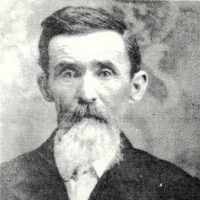
Elder Hosea Preslar
1814 - 1877
This elder wrote a book titled:
"Thoughts on Divine Providence: Or a Sketch of God's Care Over and Dealings with His People, Together with a Concise View of the Causes and Effects of the Late War in the United States"
I have this book in my library. I bought my copy of it about 1977 in the book store of Cincinnati Primitive Baptist Church. I have cited from his book in several postings through the years. (See here, here, here). He lived at first in Anson County, North Carolina, the county adjourning my own (Union county), although at the time of his birth Anson County covered most of North Carolina, and as time went on new counties were formed out of it. He immigrated with his large family to middle Tennessee and was aided by Elder John Watson, a learned medical doctor of the time, specializing in obstetrics. Elder Watson published his final revision to his book "The Old Baptist Test" right before his death in 1866, with the help of his fellow minister and doctor, Elder R.W. Fain. Preslar's book was published in 1867.
After the death of Watson, Hosea moved back to North Carolina and became part of Lawyer's Spring Primitive Baptist church which he had previously been a part of, and which was in the Bear Creek Association that was formed in 1832. However, he wrote to the North Carolina periodical "The Primitive Baptist" and said that he had observed how that Association held to Two Seed views. The postings I reference above give citations from him on this fact. I first visited Lawyer's Spring church when my father filled appointments in the churches in the Bear Creek Association. Later, when I moved to North Carolina, I also had occasions when my wife and I visited this church. This church, at the start of the 20th century, had an intense fight over the status of Elder J.R. Wilson, and over the doctrine of the absolute predestination of all things.
Preslar, like Watson, was a strong opponent of Two Seedism and wrote much against it, and in doing so listed many of their errors. I have shown how the Bear Creek Association, which I was once a part of, still holds to several errors of Two Seedism. (See these postings: here, here, here)
Thursday, July 4, 2019
Duke Research Results (2)
Over the years I have had to correct PB histories numerous times, revealing the bias in them, even at times pointing to blatant falsehoods and distortions of records. We saw a good example of this in my previous posting regarding Elder W.H. Crouse' book in which he attributes to Elder John Clark words that belonged to Clark's opponents on the "means question"; rather than being Clark's words and belief, they are words he denied as being true. Clark was affirming his belief in means, which is what he had taught all his life, not denying them.
His beliefs were the same as those who wrote to "The Primitive Baptist," a periodical to which he often wrote in the 1830s and 1840s. If one reads Clark's periodical "Zion's Advocate" he will see the same supporters of "The Primitive Baptist" supporting Clark and his paper. Elder Temple (who took over editorship of the PB periodical when Elder Bennett left the PBs) gave announcement of Clark's paper in "The Primitive Baptist." The paper that Clark came out to attack, in Zion's Advocate, was "The Signs of the Times" and its main writers, Elders Gilbert Beebe and Samuel Trott.
The doctrines connected with the Signs of the Times that were solidly opposed by Clark come under the umbrella of "Two Seedism" or "Parkerism," and its connected ideas. One of those ideas was that Jesus as "Son of God" was a creature before time (identified as "Arianism" by Clark) and that his "sonship" was connected with his becoming a mediator and redeemer. Christ, when created, was neither divine nor human, but possessed a third nature. And, when this Christ or Son of God was created as a mediator, his elect were also then created in him, and then chosen and saved in him. This aspect of Parkerism came to be known as the doctrine of "eternal vital union" or "eternal children." These, and other ideas, were vehemently opposed by both "Zion's Advocate" and by "The Primitive Baptist."
Frequent writers to Zion's Advocate through the 1850s-1860s
(from my research at Duke).
Elder (Dr.) John M. Watson
Elder (Dr.) R.W. Fain
Elder (Dr.) J. B. Stephens
Elder Grigg Thompson
Elder Mark Temple
All these men, except perhaps Stephens, and Thompson, believed and taught Gospel means. They all believed that the Gospel was to be preached to dead sinners. We can conclude from this that Clark also held these views. Of course, his writings very pointedly aver his belief in means and he contends, like his fellow editors, Burnam and Yates, that this has always been the belief of the Primitive Baptists. Clark, if he were alive here today, would tell our modern PBs that their anti means doctrine is a new and novel doctrine among them and that it did not take over the denomination till after his death in 1882.
It is also apparent from reading the old issues of Zion's Advocate that the first few voices that began to write into the Advocate who denied means were all of the Beebe side, the Two Seed side. This is more evidence of my thesis, formed years ago from my research, that the no means view came from the Two Seed faction of the Hardshells.
It was a famous motto with the Two Seeders to say that the Gospel was for the one object of "feeding the sheep." Those who believed in Means, like Watson, Preslar (who battled on the front lines with the Two Seeders), often spoke of the Two Seeders repeating that motto. They would often counter this motto and say, "we believe it not." They would say it is also for quickening dead sinners. (For more info on this see my posting Biased Interpretation)
In my posting Elder Hosea Preslar & Watson I cited these words of Elder Hosea Preslar:
"And as to their views of the use and design of the gospel being for nothing but for the edification of the Church, and believers being the only subjects of gospel address, I believe it not." (Page 186)
See also Elder Preslar On Two Seedism.
So, just as I have proven how the Hardshells falsely claim Dr. Gill as teaching their views on means in regeneration and rebirth, and proven how they also falsely claim the old London and Welsh brethren of the 17th century, and proven how they falsely claim Elder (Dr.) John Clark and his associate Obadiah Holmes, and proven how they falsely claim every first generation leader of the "Old Schoolers," we now are proving how they have falsely claimed elder John Clark and Zion's Advocate as being in agreement with them in their teachings of today, i.e., no means regeneration, conversion not certain or necessary, denial of perseverance, denial of absolute predestination, etc.
The foreword to Crouse' work was written by Elder David Montgomery (with whom we have had many things to say) to the edition that I linked to in a previous posting, and which was published by Montgomery and the Hardshells, and it has some words that I want to quote. (I have an older copy around here somewhere - highlighting mine).
Wrote Montgomery (see here):
""Regeneration and the New Birth" by Elder William H. Crouse, was published in 1928 and has been out of print since that time. (I think my edition was published later - SG) It is my opinion that this book is one of the best ever defenses against the "Gospel Means" heresy. This heresy is the belief that the gospel is the means by which eternal salvation is brought to the Lord's people. Sound Primitive Baptists do not believe this doctrine. The leaders of this doctrinal advocacy were Elders Burnham, Pence, Screws, Yates and others."
The work by Crouse, though highly recommended by today's Hardshells, is hardly worth the paper it was first printed upon.
I have in previous writings fully analyzed this book and discovered its numerous errors. See here, and here, and here. See also my posting Hardshellism's Fundamental Tenet.
Crouse and his anti means Hardshells are the ones guilty of teaching heresy. Further, if believing in means makes one a new schooler, then all the founding fathers of the PB denomination were New Schoolers! Heretics!
Montgomery continued:
"In the book Trial and Decision of Mt. Carmel Church, Elder R.H. Pittman gave the background of the "Gospel Means" movement:
In the latter half of the nineteenth century the spirit of unrest began to be manifested. Dissatisfaction with the old way of the fathers was evidenced in the public and private service of some.
Improvement on the old way of teaching is urged. The children of Baptists must be saved, and the New Testament plan is not thought sufficient. The "Heathen" must have the Gospel preached to them, and the old Baptist system of depending entirely upon the Lord is not considered the proper one. And so a fireside campaign is put on foot to prepare the Baptists for the public introduction of the things thought to be needed. And the result of all this was that a party within the church was being formed, tutored, and nourished by certain local ministers within the bonds of the Ketocton and Ebenezer Associations, but led mainly by Elder E. H. Burnam, a minister of talent and influence that finally divided churches where peace and fellowship had long been undisturbed. This party showed their hand..."
No, the "fireside campaign" came from the anti means faction! They were the ones who pushed their new doctrine off by first labeling their opponents as "Arminian"; And, by oral communication among individual members they pushed the matter, and began to call the believers in means "heretics"; And, they pushed it further by asking questions of candidates for ordination to state their views, and if you wanted to be ordained you answered as the "Ultraists" expected and denied means. Elder Clark wrote about this in regard to himself in the 1850s and 1860s, where he was labeled a "heretic" for his belief in means! And, as we will see, Elder Lemuel Potter used as an argument, to prove that Clark denied means, the fact that Clark in later life was moderator of an ordination service where the candidate was asked if he believed in means. How is that proof? But, not to delve into that matter too much in this connection, let us rather point out the tactics used by the Ultraist anti means trouble makers, which was to use "fireside" chats to stir the issue, and then to push it in ordination questioning. As a side note, I have written about this tactic in my book "The Hardshell Baptist Cult" (chapter three - personal experiences).
Pittman's account is of course a very biased look at the causes of the division over the means question.
Montgomery continued:
"These "Meansites" or "Burnamites" first afflicted the churches that were of the "Old Line" persuasion. Soon, the heresy crept in the "Progressive" churches. Though Elder Crouse was a member of a Progressive church, it is my feeling that this wonderful defense of the doctrine of Regeneration should stand and speak for itself. This, I am certain, the reader will discover.
When I received my original copy of the book, I showed it to Elder Sonny Pyles who told me to "guard it with your life." Elder Pyles explained to me that the book was very rare and that it explains the 1689 London Confession of Faith as it ought to be interpreted. It was his feeling that every Old Baptist should read this book, especially the ministry. With such a recommendation, I felt behooved to republish it as soon as possible and get the work back into the hands of the Baptists.
Upon reading the book, it made me wonder why this book has never been republished heretofore. Elder Crouse so clearly explains the important doctrine and the Scriptural and historical evidence that he gives in support of his position, more than convinced me of the scholarship of this work and encouraged me all the more to seek its republication. So, with all this in mind, it is a great joy for me to present this volume to the public."
Well, both Sonny and David both should be more careful in the works they recommend! Why recommend a work so full of misrepresentations? It is clear that both Pyles and Montgomery do not act as noble Bereans and check the veracity of the things they read!
Elder John R. Daily, who baptized Crouse, writes of Crouse:
"For a young man of strong intellectual power and high ambition to turn away from all that naturally engaged his mind and heart and consent to live a life of deprivation and trials, such as the ministry of the true gospel entails, is unmistakable proof of a work of grace and calling of God." (here)
Well, if Crouse is representative of Hardshell "scholarship" then they are to be pitied.
In the next posting we will look further into the history of the debate regarding Elder Clark.
His beliefs were the same as those who wrote to "The Primitive Baptist," a periodical to which he often wrote in the 1830s and 1840s. If one reads Clark's periodical "Zion's Advocate" he will see the same supporters of "The Primitive Baptist" supporting Clark and his paper. Elder Temple (who took over editorship of the PB periodical when Elder Bennett left the PBs) gave announcement of Clark's paper in "The Primitive Baptist." The paper that Clark came out to attack, in Zion's Advocate, was "The Signs of the Times" and its main writers, Elders Gilbert Beebe and Samuel Trott.
The doctrines connected with the Signs of the Times that were solidly opposed by Clark come under the umbrella of "Two Seedism" or "Parkerism," and its connected ideas. One of those ideas was that Jesus as "Son of God" was a creature before time (identified as "Arianism" by Clark) and that his "sonship" was connected with his becoming a mediator and redeemer. Christ, when created, was neither divine nor human, but possessed a third nature. And, when this Christ or Son of God was created as a mediator, his elect were also then created in him, and then chosen and saved in him. This aspect of Parkerism came to be known as the doctrine of "eternal vital union" or "eternal children." These, and other ideas, were vehemently opposed by both "Zion's Advocate" and by "The Primitive Baptist."
Frequent writers to Zion's Advocate through the 1850s-1860s
(from my research at Duke).
Elder (Dr.) John M. Watson
Elder (Dr.) R.W. Fain
Elder (Dr.) J. B. Stephens
Elder Grigg Thompson
Elder Mark Temple
All these men, except perhaps Stephens, and Thompson, believed and taught Gospel means. They all believed that the Gospel was to be preached to dead sinners. We can conclude from this that Clark also held these views. Of course, his writings very pointedly aver his belief in means and he contends, like his fellow editors, Burnam and Yates, that this has always been the belief of the Primitive Baptists. Clark, if he were alive here today, would tell our modern PBs that their anti means doctrine is a new and novel doctrine among them and that it did not take over the denomination till after his death in 1882.
It is also apparent from reading the old issues of Zion's Advocate that the first few voices that began to write into the Advocate who denied means were all of the Beebe side, the Two Seed side. This is more evidence of my thesis, formed years ago from my research, that the no means view came from the Two Seed faction of the Hardshells.
It was a famous motto with the Two Seeders to say that the Gospel was for the one object of "feeding the sheep." Those who believed in Means, like Watson, Preslar (who battled on the front lines with the Two Seeders), often spoke of the Two Seeders repeating that motto. They would often counter this motto and say, "we believe it not." They would say it is also for quickening dead sinners. (For more info on this see my posting Biased Interpretation)
In my posting Elder Hosea Preslar & Watson I cited these words of Elder Hosea Preslar:
"And as to their views of the use and design of the gospel being for nothing but for the edification of the Church, and believers being the only subjects of gospel address, I believe it not." (Page 186)
See also Elder Preslar On Two Seedism.
So, just as I have proven how the Hardshells falsely claim Dr. Gill as teaching their views on means in regeneration and rebirth, and proven how they also falsely claim the old London and Welsh brethren of the 17th century, and proven how they falsely claim Elder (Dr.) John Clark and his associate Obadiah Holmes, and proven how they falsely claim every first generation leader of the "Old Schoolers," we now are proving how they have falsely claimed elder John Clark and Zion's Advocate as being in agreement with them in their teachings of today, i.e., no means regeneration, conversion not certain or necessary, denial of perseverance, denial of absolute predestination, etc.
The foreword to Crouse' work was written by Elder David Montgomery (with whom we have had many things to say) to the edition that I linked to in a previous posting, and which was published by Montgomery and the Hardshells, and it has some words that I want to quote. (I have an older copy around here somewhere - highlighting mine).
Wrote Montgomery (see here):
""Regeneration and the New Birth" by Elder William H. Crouse, was published in 1928 and has been out of print since that time. (I think my edition was published later - SG) It is my opinion that this book is one of the best ever defenses against the "Gospel Means" heresy. This heresy is the belief that the gospel is the means by which eternal salvation is brought to the Lord's people. Sound Primitive Baptists do not believe this doctrine. The leaders of this doctrinal advocacy were Elders Burnham, Pence, Screws, Yates and others."
The work by Crouse, though highly recommended by today's Hardshells, is hardly worth the paper it was first printed upon.
I have in previous writings fully analyzed this book and discovered its numerous errors. See here, and here, and here. See also my posting Hardshellism's Fundamental Tenet.
Crouse and his anti means Hardshells are the ones guilty of teaching heresy. Further, if believing in means makes one a new schooler, then all the founding fathers of the PB denomination were New Schoolers! Heretics!
Montgomery continued:
"In the book Trial and Decision of Mt. Carmel Church, Elder R.H. Pittman gave the background of the "Gospel Means" movement:
In the latter half of the nineteenth century the spirit of unrest began to be manifested. Dissatisfaction with the old way of the fathers was evidenced in the public and private service of some.
Improvement on the old way of teaching is urged. The children of Baptists must be saved, and the New Testament plan is not thought sufficient. The "Heathen" must have the Gospel preached to them, and the old Baptist system of depending entirely upon the Lord is not considered the proper one. And so a fireside campaign is put on foot to prepare the Baptists for the public introduction of the things thought to be needed. And the result of all this was that a party within the church was being formed, tutored, and nourished by certain local ministers within the bonds of the Ketocton and Ebenezer Associations, but led mainly by Elder E. H. Burnam, a minister of talent and influence that finally divided churches where peace and fellowship had long been undisturbed. This party showed their hand..."
No, the "fireside campaign" came from the anti means faction! They were the ones who pushed their new doctrine off by first labeling their opponents as "Arminian"; And, by oral communication among individual members they pushed the matter, and began to call the believers in means "heretics"; And, they pushed it further by asking questions of candidates for ordination to state their views, and if you wanted to be ordained you answered as the "Ultraists" expected and denied means. Elder Clark wrote about this in regard to himself in the 1850s and 1860s, where he was labeled a "heretic" for his belief in means! And, as we will see, Elder Lemuel Potter used as an argument, to prove that Clark denied means, the fact that Clark in later life was moderator of an ordination service where the candidate was asked if he believed in means. How is that proof? But, not to delve into that matter too much in this connection, let us rather point out the tactics used by the Ultraist anti means trouble makers, which was to use "fireside" chats to stir the issue, and then to push it in ordination questioning. As a side note, I have written about this tactic in my book "The Hardshell Baptist Cult" (chapter three - personal experiences).
Pittman's account is of course a very biased look at the causes of the division over the means question.
Montgomery continued:
"These "Meansites" or "Burnamites" first afflicted the churches that were of the "Old Line" persuasion. Soon, the heresy crept in the "Progressive" churches. Though Elder Crouse was a member of a Progressive church, it is my feeling that this wonderful defense of the doctrine of Regeneration should stand and speak for itself. This, I am certain, the reader will discover.
When I received my original copy of the book, I showed it to Elder Sonny Pyles who told me to "guard it with your life." Elder Pyles explained to me that the book was very rare and that it explains the 1689 London Confession of Faith as it ought to be interpreted. It was his feeling that every Old Baptist should read this book, especially the ministry. With such a recommendation, I felt behooved to republish it as soon as possible and get the work back into the hands of the Baptists.
Upon reading the book, it made me wonder why this book has never been republished heretofore. Elder Crouse so clearly explains the important doctrine and the Scriptural and historical evidence that he gives in support of his position, more than convinced me of the scholarship of this work and encouraged me all the more to seek its republication. So, with all this in mind, it is a great joy for me to present this volume to the public."
Well, both Sonny and David both should be more careful in the works they recommend! Why recommend a work so full of misrepresentations? It is clear that both Pyles and Montgomery do not act as noble Bereans and check the veracity of the things they read!
Elder John R. Daily, who baptized Crouse, writes of Crouse:
"For a young man of strong intellectual power and high ambition to turn away from all that naturally engaged his mind and heart and consent to live a life of deprivation and trials, such as the ministry of the true gospel entails, is unmistakable proof of a work of grace and calling of God." (here)
Well, if Crouse is representative of Hardshell "scholarship" then they are to be pitied.
In the next posting we will look further into the history of the debate regarding Elder Clark.
Monday, October 3, 2011
Hit and Run?
Brother Kevin Fralick recently wrote another good article against the Hardshell doctrinal novelty titled ""Time Salvation," Historical Criteria for Conditional Time Salvation." See here for Kevin's posting.
One Hardshell brother responded. His name is Tim Herrin. Tim lives here in my hometown and is a member of High Hill Primitive Baptist church, probably the oldest in the county, established in 1784. High Hill church is in the Bear Creek Association, established in 1832 as a result of the division over missions, et als. I attended their annual association a couple weeks ago. I got a copy of their association minutes for 2010 and on the front cover I see that Tim was the church clerk for the association that year.
Tim Herrin left this comment to Kevin's article (emphasis mine - SG).
"John Gill believed in "conditional time salvation". In his comments on I Tim 4:16 (Take heed unto thyself, and unto the doctrine; continue in them: for in doing this thou shalt both save thyself, and them that hear thee.) Gill says, "a minister by taking heed to himself, and doctrine, saves himself from the pollutions of the world, from the errors and heresies of false teachers, from the blood of all men, and from all just blame in his ministry". That is as clear and plain a statement of conditional time salvation as was ever written or spoken. John Gill would not have written it if he did not believe it. It was true when Gill wrote it, and it is just as true today."
Brother Kevin Fralick responded with this comment.
"Tim,
The specifics of which Gill mentions here as to from what Timothy was to be saved are not be seen as something independent of eternal salvation, but part of it. In being saved with an eternal salvation there would be an implicit preservation from the world’s pollutions, heresies, etc. Paul has reference to Timothy's ongoing salvation commenced in the new birth (Philip. 1:6).
But why did you not quote Gill’s comments on the remainder of the passage?
“And them that hear thee; by being an example to them in doctrine and conversation, a minister is the means of saving and preserving those that attend on him, from erroneous principles, and immoral practices; and by faithfully preaching the Gospel to his hearers, he is instrumental in their eternal salvation; for though Jesus Christ is the only Saviour, the only efficient and procuring cause of salvation, yet the ministers of the Gospel are instruments by which souls believe in him, and so are saved; the word preached by them, being attended with the Spirit of God, becomes the ingrafted word, which is able to save, and is the power of God unto salvation; and nothing can more animate and engage the ministers of the word to take heed to themselves and doctrine, and abide therein, than this, of being the happy instruments of converting sinners, and saving them from death;”
He mentions that ministers are instrumental in the eternal salvation of hearers of the gospel.
Do you agree with the learned theologian here?"
Please reconsider Tim."
After giving Tim a few days to respond, and yet not getting any response from Tim, I searched the Internet and found information on Tim. I then left Tim this comment.
"Dear Tim:
I am guessing you are the Tim Herrin who lives in Union County and go to High Hill church?
Did you know that High Hill church and the other churches of the Bear Creek Association originally believed in means in regeneration?
Elder Hosea Preslar was a member and pastor of Lawyer's Spring church in the early 19th century and he believed in means.
See my posting here
http://old-baptist-test.blogspot.com/2011/06/elder-hosea-preslar-watson.html
Elder Jacob Helms, the pastor of High Hill at the time of the division in 1832 was an associate of Preslar. The old churches in the Bear Creek ass. all accepted the Philadelphia Confession of faith, which taught means in being born again. So, how can you claim to be "primitive" when you do not believe what the old pastors of High Hill and Lawyer's Spring churches believed?"
Now, I find it amazing that Tim has opted out of making another comment. I see it as another "hit and run" tactic common to the Hardshell cult, and one I have mentioned before. Recently, on my baptistgadfly blog, Hardshell Mark Green made a comment, I responded, but then he opted out of responding. "Hit and run"! I could give numerous examples of this tactic of today's Hardshells. Why do they not want to know the truth? Why will they not defend their views? Why do they hide and flee? The answer is quite obvious to all who are not in this cult. The Hardshells are a brainwashed people, biased and bigoted, who see themselves as peculiarly Jesus' "little flock," his "kingdom" on earth, and such a view of themselves is evidence of their cult status.
Today's Hardshells ought to be ashamed of themselves. Their revered forefathers would not even countenance their present group state of mind. They need to heed the proverb that says:
"He that is first in his own cause seemeth just; but his neighbour cometh and searcheth him." (Prov. 18: 17)
I consider myself a "neighbor" and friend to the Hardshells and I am "searching him out" for his good, for his conversion to truth. (James 5: 18, 19)
One Hardshell brother responded. His name is Tim Herrin. Tim lives here in my hometown and is a member of High Hill Primitive Baptist church, probably the oldest in the county, established in 1784. High Hill church is in the Bear Creek Association, established in 1832 as a result of the division over missions, et als. I attended their annual association a couple weeks ago. I got a copy of their association minutes for 2010 and on the front cover I see that Tim was the church clerk for the association that year.
Tim Herrin left this comment to Kevin's article (emphasis mine - SG).
"John Gill believed in "conditional time salvation". In his comments on I Tim 4:16 (Take heed unto thyself, and unto the doctrine; continue in them: for in doing this thou shalt both save thyself, and them that hear thee.) Gill says, "a minister by taking heed to himself, and doctrine, saves himself from the pollutions of the world, from the errors and heresies of false teachers, from the blood of all men, and from all just blame in his ministry". That is as clear and plain a statement of conditional time salvation as was ever written or spoken. John Gill would not have written it if he did not believe it. It was true when Gill wrote it, and it is just as true today."
Brother Kevin Fralick responded with this comment.
"Tim,
The specifics of which Gill mentions here as to from what Timothy was to be saved are not be seen as something independent of eternal salvation, but part of it. In being saved with an eternal salvation there would be an implicit preservation from the world’s pollutions, heresies, etc. Paul has reference to Timothy's ongoing salvation commenced in the new birth (Philip. 1:6).
But why did you not quote Gill’s comments on the remainder of the passage?
“And them that hear thee; by being an example to them in doctrine and conversation, a minister is the means of saving and preserving those that attend on him, from erroneous principles, and immoral practices; and by faithfully preaching the Gospel to his hearers, he is instrumental in their eternal salvation; for though Jesus Christ is the only Saviour, the only efficient and procuring cause of salvation, yet the ministers of the Gospel are instruments by which souls believe in him, and so are saved; the word preached by them, being attended with the Spirit of God, becomes the ingrafted word, which is able to save, and is the power of God unto salvation; and nothing can more animate and engage the ministers of the word to take heed to themselves and doctrine, and abide therein, than this, of being the happy instruments of converting sinners, and saving them from death;”
He mentions that ministers are instrumental in the eternal salvation of hearers of the gospel.
Do you agree with the learned theologian here?"
Please reconsider Tim."
After giving Tim a few days to respond, and yet not getting any response from Tim, I searched the Internet and found information on Tim. I then left Tim this comment.
"Dear Tim:
I am guessing you are the Tim Herrin who lives in Union County and go to High Hill church?
Did you know that High Hill church and the other churches of the Bear Creek Association originally believed in means in regeneration?
Elder Hosea Preslar was a member and pastor of Lawyer's Spring church in the early 19th century and he believed in means.
See my posting here
http://old-baptist-test.blogspot.com/2011/06/elder-hosea-preslar-watson.html
Elder Jacob Helms, the pastor of High Hill at the time of the division in 1832 was an associate of Preslar. The old churches in the Bear Creek ass. all accepted the Philadelphia Confession of faith, which taught means in being born again. So, how can you claim to be "primitive" when you do not believe what the old pastors of High Hill and Lawyer's Spring churches believed?"
Now, I find it amazing that Tim has opted out of making another comment. I see it as another "hit and run" tactic common to the Hardshell cult, and one I have mentioned before. Recently, on my baptistgadfly blog, Hardshell Mark Green made a comment, I responded, but then he opted out of responding. "Hit and run"! I could give numerous examples of this tactic of today's Hardshells. Why do they not want to know the truth? Why will they not defend their views? Why do they hide and flee? The answer is quite obvious to all who are not in this cult. The Hardshells are a brainwashed people, biased and bigoted, who see themselves as peculiarly Jesus' "little flock," his "kingdom" on earth, and such a view of themselves is evidence of their cult status.
Today's Hardshells ought to be ashamed of themselves. Their revered forefathers would not even countenance their present group state of mind. They need to heed the proverb that says:
"He that is first in his own cause seemeth just; but his neighbour cometh and searcheth him." (Prov. 18: 17)
I consider myself a "neighbor" and friend to the Hardshells and I am "searching him out" for his good, for his conversion to truth. (James 5: 18, 19)
Tuesday, August 18, 2015
Elder Preslar on Two Seedism
In previous writings I have referred to Elder Hosea Preslar who was first of North Carolina (Bear Creek Association) in its early days and later a resident of middle Tennessee and friend of Elder (Dr.) John M. Watson. For instance see my posting "Elder Hosea Preslar & Watson" (see here).
I showed that Elder Preslar believed the Gospel means position, which was the original position of the first generation of Hardshell leaders, including the Bear Creek. Both Elders Watson and Preslar show that the "no means" view of spiritual birth was one of the foundational principles of Daniel Parker's "Two-Seedism."
Today's Hardshells tell their members things about their history that are outright falsehoods (which any serious student of Baptist history will soon discover). When beginning students of Hardshell history ask their Hardshell "historians" about Daniel Parker and his view on the "two seeds," or what was later called "Parkerism," they are told these things (what we might call their "talking points").
1. Parker was one who rightly opposed the "modern mission system" with all that pertains to that term.
2. His views on the "two seeds" was quickly declared as a heresy by the Hardshells and his followers were few, mainly in Texas.
3. The "Primitive Baptist" not only soon disassociated themselves from Parker and his views on the "two seeds," but had no further difficulty with the teachings of Parker.
4. The "two seed" view had one main error associated with it, and that was of an eternal devil.
5. Another serious error of this faction (sub cult) was their belief that only the elect fell in Adam, and that the souls of the elect were eternally created in Christ (as a seed) and that these eternal souls or spirits enter the human body in "regeneration."
Generally this is the limit that the "talking points" choose to go. Further or deeper investigation into the history or "Parkerism" is discouraged. But, some soon discover, if they persist in their historical studies, that there was more involved in Parker's "two-seedism" than at first meets the eye.
Such further research will discover that Parkerism or two seedism spawned these other doctrinal errors.
1. "Hollow Log" regeneration or "no change" view of regeneration.
2. The denial of a physical resurrection of the bodies of both saint and sinner.
3. A denial that the human nature of Christ was a creature of time, or began its existence when conceived in the womb of the blessed mother, Mary.
4. A denial that conversion to Christ was essential to being regenerated.
5. A denial that the preaching of the Gospel is a means in spiritual birth or for final salvation.
6. A denial that the Gospel is to be preached to all men and that they are to be exhorted to believe the Gospel and repent.
Now, the following form the pen of Elder Preslar will help show these things to be true. Here is what Elder Preslar wrote about his meeting Two Seeders upon his move to Henderson county Tennessee from Anson County North Carolina.
"From that time forth I was persecuted by some of those people, but I thought, perhaps that Divine Providence had sent me to Tennessee to defend the truths of the gospel, with others of like calling; and that we should suffer together for His sake. To speak of all the distress this doctrine caused, within my knowledge, would be too tedious. But for the satisfaction of those that are not acquainted with it, I will endeavor to give the reader a short, but plain sketch of their doctrine, though they, among themselves, seem at times to have it almost every way, any way, and as it were, no way at last. Some call them the "Sadducees," some "Non-Resurrectionists," but mostly the "Two-Seeders." Now if there is any system to their doctrine, or if they preach any system, I understand it to be about as follows:
First: they hold that the foreknowledge of God amounts to a decree, because (say they) it could not be any other way, and therefore denounce the idea that Adam was able to stand, but liable to fall.
Secondly: They hold that the Church of God was in eternal union with Him, (not in purpose, but actually so); and that the church is composed of a family of eternal children, that was in eternal union with God.
Thirdly: That when Adam transgressed the law of his Creator, and fell under its curse, that those eternal children fell in him; but not in the same like sense that the children of the devil fell.
Fourthly: That the devil is a self-existent devil, or wicked spirit, and that, after Adam had transgressed the law of his Creator, the devil and his children, through Eve, began to make their appearance; and from them came another set of children that they call the children of the devil, or the seed of the serpent. And that those wicked children are a wicked spiritual family that dwell in mortal bodies; and are therefore called children of the flesh, and that this wicked generation of children constitute the non-elect; and that those eternal children that were in eternal union with God, constitute the elect of God or the church.
Fifthly: And as they had fallen under the law in Adam, that Christ came and redeemed them back again, and that the Holy Ghost makes manifest this to them in time, and that they are now renewed in the spirit of their mind, that is in the enjoyment of that eternal union they had with God; for (say they), there is nothing the soul receives in time, but a manifestation of what did before exist, not in purpose, for purpose (say they) amounts to nothing, but actually so.
Sixthly: That the gospel never was designed for anything else, but for the edification of the body of Christ, and that believers are the only subjects of gospel address.
Seventhly: That everything must return back again to its origin, and hence, these mortal bodies of ours must return to the dust, and never will be resurrected any more. They contend for (what they call) a spiritual resurrection, and a spiritual body, that was eternally prepared of God for them; and that this was the kind of body that Jesus ascended into heaven with, and not in the one that was born of the Virgin Mary, crucified upon the Roman cross, and laid in the sepulcher; adding that it is none of our business what became of that body.
Eighthly, and lastly: They say that all other doctrine outside, or differing from this, is unsound, is Armianism, etc.
"The above is a correct and concise account of the items or tenets of doctrine, I understand them to hold forth. And as I consider their system to be heresy, and having suffered much, as well as many others on account of it, I here give my reasons in a brief way, hoping that Divine Providence may make it a blessing to His church and people hereafter, for of all the systems of heresy that ever I have encountered with yet, I abhor it the most." (pages 179-80)
"Neither has he told us when or how the devil was made or created, but He has let us know there is a devil, and He has let us know he is a murderer, a liar, and the father of lies, and that he sinned from the beginning, and abode not in the truth; John 8: 44. This much God has been pleased to let us know about the devil. He does not tell us he never was in possession of the truth, but that he abode not in the truth...Then away with the doctrine of an eternal, self-existent devil." (pg. 183-84)
"And as to their views of the use and design of the gospel being for nothing but for the edification of the Church, and believers being the only subjects of gospel address, I believe it not." (Page 186)
"But some object to these ideas and say all this is the work of the spirit of God; and the gospel has nothing to do with it. Ah, a gospel without a spirit! Well, God save me from a gospel that has not His spirit. God says His word is quick and powerful, and He says by Peter, This is the word which by the gospel is preached unto you; I Peter 1: 25. And as to the subjects of Gospel address, it is to every creature the disciples were commanded to preach the gospel; and Paul said, Whom we preach warning every man, and teaching every man, in all wisdom, etc.; Col. 1: 28. So we see that their idea on that point is false as the balance, and we will now give their last, but not least error a passing notice." (pg. 187)
"This is the new man begotten by the word of truth; yea, begotten of God; I John 5: 18." (page 185)
"And as to their views of the use and design of the gospel being for nothing but for the edification of the Church, and believers being the only subjects of gospel address, I believe it not." (Page 186)
He says that the gospel "is moreover to be for a witness unto all nations; Matt. 24: 14; and for the awakening of sinners, who are dead in trespasses and in sin." (page 187)
"...the other is the child of God, that was begotten by the word of truth; James 1: 14; I Cor. 4: 15; I John 5: 1." (Page 112)
"About this time there came to hand a work written by Elder Watson of Nashville, Tenn., entitled The Old Baptist Test, or the Bible Signs of the Lord's People. Well, when I read it, I thanked God and took, as it were, fresh courage, for it contained and explained the very things that we were contending about, and I thought surely my accusers will now yield their ground...So along about this time, perhaps in the year 1858, I visited my old native State (North Carolina) again, and had one more opportunity of preaching to the members at my old association (Bear Creek)...I then made my way to the eastern parts of the State, and had good days among the brethren of the old Kehukee Association." (pgs. 190-91)
"It was not long after my return home before I went to Nashville. My sister having been afflicted in a very serious and critical way...I thought, now perhaps, I shall get to see Dr. Watson, the author of the old Baptist Test, as he is an able physician, as well as a minister of the gospel...I at once found him a plain and loving brother. He took to his house and treated me with all the kindness of a father, and he and Brigs commenced waiting on my sister...I made brother Watson's house my home by his request, and he was a father, as well as a brother to us; he did not only board me free of charge, but bestowed much on me and my sister beside." (pgs. 192-93)
Two Seedism in the Bear Creek?
Preslar wrote about his return trip to North Carolina (80 days) in the Feb. 11, 1860 issue of "The Primitive Baptist" periodical. His letter to the editor, Elder Temples, begins on the front page. Here are some excerpts (see here):
"And while in my mother State, (North Carolina) and in my old section (Anson and Union counties) I met with many that seemed greatly to rejoice at my presence among them: and this being the region of my birth country (of both body and soul) and also in the bounds of my old Association (to wit, Bear Creek), I watched things closely...And although this was one view I took of the case, yet in taking another view, perhaps a large majority of that section are the professed followers of Christ."
"But in the midst of all this confusion, my desire and prayer to God was that the Bear Creek Association might be saved,--saved from the many errors by which she was surrounded, (her well known enemies) And also from some erroneous things or principles, that are now in her midst, or in her ranks, going under the name of "Old Baptist;" but when named by those who are better acquainted with its signs and marks, is the old Two Seed Parkerite heresy."
Today's Hardshells, including the Bear Creek, though they may reject some of Parker's "Two-Seedism," nevertheless hold to its "no means" view. Remnants of Parkerism still remain.
I showed that Elder Preslar believed the Gospel means position, which was the original position of the first generation of Hardshell leaders, including the Bear Creek. Both Elders Watson and Preslar show that the "no means" view of spiritual birth was one of the foundational principles of Daniel Parker's "Two-Seedism."
Today's Hardshells tell their members things about their history that are outright falsehoods (which any serious student of Baptist history will soon discover). When beginning students of Hardshell history ask their Hardshell "historians" about Daniel Parker and his view on the "two seeds," or what was later called "Parkerism," they are told these things (what we might call their "talking points").
1. Parker was one who rightly opposed the "modern mission system" with all that pertains to that term.
2. His views on the "two seeds" was quickly declared as a heresy by the Hardshells and his followers were few, mainly in Texas.
3. The "Primitive Baptist" not only soon disassociated themselves from Parker and his views on the "two seeds," but had no further difficulty with the teachings of Parker.
4. The "two seed" view had one main error associated with it, and that was of an eternal devil.
5. Another serious error of this faction (sub cult) was their belief that only the elect fell in Adam, and that the souls of the elect were eternally created in Christ (as a seed) and that these eternal souls or spirits enter the human body in "regeneration."
Generally this is the limit that the "talking points" choose to go. Further or deeper investigation into the history or "Parkerism" is discouraged. But, some soon discover, if they persist in their historical studies, that there was more involved in Parker's "two-seedism" than at first meets the eye.
Such further research will discover that Parkerism or two seedism spawned these other doctrinal errors.
1. "Hollow Log" regeneration or "no change" view of regeneration.
2. The denial of a physical resurrection of the bodies of both saint and sinner.
3. A denial that the human nature of Christ was a creature of time, or began its existence when conceived in the womb of the blessed mother, Mary.
4. A denial that conversion to Christ was essential to being regenerated.
5. A denial that the preaching of the Gospel is a means in spiritual birth or for final salvation.
6. A denial that the Gospel is to be preached to all men and that they are to be exhorted to believe the Gospel and repent.
Now, the following form the pen of Elder Preslar will help show these things to be true. Here is what Elder Preslar wrote about his meeting Two Seeders upon his move to Henderson county Tennessee from Anson County North Carolina.
"From that time forth I was persecuted by some of those people, but I thought, perhaps that Divine Providence had sent me to Tennessee to defend the truths of the gospel, with others of like calling; and that we should suffer together for His sake. To speak of all the distress this doctrine caused, within my knowledge, would be too tedious. But for the satisfaction of those that are not acquainted with it, I will endeavor to give the reader a short, but plain sketch of their doctrine, though they, among themselves, seem at times to have it almost every way, any way, and as it were, no way at last. Some call them the "Sadducees," some "Non-Resurrectionists," but mostly the "Two-Seeders." Now if there is any system to their doctrine, or if they preach any system, I understand it to be about as follows:
First: they hold that the foreknowledge of God amounts to a decree, because (say they) it could not be any other way, and therefore denounce the idea that Adam was able to stand, but liable to fall.
Secondly: They hold that the Church of God was in eternal union with Him, (not in purpose, but actually so); and that the church is composed of a family of eternal children, that was in eternal union with God.
Thirdly: That when Adam transgressed the law of his Creator, and fell under its curse, that those eternal children fell in him; but not in the same like sense that the children of the devil fell.
Fourthly: That the devil is a self-existent devil, or wicked spirit, and that, after Adam had transgressed the law of his Creator, the devil and his children, through Eve, began to make their appearance; and from them came another set of children that they call the children of the devil, or the seed of the serpent. And that those wicked children are a wicked spiritual family that dwell in mortal bodies; and are therefore called children of the flesh, and that this wicked generation of children constitute the non-elect; and that those eternal children that were in eternal union with God, constitute the elect of God or the church.
Fifthly: And as they had fallen under the law in Adam, that Christ came and redeemed them back again, and that the Holy Ghost makes manifest this to them in time, and that they are now renewed in the spirit of their mind, that is in the enjoyment of that eternal union they had with God; for (say they), there is nothing the soul receives in time, but a manifestation of what did before exist, not in purpose, for purpose (say they) amounts to nothing, but actually so.
Sixthly: That the gospel never was designed for anything else, but for the edification of the body of Christ, and that believers are the only subjects of gospel address.
Seventhly: That everything must return back again to its origin, and hence, these mortal bodies of ours must return to the dust, and never will be resurrected any more. They contend for (what they call) a spiritual resurrection, and a spiritual body, that was eternally prepared of God for them; and that this was the kind of body that Jesus ascended into heaven with, and not in the one that was born of the Virgin Mary, crucified upon the Roman cross, and laid in the sepulcher; adding that it is none of our business what became of that body.
Eighthly, and lastly: They say that all other doctrine outside, or differing from this, is unsound, is Armianism, etc.
"The above is a correct and concise account of the items or tenets of doctrine, I understand them to hold forth. And as I consider their system to be heresy, and having suffered much, as well as many others on account of it, I here give my reasons in a brief way, hoping that Divine Providence may make it a blessing to His church and people hereafter, for of all the systems of heresy that ever I have encountered with yet, I abhor it the most." (pages 179-80)
"Neither has he told us when or how the devil was made or created, but He has let us know there is a devil, and He has let us know he is a murderer, a liar, and the father of lies, and that he sinned from the beginning, and abode not in the truth; John 8: 44. This much God has been pleased to let us know about the devil. He does not tell us he never was in possession of the truth, but that he abode not in the truth...Then away with the doctrine of an eternal, self-existent devil." (pg. 183-84)
"And as to their views of the use and design of the gospel being for nothing but for the edification of the Church, and believers being the only subjects of gospel address, I believe it not." (Page 186)
"But some object to these ideas and say all this is the work of the spirit of God; and the gospel has nothing to do with it. Ah, a gospel without a spirit! Well, God save me from a gospel that has not His spirit. God says His word is quick and powerful, and He says by Peter, This is the word which by the gospel is preached unto you; I Peter 1: 25. And as to the subjects of Gospel address, it is to every creature the disciples were commanded to preach the gospel; and Paul said, Whom we preach warning every man, and teaching every man, in all wisdom, etc.; Col. 1: 28. So we see that their idea on that point is false as the balance, and we will now give their last, but not least error a passing notice." (pg. 187)
"This is the new man begotten by the word of truth; yea, begotten of God; I John 5: 18." (page 185)
"And as to their views of the use and design of the gospel being for nothing but for the edification of the Church, and believers being the only subjects of gospel address, I believe it not." (Page 186)
He says that the gospel "is moreover to be for a witness unto all nations; Matt. 24: 14; and for the awakening of sinners, who are dead in trespasses and in sin." (page 187)
"...the other is the child of God, that was begotten by the word of truth; James 1: 14; I Cor. 4: 15; I John 5: 1." (Page 112)
"About this time there came to hand a work written by Elder Watson of Nashville, Tenn., entitled The Old Baptist Test, or the Bible Signs of the Lord's People. Well, when I read it, I thanked God and took, as it were, fresh courage, for it contained and explained the very things that we were contending about, and I thought surely my accusers will now yield their ground...So along about this time, perhaps in the year 1858, I visited my old native State (North Carolina) again, and had one more opportunity of preaching to the members at my old association (Bear Creek)...I then made my way to the eastern parts of the State, and had good days among the brethren of the old Kehukee Association." (pgs. 190-91)
"It was not long after my return home before I went to Nashville. My sister having been afflicted in a very serious and critical way...I thought, now perhaps, I shall get to see Dr. Watson, the author of the old Baptist Test, as he is an able physician, as well as a minister of the gospel...I at once found him a plain and loving brother. He took to his house and treated me with all the kindness of a father, and he and Brigs commenced waiting on my sister...I made brother Watson's house my home by his request, and he was a father, as well as a brother to us; he did not only board me free of charge, but bestowed much on me and my sister beside." (pgs. 192-93)
Two Seedism in the Bear Creek?
Preslar wrote about his return trip to North Carolina (80 days) in the Feb. 11, 1860 issue of "The Primitive Baptist" periodical. His letter to the editor, Elder Temples, begins on the front page. Here are some excerpts (see here):
"And while in my mother State, (North Carolina) and in my old section (Anson and Union counties) I met with many that seemed greatly to rejoice at my presence among them: and this being the region of my birth country (of both body and soul) and also in the bounds of my old Association (to wit, Bear Creek), I watched things closely...And although this was one view I took of the case, yet in taking another view, perhaps a large majority of that section are the professed followers of Christ."
"But in the midst of all this confusion, my desire and prayer to God was that the Bear Creek Association might be saved,--saved from the many errors by which she was surrounded, (her well known enemies) And also from some erroneous things or principles, that are now in her midst, or in her ranks, going under the name of "Old Baptist;" but when named by those who are better acquainted with its signs and marks, is the old Two Seed Parkerite heresy."
Today's Hardshells, including the Bear Creek, though they may reject some of Parker's "Two-Seedism," nevertheless hold to its "no means" view. Remnants of Parkerism still remain.
Friday, July 25, 2025
Two Seed Baptist Ideology (I)
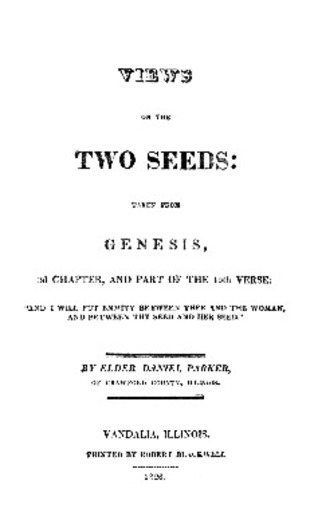
The first thing to do is to describe the belief system of Two Seedism. The next thing will be to trace the causes that gave birth to this system and to observe the history of its advocates and that sect.
Maxims & Premises of Two Seeders
There are some maxims of the Two Seeders that give in a nutshell their views. Here are two of them:
1. "If the head of the body existed before the world began, then so too did his body (the elect), for it would be absurd to think the head existed without a body."
2. "Nothing goes up to heaven but what first came down from heaven."
Some of the leading premises or propositions of Two Seeders are these:
1. The man Christ Jesus had a human existence before the world began, being created a man with a human soul when he was "begotten" by the Father, his being begotten having to do with his humanity and not with his divinity.
2. When the man Christ was begotten or created before the world was created, the souls of the elect were also then created in Christ, so that both the human Christ and the elect preexisted the creation of the world.
3. The elect had thus a vital living and actual union with the man Christ Jesus before the world began.
4. Regeneration or Rebirth is simply a coming down from heaven of the souls of the elect in order to enter into their human bodies when conceived in the womb.
5. Regeneration thus does not change a man. The preexistent soul is not changed from sin's impurity for it was already pure by being in Christ from before creation, nor is the sinful body changed when it becomes possessed by the eternal spirit of the elect. The holy nature of the descended spirit was not changed and the depraved nature of the flesh was not changed when possessed. It is like when a rabbit runs into a hollow log. The log is not changed as a result. Hence we have the "hollow log" doctrine or no change in regeneration.
6. All the non-elect were united to their father the Devil also before the world began. Thus the "two seeds," one of God and the other of Satan.
7. God did not create the Devil. Thus, both God and the Devil are uncreated beings. The Devil never was in heaven as a pure angel, thus he never fell from heaven. Nor has any angel fallen from heaven.
8. The non elect never fell in Adam.
9. The Christian warfare of flesh (body) with the inner renewed spirit is the result or evidence of the preexistent spirit entering the depraved body.
10. There is no need for a resurrected body, for a return to being a pure spirit is preferred.
11. The seed of the Devil cannot be saved and they should not be preached unto and offered salvation.
12. Being "chosen in Christ before the foundation of the world" (Eph. 1: 4) and "given grace in Christ Jesus before the world began" (II Tim. 1: 9) necessarily imply that the elect actually existed before the world began, and not merely existed in God's mind.
13. In the beginning God had appointed that Eve should bring forth only a certain number of offspring; the same provision applied to each of her daughters. But when the particles of evil essence had been diffused by Satan, the conception of Eve and her daughters was increased. They were now required to bear the original number, who were styled the seed of God; and an additional number who were called the seed of the serpent. (See B.H. Carroll's "The Genesis of American Anti-Missionism")
14. The elect were justified from sin from eternity. T. P. Simmons, author of a good systematic theology, said the following about Two Seedism's embrace of the doctrine of eternal justification: "As commonly used, this is a logical corollary of the two-seed doctrine." He also said: "We utterly reject this doctrine. It is wholly anti-scriptural, and is the absurdest nonsense. It is aptly described as "a curious revival, with some modifications, of the ancient speculative philosophy of Manichaeus" and "a very disgusting form of Gnostic heresy." ("Two-Seed Doctrine and Eternal Justification" by T. P. Simmons, 1931; See here)
15. The non elect have no souls.
We could also possibly add the doctrine known as "the absolute predestination of all things," but it seems that Daniel Parker may not have believed this doctrine, though some later advocates of Two Seedism did.
Two Seedism borrows, as we will see, elements of its system from the following religious systems:
1. Manichaeism (Dualism or Zoroastrianism)
2. Gnosticism or Mysticism
3. Arianism or Semi Arianism
4. Hyper Calvinism
We could possibly add Mormonism, but really it seems that Mormonism borrowed from Two Seedism rather than the other way around.
Elder Hosea Preslar was a Primitive Baptist minister who lived in both North Carolina and Tennessee in the early to mid 19th century and I cited him in an article (See here) where he listed eight beliefs of the Two Seeders that he battled in those states, especially in middle Tennessee. He was an associate of Elder (Dr.) John M. Watson who likewise contended against the Two Seeders and wrote a book called "The Old Baptist Test" wherein the first half of the book attacks the heretical ideas of the Two Seed Baptists. We will refer to both these men in upcoming chapters. Preslar wrote a book titled "Thoughts on Divine Providence," a book I have in my library from which I cited several times.
He lists many of the items in the list I have above, but adds that it was the Two Seeders who began to teach that God does not use his word in the regeneration of sinners. He said:
"Sixthly: That the gospel never was designed for anything else, but for the edification of the body of Christ, and that believers are the only subjects of gospel address."
That citation was taken from his book, mentioned above, and from page 87 (See my other post here)
In a previous article I cited the following words from Hardshell leader and historian, Elder Sylvester Hassell, about Two Seedism:
"...the heathenish perversions of Scriptural truth set forth by Eld. Daniel Parker, of Tennessee, about 1835, in his pamphlet called "My Views on the Two Seeds," have corrupted Primitive Baptist doctrine more, and rent off more members and churches from our fellowship, than any and all other causes combined." (The Two Seed Heresy
The Gospel Messenger--March 1894)
Other Hardshell Baptists have said the same. See all my previous articles on this, especially what Elders Grigg Thompson and Hosea Preslar (who lived during the time of Parker) have testified to the same fact Elder Hassell states.
On pages 179-180 of Preslar's book he writes (emphasis mine):
"From that time forth I was persecuted by some of those people (Two Seeders), but I thought, perhaps that Divine Providence had sent me to Tennessee to defend the truths of the gospel, with others of like calling; and that we should suffer together for His sake. To speak of all the distress this doctrine caused, within my knowledge, would be too tedious. But for the satisfaction of those that are not acquainted with it, I will endeavor to give the reader a short, but plain sketch of their doctrine, though they, among themselves, seem at times to have it almost every way, any way, and as it were, no way at last. Some call them the "Sadducees," some "Non-Resurrectionists," but mostly the "Two-Seeders." Now if there is any system to their doctrine, or if they preach any system, I understand it to be about as follows..." (He then lists a number of the beliefs of the Two Seeders; see my two postings mentioned above with links)
In writing on the "Two Seed" Baptists, of which Elder Daniel Parker was the first leader and promulgator of "Two Seedism," one must first define it. What are the leading ideas inherent in that system? Simply put, it is the belief that there are two seeds in scripture, the seed of Satan and the seed of the Lord. The seed of Satan stands for the "children of the Devil" that Jesus spoke about. The seed of the Lord stands for the "children of God." That basic proposition finds little opposition from the Christian world. What does find opposition, however, is what Parker and others following him taught relative to these two seeds.
Parker and the first promoters of Two Seedism believed in the preexistence of the souls of both seed groups. The seed of the Devil existed in the Devil before the world began. The seed of the Lord likewise existed in the Lord Jesus Christ before the world began. These views arose out of several ancient heretical ideas. One is Manichaeism, also known as Dualism or Zoroastrianism. Another one of these ideas is the belief in the preexistence of souls. Another is the heresy known as Arianism. Another idea inherent in Two Seedism is borrowed from some aspects of Gnosticism. Finally, another heretical idea involved is the idea that Christ in his human nature existed in some form before the world began. Two Seedism is the result of blending these ideas together.
We should also mention what is called "eternal vital union" which says that the elect had a literal existence in Christ the Son of God before the world began. Just as Eve was in Adam before she was made from his rib, so the elect, as the bride of Christ, existed in him before they were born into the physical world. This idea denied that "vital union" with Christ is begun in time when the sinner unites himself with Christ by faith.
Following Parker there were those who took the lead in promoting Two Seed ideology. Elder Gilbert Beebe took that lead along with Elder Samuel Trott and other leading writers of the periodical "Signs of the Times." Immediately after helping to write "The Black Rock Address" in 1832 (a document where the Hardshells declared non-fellowship with all other Baptists who did not agree with them) he began to publish the first Hardshell periodical called "The Signs of the Times."
Monday, July 27, 2015
Powell's Valley Originally Espoused Gospel Means
In "The History of the Baptists of Tennessee" by Lawrence Edwards (August, 1940), University of Tennessee - Knoxville (see here), a work I have just read, I found some interesting information about the history of the Hardshells. Some of this information I will give in this posting.
Preliminary Observations and Comments
1. The facts here presented by this historian can be added to the other historical proofs I already have put forth and help to substantiate my claim that the no means view of today's Hardshells had its birth among the "two seed" followers of Daniel Parker, but was not the general view of the other Hardshells.
2. The citations to be given are from the Powell's Valley Association of which I was once a member when I first joined the Hardshells and one that is a close ally of the Bear Creek Association here in North Carolina, of which I was also once a member. These citations will show the Powell's Valley Association, as late as 1879, held to the Gospel means position, though they were "anti missionary."
As a prelude to the citations regarding the Powell's Valley Association I wish to cite these words of our historian. It is from Chapter IV, titled "ANTI-MISSION BAPTISTS OCCUPIED BY DOCTRINAL DISPUTES."
"After the mission schism the anti-mission or Primitive Baptist churches lapsed into a period of doctrinal disputation that threatened their utter dissolution. Condemning missions as institutions of men unauthorized by the Scriptures, they withdrew doggedly into their stern predestinarian doctrine and for a few years were torn by grave doctrinal disputes."
All I can say is amen! Anyone who has studied the history of the Hardshells know this. Further, I don't know any man living who knows more about it than I do.
In chapter V, "THE TWO-SEED HERESY AND ABSOLUTE PREDESTINATION," Lawrence wrote:
"The Two-Seed doctrine, which was beginning to occupy the attention of the churches in the early 1870's, continued to plague the Primitive Baptists, especially those of the Powell Valley association, until 1889, when a split occurred in the association. The Nolachucky association, too, felt the impact of this conflict, but no complete rift, such as the Powell Valley experienced, occurred in any of the other East Tennessee associations.
At the 1879 meeting of the Powell Valley association the tenth item of business said: Committee appointed to draft advice to the churches in regard to the Two-Seed doctrine, who reported as follows:
We as an association advise our sister churches to have no fellowship with what is generally known as the two-Seed Heresy or those who teach the doctrine of an Eternally damned or Eternally Justified outside of the preaching of the gospel of the Kingdom of God and teach that the unbeliever is no subject of gospel address. We believe that God makes use of the Gospel as a means of calling his Elect and this means is the work of the Spirit in the church.
But the Powell Valley seems to feed on division and dissension, for in the early years of the twentieth century it was again torn asunder." (pg. 89)
Now, today's Hardshells of the Powell's Valley and Bear Creek Associations do not declare non-fellowship for those who believe in the Two Seed heresy of anti means, but are two seeders themselves or imbibers of Daniel Parker's heresies! Those who Elder Watson (who is mentioned in this history) called "ultraists" and "modern innovators" are those who are of the anti means heresy and who Elder Watson and Elder Hosea Preslar identified as being an invention of the two seeders or Parkerites. (See my posting Hosea Preslar)
Of course, after I found this information about the Powell's Valley, I had to share it with dad, who I am sure was shocked to know that the Powell's Valley believed in means till at least 1879.
What will you do with such facts, my Hardshell brethren?
Preliminary Observations and Comments
1. The facts here presented by this historian can be added to the other historical proofs I already have put forth and help to substantiate my claim that the no means view of today's Hardshells had its birth among the "two seed" followers of Daniel Parker, but was not the general view of the other Hardshells.
2. The citations to be given are from the Powell's Valley Association of which I was once a member when I first joined the Hardshells and one that is a close ally of the Bear Creek Association here in North Carolina, of which I was also once a member. These citations will show the Powell's Valley Association, as late as 1879, held to the Gospel means position, though they were "anti missionary."
As a prelude to the citations regarding the Powell's Valley Association I wish to cite these words of our historian. It is from Chapter IV, titled "ANTI-MISSION BAPTISTS OCCUPIED BY DOCTRINAL DISPUTES."
"After the mission schism the anti-mission or Primitive Baptist churches lapsed into a period of doctrinal disputation that threatened their utter dissolution. Condemning missions as institutions of men unauthorized by the Scriptures, they withdrew doggedly into their stern predestinarian doctrine and for a few years were torn by grave doctrinal disputes."
All I can say is amen! Anyone who has studied the history of the Hardshells know this. Further, I don't know any man living who knows more about it than I do.
In chapter V, "THE TWO-SEED HERESY AND ABSOLUTE PREDESTINATION," Lawrence wrote:
"The Two-Seed doctrine, which was beginning to occupy the attention of the churches in the early 1870's, continued to plague the Primitive Baptists, especially those of the Powell Valley association, until 1889, when a split occurred in the association. The Nolachucky association, too, felt the impact of this conflict, but no complete rift, such as the Powell Valley experienced, occurred in any of the other East Tennessee associations.
At the 1879 meeting of the Powell Valley association the tenth item of business said: Committee appointed to draft advice to the churches in regard to the Two-Seed doctrine, who reported as follows:
We as an association advise our sister churches to have no fellowship with what is generally known as the two-Seed Heresy or those who teach the doctrine of an Eternally damned or Eternally Justified outside of the preaching of the gospel of the Kingdom of God and teach that the unbeliever is no subject of gospel address. We believe that God makes use of the Gospel as a means of calling his Elect and this means is the work of the Spirit in the church.
But the Powell Valley seems to feed on division and dissension, for in the early years of the twentieth century it was again torn asunder." (pg. 89)
Now, today's Hardshells of the Powell's Valley and Bear Creek Associations do not declare non-fellowship for those who believe in the Two Seed heresy of anti means, but are two seeders themselves or imbibers of Daniel Parker's heresies! Those who Elder Watson (who is mentioned in this history) called "ultraists" and "modern innovators" are those who are of the anti means heresy and who Elder Watson and Elder Hosea Preslar identified as being an invention of the two seeders or Parkerites. (See my posting Hosea Preslar)
Of course, after I found this information about the Powell's Valley, I had to share it with dad, who I am sure was shocked to know that the Powell's Valley believed in means till at least 1879.
What will you do with such facts, my Hardshell brethren?
Saturday, September 17, 2011
Conversations with Hardshells
Last night my fellow paster (Chuck Griffin) and I went to the evening session of the Bear Creek Association. Last year we also went, but on a Saturday, and stayed for two sessions, and we had a few others from our church to go with us. Our church, Crossroads Baptist, the past few years, has been in the habit of visiting other churches. Our pastor and a few others who wanted to go, would visit one of the denominational churches, and then meet afterwards to talk about doctrine and church practice, and about the differences between our church beliefs and practices and those of the churches visited. Last year, it was the first time some of them had ever been to a Hardshell church service.
Chuck has a relative who is a local Hardshell preacher, a young man of 38, and who had been recently ordained. Chuck attended his ordination. He is now pastoring 2-3 churches and preaching about eight times per month. This young preacher was introduced to me and he said he remembers me from the years I was a local Hardshell preacher! That was in the late seventies, primarily. He was just a child then and yet he remembered me. I thought that was very interesting. But, I do remember how I had made an impression on many young children back then. One young man, about six, was killed in front of his house when a truck ran over him. It was tragic. His mom and dad were Hardshells. They asked me to preach his funeral since I had made such an impression upon him! Precious memories! To think that God had used me to reach that young boy!
I hope I can meet with the young Hardshell preacher. We only chatted a little while, seeing the people were beginning to gather for meeting. I hope Chuck can set up a meeting for us to discuss the Old Baptist faith.
One of the two preachers who preached the evening service was Elder David Montgomery of Texas. David has a large web page with old articles of "Primitive Baptists." I have cited from articles posted on his web page. He preached first and spoke against "perseverance," which many of his brethren do, claiming that a belief in perseverance was not scriptural, and that it taught preservation rather than perseverance. I took issue, in my mind, of course, to the things which he said. Since I have just finished my series of chapters on "Hardshell Proof Texts," I plan to begin posting a series of chapters on "Hardshells and Perseverance" over the next few weeks. In this series I will address the kind of arguments offered by Montgomery on the subject.
After the services ended, I got to speak with my ex father-in-law, Elder Newell Helms, who has been a leading preacher in the Bear Creek Association for 45-50 years. I showed him the book "Thoughts on Divine Providence," by Elder Hosea Preslar, and asked him if he had ever seen it. He had not. I then told him about Elder Preslar, how he was born in 1814 in Anson County, NC., the county adjoining our county, and how he was a member and later pastor of Lawyer's Spring Primitive Baptist Church, one of the oldest in the Bear Creek. I told him that Preslar was present during the division over missions, Sunday Schools, seminaries, etc. That he had taken the "Old School" side. However, he believed in gospel means, that sinners are begotten by the preaching of the gospel! I had several pages marked where Preslar stated many things contrary to hardshellism! I told Newell - "that is the original old Baptist position! Who is really primitive then?" Newell said he would like to read the book. So, I plan to write him this week and include copies of pertinent pages in the book and how he should contact Cincinnati PB church to see if they still sell it.
This has caused me to want to do some more research on the Bear Creek Association's history and possibly write a pamphlet for today's local Hardshells, showing them that the original position of their churches taught gospel means, perseverance, etc.
After talking with Newell a few minutes, he had to leave with his aged wife, and I determined to go and meet Elder Montgomery. I found him still in the sanctuary talking with some ladies. Chuck and I went up to where he was. Chuck sat down and I stood near him, waiting for him to finish his discussions with the sisters.
Finally, he finished, and I reached out to shake his hand, and introduced myself. He recognized my name! I told him I had visited his web page many times and cited from the authors he has available on his page. He said he had visited my web pages in the past. I gave him info on the three I have which deal with Hardshellism.
I mentioned to him how he has citations from Elder John Clark, editor of Zion's Advocate, from the early 1850's till about 1889, and who was a leader in the "Old School" movement. I told him that Clark believed in gospel means in the work of being regenerated or born again. He did not deny it.
I brought up the old Philadelphia/London confession and about the Hardshells difficulty with it, how all their old churches endorsed it, and yet how it taught gospel means. I brought up the Fulton Convention (1900) of fifty-one elders who met to affirm their adherence to the London Confession, and yet put footnotes to the confession which altered the meaning of the sections dealing with gospel means. Many Hardshells confess, however, that the confession teaches means, and that those elders in Fulton were twisting the clear meaning of the confession. Those who are this honest, are also the very ones who will not recognize the London Confession nor consider it a criterion for judging who is "primitive" and who is not. David was uncomfortable here. But, I never got his view on the matter, as we were all in a hurry. He either agrees with the Fulton Convention, or he does not. He either agrees with them that the confession is a rule for determining who is an old or original Baptist, or he does not. He either agrees with them in their footnotes, or he does not. Either way, however, he has difficulties to deal with.
I mentioned how the first Hardshells, like Beebe and Trott, taught the three stage model of the new birth, how conversion, by the gospel and faith, was what it meant to be "born again." He acknowledged that was their view and even suggested some of his Texas brethren believed the same or something similar. I would like to have gone further with this conversation, but time ran out.
In my parting words to David, I told him how I had challenged numerous Hardshells to give articles of faith or writings of Baptist leaders, prior to the rise of the Hardshells, prior to 1830, or prior to the 19th century, where Hardshell views on regeneration were in existence. I asked him if he could do it. He indicated to me that he could, if I interpreted his response correctly. I told him to send me the info if he had it. So, we will see. I also said - "let us communicate in the future." So, again, we will see.
Chuck has a relative who is a local Hardshell preacher, a young man of 38, and who had been recently ordained. Chuck attended his ordination. He is now pastoring 2-3 churches and preaching about eight times per month. This young preacher was introduced to me and he said he remembers me from the years I was a local Hardshell preacher! That was in the late seventies, primarily. He was just a child then and yet he remembered me. I thought that was very interesting. But, I do remember how I had made an impression on many young children back then. One young man, about six, was killed in front of his house when a truck ran over him. It was tragic. His mom and dad were Hardshells. They asked me to preach his funeral since I had made such an impression upon him! Precious memories! To think that God had used me to reach that young boy!
I hope I can meet with the young Hardshell preacher. We only chatted a little while, seeing the people were beginning to gather for meeting. I hope Chuck can set up a meeting for us to discuss the Old Baptist faith.
One of the two preachers who preached the evening service was Elder David Montgomery of Texas. David has a large web page with old articles of "Primitive Baptists." I have cited from articles posted on his web page. He preached first and spoke against "perseverance," which many of his brethren do, claiming that a belief in perseverance was not scriptural, and that it taught preservation rather than perseverance. I took issue, in my mind, of course, to the things which he said. Since I have just finished my series of chapters on "Hardshell Proof Texts," I plan to begin posting a series of chapters on "Hardshells and Perseverance" over the next few weeks. In this series I will address the kind of arguments offered by Montgomery on the subject.
After the services ended, I got to speak with my ex father-in-law, Elder Newell Helms, who has been a leading preacher in the Bear Creek Association for 45-50 years. I showed him the book "Thoughts on Divine Providence," by Elder Hosea Preslar, and asked him if he had ever seen it. He had not. I then told him about Elder Preslar, how he was born in 1814 in Anson County, NC., the county adjoining our county, and how he was a member and later pastor of Lawyer's Spring Primitive Baptist Church, one of the oldest in the Bear Creek. I told him that Preslar was present during the division over missions, Sunday Schools, seminaries, etc. That he had taken the "Old School" side. However, he believed in gospel means, that sinners are begotten by the preaching of the gospel! I had several pages marked where Preslar stated many things contrary to hardshellism! I told Newell - "that is the original old Baptist position! Who is really primitive then?" Newell said he would like to read the book. So, I plan to write him this week and include copies of pertinent pages in the book and how he should contact Cincinnati PB church to see if they still sell it.
This has caused me to want to do some more research on the Bear Creek Association's history and possibly write a pamphlet for today's local Hardshells, showing them that the original position of their churches taught gospel means, perseverance, etc.
After talking with Newell a few minutes, he had to leave with his aged wife, and I determined to go and meet Elder Montgomery. I found him still in the sanctuary talking with some ladies. Chuck and I went up to where he was. Chuck sat down and I stood near him, waiting for him to finish his discussions with the sisters.
Finally, he finished, and I reached out to shake his hand, and introduced myself. He recognized my name! I told him I had visited his web page many times and cited from the authors he has available on his page. He said he had visited my web pages in the past. I gave him info on the three I have which deal with Hardshellism.
I mentioned to him how he has citations from Elder John Clark, editor of Zion's Advocate, from the early 1850's till about 1889, and who was a leader in the "Old School" movement. I told him that Clark believed in gospel means in the work of being regenerated or born again. He did not deny it.
I brought up the old Philadelphia/London confession and about the Hardshells difficulty with it, how all their old churches endorsed it, and yet how it taught gospel means. I brought up the Fulton Convention (1900) of fifty-one elders who met to affirm their adherence to the London Confession, and yet put footnotes to the confession which altered the meaning of the sections dealing with gospel means. Many Hardshells confess, however, that the confession teaches means, and that those elders in Fulton were twisting the clear meaning of the confession. Those who are this honest, are also the very ones who will not recognize the London Confession nor consider it a criterion for judging who is "primitive" and who is not. David was uncomfortable here. But, I never got his view on the matter, as we were all in a hurry. He either agrees with the Fulton Convention, or he does not. He either agrees with them that the confession is a rule for determining who is an old or original Baptist, or he does not. He either agrees with them in their footnotes, or he does not. Either way, however, he has difficulties to deal with.
I mentioned how the first Hardshells, like Beebe and Trott, taught the three stage model of the new birth, how conversion, by the gospel and faith, was what it meant to be "born again." He acknowledged that was their view and even suggested some of his Texas brethren believed the same or something similar. I would like to have gone further with this conversation, but time ran out.
In my parting words to David, I told him how I had challenged numerous Hardshells to give articles of faith or writings of Baptist leaders, prior to the rise of the Hardshells, prior to 1830, or prior to the 19th century, where Hardshell views on regeneration were in existence. I asked him if he could do it. He indicated to me that he could, if I interpreted his response correctly. I told him to send me the info if he had it. So, we will see. I also said - "let us communicate in the future." So, again, we will see.
Thursday, October 22, 2015
Bear Creek Association & Two Seedism
In previous writings I have shown that the "Original Bear Creek Association of Primitive Baptists" (here in North Carolina) was formerly the place of some of my early ministerial labors while a Hardshell preacher (see my chapter "Personal Experiences" - see here) and have shown that their association history shows that they were infected with elements of "two seedism" in the nineteenth century per the witness of Elder Hosea Preslar (see the posting "Elder Preslar on Two Seedism" (see here). In the former I showed how the Bear Creek Hardshells are possessed of a harsh, popish spirit, an arrogant, proud, and critical spirit. I have also through the years written of my visits to the Bear Creek Association.
Here is what Elder Preslar wrote about the Bear Creek Association in the days just preceding the Civil War.
"But in the midst of all this confusion, my desire and prayer to God was that the Bear Creek Association might be saved,--saved from the many errors by which she was surrounded, (her well known enemies) And also from some erroneous things or principles, that are now in her midst, or in her ranks, going under the name of "Old Baptist;" but when named by those who are better acquainted with its signs and marks, is the old Two Seed Parkerite heresy."
Now let us notice the following unique expression in the present articles of faith of this association.
Art. 2. We believe in the man Jesus being the first of all God's creation and the pattern of all Gods perfection in nature, providence, grace and glory, and in relative union with the Divine Word, and thus united with the whole Trinity.
What is this article teaching? The eternal humanity of Christ? Can anyone see the "two seedism" in these words? (I will not enlarge upon this in this posting but will do so, the Lord willing, in the future)
Notice also this article (which wording of it was changed in the late 19th century).
Art. 4. We believe the doctrine of Election, that God chose his church in Christ Jesus before the world began.
Proceedings of the Spring Session, 1892. (see here)
Can anyone see the two seed understanding of election in these words? (more on this later also)
Perhaps some leader of the Bear Creek Association can help us out here?
Here is what Elder Preslar wrote about the Bear Creek Association in the days just preceding the Civil War.
"But in the midst of all this confusion, my desire and prayer to God was that the Bear Creek Association might be saved,--saved from the many errors by which she was surrounded, (her well known enemies) And also from some erroneous things or principles, that are now in her midst, or in her ranks, going under the name of "Old Baptist;" but when named by those who are better acquainted with its signs and marks, is the old Two Seed Parkerite heresy."
Now let us notice the following unique expression in the present articles of faith of this association.
Art. 2. We believe in the man Jesus being the first of all God's creation and the pattern of all Gods perfection in nature, providence, grace and glory, and in relative union with the Divine Word, and thus united with the whole Trinity.
What is this article teaching? The eternal humanity of Christ? Can anyone see the "two seedism" in these words? (I will not enlarge upon this in this posting but will do so, the Lord willing, in the future)
Notice also this article (which wording of it was changed in the late 19th century).
Art. 4. We believe the doctrine of Election, that God chose his church in Christ Jesus before the world began.
Proceedings of the Spring Session, 1892. (see here)
Can anyone see the two seed understanding of election in these words? (more on this later also)
Perhaps some leader of the Bear Creek Association can help us out here?
Wednesday, January 28, 2026
Two Seed Baptist Ideology (XL)
Two areas of theology that were involved in the Two Seed controversy dealt with the nature of man and with whether Christ was a man from eternity. We will now look at what Elder Lemuel Potter wrote on these two subjects. Potter first gives us what the Two Seeders said and he gives the following article from Martin Ellis titled "WHAT IS MAN?" (Hardinsburg, Ind., January 27, 1879) This article is given in Potter's 1880 pamphlet titled "Unconditional Election Stated And Defined; Or, A Denial Of The Doctrine Of Eternal Children, Or Two Seeds In The Flesh." Potter wrote the following, giving us what the Two Seeder wrote in response to a previous article by Potter titled "What Is Man" (emphasis mine):
"Noticing an article in the Church Advocate, of December 16, 1878, on the subject of "What is Man," I, by your permission, wish to present your readers a few thoughts on the same subject, but refer you to a different text, which you will find in Paul's first letter to the church at Corinth, 15th chap. and 47th verse. "The first man is of the earth, earthy; the second man is the Lord from heaven." I wish to be understood that when Paul penned the text, he was moved by the Holy Spirit and wrote the truth. Then there is a man from heaven and a man of earth, and the earthly man is made in the image and after the likeness of the man from heaven. Paul says to the church at Rome, 5th chapter and 14th verse, that the earthly man is the figure of Him that was to come. In the 15th chapter and 45th verse of 1st Corinthians, Paul calls this heavenly man and this earthly both Adam, bearing the same name."
"The question is, is there any relationship between the two men. I take the ground there is. What is it? says one. The prophet Isaiah says to Israel "Look to the rock from whence you were hewn; which rock is Christ. Now anything hewn from out of anything must be of the same substance as that from which it is hewn. I will tell you what Paul says about it. He says to the Church "ye are of his body, of his flesh and of his bones," I will here say that all that stood in Adam, when God blessed him were the children of God, and fell in transgression in Adam, in the character of a seed. David says in the 22nd Psalm, 30th verse, "A seed shall serve him; it shall be accounted unto the Lord for a generation." Now, as we have come to this point, I ask did David have reference to the Adam family when he was talking about a seed to serve the Lord? I say yes; that is just what he calls a generation. Paul called Christ a seed in writing to the Galatian Church, 3rd chapter, 16th verse. He says, "Not unto seeds, as of many, but as of one and to thy seed which is Christ." Now this is the woman's seed which bruised the serpent's head. When we speak of seed it is that (if it is a good seed) which will produce."
"Then I reckon no one will try to deny that Christ is a good seed. Then he is productive, and produced Adam. And when Adam was produced he was "good and very good." Now we go to the 13th chapter of Matthew, 37th verse; Christ there says, "He that sowed the good seed is the Son of Man." In the next verse he says, "the field is the world," the good seed are the "children of the kingdom." The tares are "the children of the wicked one." The enemy that sowed them is the devil. There are two generations brought to view in the scriptures. There is the generation of Jesus Christ and the generation of vipers."
"He took one of his ribs and made it a woman, and Adam says, "this is bone of my bones and flesh of my flesh." We there find her first existence in her husband, and she existed in substance as soon as her head, and husband existed."
"Then the heavenly man is the husband of the earthly man. Then, as this is true, Christ is bound for her debt, by law. To pay the debt he died on the tree of the cross. There is no man that has a wife that contracts a debt, but the law holds her husband responsible for the payment of it. Now did the bride of Christ exist in Christ before the world began? I will tell you what Paul says, Eph. 1st chapter, 4th verse, "According as he hath chosen us in him before the foundation of the world."
"Paul says in Corinthians, 15th chapter and 21st verse. "For as in Adam all die." Then the bride of Christ, or Lamb's wife died in earthly Adam. Then as sin did not destroy the flesh and bone relation, nor could not, it still remains. Then if sin could not destroy the relation, it cannot be destroyed. Then this being true, the flesh and bone relation between Christ and his bride is not destroyed. Then I ask the question which is the oldest in substance, Christ or his bride? If the figure that Paul uses in the earthly Adam shows anything, it shows they were the same age."
In these citations we see where the basic Two Seed tenets are affirmed. First, Christ as a man existed from eternity, as a mediator, as a husband of the elect or church, and Second, the church existed in him or in his seed from eternity, and Third, after being deposited in Adam, they sinned and fell in Adam, but this did not destroy their relationship to God, did not separate them from God, did not bring them under wrath or degenerate them. The doctrine of "eternal children" is affirmed for the Two Seeder says that Christ and his bride are of the same age.
The doctrine of unconditional election, or election by grace, is also denied, for the Two Seed apologist (Ellis) says that Christ was obligated in law to pay the debt of sin that his wife incurred. In this paradigm it is affirmed that Christ was already the "last Adam" before the "first Adam" was created, and that Adam the first was created, body, soul, and spirit after the image of the human Christ. These tenets are but cunningly devised fables. Recall that I cited from the articles of faith of the Bear Creek Association (1832), and which remains present in them to this day, and shows that the association was infected with Two Seedism from the start, a fact that Elder Hosea Preslar testified to when he returned from Tennessee and lived once again in the bounds of that association. That article said:
Art. 2. We believe in the man Jesus being the first of all God's creation and the pattern of all Gods perfection in nature, providence, grace and glory, and in relative union with the Divine Word, and thus united with the whole Trinity.
You can read Elder Hosea Preslar's words on Two Seedism in the Bear Creek Association in these posts: (here, here, here here, here). Recall also that I have shown in previous chapters how they make Christ the first Adam or first man, and yet Adam, the husband of Eve, was called the first man or first Adam.
Now let us notice what Potter said in rebuttal. Potter wrote:
"We propose to make the Bible our umpire, and hope that we have no desire to appeal from its decisions on any subject that may come before us. Brother Ellis tells us that Adam, the earthly man, was made in the image, and after the likeness of the man from heaven. This is the first information we have had that Adam was made in the image and after the likeness of a man at all. The Bible says, "So God created man in his own image, in the image of God created he him, male and female created he them." Gen. i. 27. From what Elder Ellis says, we suppose he must reckon God to be the man from heaven. We, however, are not ready to accept the position yet, until we can get it from better authority. We shall still adhere to the Bible on the subject, that Adam was made in the image of God and not man."
The claim of Ellis and the Two Seeders that "Adam, the earthly man, was made in the image, and after the likeness of the man from heaven" is exactly what the Bear Creek article of faith says. This is, as I have also stated in previous chapters, very close to what Mormons teach. According to Doctrine and Covenants 130:22, “The Father has a body of flesh and bones as tangible as man’s.” They also teach that the only begotten Son of God had a body before the world began and Adam was made with a body in the likeness of the bodies of the Father and Son.
Potter wrote further:
"Then the apostle truly says, "We are members of his body, of his flesh and of his bones." Not that we are of his body, in a sense that we were produced by his body of flesh and bones. What text of scripture says we were made of Christ. We read that he was made of a woman - that he was of the seed of David according to the flesh - that the Virgin Mary brought him forth, that our Lord sprang out of Judah, etc. But that Adam is the natural product of the humanity of Christ, we do not learn from the Bible."
Albert Barnes in his commentary on Ephesians 5: 30, where Paul says of believers that they are "members of his body, of his flesh, and of his bones," rightly says:
"Of his flesh, and of his bones - There is an allusion here evidently to the language which Adam used respecting Eve. "This is now bone of my bones, and flesh of my flesh;" Genesis 2:23. It is language which is employed to denote the closeness of the marriage relation, and which Paul applies to the connection between Christ and his people. Of course, it cannot be understood "literally." It is not true literally that our bones are a part of the bones of Christ, or our flesh of his flesh; nor should language ever be used that would imply a miraculous union. It is not a physical union, but a union of attachment; of feeling; of love. If we avoid the notion of a "physical" union, however, it is scarcely possible to use too strong language in describing the union of believers with the Lord Jesus."
Of course, in the case of Adam and Eve, it was literally true that Eve was bone of Adam's bone and flesh of Adam's flesh. But, it is not true of every other marriage. I cannot say of my wife what Adam said of his wife. Paul uses that language to denote the union of believers with Christ, and the "body" of which they are members is not a physical body, but a group of people, an assembly or congregation of believers.
John Gill in his commentary wrote:
"For we are members of his body,...Not of his natural body, for this would make Christ's human nature monstrous; Christ, as man, is of our flesh and of our bones, or a partaker of the same flesh and blood with us; or otherwise, his incarnation would have been of no service to us; and had our human nature been from Christ, it would not have been corrupted; but our bodies, flesh, and bones, are from the first, and not the second Adam, and so corrupt and sinful...Of his flesh and of his bones: for so the church may be called, his own flesh, his flesh and bones, on account of the marriage relation she stands in to him, and that spiritual union there is between them, which these phrases are expressive of; and which the near relation of man and wife is an emblem of..."
This is an excellent response to the Two Seeder view. The Bible is clear in affirming that Christ is a descendant of Adam, getting his body from him, and not vise versa. So Paul wrote:
"Forasmuch then as the children are partakers of flesh and blood, he also himself likewise took part of the same" (Heb. 2: 14 kjv).
As we saw in previous chapters, this was a verse much used by Elder Beebe to prove his Two Seed views. His view was that both Christ and his children preexisted and then took part of flesh and blood, each becoming incarnate or coming down from heaven. However, for the view of the Two Seeders to be correct, the text should rather read as follows:
"Therefore, because Christ was a partaker of flesh and blood from before the world began, the children likewise partake of flesh and blood."
The words of Paul indicate that the children were first being partakers of flesh and blood, and Christ then took part of flesh and blood. Who does Paul indicate first partook of flesh and blood? Christ or his children?
Some who believe as do the Roman Catholics that the bread and wine of the Eucharist or Lord's Supper become the literal flesh and blood of Christ will say that believers do partake of the literal body of Christ. But, if this is true, what about his bones? How would such a view of the Supper make it true that the communicants become "bone of his bone"? The truth is, we do partake of Christ in the Supper, and in feasting upon him and his sacrifice, but this is not so literally or physically, but spiritually and mentally. This is what Paul means when he says: "For indeed Christ, our Passover, was sacrificed for us. Therefore let us keep the feast..." (I Cor. 5: 7-8 nkjv) Priests in the old testament were to eat of the burnt sacrifice of the Passover, and today we do so by faith and through our joyful meditations upon that sacrifice.
Potter wrote:
"If Adam is the natural product of the humanity of Christ, then he did not make Adam any more than we make our children. Yet we find that man was created, which means he was brought into being; and this fact contradicts the idea that he eternally had a being."
He also wrote:
"There is no text in the Bible that proves the pre-existence of the seed of Abraham."
Of course, Two Seeders would dispute this claim. Granted, there is no text that explicitly says that the elect actually preexisted before their conception in the womb of their mothers, but the Two Seeders would try to prove it by inference, as we have seen. They believed that Eve being in some sense in Adam before she had an actual developed existence or creation out of Adam's rib and say that this shows that the bride of Christ was also in Christ before she was in time created in the womb.
In the next chapter we will continue to look at what Potter wrote against the Two Seed idea of the preexisting humanity of Christ.
Sunday, January 4, 2026
Two Seed Baptist Ideology (XXXIII)

Elder Lemuel Potter
1841 - 1897
I have two chapters on "Eternal Vital Union" and one on "Hollow Log Doctrine" from my writings titled "The Hardshell Baptist Cult" (which has its own blog with 128 chapters, which I began writing back in 2008; See here). Those chapters can be read in that blog (here, and here and here) or in my blog that has all my Two Seed Baptist writings and chapters (See here). In those chapters I cited much from Lemuel Potter and some from others, such as Grigg Thompson, J. H. Oliphant, William Conrad, S. F. and C. H. Cayce, etc. So, some of what I will be writing in the next several chapters may be but a repeat of what I wrote therein. In the past two chapters we have looked at what two of the leading elders of the "Primitive Baptist" or "Old School" Baptists wrote in opposition to Two Seedism, namely Elder Joshua Lawrence and Elder Grigg Thompson. Beginning with this chapter we will focus on what Elder Lemuel Potter of Illinois wrote against Two Seedism, beginning around 1880. In the first link of the three in parentheses I focus on what Elder Potter wrote. In the second link I focus on what Elder William Conrad (1797-1882) of Kentucky wrote against Two Seedism in his book "Life And Travels Of William Conrad." He was a contemporary of T. P. Dudley, one of the leaders of the Two Seeders from whom we cited much in previous chapters. In the third link I cite again from Potter, Grigg Thompson, S.F. Cayce, C.H. Cayce, and a few others.
Elder Potter says that when he first began to preach among the "Primitive," or "Regular" Baptists, that he favored the Two Seed doctrine. I wrote on this in a posting titled "The Church Advocate" Periodical" (See here) and cited from Potter's book "Life and Travels of a Poor Sinner." In that post I wrote:
"The Church Advocate" periodical was first begun by Elder Daniel Parker in 1829 to promote his "two seed" views. What is interesting is the fact that Elder Lemuel Potter, about fifty years or so later, an opponent of "Two Seedism," started a paper and named it "Church Advocate.""Elder Lemuel Potter resumed publication of his paper, the "Church Advocate" in 1892, to oppose the "means" doctrine. The first issue of the paper in 1892 aggressively opposed those who were introducing these departures. Elder Potter stated that the "Means" party claimed that they had about 100 churches with about 5,000 members." (From Primitive Baptist Library - here)
I have not been able to ascertain when he first began this paper. I do know that he used it to fight two major theological views; Two Seedism and Means. If one reads Potter's book "Life And Travels Of A Poor Sinner" (here) he will find Potter saying this:
"When I first joined the church and began to preach, there was a great deal said about the Two Seed doctrine, and the most of our preachers of southern Illinois believed it. It was nothing uncommon to hear a minister speak out in favor of that doctrine in his sermons. It seemed that in our immediate connection, it had the ascendency (sic). Some of the Associations in our correspondence passed resolutions that the belief or disbelief of that doctrine should not be a bar to fellowship. For several years after I commenced preaching, I rather favored it, enough to accept it at least, and without any investigation of the matter, I did not know but what it was the doctrine of our people generally. I finally began to study the matter for myself, and I soon became satisfied that if it was the Baptist doctrine I did not believe it. After trying to discourage the agitation of it for a few years, I studied the matter so much that I finally concluded to write on that subject, which I did, and put out a small work, giving my objections to it, in the year 1880." (pg. 262)
I find it strange and ironic that Potter would name his periodical the same as Daniel Parker named his periodical, seeing that Potter was at that date strongly opposing Two Seedism. I also find it strange that he says that he started that periodical to fight against the doctrine that God uses the means of his word or gospel in regeneration and eternal salvation and yet Daniel Parker believed in means, as we have seen. Later Two Seeders did lead the way in teaching that means were not used in God's saving of sinners. We have Elder John Watson's testimony to that fact. We also have Elder Hosea Preslar's testimony of that fact. We could also mention Elder William Conrad who testified the same in his book "Life and Travels of Elder William Conrad." In the previous chapter I cited from the testimony of several other first generation leaders of the newly formed "Primitive" or "Old School" Baptist sect that also said that the no means view originated among the Two Seed Primitive Baptists who followed Parker.
In a post titled "Powell's Valley Originally Espoused Gospel Means" I cited from a book titled "The History of the Baptists of Tennessee" by Lawrence Edwards (August, 1940) and from chapter five titled "THE TWO-SEED HERESY AND ABSOLUTE PREDESTINATION," where he wrote (See here):
"The Two-Seed doctrine, which was beginning to occupy the attention of the churches in the early 1870's, continued to plague the Primitive Baptists, especially those of the Powell Valley association, until 1889, when a split occurred in the association. The Nolachucky association, too, felt the impact of this conflict, but no complete rift, such as the Powell Valley experienced, occurred in any of the other East Tennessee associations.
At the 1879 meeting of the Powell Valley association the tenth item of business said: Committee appointed to draft advice to the churches in regard to the Two-Seed doctrine, who reported as follows:
We as an association advise our sister churches to have no fellowship with what is generally known as the two-Seed Heresy or those who teach the doctrine of an Eternally damned or Eternally Justified outside of the preaching of the gospel of the Kingdom of God and teach that the unbeliever is no subject of gospel address. We believe that God makes use of the Gospel as a means of calling his Elect and this means is the work of the Spirit in the church."
Here we see where Edwards also shows how the "eternal justification" and "no means" views were identified as part of Two Seedism. Many of today's "Primitive Baptists" accept the "eternal justification" view, men such as David Pyles, pastor of Grace Primitive Baptist church of Pearl, Mississippi, and nearly all of them accept the "no means" view. So, though they may say that they are not Two Seeders, that is not totally true.
I also am astounded by the fact that some of the first "Primitive," "Old School," or "Hardshell" Baptists who did not believe in Two Seedism nevertheless did not declare non-fellowship for Two Seeders. We have seen in the previous chapters where Elder Grigg Thompson published his book "The Measuring Rod" wherein he said that such churches and ministers who believed in Two Seedism were not true churches and ministers, and that he doubted they were even saved. At that time there were churches and associations who were beginning to declare non-fellowship for Two Seed churches, but prior to that time, and even in the time of Thompson, many tolerated Two Seedism, not seeing it as a heresy, as Potter says. How could such people declare non-fellowship for Missionary Baptists because they supported mission work and religious education and yet tolerate Two Seedism? Hosea Preslar and John Watson both said they believed that Two Seedism was far worse than the errors of Missionary Baptists from whom they had declared non-fellowship. In the previous chapter I cited the words of Elder John Watson from his book "The Old Baptist Test" where he said: "It also soon became evident that we would have to tolerate the heresy or separate from the Churches which entertained it." So, which choice did the new denomination choose at the first?
The ones who rejected Two Seedism tolerated it for the most part and it took decades for the new denomination to declare Two Seedism a heresy and rid themselves of it, although, as I have stated, remnants of it still remain to this day among the "Primitive" or "Hardshell" Baptists. We have given evidence of that fact in previous chapters. In my post titled "Hassell On PB Two Seed Ancestry" (See here) I cite Hassell's testimony from "The Gospel Messenger" (March, 1894) where he wrote, speaking of Two Seedism: "the blighting Satanic delusions with which their churches have been cursed for nearly sixty years." Sixty years would take in the time period between 1834-1894. He also said: "It would be impossible to tell how many changes and forms, each one inconsistent with itself, with the others, and with the Scriptures, Two-Seedism has assumed during that period."
As stated in the first paragraph of this chapter, I have already written much on what Elder Lemuel Potter wrote against Two Seedism. So, a lot of this will repetition of what I wrote in those chapters from my writings in "The Hardshell Baptist Cult." I will perhaps put some of those citations in this series as it will put it all together. I do have those chapters in my blog devoted to all my writings on Two Seedism.
Elder James H. Oliphant (1846-1925), a well known leader of the "Primitive Baptists" and who was the chosen moderator of the "Fulton Convention" (1900), in his book "Principles And Practices Of The Regular Baptists" (See here) writes (1883):
"We think that the doctrine of the two seeds, as taught by Parker, and also the doctrine of eternal vital union, as held by others, are opposed to the doctrine of election as taught by the bible, and that they are equally as objectionable as the doctrine of election as taught by Wesley. Each of these views finds the reasons of one's election in himself. Wesley ascribes our election to our obedience, which is at war with grace. Parker and others find a difference in the origin of men that accounts for the election of some and the reprobation of others, while the bible puts it upon the sovereignty of God. Eld. Lemuel Potter has recently published a pamphlet in which this subject is fully investigated, in which he has shown that all these views are open to the same objections."
In the next chapter we will continue to look at what Elder Potter wrote on Two Seedism.
Subscribe to:
Comments (Atom)