Thursday, September 18, 2025

Two Seed Baptist Ideology (XV)


In this chapter we will continue to give the Two Seed views of "Old School Baptist" Elder T. P. Dudley, one of the chief defenders of Two Seedism in its beginnings in the nineteenth century among those called "Primitive" or "Old School" or "Hardshell" Baptists. We have been citing from his biography as given by J. Taylor Moore (See here).

Wrote Moore:

"The idea of substituting a part of the generation of Adamic sinners as “the generation of Jesus Christ” is to subvert the whole general tenor of Bible truth. And this is just exactly what the learned John M. Watson did in his “Review of the Circular Letter of Licking Association of Particular Baptist;” namely, “the circular on the warfare,” and all others who war in like manner against the truth of God." 

Watson was one of the first "Primitive Baptists" to lead the opposition against Two Seedism, as we have before seen. An Internet search does not locate the work of Watson referenced above, wherein he reviews the Circular letter of Dudley. Perhaps he incorporated his "Review" into his book titled "The Old Baptist Test," which was first published in the late 1850s. In upcoming chapters we will read of others who followed in the steps of Watson and opposed the Two Seed wing of the newly formed "Primitive Baptist Church," such as Elders George Stipp, Lemuel Potter, C.H. Cayce, and Grigg Thompson, etc. 

Wrote Moore:

"In a reply to this lengthy review of J.M. Watson, the venerable editor of the SIGNS OF THE TIMES, Elder Gilbert Beebe, says: “It is not our human existence that is born again. ‘That which is born of the flesh, is flesh, and that which is born of the Spirit is spirit.’ Elder Watson falls into the same error in confounding the two births that Nicodemus did, in supposing them both to be applied to us as merely human beings, whereas the new birth is a spiritual birth. But in what language shall we treat the conclusion arrived at by Elder Watson that, ‘if the children of God are born of him as a consequence of a previous existence in and union to him before they are born again, as in the case of Adam, then they must needs be born gods, and not merely saints or new creatures.’ This is a very extraordinary conclusion for a man of Watson’s superior understanding to draw from the premises. We think that it is clearly demonstrated in the Scriptures of truth that Christ is the life of his mystical body, that He has been their dwelling place in all generations, even from everlasting, and that upon this very principal they are his seed that shall serve him, and they shall be accounted to him for a generation."

The burden of proof was on the Two Seeders to prove that the children of God were begotten in Christ before the world began. They have no scripture which asserts such a thing. They have only one argument, which is to say that "as all human souls were created in Adam so were all spiritual souls created in the second Adam before the world began." They argued that "the seed" of Adam (his sperm) contained all the souls of every human being as Levi was in the loins of Abraham. (Heb. 7: 10) Beebe would cite Hebrews 2: 14, as we have seen, as a proof text that affirmed that Christ becoming flesh is the same in all respects as the elect becoming flesh, that as Christ existed before his incarnation, so too did the children of God. But, that is certainly not what the text is affirming. 

As we have before suggested, Two Seedism was in part spawned from a belief of some Hyper Calvinists of the 18th century who affirmed that the human soul of Christ was begotten in eternity. It was easy to jump to the conclusion that the bride of Christ (the elect) was also begotten when Christ was begotten. Thus, we have the doctrine of "eternal vital union" and of the preexistence of souls. We will have more to say on this when we give citations from Elder Lemuel Potter's articles against Two Seedism in the latter end of the nineteenth century. 

Wrote Moore:

"If they are his seed then that seed was in him as their spiritual progenitor, or seminal head, and so long as he has sustained the relationship of everlasting Father, they have existed in the relationship of childrenBy virtue of this relationship they are born ‘not of blood, nor of the will of the flesh, nor of the will of man, but of God.’ Does this birth, then, make them gods? By no means. Our pre-existence in, and lineal descent from Adam did not make us all Adams, or public federal heads of all the human family, but it made us manifest as the sons or children of Adam. So our relation to and previous existence in Christ, and our consequent descent from him by regeneration makes us manifest, not as gods, but as the sons or children of God. To charge that, the doctrine of vital relationship and the pre-existence of a spiritual life in Christ, savors very much of Manicheism, falls harmlessly and powerlessly at our feet, so long as we find in support of that soul-cheering, God-honoring, and hell-defying doctrine, that cluster of direct Scripture testimony, which he [Watson] has copied from the Licking Circular immediately preceding this charge.”

What "cluster of direct Scripture testimony"? Where do the scriptures affirm the preexistence of the souls of men in either Adam or in Christ before the world began? Is it not built upon taking some scripture hyper literally? Upon unwarranted inferences? Is it not a case of reading Two Seed ideas into certain texts?

If those who are the "children of God" have been such from eternity, then they do not become children of God in time when they are born of God. 

Many of the first "Primitive Baptists" believed in dividing the birth experience into conception, gestation in the womb, and final birth from the womb. They believed this to be true in regard to the new birth, where "regeneration" was equated with "conception" or the sowing of the seed (sperm) in the womb, and "conversion" with "deliverance" from the womb, and the time in the womb as a time when the fetus was being developed, corresponding to the time when a soul is under conviction of sin and before he finds hope in Christ. Alexander Campbell also took this paradigm and altered it by saying that the "birth" of a sinner occurs in the act of baptism, though his conception occurred when the sinner believed. Many Two Seeders also adopted this paradigm and said that the children of God were "conceived" (or 'begotten') before the world began when the Son of God was begotten, when Christ's human soul was conceived, but they are "born" when they are "born again" by the Spirit. 

When Paul spoke of "casting down imaginations" (II Cor. 10: 5) we cannot help but see Two Seedism as one of those theological "imaginations." It is certainly one of those theological "inventions" that we are warned about in scripture. (Eccl. 7: 29; Rom. 1: 30)

As we will see, such a view not only is opposed to the biblical teaching that one becomes a child of God by being begotten of God  when he believes, but also is against the Calvinist belief in "unconditional election." In the above words of Moore, defending Dudley and the Two Seed doctrine, he says that it is because of one's "previous existence in Christ" that they are born again, or God's chosen people. Two Seedism says that Christ was obligated to save his elect because they were his wife, and a husband is obligated to pay the debt of his wife. He chose them because they were in Christ. Many of those who opposed this narrative said that it taught a conditional election and was thus "Arminianism" because the choice was based upon some difference in the ones chosen. Beebe on several occasions argued this view. The reason why God chose anyone, before the world began, is because he was already "in Christ." The choice was not in order to place a person in Christ, but because one was in Christ. Thus, as Potter and others would argue, this denies unconditional election.

Wrote Moore:

"We will now give the extract from Elder Watson’s review: “We should note the qualifying adverb again in the declaration of the Savior that a man must ‘be born again, before he can see the kingdom of God.’ We shall then learn that human beings are born again, those who have already derived by a natural birth personal existence from Adam in such a manner that each one has become a distinct person, an I, me, one’s self. The very I, one’s own self must, says Christ, be ‘born of the Spirit.’ How? In consequence of an actual eternal existence in and union to the spirit? No, verily, for that would be downright Manicehanism. The I, me, or one’s self is brought into an actual union with Christ through the quickening, sanctifying, and transforming power of the Holy Spirit; thus this actual union has a beginning with the creature, and becomes one of life, the soul that is dead in trespasses and sins is quickened into spiritual life … Hence to be born again does not imply a previous actual eternal existence in and union to the spirit.”

In other words, why would the Lord say to Nicodemus "you must be born again" if he was already spiritually born before the world began? Further, is the "you" not the human Nicodemus? The one who had been born physically, i.e. the "Adam man"? It is a gross twisting of scripture to read the text as "you must have your preexistent self enter into you to manifest your prior birth of God"? Watson correctly affirms that actual vital union with Christ occurs when "the soul" or spirit that is spiritually dead is made alive. 

Wrote Moore:

"Now I desire to ask in all candor, what better is the position of Modern Old School Baptists who claim that it is “the sinner that is born again” of the Spirit, or from above, for their view of vital union is the same sporadic disease that affects every religious organization known on earth, that profess to believe in the operation of the Spirit? And all classes of Arminians can receive it as a weapon against the chosen generation of Jesus Christ."

Two Seedism is a novelty, and not the Orthodox view of Christians, and they even acknowledge this fact. Yes, it borrowed ideas from other sources, as we have seen, but the particular combination of those ideas is what is new, at least among Baptists. "The sinner" is not the one who is born of God? It is bewildering that a Baptist, or any other Bible believer, could read the bible and come to that conclusion.

Next, Moore begins to give us some other writings of Dudley and from these we now wish to cite.

SELECT WRITINGS OF T. P. DUDLEY. THE ADAMIC STATE. Near Lexington, Ky., Feb.16, 1841.

"MY DEAR BROTHER BEEBE: - Although a controversy has been going on between the Old and New School Baptists in the west, for some years, in relation to what Adam was antecedently to his transgressing the divine commandyet I was not aware of a discrepancy in the views of “Old School” Baptists, on that point, until I read your editorial remarks in number 20, vol.8, of the SIGNS, in which your readers are informed that “a part of the Redstone Baptist Association, Pennsylvania,” take exception to the views contained in the circular of the Licking Association of 1839. I had hitherto supposed that association to be “built upon the foundation of the Apostles and prophets, Jesus Christ himself being the Chief Corner Stone,” and consequently that she recognized the Bible as the only infallible standard of faith and practice. I am very sure that no evidence can be had thence to sustain the opinion that he was spiritual; and I confess I was surprised to learn that such an idea was entertained even by a part of that body. The New School party in this country assume that he was a spiritual being; hence he was obliged to the performance of spiritual duties, such as evangelical faith and repentance, and liable to condemnation for non-compliance. I say assume, because it is assumption without proof; indeed the proof is altogether on the other side, and we have abundant cause of adoration to God that it is so – were it otherwise, the christian’s hope would be entirely prostrated."

The Two Seed idea that Adam was unfit for heaven and enjoyment of God even before his fall is totally untenable. In my years with the Hardshells I often heard them saying that Adam was not in any sense a spiritual being, and as such could do nothing spiritual, nothing holy, nothing pleasing to God. However, if Adam became spiritually dead when he sinned, then he must have been spiritually alive. Yet, many Hardshells would say that Adam did not die spiritually. I used to reject that idea when I heard it. So too did father, probably because he came to the "Primitive Baptist Church" from the Missionary Baptists and did not cease believing in some truths held to by the Missionaries. One of those beliefs, as we have seen, was father retaining the view that Satan and other angels fell from heaven, a view that got him into hot water with many Hardshells. He would often argue with other Hardshells who wanted to say that Adam did not die spiritually when he sinned.

It is absurd for the Two Seeders to say that Adam, prior to his sin, had no duty to believe God or obey him, for according to them he had no ability to do anything spiritual. 

Wrote Dudley:

"If, as is contended by some, the object of the second Adam was to restore the ruins of the first, why is the curse not removed from the ground? Why does it yet produce “thorns and thistles?” And why has man yet in the sweat of his face to eat his bread?" 

This is fallacious reasoning by Dudley. Does he not know that salvation occurs in stages? That redemption is not yet complete? Restoration will be fully realized when Christ returns, and then there will be no more curse, no more thorns and thistles, etc. So we read where Peter said:

"whom heaven must receive until the times of restoration of all things, which God has spoken by the mouth of all His holy prophets since the world began." (Acts 3: 21 nkjv) 

Initial restoration occurs when a person is united to Christ by faith and is converted. It is then that "the image and likeness of God" is recreated. Adam was originally made in the image and likeness of God. But, sin and death altered or defaced that image. Restoration of that image begins when a soul is born of God. Yet it is not complete, for that restoration or transformation is continuous and progressive throughout the life of the believer. He is being "conformed to the image" of the Son of God, which is a restoration of the image that was lost by sin. 

Wrote Dudley:

"But to return; All the perceptions and powers bestowed upon man in his creation were purely of the natural kind; hence his feelings, his enjoyments and happiness are all earthly. “But the natural man receiveth not the things of the Spirit of God, for they are foolishness unto him; neither can he know them, because they are spiritually discerned.”

That is false. Adam was a spiritual man. If he was not, then he could not die spiritually. But, he did die spiritually. Ergo, he was previously alive spiritually. 

"The natural man" that Paul mentions in First Corinthians 2: 14 is not Adam as originally made, but of a sinful fallen man. Yes, he does refer to Adam's body as being natural in First Corinthians chapter fifteen, but he does not affirm that Adam was not spiritual in his soul, mind, heart, or spirit.

In "Was Adam Made Spiritual?" Sylvester Hassell, "Primitive Baptist" historian and apologist, we find the following comments made by him (Posted by Marchtozion.com on August 21, 2020 - See here):

"Question. Was Adam made a spiritual man, and did he die a spiritual death when he ate the forbidden fruit?"

"The truly humble soul does not desire to indulge in such speculations, or to hear or read such speculations from other (Psa. cxxxi.; Isa. viii 20.; Acts xvii. 11; 1 Tim. Vi. 3-5; 2 Tim. Iii. 15-17). We know from the scriptures that Adam was made with a body and a soul (Gen.ii 7; Ecc. Xii. 7), and yet that he was made a natural man (1 Cor. Xv. 45-49). Though he had a human spirit, he was not spiritual in the sense in which God’s children are who are born of the Divine Spirit. And we know, from the Scriptures, that, when he ate the for bidden fruit, he died to the pleasant communion that he had before with God, became dead in trespasses and sins (Gen ii. 17; Eph. ii 1), and that he became subject to Divine wrath and to physical and eternal death unless saved by Divine mercy. Gen iii. 17, 19; Rom. V. 12, 21. Some call the death in trespasses and sin spiritual death; if by the phrase “spiritual death” they mean death in trespasses and sins, let us bear with them, and not make our brother an offender for a mere word or expression, when he means only what that Scriptures declare (Is. xxix. 21).” (From Gospel Messenger of Oct., 1902) (emphasis mine)

Though Hassell was an opponent of Two Seedism, nevertheless, as we have seen, he, like many of today's "Primitive Baptists," often showed remnants of Two Seedism in various ways. The above is another example of this fact, just as was Hassell's and others of his brethren's reluctance to say that Satan and the angels fell from the third heaven. How can he deny that sinners are spiritually dead? The text from First Corinthians chapter fifteen that says that Adam, when created, was a "natural man," refers to his physical body. It is not till the resurrection that the natural body will be made spiritual. If Adam had "pleasant communion with God" as Hassell says, then that is the essence of spirituality. 

When I was a young Hardshell Baptist I traveled with my father, Elder Eddie K. Garrett Sr., as he went on preaching tours among the "Primitive Baptists." Often father would have Bible discussions with various elders and I remember many of them not wanting to admit that Adam died spiritually. Father believed that Adam did die spiritually. Father came to the Hardshells from the Missionary Baptists and that kept him from embracing certain Two Seed ideas that would come up in those discussions, because he continued to believe that Satan and other angels fell from the third heaven, that the story of the rich man and Lazarus taught what happens to the saved and unsaved when they die, and that Adam died spiritually. 

In the "SELECT WRITINGS OF T. P. DUDLEY" as given by Moore, we have Dudley's article titled "THE ADAMIC STATE" written from Lexington, Ky., Feb.16, 1841. His article was published in the "Signs of the Times." He wrote to the editor, fellow Two Seed Primitive Baptist leader, Gilbert Beebe as follows:

"MY DEAR BROTHER BEEBE: 

Although a controversy has been going on between the Old and New School Baptists in the west, for some years, in relation to what Adam was antecedently to his transgressing the divine command, yet I was not aware of a discrepancy in the views of “Old School” Baptists, on that point, until I read your editorial remarks in number 20, vol.8, of the SIGNS, in which your readers are informed that “a part of the Redstone Baptist Association, Pennsylvania,” take exception to the views contained in the circular of the Licking Association of 1839. I had hitherto supposed that association to be “built upon the foundation of the Apostles and prophets, Jesus Christ himself being the Chief Corner Stone,” and consequently that she recognized the Bible as the only infallible standard of faith and practice. I am very sure that no evidence can be had thence to sustain the opinion that he was spiritual; and I confess I was surprised to learn that such an idea was entertained even by a part of that body. The New School party in this country assume that he was a spiritual being; hence he was obliged to the performance of spiritual duties, such as evangelical faith and repentance, and liable to condemnation for non-compliance. I say assume, because it is assumption without proof; indeed the proof is altogether on the other side, and we have abundant cause of adoration to God that it is so – were it otherwise, the christian’s hope would be entirely prostrated."

Dudley uses a fallacious argument when he infers that those who are called "Old School" Baptists cannot believe that Adam died spiritually because this was believed by "the New School party." This argument is built upon the premise that the "New School" or "Missionary" Baptists cannot possibly be right on anything. Further, even as Hassell admits, the Hardshells of the nineteenth century differed on the question, some affirming that Adam died spiritually. Hassell stated that the issue should not be a test of fellowship if those who say Adam died spiritually simply meant that he became "dead in trespasses and sins." This statement reveals that the question was often a bone of contention among the Hardshells, and this is because the denial that Adam died spiritually is another instance of the remnants of Two Seedism among them.

Wrote Dudley further:

"But to return; All the perceptions and powers bestowed upon man in his creation were purely of the natural kind; hence his feelings, his enjoyments and happiness are all earthly. “But the natural man receiveth not the things of the Spirit of God, for they are foolishness unto him; neither can he know them, because they are spiritually discerned.”

Here Dudley presents what is called a false dichotomy by assuming that the "natural man" of First Corinthians 2: 14 and First Corinthians 15: 44, 46 are the same. They are not. In the former passage "the natural man" is the man in his fallen state and who is either without the biblical revelation and Holy Spirit or one who rejects both. The "natural man" of the latter refers to what Adam was before the fall in his physical being, in his body. 

To be spiritually dead is to be "cut off" from God. So the prophet said "your iniquities have separated you from your God, and your sins have hidden his face from you." (Isa. 59: 2) Adam, when first created, was without sin, and enjoyed God's presence, and seeing God face to face. Therefore he was spiritually alive. Further, being created in the image and likeness of God implies having spiritual life. Further, if sin "separated" or "cut off" Adam from God, then he must have been previously joined or united to God.

Thankfully some "Primitive Baptists" do affirm that Adam died spiritually, and that all are born spiritually dead as a result, except for Christ. In "The Fall of Man" by Elder Jeremiah Bass (See here), pastor of Cincinnati Primitive Baptist Church, we see the truth affirmed which says that Adam died spiritually when he sinned. Wrote Bass (emphasis mine):

"The curse that fell upon Adam and all his offspring was death, according to the terms of God’s covenant with Adam: “And the Lord God commanded the man, saying, Of every tree of the garden thou mayest freely eat: but of the tree of the knowledge of good and evil, thou shalt not eat of it: for in the day that thou eatest thereof thou shalt surely die” (Gen. 2:16-17). Now certainly physical death is partly to be understood here. But Adam and Eve did not immediately die in that sense. Rather, we are on surer footing if we understand death as the curse accompanying disobedience to the Divine command in its fuller sense as encompassing spiritual, physical, and eternal death. Thus, Adam and Eve were not only going to die physically (which they did, see Gen. 5:5), but also they immediately died spiritually, and were exposed to die eternally."

This was father's position and would argue it with other fellow Hardshells who were against that idea.

Wrote Bass:

"What does it mean to die spiritually? The apostle Paul again comes to our aid with his words to the Ephesian church: “And you hath he quickened, who were dead in trespasses and sins; wherein in time past ye walked according to the course of this world, according to the prince of the power of the air, the spirit that now worketh in the children of disobedience: among whom also we all had our conversation in times past in the lusts of our flesh, fulfilling the desires of the flesh and of the mind; and were by nature the children of wrath, even as others” (Eph. 2:1-3). Here we learn that spiritual death is characterized by bondage to the world, to the Devil, and to the lusts of the flesh."

Adam walked with God before he sinned. Therefore, he was spiritually alive. He also was under law, and Paul says that "the law is spiritual" (Rom. 7: 14), and so Adam was obligated to be spiritual in obeying it. He had a duty to be, and actually was, when originally made in the image and likeness of God, "spiritually minded" (Rom. 8: 6), and so was "spiritually alive," for Paul says "to be spiritually minded is life and peace." The logical conclusion of Dudley and the Two Seeders on this point leads them to deny that any man is spiritually dead, and if not spiritually dead, then being "quickened" by the Spirit does not give spiritual life to the spiritually dead.

Wednesday, September 17, 2025

Brothers: Beware of the Animals (III)


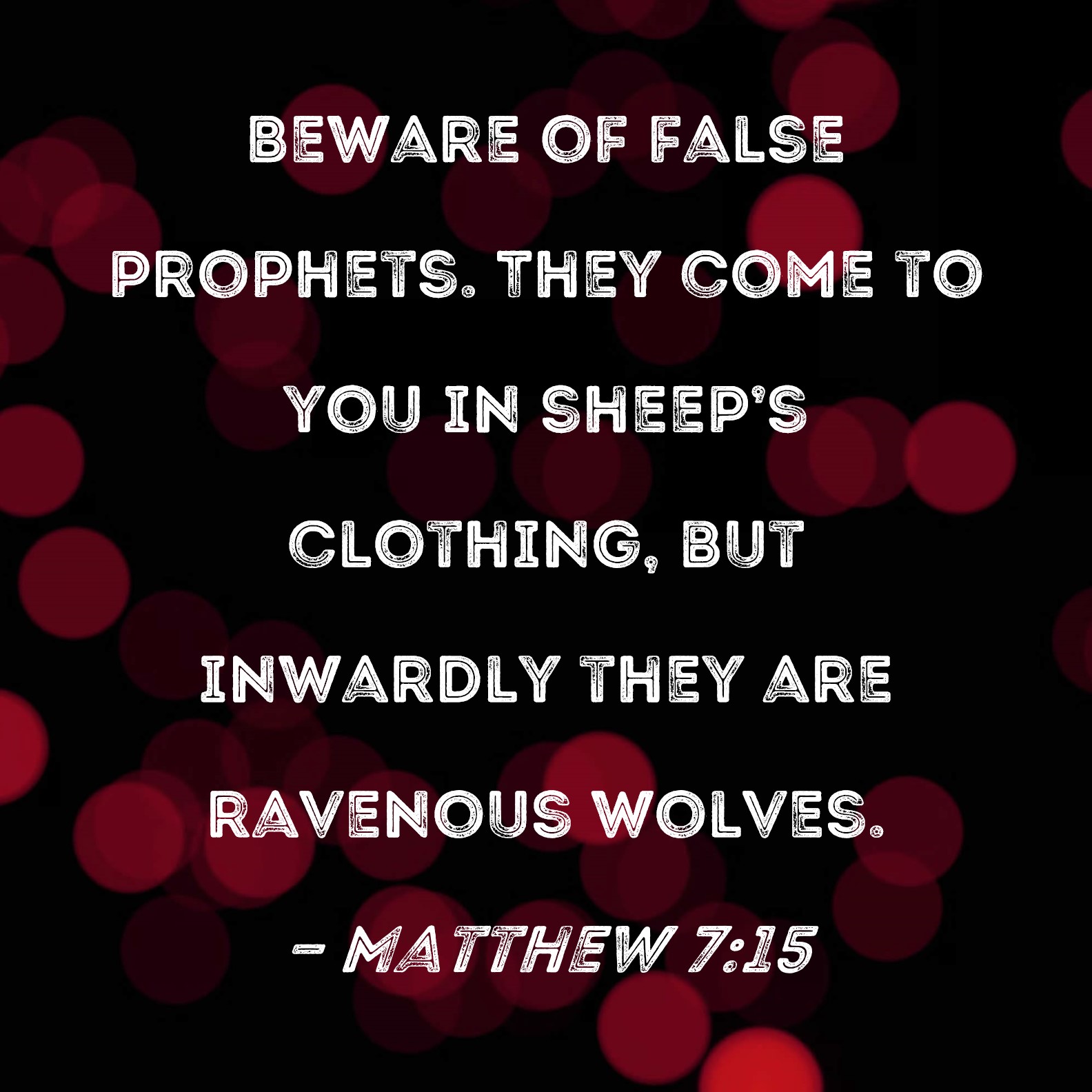
In this chapter we will look at people who are described in the Bible as "wolves." Previously we looked at how some people are called "dogs" in scripture. It is natural therefore to next speak of how some people are labeled as "wolves" as in the above words of Jesus.

Nietzsche was a man who greatly disliked and opposed the Christian religion. He is famous, or infamous, for declaring that "God is dead." He used the "sheep and wolves" metaphor to describe two fundamental types of human behavior and morality: sheep-like individuals are herd animals who conform to societal norms and fear the strong, while wolf-like individuals are independent, create their own values, and embrace strength and risk. This dichotomy relates to his ideas on the Übermensch, the herd instinct, and the "master-slave" morality where "sheep" (the herd) define morality based on their own weakness and fear, naturally condemning the "wolf's" strength as evil.

It is not surprising that wolves, like Nietzsche, would create such a paradigm and glorify wolf-like behavior and justify it. Nietzsche often used to describe himself as an "immoralist," and it is no wonder that he contracted syphilis due to his sexual sins. His hatred for Christianity no doubt gave him a license to ignore God's commandments. He also was a nihilist. His philosophy gave rise to Hitler and to the rise of the Nazis and Fascists, people who were evil, who were wolves in the sense spoken of in the Bible. 

In the text at the head of this page, Jesus warns of "wolves" who seek to devour the sheep, to religious hucksters, and those who prey on others, such as kidnappers and human traffickers, murderers, rapists, etc. False teachers, both within and without the Christian community, are wolves who seek to devour the sheep of the Lord. This is why sheep need shepherds who can protect the flock from the wolves. Christ is the "great" and the "good" and the "chief" shepherd of the sheep. (John 10: 11; Heb. 13: 20; I Peter 2: 25; 5: 4) Elders or Pastors are also under shepherds. (I Peter 5: 1-4; Acts 20: 17, 28; etc.) Said the "chief shepherd"

"But a hireling, he who is not the shepherd, one who does not own the sheep, sees the wolf coming and leaves the sheep and flees; and the wolf catches the sheep and scatters them. The hireling flees because he is a hireling and does not care about the sheep." (John 10: 12-13 nkjv)

A "great" shepherd will protect the sheep from the wolves and prevent their being devoured. This is what Christ does, thus none of the sheep will be caught by the wolf and devoured. If you are not sheep of Christ's flock, but sheep of some other shepherd, then you will be easy prey for the wolves. 

A "ravenous" wolf is an extremely hungry wolf, and this will increase the wolf's ferocity. A sheep without a mighty shepherd has no chance to withstand the attack of wolves. The very survival of sheep depends upon a shepherd. It would be cruel to place sheep into an area where wolves are present and active when there is no shepherd. Recall that Jesus said:

"Behold, I send you forth as sheep in the midst of wolves: be ye therefore wise as serpents, and harmless as doves." (Matt. 10: 16 kjv)

So, what should the sheep (Christians) do to protect themselves from the wolves? In the above words of the great shepherd he says, in order to ward off the wolves, that the Lord's disciples should be "wise as serpents," yet "harmless as doves." Christians are not ordered by the Lord to go out and hunt wolves and kill them. They are rather to exercise wisdom in their dealings with the wolves without harming anyone in the process. This is not always easy to do. It is our nature to defend ourselves from attacks, whether foreseen or occurring. Jesus is not telling us to just let the wolves devour them without resisting them. So wrote Peter about Satan the "roaring lion" and admonished Christians to "resist" him, and the wolves, by being "steadfast in the faith." James the Lord's brother said "resist the Devil and he will flee from you." (James 4: 7) The disciples of Christ have armor so that they can (Eph. 6: 13-18) "withstand" the evil of devils, and by the "shield of faith" to defend against the "fiery darts" of the Devil. In fighting off the wolves, we use this armor of the Lord and heed these words of the apostle Paul:

"For though we walk in the flesh, we do not war according to the flesh. For the weapons of our warfare are not carnal but mighty in God for pulling down strongholds, casting down arguments and every high thing that exalts itself against the knowledge of God, bringing every thought into captivity to the obedience of Christ, and being ready to punish all disobedience when your obedience is fulfilled." (II Cor. 10: 3-6 nkjv)

Religious leaders, as well as governmental or political leaders, are often compared to wolves. In the old testament we read:

"Her princes in the midst thereof are like wolves ravening the prey, to shed blood, and to destroy souls, to get dishonest gain." (Eze. 22: 27 kjv)

"Her princes within her are roaring lions; her judges are evening wolves; they gnaw not the bones till the morrow. Her prophets are light and treacherous persons: her priests have polluted the sanctuary, they have done violence to the law." (Zeph. 3: 3-4 kjv)

In the above words of the prophets we see where various kinds of corrupt and oppressive leaders are described by various kinds of beasts. Jesus said the "false prophets" were wolves. In our opening chapter in this series we cited the words of Paul where he said he had "fought with beasts at Ephesus." (I Cor. 15: 32) He fought with princes, judges, prophets, and priests in their hatred of Christ and persecution of his followers. Paul warned of such people who sneak into the Christian community under the guise of sheep but who are actually wolves. He said to the elders (shepherds) of the church at Ephesus:

"For I know this, that after my departing shall grievous wolves enter in among you, not sparing the flock." (Acts 20: 29 kjv)

The history of the people of God, or the "little flock" (Luke 12: 32), is also a history of the wolves who have sought to devour and destroy the flock. Many of these are professing Christians. They are as Jesus described, "wolves in sheep clothes." They are pretenders, hypocrites, "false teachers," "false brothers." (Gal. 2: 4; II Peter 2: 1) They are the "heretics." (Titus 3: 10; I Cor. 11: 19) 

Friday, September 12, 2025

Two Seed Baptist Ideology (XIV)


In this chapter we will continue to look at what T. P. Dudley wrote in defense of Two Seedism in his pamphlet "The Origin, Nature, and Effects of the Christian Warfare." We will also give the views of Dudley and the Two Seed Primitive Baptists regarding "the old man" and "the new man" in Paul's epistles. We will begin by citing from some of the things Dudley wrote in that writing. Wrote Dudley:

"It is contended by some, yea, many professors of religion, that the soul is regenerated. We confess we know but little about the soul...If the soul were regenerated, would it not be as wholly devoted to God, subsequently, as it had been to sin, antecedently to the new birth? If it be the soul that exercises volition for the body, and that soul is “born of God,” and consequently “cannot sin,” how are we to account for the wicked actions of David, of Peter, and thousands of other christians, even down to the present day?"

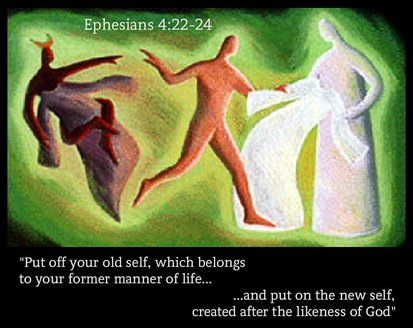
The "soul" is often put for the "spirit," or what Paul calls the "inner man" in contrast to the "outer man," which is the body. (2 Corinthians 4:16; Ephesians 3:16; Romans 7:22–23) How does the inner and outer man relate to the "new man" or the "old man"? The expressions “old man” and “new man” occur in basically four places in Paul’s letters, namely, Romans 6:6; Ephesians 2:15; 4:22-24; and Colossians 3:9-11. The way Dudley and the Two Seeders interpret these terms is strange. To them, the "new man" is their preexistent self, begotten or made when Christ was begotten or made before the world began. To them the "old man" is the man who was created in Adam and the man born with his depraved fallen nature. Upon this foundation they then say that "regeneration" or being "born again" does not change anything about the "Adam man." The new man is not changed, for it enters into a man and remains as it was from eternity, a holy spiritual being who needs no regeneration. So too the old man is not changed because he remains degenerate. That is why in the above citation Dudley denied that "the soul" is "regenerated." A man when "born again," according to Dudley, experiences no change to his depraved Adam nature, to his natural soul, spirit, or body, and the divine nature he receives is not changed. So, how did the opponents of Two Seedism, such as Watson, Potter, etc., reply to this narrative? Before we answer that question, let us first notice a few more citations from Dudley on this point.

Wrote Dudley:

"But, it is contended, that the same soul, exercises wicked volition for the “old,” and holy volition for the “new man?” If so, is not the soul divided against itself? Others tell us, it is the mind which exercises volition for the body."

Yes, the soul (self, spirit, mind, heart, etc.) is divided. Within a born again believer there is both a depraved human nature and a holy divine nature. That is, there is within his innermost being both natures. Sometimes the one is followed and sometimes the other. But, this implies a third person. I am the one who decides whether to follow the old man or the new man. That makes three men. There is but one soul or spirit and within it there are two natures, principles of law, that are influencers

Even in the unregenerate there is a duality for he has within him 1) a conscience (spirit or nature) wherein the law of God is inscribed (See Rom. 2: 14-16) and which convicts him of sin, and restrains him in his immoral conduct, and wherein the Spirit of God "strives" with him (See Gen. 6: 3) and 2) an innate depravity of soul, mind, heart, and spirit which tempts, entices, or lures him to do immoral acts. This is sometimes caricatured by showing a person trying to make a moral decision and having a good angel whisper in one ear and a bad angel whispering in the other. In the life of the Christian these two entities are called "flesh" and "spirit." The flesh, like the term "old man," stands for the depraved nature, for  inward carnality and lust, while "spirit" refers to the "spirit of a man" that is now indwelt by the Holy Spirit. So Paul wrote:

"For the flesh lusts against the Spirit, and the Spirit against the flesh; and these are contrary to one another, so that you do not do the things that you wish." (Gal. 5: 17 nkjv)

By "the spirit" here is not the Holy Spirit, but the spirit of the believer which is united to the Spirit of God. This inner spirit of the believer has been, and continues to be, renewed, so Paul exhorts believers to be "renewed in the spirit of your mind" (Eph. 4: 23), which exhortation speaks of "the spirit" of the "mind." The spirit of the mind is not always pure and holy even in the believer and is why continual cleansing and renewal are needed. Sometimes the believer is operating from a "pure mind" (II Peter 3: 1) and sometimes from an impure mind, but in either case it is the same mind (or faculty) that is alternating between states. 

Notice also the three entities in the above text. There is 1) "the flesh" (or old man), and 2) "the spirit" (or new man), and 3) "you." If the flesh and spirit denote persons or selves, then we must say that, according to Two Seedism, a man is composed of three persons or selves. 

Wrote Paul:

"21 I find then a law, that evil is present with me, the one who wills to do good. 22 For I delight in the law of God according to the inward man. 23 But I see another law in my members, warring against the law of my mind, and bringing me into captivity to the law of sin which is in my members. 24 O wretched man that I am! Who will deliver me from this body of death? 25 I thank God—through Jesus Christ our Lord! So then, with the mind I myself serve the law of God, but with the flesh the law of sin." (Rom. 7: 21-25 nkjv)

Two men, two minds, two laws controlling thought and behavior, two hearts, etc. Or, is it not a case where the same heart, soul, mind, or spirit is the source of both obedience and disobedience? We read of people who are "double minded" (James 1: 18) but we do not interpret that to mean two brains, or two separate thinking entities, but two ways of thinking by the same faculty. So, likewise, we sometimes read of a person having two hearts: Psalm 12:2: "Everyone utters lies to his neighbor; with flattering lips and a double heart they speak." Again, that does not mean that there are literally two separate hearts, but one heart that sometimes is divided. 

The "heart" in scripture often carries the idea of what is the core of being, what is the innermost or center of self. In the believer Christ, as well as the Father and Spirit, take up residence in that place. But, within that heart there yet remains sin and lust, its complete eradication not occurring when a person has God within, but occurs gradually.  Paul warned believers, those who had been given a "new heart" and "new spirit" when they were converted, to "take heed lest there be in any of you an evil heart of unbelief." (Heb. 3: 12) A Christian is not always singular in his heart. Yet, God gives to Christians, according to his promise, "singleness of heart" (Eze. 11: 19; Jer. 32: 39; Acts 2: 46-47). 

Is God making a new man out of the old man? Is God making a new heart out of the old heart? Is God making a new spirit out of the old spirit? Is God making a new nature out of the old nature? Is regeneration a change or an exchange? These are the central questions that Dudley and other Two Seeders frequently asked of their opponents. This is why Dudley and his ilk did not like referring to regeneration as a "reformation," "restoration," or a being "born over" as opposed to being born anew. However, the bible writers did speak of restoration and reformation. Does partaking of the divine nature change the human depraved nature? Dudley would say no. 

Wrote Moore:

"And so they reverse the scriptures, and have the old man, put off the old man, if it is only one man with two natures. On this subject Elder Dudley says: “I find no authority in my Bible for dividing the man. The old man is an entire old man, and the new man is an entire new man.”

The scriptures show that it is the same soul, heart, mind, or spirit, or the same person, that is changed when it experiences conversion, regeneration, or rebirth. The words the apostles used to describe this experience show this to be the case, such as "renewed," "transformed," "conformed," "resurrected," "converted," "repented," etc., all which means that the inner man, the incorporeal self, a person's innermost being, soul and spirit, or his mind or way of thinking, is changed or being changed. This change is drastic at the start, but not completed. Transformation of the inner self continues throughout the life of the born again child of God. 

We would ask the Two Seeders:

1. Is not what is dead in a lost sinner quickened? 
2. Is not what is degenerate in a man the very thing regenerated?
3. Is not what is transformed or renewed in the believer changed?

Wrote Moore:

"But I have a letter before me, written by Elder Dudley, in which he states that, “I [Dudley] have various letters from John Clark, of Virginia, pledged to the belief of the doctrine I maintain, and in one or more of which he [Clark] uses the language, ‘I [Clark] have read the Circular on the Warfare and I see nothing in it, which should disturb the fellowship of brethren.’ ”

I have to question whether John Clark, a first generation leader of the newly formed "Primitive" or "Old School" Baptists, believed in Two Seedism. Perhaps he did believe in some portions of it early in his ministry, as did Lemuel Potter, but later turned away from it. Much of what Dudley wrote in his book on the Christian Warfare is biblical. The only part that is not is: 1) the belief that the new man is a preexistent man who enters into the old man, 2) the belief that nothing of the man is changed in regeneration. 

J. Taylor Moore in his biography of Dudley (from which we cited in the previous chapter) also wrote:

"Elder Dudley, in his defense against the very same characters wrote: “How, then, can they contend that some part – for I have not met with one who contends that the entire Adamic man or the old man – is born of God?” And on another occasion, when asked by an aged Baptist minister why he did not tell the people that it was the Adam man that is born of the Spirit, his reply was: “My Bible don’t say so.”

If the unregenerate man is not born of the Spirit, then who or what is born again? Obviously the person who is born again is the same person who was born the first time, i.e. an "Adam man." So Paul wrote: "and you has he quickened who were dead in trespasses and sins." (Eph. 2: 1). The "you" that was dead is the you that was brought back to life.

Wrote Moore:

"Their principal charge was that Elder Dudley denied the “new birth.”"

This is a valid objection to the Two Seed idea of the preexistence of the souls of the elect. The Two Seed idea is that being born of God occurred in eternity past when Christ, as a human mediator, was begotten by the Father, and that a person being born again in time is but a manifestation of that previous birth, being the time when the eternal child of God is incarnated (enters into a person). That is certainly foreign to how the new testament describes the new birth.

In Chapter IV Moore wrote:

"Elder Dudley soon learned that there would be no lack of an attempt to overthrow the faith that he maintained, for correspondents now began to write to him from almost every state in the Union, and from Canada; some desiring further explanation on certain points contained in the Circular, others urging him to visit their section, others assuming to teach him the way more perfectly, while some others aspiring to greater and public notoriety, began an attack on garbled extracts from the Circular, through the different religious periodicals, to the greater number of which he replied in the most humble and Christian-like spirit."

The debate over "Two Seedism" was very intense in the first decades after the formation of the Hardshell Baptist sect. It continued to be a hotly debated and divisive issue with them through the entire nineteenth century, as Elder Sylvester Hassell stated at the end of that century.

Wrote Moore:

"I have frequently heard him speak of a visit to the Red River Association where he had been most outrageously misrepresented by a Dr. Fain, one of the editors of the Baptist Watchman. When Dudley was put upon the stand to preach he had been speaking but a little while when some man in the congregation cried out “If that man is a heretic so am I.” He had proceeded but a little while when the same expression was used, and immediately it was taken up throughout the congregation. When the excitement had quieted, one of the preachers in the stand behind him, said, “Yes, we are all heretics.” On Sunday Dr. Fain followed him in a very excited manner, and had progressed but a short while when he said, in a very excited way, “Yes, yes, a few years ago, you pronounced what you have just heard, the worst kind of heresy, and now you swallow it down greedily, greedily, greedily,” reminding us very forcibly of what we have heard Elder Dudley say, about a Baptist coming to him in a certain section, where he had been libelously reported, and saying to him, “Brother Dudley, when I hear others tell what you believe, and preach I don’t believe a word of your preaching, but when I hear you preach, I believe every word of it.”

R.W. Fain was an associate with John Watson, and they were not only fellow "Primitive Baptists" but fellow physicians, and lived in the same area around Nashville. When Watson died in 1866, Fain, along with others, such as Elder (Dr.) J. B. Stephens, began a weekly periodical titled "The Baptist Watchman." I have cited from this periodical several times and have shown how Fain, Stephens, et.al, published articles supporting the view that God saves his people through the means of the gospel. That paper was also intended to carry on the work and teachings of Watson, being the publishers and promoters of Watson's book "The Old Baptist Test." Fain, like Watson, was a fervent opponent of Two Seedism. 

Wrote Moore:

"He (Dudley) says in his writings, that one of the first objections he heard urged against the Circular on the Warfare was, that it taught that man had two souls. Then one Elder White, of Missouri, concluded that he taught in his writings that man had not even one soul; and one charge became proverbial among his antagonists; namely, “that he taught that in the atonement of Christ, there was nothing done for the sinner,” another, “that he denied the resurrection of the dead,” and still another, “that God had a family of spiritual children in heaven before time began, fully developed, who from time to time come down to earth, take up their abode in the Adamic man, engage in mortal combat, carry on the unequal strife, til man dies, and then returns to heaven without accomplishing anything else than opposition to man.” All of these charges with a multitude of others he met and refuted with that Christian-like spirit that characterized his whole public life." 

Well, Dudley did not refute all these charges. He did in fact believe in the "Eternal Children" doctrine. 

Wrote Moore:

"To the honest reader, I wish to say, that this is but a brief extract from Elder Dudley’s writings, and I have many of a like nature, and for which many withdrew their correspondence, fellowship, and Christian intercourse, from him, his churches and the Licking Association. This was in reply to a man who claimed that the soul is “born again,” “or a part of the Adamic man.” This turn was taken in order to avoid the idea, that the man is born over again. Elder Dudley reputed the idea that the Adamic man, or sinner in whole or in part, in order to constitute the child of God, is born of the Spirit. For he says, “I have ever conceived that the corn of wheat, which falls into the ground and dies, contains within its germ everything, and nothing more than will spring up and grow out of it. Now I ask, was anything born of that incorruptible seed which was not in the germ? Was the natural seed deposited in Christ? I think brethren will answer each of these questions in the negative. How then can they contend that it is some part [for I have not met with one who contends that the entire Adamic man or the old man] is born of God.” In view of such clear expressions, such a positive position, what must be thought by every honest, intelligent Christian of such men as Elder S.H. Durand, of Pennsylvania, and others, who claimed such harmony with Elder Dudley while living, to come among us after he is gone claiming that it is the sinner, that is born again, but in vain pretending they don’t mean “born over;” don’t mean that the Adamic man is changed. Who is the sinner? Is he not the Adamic man?" 

So, Dudley did believe that the man who is born into the world and of the lineage of Adam was not the man who was saved, or born again. This is why Two Seeders were accused of believing in the "no change view" of regeneration or "hollow log" doctrine (of which I have spoken about in other articles). 

Wrote Moore:

"I have a private letter written by Elder Dudley in which he says, in speaking of the doctrinal sentiments of the Circular on the warfare, that he believed the time would come when that sentiment would be made a test of fellowship." 

Dudley's prophecy was true, although it took the "Primitive Baptist" church nearly a century to rid themselves of it, although as we have said, citing Crowley, that if one knows what to listen for, he can still hear remnants of Two Seed thinking among today's Hardshells.

Wrote Moore:

"Not only did Elder Dudley have Elder John Clark of Virginia, committed in writing of his hearty endorsement of the faith he maintained of the vital oneness of Christ and his people, but many others, among whom was Elder Wilson Thompson and his son, John A. Thompson, who said publicly on the stand at the Conn’s Creek Association in following Elder Dudley [who preached the introductory on that occasion at the request of Elder McQuary,] I [J.A.T.] have heard Brother Dudley once before, and then said, “If I ever heard the gospel preached Brother Dudley preached it,” and Elder Dudley writes: “He [Thompson] then endorsed most fully and feelingly on that occasion.” Elder D. says of the occasion: “When we went on the stand I determined within myself, ‘If I can find language plain enough to make myself understood, a future misrepresentation should be willful.’ I had been so often and so grossly misrepresented.” While discussing the question a brother in the congregation cried out aloud, “If that man is a heretic so am I.” He was responded to by another, and it was Elder Wilson Thompson, who proclaimed aloud from the stand, “Yes, brethren, if that is heresy, we are all heretics.” 

I do believe that Wilson Thompson, a founding father of the "Primitive Baptist Church," did believe in Two Seed ideas. I have read where he considered himself a friend of Daniel Parker, and never wrote anything in opposition to Parker. According to Moore, Wilson Thompson wrote letters to Dudley endorsing his views. However, I have also read in the past where Wilson's eldest son, Grigg, who also was a first generation leader of the newly formed denomination, denied that his father believed in Two Seedism. I think, however, that Grigg was not telling the truth. I am sorry that I cannot recall where I read this about Grigg defending his father relative to whether he was a Two Seeder.

The fact is, a large portion, possibly the majority, of those who became part of the anti mission movement and of the sect that called itself "Primitive" or "Old School" or "Hardshell" Baptist, were Two Seeders. It was not till we got towards the end of the nineteenth century that the Two Seeders began to decrease dramatically. 

Wrote Moore:

"And the idea of having the old man, the Adamic man, and sin and lust or corruption, making three men, then boiling these three down into one sinner man, then throwing a little essence of spirit in, and by its operation, making all into one spiritual man, did not originate with one P.G. Lester, who a few years ago came amongst us, backed by an eastern syndicate, sizzling like a trembling crater, ready for an eruption for a number of years, for Elder Dudley had the same heretical notion to meet in a controversy with Elder John A. Thompson, of Lebanon, Ohio. In that controversy with Thompson, Elder Dudley says: “If I were as entirely confident of interest in the atoning blood and righteousness of the Lord Jesus Christ, as I am that the earthly, fallen and depraved Adam, is the old man, I do not think I should entertain a doubt of reaching the heavenly glory."

So, is any part of a man changed in being born of God? The Two Seeder would say no. Those who oppose them would say yes. So, what does the Bible say? The word "repent" means either to "turn" or to "change your mind." It is from the Greek word metanoia, meta meaning change, and noia meaning mind. So, the mind of the Adam man is changed. This involves a change in a person's psychology, and "psuche" is the new testament Greek word meaning psyche. To change a soul is to change a personality, including a change in attitude, beliefs, etc.  The word "convert" also means to change, the thing being changed is the way of thinking, or the things believed. In other words, the soul of man is changed. So the Psalmist said:

"The law of the LORD is perfect, converting the soul: the testimony of the LORD is sure, making wise the simple." (Psa. 19: 7)

The Psalmist David also prayed:

"Create in me a clean heart, O God, and renew a right spirit within me." (Psa. 51: 10)

The word "renew" means to make new again, and is similar to the word "regeneration." It is not something foreign to an Adam man that is made new, but what was part of the man. 

One of the errors of Primitive Baptists is in thinking that in regeneration, rebirth, renewal, etc., there is a change to the essence or substance of the soul and spirit, a physical change, rather than being a moral, spiritual, psychological, change. They not only believe this is true in regeneration, but also in being generated in physical birth, for they will contend that the doctrine of "total depravity" means that a degenerate sinner lacks the physical faculties to do anything pleasing to God. The great theologian, Jonathan Edwards, however, taught that in becoming degenerated by sin did not remove any faculties of body or soul, there being no physical inability in the lost sinners to believe, repent, etc. He does not have moral or spiritual ability is what Edwards taught and many Baptists agreed. In my early writings against Hardshell Baptist teachings I cited from Elder R.V. Sarrels who wrote a "Systematic Theology" from a Hardshell point of view. In his section on regeneration he advocated that there was a change is the soul's essence when it was regenerated. 

Also, the word "restore" is used to describe the change that occurs when a sinner believes and is renewed. David said "He restores my soul" (Psa. 23: 3). The Two Seeders, however, opposed using such words to describe the change that occurs when a person is born of the Spirit. They opposed the word "reformed" also for the same reasons, although the word "repent" carries with it the idea of being reformed. 

Wrote Moore:

"One man now living made an insidious attack on his views of “quickened spirits,” in the Baptist Watchman, a paper published in the South that never was regarded as sound in the old Baptist faith, and this man at the same time was professing great love, fellowship and “perfect harmony of sentiment,” but since the death of Elder Dudley the turpitude of the spirit by which he was acting then has been so clearly demonstrated, that we wonder how any can respect him for such baseness of character." 

This is a biased statement made by a Two Seeder who is writing in defense of Dudley. We have already seen where Moore referred to the opposition coming from Elder (Dr.) R.W. Fain who was one of the editors of "The Baptist Watchman." Dr. Fain was far more sound in the faith than other Two Seed or Primitive Baptists. 
Tuesday, September 9, 2025

Brothers: Beware of the Animals (II)


This is the second in my new series on animalistic people against whom we are warned by the biblical writers. See the first (here). In this chapter we will look at people who are "dogs."

Certainly the apostle is not warning Christians of literal dogs. That is far outside the scope of his content. Rather, he is identifying certain people who are troubling the churches of Galatia, people called "Judaizers," Jewish people who thought that Christians, both Jew and Gentile, must be circumcised in the flesh and keep the law of Moses in order to be saved.

The Jews looked upon the Gentiles as being "dogs." We see that in this story about a Gentile woman who begged to see Jesus.

"21And Jesus went away from there and withdrew to the district of Tyre and Sidon. 22And behold, a Canaanite woman from that region came out and was crying, “Have mercy on me, O Lord, Son of David; my daughter is severely oppressed by a demon.” 23But he did not answer her a word. And his disciples came and begged him, saying, “Send her away, for she is crying out after us.” 24He answered, “I was sent only to the lost sheep of the house of Israel.” 25But she came and knelt before him, saying, “Lord, help me.” 26And he answered, “It is not right to take the children’s bread and throw it to the dogs.” 27She said, “Yes, Lord, yet even the dogs eat the crumbs that fall from their masters’ table.” 28Then Jesus answered her, “O woman, great is your faith! Be it done for you as you desire.” And her daughter was healed instantly." (Matt. 15: 21-28 esv)

So, it is ironic that Paul would label the Judaizing Jews "dogs." Not only that, but he calls the Jewish rite of circumcision a "mutilation" ("concision" kjv), and says of Christians who are under grace: "For we are the circumcision, which worship God in the spirit, and rejoice in Christ Jesus, and have no confidence in the flesh." 

This text has been preached upon by many since Paul wrote it. Some preachers have gotten laughter from their hearers when they compared certain types of troublemakers in the church to various kinds of dogs. One famous sermon was by Rev. B.W. Smith titled "Watch Them Dogs!" (listen to it here) It is well worth listening to. As there are various kinds of false teachers and false brothers, so there are various kinds of dogs. It is a very good and funny sermon. He spoke of some who were like "hound dogs," and others like "mad dogs," "bull dogs," "coon dogs," and to those dogs who are "pointers" or "setters," etc. In that sermon Smith gets into a "sing-song" rhythm as many Hardshell Baptist preachers. 

Jesus spoke of some people who were dogs when he said:

Do not give what is holy to the dogs; nor cast your pearls before swine, lest they trample them under their feet, and turn and tear you in pieces." (Matt. 7: 6 nkjv)

To refer to someone as a dog is to show contempt for that person, and to judge them as morally unclean, as a "low life." So we read where the giant Goliath said - "am I a dog that you come at me with sticks?" (I Sam. 17: 43) Thus, a dog is a low specimen of humanity. Paul is not in the habit of calling people names for no reason, but in this case he has reason to do so. Paul is saying to these Judaizers - "you think the Gentiles are dogs, but you are the real dogs." He also calls them "evil workers." 

Paul says to "beware of" the dogs, meaning "watch out" for them. Why? Because they will sneak upon you, and will attack you when you turn around. Why? Because they are dangerous. "The apostle calls them so, because they returned to Judaism, as the dog to its vomit, 2 Peter 2:22; and because of the uncleanness in which many of them lived..." (Gill)

The psalmist spoke of dogs when he wrote:

"For dogs have compassed me: the assembly of the wicked have inclosed me: they pierced my hands and my feet." (Psa. 22: 16 kjv)

"Deliver my soul from the sword; my darling from the power of the dog. Save me from the lion's mouth: for thou hast heard me from the horns of the unicorns." (Psa. 22: 20-21 kjv)

Though these verses use the word "dog" in a negative sense, there are those who are like dogs in a good sense. In the above sermon the preacher spoke of good dogs who are the best friends of their masters. So too in the bible do we see these kinds of dogs, such as "guard dogs," and "shepherd dogs." These are alluded to in these words of Isaiah:

"His watchmen are blind: they are all ignorant, they are all dumb dogs, they cannot bark; sleeping, lying down, loving to slumber. Yea, they are greedy dogs which can never have enough, and they are shepherds that cannot understand: they all look to their own way, every one for his gain, from his quarter." (Isa. 56: 10-11 kjv)

What good would a "guard dog" be if he could not bark? Such dogs have often been leaders in the church of Christ. They preach simply to entertain or tickle the ear and will not warn against sin. Isaiah also called the shepherds "greedy dogs." They were religious because it was a way to make money, to fleece people. We see lots of those preachers today and throughout the history of the church. Paul spoke of them when he wrote: "whose mouths must be stopped, who subvert whole households, teaching things which they ought not, for the sake of dishonest gain." (Titus 1: 11 nkjv)

Apostates from the Christian faith are compared by Solomon and the apostle Peter as dogs: "As a dog returns to his own vomit, So a fool repeats his folly." (Prov. 26: 11 nkjv; II Peter 2: 22) This is especially true of those apostates who become persecutors, ridiculers of the bible, and who mock Christ and his followers.  

The fate of "them dogs" is told to us in the Book of Revelation. 

"But outside are dogs and sorcerers and sexually immoral and murderers and idolaters, and whoever loves and practices a lie." (Rev. 22: 15 nkjv)

We even have among the constellations the "Dog Star" or "Sirius," the brightest star in the night sky, located in the constellation Canis Major (the Greater Dog). Many think this is a constellation that alludes to Satan in the same way the constellation Draco or "the dragon" points to him. The Draco constellation appears as a long, winding shape in the northern sky, resembling a dragon or serpent winding around the North Celestial Pole. This serpentine form is a key characteristic, with its tail snaking between the Big Dipper and Little Dipper. So, we might say that the tail of Draco wraps its tail around a third of the stars of heaven. (See Rev. 12: 4) Satan is therefore "the head dog." He is the Alpha dog, the leader of the pack of dogs. We must look out for him and be on guard therefore.

Sunday, September 7, 2025

Two Seed Baptist Ideology (XIII)


Elder Thomas P. Dudley
1792 - 1886

The above elder was, along with Gilbert Beebe and Samuel Trott, one of the chief defenders of Two Seedism. He was a frequent writer to the "Signs of the Times" periodical edited by Beebe. Dudley wrote much on Two Seed ideas and we will begin in this chapter a look at those writings. Following this we will study what the leading opposers of Two Seedism wrote in their attacks upon Two Seedism. We have already mentioned Elder (Dr.) John M. Watson of middle Tennessee and will look at what Elder Grigg Thompson, son of Elder Wilson Thompson, wrote in his opposition to Two Seedism, and also at what Elder Lemuel Potter wrote against it, and of the dialogue the latter carried on with Beebe. 

From the "Baptist History Homepage" we learn the following about Thomas Dudley, a founding father of the "Primitive Baptist Church" (emphasis mine), citing William Cathcart, editor of the The Baptist Encyclopedia, 1881; reprint, 1988, pp. 345-6:

"Rev. Thomas Parker Dudley, son of Rev. Ambrose Dudley, is the most distinguished preacher among the Baptists of Kentucky. He was born in Fayette Co., Ky., May 31, 1792. In 1812 he entered the army, was made commissary of the Northwestern troops, participating in the battles of Frenchtown and the River Raisin; in the latter was wounded in the shoulder; taken prisoner by the Indians and carried to Detroit. In the fall of 1814 he was made quartermaster of a detachment which reinforced Gen. Jackson at the battle of New Orleans, and the same year was appointed quartermaster-general of Kentucky. From 1816 until 1824 he was a cashier of a branch of the old Bank of Kentucky, located at Winchester, and for several years afterwards was engaged in settling up the business of these branch banks. He succeeded his father in the pastorate of Bryant's church in 1825. Of this church he has now (1880) been pastor fifty-five years, and of the three other churches almost as long, and he has also been moderator of Licking Association forty-seven years. He resides in Lexington." (See here)

I have read tidbits of history about both Ambrose Dudley and his son Thomas. The father was more sound in doctrine than the son, for the former was no hyper Calvinist nor a Two Seeder, while his son was all this and more, including being antinomian, and a denial of means in regeneration and eternal salvation. During the time of Thomas Dudley he did much to bring division to the churches in the Elkhorn and Licking associations over his Two Seed ideas, including his "Two Souls" view and his book called "The Christian Warfare." 

In "Twin Creek Baptist Association" in "A History of Kentucky Baptists," Baptist historian John H. Spencer (1885) wrote the following about this Baptist Association (See here):

"This small community of Antimissionary Baptists originated from a division of Licking Association, caused by a circular letter, written by Elder Thomas P. Dudley, in 1846. This letter was not presented to the Association, as was originally intended; but some of the members were permitted to read it, and, in 1847, it was read before the body. The style of the writing was obscure, and it was not clearly understood by the members. However, it caused considerable dissatisfaction and disputation. To avoid being further misrepresented, as he averred, Mr. Dudley, in 1848, caused 1,000 copies of the letter to be printed and circulated. A deliberate reading of the document increased the discontent. With the hope of restoring harmony, James Dudley, a brother of the author of the letter, sent a circular to all the churches of the Association, requesting them to send messengers to Bryants Station, in Fayette county, on the last Wednesday in March, 1850. In this meeting, about half the churches were represented, and the writer of the letter was acquitted of heresy. This further increased the discontent of the churches which dissented from the decision of the conference. Stony Point and Friendship churches issued a "Joint Manifesto" in which it was averred that Mr. Dudley taught the "Eternal Creation System." It was also claimed that he denied the doctrine of the "Regeneration of the soul."

In upcoming chapters we will look at some peculiar things taught by Dudley in the document referred to, and which later became a booklet called "The Origin, Nature, and Effects of the Christian Warfare." In this writing Dudley defended the leading ideas of Two Seedism, namely the belief that the souls of the elect were brought into existence when Christ, as the God-Man mediator, was begotten sometime in eternity past. He vehemently defended the doctrine of "eternal vital union." We must also remember that T.P. Dudley became one of the most important figures in the history of Kentucky Baptists, especially of those who were known as "Primitive," "Regular," or "Old School" Baptists, or as Hardshell or anti mission Baptists. In the above citation Spencer gives the name of Dudley's home church as "Bryant" but others say it is "Bryan." It is one of the oldest Baptist churches in Kentucky.

Said Spencer in his description of the Two Seed views of Dudley:

"The "Eternal Creation System" taught that God, in the Eternal Past, created two distinct families: one in Adam, and the other in Jesus Christ; that all the members of each of these families were created simultaneously, and, that, of course, they [p. 605] are, in fact, of the same age. According to this teaching, the child born today is, in reality, as old as Adam: The recent birth is only a development of an "eternal creation." So of the spiritual family, "created in, and simultaneously with Jesus Christ." Abel, the first Christian, is no older than the last one that shall be "born from above." The descendant of Adam is the natural man, a simple being wholly corrupt, and unchangeable in the present life. A descendant from Jesus Christ, whether born (developed) in the days of Abel, or in the present age, is wholly pure and incorruptible." (Ibid)

It is stretching things beyond measure to say that I existed as a person in Adam just because I have come from his seed. To use a pun, that is "going to seed" on what it means to be the seed of another person. My person, my "self," my soul or spirit, did not exist in Adam but was brought into existence when I was formed in the womb of my mother and from the seed of my father. The kind of union that human beings have with Adam and Eve is twofold, seminally and representatively. The scriptures emphasize the latter, however, and not the former. It is because of my connection with Adam that I am born with a human nature, with a human soul. It is because of my connection with Christ, the second Adam, that I am born with a divine nature. (II Peter 1: 4) There is no vital union with Christ until Christ is received by faith. 

Just because the divine nature or divine seed ("incorruptible seed" - I Peter 1: 23) has eternally existed does not mean that the one who partakes of the divine nature when converted to Christ has eternally existed with a divine nature. It is not deducible to affirm that since all the children of God are "begotten" of God that they therefore eternally existed in God. 

The Two Seed view expressed above by Dudley is ridiculous. If what he says is true, then my father and I are the same age. The scriptures however do not speak this way, but often speak of one person being either younger or older than another. If what he says is true, then when Paul says that Andronicus and Junia "were in Christ before me" (Rom. 16: 7) is incorrect. 

Said the same source:

"A Christian, according to this theory, is not a child of Adam, regenerated, nor yet a descendant of Christ, born from above, but a coalescence of both, and consequently, a "compound being." As both of the component parts are unchangeable, and are antagonistic in their nature, there must be a perpetual strife between them until the stronger destroys the weaker. This Mr. Dudley denominates the "Christian Warfare." While the subject was agitated, the theory was sometimes called the "Two Souls doctrine." The denial of the regeneration of the human soul was a necessary sequence of this theory." (Ibid)

One can see how this idea of the preexistence of souls, either in Adam or in the pre-incarnate Son of God, has far reaching effects on the doctrine of regeneration or birth of the Spirit and of the resurrection of the dead. In the Two Seed view of being regenerated or born again, an eternal divine child of God who is spirit enters into the physical body of a person (much like a demon spirit). That child of God is not essentially changed in regeneration nor is the "Adam man." The entrance of that eternal spirit into the human merely causes a warfare. 

Dudley's treatise "The Origin, Nature, and Effects of the Christian Warfare" was at first the title to the circular letter. Spencer in his "A History of Kentucky Baptists," writes (See here):

"In 1845 [1844], Thomas P. Dudley was appointed to write the circular letter for the ensuing year. He wrote on the subject of the "Christian Warfare, including the Eternal Spiritual Oneness of Christ and the church." Showing the paper to some of the brethren, it was privately discussed, before the Association was organized. Learning that some objection would be made to the letter, Mr. Dudley declined presenting it, and it was not published, for the time. But its contents were discussed among the brethren, and, as Mr. Dudley averred, its teachings were misrepresented. In order to correct the erroneous impressions, made on the public mind, Mr. Dudley, in 1849, printed and circulated a thousand copies of the letter, in pamphlet form. The style of the treatise is labored and obscure, but the substance of the doctrine contained in it was understood to be as follows:

1. God created two distinct families of men. The first was created in Adam, and was denominated the natural man. As the great oak, with its innumerable branches, leaves and acorns, was contained in the acorn from whence it sprang: so the whole human family, comprising the countless millions of all its generations, was contained in Adam, at his creation.

2. The other family was created in, and simultaneously with Jesus Christ, and was called the spiritual man. As every soul of the natural family was comprised in Adam: so every member of the spiritual family was embraced in Jesus Christ, at his creation

3. What men call a multiplication of these families, is only a development, or manifestation, to human perception, of what God created instantaneously, in the beginning.

4. The nature of each of these families, is uniform and unchangeable. That of the natural man is wholly corrupt, and remains so perpetually, in every member of that family: That of the spiritual man is wholly pure, and can never be, in any degree, corrupted or tarnished.

5. A christian is a compound being, composed of one natural man and one spiritual man, mysteriously combined by the power of the Holy Spirit, while the original nature of each remains unchanged, and unchangeable.

6. The christian's warfare consists in a life-long struggle between the two men of which he is composed, often called, in the sacred Scriptures, the "old man" and the "new man." In the end, the spiritual man triumphs over, and utterly destroys his antagonist, and then returns to God, who sent him to be developed in this warfare.

As we have pointed out previously, this is similar to Mormon belief. As we will see later, one of the arguments that Dudley and the Two Seeders used to prove their thesis was Paul's "new man" and "old man" teaching. The "new man" is the eternally begotten child of God and the "old man" is the begotten child of Adam.

Wrote Spencer further:

"This teaching was popularly called the "Two-Souls doctrine," and was regarded heretical by some of the churches and all the correspondents of Licking Association. Such was the influence of Mr. Dudley, however, that a majority of the churches acquiesced in his interpretation of his pamphlet. But much disturbance followed its publication. Salem Association of Predestinarian Baptists withheld correspondence from Licking, in 1850. Foreseeing the storm that was gathering, James Dudley, a brother to the author of the "Christian Warfare," sent a circular to all the churches in Licking Association, inviting them to send messengers to meet at Bryants, in March, 1850, for the purpose of endeavoring to allay the confusion. Most of the churches responded to the call. But Friendship and Stony Point issued a joint manifesto, denouncing the teaching of Mr. Dudley's pamphlet, and declaring non-fellowship for three churches which had received it, and for all who believed as they did. This resulted in a speedy division of the Association. Friendship, Stony Point, Twin Creek, Williamsburg, Rays Fork, and Fork Lick churches withdrew, and constituted a new fraternity, under the style of "Twin Creek Old Regular Baptist Association." This occurred, in 1850. The next year, all the Associations in Kentucky withheld correspondence from Licking. The body still exchanged minutes with two or three distant fraternities, but, in 1853, even this shadow of a correspondence was dropped. But Mr. Dudley, who has been the leading spirit of the Association, for more than fifty years, was a man of great energy and excellent address, and, by visiting the various Associations, preaching among them, and conciliating them, wisely and prudently, he succeeded in re-establishing correspondence with most of those fraternities from which his Association had become alienated. - Volume II, 1881, pp. 245-246."

I have tried to find that "joint manifesto" against Dudley and his Two Seed (or Two Souls) view that was issued by Friendship and Stony Point churches. Now let us look at some of the things Dudley wrote in that pamphlet. He begins by saying (emphasis mine): "To the Churches composing the Licking Association of Particular Baptist; their Messengers wish grace, mercy and peace multiplied." (See here) The following citations are from chapter four of the biography of T.P. Dudley, as written to Elder Smoot by J. Taylor Moore

Dudley writes:

"DEARLY BELOVED; It occurs to us that we could not select a more appropriate subject, because none possesses more intrinsic merit, for our present annual address, that the ORIGIN, NATURE, and EFFECTS of that warfare which so painfully disturbs the peace and quiet of the Children of the Regeneration."

Wrote Dudley:

"That the warfare, invariably follows being “born again,” is not, we believe, controverted by any experimental Christian. But whilst some of us maintain, that the warfare results from a conflict of elements within; others, and perhaps the larger number contend, that in the new birth, the man is changed from the love of sin to the love of holiness."

Notice that Dudley affirms that being born again does not change a man from the love of sin to the love of holiness. Such an affirmation caused many Old School or Primitive Baptists to react with fervent censure. There was intense debate among the Hardshells over this very question. What change, if any, occurs in a sinner when he is regenerated and converted? The Two Seed view came to be called "the no change view of regeneration" or "hollow log" doctrine. But, more on that later. 

Wrote Dudley:

"Now we ask, if indeed, in the new birth, the man is changed from the love of sin to the love of holiness, and this change is perfect, does it not necessarily follow, that he will be as wholly and entirely devoted to holiness subsequently, as he had been to sin antecedently to the new birth? If, as is contended by many, the enmity of the heart is slain in regeneration, whence arises opposition to the dispensations of God’s providence? Irreconciliation to his will? And whence the exclamation, “O wretched man that I am! Who shall deliver me from the body of this death?” Rom.7:24. That the Christian is a compound being, is a truth so fully taught in his history; as given in the holy Scriptures, that we wonder it should be controverted by any who have tasted that “the LORD is gracious.”

There again we see Dudley denying that a man is changed in being born of God. The "new man" does not need to be changed, for it was perfect when first begotten in eternity past, and the "old man" is not changed at all when the "new man" takes possession of the "old man." The only change is in the activities of either, each beginning a war with the other. 

Notice also in the citations above that Dudley admits that his view was a minority view, admitting that it is the view of the majority that the new birth slew the natural enmity of the heart against the Lord. About the Christian being "a compound being" we will have more to say later perhaps. In some sense we can agree with this affirmation, but not in the sense given by Dudley and Two Seed Baptists. 

Wrote Dudley:

"Whence these various distinctions between the old and new man, if indeed there are not two men? If man is only changed in the new birth? If the language that “man is changed” were appropriate, there would be but one man; his feelings and affections having been changed; there would be no conflict and hence no warfare! We presume that none will contend that the old is the new man, or the new is the old man. This would be to confound language and make it unintelligible." 

The terms "new man" and "old man" as used by Paul are not to be taken literally but figuratively. It is used by Paul in the same way people use it in common speech, as when they say "he is not the same man as he once was." This is said in instances where a person has changed dramatically in either physical appearance or psychological ways, as in a change of beliefs, values, behavior, attitude, etc. The "old man" is a metaphor for the kind of person a believer was before he was converted and the "new man" is a metaphor for the man after conversion. Some bible commentaries say that the "old man" represents the old depraved nature that a person receives from Adam when he is born into the world, and the "new man" represents the new divine nature that a person receives from Christ, the second Adam, when born of the Spirit. 

This led to a debate on whether any part of the "Adam man," or "the natural man," is changed in regeneration. The Orthodox view said that it is the soul or spirit of a man that is what is changed. 

Wrote Dudley:

"The Bible furnishes the following history of the natural family. “So God created man in his own image, in the image of God created he him; male and female created he them.” Gen.1:27. “And the Lord God formed man of the dust of the ground, and breathed into his nostrils the breath of life; and man became a living soul.” Gen.2:7. “Man and female created he them, and blessed them, and called their name Adam, in the day when they were created.” Gen.5:2. Hence we learn that all “living souls,” were created in, and simultaneously with their natural progenitor." 

Here Dudley begs the question when he says that every living soul was created in Adam. He then makes a giant inferential leap when he affirms that likewise all the souls or spirits of God's children were created in Christ before the world began. 

Wrote Dudley:

"They all descend from him by ordinary or natural generation. They necessarily partake of his nature, and subsist upon the same elements upon which he subsisted. The breath of life communicated to man, whence he became a “living soul,” constituted him a rational, intelligent, responsible being, the subject of law and of earthly enjoyments, capable of subsisting upon the products of the earth; but incapable of other and higher enjoyments." 

Dudley argues as do other Two Seeders that Adam, even before his fall, was not in any sense a "spiritual" being, but was wholly a "natural man" (I Cor. 2: 14). Being natural meant that he could not have anything spiritual about him, no communion with God as such. Of course, that is not true. Adam walked with God in the Garden and conversed with God. There was nothing in the original constitution of man that hindered him from enjoying anything spiritual. After Adam's fall he became morally and spiritually unable to please God and to enjoy him, not a physical inability. 

Wrote Dudley:

"The characteristics of this family are strikingly marked in the Scriptures – “And Adam lived a hundred and thirty years, and begat a son in his own likeness, after his own image; and called his name Seth.” Gen.5:3. “Behold, I was shapen in iniquity; and in sin did my mother conceive me.” Ps.51:5. “The wicked are estranged from the womb; they go astray as soon as they be born, speaking lies.” Ps.58:3. “Wherefore, as by one man sin entered into the world, and death by sin; and so death passed upon all men, for that all have sinned.” Rom.5:12." 

This family of man, however, contrary to the views of many Two Seeders, had both elect and non elect, wheat and tares, children of God and children of the Devil. Many Two Seeders denied that the seed of the Devil fell in Adam.

Wrote Dudley:

"From the preceding verses and arguments it is manifest that the family of the “first Adam” is not capable of rendering acceptable service to God, but the antagonist nature and principle of the two families [the natural and the spiritual,] out of which grows the warfare, are made still more manifest by the contrast introduced by an Apostle. And so it is written: “The first man Adam was made a living soul; the last Adam was made a quickening spirit. Howbeit that was not first which is spiritual, but that which is natural; and afterwards that which is spiritual. The first man is of the earth, earthy; the second man is the Lord from heaven. As is the earthy, such are they also that are earthy; and as is the heavenly, such are they also that are heavenly. And as we have borne the image of the earthy, we shall also bear the image of the heavenly. Now this I say, brethren, that flesh and blood cannot inherit the kingdom of God; neither doth corruption inherit incorruption.” I Cor.15:45-50"

When Paul speaks of "the natural man" in First Corinthians (2: 14) he is not referring to how man was created originally by God. Rather, he is referring to a "soulish" man, the Greek word psychikos denoting such. Such a natural man who follows his own ideas and rejects divine revelation. When Adam was first made he did not have an "antagonistic nature" towards God. He was created holy, righteous, spiritual, godly, etc. This is because he was created in the image of God. It was not till he sinned that he lost that original state and likeness. 

When in the above words of Paul he says that Adam was natural, earthly, and not spiritual, he is speaking of his human body, not of his soul or spirit. First Corinthians chapter fifteenth is talking about the resurrection of the body. The flesh and blood of Adam, before his sin, was not spiritual.

Wrote Dudley:

"Is it not evident then, that all “living souls” were created in and simultaneously with the “first man Adam,” that they all, being born of him, necessarily partake of his nature, “and he called their name Adam?” And that all “quickened spirits” were created in and simultaneously with the “last Adam” – that they all, being born of him, “born of God,” as necessarily partake of his nature? That all living souls no more necessarily descend from the first Adam than all quickened spirits necessarily descend from the last Adam; that the seed of the “first Adam” disclose his nature, and the seed of the “last Adam” make manifest his nature."

No, it is not evident that all the souls of the elect were "created in and simultaneously with" Christ the last Adam. Being "in Christ" and being created or born anew occurs when the soul is joined to Christ by faith in the work of conversion, and not in eternity past. The Son of God has always existed as such but the man Christ Jesus, composed of human soul and spirit, was created and begotten in time, when he was conceived by the Spirit in the womb of Mary his mother. 

In the above citation Dudley admits that it is when a man is born that he then partakes of the fallen nature of his father Adam. This would deny that the elect or non-elect partake of either the divine or human nature in past eternity. If a person becomes a "partaker of the divine nature" when he is born again, then he did not have a divine or spiritual nature before, and thus Two Seedism is overthrown.

Wrote Dudley:

"The children of the “first Adam” are born of the flesh and are earthly in all their feelings and affections; the children of the “last Adam” are born of the Spirit and are necessarily heavenly or spiritual in their feelings and affections. The children of the first are born for earth; of the last Adam, are born for heaven. Those of the “first” are born of corruptible; those of the “last Adam” are of incorruptible seed. The first necessarily partake of human; the last, of the divine nature. The antagonistic principles attached to the two men necessarily result in the warfare. If all living souls were not vitally united to the first Adam, how could they be so directly and fatally effected by the first transgression? How could the original act of transgression be considered their act? “And so death passed upon all men, for that all have sinned.” “There is none righteous, no not one.” Rom.3:10."

Much of what Dudley here says is orthodox. The question however is - "when and how does a person partake of either Adam's fallen nature or the divine nature?" If Two Seedism is correct, he cannot say that the divine nature is given to people when they are born again of the Spirit, for they were eternally begotten as such. Dudley has already affirmed that all the souls of Adam's seed were in Adam and so partook of his corrupt nature all at once when he sinned. If that is so, then it is wrong to say that an individual of the race obtains his fallen nature when he is humanly conceived. Likewise, if all of the souls of the Lord's seed were in Christ since eternity, and all received his nature at the same time, then it is wrong to say that an individual of the race obtains the divine nature when born anew.

In the next chapter we will continue giving the Two Seed views of Dudley from his book on the Christian Warfare and other writings. 

Wednesday, September 3, 2025

Two Seed Baptist Ideology (XII)


In the opening chapters of this new series on Two Seedism or Parkerism I said that this false doctrine borrowed its leading ideas from several sources, such as Manichaeism, Gnosticism, Platonism, Hyper Calvinism, Arianism, etc. In this chapter I want to show how it borrowed from Gnosticism the idea of divine "emanations." I want to also show how it borrowed from what is called the "serpent seed" doctrine. 

Emanations or "Particles"

"Emanations of deity are beings, principles, or the material world that are seen as "flowing" or "pouring forth" from a single, supreme, and undiminished source, rather than being created from nothing. This cosmological concept, often contrasted with creation ex nihilo, is found in various philosophical and religious traditions, most notably Neoplatonism and Gnosticism, where it describes a hierarchy of reality that descends from a perfect, unitary source through stages of progressively less perfect forms." (Google AI)

Daniel Parker, Gilbert Beebe, Samuel Trott, and the other apologists for Two Seedism believed that those who are the "seed of the serpent" (or the Devil) were a kind of emanation from the Devil or Satan and so too are those who are the "seed of the woman" (the church or the elect), or the seed of the Lord, emanations of the Deity. Wrote one source:

"In various pamphlets (1826-29) Parker made public some very peculiar theories he held concerning the introduction and perpetuation of evil in the human race. According to these beliefs, God, when He created Adam and Eve, infused into them particles of Himself, thus making them altogether good; the devil corrupted them by infusing into them particles of himelf. Eve, by predestination, brought forth a certain number of good and a certain number of bad offsprings; and all her daughters after her were predestined to do likewise." ("The Encyclopedia Americana (1920)/Baptists, Two-Seed-in-the-Spirit" (See here)

That is Gnostic language. In "DANIEL PARKER'S DOCTRINE OF THE TWO SEEDS" by 0. Max Lee (June 1962) we see Parker using this very terminology. Lee cites from Parker who wrote (emphasis mine):

"If the Devil, or body of corruption, be the product of the power and perfections of God, then of course all the progress and power of sin, (for sin is certainly a power) from the fall of man until now, has flowed from the same perfections of God. Now how will the glory of God appear in destroying the works of the Devil, it being but a power of his own production." (See here; page 41)

William Dudley Nowlin in "The Anti-Missionary Controversy of Baptists in Kentucky from 1832 to 1842" (See here at the Baptist History Homepage) also cites Daniel Parker who wrote (emphasis mine):

"The essence of God is good; the essence of evil is the Devil. Good angels are emanations from or particles of God; evil angels are particles of the Devil. When God created Adam and Eve, they were endowed with an emanation from himself or particles of God were included in their constitution. They were wholly good. Satan, however, diffused into them particles of his essence by which they were corrupted. In the beginning God had appointed that Eve should bring forth only a certain number of offsprings [sic]; the same provision applied to each of her daughters. But when the particles of evil essence had been infuse by Satan, the conception of Eve and her daughter was increased. They were now required to bear the original number, who were styled the seed of God, and an additional number who were called the seed of the serpent."

Again, to say that certain souls are eternal emanations or particles of the Deity is in keeping with Gnosticism, Platonism, and other heresies.

Nowling wrote further concerning Parker's Two Seedism:

"This Two-Seed doctrine is a curious revival, with some modifications of the ancient speculative philosophy of Manichaeus. Doctor Newman calls it a 'very disgusting form of Gnostic heresy.' It is easy to see how such a heresy would cause opposition to missions; for the progeny of one of the seed would constitute the body of Christ, whose salvation is provided."

Two Seedism borrowed as much from Gnosticism as it did from Manichaeism. 

Nowlin wrote further, still citing Parker:

"On the other hand he taught that the remaining portion of the human family were the actual sons of God from eternity, and being allied to Jesus Christ ere 'the morning stars sang together and all the sons of God shouted for joy' by the nearest and dearest ties of consanguinity, being no less than 'particles' of his body - bone of his bone and flesh of his flesh..."

Again, we see Gnostic language. Also, it seems in this statement that Parker did believe in 1) that not only the human soul of Christ existed from eternity, but so too his human body, and 2) a Two Seed in the Flesh view, which in other places he does not. Notice too his thesis - "actual sons of God from eternity."

Nowlin also wrote:

"But there were many who embraced only half the doctrine of Mr. Parker and though they manifested no great apprehension for the liege subjects of the Prince of Darkness, yet they expressed great alarm lest the missionaries should help the Lord to perform his work, and convert the souls of some in a way God never intended they should be. They were such staunch friends of the Lord's doing all his work, that they set upon and terribly assailed their missionary brethren, for fear they should by some means assist the Lord in the salvation of his elect."

We have already observed more than once, citing others, how Two Seedism has appeared in several forms, some sub groups of Two Seeders accepting some propositions of the Two Seeders but not others. The one they all seem to have kept however is the belief that all the righteous have existed from eternity, or what is called the doctrine of "eternal children." 

What Nowlin says about Two Seeders being alarmed lest they should "help the Lord to perform his work" is still true today with the Hardshell Baptists, being another instance where the remnants of Two Seed thinking is still evident among them, even though they have mainly now mostly freed themselves from believing in an eternal Devil and in eternal children, etc. We have also shown where Two Seedism gave rise to the notion that God saves people apart from the means of the word of God or the gospel, one of the principles of Two Seedism that is still adhered to by the Hardshells. 

In "Interpretation of the Scriptures II" Sylvester Hassell, in The Gospel Messenger for March, 1894 (See here), wrote the following (emphasis mine):

"It is said that, in all other respects, Elder Parker was orthodox, but what is known as his system of "Two Seeds" is a somewhat refined, but still very crude, mystic, and unintelligible and inconsistent modification of Manichaeism--that all the descendants of Adam and Eve are elect and will be saved (being a part of God); that their individual spirits had an eternal pre-existence in Christ, and an eternal vital union with Him, before the world began (somewhat like the doctrine of the pre-existence of souls maintained by the heathen philosophers, Pythagorus and Plato, and by the Hindoos, the Egyptians, the Gnostics, and the Caballists, and the Universalist professor, Orgin) (Origen - SG); that these souls were infused into Adam, and pass, by ordinary generation, into the persons of the elect, and at death ascend to glory in mystic bodies, leaving the material body in the grave; while this monstrous, incomprehensible and inexplicable theory imagines that there were born, "as an extra production" (whatever that means) of Adam and Eve, "through the Serpent" (however that was) "by reason of sin," other human bodies, without souls, but recipients of a Satanic seed, or spirits, uncreated and eternal (perpetuated after the flood by the wife of Ham), who are the non-elect and will be all damned and will finally return to Satan (whence they came) not in material, but in mystic bodies. I see no more reason in Scripture in these obscure and obscene speculations." (pg. 98)

"Serpent Seed" Etymology

The Serpent Seed doctrine, also known as the "two-seedline" doctrine, is a fringe belief, primarily in some Abrahamic religious movements, that posits the Serpent in the Garden of Eden had sexual intercourse with Eve, and their offspring was Cain. This belief asserts that humanity is divided into two races: the wicked, serpent-descended line destined for damnation, and the righteous, Adam-descended line chosen for eternal life. This point is what divides the two historical groups of Two Seeders, one called "Two Seed in the Flesh" and the other "Two Seed in the Spirit." The former hold to the view that Satan had sex with Eve. The latter say that Satan's "seed" was sown into the mind of Eve and not into her physical body via coitus. Satan's seed is equated with "sin." This was the view of Daniel Parker. 

Otis Stone in a Facebook article cited from the late Dr. R.E. Pound, historian of the primitive Baptist sect, a man I have cited many times before, who is said to have said the following things about how the seed of the serpent came to be (See here emphasis mine):

"In the main body of the document, Parker says, “Some may think I believe the Serpent cohabited with the woman. Certainly he did, so far as to beget the wicked, sinful principle and nature in her, which, was the cause of the sentence being passed against her by her Maker: – but not to beget children by her, in no other way but through or by the man, which, as her husband had received the forbidden fruit, and partook of the same principle and nature of Satan.”

This is why we say that Parker was a "two seed in the spirit" and not "two seed in the flesh." Parker believed the evil "seed" were words the Devil "planted" in her mind.

Wrote another source (See here):

"Irenaeus (c. 180), an Early Church Father, condemned the notion of original sin as adultery between Eve and the serpent in his book Against Heresies as a "Gnostic" heresy espoused by Valentinus (100–160). It also appeared in medieval Jewish literature, including the Targum Pseudo-Jonathan."

Wrote the same source, citing other sources:

"During the 19th century, the serpent seed doctrine was revived by American religious leaders who wanted to promote white supremacy. The modern versions of the serpent seed doctrine were developed within the teachings of British Israelism by C. A. L. Totten (1851–1908) and Russel Kelso Carter (1849–1928). Daniel Parker (1781–1844) was also responsible for reviving and promoting the doctrine among Primitive Baptists.[1] Teachers of Christian Identity theology, which branched off from British Israelism, preached the doctrine during the early twentieth century and promoted it within the Ku Klux Klan, Aryan Nations, the American Nazi Party and other white supremacist organizations. The belief's adherents commonly use it to justify antisemitism and racism by claiming that Jews or members of non-white races are the descendants of Cain and the Serpent, who they variably interpret to be Satan or an intelligent non-human creature which lived before Adam and Eve.[2][3]"

Wrote the same source:

"The serpent seed teaching comes in several different forms. William M. Branham (1909–1965), Arnold Murray (1929–2014), Wesley A. Swift (1913–1970), and Sun Myung Moon (1920–2012) played important roles in spreading different versions of the doctrine among members of their respective groups throughout the 20th century. Around the world, there are millions of adherents of the serpent seed doctrine within Branhamism and the Unification Church."

All this proves a point I have previously made about the rise of Two Seedism via Daniel Parker. The leading ideas in Two Seed ideology did not originate with Parker nor the nineteenth century. The dualism of Two Seedism did not begin with Parker. The serpent seed doctrine did not begin with Parker. The idea of preexisting souls was not new to Parker. The idea that certain humans do not have souls is not unique to Two Seedism, nor its denial of a physical resurrection. Two Seedism is a mishmash of all these unbiblical ideas. The various forms of Two Seedism that historians such as Sylvester Hassell have mentioned are the result of some Two Seeders accepting some of the ideas but not all of them. 

Seed "Planting"

"Seed" is from the Greek "sperma." The word "planting" is used inordinately by many Two Seeders and by Hardshell Baptists. It is also true with other words that one hears frequently in sermons and writings by Two Seed Hardshells, such as "manifestation," as we have seen. In the new birth, for instance, a new life is not begotten or created, but is only manifested. Regeneration merely manifests who are the elect, or who eternally existed as a spiritual person (who had been begotten in eternity past). Another instance is seen in their saying that a man is not justified by faith when he believes, but rather that faith only manifests that he had been justified from eternity. Another instance is seen in their contention that conversion or regeneration only gives evidence to a person that he is elect, born of God from eternity, having been begotten when Christ the Son of God was begotten. 

When I was with the Hardshells I would hear them use this word "manifestation" frequently when interpreting certain passages of scripture. In interpreting the words "and as many as received him to them he gave the power to become the sons of God" (John 1: 12) they would add the word "manifestly" so that it read "power to become manifestly the sons of God." In interpreting the words "we are all the children of God by faith in Christ Jesus" (Gal. 3: 26) they would add the word "manifestly" to the text and make it say "we are all manifestly the children of God by faith in Christ Jesus." 

Two Seedism proffers that the life that is given in regeneration or spiritual conception is but the implanting of an eternal living child of God, they being the "seed" of the "God-Man," being the third nature of Christ, his being made a Mediator back in eternity by the decree of God. This is why many of them objected to the idea of being born "again." If a person was begotten of God before the world began, then why does he need to be born again? That is why they would say that "born again" in John 3: 3-5 should rather be translated as "born from above" meaning that the eternal child that had been spiritually begotten before the world began would come down and take possession of a person who is of the elect. I cannot give the source for this information at this time, but I have lots of information about Two Seed beliefs, gathered through years of reading their history, that I did not keep notes. 

When the Hardshell Baptists speak of "regeneration" or being "born again" they use certain words frequently, such as "manifested" as we have seen. Another word is "planted." In regeneration God plants within a person "life," or a "new nature," or Christ himself. All this is good except the Two Seeders would argue that what is "planted" is the life and new nature of a child of God who has existed from eternity. 

We see this idea of "seed" planting in those who believe in infant regeneration, such as those in the traditional Presbyterian church or among the Hardshell Primitive Baptists, and is called "presumptive regeneration." In the former a baby is baptized and in that act a "seed of faith" is sown or planted within the infant which will, perhaps, later germinate into full regeneration or conversion. The Hardshells have taken the idea of "infant regeneration" and made far too much of it. This seed may be planted in a person, baby or adult, and it remains "dormant" in the person until it is later "manifested." It is like a woman being pregnant and not knowing it. She has the seed and its production within her but does not know it till the signs of it appear. 

Yes, God does plant life, spiritual mindedness, faith, etc., in regeneration, but that is a far different thing than saying that God implants an eternal child into the physical bodies of some humans.

Monday, September 1, 2025

Brothers: Beware of the Animals


The animals the scriptures warn us about are these: dogs, wolves, foxes, serpents (or snakes), lions. Though there are some warnings about locusts, birds of prey, etc., we will not focus on them.

Paul said:

"What do I gain if, humanly speaking, I fought with beasts at Ephesus? If the dead are not raised, “Let us eat and drink, for tomorrow we die.” (I Cor. 15: 32 esv)

What does Paul mean when he says that he fought with "beasts" (wild animals)? Commentators say it may have been literally true, for many of the martyrs in the days of Paul (and Nero) were thrown into the arenas with wild beasts to be devoured by them. Others think that by "beasts" Paul is speaking of human beings who are often labeled as animals in the bible.

Dr. Barnes in his great commentary said "it is not easy to determine the true sense of this difficult passage." I agree. Barnes says: "others regard this as a supposable case; on the supposition that I had fought with wild beasts at Ephesus." He then says:

"The following thoughts, however, may perhaps make it clear: 

(1) Paul refers to some real occurrence at Ephesus. This is manifest from the whole passage. It is not a supposable case.

(2) it was some one case when his life was endangered, and when it was regarded as remarkable that he escaped and survived; compare 2 Corinthians 1:8-10.

(3) it was common among the Romans, and the ancients generally, to expose criminals to fight with wild beasts in the amphitheater for the amusement of the populace."

My own view is that Paul is speaking of men who are labeled as animals by him as such or by other men of God. People use the word "animal" in this way all the time when referring to certain depraved persons, saying "he is an animal." The apostle Peter in the text at the heading of this chapter refers to the rage filled oppressors and persecutors of Christians, and of the heretics, as "natural brute beasts." 

In this short series I will use one chapter or post for each of the several animals mentioned at the start of this page. We will in the next chapter talk of "the dogs" that Paul warns believers about. Following that we will give a post about the other human animals.

The animals that we will focus our attention on are not always used in a bad sense or as a pejorative. So, though Satan is a "roaring lion seeking whom he may devour" (I Peter 5: 8) yet Christ is "the lion of the tribe of Judah" (Rev. 5: 5) and Christians, though in one sense are sheep, in another sense are also lions as Christ. "The righteous are bold as a lion" (Prov. 28: 1) said Solomon. 

What may be said about wild dogs and cats may not be true of domesticated dogs and cats. However, in scripture wild animals are generally viewed as emblems of bad people. 

Both the Bible and every day language are filled with similes and metaphors comparing certain peoples to certain animals. You hear some say "he is a weasel," or "he is a snake," or "he is a dog," or "he is a fox," or "he is a chameleon," or "he is an ass," etc. Sometimes people will simply say "he is a beast," or "a monster," or "he is an animal." Job spoke of men who are "born as a wild ass's colt." (Job 11: 12) Jesus said "go tell that fox," referring to Herod. (Luke 13: 32) Peter compared apostates to dogs who eat their own vomit and to pigs wallowing in the sty. (II Peter 2: 22)

Daniel Parker, who caused much trouble among the Baptists in the early nineteenth century with his opposition to missions, theological education, and who embraced Hyper Calvinism and other falsehoods found among heretical groups and heathen peoples, was likened to a wild boar.

"Doctor Carroll, of Texas, in a speech before the Southern Baptist Convention at Hot Springs, Arkansas, in 1900, compared Parker in his violence to a wild boar rooting up the tender plants in a garden." (William Dudley Nowlin The Anti-Missionary Controversy of Baptists in Kentucky from 1832 to 1842; See here

It is also interesting that the bible writers likened tyrants to ferocious wild animals. In the prophetic writings of Daniel the prophet the Babylonian kingdom is likened to a lion, the Medo-Persian is likened to a bear, the Greek empire is likened to a leopard, and the Roman empire to a monstrous beast. 

The counterpart of these beastly worldly governments is seen in the Book of Revelation's "four beasts," or rather "four living creatures." (Rev. 4) They are angelic, or cherubic, beings surrounding God's throne, each with a different face—a lion, an ox (or calf), a man, and an eagle. These creatures are constantly worshiping God, proclaiming His holiness, and are described as being covered in eyes and having six wings. 

When Satan appeared to Eve he came in the serpent. Satan himself is called "the serpent" (Rev. 12: 9; 20: 2) When God the Holy Spirit appeared to men when Christ was baptized, he appeared as a dove. (Matt. 3: 16)

In the next chapter we will begin to look at some of the leading animals that are used to describe certain evil men and of whom Christians are to be on guard against.