Tuesday, August 25, 2020

Black Horse Of The Apocalypse V


"I will consume them by the sword, and by the famine, and by the pestilence." 
(Jer. 14: 12)

"Before their face the people shall be much pained: all faces shall gather blackness."
(Joel 2: 6)

The Black Death Of Famine

"Black, in the Scriptures, is the image of fear, of famine, of death. Lamentations 5:10; "our skin was black like an oven, because of the terrible famine." Jeremiah 14:2; "because of the drought Judah mourneth, and the gates thereof languish; they are in deep mourning (literally, black) for the land." Joel 2:6; "all faces shall gather blackness." Nahum 2:10; "the knees smite together, and there is great pain in all loins, and the faces of them all gather blackness." Compare Revelation 6:12; Ezekiel 32:7. See also Bochart, Hieroz. P. i. lib. ii. c. vii. pp. 106, 107. From the color of the horse here introduced we should naturally look for some dire calamity, though the nature of the calamity would not be designated by the mere use of the word "black." What the calamity was to be must be determined by what follows in the symbol. Famine, pestilence, oppression, heavy taxation, tyranny, invasion - any of these might be denoted by the color of the horse." (Barnes Commentary on Rev. 6: 5-6)

It must be kept in mind that the famine that comes with the black horse rider is a judgment from God upon a sinful world. In the Lord's first great worldwide destruction he "brought in the flood upon the world of the ungodly." (II Peter 2: 5) In the judgments of the Apocalypse, including that of the black horse rider, God will again bring worldwide destruction "upon the world of the ungodly."

"For the hurt of the daughter of my people am I hurt; I am black; astonishment hath taken hold on me." (Jer. 8: 21)

Black is associated with the negative aspects of human experience, such as death, and so accounts for people wearing black clothing, the clothing of mourning, at ceremonies for the dead, or at funerals. It is also a color associated with disease and famine, with deep lamentations (hence the association of sackcloth, which is black, with such mourning), all of which are the results of sin. On the above words of the prophet ("I am black") we have these comments from the commentaries:

"I am black — I look ghastly, as those who are dying." (Benson Commentary)
"black—sad in visage with grief (Joe 2:6)." (JFB)
"I am black; I am as those that are clad in deep mourning, Psalm 38:6 Jeremiah 14:2." (Matthew Poole's)
"I am black; with grief and sorrow. The Targum is,"my face is covered with blackness, black as a pot.'" (Gill)

Of the judgment of God upon the crops via the various kinds of locusts narrated in the Book of Joel, we have this testimony concerning the locust "armies" God sent: "Before their face the people shall be much pained: all faces shall gather blackness." (Joel 2: 6) Such will be the "face of the people" of the planet (except for a favored few) at the time when the famine of the black horse rider comes. Recall too the words of Jeremiah - "our skin was black like an oven, because of the terrible famine."

Some think that a good God would never inflict such an evil upon men. They think God is being too harsh, too strict and severe in his punishments, to do such. Of course, as we know, even in human courts the guilty often think their punishment is either undeserved or too severe. But, God is severe in his judgments, but they are nevertheless deserved by fallen man.

The Severity Of God

On the "severity" of God Paul wrote:

"Behold therefore the goodness and severity of Godon them which fell, severity; but toward thee, goodness, if thou continue in his goodness: otherwise thou also shalt be cut off." (Rom. 11: 22)

Severe does not mean unjust nor "cruel and unusual punishment." The severity of the judgment will be in proportion to the severity of the evil of men upon whom it is executed. Men have been severe in their judgments (criticisms) of God, of each other, and of the good and righteous. Thus, men do not get more than they deserve in the day of tribulation and wrath. Nor do they get less than they deserve. They get exactly what they deserve.

Further, God is the judge of what is too harsh and severe. Men have no right to question God's just judgments or call him to account. God answers to no man. All answer to him. Only a fool would try to convince God that he has acted too harshly, cruelly, and severely in condemning him. Few criminals acknowledge the justice of their punishment.

"Behold, the day of the LORD cometh, cruel both with wrath and fierce anger, to lay the land desolate: and he shall destroy the sinners thereof out of it." (Isa. 13: 9)

Is God cruel and fierce? Apparently so. But, the cruelty of the Lord is not cruel in the sense of unjust or unfair. The Hebrew word translated "cruel" involves "terror." God is both cruel and terrible in his judgments. Wrote the Psalmist:

"For the LORD most high is terrible; he is a great King over all the earth." (Psa. 47: 2)

By terrible is meant causing intense fear and foreboding. In this sense God also is "awful," not in the sense of bad, but in the sense of inspiring awe.

When we think about God being strict and severe, what we are really talking about is his "having judgment without mercy." (James 2: 13) To have judgment without mercy, or leniency, is to be severe, strict, and exacting. Merciless execution of punishment is indeed cruel and terrible, but so too is the crime of humanity in rejecting its creator and his proffered salvation. The wrath of man is cruel. But, God's wrath is justly cruel and is far more marvelous than that of depraved man. Notice these words of the prophet Jeremiah:

"All thy lovers have forgotten thee; they seek thee not; for I have wounded thee with the wound of an enemy, with the chastisement of a cruel onefor the multitude of thine iniquitybecause thy sins were increased." (Jer. 30: 14)

Here the Lord testifies that he had sent wounding and chastisement as "of a cruel one." But, again, notice how the cruelty of the Lord is just retribution for it is "for the multitude" and "increase" of the "iniquity" and "sins" of the people.

The day of judgment under the four horsemen will see what is called the "fierce anger of the LORD" by the prophets.

By Sword & Famine

"They shall die of grievous deaths; they shall not be lamented; neither shall they be buried; but they shall be as dung upon the face of the earth: and they shall be consumed by the sword, and by famine; and their carcases shall be meat for the fowls of heaven, and for the beasts of the earth." (Jer. 16: 4)

This has been God's previous means of punishment in Israel's history and in the history of other nations over whom the Lord reigns. But it will be superbly so at the time of the end when the red and black horse riders appear with their awful calamities.

"When I shall send upon them the evil arrows of famine, which shall be for their destruction, and which I will send to destroy you: and I will increase the famine upon you, and will break your staff of bread: So will I send upon you famine and evil beasts, and they shall bereave thee; and pestilence and blood shall pass through thee; and I will bring the sword upon thee. I the LORD have spoken it." (Eze. 5: 16-17)

There are many verses in the old testament that couple together the sword and the famine, the very things we see with the coming of the red and black horse riders. In the above verse, a verse we called attention to when we discussed the white horse rider with his "evil arrows of famine" shot from his "toxon," the arrows are sword and famine. Further, the above promised judgment is not for sinners in Israel alone but are the very same which will be sent upon the Omega generation of "this evil age." Further, the sword and the famine are also linked with sending "evil beasts," the very thing we see in the coming of the deathly green or pale horse. Ezekiel also wrote of this oracle from Jehovah:

"Son of man, when the land sinneth against me by trespassing grievously, then will I stretch out mine hand upon it, and will break the staff of the bread thereof, and will send famine upon it, and will cut off man and beast from it." (Eze. 14: 13)

Notice again the attack upon "the bread," which is also what we see with the black horse rider, who is measuring out in meagre quantities both wheat and barley, grains used for making bread. But, more on that later. Notice again the reason for this famine. It is for "the land sinning against me by trespassing grievously." Also, notice again the coupling of sword and famine. Notice also that the purpose of the famine is to "cut off man and beast" from the land. Wrote Isaiah:

"These two things are come unto thee; who shall be sorry for thee? desolation, and destruction, and the famine, and the sword: by whom shall I comfort thee?" (Isa. 51: 19)

These "two things" are what we see in the sword of the red horse and the famine and scales of the black horse. Though there are four things seemingly mentioned in the above text, yet there are really only two. Wrote Dr. Gill:

"desolation, and destruction, and the famine, and the sword; which may be the two things before mentioned, for though there are four words, they are reducible to two things, desolation, which is the sword, and by it, and destruction, which is the famine, and comes by that, as Kimchi observes: or the words may be rendered thus, "desolation, and destruction, even the famine and the sword"; so that there is no need of making these things four, and of considering them as distinct from the other two..." (Commentary)

Now notice this sampling of other verses that couple the sword and famine together.

"Therefore thus saith the LORD of hosts, Behold, I will punish them: the young men shall die by the sword; their sons and their daughters shall die by famine." (Jer. 11: 22)

"And it shall come to pass, if they say unto thee, Whither shall we go forth? then thou shalt tell them, Thus saith the LORD; Such as are for death, to death; and such as are for the sword, to the sword; and such as are for the famine, to the famine; and such as are for the captivity, to the captivity." (Jer. 15: 2)

"And I will send the sword, the famine, and the pestilence, among them, till they be consumed from off the land that I gave unto them and to their fathers." (Jer. 24: 10)

In this verse we have all three horse riders depicted by the sword (red horse), famine (black horse), and pestilence (pale horse).

"They have belied the LORD, and said, It is not he; neither shall evil come upon us; neither shall we see sword nor famine." (Jer. 5: 12)

"Therefore thus saith the LORD of hosts, Behold, I will punish them: the young men shall die by the sword; their sons and their daughters shall die by famine." (Jer. 11: 22)

"I will consume them by the sword, and by the famine, and by the pestilence." (Jer. 14:12)

"And I will send the sword, the famine, and the pestilence, among them, till they be consumed from off the land that I gave unto them and to their fathers." (Jer. 24: 10)

The famine and the sword are rewards for rebellion against God. Let us consider these words of the prophet Obadiah:

"For the day of the LORD is near upon all the heathen: as thou hast done, it shall be done unto thee: thy reward shall return upon thine own head." (Oba. 1:15)

When the sword and famine come to the world through the coming of the red and black horse riders, then it will be sent as "reward," for the doing unto sinners what they have done to God, his word, and unto their fellow man.

Open Rebuke or Silent Love?

"Open rebuke is better than secret love." (Prov. 27: 5 KJV)

What does this proverb mean? Open rebuke we can fairly understand. There is a difference between "open rebuke" and "public rebuke." One may openly confront another about a wrong without it being public. The Hebrew word for "open" is galah and is not the normal word for "open." The Hebrew word means "to uncover, remove" (Strong)

The KJV translates the same Hebrew word with these words: uncover (34x), discover (29x), captive (28x), carry away (22x), reveal (16x), open (12x), captivity (11x), shew (9x), remove (6x), appear (3x), miscellaneous (18x).

Thus, by "open" we mean a "spoken" reprimand. It is one thing to form a judgment about a wrongful act by an actor and another to communicate that judgment to the actor. As long as the judgment is left unspoken, residing only in the mind, then it is covered, unrevealed, hidden, or otherwise not known (i.e., the opposite of open or uncovered). An example is when we feel hurt by an action of another, as a spouse, and are angry, and yet we say nothing to the one who hurt us. So, rather than confronting the one who caused the harm, anger and bitterness are harbored, covered, and hidden. We should think of the word "disclosed" versus "undisclosed" rather than discovered or undiscovered. Love discloses the wrong.

A "rebuke" is spoken. It is not merely a thought or mental judgment. It is the judgment of the mind made known or uncovered towards the person judged to have done wrong.

Being overly judgmental is warned against in scripture, but it also warns against failing to condemn the crimes and wrongs of others. This is the essence of the proverb. When we see wrongs done and fail to protest or say anything to the wrongdoers, then we are doing wrong ourselves.

Open rebuke is good when done with the right motive and in the right spirit. That is implied in the text. It is also what the scriptures elsewhere teach.

Some will not criticize or reprimand another because they feel that "love" demands that the one say nothing, to overlook the fault or wrong, to not judge. But, this is not love, for love rather "speaks up" and rebukes the ill behavior.

Silence can be a form of acquiescence and approval. Many wrongdoers have said to others (parents, friends, etc.) "you never said a word to me" in regard to the bad behavior.

Give me the person who will confront me face to face with my wrongdoings and who will, in love and yet sternly tell me of my wrongs rather than the one who forms a judgment of my wrongs and then goes around telling others of my wrongs! Give me the open rebuker over the "backstabber"!

What is meant by "secret (or hidden) love"?

It is the opposite of "open rebuke." Love for another cannot be silent, hidden, or unrevealed when that other person is involved in acts that are criminal or immoral. Love must condemn the wrongful acts and seek the correction of the wrongdoer. So, by "secret love" we may understand a "silent love," a love that never makes a judgment, a love that never rebukes the evil doer, that never uncovers wrongdoing, a love that never says anything against the wickedness of the wicked.

It is in every way "better" to rebuke face to face those who do wrong, for the good of all, than to say nothing, or to judge no one in anything. Love will not keep silent. Love will not overlook sin. Love will rather rebuke and correct.

P.S. For an entry on rebuking, see my posting Rebuke Them Sharply.

Saturday, August 22, 2020

Black Horse Of The Apocalypse IV


"they shall be consumed by the sword, and by famine"
 (Jer. 16: 4)
"I will kill thy root with famine, and he shall slay thy remnant" 
(Isa. 14: 30)

In regard to the famine that is coming  (via the black horse) we have emphasized how the world will be feasting (in a way displeasing to God), enjoying a "frat party" atmosphere, up to that time. Then suddenly severe global famine comes. The world will go "from feast to famine" in a short period of time. Solomon warned - "for riches certainly make themselves wings; they fly away as an eagle toward heaven." (Prov. 23: 5) Sufficiency of food for all, like riches, will "fly away" when the four horsemen ride into our world in terrible judgment.

As we have observed in regard to the circumstances that led to the numerous sins of Sodom, one of them was having "excess of food." Not having enough is bad, as all would agree. But, how many would agree that having too much is also bad in many cases? When the black horse rider comes, then the world will go from having plenty, or too much, to not having enough, to having scant supplies.

Having considered already the intemperate and gluttonous times that precede the Apocalyptic judgment of the red and black horses, we add these pertinent words of the prophet to that previous description of the "fat cats" of the last days.

"Yea, they are greedy dogs which can never have enough, and they are shepherds that cannot understand: they all look to their own way, every one for his gain, from his quarter. Come ye, say they, I will fetch wine, and we will fill ourselves with strong drink; and to morrow shall be as this day, and much more abundant." (Isa. 56: 11-12)

The religious and governmental leaders of the above texts are characterized; And, the description of them is also a description of the character of the world's citizens at the time of the coming sword of the red horse rider and of the famine of the black horse rider. The description is similar to other passages that we have already studied and which describes the evil characteristics of the Omega generation.

"Yea, they are greedy dogs - Margin, 'Strong of appetite.' Literally, 'Strong of soul' (עזי־נפשׁ ‛azēy-nephesh. Jerome renders it, Canes impudentissimi. So the Septuagint, Κύνες ἀναιδεῖς τῇ ψυχῇ Kunes anaideis tē psuchē - 'Dogs impudent in soul.' They were greedy and insatiable in that which the soul or the appetite demands. The idea here is, that the prophets to whom reference is here made were sensual, and disposed to gorge themselves; living only for carnal indulgence, insensible to the rights of others, and never satisfied." (Barnes Notes)

Surely if there was ever a description of a Hedonistic people it is here in these words of the prophet. Surely the final generation will be Hedonistic on a scale never before seen. People today are never satisfied, "can never have enough," and they are selfish, caring for no one but themselves, and are totally given over to serving their own carnal desires. As Solomon said, "the eyes of man are never satisfied." (Prov. 27: 20) On these words Dr. Gill commented: "so neither the eyes of the carnal mind, or the lusts of it, which are insatiable things, let the objects of them be what they will; as in an ambitious man, a covetous person, or an unclean one." (Commentary)

Men today think that if they can simply make enough money that they will be "satisfied." They work hard, oftentimes "by hook or crook," to obtain freedom from want and care, longing for the day they dream of, a day when they can "relax," and to "take it easy," to "live on easy street" for awhile, to be served rather than to serve (or to employ rather than being employed), etc. Yet, Solomon also warned:

"He that loveth silver shall not be satisfied with silver; nor he that loveth abundance with increase: this is also vanity." (Eccl. 5: 10)

Rich people are no better than poor people, morally speaking. They also do not enjoy more peace and contentment than the poor or the not so rich. The rich are not exempt from family troubles, nor with addiction evils, nor with lack of self control, nor with other numerous consequences of being human and sinful. People who thought that wealth would bring them wealth find, once they have become wealthy and self sufficient, that it did not solve all their problems. Ironically, it often brings further tribulation. They thought it would "satisfy" but find out that it does not. The reason is, of course, is that they do not know "contentment."

Wrote the prophet:

"Shall I acquit someone with dishonest scales, with a bag of false weights? Your rich people are violent; your inhabitants are liars and their tongues speak deceitfully. Therefore, I have begun to destroy you, to ruin you because of your sins. You will eat but not be satisfied; your stomach will still be empty. You will store up but save nothing, because what you save I will give to the sword." (Mic 6:11-14 NIV)

These same words may be spoken by the Lord unto today's wicked generation. Much ill gotten gain with very few honest people in the world! Notice how the judgment of the Lord was against "your rich people" specifically and the "inhabitants" in general and is economic in nature. What would our description of today's rich people be? Would it be all that different from that given by Micah the prophet? What also would be our description of most of the world's citizens as respects honest dealings? Again, would it be all that better than as described above?

Barnes also added these thoughts on our opening text (Isa. 56: 11-12):

"Come ye, say they - (compare the notes at Isaiah 22:13). That is, one says to another, 'I will fetch wine;' or as we would say, 'I will take another glass.' The object is to describe a drinking-bout, or carousal, when the glass is shoved around, and there is drinking to excess. The language denotes the state of exhilaration and excitement when sitting at the table, and already under the influence of wine."

Again, of this kind of "lifestyle" we have already spoken much about. Recall how the apostle described the people of the world in the last days in these words:

"People will be lovers of themselves, lovers of money, boastful, proud, abusive, disobedient to their parents, ungrateful, unholy, without love, unforgiving, slanderous, without self-control, brutal, not lovers of the good, treacherous, rash, conceited, lovers of pleasure rather than lovers of God" (II Tim. 3: 2-4 NIV).

The same apostle spoke of how true love (agape) does not "rejoice in iniquity" (I Cor. 13: 6). "Rejoice in iniquity"? Is that not a description of the "rejoicing" (happiness, enjoyment) that characterizes sinners who are today lost in sin and depravity? Paul not only spoke of "rejoicing not in iniquity" but also of how love "rejoices in the truth," in what is right and real. Those who rejoice in iniquity do not rejoice in what is right and real, but in what is false and myth. These unrealities, call them dreams or aspirations, are false beliefs and realities; And, in these men take mental refuge. So said the prophet in the long ago: "for we have made lies our refuge, and under falsehood have we hid ourselves." (Isa. 28: 15)

As we have pointed out, being wealthy is generally a temptation that few escape. Wrote the apostle:

"But they that will be rich fall into temptation and a snare, and into many foolish and hurtful lusts, which drown men in destruction and perdition. For the love of money is the root of all evil: which while some coveted after, they have erred from the faith, and pierced themselves through with many sorrows." (1 Tim. 6: 9-10)

Taking the principle above and applying it to the world in general, we can say that the Omega generation will be one given to luxury and extravagance and that this state will precede the bloodshed and famine under the coming of the red and black horse riders. The world will, being rich, at the time of the end, "fall into temptation (trial) and a snare (trap)," and will experience "many foolish and hurtful lusts" and "pierce themselves through with many sorrows," such as we see under the judgments that begin the Apocalypse via the four horsemen.

Wrote the prophet Jeremiah:

"How shall I pardon thee for this? thy children have forsaken me, and sworn by them that are no gods: when I had fed them to the full, they then committed adultery, and assembled themselves by troops in the harlots' houses. They were as fed horses in the morning: every one neighed after his neighbour's wife. Shall I not visit for these things? saith the LORD: and shall not my soul be avenged on such a nation as this?" (Jer. 5: 7-9)

Notice that it is when the people had been "fed to the full" that they were led astray. Sinners today, with so much wealth on every hand, and likewise "fed to the full," arise each day as "fed horses," ready to go "neighing" (lusting). Upon these the Lord promises vengeance, and this is what we see in the coming famine under the black horse rider. Then it will be like that described by Jeremiah who wrote:

"The tongue of the sucking child cleaveth to the roof of his mouth for thirst: the young children ask bread, and no man breaketh it unto them. They that did feed delicately are desolate in the streets: they that were brought up in scarlet embrace dunghills. For the punishment of the iniquity of the daughter of my people is greater than the punishment of the sin of Sodom, that was overthrown as in a moment, and no hands stayed on her." ( Lam 4: 4-6)

They will also be living "after the manner of the Zidonians." 

"Then the five men departed, and came to Laish, and saw the people that were therein, how they dwelt careless, after the manner of the Zidonians, quiet and secure; and there was no magistrate in the land, that might put them to shame in any thing; he and they were far from the Zidonians, and had no business with any man." (Judges 18: 7)

Every man at the time of the coming judgment of the four horsemen will be "doing their own thing," being fully "Libertine," or "Libertarian," even anarchists and antinomians. Again, in the Book of Judges we read where the people did "every man did that which was right in his own eyes(Judges 21: 25)

Famine Is The Fruit Of Covetousness

"For from the least of them even unto the greatest of them every one is given to covetousness." (Jer. 6: 13)

OT word for covetousness is betsa`and means "profit, unjust gain, gain (profit) acquired by violence" (Strong) The NT Greek word is pleonexia and means "greedy desire to have more, covetousness, avarice." And, people are addicted or "given to" their covetousness. It controls them.

Wrote Dr. Henry Morris:

“And He said unto them, Take heed, and beware of covetousness: for a man’s life consisteth not in the abundance of the things which he possesseth” (Luke 12:15).

The sin of covetousness perhaps has been the most besetting sin of the human race since Eve, and God finally wrote it into the Decalog itself: “Thou shalt not covet” (Exodus 20:17). The apostle Paul even made the sweeping statement: “The love of money is the root of all evil” (I Timothy 6:10). “For no covetous man, who is an idolater, hath any inheritance in the kingdom of Christ and of God” (Ephesians 5:5).

In view of such warnings, the Christian should indeed greatly beware of covetousness. Nevertheless, one of the distressing characteristics predicted for the “last days” is a great increase of covetousness, even among professing Christians. “In the last days...men shall be lovers of their own selves, covetous...Having a form of godliness, but denying the power thereof” (II Timothy 3:1,2,5).

It is sad to see so many modern “Christian” movements promoting what might be called a “prosperity cult,” teaching that “gain is godliness.” Stressing “positive mental attitude,” “self-help,” “creative visualization,” and various other supposed spiritual psychotherapies, these modern false teachers and their affluent life styles have deluded multitudes of coveting Christians into thinking they have some sort of divine right to material prosperity.

The Greek word for “covetous,” describing men of the last days (II Timothy 3:2) is the same as that for “love of money” (I Timothy 6:10), an undue attention to material things. It is also used (in negative form) in Hebrews 13:5, and this is the true Christian standard. “Let your conversation be without covetousness; and be content with such things as ye have: for He hath said, I will never leave thee, nor forsake thee.” (Covetousness In The Latter Days BY Dr. HENRY M. MORRIS - here)

The word "content" is from the Greek arkeō and "primarily signifies "to be sufficient, to be possessed of sufficient strength, to be strong, to be enough for a thing;" hence, "to defend, ward off;" in the Middle Voice, "to be satisfied, contented with," Luk 3:14, with wages; 1Ti 6:8, with food and raiment; Hbr 13:5, with "such things as ye have;" negatively of Diotrephes, in 3 Jo 1:10, "not content therewith."(Vine)

Rather than having contented citizens in the world today we rather have "malcontents." We also have rampant "materialism," which is "a doctrine that the only or the highest values or objectives lie in material well-being and in the furtherance of material progress."

Notice these verses on covetousness:

"For the iniquity of his covetousness was I wroth, and smote him: I hid me, and was wroth, and he went on frowardly in the way of his heart." (Isa. 57: 17)

"Woe to him that coveteth an evil covetousness to his house, that he may set his nest on high, that he may be delivered from the power of evil!" (Hab. 2: 9)

"Let your conversation be without covetousness; and be content with such things as ye have: for he hath said, I will never leave thee, nor forsake thee." (Heb. 13: 5)

"And the soldiers likewise demanded of him, saying, And what shall we do? And he said unto them, Do violence to no man, neither accuse any falsely; and be content with your wages." (Luke 3: 14)

We have already observed how one of the characteristics of people at the time of the end time judgment is one of being "covetous." Further, the Bible says that "covetousness is idolatry." (Col. 3: 5)

Friday, August 21, 2020

Revelation Of Christ & Salvation

"All things are delivered unto me of my Father: and no man knoweth the Son, but the Father; neither knoweth any man the Father, save the Son, and he to whomsoever the Son will reveal him." (Matt. 11: 27)

"And Simon Peter answered and said, Thou art the Christ, the Son of the living God. And Jesus answered and said unto him, Blessed art thou, Simon Barjona: for flesh and blood hath not revealed it unto thee, but my Father which is in heaven." (Matt. 16: 16-17)

These two verses are important to consider when analyzing the basic tenets of Neo Hardshellism. The tenets of Neo Hardshellism include a total divorcing of evangelical faith, repentance, and conversion from the experience of regeneration or rebirth.

Questions For Neo Hardshells

1. Is the experience of having Christ revealed to a person a regeneration experience or a conversion experience?

2. If regeneration, then how can one say that a heathen, who knows not Jesus Christ, is regenerated?

3. If conversion, is this as much the sovereign work of God as regeneration?

4. If not regeneration, then Hardshell regeneration does not reveal Christ?

5. Is having Christ revealed necessary for final salvation?

6. How have Hardshells historically interpreted this revealing work?

7. Is the revelation of Christ a work of the Spirit apart from gospel means?

8. How have the following scriptures about Spirit revelation been applied by Hardshells historically?

a) "who hath believed our report? and to whom hath the arm of the Lord been revealed?" (John 12: 38)

b) "But God hath revealed them unto us by his Spirit" (I Cor. 2: 10)

c) "But I certify you, brethren, that the gospel which was preached of me is not after man. For I neither received it of man, neither was I taught it, but by the revelation of Jesus Christ...But when it pleased God, who separated me from my mother's womb, and called me by his grace, To reveal his Son in me, that I might preach him among the heathen; immediately I conferred not with flesh and blood." (Gal.1: 11-12, 15-16)

9. Is not the faith of Eph. 1: 19 equated with evangelical revelation?

10. If you were regenerated in mother's womb, was Christ then revealed to you?

11. Can you have Christ revealed to you without believing in him?

12. Can you have Christ revealed to you and you not know it?

Tuesday, August 18, 2020

Black Horse Of The Apocalypse III


"take thine ease, eat, drink, and be merry"
"Let us eat and drink, for tomorrow we die!”

"And he spake a parable unto them, saying, The ground of a certain rich man brought forth plentifully: And he thought within himself, saying, What shall I do, because I have no room where to bestow my fruits? And he said, This will I do: I will pull down my barns, and build greater; and there will I bestow all my fruits and my goods. And I will say to my soul, Soul, thou hast much goods laid up for many years; take thine ease, eat, drink, and be merry. But God said unto him, Thou fool, this night thy soul shall be required of thee: then whose shall those things be, which thou hast provided? So is he that layeth up treasure for himself, and is not rich toward God." (Luke 12: 16-21)

We have lots or "rich" people today! This judgment is not made by comparing the average person's economic condition with that of billionaires, but with comparing it to those of previous generations. By that standard, even the "poor" of today are rich. Even the poor of today have interior running water with bathrooms, electricity, refrigerators and other appliances, good food to eat from all parts of the world, which things the wealthy of former generations knew nothing about. Even in  "developing countries" (that have suffered the most famine in the twentieth century and onward, such as countries in Africa and Asia), people live better today than ever before.

The world today then is typified in the prosperous fool described by the Lord in the above story. People today are able to enjoy a short work week (unheard of till the 20th century) and have "leisure" time (a thing that only the rich were able to enjoy till modern times), and live in comfortable air conditioned homes, are able to retire early with their "nest eggs" and to say "take it easy." Have fun and enjoy. Simply "eat, drink, and be merry!" 

This calls to mind these words of Ezekiel:

"Behold, this was the iniquity of thy sister Sodom, pride, fulness of bread, and abundance of idleness was in her and in her daughters, neither did she strengthen the hand of the poor and needy. And they were haughty, and committed abomination before me: therefore I took them away as I saw good." (Eze. 16: 49-50)

This is predominantly the state of the world at the time of the coming of the judgments of the four horsemen of the Apocalypse of Christ. Many of these characteristics have been referred to in previous chapters on the white and red horses. But the characteristics now to be considered are her having "fulness of bread" and "abundance of idleness," both descriptive of times of prosperity. Yet, this prosperity was not the result of being blessed for godly living, but in spite of it.

Even "the wicked live, grow old," and are "mighty in power," that is, in wealth. (Job 21: 7) In fact, as we have shown, most of the righteous have been of the poorer classes. Further, what did the Sodomites spend their "free time" doing? They spent their time "fulfilling the lusts of the flesh and of the mind." They certainly did not spend it in good deeds, such as in feeding the poor and needy. In their prosperity they "committed abomination" openly and defiantly before the Lord, which included idolatry and all kinds of sexual immorality and perversion.

Jesus said that the poor would always be existent in this world. (Mark 14: 7) So, we are not looking for a time when all poverty will be eliminated (except after Jesus comes, of course, and we see the new heavens and earth). Rather, we are looking for that time of "peace and safety," and end time prosperity, which will be the state of the world at the time when the red and black horse riders ride into our world. Then, ironically, things will be amazingly reversed.

In the last hundred years, via industrialization and technological advancements, the world has gone "from rags to riches." But, when the red and black horse riders come we will see the world quickly go "from riches to rags." The height of the prosperity will be great but so also will be the depth of the famine and deprivation. It will be a great fall; From the heights of human glory to the lowest level of shame when worldwide civil war and famine abound!

Wrote the prophet Isaiah:

"And in that day did the Lord GOD of hosts call to weeping, and to mourning, and to baldness, and to girding with sackcloth: And behold joy and gladness, slaying oxen, and killing sheep, eating flesh, and drinking wine: let us eat and drink; for to morrow we shall die." (Isa. 22: 12-13)

The words highlighted above are cited by the Apostle Paul:

"If, in the manner of men, I have fought with beasts at Ephesus, what advantage is it to me? If the dead do not rise, “Let us eat and drink, for tomorrow we die!” (I Cor. 15: 32)

This attitude prevailed in Sodom. It prevailed in the world at the time of the great deluge. It has appeared in many heathen states throughout history. It will yet prevail at the time of the end when the black horse rider brings loss of basic foods and things necessary for survival and good health. Behind this attitude is a belief that this life is what is important, any "after life" being merely thought of as a possibility, and therefore such belief leads to Hedonism. As we have seen in this series on the four horsemen, people in the last days will, on a grand scale, be "lovers of pleasures" (II Tim. 3: 4), especially "the pleasures of sin" (Heb. 11: 25). They will be living indulgent lifestyles, "fulfilling the desires of the flesh and of the mind." (Eph. 2: 3)

Moses, however, warned of the dangerous state of material prosperity, writing:

"When you have eaten your fill and have built fine houses and live in them, and when your herds and flocks have multiplied, and your silver and gold is multiplied, and all that you have is multiplied, then do not exalt yourself, forgetting the Lord your God, who brought you out of the land of Egypt, out of the house of slavery." (Deut. 8:12-14)

This is similar to the words of Solomon previously cited about how the temptation of being rich is to forget the Lord and to feel no need of him. Moses warns the people against forgetting God in times of prosperity.

At the time of global prosperity, the world will be feasting, "living in sensuality, passions, drunkenness, orgies, drinking parties, and lawless idolatry" (I Peter 4: 3, English Standard Version). And then suddenly and unexpectedly, wham! Here comes bloodshed and famine! It makes one think of the judgment of God upon the murmuring and complaining Israelites. Wrote Moses:

"And while the flesh was yet between their teeth, ere it was chewed, the wrath of the LORD was kindled against the people, and the LORD smote the people with a very great plague." (Num. 11: 33)

"While the flesh was in their teeth"! It may be said too of that generation that will experience the judgment of the black horse rider - "while they feasted and drunk came sudden famine and want"!

It also recalls the time in the Book of Daniel when Belteshazzar "made a feast," the kind that a fat rich king would make, or a Hollywood immoral "fat cat" or rich "playboy" might make, and when he was filled with food and drink, and toasting all the false gods, he saw the handwriting of God upon the wall that announced his and his kingdom's doom. (See Daniel 5) Recall also that Job's sons and daughters, who do not seem to be godly as their father, were "feasting" in the eldest son's house when they were destroyed by agents of the Devil. So too will the handwriting be on the wall at the time of the red and black horse riders. So too the world will be feasting, with their fine foods in their mouths, when God sends forth famine and death.

Destroying The Strong & Fat Ones

"I will feed my flock, and I will cause them to lie down, saith the Lord GOD. I will seek that which was lost, and bring again that which was driven away, and will bind up that which was broken, and will strengthen that which was sick: but I will destroy the fat and the strong; I will feed them with judgment." (Eze. 34: 15-16)

Who are "the fat" and "the strong" upon whom the Lord promises judgment and destruction? Surely they are "the rich in this world," of whom the Psalmist spoke, saying of them: "Behold, these are the ungodly, who prosper in the world; they increase in riches." (Psa. 73: 12) By their wealth they have power over many people, and more often than not they use that power corruptly to increase their wealth and control over the people.

These "fat cats" have often been seen in high government positions where they use their political power to increase their wealth. The world at the time of the coming of the black horse of famine will suffer an attack by God upon the whole "world of the ungodly" (II Peter 2: 5), but particularly upon "the rich and strong ones." When one looks at the many trials and calamities of the day of wrath and judgment in the Apocalypse he sees how "the rich" are often particularly singled out for judgment. But, as we have seen, the world will be full of rich people, for nearly all countries will enjoy a standard of living higher than that of kings and rich men of ancient times. There will be in the end times, however, the super rich.

The irony in the above words is obvious. God says to those who have been "feeding" themselves with the finest of food and the best of earthly enjoyments (the rich) - "I will feed you with judgment." They will eat the judgments he has prepared for them.

On the above verse we have these good comments from the Commentaries:

"The fat and the strong.—While fatness is in general an emblem of prosperity, it is frequently used in Scripture, as here, for that prosperity which begets hardness of heart and forgetfulness of God. (See Deuteronomy 32:15; Acts 28:27, &c.)" (Ellicott's Commentary for English Readers)

"fat...strong—that is, those rendered wanton by prosperity (De 32:15; Jer 5:28), who use their strength to oppress the weak. Compare Eze 34:20, "the fat cattle" (Isa 10:16). The image is from fat cattle that wax refractory." (JBF Commentary)

In company with the above verse, notice these words of the prophet Jeremiah:

"As a cage is full of birds, so are their houses full of deceit: therefore they are become great, and waxen rich. They are waxen fat, they shine: yea, they overpass the deeds of the wicked: they judge not the cause, the cause of the fatherless, yet they prosper; and the right of the needy do they not judge." (Jer. 5:27-28)

This picture of the wicked prospering, often by "ill gotten gain," in the above text, is also a picture of the character of the world's citizens at the time of the four horsemen.

Fattened For Slaughter

"Now listen, you rich people, weep and wail because of the misery that is coming on you. 2 Your wealth has rotted, and moths have eaten your clothes. 3 Your gold and silver are corroded. Their corrosion will testify against you and eat your flesh like fire. You have hoarded wealth in the last days. 4 Look! The wages you failed to pay the workers who mowed your fields are crying out against you. The cries of the harvesters have reached the ears of the Lord Almighty. 5 You have lived on earth in luxury and self-indulgence. You have fattened yourselves in the day of slaughter.[a] 6 You have condemned and murdered the innocent one, who was not opposing you." (James 5: 1-6 NIV)

The world at the time of the coming judgment of the four horsemen, particularly of the black horse of famine and want, will be ungodly and will have "fattened" themselves for "the day of slaughter," or as we say today, "fattened for the kill." Wrote Barnes:

"The meaning is, that they appeared to have been fattening themselves, like stall-fed beasts, for the day of slaughter. As cattle are carefully fed, and are fattened with a view to their being slaughtered, so they seemed to have been fattened for the slaughter that was to come on them - the day of vengeance. Thus many now live." (Commentary)

Will the world not be "fattened for slaughter" at the time of the end?

Barnes said further:

"As in a day of slaughter - There has been much variety in the interpretation of this expression...But probably the more correct idea is, that they had fattened themselves as for the day of destruction; that is, as animals are fattened for slaughter. They lived only to eat and drink, and to enjoy life. But, by such a course, they were as certainly preparing for perdition, as cattle were prepared to be killed by being stall-fed." (Ibid)

The prophet Jeremiah in his deprecation against the ungodly prayed the Lord:

"pull them out like sheep for the slaughter, and prepare them for the day of slaughter." (Jer. 12: 3)

On these words Dr. Gill wrote:

"Pull them out like sheep for the slaughter; either out of the fold, or from a fat pasture; so fat sheep are plucked from the rest, in order to be killed: this shows that their riches, affluence, and plenty, served but to ripen them for ruin and destruction, and were like the fattening of sheep for slaughter; which the prophet, by this imprecation, suggests and foretells would be their case, as a righteous judgment upon them; see ( James 5:5) . Prepare them for the day of slaughter; or, "sanctify them"; set them apart for it." (Commentary)

What "Study" Really Means In II Tim. 2: 15

"Study to shew thyself approved unto God, a workman that needeth not to be ashamed, rightly dividing the word of truth." (II Tim. 2: 15 KJV)

It is unfortunate that the above scripture has often been misapplied. I have heard it cited all my life (mostly in the PB churches) as a command for Timothy to study the scriptures in order to show oneself approved of God. But, that is not the meaning of Paul's exhortation "to study." What is studied is not the scriptures, but a study of how one is to have God's approval of his labor.

Yes, there is mention of the "word of truth," but that is not what is specifically the object of study. The "word of truth" is to be "rightly divided"; And, this is one aspect of what it means to "study" for God's approval, for God is pleased when men rightly divide his word, but it is not the only aspect. We are to study how we may best labor for the Lord, how we might best serve and please him, how we might be accepted and approved by him, both in our persons and works, and both now and in the day of judgment.

The word "study" is from spoudazō and it is translated in the following ways in the KJV:

endeavour (3x), do diligence (2x), be diligent (2x), give diligence (1x), be forward (1x), labour (1x), study (1x) (Strong)

Had the KJV translators used the word "diligent" or "endeavor" it would have not been as much misapplied to strictly studying scripture, rather than with studying how to live and please God. So we would read it rather as "be diligent (or endeavor) to show yourself approved unto God." Those words, rather than "study," would have kept people from applying it strictly to studying scripture.

Many people study scripture but do not study how to please God and obtain his approval. They are not exactly the same thing.

The words "rightly dividing" are from the singular Greek word orthotomounta (ὀρθοτομοῦντα) and is unique in the Greek, being only used here. Much has been written about its usage in the time of Paul. I believe it is best described by these words - ‘holding a straight course in the word of truth’ (R.V. margin).

The word "workman" is from the Greek ergatēs and is translated as follows in the KJV:

labourer (10x), workman (3x), worker (3x).

On ergatēs Thayer wrote:

"...in Greek writings a workman, a laborer: usually one who works for hire, Matthew 10:10; Luke 10:7; 1 Timothy 5:18; especially an agricultural laborer, Matthew 9:37; Matthew 20:1f, 8; Luke 10:2; James 5:4 (Wis. 17:16)."

One of the ideas in the Greek word orthotomounta is that of "cutting straight," as in "cutting a straight line," things which many laborers know a lot about, such as those who plow fields, who must plow in a straight line, or a carpenter who must cut straight, etc.

Saturday, August 15, 2020

Gill On Gospel Regeneration

It has been the contention of the Hardshells since the Daily-Throgmorton debate that John Gill, though he taught means in regeneration in his Commentaries, written in his supposed younger years, nevertheless changed his mind in his later years and works, in which later writings (Body of Divinity) he supposedly denied regeneration by means. I have in my section on "Gill and the Hardshells" shown how false a charge that was, and in spite of evidence showing it to be false, they continue to say this about Dr. Gill.

In the following citations from Gill's "Doctrinal Divinity, Book 4, Chapter 7," titled "Of the Gospel,Gill shows clearly that he held to the same view in his Body of Divinity and in his old age as he did in his Commentaries or in his younger days.

Wrote Gill:

"Thirdly, The effects of the gospel when attended with the power and Spirit of God.

3a. The regeneration of men, who are said to be born again by the word of God, and to be begotten again with the word of truth, #1Pe 1:23 Jas 1:18 hence ministers of the gospel are represented as spiritual fathers, #1Co 4:15."

Can anything be clearer? That is the same view he gave in his Commentaries, especially on the passages mentioned.

Gill continued:

"3b. As in regeneration souls are quickened by the Spirit and grace of God, this is ascribed to the gospel as an instrument, hence it is called the Spirit which giveth life, and said to be the savour of life unto life,  2 Co 2:16 3:6."

Again, is that not clear? Is that not what the first "Primitive Baptists" believed and taught? How and why did their later followers come to deny it?

Gill continued:

"3c. The gospel is frequently spoken of as a light, a great light, a glorious light; and so is in the hands of the Spirit a means of enlightening the dark minds of men into the mysteries of grace, and the method of salvation; "the entrance of thy word giveth light, it giveth understanding unto the simple", #Ps 119:130. The Spirit of God gives the gospel an entrance into the heart, being opened by him to attend unto it; and when it has an entrance, it gives light into a man's self, his state and condition, and into the way of life by Christ; it is a glass in which the glory of Christ, and of the riches of his grace, may be seen.

3d. By it faith in Christ comes, and is ingenerated in the heart by the Spirit of God attending it; hence among other reasons, it is called "the word of faith"; and ministers, by preaching it, are instruments of confirming and increasing faith, and of perfecting what is lacking in it, #Ro 10:8,17 1Th 3:10."

He also wrote in the same section:

"but it is a blessing of the covenant of grace, which flows from electing love, is a gift of God's free grace, the operation of the Spirit of God, comes by the hearing of faith, or the word of faith, as a means, that is, the gospel; for which reason, among others, the gospel is so called; and it is that which points out Christ, the object of faith; and directs and encourages sensible sinners under a divine influence to exercise it on him; its language is, "believe on the Lord Jesus Christ, and thou shalt be saved", Acts 16:31."

Will our Hardshell brothers stop repeating their lies about Gill on this? Do they not realize how they are casting serious reflection on this great man of God?

If Gill did change his mind in his later years, why did he not publish that fact, seeing it was against all he had ever said before on the subject? Surely he would have done so for he was an honest man.

Friday, August 14, 2020

Black Horse Of The Apocalypse II


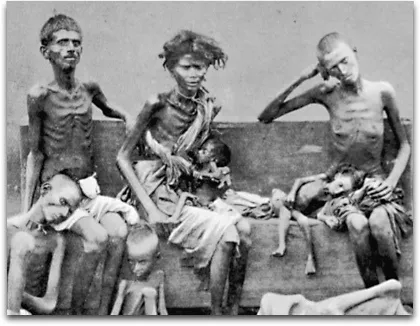
"Their visage is blacker than a coal - their skin cleaveth to their bones"

"Their visage is blacker than a coal; they are not known in the streets: their skin cleaveth to their bones; it is withered, it is become like a stick. They that be slain with the sword are better than they that be slain with hunger: for these pine away, stricken through for want of the fruits of the field." (Lam. 4: 8-9)

Such famines as described in the above words of Jeremiah have existed in communities and states since the beginning of civilization. Some famines have affected many nations at once, being caused often by drought, insects, disease in plants and animals, wars, etc. What is unique, however, about the famine under the coming of the black horse rider is that it is global in scale. It is also a famine that follows upon the heels of global violence and manslaughter.

It is highly ironic that obesity is a common problem around the world today, in the days that immediately precede the coming famine under the black horse rider. In the days preceding the black horse rider the world experiences prosperity on a scale never before experienced. People will have "waxed fat," to use a scriptural expression.

"Fat" or "fatness" are words used many times in scripture for obesity, but also to denote a people that are well fed, who are far off from famine. Thus, when the famine under the black horse rider comes people will go from fatness and obesity to skin and bones! All because they have sinned grievously against the Lord and have rejected his Son and our only Savior, the Lord Jesus Christ, and his calls to repentance.

Waxed Fat & Kicking

"Give me neither poverty nor riches; feed me with food convenient for me: Lest I be full, and deny thee, and say, Who is the LORD? or lest I be poor, and steal, and take the name of my God in vain." (Prov. 30: 8-9)

The general population of the world today lives better than at any time in the history of the world. Men credit this fact to man's ability to evolve, to his power to reason, to his natural abilities, and will not give credit to God. They are rich in comparison to all preceding generations. According to the words of Solomon, however, the danger in "having riches" and being "full" is that men will be likely to "deny" the Lord, and to mock at any possibility of having knowledge of him. Thus it has been in the case of the chosen people Israel, as well as many other nations who have been blessed by God with freedom from want.

Notice these words of Moses:

"So the LORD alone did lead him, and there was no strange god with him. He made him ride on the high places of the earth, that he might eat the increase of the fields; and he made him to suck honey out of the rock, and oil out of the flinty rock; Butter of kine, and milk of sheep, with fat of lambs, and rams of the breed of Bashan, and goats, with the fat of kidneys of wheat; and thou didst drink the pure blood of the grape. But Jeshurun waxed fat, and kicked: thou art waxen fat, thou art grown thick, thou art covered with fatness; then he forsook God which made him, and lightly esteemed the Rock of his salvation." (Duet. 32: 12-15)

"They are said to "wax fat", enjoy great outward prosperity, to abound in temporal good things...thou art waxen fat, thou art grown thick, thou art covered with fatness; which is repeated and expressed by different words, both for the certainty of it, and to denote their great affluence of good things, and so the more to aggravate their impiety and ingratitude, next observed." (Gill's Commentary)

The world at the time when the red and black horses ride will have become fat, enjoying prosperity on a scale never seen before. In describing "fat" or well fed people, we note these scriptures:

"Their eyes stand out with fatness: they have more than heart could wish." (Psa. 73: 7)

How different is the picture of the famished! Look at the picture at the top of this chapter. Look at the description of the bodies of the famished by Jeremiah! Then, compare it with this description of those who have plenty to eat. Their "eyes stand out with fatness" and "they have more than heart could wish." The Psalmist speaks of being "fat and flourishing." (Psa. 92: 14) He also spoke, on the other hand, of his being physically "weak through fasting," saying "my flesh faileth of fatness." (Psa. 109: 24) Isaiah prophesied saying:

"And in that day it shall come to pass, that the glory of Jacob shall be made thin, and the fatness of his flesh shall wax lean." (Isa. 17: 4)

These words are comparable to those of Jeremiah given at the head of this chapter where he said"their visage is blacker than a coal; they are not known in the streets: their skin cleaveth to their bones; it is withered, it is become like a stick." Here starvation is described as being "made thin," and a case where "the fatness of his flesh shall wax lean."

It is not sinful to be rich. Many godly men and women in scripture have been rich. In all cases, however, the godly rich were always helping the poor and sharing their abundance. Further, the Lord promises prosperity, or fatness, to those who follow his teachings and heed his wisdom. Notice these verses on that point.

"The liberal soul shall be made fat: and he that watereth shall be watered also himself." (Prov. 11: 25)

"The soul of the sluggard desireth, and hath nothing: but the soul of the diligent shall be made fat." (Prov. 13: 4)

Here we see how working hard and being liberal brings fatness and good nourishment, freedom from want of food and general deprivation. It is not being rich that is sinful and immoral, but it is simply that riches, like power, corrupts. Very few who have become rich in this world escape degeneration and as Solomon said, keep themselves from denying the Lord and manifesting gross ignorance of him. It is also what Moses described when he said "Jeshurun waxed fat and kicked." On this John Calvin wrote:

"Moses here severely censures the ingratitude of the people, because when filled with delicacies, they began to wax wanton against God; for, according to the vulgar proverb, satiety breeds violence; but this arises from men’s detestable depravity, who ought rather to be inclined to humility and gentleness by the loving-kindness of God, since the more abundantly He supplies us with food, the more does He invite us to show forth the affection that becomes children, inasmuch as He thus more closely and familiarly declares Himself to be our Father. Intolerable, then, is the impiety of profane persons, who increase in insolence against Him, when they have gorged themselves with an abundance of all good things. They are here compared to restive horses, which, if they are well fed, without exercise, kick under their rider, and are rendered almost intractable." (Commentary)

Though it is not true in every case, yet it is so in most; prosperity can be dangerous for your spiritual well being. Not all prosperity is the result of righteous and wise living, though it is one of the fruits of it. Many wicked people prosper and are "fat." In fact, if we are to believe the record of scripture in many places, being rich in this world and having plenty to eat, makes it less likely that one is of the elect, or of the saved. Said the apostle:

"Hath not God chosen the poor of this world rich in faith, and heirs of the kingdom which he hath promised to them that love him?" (James 2: 5)

Jesus also taught that most rich people will fail of entering into the kingdom of God.

"And again I say unto you, It is easier for a camel to go through the eye of a needle, than for a rich man to enter into the kingdom of God." (Matt. 19: 24)

Paul also testified:

"For ye see your calling, brethren, how that not many wise men after the flesh, not many mighty, not many noble, are called." (I Cor. 1: 26)

He did not write "not any," thank God, but "not many." Few of the rich in this world are friends of God but are generally in league with Babylon and with "the god of this age."

One good commentary gives a lengthy commentary upon the words of Moses in Duet. 32 and the words "Jeshurun waxed fat and kicked" under the sub heading "Worldly prosperity." It says:

I. A community realising worldly prosperity. Worldly prosperity sometimes comes to a man--

1. Irrespective of his efforts.
2. By his honest efforts.
3. By his dishonest efforts.

II. A community abusing worldly prosperity.

1. In sympathy they withdrew from God.
2. In life they disregarded God.

On the dangers of prosperity

Two main themes run through this song, strongly contrasted, like a cord of bright gold and a black cord twined together. The one which takes the lead is the gracious kindness of the Lord to Israel in the wonderful works wrought for their deliverance and exaltation, and the benefits of all kinds bestowed upon them. Then over against this stands Israel’s gross misimprovement of these blessings, Israel’s ingratitude and apostasy, with the judgments which naturally followed their unfaithfulness. The text is the turning point of this wonderful composition. Up to this verse the strain has been (in the main) exultant and cheering, celebrating the lofty distinction to which Israel had been raised; now it becomes sad, threatening, and bewailing an unparalleled declension. How did this come about? It is all contained in these few words, which have a solemn warning for ourselves: “Jeshurun waxed fat, and kicked.” Jeshurun, “the upright one,” the people who had been called and set apart to be a holy nation, aiming at righteousness, and who hitherto had been distinguished by a measure of integrity, became corrupted through prosperity.

I. Let us regard men in their social capacity, and with respect to their general worldly interests, and observe how they are commonly affected by abundant prosperity. History is full of instances to show how national character has deteriorated as the wealth and power of a nation have increased. A people, while struggling for existence and contending for liberty, have displayed all the virtues of industry and frugality, of energy and courage, of public spirit and self-denying regard for the common good. Thus they establish their commonwealth and grow strong and powerful. Then riches flow in; luxury follows in their train; the sons soon forget the virtues of their fathers, or despise them; then parties are formed; each class, each individual, is ambitious to cope with or outshine the other. All the petty passions of our nature soon spring up into rank activity. Selfishness reigns, the general good is forgotten, and principles which once were held in honour are derided and spurned." (The Biblical Illustrator)

The last generation, the Omega generation, which shall live to see the coming of the Apocalypse and all its varied judgments, will have "waxed fat" through the blessing of God and yet, have "kicked" or stubbornly rebelled against him. They do not ascribe to him, as they should, the reason for their prosperity and their being well fed and nourished. Mankind's "fruitful seasons" are undeserved gifts of God and if men forget this fact, they are sure to suffer for it. Testified Paul:

"Nevertheless he left not himself without witness, in that he did good, and gave us rain from heaven, and fruitful seasons, filling our hearts with food and gladness." (Acts 14: 17)

How dreadful is the sin of man in the very last days! A time when men will have been so highly blessed with "fruitful seasons" and being "filled with food," and "filled with gladness in heart"! Do they thank God for it and render until him the praise he is due?

The Bible says much about gratitude as well as the lack of it. Ingratitude is a sin with severe repercussions. The record of such fat ingrates is this:

“Although they knew God, they neither glorified him as God nor gave thanks to him.” (Rom. 1: 21)

Oh the vile ingratitude of man in the last days! What height of arrogance! The characteristics of these arrogant and ungrateful souls is that they will be "lovers of self, lovers of money, proud, arrogant, abusive, disobedient to their parents, ungrateful, unholy." (II Tim. 3: 2)

The "goodness of God" in giving man his food and his enjoyments was in order to draw men to God via repentance.

"Or despisest thou the riches of his goodness and forbearance and longsuffering; not knowing that the goodness of God leadeth thee to repentance?" (Rom. 2: 4)

Not only are men ingrates in regard to giving God his thanks, but they have gone even further in their kicking and rebellion by their actual "despising" what are "the riches of his goodness," and "the riches of his forbearance," and the "riches of his longsuffering." And, not only despising God and his gifts, there is no turning to him (repentance), but a further turning away from him.

In some respects, the wicked men who shall experience the judgments of the seven seals are to be pitied, for the judgments are severe and terrible. But, when one considers the great depravity of the people of that final wicked generation, then tendency to pity is removed. They get what they deserve for "true and righteous (just) are his judgments" (Rev. 19: 2). When the Lord comes in Apocalyptic judgment, he will then deal with "the fat ones" who have kicked at his word and sovereignty. But, more on that in the next chapter.