Thursday, March 2, 2023

Beliefs about the Afterlife (xii)


"I charge you therefore before God and the Lord Jesus Christ, 
who will judge the living and the dead 
at His appearing and His kingdom." 
(II Tim. 4: 1)

Said one leading commentator in comments upon I Peter 4: 6, the text we are still examining (See here at Precept Austin web page):

"Warning! Someone has said this is the most difficult verse in the Bible to interpret! There are some 20 interpretations according to one writer! We will not even attempt to go there, but recommend that you be a Berean." (emphasis mine)

In this part of our series on the topic of the afterlife, we are focusing on it as it relates to the Lord Jesus Christ, and I am giving my interpretation of I Peter 3: 19 and 4: 6, the two passages that speak of Christ preaching to the dead in the Underworld of Sheol or Hades, to his descent into the place of the dead. As I stated previously I took a different view when a novice bible student than the one I believe now. I have studied this subject off and on over the past fifty plus years. At first I settled on the most favored view that the dead had the gospel preached to them while they were alive so that the text should be read as saying "for this reason the gospel was preached to men before they died," or something very similar.

I also generally would affirm that Jesus did not go in spirit to Hades when he died but went to Heaven and stayed there for the three days and nights in which his spirit was separated from his body (when it was dead). I believed, like many others, that the promise made to the thief on the cross (on the right hand of Christ), in the words "today you will be with me in paradise," taught that paradise or heaven was the only place Christ was "in spirit" between his death and resurrection. However, as previously stated, I never fully accepted that interpretation and there were many other texts, dealing with "leading captivity captive," and Christ going into "the heart of the earth," etc. that nagged at me. Sometimes I put deeper study of the subject on a shelf for another day (when I could access more materials such as commentaries). What the passages were saying was harder for me to accept than to understand (as I have previously observed about the reluctance of many bible students to accept it as proof that Christ did descend to the Underworld). 

My present interpretation is not novel, but orthodox. In fact, it is the view, not only of the apostles and early Christians, but of the scriptures themselves. It was arrived at after many years of thinking about the texts integral to the question. It represents, at least on my part, a mature interpretation, an unbiased opinion.

How important is a correct understanding of this subject, and texts dealing with it? I cannot answer that question. I can only say that since embracing the orthodox view I have seen truths about Christ's experience in the afterlife that leaves me amazed and filled with wonder. When I now read about Christ having the keys of Hades and Death, I have a better understanding of Christ's relationship to Hades and Death. Further, the nagging doubt about whether I was interpreting the text correctly, or twisting it, has left me.

In this chapter we are still considering what is the right interpretation and translation of both I Peter 3: 18-20 and 4: 5-6. We will begin this section of our study by looking at what is meant by the words "for this reason" (4: 6) and at the purpose(s) connected with the Greek "hina" (a word denoting purpose or intent, and involving what is called a "hina clause"; And is often translated by the English word "that"). The text is stating the reason for Christ preaching the gospel to the inhabitants of the Underworld. It would be an answer to our anxious question - "for what purpose did Christ go to the Underworld and there proclaim the good news?" 

Though Peter does not go into any detail in answering that question (many will be left with more questions than answers about the reason why the Lord went to Hades and preached there), nevertheless he does offer at least one reason why. Peter surely believed that there were other reasons for Christ going to Hades and preaching there than the one mentioned by him in these words. The reason for Christ preaching in Hades had to do with him acting as Lord and Judge of the dead. Let us again cite the words we are still examining. 

"They will give an account to Him who is ready to judge the living and the dead. For this reason the gospel was preached also to those who are dead, that they might be judged according to men in the flesh, but live according to God in the spirit." (I Peter 4: 5-6)

Well did one commentator write in regard to the prima facie reading of this inspired text:

"No one with an un-preoccupied mind could doubt, taking this clause by itself, that the persons to whom this preaching was made were dead at the time of being preached to. If this is the case, then, pretty obviously, St. Peter is carrying us back to his teaching of 1Peter 3:19, and is explaining further the purpose of Christ’s descent into hell." (Ellicott's Commentary for English Readers) 

That is what I also believe. As I said, I did not accept this at one time, but there was constant nagging doubt about my view resulting from my refusal to accept the obvious meaning of the text. I was fearful that it might uphold the doctrine that it was possible to die lost and condemned, go to the place of the damned in Hades, and yet be saved and go to heaven. That fear is gone through a proper understanding of the descent of Christ into the Underworld. Christ went to Hell, preached there, and it was not for the salvation of any who had died condemned and were on the torment side of the gulf of Hades. His preaching in hell had other reasons than that of salvation. Further, we can hardly call the taking of old testament believers into the third heaven (paradise) a saving of them, unless we want to say they were saved from the confinement of Hades, and from not enjoying the fullness of Heaven.

Wrote Greek scholar and bible commentator Kenneth Wuest (See here):

"The words “by which” in the Greek text are en hoi, a preposition and a relative pronoun, the latter either in the locative or the instrumental cases, since the preposition is used with both cases. The pronoun is either masculine or neuter, and there being a neuter noun “spirit” immediately preceding it, the word “which” according to the rules of Greek grammar, refers back to the word “spirit.” One could translate either “in which spirit,” or “by means of which spirit.” The word “went” is a translation of poreuomai, a word that is used of one travelling, going on a journey. The translation reads now, “in which (human) spirit having proceeded,” or, “by means of which human spirit having proceeded.” This speaks of our Lord in His disembodied state after He had spoken the words, “Into thy hands I commend my spirit” (Luke 23:46). His human body was laid in Joseph’s tomb, but He as the Man Christ Jesus, possessing His human soul and human spirit, departed this life. It is clear that our Lord as the Man Christ Jesus went to the place of the departed dead called in the Old Testament “sheol” and in the New Testament, “hell” (Acts 2:27), the word “hell” being the translation of the Greek word “Hades.” But Peter is not speaking of that here. Peter says “in which” or “by means of which (human) spirit also having proceeded, He preached unto the spirits in prison.” The word “also” speaks of the fact that it was in His human spirit as made alive by the Holy Spirit that our Lord proceeded." 

I think that is the normal reading of the text and attempts to deny it, or change its meaning, are vain, and are therefore to be rejected. 

Wuest believes that "the spirits in prison" are the fallen angels of Genesis six and the antediluvian wickedness, a view I have previously referred to. Said Wuest:

"But are the spirits of our First Peter passage angels or demons? Peter tells us that these spirits were in prison. There are just two prisons in the unseen world where evil spirits are confined, Tartarus (II Peter 2:4, “hell” tartarosas where fallen angels are kept; and the Bottomless Pit (Rev. 9:1–12). When our Lord was about to cast out the demons from the maniac of Gadara, they besought Him not to cast them into the deep, the abusson (Luke 8:31). The words “bottomless pit” of Revelation 9:1 are literally “the well of the abusson,” same Greek word as used in Luke 8:31, which fixes the Bottomless Pit as the prison house of demons. To which place did our Lord go and preach? Peter in his first epistle (3:19, 20) and in his second epistle (2:4, 5) links spirits and angels with the flood and states that they sinned at that time. The inference should be clear that he is referring to the same beings, for Hebrews uses the words “angels” and “spirits” as designating the same created beings, and Peter is just following the practice of other inspired writers."

I do not find strong objection to those commentators who see the "spirits in prison" as the fallen angels of Genesis chapter six, and not to the humans of that age who died in the flood. Wuest bases his interpretation on the fact that angels are more generally called "spirits" in scripture than are human beings. He does acknowledge, however, that humans who have died and in spirit left bodies are sometimes called "spirits." 

I also think that the places mentioned by Wuest (Tartarus, Abyss, bottomless pit) are simply places within the whole of Hades or the Underworld. Abraham's festive table, with his kin (believers), occupy the paradisaical upper side of the divided Underworld. We can safely say that there are divisions or sections of the Underworld, concerning which we have already written in earlier chapters (bible cosmology). 

Some also believe the same as Wuest (spirits in prison being the fallen angels) and offer another reason to the ones mentioned by him. These say that the background of Peter's words is the Book of Enoch, called "Enoch1," a book known by Peter and the early Christians. Many bible scholars say that both Peter's and Jude's writings, allude to things that are written in the book of Enoch. Jude even refers to a prophecy of Enoch that is found in Enoch, a verse we have already cited ("Behold the Lord comes..."). 

In Enoch the fallen angels (called the "watchers") send Enoch from the Underworld (Tartarus) to Heaven to carry their petition to God for pardon and Enoch comes back with the message of "no." There is truth in this view, and the Enoch story no doubt was in the back of Peter's mind and a context or paradigm for what Peter said about the fall of the angels; And, there may be a similarity between the message Christ brings from heaven to Hades and the message Enoch brought from heaven and delivered to the fallen angels who were in the lowest hell. Christ also would have proclaimed "no" to the requests of the damned, whether men or angels, who sought pardon, mercy, or acquittal. 

It seems clear to me that those "spirits in prison" (who are described as they who were "at one time disobedient at the time when God was longsuffering while the ark was being built") are identified with those who died in the flood, and this implies that they had physical bodies. No pure spirit beings were drowned in the flood. God was showing longsuffering not to the fallen angels while the ark was being built but to sinful human beings. 

It could be argued that the "sons of God" (angels) who mated with the "daughters of men," had taken on bodily forms in order to procreate and thus their bodies may have been destroyed in the flood. Also, their hybrid offspring, the "giants" or "nephilim," would have had giant physical bodies and they too would have been destroyed in the flood. 

I do not doubt that Christ had a message for the fallen angels, but don't believe that is what Peter is referring to (in 3: 19), but is rather a message Christ gave to disobedient humans who died in the flood, and who composed "the world of the ungodly" (Peter's words). Consider the fact that "the spirits in prison" of 3: 19 are part of the larger class called "dead ones" in 4: 6. Angels do not die, for they have no physical bodies. 

Christ preached the gospel to "the dead ones." This implies that they were human beings for they had experienced physical death, and then entered the Underworld or afterlife as a conscious disembodied spirit. The simple subject "the dead" or "dead ones," nearly always, in the bible, refers to human beings who have died. This does not deny that angels and spirits may not die in some non physical or metaphysical sense. The fallen angels will spend eternity in Gehenna, in the "Lake of Fire," "which is the second death." (Rev. 20: 14) But, they are never called nor included in the group called "the dead." 

Further, Wuest seems to imply that the "demons" are the same as the fallen "angels" or "sons of God" of Genesis chapter six, which is a common error. However, I believe, along with others, that the demons are the spirits of the wicked human dead and are not angelic spirits. (See my writings and notes on that subject in my blogs) So, in preaching to the "dead ones" in Hades he is preaching to demons by his preaching to the wicked spirits of deceased humans. He is not specifically said to be preaching to fallen angels in either text (3: 19 & 4: 6). They rather show what Christ said to the human occupants of the Underworld. Reason and inference do tell us that Christ no doubt had things to announce to Satan and the fallen angels and their monstrous offspring (Nephilim or giants). 

Wuest is right to defend the view that Christ descended in spirit to Hades. That is the main point. He is a Greek scholar and he affirms, as other such scholars, that the text says that Christ himself went in his spirit, when it left his crucified body, to the place of departed spirits. He does not believe that Peter is affirming that Christ went in spirit to the antediluvian sinners and preached to them via Noah, at least as regards the 3: 19 passage. 

Some think that the idea of Christ descending into the Underworld is a "Catholic" doctrine, and not a Protestant belief, certainly not "Baptistic." But, that is not the case. Christ descent into the Underworld was believed by Christians in the first century, long before there was a "Catholic Church," certainly before there was a "Roman" Catholic church. 

However, the error of the Catholics was not their idea of a "limbus patrum" (Abraham's bosom) where all OT believers were gathered awaiting Christ's coming, for many Protestants and some Baptists have believed such. Nor was their belief that Christ descended to Hades an error, for the first Christians believed it, and as do many Protestants, including Baptists as myself. No, their error about Christ's descent relates to their idea about "Purgatory," and about their contention that salvation or redemption is possible for those who have gone to the Underworld as condemned criminals under sentence.  

Wuest also wrote:

"Our Lord therefore, between His death on the Cross and His resurrection from Joseph’s tomb, preached to the fallen angels in Tartarus. But what did He preach to them? The word translated “preached” here is kerusso. The word was used in secular Greek of an official announcement or proclamation made by a representative of a government. The word in itself does not indicate the content of the message. A qualifying phrase must be used for that purpose. In the New Testament, the word is used either with a qualifying phrase such as “the gospel” (Mark 16:15), or the contents of the proclamation are given as in Revelation 5:2, or it is used alone without the contents of the message being given as in Romans 10:15. Thus, one cannot say that our Lord preached the gospel to these fallen angels. There is a distinct word used in the Greek New Testament which means “to preach the gospel,” euaggelizomai. In Luke 4:18 we have, “to preach the gospel to the poor,” where the words, “preach the gospel” are the translation of the one word euaggelizomai. The word is made up of aggello “to bring a message,” and eu  “well” or “good,” thus, “a message of good,” thus, “to bring good news.” The word “gospel” means “good news.” But this word is not used here. Our Lord made an official proclamation to these fallen angels. It was not the gospel. Angels are not included among those for whom Christ died. Hebrews 2:16 says, “For verily He took not hold of angels: but He took hold of the seed of Abraham.” In perfect righteousness, God in justice passed by fallen angels, and in infinite mercy, procured for fallen man a salvation at Calvary, purchased by His own precious blood (Acts 20:28). As to a suggestion regarding the possible content of the proclamation, that must await our treatment of the subject concerning the nature of the disobedience of these fallen angels."  

All this is right. However, in his comments on 4: 6 he writes:

"The words “them that are dead,” refer to Christian believers who had died. The gospel had been preached to them and they had become Christians. As a result of this they had been judged according to men while they were on earth. This judgment was in the form of persecution because of their Christian testimony. The word translated “according to” means literally “down,” and speaks of domination. This judgment was in the hands of men and was administered by them."  

Here Wuest seems to argue differently than he did for his comments on 3: 19. Here he takes the view, along with others, that Peter is referring to Christians, especially martyrs, they being "the dead" who had the gospel preached to them (before they died) for the purpose stated by Peter. Such interpreters see the words as equivalent to saying "the gospel was preached to departed believers, before they died, so that though later judged and condemned to die by depraved men, they would nevertheless live to God in spiritual life in heaven." But, that makes no sense. Is that not the reason why the gospel is preached to all, to those who have lived and died and gone to heaven, as well as those who are living still? Is it the same reason why the gospel will be preached in the future to those chosen to salvation? Are we to interpret Peter's words to mean all the same as "for this reason were they saved by the gospel before they died"

This view also says that the "judge" who judged the dead ones who heard the gospel preached by Christ are the persecutors and murderers of the righteous. These are identified as "men in the flesh," denoting wicked people who persecute spiritual Christians, particularly in their condemning to death (judging) the ones who had heard and believed the gospel. Wuest said "this judgment was in the form of persecution." But that is not correct. 

First, "in order that" (hina - "that they might be judged") cannot be interpreted as "although they might be judged," which it does not mean. There is a lot of difference between "that they might" and "although." The latter is the term used by those who say that the judges of the text are persecutors. Those who take this view argue these points: 

1) "men in the flesh" are unsaved people who persecute and put to death those who have heard and believed the gospel, and 
2) that the judgment denotes condemnation to death by "men in the flesh," and 
3) that the "dead ones" preached to denotes believers who have died, especially died as martyrs. 

Thus, they see the intent of Peter was to encourage believers with the thought that they will have spiritual and eternal life even when they die, and so therefore there should be no fear of dying as a result of preaching and following Christ. However, how a person can get that out of the words "for this reason was the gospel preached even to those who are dead that they might be judged by men in the flesh..." is bewildering. 

Such an interpretation does not answer the question "why was the gospel preached by Christ to the dead"? In fact, they of such interpretations change the question. Peter is going to give us the reason why the gospel was preached to "the dead," not the reason it is preached to "the living." The above view does not give us the reason. How is the preaching to departed believers (before they died) special and peculiar to them? Is the reason why the living are preached to different? Those of this view read the text this way: "the gospel was preached to our saved departed brothers and sisters so that they, though having been condemned to die, will yet live unto God in spirit." Or, "in order that you might be saved when you die as a martyr, the gospel was preached to you." 

Second, the one who will "judge" the dead ones who heard the gospel preached by Christ in the Underworld (or even who heard it while they were alive for that matter) is the same judge mentioned in the preceding verse where Peter speaks of him "who is ready to judge living and dead." That is Christ and he is the Judge and Lord of the dead, in that character he made announcements to all who were in the Underworld when he descended into the heart of the earth. We will be looking at that aspect of our present subject in an upcoming chapter, that of Christ becoming "lord" of the dead.

I see the text as saying "for this reason was the gospel preached (by Christ as in 3: 19) to dead ones, so that they might be judged by the judge of the living and the dead as being either "men in the flesh" (lost) or as men alive to God in spirit (saved)." I will further explain my reasons for this interpretation as we continue to look at the grammar and syntax of the passage, and consult some Greek translators. 

Wuest continues:

"The words “in the flesh” are to be construed with “might be judged,” for they balance up the words “in the spirit” which clearly are to be understood with “live.” We have here the dative of respect." 

That is true, except he left out the word "men" when he mentions "in the flesh." It is "men in the flesh." We know that "men in the flesh" could be used in more than one sense. It may mean "men who are in their bodies" (or living people, not disembodied spirits). It could denote those who are animalistic and depraved, being used in the sense Paul often used the adjectival phraseology. Notice these words of his:

"For to be carnally minded is death; but to be spiritually minded is life and peace. Because the carnal mind is enmity against God: for it is not subject to the law of God, neither indeed can be. So then they that are in the flesh cannot please God. But ye are not in the flesh, but in the Spirit, if so be that the Spirit of God dwell in you. Now if any man have not the Spirit of Christ, he is none of his." (Rom. 8: 6-9)

Clearly people "in the flesh" (Greek sarx) are people who are controlled by the lusts of the flesh, not being spiritual, not having "the Spirit of Christ." 

I believe Peter is using "men in the flesh" in the same way as Paul. Even those like Wuest who believe the preaching was done to departed believers while they were alive on earth (and not to the dead spirits in Hades), also see these men as lost depraved sinners, for they are the murderers of believers. The question is who is doing the judging (or deciding)? Further, what does it mean for Christ to judge one of the dead (who heard his preaching in Hades) "according to men in the flesh"? That point we will discuss shortly.

Wuest continues:

"These Christians were judged with respect to the flesh, that is, with respect to their earthly existence in the body. The natural result of accepting the gospel would be the living of a Christian life, and the natural result of that would be persecution. But these Christians died, many of them as martyrs. Now, in heaven they were living according to the Word of God with respect to their spirits, their human spirits. They in their disembodied state were serving the Lord in the future life."

But, that is not correct. First, "them who are dead" does not denote "these Christians," these "martyrs," as we have seen. Rather, as we have seen, this interpretation says that the gospel was preached not to dead people, but to living people. Very ironic. Second, the judging is done by the only judge mentioned in the context, which is the one who is "ready to judge living and dead."(4: 5) But, Wuest, and they who share his view, make the judge(s) wicked human beings who kill believers. That is wrong. The error is in not comprehending what is meant by "that they might be judged according to men in the flesh."

Questions

1. Who are the "they" in "that they might be"? Well, obviously it is "them who are dead." 
2. Who is the "judge" of the "they"?
3. What does it mean to be "judged according to men in the flesh"?
4. What does it mean to be "judged according to or as being alive to God in spirit"?

On these points and questions, we will have more to say. We will speak further of the purpose Peter says that Jesus fulfilled in going to the Underworld and preaching there. We will look closer at the grammar and syntax of the passages under investigation and doing that will bring us back to these points. We will continue to do that in the next chapter.

Thursday, February 23, 2023

Beliefs about the Afterlife (xi)


Preaching In Hades

So Christ, when he died, exited "the land of the living," and then in spirit descended into "the land of the dead," to Sheol, or Hades, into the Underworld. He also came there with a "proclamation." He had gone to Hades and "preached to the spirits in prison," as Peter testified. What does all that imply, however? The fact is fascinating in itself, but the readers of Peter's words cry out with questions, such as - "what did he preach?" And, "What did he say and to whom?" And, "What was the purpose of his preaching?" We might even wonder what words and questions were addressed to Christ by the occupants of the Underworld during the time Christ was there "in spirit." 

Who would not want to hear some of the discourses Christ gave in Hades? The greatest sermons and homilies of Christ that are recorded in the gospel, well known sermons, such as "the sermon on the mount," and the "Olivet Discourse" (uttered on the "Mount of Olives"), etc., are memorable indeed, but what of his preaching in Hades? Many things that Jesus did and said are not written, and the apostle John said further, that if they were written, the world could not contain the volumes of scrolls. (John 21: 25) The words Christ spoke while in Hades have not been "written down." We wish they were. 

That is why, when we read these two passages in Peter's first epistle and hear Peter say that Christ went to Hades and preached to the dead, to the spirits who were its occupants, we eagerly wait for the rest of the story. Okay Peter, so what did the Lord say in his preaching? Peter tells us very little. He tells us of the fact of Christ's descent into Hades and of his preaching and communicating while there, but then says very little else about that historical fact. He does however say some few things and gives us some hints.

Let us not assume that because Peter refers to one particular group of spirits in the Hadean prison (in this case the disobedient ones in the days of Noah) he therefore means to exclude the possibility or fact that other groups of sinners in Hades were also spoken to by the Lord of glory. That is a false assumption that some commentators make. As we have seen, he did go to the side of Hades where the righteous were living in comfort and delight, to "Abraham's Bosom," and led them out of there and into the third heaven or to paradise. It is reasonable to think that he would dialogue with, and preach to, those people

Let us first talk about the meaning of the word "preached" (English) and its word in the Greek. Let us see if the word itself, and its common usage in scripture, helps us answer the question about the kind of preaching it was, and what its likely subject was. 

The Nature of the Preaching

Wrote one scholarly writer on the meaning of "preached" per the Greek word of the text (here):

"proclaimed" (or in many Bibles, "preached"). Most objective commentaries will note that this word in the Greek (ekêruxen from kêrússô) means in general "to be a herald," "to proclaim," "to announce," "to publish," "to preach." Although it can be used as such, it does not necessarily mean "to preach the gospel to" or "to preach salvation to." Because Peter does not specify what Jesus "proclaimed" or "announced," to assume the preaching of the gospel is not warranted." (Ibid)

Wrote Dr. Albert Barnes in his Commentary said this about the Greek word translated "preached":

"The word used here (ἐκήρυξεν ekēruxen) is of a general character, meaning to make a proclamation of any kind, as a crier does, or to deliver a message, and does not necessarily imply that it was the gospel which was preached, nor does it determine anything in regard to the nature of the message. It is not affirmed that he preached the gospel, for if that specific idea had been expressed it would have been rather by another word - εὐαγγελίζω euangelizō." 

This "preaching" was not for the purpose of saving any of those who were condemned on the torment side of Hades. There is no chance of salvation after death. The word "preaching" simply means to make an announcement, to make a proclamation, to inform. However, there is another possible piece of biblical evidence to consider in ascertaining the nature and purpose of the preaching of I Peter 3: 19.

Enter I Peter 4: 6

"Who shall give account to him that is ready to judge the quick and the dead. For for this cause was the gospel preached also to them that are dead, that they might be judged according to men in the flesh, but live according to God in the spirit." (I Peter 4: 5-6) 

If this verse is an extension of I Peter 3: 19 then all the argument over whether the "preaching" of Christ in Hades (3: 19) included preaching the gospel is at an end. It positively says that what was preached included "the gospel." 

Further, the text (4: 6) indicates that it was preached not just to the "disobedient" people who died in the flood, as does the text from chapter three, but "to them that are dead," which would indicate that in some way it was preached to all the dead in the Underworld. 

Many bible students ask, in regard to I Peter 3:18-19, "why it is that Christ only preached to one class of the condemned in Hades?" Why not preach to all the wicked dead in Hades? Well, obviously, from the words of 4: 6, he did preach to the other peoples and groups in Hades. It was wrong for commentators to think that the reference to Christ preaching to one particular group of inmates in prison (3: 19) implied that he spoke to no other groups, not to the entire population. In looking closer at 4: 5-6, let us begin by citing these comments from the Pulpit Commentary

"The aorist εὐηγγελίσθη directs our thoughts to some definite occasion. The absence of the article (καὶ νεκροῖς) should also be noticed; the words assert that the gospel was preached to dead persons - to some that were dead. These considerations lead us to connect the passage with 1 Peter 3:19, 20. There St. Peter tells us that Christ himself went and preached in the spirit "to the spirits in prison;" then the gospel was preached, the good news of salvation was announced, to some that were dead. The article is absent both here and in ver. 5 (ζῶντας καὶ νεκρούς). All men, quick and dead alike, must appear before the judgment-seat of Christ; so St. Peter may not have intended to limit the area of the Lord's preaching in Hades here, as he had done in 1 Peter 3There he mentioned one section only of the departed; partly because the Deluge furnished a conspicuous example of men who suffered for evil-doing, partly because he regarded it as a striking type of Christian baptism. Here, perhaps, he asserts the general fact - the gospel was preached to the dead; perhaps (we may not presume to dogmatize in a matter so mysterious, about which so little is revealed) to all the vast population of the underworld, who had passed away before the gospel times."

I also think it is most reasonable and likely that Peter's words in 4: 6 repeat and enlarge upon what he had said earlier in 3: 19. Interpreters disagree however. But, who can deny that both passages say that the dead were addressed in preaching? Though Christ is not mentioned as the one doing the preaching in 4: 6, as he was in 3: 19, I firmly believe it is the same preaching, for it is the normal meaning of the words, linguistically, syntactically, and contextually. Who could prove it was not the same preaching in both texts? Both texts speak of preaching to the dead (spirits in prison) as being a past event, a completed act, and not as something that is ongoing. The text therefore does not warrant us thinking that the dead, in Peter's mind, were still being preached to by the Lord nor by anyone else. It seems to me that the apostle Peter has in view a single action of the past, in the context of Christ's sufferings and death, and not to an ongoing preaching activity in Hades. Christ's preaching in Hades probably filled the entire three days, the "three days and three nights." Further, his preaching in Hades during the time when he was dead would be, as expected, a momentous and highly significant event with profound repercussions and consequences. 

Thus it is true that the gospel was proclaimed or announced to all the occupants of the Underworld, to the righteous dead of the old testament period, to the fallen angels and to their monstrous offspring, and to the irredeemably damned, to all wicked spirits and demons. But, for what purpose? Was it multi purposeful? Did the preaching in Hades include the offer of pardon, as it did his preaching on earth? Was it purposed so that some in the afterlife would believe and repent and submit to Christ and be saved? Must the fact of Christ "preaching the gospel" in Hades imply a chance given for salvation? Must preaching only be for the purpose of saving from Hell? 

What if this "preaching or proclaiming" was in the context of a warden visiting the prison over which he rules and governs? Or in the context of a prosecutor or court official speaking to the inmates who are there awaiting trial? Suppose the setting is a pre-trial hearing on the charge of having rejected the gospel and its offer? Would not the gospel need to be stated and defined? The crime of unbelief must be ascertained by showing what it was that was not believed (as the crime is defined by the criminal statute).

Notice that the specific ones mentioned in 3: 19-20 were the "disobedient" who were living in a violent and depraved world and who were "the world of the ungodly" (II Peter 2: 5) and who were all destroyed in the global flood in the days of Noah. Nothing is said in this text about his preaching to people in "purgatory," to those who 1) died as infants or young children, or who 2) lived and died as mentally insane, or who 3) died without ever having heard the gospel. 

Some think that the fallen "sons of God," or angels, of Genesis chapter six, verse 1-8, who took human wives, and produced "Nephilim," or "giants," a monstrous hybrid of human and angelic, are alluded to. Christ "had a message for" each group of criminals in the Hades prison, and this would include the fallen angels and the Nephilim. However, it seems that the disobedient of Noah's day are human beings, those who were destroyed in the flood. 

What a memorable day in the history of Hades' prison! Millions and millions of wicked human spirits entering the land of the dead, to the place of Dives, on the lower side of the gulf that divides the two major divisions of Hades, during the early days of the flood waters!

Notice these words of the Lord Jesus about the coming judgment day trial for the criminals of Hades, for those who have disbelieved and disobeyed the good news of God's word.

“He who rejects Me, and does not receive My words, has that which judges him—the word that I have spoken will judge him in the last day." (John 12: 48)

If the gospel that Christ preached is what will be the measuring rule for deciding a legal case, in the day of judgment, it must be defined and described, or reported, proclaimed, announced, preached. Rather than preaching for the purpose of saving from Hades all the spirits in prison, who died in a condemned state, why could the preaching of the gospel be in the manner of "you rejected the gospel which says..."

Christ in his "Hades Prison Address" to the "disobedient" who were destroyed in the flood would have reminded those criminals (I imagine) of the charges against them, the leading charge being "you rejected the offers of pardon," or "you rejected the only Savior." The gospel would be reported in the reading of the charges and the indictment. That is certainly reasonable to believe, and it may be the reason for Christ preaching to the damned in Hades, rather than for the purpose of effecting repentance to salvation. I can also envision Christ saying the following things to those who lived in Noah's day and died in the deluge: 1) Enoch warned you, 2) Noah warned you. I can envision Christ saying something like this to the lost who died in the flood:

You heard the gospel, the basics of which were given in the dialogues between God, the Serpent, Adam, and Eve, after they disobeyed God in eating of the tree of knowledge of good and evil. My coming as the world's promised Savior was told to you by Adam, Seth, Enoch and Noah, etc. But, you rejected that promised Messiah and the call to repentance and lived in rebellion against your God and Creator. 

Here is what Enoch preached to the disobedient in his day and who were spirits in the prison of Hades in the days of Peter:

"Now Enoch, the seventh from Adam, prophesied about these men also, saying, “Behold, the Lord comes with ten thousands of His saints, to execute judgment on all, to convict all who are ungodly among them of all their ungodly deeds which they have committed in an ungodly way, and of all the harsh things which ungodly sinners have spoken against Him.” (Jude 1: 14-15)

I can envision him saying to the unbelievers who died in the flood, those of "ancient world," how they had been warned of judgment and imprisonment in Hades, by Noah, great grandson of Enoch the great, Noah being a "preacher of righteousness," and yet you rejected his message and so Lord God destroyed you all in the flood and put your spirits under guard in this jail prison, this furnace of fire. (II Peter 2: 5) The flood was brought upon "the world of the ungodly" and you were ungodly, never repenting or seeking pardon. It was the ungodly who Enoch warned, and you are "ungodly sinners" who have "spoken against" the Lord and against his Son and Messiah. Noah was "divinely warned" and heeded the warning, but none of you heeded the warning when he conveyed the warning to you. By his preaching and example Noah "condemned the world," the ungodly world, and condemned you are.  (Heb. 11: 7)

Enduring Word Commentary (See here) well said (emphasis mine):

"Apparently, this work was done in the period after Jesus’ death, but before His first resurrection appearance to the disciples. Jesus went to Hades – the abode of the dead – and preached to the spirits there. But why would Jesus preach to these imprisoned spirits? In all probability, this was “preaching” (the proclamation of God’s message) but not “evangelism” (the proclamation of good news). Jesus probably preached judgment to these disobedient spirits. The Bible says that even those under the earth must acknowledge Jesus’ ultimate Lordship. Jesus went to Hades and announced this truth: that at the name of Jesus every knee should bow, of those in heaven, and of those on earth, and of those under the earth. (Philippians 2:10)"

That is the way I see the kind of "preaching" that Christ did to the unredeemable. It is in fact the kind of preaching many think of today when they say "stop preaching at me." What they mean is "quit warning me," or "quit saying 'I told you so'," or "stop your fault finding," or "get off my case," etc. Oh yes, Christ will "preach to" the wicked spirits, and he will say "you should have..." He will say "I warned you" no matter how much they may not like to hear it. It is the kind of preaching that parents do when scolding their children, or when a judge is sentencing a criminal and speaking in direct address to the guilty.

Recall that we also called attention to Revelation 5: 13 where those in the Underworld say "blessing and honor and glory and power be to him who sits on the throne and to the Lamb forever and ever." They will say such things in Hell because they cannot do otherwise. But, saying such as the above does not take away their guilt and from their sentence of eternal death. We also see the inhabitants of Hell "confess" the truth "Jesus Christ is Lord." Yet, such a confession does not save them. Wrote Paul:

"That at the name of Jesus every knee should bow, of things in heaven, and things in earth, and things under the earth; And that every tongue should confess that Jesus Christ is Lord, to the glory of God the Father." (Phil. 2: 10-11)

Even the demons, said James, brother of the Lord, "fear and tremble" before the Lord, and acknowledge God's sovereignty, and yet they are not acquitted of their crimes nor granted pardons for such a belief and confession. (James 2: 19) 

So, what good news would he proclaim, and to who, and for what purpose? 

1. What would he tell them all together in a general address?
2. What would he say to the righteous who had been waiting for his arrival?
3. What would he say to the condemned who had rejected Christ via the gospel?
4. What would he say to the fallen angels and the giants?

Address To The Wicked

As to what else he may have said to the unrighteous, we can envision his "giving it to them straight," not giving false hopes, and advising them of the uselessness of thinking or hoping for salvation through another, perhaps through Satan. He would tell them that they are fools for hoping such. There is no hope of salvation from another savior or lord, he would assure them. He would demonstrate his lordship over them and Hades and advise them to accept their punishment as just. 

He would also no doubt tell them that there is no salvation after death. He would remind them that they had their chances of reconciliation and salvation when they lived and that they had refused to avail themselves of the opportunity, and that their dying in their sins was final. He would tell them that they all must serve out their sentences as justly condemned rebels against God. They will all be forced to confess or acknowledge his rule over them and their prison. He would tell them as a warden might, to behave and obey all the rules while they are serving their sentences and that doing so may ease them of their pain and give them prison privileges. There are degrees of punishment in the afterlife, after all, according to the bible.

He no doubt would also speak of their coming trial, of judgment day, of preparations being made for it, and of "the court's calendar." He may also have told them that they would have a chance to defend themselves and present their defenses, or give their excuses, and that they would all be given a just and equitable trial. 

Some find the thought repugnant that Christ could be said to have gone to hell. But, in reply it may be said that hell in the bible does not always refer to the place of torment in the afterlife, and so Christ could easily go to one side and not to the other. However, there is no reason to deny that he went to the other side, for it seems to be necessarily implied that he was on the burning side (although he could stand on the good side of the gulf of Hades and preach to the bad side). However, consider how he would be in the fires of Hades as he was in the furnace with Shadrach, Meshach, and Abednego. (Daniel chapter three) What better way to demonstrate his Lordship and Divinity? There was no harm to his spirit in Hades just as there was no decay to his body which lay in the cave. 

Consider also how the Psalmist testifies that Lord God is in Sheol, in Hades, in the Underworld. Wrote the Psalmist:

"Where can I go from Your Spirit? Or where can I flee from Your presence? If I ascend into heaven, You are there; If I make my bed in hell, behold, You are there." (139: 7-9 nkjv)

God, or Christ, as the pre-incarnate Son of God, in his divinity, being omnipresent, was already in hell before the human spirit of Christ descended there. If we can accept that God's presence is in the Underworld, why do we resist believing the record that Christ was present there in his disembodied spirit?

Having taken notice of what Christ may have likely said (or 'preached') to that multitude of rebels who died in the flood, and to the unsaved population of human spirits in general, let us now consider what Christ may have said to all of them at one time, in a general address to the whole population of Sheol, Hades, or the Underworld.

General Address

He would announce to them all that he obtained victory over sin, temptation and death, defeating Satan, and exercising all power and authority over all worlds, including the Underworld of Hades, and that now, as Lord of lords and King of kings has the keys of Heaven and Hades, and that he is the judge of the dead as well as of the living. 

He would say that he is here to release those in the upper part, those reclining with Abraham and the righteous around the festive table, to take them to the highest heaven, to paradise.

He would say that his arrival was not the start of the trial, but only a preliminary to the coming day of trial and judgment. He would tell them that on the day of the trial, they will be released from Hades, or come down from Heaven, to rejoin their resurrected bodies and stand for trial in body and spirit. After the trial, the righteous will enter into their eternal state in the new heavens and earth and the condemned will enter their eternal state, and Hades will be closed and its inhabitants moved to Gehenna, to the "lake of fire." 

Address To The Righteous Dead

As what he may have said to the righteous in Abraham's Bosom, we can also reasonably expect him to have said many comforting and exciting things to them. I envision it being much like it was after Christ was raised from the dead, where the record is - "being seen by them during forty days and speaking of the things pertaining to the kingdom of God" (Acts 1: 3). Oh to have the record of those dialogues of the Lord with the old testament saints! What excitement among them! Jubilation that no doubt rang out throughout the length and breath, and depth and height of the Underworld! It reminds us of the dialogues Christ had with Moses and Elijah while he was on the mount with them, when he was yet in the flesh. 

"And behold, two men talked with Him, who were Moses and Elijah, who appeared in glory and spoke of His decease (departure) which He was about to accomplish at Jerusalem." (Luke 9: 30-31) 

Christ spoke to the two persons mentioned above, from Moses who died long before Jesus was born, and therefore his spirit would have descended to Sheol, to the place of Abraham and Lazarus where were all the righteous dead, and to Elijah who went into the heavens by a chariot of God and has never died it seems. And what did Jesus talk to these two eminent old testament believers about? Answer: About his impending sacrificial death and of his descent into Sheol or Hades during the time of his burial, and of his resurrection and bodily ascension into heaven, and of his subsequent plans for the world. 

Since Christ, the moment he died, went into the heaven of heavens, to the third heaven, or to paradise, to the holy of holies, there to offer himself and his blood to the Father, to the throne of God, and upon the altar that is before the throne, he no doubt spoke of this to the waiting believers in the comforting confines of Hades during his time there. (Heb. 9: 12-14) 

I expect that these same things would be the foundation of his dialogues with the righteous dead in Hades when Christ was there in spirit. He would be speaking about the things that pertain to the kingdom of God, about his atonement for sin, about his plans concerning his reign, the day of judgment, and the new heavens and earth.

The Purpose Clause

It seems that the question of why Christ preached in Hades to the hardened criminals there, and to the righteous who were in the favored conditions of Hades, is given a partial answer by the apostle Peter in 4: 6. In that text, unlike 3: 19-20, we are given a word of explanation about why Christ preached in Hades, and we see that in the word "that" (Greek "hina"). Peter says it is "for this reason," or in order "that," this or that might be or might occur. Why did Christ preach to the dead? It was "that they might be judged," or perhaps, "that they might live to God in spirit." Amazingly, it is the latter part of I Peter 4: 6 that is the hardest to interpret, and a look at the various and significantly different ways it is translated into English demonstrates that fact. 

It does appear on the surface to say that one of the reasons why the dead in Hades had the gospel preached to them by the Lord was that they might be saved, that is, if salvation is alluded to in the words "that they might live to God in spirit." That point we will address in the next chapter when we analyze more closely the meaning of the purpose clauses of the text. 

As before stated, if we believe Christ did in fact go to the Underworld of Hades in his human soul or spirit, then we ought not to think it strange that he would have something to say to the inhabitants there. It ought not to be hard to understand and accept that Christ, upon entering Hades, also fulfilled some purpose, that it was part of his plan, his predestination. 

Wednesday, February 22, 2023

On Doubting the Asbury Revival

   In a video on youtube, done by "WRETCHED", it shows a deep skepticism of the Asbury Revival. The video is called "The Asbury Revival-8 Crucial Questions We Need to Ask". In the video, they pose 8 questions that they feel will shed doubt on the revival being authentic. I wrote the 8 points or questions down, and answered them for myself. I know from history, many movements of God were seen as "strange", extreme, or dubious. In fact, if we are totally honest, the founding of the whole Christian faith was seen in that light. As with any movement of God, Satan will try to counterfeit it, or thrust players into it that are charlatans. Of this we must be careful and test everything. On the other hand, we must be just as careful not to dismiss something because it doesn't fit within our own understanding. Here is the link to the video, Below it, are the 8 points and my responses. I hope this may help us all to not be so busy trying to find error, that in the process, we ignore the truth. 

 https://www.youtube.com/watch?v=kDN9GbvrkYY

1. Why has Asbury seen 8 revivals since 1890, but not other schools?

    ANSWER: There are other schools that have seen revivals, but they were more localized. It happened before the internet made it possible to learn of something within hours of it happening. The producers of "WRETCHED" are Reformed Calvinists, and they have no issue with "Reformed Baptists" and baby sprinkling high church Presbyterians getting together, but they would never cooperate with Methodists or Nazarenes. I feel the more "Reformed" one is, the more biased they are against any Arminian leaning group

2.This particular branch of the Wesleyan/Holiness movement doesn't preach against sin and doesn't preach repentance.
 
ANSWER: Yes they do. By "Holiness Unto The Lord" which is written above the pulpit, the Wesleyans mean a way of living without sin. The whole goal of the Wesleyan movement teaches that one can attain total sanctification. The revival actually started by one young man, after chapel, repenting and asking forgiveness. There are many videos of people kneeling at the altar. I have never heard of someone kneeling at the altar for a "feel good" experience, or as an act of falsity. They are kneeling at the altar, as a sign of submission to God, confession etc. You would be very hard pressed to convince me that they are "putting on a show" when you can't even see their face because they are bowed down. A false professor would generally "have a word" that they want the whole congregation to hear. Or something that would make them stand out trying to get glory for themselves.

3.Who is endorsing this revival? What about some "shady" characters who endorse it"

ANSWER: There have been revivals in our history, that Baptists were skeptical of. The First Great Awakening is one example. But as the result of it, the "New Lights" converted thousands, and caused many churches to drift away from stoic clergy who were paid by the state and had no life in them. If it weren't for that "controversial" revival, men like Shubal Stearns would not have been saved and founded hundreds of Baptist churches

4.No reports of revival on secular campuses.

ANSWER: So what? I doubt there are many true Christians on secular campuses. The very word "revival" implies that it is to reignite the fire that has gone dim. Can God not move on those who are already His, cleansing His own house before He begins to cleanse the lost world? If Christians are brought closer to God by revival among us, will it not follow that at some time future, we will shout salvation to the lost? It is when God's own people draw closer to Him that creates the desire to win the lost. The lost will never be converted by a cold church.

5.What is revival? Can it be a revival when  there aren't conversions?

ANSWER: There are videos showing the cheering of the crowd when someone gets saved. Do you not believe that there are lost students at a Christian university??? This is another example of God dealing with those who have been taught the truth, but never received it. The Holy Spirit can convince a sinner who has previously heard the gospel, in a meeting of praise where the gospel has not literally been preached. All of these students have been taught the gospel already. One of the mottos used at the revival is "Father, revive the saved, and save the lost!"

6.What is actually happening at the revival?

Answer: "WRETCHED" complains that there is "a LOT of worship, but very little expository preaching". I don't see that as an issue when God is preparing His own to be dependent upon Him. These students already know "all the arguments" of the faith. They don't need to be convinced that the Bible is true or that Jesus is the Christ. They need to know that what they have already learned can be lived out and lived out in power. For too long we have taught that we don't need to "feel" anything, and to not go by our feelings. It needs to be balanced, and also be taught, that if there is NEVER any emotion or feeling, then something is wrong. The "Old Lights" condemned emotions, and tried to squelch revivals. Thank God they did not succeed.

7. Bizarre behavior at the revival.

ANSWER: "WRETCHED" is clearly against the casting out of demons, which one video shows in the revival. Well demonic activity is very real. In the video which shows a supposed demon being cast out, it seems to me to be very calm and tame, not charlatan. The screaming of the "demon" that is heard is a real scream. There are only 2 options. Either a demon is being tormented by those praising Christ, or the person has a mental illness. The Pharisees accused Jesus of casting out demons by Satan's power, because the "religious" leaders were afraid to attempt it themselves, or didn't believe it was possible. The video also mentions a few that speak in tongues. The Wesleyan movement is not a Charismatic group, so if tongues are heard, it is no different than the occasional tongues heard in many Baptist revivals that a Charismatic may visit. This happened a few times in my church growing up. We can't always control what others do, but to label the revival as a "Charismatic" thing is false. "WRETCHED" denounced some of the music used which comes from Hillsong and Bethel. I agree that there are problems with those groups, but the churches in fellowship with "WRETCHED" have no issue singing a hymn written by Martin Luther, who taught a literal sacrifice of Christ in communion, had detractors killed and was vehemently anti-Semitic. They have no issue singing "Battle Hymn of the Republic" which was written by a Unitarian.

8. Too much emphasis on the Holy Spirit, not enough on Jesus.

ANSWER: Last I checked, the Holy Spirit is just as much God as Jesus and the Father. Also, generally speaking how often do we focus on the Father? For those who are already saved, it is the Holy Spirit who revives, convicts, pushes, and urges us towards holy living. Also, 90% of the songs sung at the revival are about Jesus, such as "He Is Worthy" which is sung at almost every meeting, sometimes being sung for half an hour at the time. I understand the concern, I have it as well. However, since the revival started in a Wesleyan/Holiness school which emphasizes sanctification, this is not surprising. Perhaps we Baptists should strive a little more to be "sanctified" instead of only "satisfied".

   Let me say that "WRETCHED" never officially condemned this revival with words. I cannot judge their motives. There is nothing wrong about caution and even skepticism, but we must be very careful when doing so. You can be "positively" cautious, or "negatively" cautious. I prefer being positive. I prefer being like Simeon, waiting in the temple, believing God that he would not die until he had seen the Messiah. With every child he saw, there must have been an expectation, and he must have said to himself, "Is this the One?" I, like Simeon, pray that I will not die until I have seen a great revival, the promised revival, of which is said, "In the last days, God says, I will pour out my Spirit on all people. Your sons and daughters will prophesy, your young men will see visions, your old men will dream dreams." (Acts 2:17) Now that I am an "old man", I look forward to any dream God may give to me.
   And finally, when the Sanhedrin brought the apostles before them for teaching the people in the name of Jesus, many wanted to have them killed. However, Gamaliel was more cautious. He had seen movements come and go. Maybe his advice is one we should heed today. I suspect Gamaliel was "positively" cautious, and really had a desire to see the promises of God when he said " I advise you: Leave these men alone. Let them go! For if their purpose or endeavor is of human origin, it will fail. But if it is from God, you will not be able to stop them. You may even find yourselves fighting against God.”  Selah
Ken Mann


Tuesday, February 21, 2023

Asbury Revival-Things to think about

 Below are some things to consider, questions to ask when trying to discern if a movement or revival is of God. When we do these things, we must consider our own history, how we got started, and who has affected us in the past. It is easy to dismiss something, only to find out our very existence as a group would never have occurred if not for some "questionable" moments in the past. No matter where you stand on the current "happenings" at Asbury College, to condemn it without first doing some soul searching, would be unwise and hypocritical. Read below and see how you would respond to the questions and how you would deal with "discrepancies" in the history of your own church or movement.

Does  revival require complete doctrinal unity? If so, does this mean joint revival cannot even be experienced by Baptists of different stripes? Did not our Baptist forefathers baptize anyone who came to them seeking immersion, even tho they did not join a Baptist church?

Does revival require preaching the Gospel, or can God simply move on those who are already His in order to prepare them for something future, which may include Gospel preaching? Could He be saying to those who feel like they are all alone in their faith "I have others that ye know not of" and especially to young people who may feel no one their age is interested in the things of God,  that the Lord has "reserved" others just like them, who have not bowed their knee to Baal?? Is the spirit of Elijah coming in these last days"

What about some practices we see as "unbiblical" like female preachers? The Methodists have been licensing female preachers since 1789 by order of John Wesley. Did this negate Wesley's ministry or diminish those saved under Methodist preaching? Missionary Baptists have been sending female missionaries all over the world for 175 years. Many times they were unmarried. Were these women, in effect "preachers"? Southern Baptists honor these women like Annie Armstrong, who went up against fierce opposition from male leadership in the Southern Baptist Convention, yet today her organization and offerings taken in her name fund the SBC Missions. Also women like Lottie Moon who went alone to China to reach the lost, converting hundreds, died on the field, and was found weighing a mere 50 lbs because she kept giving her food to the starving Chinese.  There is a monument erected in 1915 in her honor by the Chinese Christians outside Wulin Shenghui Church of Penglai Shandong province. The monument and her church is protected as a "cultural historical" site by the Chinese Communist Govt, and the church is still active with 4000 members. While America is ripping down our own monuments, Communists are preserving Christian ones. She also has a monument in Georgia erected by Southern Baptists, which calls her an "evangelist and devoted minister of the Gospel". Is her work "out of order"? Is it possible God will call a woman because a male refused His call? Is the ministry of pastors like Charles Stanley invalid because he was converted by a female Pentecostal preacher?

There is a video of a supposed demon being cast out at the revival.What about casting out demons? Is it for today? If people really can be possessed and oppressed by demons, and those "not of us" cast them out, shall we be like the apostle when he said "Master, we saw one casting out devils in thy name; and we forbad him, because he followeth not with us? (Luke 9:49) And if we forbid them, would Jesus say to us "Forbid him not: for he that is not against us is for us."?  (Luke 9:50)

Baptists rejected the First Great Awakening for "doctrinal" reasons. Many Baptists said it was merely emotional and out of order. Yet there have been many Baptists in the past, who by today's standards, would be seen as almost charismatic. Even now, some very conservative Baptists who are denouncing this movement have very charismatic style worship, no tongues speaking but very emotional, with shouting, running, jumping, etc. The Asbury revival has had no such wild manifestations, other than praising with the voice and hand raising. The Asbury worship has been "tame" compared to many Independent Baptists. In some past great revivals, Baptists did "come late to the table" but eventually joined in. Is it wise to wait and see, or better to simply pray for revival in our own churches, and then join in with others when we believe it to be real?

Almost all Baptists have been against the Pentecostal movement, yet most SBC churches and nearly all Independent Baptists and even the Eastern District Primitive Baptists use the "red back hymnal" published by the Church of God. Why do we prefer their hymnal over the Baptist hymnal? Is this an example of not letting a doctrinal variance hinder us from participating in what we agree on, and acknowledging the efforts of brothers and sisters in other sects? Can we Baptists sometimes be hypocrites like the Campbellites, who love to sing songs written by people of other churches, then turn around and in essence denounce them as heretics because we do not see how God can move unless its within our own understanding and approval?

Are Baptists still displaying undertones of strict Landmarkism, with some believing true revival must always begin with us? 

I for one have many questions, but I also affirm that God moves when and where He wills. He will come to those who are hungry and thirsty. He praised the Good Samaritan, who the Jews would have said "is not of us". He also "revived" a woman who was a Samaritan, whom the Jews rejected.  John 4:39-40 says "Many of the Samaritans from that town believed in him because of the woman’s testimony, “He told me everything I ever did.”  So when the Samaritans came to him, they urged him to stay with them, and he stayed two days." From what I hear, the Asbury Revival started with confession of sin and asking forgiveness of others. If that is the case, may we not hear from them and hope that the Lord will stay with us "two days" as well? Can a sect that was rejected by the Jews, really have "urged Him to stay with them" and He agree to do so?

As the United Methodist Church implodes and disintegrates, is it possible, since God has obviously  removed His mantle from them, that He may be giving it to others in the Wesleyan tradition, since Asbury is aligned with Wesleyanism and named for a Methodist bishop? Is it possible that God may simply be affirming that we should live with "HOLINESS UNTO THE LORD", which is written above the pulpit at the Asbury Chapel, and is the long standing call of Wesley? Is God preserving one of the "tribes" of Jesus that it may not be lost?

My parents were involved with a mission church among the Hispanic community, and while it was a Baptist mission, the Methodists sent more money to it than the Baptists did. Was that ministry "in error" because the Methodists supported it?

While I was raised in a Southern Baptist church, we often had Independent Baptist preachers visit, and our choir and singing groups often went to sing in their churches. Our church welcomed the "Jesus Movement" which was started by "hippie preachers" and is mostly responsible for the growth of the Calvary Chapel and Vineyard churches. Many Independent Baptists broke fellowship with us over that issue. Greg Laurie, who I believe to be a great evangelist was saved in that movement, and his church a Calvary Chapel church, is now affiliated with the SBC.  I remember as a child in the 1970's hearing many Independent Baptists preach that if a man had long hair and a beard he was in sin. I also remember asking, "Would Jesus and the apostles be allowed to preach in those churches?"

Is there an answer to these questions in Scripture when it says "Master, we saw one casting out devils in thy name; and we forbad him, because he followeth not with us. And Jesus said unto him, Forbid him not: for he that is not against us is for us."?  (Luke 9: 49-50)

And finally, let us remember that George Whitefield, a staunch Calvinist, and John Wesley, a free will Arminian, definitely had their doctrinal differences, yet shared many moments of revival. When someone asked Wesley if he thought he would see Whitefield in heaven, his answer was “I fear not, for he will be so near the eternal throne and we at such a distance, we shall hardly get sight of him.”

Ken Mann

Monday, February 20, 2023

The Asbury Phenomenon


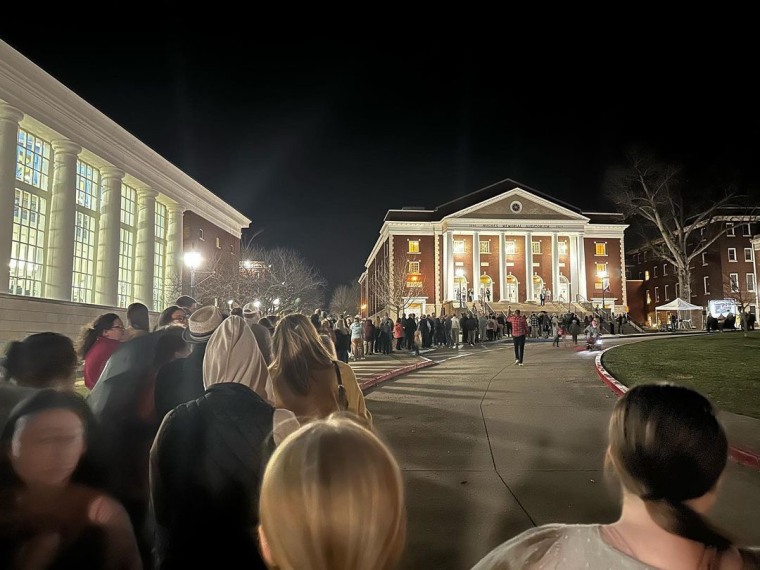
The 2023 "Asbury Revival" is an ongoing Christian revival at Asbury University in Wilmore, Kentucky. For a couple weeks now believers have been cramming into the large sanctuary of Asbury. It is now spreading to other churches. Brother Mann and I have been e-mailing each other about this move of the Holy Spirit. Is it another great revival? Another "great awakening"

Brother Mann has been following it more closely than I have and perhaps he will be led to write about it and keep us informed. I told him that I had been praying for such a thing for years, and for a "latter day rain," for many to be saved in this last corrupt generation that will, it seems, live to see the events of the Apocalypse. Elder Lasserre Bradley Jr. of Cincinnati Primitive Baptist Church, this past Sunday, called attention to it and also expressed the hope that it was a genuine awakening beginning to occur.

I am looking for the Lord to empower the church so that individual Christians will be "strong and do exploits." (Dan. 11: 32) Is it a real moving of the Holy Spirit? If it is, I don't want to be a mocker of it but join in it. If it is not, that too will become evident. We will see the fruit of it. Some will object to it because they feel like no revival can occur apart from their denomination, cult, sect, etc. But, let us hear Christ on the matter.

"And John answered and said, Master, we saw one casting out devils in thy name; and we forbad him, because he followeth not with us. And Jesus said unto him, Forbid him not: for he that is not against us is for us." (Luke 9: 49-50)

I don't want to be like the early Christians who were gathered together in a house to pray for Peter who was in prison and yet, when the angel freed Peter from his shackles and imprisonment, he went to the house where they were praying and no one wanted to believe that it was really Peter knocking at the door and calling for the door to be opened! Is the Asbury revival the beginning of the thing I have been praying about? I hope so.

"Gideon said to Him, “O my lord, if the LORD is with us, why then has all this happened to us? And where are all His miracles which our fathers told us about, saying, ‘Did not the LORD bring us up from Egypt?’ But now the LORD has forsaken us and delivered us into the hands of the Midianites.” (Judges 6: 13 nkjv)

Those believers who will have to face the time of the Apocalypse and Great Tribulation will need for God to work miraculously on a wide scale if they are to endure it. So, let us empty ourselves so that we might be filled with the Holy Spirit and fearlessly face every persecution. Oh for another Pentecost! Another great outpouring of God's Spirit! To see many of the saints working miracles and prophesying as in the early church! Fearless martyrs! 

"Pursue love, and desire spiritual gifts, but especially that you may prophesy." 
(I Cor. 14: 1)

Saturday, February 18, 2023

Beliefs about the Afterlife (x)


In the previous chapter we took notice of the fact that Christ descended into Hades as the conqueror of Death, and as the one with "the keys of Death and Hades," and we took notice of his appearing to the righteous on the side of the Gulf of Hades where Lazarus reclined on the bosom of father Abraham and was fairing well (being comforted around an implied festive table of the redeemed family of God), and what his purpose in going there was, which was to "lead captivity captive," to take them out of Hades to Heaven's Paradise. 

Though I will have some more to say about Christ' appearance to the comforted ones of upper Hades, I wish to first discuss the disputed text of I Peter 3: 18-20 and of its statement that Christ "in spirit," when put to death in the flesh, "went and preached to the spirits in prison" (KJV). Those "preached to" are identified in the text as being those who were at one time "disobedient" (had rejected God and his word) when they lived in the days of Noah. So, this would be a picture of his appearing to the side of the gulf of Hades where Dives and the condemned existed in suffering and hell fire.  

A few chapters back we listed the questions that we intended to answer as we looked at the afterlife of Jesus Christ, discussing where his soul or spirit went after his death on the cross. Here they are again.

1) The place called Hades described 
2) Biblical Cosmology 
3) Christ Descent Into Hades 
4) Conquering of Hades by Christ and the Church 
5) Believers Moved From Hades to Heaven 
6) Unbelievers Sentence Announced and Inmates Addressed in Proclamation 
7) No Offers Of Pardon Given (salvation after death) 
8) Christ Becomes Lord Of Hades & The Damned

The questions in bold letters have been addressed, although we will still have things to say in relation to them as we discuss the remaining questions (the questions, as well as the answers, are so interconnected). In this chapter we will be focused on question number six, dealing with the kind of preaching Christ did while his spirit was in Hades. 

If it is proven that Christ in spirit did descend to the Underworld, to Sheol or Hades, to "Hell" (and it is), then why is it difficult to believe that he would have something to say to the occupants thereof upon his arrival? Did not Jesus say that he would be "in the heart of the earth" for three days and nights, during the time his body was lifeless? Did we not see where Peter, on the Day of Pentecost, applied the words spoken concerning king David, "you will not leave my soul in hell" (Sheol or Hades), to Christ? If that truth is accepted, then why the great reluctance to believe that Christ said something to the inhabitants of the Underworld

I expect he had things to say to all the inhabitants of Hades and the spirit world in general, and something in particular to say to certain distinct groups within that place, chiefly the saved versus the damned. Further, that is exactly what we do find in the scriptures. That is more believable than visualizing Christ in Hades for three days "dumb before his shearers" so to speak. We cannot envision the words "opened not his mouth" as a description of his time in the Underworld of Hades.

Therefore, having accepted as a truth the fact that 1) Christ in his soul or spirit went to the Underworld, the place where all spirits of deceased humans go, and that 2) Christ had something to say to the peoples there, our debate should then move to the question of his message to the inhabitants of the Underworld. We would then be discussing the "big elephant in the room" theologically speaking, and rather discussing 1) the question as to whether there is a chance of salvation after death for anyone, and 2) whether the "preaching" of Christ to the wicked souls in Hades, to the condemned "spirits in prison," implies his offering them a chance of salvation.   

That Disputed Text

"For Christ also suffered once for sins, the just for the unjust, that He might bring us to God, being put to death in the flesh but made alive by the Spirit, by whom also He went and preached to the spirits in prison, who formerly were disobedient, when once the Divine longsuffering waited in the days of Noah, while the ark was being prepared, in which a few, that is, eight souls, were saved through water." (I Peter 3: 18-20 nkjv)

The Apostle Peter, who wrote the above words, made some interesting comments on the writings of fellow Apostle, Paul. One of them was the observation that Paul wrote in his epistles "some things hard to be understood."(II Peter 3: 16) Well, Peter may be accused of doing the same thing for the above words of Peter are also "hard to understand," or at least, hard to accept. People who read the bible often read things in it that they find "hard to understand" and/or "hard to accept." The Lord Jesus Christ had many "hard sayings" himself. They were either hard to understand, hard to accept, or both. (See John 6: 6 - "this is a hard saying, who can hear it?")

Through the years I had not, till recently, fully accepted the interpretation I now do on this much disputed passage. I used to say, as do many Protestant commentators and bible teachers, that the preaching Christ did in spirit was done by Christ preaching through Noah, and that the preaching was done to persons while they were once alive and corporeal (though they were not so at the time Peter said what he said, being then "spirits in prison"). But, I never could fully accept that view or feel comfortable with it being correct. There was a strong nagging doubt that such was the right interpretation and an inner thought that I was not just accepting what the text seems clearly to say. 

I had a reluctance to accept the obvious, as do many others (especially among those who are non Catholic). Yet, I see now that there was really nothing to fear in believing that Christ descended into Hades and spoke to the inhabitants of that world, to the righteous who are with Abraham, to the unrighteous who are with Dives in tormenting fire. 

Yes, some theologians, such as among the Roman Catholics, Mormons, etc. have said things about Christ' afterlife appearances to the dead spirits in Hades that are heretical, but the fact of his descent is not the error, and many Protestants and Evangelicals believe in it. For instance, to affirm that the purpose of Christ preaching to the disobedient in Hades was to give them a chance of salvation is a serious error and is not taught in the bible, though it is in some respects an appealing idea. We will address that error later.

Wayne Grudem (1988), well known bible commentator and seminary professor (Baptist), identifies five commonly held views on the interpretation of this verse (See here). They are: 
 
View 1: When Noah was building the ark, Christ 'in spirit' was in Noah preaching repentance and righteousness through him to unbelievers who were on the earth then but are now 'spirits in prison' (people in Hell)."

View 2: After Christ died, he went and preached to people in Hell, offering them a second chance of salvation." 

View 3: After Christ died, he went and preached to people in Hell, proclaiming to them that he had triumphed over them and their condemnation was final."

View 4: After Christ died, he proclaimed release to people who had repented just before they died in the flood, and led them out of their imprisonment (in Purgatory) into Heaven.

View 5: After Christ died (or: after he rose but before he ascended into Heaven), he travelled to Hell and proclaimed triumph over the fallen angels who had sinned by marrying human women before the flood."

These views revolve around the identity of the spirits in prison, the time in which the preaching took place, and the content of the preaching."

View number one is the one I used to strongly lean to and acknowledge and is a common view among Protestant groups. This view does see the people who are "spirits in prison" as being the spirits of the damned who are in torment in Hades. What they reject is the idea that the preaching Christ did was when he was dead, or among the dead in Hades. However, I don't think that interpretation is what the grammar and syntax of the text indicates, being what we call a "stretch." That is the reason for my doubts about such interpretation prior to finally "coming around" to the correct interpretation.

View number two is the view of Roman Catholics and no Protestant (that I am aware), other than Mormons, would affirm that Christ preaching in Hades was for the purpose of giving an opportunity for the damned to be saved. Of why this view is an error I have already somewhat spoken but will sum up and enlarge later in this series. 

View number three represents the teaching of the bible in my view. We have already to some degree shown this to be true, and will yet offer additional proofs and reasons for it being true. Since it is clear that Christ went to the Underworld, and since it is only logical and reasonable to think that he did not remain silent while there, why would we deny that one of the things he would be "proclaiming to them" would be "that he had triumphed over them and their condemnation was final"

View number four is partially right and partially wrong. Affirming that Christ proclaimed victory and release from Hades for the righteous from old testament times is true, but the people specifically mentioned as being specifically spoken to by Christ, are they who were "disobedient," and who died in their sins, who died in the flood, being a part of "the world of the ungodly." (II Peter 2: 5) Perhaps it is also an allusion to the "sons of God" (angels) in Genesis chapter six who mated with "daughters of men," and produced the hybrids known as "Nephilim" or "giants," the beings who had a fallen angel for a father and a human female for a mother. But, more on that point later.

View number five likewise has some truth and some error. There is some disagreement whether the preaching done (once the preaching through Noah view is rejected) by Christ to the spirits was done during the three days when his body lay lifeless in the tomb or after Christ was resurrected. We will speak of that issue shortly, and show why the text fairly interpreted shows that the preaching was done during the three days when Christ in spirit was in "the heart of the earth." 

Further, the bible does indicate that Christ had a message to deliver to all the inhabitants of the Underworld, to fallen men, fallen angels, and to the righteous who were happy together in a specially created region of delight in the Underworld, what is called "Abraham's Bosom."  

Important Questions On The Text

1. What does "being put to death in the flesh but made alive by the Spirit" mean?
2.What is meant by the words "by whom also He went"? 
3. When did Christ "preach to the spirits in prison"?
4. Why does Christ preach particularly to the antediluvian rebels who died in the flood?
5. What was Christ' purpose in preaching to those damned spirits

In beginning our analysis of this text, let us notice the three major occurrences of the text relative to Christ "suffering" the pains of Crucifixion and death.  

1) "having been put to death" from a single Greek word (thanatōtheis - θανατωθεὶς) 
2)  "having been made alive" from a single Greek word (zōopoiētheis - ζωοποιηθεὶς) 
3) "having gone" from a single Greek word (poreutheis - πορευθεὶς)

All those single Greek words are Aorist Tense (or Aspect) Participles, Passive Voice, Nominative Case, Masculine gender, Singular number. 

It seems clear to me that there is a sequence to these three words and what occurrences they refer to. In other words, his being "having been made alive" follows his "having been put to death." Likewise, his "having gone" follows his having been both put to death and being yet kept alive. Ergo, it seems clear that his "having gone" also is what he does after his death and his being yet alive in spirit in the afterlife. So, when did Christ go and preach to the spirits in prison? After his death, and when his soul or spirit was separated from his body, when he was a disembodied spirit. To say that the "having gone" refers to an event in Noah's day, to Christ speaking to the antediluvian peoples through Noah, is therefore totally untenable

Further, the text clearly says that Christ does his preaching while he is out of the body, while he is alive in spirit but dead in body. Also, the text seems clear that the ones preached to by Christ while he was spirit and out of the body were also disembodied spirits. It is spirit communicating with spirits. The words "in spirit preached to spirits" (literal translation) cannot refer to bodies speaking to bodies. It means just what a plain normal reading of the words leads us to think, prima facie. 

"In which" or "By which"?
The Greek Text

19 - ἐν ᾧ καὶ τοῖς ἐν φυλακῇ πνεύμασιν πορευθεὶς ἐκήρυξεν 
en o kai tois en phulake pneumasin poreutheis ekeruxen 

Does Christ, per the text, go "in spirit" or "by the Spirit"? Translators disagree on this and translate it in these ways (or similarly):

in which also he went
by whom also he went
in whom also he went

The Greek text has "en" (English "in") and not "dia" (through). That "en" sometimes functions as "by" is not doubted, but it is not the general normal use, but secondary. 

"In the flesh" is the opposite of "in the spirit" just as "put to death" is the opposite of "quickened." There is no definite article "the," however, before either "flesh" or "spirit." That strongly suggests that the Holy Spirit of the Trinity is not alluded to. Rather, it is speaking of Christ's own disembodied spirit, of what he did "in spirit," of what he said and did while in the spirit world, in the Underworld. The text is telling us what Christ did when he died, when he became a conscious disembodied spirit in the world of spirits. 

There is a lot of difference between saying "made alive (quickened) in spirit" and "made alive by the Spirit." Likewise between "in which" and "by whom." Just as "put to death in flesh" does not mean "put to death by the flesh" so "made alive in spirit" does not mean "made alive by the Spirit." The former expression tells us what was it that died, not what killed the thing, as does the latter. Likewise "made alive in spirit" tells us what did not die, not what made alive.  

What is said here of Christ can also be said in regard to the death of any human being. Being put to death in the flesh (body) does not kill the spirit. Jesus himself said this very thing. Said he:

“And do not fear those who kill the body but cannot kill the soul. But rather fear Him who is able to destroy both soul and body in hell." (Matt. 10: 28 nkjv)

Dr. John MacArthur writes (emphasis mine): 
 
"The phrase made alive in the spirit refers to the life of Jesus' spirit--not to the Holy Spirit. There's no article in the Greek text indicates that Peter was referring to the Holy Spirit. Rather, he seems to be contrasting what happened to the flesh (or body) of Jesus with what happened to His spirit. His spirit was alive but His flesh was dead.

Some think made alive in the spirit refers to Christ's resurrection, but that would necessitate a statement like, He was put to death in the flesh but made alive in the flesh. The resurrection was a spiritual and physical occurrence. Thus Peter's point has to be that though Christ was physically dead, His spirit was still alive." (As cited here)

Said Dr. James White (See here):

"There are a couple of ways the end of verse 18 and beginning of verse 19 could be translated. The Greek presents a classic men… de construction, which students of Greek recognize as meaning “on the one hand this… but on the other that…” Here, it’s thanatōtheis men sarki, zōopoiētheis de pneumati: on the one hand having been put to death in the flesh, but on the other having been made alive in the spirit. You could translate “in the spirit” as “by the spirit” (or even “by the Spirit,” indicating the Holy Spirit). However, I would suggest that if you translate it “by the spirit/Spirit,” you would need to translate the preceding men clause as “having been put to death by the flesh.” Otherwise, the parallel (“on the one hand… on the other”) wouldn’t work as powerfully. I suppose you could say “by the flesh,” referring to the Jewish and Roman authorities, but that would be an odd use of the word “flesh” that you would need to justify. The idea of “in the flesh” versus “in the spirit” is far more common, biblically speaking. It can contrast our fallen nature in Adam over against our regenerated nature in Christ (e.g., Romans 8:8-9). It can also refer simply to one’s mortal existence as opposed to one’s soul or spiritual existence (e.g., 2 Corinthians 10:3; Galatians 2:20; Philippians 1:22-24; 1 John 4:2). I believe Peter is using the term here in this latter sense. Jesus’s body was put to death, but he was spiritually alive and continued to live."

Wrote another (here):

"This passage in I Peter 3, particularly verses 19-20, is quite difficult to translate from Greek to English. This is so because each of the nine Greek words in verse 19 can be translated in various shades of meaning, making interpretation tricky. We probably do best by translating them in their most basic meanings, thus: "in which also He went and proclaimed to the spirits in prison . . ." (author's paraphrase). 
 
The "which" ("whom" in NKJV) in verse 19 probably refers back to "Spirit," its closest antecedent, in verse 18, suggesting that Jesus was no longer in the flesh but by this time had been changed into spirit. This follows the historical chain of events in order from the preceding verse: He suffered, died, was resurrected, and was thus changed to spirit, leading to the next key words, "He went."" (Richard T. Ritenbaugh Jesus and 'the Spirits in Prison')

All these facts lead us to interpret the words "made alive in spirit" not as a reference to his bodily resurrection. What is made alive in spirit is not his body. So, the text is not referring to preaching that Christ did after his bodily resurrection, but after his bodily death, when his living spirit entered the place of the spirits of the departed dead. "Made alive" has the force of "kept alive," or "animated," or "vivified." Though the body lost its life force, his spirit remained vibrant and invigorated.    

Wrote a leading Commentary on the text (emphasis mine):

"We enter here on a passage of which widely different interpretations have been given. It seems best in dealing with it to give in the first place what seems to be the true sequence of thought, and afterwards to examine the other views which appear to the present writer less satisfactory. It is obvious that every word will require a careful study in its relation to the context. (1) For “by which” we ought to read “in which.” It was not by the instrumentality of the Holy Spirit, but in His human spirit as distinct from the flesh, that He who had preached to men living in the flesh on earth now went and preached to the spirits that had an existence separate from the flesh. (2) The word “went” is, in like manner, full of significance. It comes from the Apostle who was the first to proclaim that the “spirit” or “soul” of Christ had passed into Hades, but had not been left there (Acts 2:31). It agrees with the language of St Paul in the Epistle to which we have found so many references in this Epistle, that He had “descended first into the lower parts of the earth,” i.e. into the region which the current belief of the time recognised as the habitation of the disembodied spirits of the dead (Ephesians 4:9). It harmonises with the language of the Apostle who was St. Peter’s dearest friend when he records the language in which the risen Lord had spoken of Himself as having “the keys of Hades and of death,” as having been dead, but now “alive for evermore” (Revelation 1:18)." (Cambridge Bible for Schools and Colleges) 

Though I agree with the above, I cannot accept some of what the same commentary says further in the same context. It is these words of commentary:

"And he “went and preached.” The latter word is used throughout the Gospels of the work of Christ as proclaiming “the Gospel of the kingdom” (Matthew 4:23), preaching “repentance” (Matthew 4:17), and the glad tidings of remission of sins as following upon repentance. It would do violence to all true methods of interpretation to assume that the Apostle, who had been converted by that preaching and had afterwards been a fellow-worker in it, would use the word in any other meaning now." 

We will address whether any of the "preaching" done by Christ while in Hades was the gospel, or the evangel. If we think that I Peter 4: 6, where Peter says "for this reason the gospel was preached to those who are dead," is referring to the same preaching of I Peter 3: 19, then we can say that the preaching or proclamations of Christ in Hades included the gospel message. Why would we think Christ would not say something about the good news? Surely he also preached and proclaimed judgment, announced sentence to the inhabitants, etc. As there were different groups to address in Hades, so too there were different proclamations and announcements to be made in particular to each group or section of Hades prison.

The commentary also says further:

"We cannot think of the work to which the Spirit of Christ went as that of proclaiming an irrevocable sentence of condemnation. This interpretation, resting adequately on its own grounds, is, it need hardly be said, confirmed almost beyond the shadow of a doubt by the words of ch. 1 Peter 4:6, that “the Gospel was preached also to the dead.” Those to whom He thus preached were “spirits.” (Ibid)

But, actually, he had both a message of condemnation to the unrighteous lost and to the righteous in Abraham's Bosom. It ought to be easy to accept. The purpose and the message in preaching in Hades, whether it be the gospel or the law, would be different for each side of the gulf of Hades, or to the fallen angels versus wicked humans, or to demons, or to Satan.

Baker's Evangelical Dictionary say:

"It is widely accepted that the proclamation in 1 Peter 3:19 occurs after rather than before his resurrection (v. 18, "made alive by the Spirit")..." (See here)

But, that is not true for that is not the meaning of the text as we have seen.

In summing up what we have been led to believe we see that the text says that Christ, when his body was put to death his soul continued to be animated with life in his human spirit and he went to the place where all departed spirits go, to Hades. His going there, however, was not common with any other. He went there for several reasons. 

First, because he had died. Second, to "lead captivity captive," to empty the comforting paradisaical side of Hades where the righteous family were gathered together with father Abraham. Third, to convey a message to the inhabitants of Hades, one of which is specifically addressed to one "cell block" of the punishment or prison side of Hades, to those criminals who had behaved so abominably in the days before the flood. Or, perhaps to the fallen angels who are in the "Tartarus" section of the prison?  We will pick up at this point in the next chapter as we continue our examination of I Peter 3: 18-20.