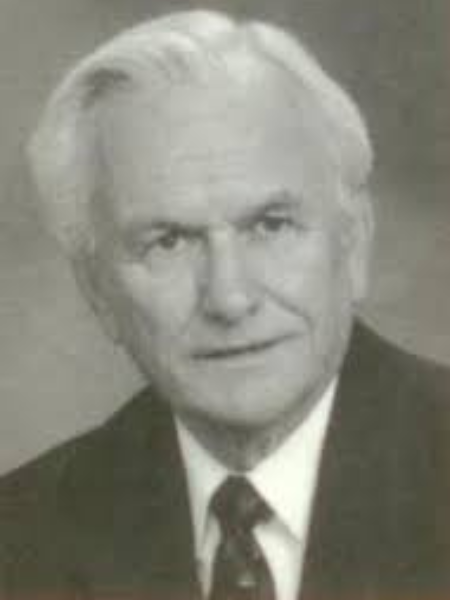
Elder Harold Hunt
In Elder Harold Hunt's book "The London Confession: And its Place in Baptist History" (2007), which you can read (here), I cited from this work and refuted much of what he wrote in this post (See here). In that post I cited these words of Hunt (emphasis mine):
"They point to those texts that identify the saved as those who believe in Christ, and they are sure the sinner could not possibly believe until they talk to him (the preacher - SG) —and tell him what to believe—as if the Spirit of God is unable to witness in the heart of the sinner."
"First off, the Bible teaches in the clearest language that the Holy Spirit teaches us to know Jesus Christ—as a person."
So, Hunt, like Sylvester Hassell, C.H. Cayce, and P.T. Oliphant, who I cited in the previous post, agrees that in order for sinners to be made believers in Jesus and be saved, Christ must personally, or the Holy Spirit must personally, witness to or preach to the sinner.
In this post (here) I cited what the late Elder Sonny Pyles said in a sermon attacking those "Primitive Baptists" who were saying that the elect must hear the gospel after regeneration in order to be finally saved. He also mentioned how some of them said that Jesus himself preaches the gospel to every elect person, and then Sonny said: "Why didn't you say that to start with?" I take that to mean that he agreed with Hassell, Cayce, etc.
In another post (here) I cited from Elder Pyle's son, Elder David Pyles, who wrote:
"We allow that God has every right and all ability to preach the gospel himself without the aid of man. According to Galations 3:8, God preached the gospel to Abraham long before there ever was an apostle, elder, or missionary. It is presumptuous for us to take any position asserting that only man can preach the gospel." (see here)
And,
"I believe I speak for all Primitive Baptists by saying that God will reveal Himself, in His own chosen way and degree, to all of His elect people here in time. In this sense it could be said that the gospel will reach all of the elect."
And,
"These texts also show that without the "gospel" preached by God, one will never receive the gospel as preached by man. Observe that in the last verse, it is asserted that the Jews would not receive the outward word because they did not possess the inward word. Only God can implant this inward word, and He will do it to all of His chosen in time."
And,
"While we allow that God may, in His own sovereign pleasure, quicken whom He will, where He will, and when He will, and while we allow that God may do all of these even among those who are, and shall remain, deprived of the true gospel as preached by man, the scriptures deny that uninspired man can identify the presence of a regenerate heart in the absence of belief in the Lord Jesus. Accordingly, we have no authority to offer the promises of the gospel to anyone who has not accepted it."
And,
"I believe I speak for all Primitive Baptists by saying that God will reveal Himself, in His own chosen way and degree, to all of His elect people here in time. In this sense it could be said that the gospel will reach all of the elect."
And,
"These texts also show that without the "gospel" preached by God, one will never receive the gospel as preached by man. Observe that in the last verse, it is asserted that the Jews would not receive the outward word because they did not possess the inward word. Only God can implant this inward word, and He will do it to all of His chosen in time."
And,
"While we allow that God may, in His own sovereign pleasure, quicken whom He will, where He will, and when He will, and while we allow that God may do all of these even among those who are, and shall remain, deprived of the true gospel as preached by man, the scriptures deny that uninspired man can identify the presence of a regenerate heart in the absence of belief in the Lord Jesus. Accordingly, we have no authority to offer the promises of the gospel to anyone who has not accepted it."
Elder Gilbert Beebe was probably the first one to promote this view. He wrote:
"The word of the Lord, which is Spirit, and which is life, which liveth and abideth forever, is that by which regeneration is affected; not MERELY by the Scriptures in their LETTER, not reading or preaching them, but the words which Jesus himself SPEAKS to the individual persons who are made to hear and live." ("Regeneration and the New Birth" in the Signs of the Times for Sept. 1st, 1857; you can read here beginning on page 13)
Hunt, in the same writing, wrote:
"For the last two hundred years the notion that one must hear the preached gospel—and believe it or burn—has caused untold contention among the Baptists."
Notice that he did not say "for the past two thousand years," but says the "past two hundred years." By this statement he admits that there was no contention over the question until the birth of the Hardshell sect in the early 1800s. Prior to that time nearly every Baptist believed that a person had to hear and believe the gospel in order to be saved. He has even admitted that the 1689 London Baptist Confession of Faith taught this truth. Though he exalts his ministers who signed the Fulton Confession of Faith (1900), saying they were the most ablest of preachers the "Primitive Baptist" ever had, yet he says they attempted to make the London confession to mean something different than it plainly says on the question of whether God uses the word of God as a means in the eternal salvation of sinners and on what that confession said about predestination.
He also does not mention the fact that most of the first generation of "Primitive" or "Old School" Baptists (prior to the Civil War) believed in means. He also contradicts himself as did Cayce for in one breath he denies that one must hear the gospel and believe it in order to be saved and then in another breath says that all the elect will hear it preached by Jesus and believe it.
I know Elder Hunt personally. I have been in his home. He was at one time a close friend of my father, a fellow Hardshell of Hunt. When father was brought up on charges of heresy by the Powell Valley Association for preaching heresy because he taught that Satan was a fallen angel, falling from heaven, Hunt at first opposed those who were making this question a test of fellowship, but then when he was pressured he did an about face and fought against father and persecuted him. I say this in order to say that when Hunt denies that the gospel, as preached by God sent preachers, is a means in saving sinners, that he is going against what his own association (Powell Valley) affirmed in 1879 in their declarations against the views of the Two Seed Baptists. In this post (here) I cited from historian Lawrence Edwards who gives us what is in the 1879 minutes of that association. Here is the citation I gave:
In chapter V, "THE TWO-SEED HERESY AND ABSOLUTE PREDESTINATION," Lawrence wrote:
"The Two-Seed doctrine, which was beginning to occupy the attention of the churches in the early 1870's, continued to plague the Primitive Baptists, especially those of the Powell Valley association, until 1889, when a split occurred in the association. The Nolachucky association, too, felt the impact of this conflict, but no complete rift, such as the Powell Valley experienced, occurred in any of the other East Tennessee associations.
At the 1879 meeting of the Powell Valley association the tenth item of business said: Committee appointed to draft advice to the churches in regard to the Two-Seed doctrine, who reported as follows:
We as an association advise our sister churches to have no fellowship with what is generally known as the two-Seed Heresy or those who teach the doctrine of an Eternally damned or Eternally Justified outside of the preaching of the gospel of the Kingdom of God and teach that the unbeliever is no subject of gospel address. We believe that God makes use of the Gospel as a means of calling his Elect and this means is the work of the Spirit in the church.
But the Powell Valley seems to feed on division and dissension, for in the early years of the twentieth century it was again torn asunder." (pg. 89)
"The Two-Seed doctrine, which was beginning to occupy the attention of the churches in the early 1870's, continued to plague the Primitive Baptists, especially those of the Powell Valley association, until 1889, when a split occurred in the association. The Nolachucky association, too, felt the impact of this conflict, but no complete rift, such as the Powell Valley experienced, occurred in any of the other East Tennessee associations.
At the 1879 meeting of the Powell Valley association the tenth item of business said: Committee appointed to draft advice to the churches in regard to the Two-Seed doctrine, who reported as follows:
We as an association advise our sister churches to have no fellowship with what is generally known as the two-Seed Heresy or those who teach the doctrine of an Eternally damned or Eternally Justified outside of the preaching of the gospel of the Kingdom of God and teach that the unbeliever is no subject of gospel address. We believe that God makes use of the Gospel as a means of calling his Elect and this means is the work of the Spirit in the church.
But the Powell Valley seems to feed on division and dissension, for in the early years of the twentieth century it was again torn asunder." (pg. 89)


No comments:
Post a Comment