Said Spurgeon in Commenting upon Matt. 7: 22:
"...they attended to marvels, but not to essentials. They neglected the important things, which should have been done in secret; they did much that could be seen in public, but they failed in the plainer, simpler things that nobody saw. Let me just say to you, brothers and sisters, that herein lies a great part of our danger
- the risk of getting a religious character without having a renewed heart,
- doing religious actions without really being born again,
- learning the brogue of the New Jerusalem without having been born as a citizen of the heavenly city,
- becoming fluent talkers, and earnest workers, but not having confessed sin, or repented of it, or laid hold on Jesus Christ by living faith.
I do beseech you, young professors, to covet most of all secret holiness,
- the holiness that does not wish to be seen,
- plain, honest dealing with God in private, -
- much secret prayer and meditation upon the Word,
- in brief, a life of true consecration to God.
You may prophesy if God calls you to do so. Perhaps you will cast out devils, I hope you may; and in Christ’s name you may do many wonderful works; but, first of all, “ye must be born again.” You must become as little children to sit at the feet of Jesus, and to learn of him. You must be obedient to His commands, and yield yourselves up to Him, or else you will be fatally mistaken, whatever profession you may make." (The Disowned - here)
Well, amen to these words! God help us to make our calling and election sure! Let us not be deceived hypocrites!
Tuesday, June 11, 2019


Monday, June 10, 2019
"Just Beyond The River"
At the 1220 mark of The Primitive Quartet's Album "He is the Light" (HERE)
Just Beyond The River
In The Sweet Forever
Is A Happy Land
Of Bright Sunshine
Sorrows Never More Will Come
Joybells Ever Chime
Some Happy Glad Tomorrow
Free From Sin And Sorrow
I Shall Leave This Sinful World Behind
I'll Cross O'er The Great Divine
To That Home Of Mine
I Shall Go Over Jordan Some Day
Seems I Hear Them Calling
Tones Of Love Are Falling
From The Land Beyond The Tide
Where My Loved Ones Wait
I Shall Walk Ever In The Bright Way
Since The Light Is Shining
I Have Ceased Repining (returning?)
All My Sinful Days Are Gone
Soon I'll Reach The Gate
I Am Finding Pleasure
Given Without Measure
As I'm Walking By The Master's Side
He Keeps Me So Glad And Free
As I Journey On
So I'll Keep On Singing
Ever To Him Clinging
Till I Cross Beyond The Rolling Tide
To That City Built By Love
Where The Saints Have Gone
I Shall Walk Go Jordan Someday...
repeat
Love The Words Highlighted!
Just Beyond The River
In The Sweet Forever
Is A Happy Land
Of Bright Sunshine
Sorrows Never More Will Come
Joybells Ever Chime
Some Happy Glad Tomorrow
Free From Sin And Sorrow
I Shall Leave This Sinful World Behind
I'll Cross O'er The Great Divine
To That Home Of Mine
I Shall Go Over Jordan Some Day
Seems I Hear Them Calling
Tones Of Love Are Falling
From The Land Beyond The Tide
Where My Loved Ones Wait
I Shall Walk Ever In The Bright Way
Since The Light Is Shining
I Have Ceased Repining (returning?)
All My Sinful Days Are Gone
Soon I'll Reach The Gate
I Am Finding Pleasure
Given Without Measure
As I'm Walking By The Master's Side
He Keeps Me So Glad And Free
As I Journey On
So I'll Keep On Singing
Ever To Him Clinging
Till I Cross Beyond The Rolling Tide
To That City Built By Love
Where The Saints Have Gone
I Shall Walk Go Jordan Someday...
repeat
Love The Words Highlighted!
When You Judge Me Lord
Help Me Lord To Stand
(in the day of judgment)
By The Primitive Quartet
From their album "He Is The Light" being the song that begins at the 940 mark.
(See here)
Here are the words (transcribed)
When You Judge Me Lord
Do Be Merciful
For I Have Been Weak
I'm Sorry Now To Say
It's A Place With Fear (?)
Fall Down Quivering
When I Face Thee Lord
On That Judgment Day
When You Judge Me Lord
Do Be Merciful
When You Look My Way
Please Beckon With Thy Hand
Fill The Place With Fear (?)
Do Be Merciful
Bring Me As A Child Dear Lord
Give Me Strength To Stand
When You Judge Me Lord
You'll Find Vanity
Many Other Faults
Have Plagued Me On Life's Way
In The Faith In Christ
And His Promises
When I Face Thee Lord
On That Judgment Day
When You Judge Me Lord
Do Be Merciful
When You Look My Way
Please Beckon With Thy Hand
Its A Place Of (to) Fear
Do Be Merciful
Bring Me As A Child Dear Lord
Give Me Strength To Stand
When You Judge Me Lord
You'll Find Poverty
I've Not Been Great
In Any Kind Of Way
I'll Be Just A Child
Crying Mercifully
When I Face Thee Lord
On That Judgment Day
When You Judge Me Lord
Do Be Merciful
When You Look My Way
Please Beckon With Thy Hand
The words of this beautiful hymn are expressed in my recent posting My Defense For That Day When I hear these words sung, they grip my soul.
(in the day of judgment)
By The Primitive Quartet
From their album "He Is The Light" being the song that begins at the 940 mark.
(See here)
Here are the words (transcribed)
When You Judge Me Lord
Do Be Merciful
For I Have Been Weak
I'm Sorry Now To Say
It's A Place With Fear (?)
Fall Down Quivering
When I Face Thee Lord
On That Judgment Day
When You Judge Me Lord
Do Be Merciful
When You Look My Way
Please Beckon With Thy Hand
Fill The Place With Fear (?)
Do Be Merciful
Bring Me As A Child Dear Lord
Give Me Strength To Stand
When You Judge Me Lord
You'll Find Vanity
Many Other Faults
Have Plagued Me On Life's Way
In The Faith In Christ
And His Promises
When I Face Thee Lord
On That Judgment Day
When You Judge Me Lord
Do Be Merciful
When You Look My Way
Please Beckon With Thy Hand
Its A Place Of (to) Fear
Do Be Merciful
Bring Me As A Child Dear Lord
Give Me Strength To Stand
When You Judge Me Lord
You'll Find Poverty
I've Not Been Great
In Any Kind Of Way
I'll Be Just A Child
Crying Mercifully
When I Face Thee Lord
On That Judgment Day
When You Judge Me Lord
Do Be Merciful
When You Look My Way
Please Beckon With Thy Hand
Its A Place Of (to) Fear
Do Be Merciful
Bring Me As A Child Dear Lord
Give Me Strength To Stand
Do Be Merciful
Bring Me As A Child Dear Lord
Give Me Strength To Stand
The words of this beautiful hymn are expressed in my recent posting My Defense For That Day When I hear these words sung, they grip my soul.
Saturday, June 8, 2019
Romans 3: 22 "unto all" & "upon all"
"Even the righteousness of God which is by faith of Jesus Christ unto all and upon all them that believe: for there is no difference." (Rom. 3:22 KJV)
Why does the inspired apostle say "unto all and upon all" (εἰς πάντας καὶ ἐπὶ πάντας)?
Why the double use of prepositions "unto" ("eis") and "upon" ("epi")? What is the difference, if any, between "unto all" and "upon all"? Is it a redundancy? Meaning the same thing? Highly unlikely. Calvin, however, in his commentary said: "Unto all and upon all, etc. For the sake of amplifying, he repeats the same thing in different forms..." But why such a redundancy here and not generally elsewhere?
I will not enter into dispute over whether the above reading is the preferred (many ancient manuscripts leave out the double preposition) but will accept the above as canonical.
"Unto all"
This unquestionably means "towards all men without distinction (or difference)." Is the gospel (and the righteousness of Christ) not "unto all"? Is it not to be preached to "all the world" and "every creature" per the great commission? Does "unto all" not show the extension of saving mercy to all through faith in the work of Christ? Does it not show that "God is not willing that any should perish"? (II Peter 3:9) Does it not show that God "has no pleasure in the death of the wicked"? (Ezekiel 18:23; 33:11) Does it not show that "God will have all to be saved and come unto a knowledge of the truth"? (I Tim 2: 4)
Wrote the learned Albert Barnes in his commentary (highlighting mine):
"Unto all and upon all - It is evident that these expressions are designed to be emphatic, but why both are used is not very apparent. Many have supposed that there was no essential difference in the meaning. If there be a difference, it is probably this: the first expression, "unto all" εἰς πᾶς eis pas, may denote that this plan of justification has come "(Luther)" unto all men, to Jews and Gentiles; that is, that it has been provided for them, and offered to them without distinction. The plan was ample for all, was suited for all, was equally necessary for all, and was offered to all."
I am sure in my own mind that the apostle intends by "unto all" to mean that salvation, via the gospel and faith in it, is sent to all men without any distinction of social status.
"Upon All"
Barnes continued:
"The second phrase, "upon all" ἐπὶ πᾶντας epi pantas, may be designed to guard against the supposition that all therefore would be benefited by it, or be saved by the mere fact that the announcement had come to all. The apostle adds therefore, that the benefits of this plan must actually come upon all, or must be applied to all, if they would be justified. They could not be justified merely by the fact that the plan was provided, and that the knowledge of it had come to all, but by their actually coming under this plan, and availing themselves of it."
Salvation consists in one being in the number designated by the second preposition (epi). For salvation to be "towards" or "unto" (eis) a person does not guarantee salvation for that person. However, salvation consists in one being in the number designated by those intended by "epi."
Here is what some others have said (all emphasis mine):
Commentary Critical and Explanatory on the Whole Bible
"...that is, perhaps, brought nigh “unto all” men the Gospel, and actually “upon all” believing men, as theirs in possession [Luther and others]; but most interpreters understand both statements” of believers as only a more emphatic way of saying that all believers, without distinction or exception, are put in possession of this gratuitous justification, purely by faith in Christ Jesus."
"Most interpreters" are wrong in understanding Paul to be emphasizing by repetition.
Godet said:
"It is quite in keeping with Paul"s manner thus to accumulate subordinate clauses to express by a change of prepositions the different aspects of the moral fact which he means to describe. These two aspects in this case are those of general destination ( εἰς, for) and personal application ( ἐπί, upon): "As to this righteousness, God sends it for thee that thou mayest believe in it; and it will rest on thee from the moment thou believest." Comp. Philippians 3:9. Theodoret, Bengel, etc. have thought that the clause: for all them, applied to the Jews, and the clause: upon all them, to the Gentiles. But the very object the apostle has here in view is to efface every other distinction save that of believing."
Haldane well expressed my views when he wrote in his famous commentary on Romans:
"This righteousness is unto all. — It is set before all, and proclaimed to all, according to the commandment of our blessed Lord, — ’ Go ye into all the world, and preach the Gospel to every creature.’ Upon all, is connected with the words that follow, viz., them that believe. While it is proclaimed to all men, it is actually upon believers. It is not put into them, as their sanctification is brought in the soul by the Holy Spirit; but it is placed upon them as a robe:--’He hath covered me with the robe of righteousness, ’ Isaiah 61:10. It is the white raiment given by Jesus Christ to them who hear His voice, that they may be clothed, and that the shame of their nakedness may not appear, Revelation 3:18. It is the fine linen, clean and white, with which the bride, the Lamb’s wife, is arrayed; for the fine linen is the righteousness of saints, Revelation 19:8. Thus Jesus Christ is made of God, to them that are in Him, righteousness, Corinthians 1:30."
Amen.
Why does the inspired apostle say "unto all and upon all" (εἰς πάντας καὶ ἐπὶ πάντας)?
Why the double use of prepositions "unto" ("eis") and "upon" ("epi")? What is the difference, if any, between "unto all" and "upon all"? Is it a redundancy? Meaning the same thing? Highly unlikely. Calvin, however, in his commentary said: "Unto all and upon all, etc. For the sake of amplifying, he repeats the same thing in different forms..." But why such a redundancy here and not generally elsewhere?
I will not enter into dispute over whether the above reading is the preferred (many ancient manuscripts leave out the double preposition) but will accept the above as canonical.
"Unto all"
This unquestionably means "towards all men without distinction (or difference)." Is the gospel (and the righteousness of Christ) not "unto all"? Is it not to be preached to "all the world" and "every creature" per the great commission? Does "unto all" not show the extension of saving mercy to all through faith in the work of Christ? Does it not show that "God is not willing that any should perish"? (II Peter 3:9) Does it not show that God "has no pleasure in the death of the wicked"? (Ezekiel 18:23; 33:11) Does it not show that "God will have all to be saved and come unto a knowledge of the truth"? (I Tim 2: 4)
Wrote the learned Albert Barnes in his commentary (highlighting mine):
"Unto all and upon all - It is evident that these expressions are designed to be emphatic, but why both are used is not very apparent. Many have supposed that there was no essential difference in the meaning. If there be a difference, it is probably this: the first expression, "unto all" εἰς πᾶς eis pas, may denote that this plan of justification has come "(Luther)" unto all men, to Jews and Gentiles; that is, that it has been provided for them, and offered to them without distinction. The plan was ample for all, was suited for all, was equally necessary for all, and was offered to all."
I am sure in my own mind that the apostle intends by "unto all" to mean that salvation, via the gospel and faith in it, is sent to all men without any distinction of social status.
"Upon All"
Barnes continued:
"The second phrase, "upon all" ἐπὶ πᾶντας epi pantas, may be designed to guard against the supposition that all therefore would be benefited by it, or be saved by the mere fact that the announcement had come to all. The apostle adds therefore, that the benefits of this plan must actually come upon all, or must be applied to all, if they would be justified. They could not be justified merely by the fact that the plan was provided, and that the knowledge of it had come to all, but by their actually coming under this plan, and availing themselves of it."
Salvation consists in one being in the number designated by the second preposition (epi). For salvation to be "towards" or "unto" (eis) a person does not guarantee salvation for that person. However, salvation consists in one being in the number designated by those intended by "epi."
Here is what some others have said (all emphasis mine):
Commentary Critical and Explanatory on the Whole Bible
"...that is, perhaps, brought nigh “unto all” men the Gospel, and actually “upon all” believing men, as theirs in possession [Luther and others]; but most interpreters understand both statements” of believers as only a more emphatic way of saying that all believers, without distinction or exception, are put in possession of this gratuitous justification, purely by faith in Christ Jesus."
"Most interpreters" are wrong in understanding Paul to be emphasizing by repetition.
Godet said:
"It is quite in keeping with Paul"s manner thus to accumulate subordinate clauses to express by a change of prepositions the different aspects of the moral fact which he means to describe. These two aspects in this case are those of general destination ( εἰς, for) and personal application ( ἐπί, upon): "As to this righteousness, God sends it for thee that thou mayest believe in it; and it will rest on thee from the moment thou believest." Comp. Philippians 3:9. Theodoret, Bengel, etc. have thought that the clause: for all them, applied to the Jews, and the clause: upon all them, to the Gentiles. But the very object the apostle has here in view is to efface every other distinction save that of believing."
Haldane well expressed my views when he wrote in his famous commentary on Romans:
"This righteousness is unto all. — It is set before all, and proclaimed to all, according to the commandment of our blessed Lord, — ’ Go ye into all the world, and preach the Gospel to every creature.’ Upon all, is connected with the words that follow, viz., them that believe. While it is proclaimed to all men, it is actually upon believers. It is not put into them, as their sanctification is brought in the soul by the Holy Spirit; but it is placed upon them as a robe:--’He hath covered me with the robe of righteousness, ’ Isaiah 61:10. It is the white raiment given by Jesus Christ to them who hear His voice, that they may be clothed, and that the shame of their nakedness may not appear, Revelation 3:18. It is the fine linen, clean and white, with which the bride, the Lamb’s wife, is arrayed; for the fine linen is the righteousness of saints, Revelation 19:8. Thus Jesus Christ is made of God, to them that are in Him, righteousness, Corinthians 1:30."
Amen.
Thursday, June 6, 2019
My Defense For "That Day"
"Wherefore we labour, that, whether present or absent, we may be accepted of him. For we must all appear before the judgment seat of Christ; that every one may receive the things done in his body, according to that he hath done, whether it be good or bad." (II Cor. 5: 9-10)
"So then every one of us shall give account of himself to God." (Rom. 14:12)
"Holding forth the word of life; that I may rejoice in the day of Christ, that I have not run in vain, neither laboured in vain." (Phl. 2:16)
"So then every one of us shall give account of himself to God." (Rom. 14:12)
"Holding forth the word of life; that I may rejoice in the day of Christ, that I have not run in vain, neither laboured in vain." (Phl. 2:16)
Stephen Michael Garrett's
Account and Plea for the coming "day of judgment"
2. I have no excuse for all my sins and unfruitfulness in your service.
3. I plead guilty to all the "bad" on my record.
4. As far as any good that I have done in life, I credit all to your grace.
5. I fall on the mercy of the court and claim the blood of your cross as my only justification.
6. Your holy will be done, Lord Jesus.
7. Lord, it has been a struggle, as you know, in the battle with the flesh. I have lost many battles in this lifelong conflict. By your grace and mercy I am thankful to have won some victories in this fight with sin and Satan. Having crucified the flesh when I first trusted in you, I have often felt like the flesh was killing me rather me killing the flesh. Lord, I fought till the end.
8. Lord, I rest on your promises. You promised eternal life and justification from all things to all who believe. Lord, you know that I trusted you through life, though I sometimes fell short.
9. Lord, you know that I have long feared this day and have often begged for mercy to be shown at this trial. Do with me as seems good in your sight.
10. Lord, I have no works of merit to plead, no ground for boasting. All the good I ever did, or the good character I ever obtained in life, was due to your working in me.
What will be your defence?
Hassell On Hardshell "Logomachies"
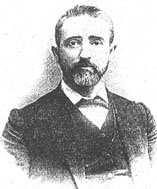
Elder Sylvester Hassell (1842-1928)
"Strifes of Words and Hobby Horses"
The Gospel Messenger--January 1894
"The Apostle Paul, writing by inspiration of God, repeatedly {1Ti 6:3-5,20-21; 2Ti 2:14-18,23-26} forbids our engaging in what he calls "logomachies," or wars of words, and "profane and vain babbling," "oppositions of science falsely so called," and "foolish and unlearned questions which gender strifes." He declares that these wordy wars proceed from the devil, {1Co 14:33; 1Ti 3:6; 4:1; 6:5; 2Ti 2:26} from spiritual disease, {1Ti 6:3-4; 2Ti 2:17} pride, {1Ti 6:4} corruption, {1Ti 6:5; 2Ti 2:16-17} avarice, {1Ti 6:10} philosophy, {1Ti 6:20; Col 2:8} and heresy; {1Ti 6:10,21; 2Ti 2:18} that they produce jealousy, rivalry, evil speaking, unjust suspicions, and vain disputations, and are unprofitable, and, instead of edifying, subvert others, and tend to destroy and overthrow their faith. {1Ti 6:4-5,10,21; 2Ti 2:14-18,23,26}"
To "logomachies" we might add "pettifoggers." I have often spoke against hair splitting theologians and Sophist preachers.
Hassell continued:
"Every person unhappily affected with such an empty, irreligious, and unmoral sophistomania is "proud," says the Apostle, {1Ti 6:4} that is, as the original word literally means, is "beclouded," "filled with the fumes of self-conceit" (like the "novice" in 1Ti 3:6--the same word being used there by the Apostle), "knowing nothing" (so darkened that he can see nothing clearly), "doting" (that is, "diseased," "morbidly anxious,") not about substantial and eternal realities, but "about subtleties and disputes of words," (or hair-splitting distinctions, abstract ideas, vain speculations, frivolous allegorizings or philosophizings), "corrupted in mind and bereft of the truth," {1Ti 6:4-5} as even the people of God are, when not sustained or illuminated by the Spirit."
Well, amen to that!
Hassell continued:
"When in the flesh, we are all of us liable to this dreadful disease; and, when so afflicted, we may enter into heated disputes with our brethren on subjects in regard to which we are really agreed, while we differ only in the words that we use--especially when the subjects of our controversies are such deep and unfathomable mysteries as the nature of God and of the human soul, predestination, redemption, and regeneration, the origin of sin, the exact condition of Adam before his fall, and the exact result of his fall. It is the mark of the highest wisdom to receive all the statements of the Scriptures on these deep mysteries with all the humility and teachableness of a little child, {Lu 18:17} and not to seek to pry into the secret things that belong to God, {De 29:29} and exercise ourselves in great matters and things too high for us, {Ps 133:1} and rail at our brethren who do not express themselves exactly as we do, who do not adopt all our shibboleths, on these profound subjects that no human being has ever been able to understand and explain. Neither upon these nor upon any other subject should we ever wilfully distort and misrepresent the views of others; and upon all subjects we should, as much as possible, endeavor to lay aside all prejudice, partiality, and prepossession, and to ascertain "the truth, the whole truth, and nothing but the truth," which alone can do us any real and lasting good."
To "logomachies" we might add "pettifoggers." I have often spoke against hair splitting theologians and Sophist preachers.
Hassell continued:
"Every person unhappily affected with such an empty, irreligious, and unmoral sophistomania is "proud," says the Apostle, {1Ti 6:4} that is, as the original word literally means, is "beclouded," "filled with the fumes of self-conceit" (like the "novice" in 1Ti 3:6--the same word being used there by the Apostle), "knowing nothing" (so darkened that he can see nothing clearly), "doting" (that is, "diseased," "morbidly anxious,") not about substantial and eternal realities, but "about subtleties and disputes of words," (or hair-splitting distinctions, abstract ideas, vain speculations, frivolous allegorizings or philosophizings), "corrupted in mind and bereft of the truth," {1Ti 6:4-5} as even the people of God are, when not sustained or illuminated by the Spirit."
Well, amen to that!
Hassell continued:
"When in the flesh, we are all of us liable to this dreadful disease; and, when so afflicted, we may enter into heated disputes with our brethren on subjects in regard to which we are really agreed, while we differ only in the words that we use--especially when the subjects of our controversies are such deep and unfathomable mysteries as the nature of God and of the human soul, predestination, redemption, and regeneration, the origin of sin, the exact condition of Adam before his fall, and the exact result of his fall. It is the mark of the highest wisdom to receive all the statements of the Scriptures on these deep mysteries with all the humility and teachableness of a little child, {Lu 18:17} and not to seek to pry into the secret things that belong to God, {De 29:29} and exercise ourselves in great matters and things too high for us, {Ps 133:1} and rail at our brethren who do not express themselves exactly as we do, who do not adopt all our shibboleths, on these profound subjects that no human being has ever been able to understand and explain. Neither upon these nor upon any other subject should we ever wilfully distort and misrepresent the views of others; and upon all subjects we should, as much as possible, endeavor to lay aside all prejudice, partiality, and prepossession, and to ascertain "the truth, the whole truth, and nothing but the truth," which alone can do us any real and lasting good."
Again, amen to that! Let us all heed these words.
Tuesday, June 4, 2019
The 1946 Waco Primitive Baptist Articles of Faith
On the 28th and 29th of September, 1946
Waco Primitive Baptist Church held a peace meeting to attempt reconciliation
with those whom they referred to as "Morgan" or "Trumpet" Baptists. During the
proceedings the Articles of Faith were set forth and confirmed by an appointed
committee. Of particular interest are
points 5-7 (emphasis mine – KF) :
5. We believe that all
the chosen in Christ shall be called, regenerated and sanctified by the Holy
Spirit and that they will be justified
in the sight of God by the righteousness of Christ imputed to them by faith
and will be preserved through grace and never fall finally away.
6. We believe that evangelical faith is the true gift of God
and good works are the fruits of faith, and justify us in the sight of men and
angels, as evidences of our gracious state.
7. We believe that all
spiritual blessings that are essential
for the consummation of the eternal salvation of the elect were given them
in Christ before the world began, and in
time bestowed upon them by virtue of His atonement for them.
In the discussion prior to the selection of the committee, Elder
J.O. Collins is on record as follows:
“I would think that
all these brethren should be elders that are to draw up these resolutions or
recommendations to put before the body. They
should be brethren that can qualify to do it, and all should be appointed by
the moderator. We have the same Article of Faith and Rules of Decorum that our fathers
and grandfathers had. We are the same
people today that we were then; our Articles of Faith remain the same; so I
say that brethren that qualify should be appointed.”
Of course, there are several things to note here, the most
important of which may be the timing.
This was in 1946, about 40 years or so after Hardshellism evolved into
its final form. But not one of the above
articles is agreeable to it! Why were
they thus received? Why was it that no elder
stood up, objecting to the wording? On
top of that, you have an explicit testimony from an elder stating that this is
what they’ve always been!
There are at least three places incompatible with
present-day Hardshell doctrine:
Imputed to them “by faith”?
“Evangelical” faith is the true gift of God?
There are “essentials” for eternal salvation to be bestowed
on the elect?
I know nothing about these brethren from Texas, nor the
peace meeting for which they convened. I
happened upon the record of this meeting and the published articles while
cleaning up my bookshelf over the weekend. They were part of a larger pamphlet containing as well the Black Rock
Address of 1832 and the Pitts Resolution of 2000. The Articles of Faith are true but are “Calvinistic”
in their wording. So what in the world are
they doing sandwiched between these two other declarations which are supposedly
representative of Primitive Baptist doctrine?!!! Did the publishers not see the incompatibility, or were they counting upon the readers not seeing it themselves?
What would happen to an elder today if he were to ascend into
the typical pulpit and began to teach that evangelical faith...THAT FAITH WHICH COMES THROUGH THE GOSPEL... is the gift of God, or that there are essentials of eternal life to be given to the elect?
I know what.
Article #5 exists today as slightly modified. Check here and see if you can spot it. Was this an intentional change? But the change of the articles isn't complete; that is, if complete consistency with anti-means Hardshellism is desired. See if you can spot what else needs to change on the other points.
But praise be to God if these brethren in 1946 did in fact believe what was written! My concern, however, is if we were able to really hone in on the wording
we would discover that they really did not.
As in other cases I’ve seen, the Articles of Faith had not yet caught up
to the newly created theology.
I would like to be wrong in this case.
Sunday, June 2, 2019
Beautiful Words
"Others"
Lord, help me live from day to day
In such a self-forgetful way
That even when I kneel to pray
My prayer shall be for OTHERS.
Help me in all the work I do
To ever be sincere and true
And know that all I do for YOU
Must needs be done for OTHERS.
Let self be crucified and slain
And buried deep, and all in vain
May efforts be to rise again
Unless to live for OTHERS.
And when my work on earth is done
And my new work in heaven begun,
May I forget the crown I've won,
While thinking still of OTHERS.
Others, Lord, yes, others --
Let this my motto be;
Help me to live for others
That I may live like Thee.--
Acapella (here)
"Wonderful Words Of Life"
Sing them over again to me,
Wonderful words of life,
Let me more of their beauty see,
Wonderful words of life;
Words of life and beauty
Teach me faith and duty.
Refrain:
Beautiful words, wonderful words,
Wonderful words of life;
Beautiful words, wonderful words,
Wonderful words of life.
Christ, the blessed One, gives to all
Wonderful words of life;
Sinner, list to the loving call,
Wonderful words of life;
All so freely given,
Wooing us to heaven.
Sweetly echo the Gospel call,
Wonderful words of life;
Offer pardon and peace to all,
Wonderful words of life;
Jesus, only Savior,
Sanctify us forever.
Acapella (HERE)
The words of these songs are true and inspiring.
Lord, help me live from day to day
In such a self-forgetful way
That even when I kneel to pray
My prayer shall be for OTHERS.
Help me in all the work I do
To ever be sincere and true
And know that all I do for YOU
Must needs be done for OTHERS.
Let self be crucified and slain
And buried deep, and all in vain
May efforts be to rise again
Unless to live for OTHERS.
And when my work on earth is done
And my new work in heaven begun,
May I forget the crown I've won,
While thinking still of OTHERS.
Others, Lord, yes, others --
Let this my motto be;
Help me to live for others
That I may live like Thee.--
Acapella (here)
"Wonderful Words Of Life"
Sing them over again to me,
Wonderful words of life,
Let me more of their beauty see,
Wonderful words of life;
Words of life and beauty
Teach me faith and duty.
Refrain:
Beautiful words, wonderful words,
Wonderful words of life;
Beautiful words, wonderful words,
Wonderful words of life.
Christ, the blessed One, gives to all
Wonderful words of life;
Sinner, list to the loving call,
Wonderful words of life;
All so freely given,
Wooing us to heaven.
Sweetly echo the Gospel call,
Wonderful words of life;
Offer pardon and peace to all,
Wonderful words of life;
Jesus, only Savior,
Sanctify us forever.
Acapella (HERE)
The words of these songs are true and inspiring.
Subscribe to:
Posts (Atom)