Tuesday, August 11, 2026

Elder Sylvester Hassell on Means (11)


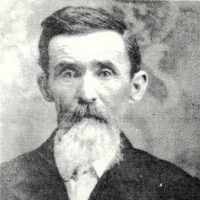
Elder Hosea Preslar

1814-1887

Elder Hosea Preslar's book titled "Thoughts On Divine Providence" lists several of the leading tenets of the Two Seed Primitive Baptists and one of them is as follows:

"Sixthly: That the gospel never was designed for anything else, but for the edification of the body of Christ, and that believers are the only subjects of gospel address." (See this post here for more citations from him on this point)

In my lengthy series on Two Seedism (see the link on this blog page) I cited from several first generation "Primitive" or "Old School" Baptists who testified that the "no means" view of salvation was a peculiar tenet of the Two Seeders who followed Daniel Parker, though Parker himself did not deny means. It was also the Two Seeders who taught that regeneration or rebirth did not change a person, but simply deposited an eternal spirit child of God in a person. Though Hassell does not go that far, yet he shows remnants of Two Seed thinking in his polemic writings against the means view. His denial of means is certainly a Two Seed invention. His idea that regeneration excludes conversion and faith and repentance also reflects this "no change" view of spiritual birth. However, recall that I cited these words of Hassell in a preceding chapter:

"Jesus is the Great Preacher, and, by His omnipresent Spirit, He preaches His gospel savingly to His people (Isa. 61:1-3,10,11; Luke 4:16-30; Heb. 2:11,12; Psalm 110:3)."

This statement confuses the matter. Why? Because Hassell over and over again denies that the preaching of the gospel is a means in being begotten of God, and yet he says the above which makes the preaching of the gospel, done by Jesus through the Spirit, a means unto salvation, and if it is a means to salvation it can't be a mere possible after effect of salvation (which is what Hassell says elsewhere). This view of the subject made it possible for Hassell (and those who agreed with the above statement) to agree with his forefathers who said that the gospel was a means in salvation and yet to also agree with the new prevailing view of the late 19th century that said the gospel (as preached by men) was no means in salvation. 

We will now continue our examination of Hassell's polemic for his "anti-means" view of salvation as given in his January, 1898 editorial "NO HUMAN INSTRUMENTALITY IN REGENERATION," published in Hassell's paper "The Gospel Messenger" (You can read it on page 12 here). But, first let me say that it is an insurmountable task to prove that God does not use his word or gospel and the preachers of it in saving sinners. This is because 1) there are so many Bible texts which affirm that God does use such means and because 2) there is no text that says God does not use such means. All the arguments against the "no means" view that are made by the Hardshells are from supposed logical deductions or from twisting of Bible passages. 

For instance, the Hardshells say that when the Bible says that sinners are saved by "grace" it (grace) excludes any conditions or human activities or means for salvation, even the means of his written word, or faith. By such argumentation they are making an argument from logic, and yet ironically, that logic is not logical. Yet, the Bible says that sinners are "saved by grace through faith" (Eph. 2: 8), which shows that faith being a means or condition does not nullify grace. Further, Paul wrote: "Therefore it is of faith that it might be according to grace" (Rom. 4: 16). Faith being a means does not nullify grace because faith is a gift of God, what he begets (I John 5: 4), and because people "believe through grace." (Acts 18: 27) Consider also the fact that the gospel is called a "grace" in the scriptures. 

They do the same when they argue that since it is God who saves (begets, regenerates, quickens, or re-creates), that such a fact excludes human agents being means. Such reasoning leads them to say that if means are used, then it is not God who saves nor is salvation by grace. Such an idea is ridiculous.

They say that when Christ said that people would be born again "by the Spirit" that this logically excludes means, saying that if the Spirit uses the means of the word of God and messengers who bring that word to people, then the birth was not by the Spirit. This logic or illogic forces them to deny that their evangelical conversion, i.e. their faith and repentance, was "by the Spirit" or "of God" and was a result of grace. They even admit that their conversions were by their works and not by grace nor God's doing. However, they are contradictory in their remarks on these things. They will say at times that "faith is a gift of God" and yet at other times say that if salvation is by faith, then that would make salvation by works. Yet, in Romans chapter four Paul plainly says that people are justified by faith and not by works. If faith were a work, however, being justified by faith would then be justification by works. 

Hassell wrote further in the above editorial:

"In such passages as Rom. x. 12—21 and 2 Thess. ii. 13, 14, Paul does not speak of Regeneration, God's first infusion of spiritual life into His chosen and redeemed people, but of the work of the ministry in proclaiming the truth as it is in Jesus, and of the manifestation, by their obedient faith, of the spiritual life which God had, before and as the cause of such manifestation, given to the hearers of that truth."

Hassell makes a surprising statement here. He says that "in such passages as Rom. x. 12—21 and 2 Thess. ii. 13, 14, Paul does not speak of Regeneration." It is astounding, especially in regard to the second passage. In a recent post (here) I showed how the first Hardshells and all Baptists of the past (before Hassell) taught that the salvation of that text was eternal salvation and one that included regeneration. That text does not say that God has chosen people to a "manifestation" of salvation but to salvation itself! I am amazed that such a learned man as Hassell would say such a foolish thing. Is the "sanctification of the Spirit" in that text also only dealing with a "manifestation" of salvation? 

This is a clear case of perverting scripture. Who gave Hassell the right to say that the words "chosen to salvation" means "manifest a person's salvation through belief of the truth." When I was a Hardshell Baptist I used to hear them add that word "manifest" often in interpreting texts that contradicted their ideology. They would say that the words "children of God by faith in Christ Jesus" (Gal. 3: 16) means "manifestly children of God by faith." They would do the same with John 1: 12 and say the text means "to as many as received him to them gave he the power to become manifest children of God." They of course have no right to add to the word of God in this manner. A terrible judgment awaits them for doing this, as Christ himself warned. (Rev. 22: 18-19)

As for Romans chapter ten, Hassell takes the view of most of today's "Primitive Baptists" in saying that the salvation of that chapter does not concern eternal salvation but a temporary salvation that is not necessary for eternal salvation. Hassell does what all Hardshells do when they come across a bible verse that says salvation is by faith or by the word or gospel of God. They will say that the salvation in those texts is not eternal salvation but salvation in time which is not necessary for eternal salvation. However, any unbiased person knows that Paul throughout the book of Romans is dealing with eternal salvation. The salvation of chapter ten is the same salvation Paul had been talking about in the chapters leading up to chapter ten. 

Hassell also contradicts himself in the above citation. As we saw in the preceding chapter, he says that regeneration involves a person being enlightened, saying "Paul declares that God quickens His people from the death of trespasses and sins, creates them in Christ Jesus unto good works, shines in their hearts to give them the light of the knowledge of the glory of God in the face of Christ Jesus." So quickening makes a person to know and believe in Christ, but Hassell then says that the salvation of Romans chapter ten, which involves knowing and believing in Christ, or coming to the saving knowledge of the glory of God in the face of Jesus Christ, is not integral to regeneration. 

Hassell said further:

"The commission of Christ to all His Apostles and ministers (Matt, xxviii. 18—20), and His special commission to Paul (Acts xxvi. 16 —20), and Paul's description of the work of the ministry (2 Cor. v. 17—21; vi; Eph. iv. 11—16), show that God sends His ministers, not to give spiritual life to the unregenerate, but to teach, bear witness to, warn, exhort, beseech, guide, comfort, perfect, unite, and edify all their hearers whom the Lord has, by His regenerating grace, prepared to receive such teaching —these hearers being called, in some of these Scriptures, "new creatures," "saints," "the body of Christ."

On the Acts 26 passage I have written upon in this post (here). The passage reads as follows:

"And I said, Who art thou, Lord? And he said, I am Jesus whom thou persecutest. But rise, and stand upon thy feet: for I have appeared unto thee for this purpose, to make thee a minister and a witness both of these things which thou hast seen, and of those things in the which I will appear unto thee; Delivering thee from the people, and from the Gentiles, unto whom now I send thee, To open their eyes, and to turn them from darkness to light, and from the power of Satan unto God, that they may receive forgiveness of sins, and inheritance among them which are sanctified by faith that is in me." (Acts 26: 15-18)

This passage is referred to by Hassell in the above citation. Hassell and the Hardshells are forced to say that neither regeneration nor eternal salvation is under consideration in the above text. Why? Because Paul is appointed by Christ to be a means in the salvation of the text and if it describes eternal salvation then their proposition that says no such means are used by God in saving sinners would be overthrown. So, rather than throwing away their proposition, they rather try to convince others that the salvation of the text is a mere temporal salvation that is not essential to eternal salvation. 

But, this effort is futile, for any unbiased mind will admit that it is eternal salvation, including initial salvation (regeneration or new birth), that is described. That is evident because being "turned from darkness to light" and "turned from the power of Satan unto God" and "receiving the forgiveness of sins" and "inheritance" among those who are "sanctified by faith" in Christ is what occurs when one is regenerated or quickened from spiritual death. Denying these things forces the Hardshells to say that the things enumerated are not necessary for being eternally saved! 

Because ministers or preachers, by bringing the word of God or the gospel to sinners, are means for sinners being able to obtain spiritual life by that word they bring, it cannot be therefore concluded that they are the source of eternal life, as the Hardshells argue. I am again surprised that Hassell would argue in this manner. God used Ezekiel to raise the dead bones to life but that does not mean that Ezekiel was the source of life. We have already addressed the several Psalms that say that people are "quickened" from the dead by "the word of God," texts which Hassell tried to say did not mean quicken but meant to revive an already existing life. It is ironic that the Hardshells rely so much on logical arguments and yet make such an illogical argument when they say -- "if means are used in salvation then the salvation is not God's work." 

Hassell said further:

"Life precedes all action and all capacity to understand. Those dead in trespasses and sins, the unregenerate, cannot be spiritually taught. "The natural man receiveth not the things of the Spirit of God, for the are foolishness unto Him; neither can he know them, because they are spiritually discerned" (1 Cor. ii. 14). The seed of the preached word does not change the ground where it is sowed; it is only those hearers who already have the ground of a good and honest heart (made so by God's grace) who properly receive and understand the word, and bring forth fruit (Matt. xiii. 1—23; Luke viii. 5— 15)"

Here is an example of how the Hardshells use carnal logic to persuade others of their doctrine of salvation. It is also an example of how they twist and pervert the meaning of scripture. The argument that "life precedes all action" and that a person must be alive before he can act, taken by itself, is a powerful argument that has convinced many that the Hardshells were right in their insistence that a person must be raised from spiritual death before he can hear and believe the gospel. But, upon further examination it is seen to be unfounded.

It is not true that life precedes all action. It was not so in the case of the bones being restored to human form and being made alive. So we read:

"So I prophesied as I was commanded: and as I prophesied, there was a noise, and behold a shaking, and the bones came together, bone to his bone. And when I beheld, lo, the sinews and the flesh came up upon them, and the skin covered them above: but there was no breath in them." (Eze. 37: 7-8 kjv)

Notice the action of the bones and the shaking before life was breathed into them. Notice also how God says through Isaiah "Incline your ear, and come unto me: hear, and your soul shall live" (Isa. 55: 3 kjv). Here we see where inclining the ear, coming to the Lord, and hearing his word precedes the soul being made alive. Jesus taught the same when he said that sinners "hear" his voice before they are made alive there by. (John 5: 25) Eternal life is a gift and all through the Bible this gift is received by faith.

Hassell gives another argument from a misinterpretation of texts which say that a spiritually dead sinner "cannot" believe, repent, etc. He and his Hardshell brethren do not understand the difference between a physical inability and a moral inability, as many of our old Baptists and Calvinist theologians explained. 

A. W. Pink, a favorite author to read for many Hardshells, wrote (emphasis mine):

"Second, fallen man’s inability is moral, not physical or constitutional...The normal or ordinary natural man is not without either mental or physical strength to use his talents."

Jonathan Edwards, in his book "Freedom of the Will," SECTION IV., under the heading "Command and Obligation to Obedience, consistent with moral Inability to obey," wrote:

"What has been said of natural and moral Necessity, may serve to explain what is intended by natural and moral Inability. We are said to be naturally unable to do a thing, when we cannot do it if we will, because what is most commonly called nature does not allow of it, or because of some impeding defect or obstacle that is extrinsic to the will, either in the faculty of understanding, constitution of body, or external objects. Moral Inability consists not in any of these things..."

(See this post here of mine for more such citations)

As regards I Corinthians 2: 14, a favorite of Hyper Calvinists, see my post (here). If a natural man, a dead alien sinner, cannot receive anything spiritual, then how can he be saved since he must receive the Spirit to be saved? And must receive spiritual life to be saved? And must receive Christ to be saved? Etc.

Elder John Clark, editor of Zion's Advocate, and leader of the "Primitive Baptist" church in the middle 19th century, and an oft opponent of some of the views of Beebe, wrote:

"But some object and say, Why preach repentance to dead sinners? They can neither hear, see nor understand. That is true; that they hear not, see not, understand not, so far as the preacher is concerned or is able to effect them; but why did the prophet call upon the dry bones to hear the word of the Lord? He answered, “And I prophesied as I was commanded.” That was authority then for all who feared God, and it is still the authority for all such. This objection, however, will lie against all the exhortations and admonitions to the saints as it does against addresses to the ungodly, for the Christian has no more power than the unbeliever. The difference between them is not in the power, but in the will; as it written: "To will is present with me, but to perform that which is good I find not.”"

The theory that we must preach to men according to the power they possess to obey is sublimated Arminianism, and yet; the advocates of it are very fraid of being called Arminians. Christians know, however, by the word of his grace, and by the revelation of that word in their hearts, when it comes in power and in the Holy Ghost, and in much assurance, that Christ’s word is true which says, “Without me you can do nothing.” The Spirit takes the word of Christ and shows it to his people, and thus it is verified in the experience.

To preach to men upon the ground that they have power to do what is commanded, or to refuse to preach to them because they have not the power, shows that the confidence is in the flesh and not in God; that they depend upon the will of the flesh and not upon the power God, and that is the very essence, double refined, of Arminianism.

The minister of Christ does not preach to any class of men upon the consideration of their ability or inability. He has the sentence of death in himself, and therefore cannot trust in himself; and he has no confidence in the flesh of any other, but his confidence, his faith and hope, is in God, from whence alone are his expectations."


("What To Preach and How To Preach" Written by John Clark in Zion's Advocate--August 1875)


Clark taught rightly on this issue and Hassell did not. 

Hassell said further:

"The Jews who believed Peter's word were already "devout men" (Acts ii. 5) before he addressed them; and Cornelius, before he ever saw Peter, was "a devout man, and one that feared God with all his house, who gave much alms to the people, and prayed to God always"; he was already "cleansed of God" and "accepted with God" (Acts x. 2, 15, 35). On neither of these occasions is there the slightest intimation that the Divine, Life-giving, Omnipresent, and Omnipotent Spirit passed through Peter to get into his hearers."

On the case of Cornelius see this post (here) where I answer the argumentation of the Hardshells which avers that Cornelius was already saved and spiritually alive before Peter preached the gospel to him. Here is what the apostle Peter said about it (and he would know for he was the one who first preached the gospel to Cornelius):

“Men and brethren, you know that a good while ago God chose among us, that by my mouth the Gentiles should hear the word of the gospel and believe. So God, who knows the heart, acknowledged them by giving them the Holy Spirit, just as He did to us, and made no distinction between us and them, purifying their hearts by faith." (Acts 15: 7b-9 nkjv)

Peter reports what the angel who appeared to Cornelius said to him:

"And he shewed us how he had seen an angel in his house, which stood and said unto him, Send men to Joppa, and call for Simon, whose surname is Peter; Who shall tell thee words, whereby thou and all thy house shall be saved." (Acts 11: 113-14 kjv)

These texts tell us that Cornelius was not a believer before he heard the gospel preached to him by Peter. They also tell us that he was not saved until he believed, and that his heart was not purified till he believed, and had not received the Spirit till he believed. That nullifies the argumentation offered by Hassell and his Hardshell brethren.

No comments: