Friday, November 21, 2025

Two Seed Baptist Ideology (XXV)


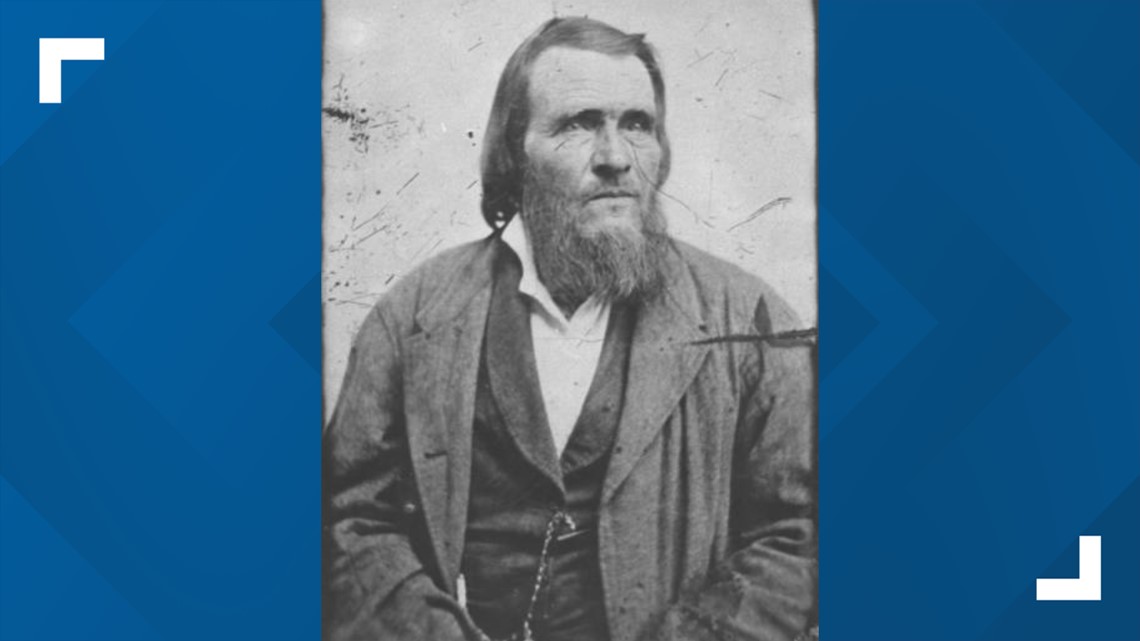
Elder Daniel Parker
1781 - 1844

In this chapter we will review some of the things that are written in a book titled "DANIEL PARKER'S DOCTRINE OF THE TWO SEEDS" by 0. Max Lee (1962) in his Thesis Paper (See here), from which we previously cited. Following this we plan to begin a few chapters giving the rebuttals that some "Primitive Baptists" made against the Two Seeders. We have already in earlier chapters cited from Elder John M. Watson and his book "The Old Baptist Test." We will have some more citations from him, along with Elders Joshua Lawrence, George Stipp, Lemuel Potter, Grigg Thompson., S.F. Cayce, C.H. Cayce, Hosea Preslar, etc.

Wrote Lee, referring to what Parker wrote on page 4 of his book "Views on the Two Seeds" (all emphasis mine):

"It disturbed Parker to think that a creature made by God might suffer eternal punishment. Baptists believed, so Parker contended, that God chose his elect in Christ before the world began. But what about God's relationship with the non-elect? Surely God would not condemn those whom he had created in his own image." (pg. 25)

In Parker's case, he believed his Two Seed doctrine was the only answer to the problem of evil and to how a benevolent and loving God could send anyone to Hell forever. One wonders why he did not simply become a Universalist like some "Primitive Baptists" did in later years. Perhaps he felt like the scriptures so plainly taught eternal punishment for some so that did not become an option. Why then did he reject the belief that God sends some men, who are created in the image of God, to Hell, seeing that this is what divine justice demanded? This is somewhat bewildering. Why did his brethren not educate him on this point? 

His conviction that "God would not condemn those whom he had created in his own image" must have been why he also denied the creation and fall of the angels, or of the fall of Satan. The view Parker accepts as the solution was no real solution, for it involved a denial that all men, those who are elect and those who are not, are created by God and in his image. He must deny that all men were created by God, and if not created by God, then by who? This no doubt is why some Two Seeders denied that those of the seed of Satan had souls, were not really humans created by God. So, not only does his solution force him to believe that Satan was not created by God, but so too were most of the human race. The scriptures are clear that all men, whether they be children of Satan or children of God, are God's creation.

Lee wrote further, alluding to what Parker wrote in the Volume II of his paper "The Church Advocate" in 1831 (pg. 279):

"As Parker continued to ponder the problem, a possible solution presented by an "old brother" continued to come to him, only to be rejected each time as heretical. The scriptural basis of this possible solution was found in Genesis 3:15: "And I will put enmity between thee and the woman, and between thy seed and her seed." Was it possible that two kinds of offspring were implicit in the verse? Could it be possible, then, that those who were eternally punished were not God's creation after all, but were a product of Satan? When Parker became convinced that such was the case, he marveled that this scripture had been used so infrequently by preachers. As he read other scriptures, it seemed obvious that there were two eternal principles, good and bad, as seen in God and the Devil. The two seeds in Genesis must indicate the two lineages from which had originated the people of the earth. Thus, the elect, God's children, came from God's seed, which resided first in Adam and later in Eve. Satan's children, the non-elect, sprang from Satan's seed which also came through Adam, but only after God had multiplied Eve's conception that she might bear the non-elect in addition to bearing the elect." (pg. 25-26)

How could he deny that God made all men when it is so plainly taught in scripture? Paul, while in Athens, Greece, said: "And He has made from one blood every nation of men to dwell on all the face of the earth." The Two Seeders often say that Cain was of the seed of Satan, therefore not created by God, but this is absurd. God created Cain and Abel, so the difference in them was not owing to their original creation but due to their acceptance of God and his redemption or rejection of it. In Colossians 1: 16 Paul says that "all things were created" by the Lord, but Parker and the Two Seeders must deny this plain truth. Notice also these texts:

"Whoever sheds the blood of man, by man shall his blood be shed, for in the image of God has God made man." (Gen. 9: 6)

"With the tongue we praise our Lord and Father, and with it we curse human beings, who have been made in God’s likeness." (James 3: 9)

Would it not be absurd for a murderer to say in court -- "Judge, I killed him because he was a child of the Devil and therefore not a human being who was made in the image of God"?

Parker says that Satan created those humans who were his children, being his product. He therefore believes in two creators. So, not only is Satan uncreated as is God, but he is a creator like God. 

Wrote Lee, citing from both the "Church Advocate" vol. II for November 1830, page 41 from "Views on the Two Seeds" for December, 1830, page 64:

"Parker emphatically declared that God did not create Satan. Furthermore, he stated that Satan was self-existent: "There is an existing opposite to Jehovah, which never did receive its origin from God, the fountain of perfection. If the Devil were not self-existent, Parker held that God must have made him; if such were true, Parker said that he "would as soon believe that there was no god. To hold that God was responsible for the creation of Satan, Parker surmised, would make God the author of both good and evil." (pgs. 40-41)

This teaching of Parker is a heresy of the worst kind. To deny that God is the creator of all is so clearly against what the Bible teaches. Not all Two Seeders would affirm such, most of them avoiding the topic of Satan's origin.

Wrote Lee:

"Having proved to his own satisfaction that Satan was self-existent, Parker insisted that Satan, although powerful, was not equal with God." (pg. 42)

However, if Satan is uncreated and self-existent, then he is equal with God in those respects.

Again alluding to Parker's "Church Advocate" vol. II for June 1831 (pg. 210) Lee wrote the following under the title "A Doctrine of the Non-Elect": 

"Parker's concept of the two-seeds, then, is a doctrine of the non-elect. But instead of contending that the children of Satan are eternally damned, as has been charged, the doctrine teaches that they may come to salvation. For the non-elect stand on the same ground that the Armenian [sic] says the whole world stands on, for Christ rejects none that comes to him for salvation on gospel terms, and those that seek shall find. And since the non-elect may come to Christ for salvation, their condemnation, if they are condemned, will be their own responsibility. They will be justly condemned, not because they are the serpent's seed, or that God had reprobated them to destruction before they were born, but because of their sins and acts of wicked rebellion against God, for they shall be judged according to their works. In order that the non-elect might be without excuse, Parker urged every Christian to witness to the lost." (pg. 26-27) 

All this is quite interesting. Parker shows how inconsistent and contradictory he was. He says on the one hand that because they are children of Satan that they will undoubtedly go in the way of Satan, and yet says on the other hand that they may be saved and become children of God. Truly "the legs of the lame are not equal" in his views.

Lee writes further about Parker's belief that the children of Satan may be saved, citing again from page 38 of Parker's book "Views on the Two Seeds":

"And notwithstanding the doctrine of election is true, it is the duty of christians [sic] to exert themselves to show sinners their need of Christ, as though it was in their power to do it--while they should engage at a throne of grace, that God may bless their labors, for God works through and by his people; and all that christians [sic] can do is to obey...And the preachers of the gospel should realize that it is their business to preach Christ, the Saviour of sinners, and urge the necessity of repentance towards God and faith in Christ...And each saint, though ever so small, should know that there is something for them to do in the church of Christ; if they cannot preach they can pray--for the preacher is wholly defendant [sic] on the Lord for the success of his labor."  (pg. 27)

Some Two Seeders agreed with Parker. Others however began to say that God does not use people or preachers to urge sinners to believe and repent in order to be saved. This is the opinion of nearly all "Primitive" or Hardshell Baptists today. Not that it was always so, for most of the first generation of anti mission Baptists believed that God did use means to bring about the new birth. For instance, Elder W. M. Mitchell of Alabama, a leading elder of "Primitive Baptists" in the early to mid 19th century, also insisted on the necessity of faith and repentance for salvation, as did Beebe and Trott. I have previously cited from Mitchell on this in a post I made in the "Old Baptist Test" blog (See here). He wrote the following in the paper "The Southern Baptist Messenger" that was begun by Gilbert Beebe's son William L. Beebe and was a periodical that promoted Two Seed ideology. Wrote Mitchell:

"The saving of sinners from their sins with an everlasting salvation is a great work, but God is a Great God and all his works are great. When it is said that “salvation is of the Lord” it is thereby declared that everything pertaining to salvation from first to last is of him. There is no salvation without the choice of God in Christ. He hath therefore from the beginning chosen us unto salvation through sanctification of the Spirit and belief of the truth...In conclusion, let us not overlook the fact that in order to salvation, it is necessary that we be born again; that we have faith, repent and believe in the Lord Jesus Christ; but as salvation is of the Lord, these things are as much of him as our redemption, calling or justification, for his “divine power hath given us all things that pertain unto, life and godliness.” 2 Pet. i. 4. “He that spared not his own Son, but delivered him up for us all, how shall he not with him also freely give us all things ?”"

You can read that issue of that periodical (here).

Lee writes further, still citing from Parker's book "Views":

"Then if children of Satan may be saved, and if the preachers are urged to exhort sinners to repentance, what good has election done? Parker answers very simply, "It has saved thousands..." (pg. 27-28)

When Parker says that the children of Satan may be saved by faith and repentance, he obviously means that they may be saved hypothetically.

Wrote Lee, still referring to Parker's book "Views":

"Another obvious question arises. If both the elect and the non-elect may be saved, what is the difference, if any, in the process of salvation for the two groups? The difference is that for the elect, God prompts their hearts to repentance through the working of his Divine Spirit. This Spirit is brought to bear on the life through the medium of the preached word. God not only ordained that the Divine Spirit would work on the individual heart; he also ordained that the Divine Spirit would gain its entrance to the heart through preaching. The non-elect receive no such prompting, however, from God's Spirit. As they were the product of sin, and not included in the covenant of grace, the sovereignty of God is not bound to bring them to the saving grace in Christ, but consistent with his divine perfections, can let them alone under the common calls of the gospel." (pg. 28)

A few things need to be pointed out in regard to these remarks. In believing that God used "the medium of the preached word" to save sinners Parker was in league with nearly all of the first "Primitive" or "Old School" Baptists. It would later change, as many Two Seeders began to deny means in the eternal salvation of sinners. Further, we can see where Parker speaks out of both sides of his mouth. He says the children of the Devil may be saved, but then says such things as the above, which affirm that they cannot be saved.

Wrote Lee further, still citing from Parker's "Views on the Two Seeds":

"The question then arises, "Will the non-elect be saved, even though their salvation is possible, if God's Spirit does not prompt them to repentance?" Parker would answer that they follow the will of their father, the Devil. Now if they (the non-elect) will, they may come, and it is their duty to obey the gospel and come; and if they will not, they are justly condemned, for God is as willing to save them, as they are to be saved, by Christ. Then why should they complain of injustice in God, when the fault is in themselves. But will they come? What is their will, but the will of their father, the Devil? And God is not bound to bring them, but consistent with his divine perfections--can let them alone to fill up their cup of wrath, against the day of wrath, etc. And thus let alone, their will is to follow their father, which they do." (pg. 28-29)

Parker believed it was the duty of all to obey the Gospel. Most "Primitive Baptists" today do not believe such, saying it is "Fullerism," believing rather the view of Joseph Hussey who denied that it was the duty of all to believe the word of God and that God does not offer salvation to all through the Gospel. Samuel Trott, who we have cited much in earlier chapters, did believe as Parker. I showed this in a post I made a few years ago (See here). In that post I wrote:

In an article in the "Signs of the Times" periodical for 1839, titled "Duty Faith & Repentance. An enquiry concerning the duty of the unregenerate to believe, repent or pray," (see here) Trott wrote:  (emphasis mine)

"On the other hand, I understand the Old School doctrine to be, that it is the duty of all rational beings to believe all God has spoken in the scriptures as they have access to them directly or indirectly, and to believe the testimony of the works of creation and providence, where the scriptures have not come. To disbelieve the record, which God hath given of His Son, is to make God a liar (I John 5:10;) and surely no person can do this and be guiltless. The obligation man is under thus to believe God, arises, not from any demand which the gospel as such peculiarly makes upon him, but from the nature and fitness of things, and from what God is. It is a law of our creation."

So, for today's "Primitive Baptists" to reject this belief and declare non-fellowship for those who believe like Parker and Trott, they show that they are not "Primitive" at all. I have written on this subject several times over the years. For instance (See here). I showed that if it is not a duty to believe the word of God, then it is no sin to disbelieve it. Many of the Two Seeders who would follow Parker, however, would both deny means in salvation and duty faith.

Again, notice the contradiction. Parker believed that the children of the Devil can be saved, and ought to be exhorted to believe and repent, and yet says that the children of the Devil will invariably follow their father the Devil.

Wrote Lee, citing from Parker''s "Supplement or Explanation of MY Views on the Two Seeds": 

"However, being a child of Satan does not, of itself, bring condemnation. As the non-elect spring into existence by the power of God through the express creation of God, although they are the seed of the serpent, yet they are human beings, and no less accountable to God, nor no more doomed to eternal wo [sic], than if they had been the express creation of God in the display of his sovereign goodness, and not elected or chosen in Christ." (pg. 29)

Here is more contradiction. He doesn't believe God created the Devil or his children (the  non-elect) and yet says that they "spring into existence by the power of God through the express creation of God." Then, after saying that, he says just the opposite, saying "IF they had been the express creation of God." 

Wrote Lee, citing from Parker's "Second Dose...":

"In contrast with the failure of the non-elect to come to Christ for salvation, the elect will be brought by God to salvation so that not a single one of them will be lost. Eternal life will be enjoyed by all the elect; eternal punishment will be endured by all the non-elect. This destiny of the non-elect was not determined by a decree of God which foreordained each of them in particular to condemnation; rather it will be self-imposed in that each of the non-elect will refuse to believe in Jesus Christ. By such an explanation, Parker provided what to him was a logical and biblical understanding of the elect and the non-elect." (pg. 29-30)

"Each of the non-elect will refuse to believe in Jesus Christ." If that is true, then again he contradicts himself, for he has said that they may be saved, as we cited his words earlier when Lee wrote: "Then if children of Satan may be saved, and if the preachers are urged to exhort sinners to repentance, what good has election done? Parker answers very simply, "It has saved thousands..."

Of interest in the above citation is the fact that Parker seems clearly to affirm that people must "believe in Jesus Christ" to be saved. How can today's "Primitive Baptists," with few exceptions, say that their forefathers taught as they do, that believing in Christ is not necessary for salvation? 

Wrote Lee:

"Parker's actual writing of the two-seed views came after his anti-mission efforts had been successful in both Tennessee and Illinois. While declaring the certainty of God's election and while preaching against the mission efforts of the day, he became increasingly dissatisfied with the current doctrine of the non-elect. How could it be honorable for God to condemn some of his own creation to eternal damnation?" (pg. 37)

Does the above indicate that Parker did not believe and preach Two Seedism when he lived in Tennessee, and prior to moving to Illinois? 

Citing from William Warren Sweet, The Baptists, 1783-1830, Vol. I: Religion on the American Frontier (Chicago: The University of Chicago Press, 1931), pp. 75-76, Lee wrote:

"According to Parker, "the nature and certainty of the relationship or union which exists in Christ with his Church" was a crucial issue in his two-seeds doctrine. Parker said that an eternal oneness existed between Christ and His Church." (pg. 55)

He then cites these words of Parker:

"I wish to be understood as believing, and now aiming to prove, that Christ and his Church are one; and if they are now, or ever will be one, that, that oneness has existed as long as Christ has existed, as it is as impossible for a head to exist without a body, as for a body to exist without the head." (pg. 55)

This is the core tenet of Two Seedism. Christ, as a Mediator, was a begotten or created being, composed of both human and divine natures, and his Church was begotten or created in him at that same time in eternity past. Other tenets of Two Seedism are by-products of that chief tenet. 

Lee then writes:

"This oneness or union, while existing prior to God's creation, was demonstrated in the creation itself." (pg. 55)

This is exactly what the article of faith of the Bear Creek Association stated in their 1832 articles of faith, as we have seen. 

Wrote Lee:

"Having come into the world, the Church sinned. Adam, who stood with the Church (the elect) in him, partook of the forbidden fruit, causing him and the Church to deserve God's wrath. But because of Christ's union with and love for the Church, he married her human nature, assumed her debt of sin, and redeemed her from the curse of the law. Such a manifestation of love, while having no equal, was a logical outgrowth of the eternal union which existed between Christ and his Church." (pg. 56)

If the elect or church actually existed with Christ in eternity past, and was in union with Christ then, why the need to be united to him now? If their sins "separated" them from Christ or God (Isa. 59: 2), then they were no longer united to him. Such a doctrinal view denies that sinners are united to Christ by faith, or when they are regenerated or born again. If the elect were already married to Christ from eternity, why the need to exhort them to become joined to Christ in marriage? Did not Paul say, as we have previously shown, that he had "espoused" the Corinthian believers to Christ? (II Cor. 11: 2)

Lee wrote:

"The only extant attempt to refute the two-seed view was written by John Watson in 1855. However, this refutation was not of Parker's two-seed views; instead it was the refutation of a distorted form of the two-seed views as embodied in certain churches." (pg. 62)

I don't believe that is accurate, as a reading of Watson's book "The Old Baptist Test" shows. I agree that many of those who later embraced Two Seedism included other heretical ideas into the system that Parker did not originally believe, such as not believing in means and in preaching to and exhorting the lost, and denying the resurrection of the body, etc. Watson does show that Parker and many of his followers did believe that the Devil was not created by God, an idea that some Two Seeders would later not affirm. 

Lee wrote:

"Of all the secondary sources, Watson's description of the two-seed views most nearly coincided with Parker's actual writing. However, it reflected many of the misunderstandings current in the 1850's." (pg. 62-63)

Again, I don't think Lee is right in what he says about what Watson wrote in "The Old Baptist Test." Watson accurately described the views of Parker and of those in Tennessee who became Two Seeders.

Lee wrote:

"In seeking to refute the two-seed views, Watson understood the doctrine to include (1) the denial of the resurrection of the bodies of the just and unjust, (2) the absence of souls in the non-elect, and (3) the rejection by God of the use of any kind of means to bring about salvation. Parker had explicitly taught the opposite in his two-seed views." (pg. 63)

Watson never did say that Parker himself denied the resurrection, nor that the souls of the non-elect had souls, nor that God used means in salvation, but he did say that this is what Two Seeders who followed Parker added to the Two Seed system of Parker.

Lee wrote:

"Some groups which held generally to the two-seed views rejected certain portions of the doctrine. One such group, the Old School Baptists of Bethel and Muddy River Associations (Illinois), strenuously denied that the proclamation of the gospel had anything to do in bringing sinners to a knowledge of the truth. Daniel Parker had declared just as strenuously that God used such means to bring sinners to repentance." (pg. 63-64)

I agree that Daniel Parker did not teach what later Two Seeders would teach, for they came to deny that God uses means in salvation. Elder Hosea Preslar, who lived in middle Tennessee where Elder Watson lived, and who was a close associate of his, wrote a book titled "Thoughts On Divine Providence" which says that Two Seeders, with the exception of Parker himself, did preach that God uses no means in the salvation of sinners. I cited extensively from him in this posting (here). Here are some of the things Preslar said in that book about the Two Seed views:

"And as to their views of the use and design of the gospel being for nothing but for the edification of the Church, and believers being the only subjects of gospel address, I believe it not." (Page 186)

"But some object (the "ultraist" Hardshells - SG) to these ideas and say all this is the work of the spirit of God; and the gospel has nothing to do with it. Ah, a gospel without a spirit! Well, God save me from a gospel that has not His spirit. God says His word is quick and powerful, and He says by Peter, This is the word which by the gospel is preached unto you; I Peter 1: 25. And as to the subjects of Gospel address, it is to every creature the disciples were commanded to preach the gospel; and Paul said, Whom we preach warning every man, and teaching every man, in all wisdom, etc.; Col. 1: 28. So we see that their idea on that point is false as the balance, and we will now give their last, but not least error a passing notice."

He then states his view, and the view of Watson, and of most of the "Primitive Baptists" in the 1830s who were not Two Seeders, writing:

"...the other is the child of God, that was begotten by the word of truth; James 1: 14; I Cor. 4: 15; I John 5: 1." (Page 112)

"This is the new man begotten by the word of truth; yea, begotten of God; I John 5: 18." (page 185)

So, those "Primitive Baptists" today who deny means are not in league with Parker, but are in league with most Two Seeders who followed Parker. Recall that I cited from Lawrence Edward's history of Tennessee Baptists who wrote this about the Two Seed division in the Powell Valley Association:

"At the 1879 meeting of the Powell Valley association the tenth item of business said: Committee appointed to draft advice to the churches in regard to the Two-Seed doctrine, who reported as follows:

We as an association advise our sister churches to have no fellowship with what is generally known as the two-Seed Heresy or those who teach the doctrine of an Eternally damned or Eternally Justified outside of the preaching of the gospel of the Kingdom of God and teach that the unbeliever is no subject of gospel address. We believe that God makes use of the Gospel as a means of calling his Elect and this means is the work of the Spirit in the church."

So, it was pretty well established as a fact that it became a leading tenet Two Seedism to deny means in the eternal salvation of sinners. That being true, we can say that that aspect of Two Seedism still survives in nearly all "Primitive Baptist" churches today.

The Perils of an Uninformed Citizenry


“The best argument against democracy is a five-minute conversation with the average voter.”

This is reported to have been said by Winston Churchill, but others deny that he ever said it. Regardless, the statement is indeed true. 

Over the past several years I have watched News Organizations go to the streets of New York or some other city and begin asking the citizens questions about the history of the United States. Oftentimes the average citizen does not know how many states are in the union, who fought the Civil War or Revolutionary War, or who was the first president, etc. It frightens me to know that such people are voting. It makes me think that we should have a test for basic knowledge in order to be able to vote. I blame this ignorance and illiteracy on the education system in this country that has deteriorated since the days when I was in school. 

What think ye?

Thursday, November 20, 2025

Two Seed Baptist Ideology (XXIV)


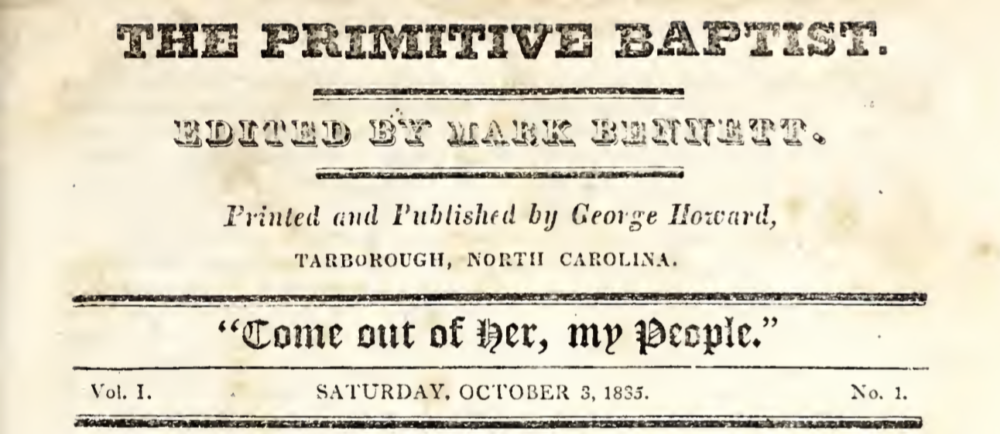
The above image is of the first issue of "The Primitive Baptist." Its first editor was Elder Mark Bennett who was asked to fill that position by Elder Joshua Lawrence. This paper continued till the late 1860's when it was discontinued. This paper is not the same paper that was later begun by Elder S.F. Cayce in 1886 and later taken over by his son Elder C. H. Cayce (Claude) upon the death of his father. This Web (hathitrust; here) page gives you access to the former periodical from 1835 to 1860, volumes 1-26. 

As we will see in upcoming chapters, the latter periodical of the Cayce's was, like the first, opposed to Two Seedism or "Parkerism." However, the older periodical taught that the word of God or Gospel preaching was a means in the eternal salvation of sinners, while the latter did not. As we will see also, though Daniel Parker believed in such means, many Two Seeders did begin to teach that view. So, though Cayce's paper did not accept Two Seedism, they did accept Two Seedism's denial of means. Even the "Signs of the Times" would later deny means in "regeneration," as did Wilson Thompson, though they did not deny that the Gospel was a means in the "new birth," for they did not believe they were the same. 

The original "Primitive Baptist" periodical was the leading paper that represented the opposers of Two Seedism, as we will see when we give some citations from one of its two chief spokesmen, Elder Joshua Lawrence, who was the leader in the "Kehukee" Association which declared non-fellowship against Baptists who supported mission societies and other things in 1827, called "The Kehukee Declaration and Address," five years before the "Black Rock Address" (1832) that did the same, and of which Elder Gilbert Beebe was a leader, and who the members of that group (who wrote that Address) decided to support the creation of the "Signs of the Times" periodical and choosing Beebe to be its editor. You can download that Address on this web page (here). Lawrence was the primary drafter of that Declaration and Address. 

I have written a good bit through the years about the beliefs of Joshua Lawrence and of Mark Bennett. Bennett, after a few years editing the "Primitive Baptist," found that he could no longer oppose missionaries and theological education, whether seminaries or Sunday Schools. He also after this had a couple debates with Elder Grigg Thompson, who we have mentioned before and will have more to say later. In their first debate Thompson seemed to deny that God used means in regeneration, while Bennett affirmed them. A belief in means was the position of Lawrence, Bennett, and most of the writers to that periodical. Thompson may have believed like his father (Wilson Thompson) and most "Primitive" or "Old School" Baptists that regeneration and the new birth were distinct, and that the former was wrought by God apart from those means but the latter was accomplish by those means. That was Gilbert Beebe's and Samuel Trott's view. On that I have also written extensively in the "Old Baptist Test" blog. 

The "Signs of the Times" periodical was the first and leading paper for the Two Seed wing of the newly formed denomination, while the "Primitive Baptist" periodical of Lawrence and Bennett represented the non-Two Seed wing. The former periodical favored the name "Old School" while the latter favored "Primitive." A large majority of those who supported the "Signs of the Times" believed in the "absolute predestination of all things," but was a minor view of those who supported the "Primitive Baptist." However, few seemed to want to make differences on the extent of predestination a test of fellowship nor on Two Seedism or on whether regeneration involved God using means. That would change, however, after the Civil War, in the latter quarter of the 19th century.

When Did Daniel Parker Become Convinced?

As we have seen, it was in 1810 that Elder Parker, while in east Tennessee, learned of the Two Seed ideology, in crude form, from an old brother there. At first he rejected it as heresy, as O. Max Lee told us in his book from which we have previously cited. But, after pondering on it for a period of time, he embraced it. We are not told when that occurred. Did he fully embrace it while in Tennessee, and before he moved to Illinois? Did he teach it in the bounds of the Concord Association, which would later be split over Two Seedism? It seems to me that Parker must have taught Two Seedism in Tennessee among the churches of that Association (middle Tennessee) for it was believed by a large number of those in that Association, of which Elder Watson worked hard to fight against, as we have seen. If Parker believed it, and even taught it while in Tennessee, then he believed and taught it prior to Wilson Thompson did in 1820 through his book "Simple Truth." If he believed and taught it then, he must also have believed and taught it when he moved to Illinois. On page 38 of Lee's book, he said (citing Parker's testimony in Parker's paper "Church Advocate" vol. II; Sept. 1831, page 271):

"Having come completely to accept the doctrine, he determined "to proclaim on the house top, that which had been revealed to me in secret."

If that is true, we must say that he preached Two Seedism from the very time he became convinced of its truth. So, if he never preached it till he got to Illinois and published his first book, then he was not convinced of it while in Tennessee. So then, when and how did the Two Seeders in Tennessee come to embrace it? Did they embrace it when they got copies of Parker's first book on it in 1826? If so, how could they embrace that view so quickly and in great numbers? That requires greater research by historians. I say all this because I am trying to discern whether Wilson Thompson or Daniel Parker should be credited with first promoting Two Seedism's tenets. The same may also be asked of the anti-mission Baptists of Illinois and Indiana, and in the Wabash Association. When and how did they first learn of it? Were they already believers in it before Parker and Thompson? Which one of them first introduced this to those folks? Also, why did so many quickly embrace such a monstrous system?  

In chapter XXII I cited from the "Primitive Baptist" (1839) where Elder Richard Newport wrote to that periodical objecting to what J.H. Parker wrote about Daniel Parker (no relation that I am aware of). I have since then seen where J.H. Parker responded to the criticisms and corrections of Newport. I feel I should include J.H. Parker's response to Newport. From "The Primitive Baptist" for May 11th, 1839 there is an article from Jonathan H. Parker of Lexington, Kentucky. Parker writes in response to what Newport wrote about him and also what a brother named Levi Lancaster wrote about him. Parker wrote (emphasis mine):

"I discovered in the Primitive Baptist, 16 No. vol. 3d, page 254, a piece written by Levi Lancaster, in answer to a piece published in that paper written by myself concerning the split and the doctrine held and preached by the party that rent from the Little River Association. It appears that I touched a tender place. 

But to the point. It appears that what galled Mr. Lancaster and others was, that I said in my letter they were what the people called Parkerites. I still say so, and Mr. Lancaster knows as well as myself, that the preachers (or most of them) among them, did and do yet preach the two seed doctrine. But if Mr. Lancaster is the man I think he is, I stayed all night at his house on my way home from the Association held at Crocket's Creek church, the year before the rent look place; and if he was a member of the church then I do not now recollect, though that matters not. He treated me and those with me very kindly, and I am sorry for him if he has numbered himself with those that advocate and preach the two seed doctrine of Daniel Parker. I can only say to Mr. Lancaster at present, if the cap fits he must wear it."

Apparently J. H. Parker credits Daniel Parker with being the originator of "the two seed doctrine" and not Wilson Thompson. Was he aware that Thompson in 1820 taught the doctrine of eternal vital union, a key tenet of Two Seedism? 

Parker writes further in response to Newport:

"Again, vol. 3rd, No. 22, page 350, I see a piece headed New Harmony, Indiana, over the signature of Richard M. Newport. First. He says he wished to make a few remarks on J. H. Parker's publication. He states that he does not know who J. H. Parker is, or what he is doctrinally; neither does he know certainly, what is the character or condition of the Little River Association. But he says there is one thing he does know, and that is, that J. PL Parker is a very unguarded writer.

Now, brethren, it is not common for persons to introduce themselves; but by this I wish to try to make Mr. Newport partially acquainted with me. I will here say to him, that what I wrote concerning the doctrine held and preached by Daniel Parker is truth and cannot be denied; and I am somewhat astonished that any man, and particularly a preacher, should stand up and confront the public and at the same time know that he (Daniel Parker) did preach and publish the two seed doctrine, and so do his followers. I had liked to have said, that I believe that Mr. Newport knows it himself, and I think I will not retract. But, brethren, on a minute's reflection we can see from the course pursued by R. M. Newport, that we need not be the least astonished, for actions speak louder than words, for no person could have taken exceptions at my publication only those that are of the same cast. Newport further states, if J. H. Parker is always as unguarded in writing and speaking, he is entirely unworthy of confidence. Now, brethren Editors, and brethren, I think that I am as well known amongst the brethren in the different parts of the United States as Newport is; and as to the respect or confidence they have in me, I leave that to those to judge that know me. Though I do not expect those holding and preaching the two seed doctrine to have confidence or respect towards me, as they are well aware that I always opposed their doctrine. And, brethren, to come out in plain words, I do not want or wish their confidence or respect."

As I have before stated, I believe that Newport was a Two Seeder. J.H. Parker wrote further:

"Newport further states, that J. H. Parker says that Daniel Parker once was an esteemed Baptist preacher in Kentucky. It is truth. J. H. P. still says so, in this publication. Newport says, Daniel Parker never lived in Kentuckv. Brethren, I never said he did; and if Newport will reflect on himself as he did on me, he will find that he writes a little more unguarded than I do. R. M. Newport further states, that J. H. P. says that D. P. went off in a doctrine of his own, and published the 1st and 2nd doses, as referred to in my publication, &c. Newport there acknowledges that he (D. P.) did publish such pamphlets on the two seeds, and then tries to solve it in a mild manner by quotations to the scriptures, &c. R. M. Newport further states, that J. H. P. says that D. P. taught through those pamphlets. I think if RM. Newport will read my publication again, he will see that he is unguarded in his writings, as I did not say that he taught through those pamphlets directly; but I now say so. Newport further states, that J. H. Parker says that D. P. taught thro' those pamphlets, that the devil was from everlasting a selfexisting being, equal with God in power, wisdom and glory. Brethren, it is possible that I may be mistaken as to the glory being attached to the devil; but I still think it belongs to the Parkerites, as they sat him (the devil) on an equal footing with the God of heaven who created them; and I do know, and that from good authority, that D. P. did preach and tried to establish the doctrine before mentioned, and so do his proselytes in different States, say in Kentucky, Illinois, Indiana, and some in Tennessee; but the greater number are in Illinois. The reason that I believe the greater number are in Illinois is, I once attended the Association called the Muddy River Association on the Big Bay, in Pope county, Illinois, as a corresponding messenger of the Little River Association, and found a majority of that Association, (I mean those present) to be of the two seed order."

Many Parkerites did believe that Satan was uncreated and that his children eternally existed in him. Others, like Beebe, did not avow this part of Two Seedism. The question "where did the Devil come from?" I have never seen where Beebe addressed it. Many Two Seeders simply want not to discuss it, it being one of the items in their system that they want to ignore. 

Parker wrote further:

"Now, brethren, it is out of the question for any man to publish any thing that he knows nothing about; for if Newport had known me, he would have known that I always stood in opposition to the missionaries, and the two seeders, and all of their inventions. But as I have said before in my publication, there are missionaries amongst the Little River Association, which is the Association that I belong to; but there are no two seeders, followers of D, P., they have all left and gone after their own flock."

Parker wrote further:

"Brethren, there is such a doctrine in the world, which I expect most of you know; and that D. Parker is or was the father of it; and why those embracing it will deny it when it comes before the public, I am at a loss to decide. When if you will go to Illinois, in the boundary of the Muddy River Association, a great many of the preachers that call themselves after the Old School or Primitive Baptists, do contend for the two seed doctrine and preach it, and sometimes almost to the separation of man and wife; as one brother told me himself, that it came very near separating him and his wife. For further proof on the subject of the two seed system, I refer you to the Signs of the Times, vol. 6th, No, 25, page 198, and you will see there, that there they have formed themselves in an Association, and sent their creed and circular to the Editor for insertion; and you will see there, that the Editor of the Signs of the Times condemns the doctrine, I must now come to a close."

When I first read the above statement of J. H. Parker I was stunned. Did Elder Beebe condemn the Two Seed doctrine? How could Parker say that in view of all that we have cited from Beebe in the "Signs of the Times" that affirmed "eternal vital union" between Christ and the church? It is true that Beebe did not believe in an eternal Devil as did Daniel Parker, not deny that all men had souls, nor deny the resurrection of the body, as did some Two Seeders, but he did believe that Christ as Mediator, as a composite of divine and human natures, did preexist his incarnation and that the church also had an existence in him as such. We have seen where Beebe, Trott, and T. P. Dudley said that being "created in Christ Jesus" or becoming a "new creature in Christ," occurred not in regeneration or rebirth but before the world began. So, I located that issue of the "Signs of the Times" that Parker mentioned to see if Beebe did indeed condemn Two Seedism. Here is that article by Beebe for the year 1838 under the heading "THE TWO SEED SYSTEM":

"In the Minutes and Circular of the Bethlehem Predestinarian Association, published, by their request, in this number, they have frankly avowed their faith in what they call the doctrine of two seeds and hint that they have, on account of that sentiment, been denied the privilege of remaining with those from whom they had hoped for better things. We know but little more concerning the sentiment than what is embraced in their Minutes and Circular; but to us the sentiment appears highly speculative. That the words of divine revelation declare two seeds among the family of Adam, viz: the children of promise, which are accounted for the seed, the chosen generation, &c', and also of the seed of the serpent, the generation of vipers, the seed of evil doers, &,c., we fully admit; but that the former of these actually and personally existed in eternity, in any other sense than that their life was children with Christ in God, and that the latter had an actual existence in the bottomless pit before they existed on earth, is a doctrine which neither the word nor Spirit has ever revealed unto us; the sentiment is new to those who have taken the stand with us under the name of Old School Baptists, and to admit a discussion of the sentiment in our paper would be, in our opinion, a departure from the original stand taken by us and fully asserted in our prospectus."

From these words we can see how divisions over Two Seedism were occurring in the 1830s. However, it is also true that many churches and associations tolerated Two Seedism so that both those who opposed it and those who espoused it remained together in fellowship. As time went on, however, more and more divisions were occurring, especially towards the end of the 19th century. For instance, in a post I made on July 27th, 2015 I cited from "The History of the Baptists of Tennessee" by Lawrence Edwards (1940) who gave us the following information on the Powell Valley Association of which father and I were once a part of. You can read that posting (here). Lawrence wrote in chapter V, "THE TWO-SEED HERESY AND ABSOLUTE PREDESTINATION" wrote:

"The Two-Seed doctrine, which was beginning to occupy the attention of the churches in the early 1870's, continued to plague the Primitive Baptists, especially those of the Powell Valley association, until 1889, when a split occurred in the association. The Nolachucky association, too, felt the impact of this conflict, but no complete rift, such as the Powell Valley experienced, occurred in any of the other East Tennessee associations. 

At the 1879 meeting of the Powell Valley association the tenth item of business said: Committee appointed to draft advice to the churches in regard to the Two-Seed doctrine, who reported as follows:

We as an association advise our sister churches to have no fellowship with what is generally known as the two-Seed Heresy or those who teach the doctrine of an Eternally damned or Eternally Justified outside of the preaching of the gospel of the Kingdom of God and teach that the unbeliever is no subject of gospel address. We believe that God makes use of the Gospel as a means of calling his Elect and this means is the work of the Spirit in the church."

The Powell Valley Association had many churches in East Tennessee where Daniel Parker says he first learned of the Two Seed theory.

In the above writing of Beebe he says he does not believe in Two Seedism as J. H. Parker stated. I was stunned to read this, because we have already presented numerous writings of Beebe where he did affirm the eternal vital union of the church and Christ, which necessarily entails that he believed in both the preexistence of the man Christ Jesus and of the souls of his elect. He says that the sentiment of the circular was highly speculative. Is he referring to his own view on the Two Seeds and on eternal vital union? Or, to other aspects of Two Seedism? He says that he does not believe that the church or elect "actually" or "personally existed in eternity." He does affirm that the children of God did exist in the "sense" that "their life was children with Christ in God." Frankly, that statement is unclear, and seems to contradict what he had just previously stated. 

Beebe does deny that the children of the Devil (non-elect) had an existence prior to their existence on earth, and says that such a view is new among Old School Baptists. 

Wrote Beebe further:

"Although the Association believe that the nine articles of her faith (on which the Association has united) fully implies the doctrine of the two seeds, we see nothing in the articles to which we would seriously object; and if they imply what we do not believe, we cannot perceive it. It being the request of the Association expressed in the sixth item of her Minutes that we should publish her communication, notwithstanding the objectionable sentiment contained in it, we have cheerfully complied with their wish; and we hope our brethren may be delivered from any error or vain speculation into which they may have fallen in an unguarded moment."

I have done an Internet search for the circular that Beebe is discussing but have not found it. We are not even told which state the Bethlehem Predestinarian Association is located, though I would guess Indiana. What is interesting is Beebe's statement that he saw "nothing in the articles" of that Two Seed Association "to which he would seriously object," although there was an "objectionable sentiment" contained in the articles of faith or circular. It seems to me that Beebe is trying to take a position that will keep him in good standing with both the Two Seeders and the opposers of Two Seedism. Beebe made his living off of his publishing business and publishing the "Signs of the Times," and like many who do so, often try to do nothing that will cause him to lose subscribers.

A few months later in Vol. VII, number 4, of the "Signs of the Times," for Feb. 15th, 1839, Beebe writes the following editorial:

"The life which the saints had in Christ before they fell in Adam. That the saints had any personal individual existence, other than that which was given them in Christ, we shall not contend; but that they existed as the spiritual body of which Christ is the Head, is as clearly proven in scripture as is the existence of Christ as Head of his body; and that the body of Christ was created in Christ, as that Eve was created in Adam; and that they were chosen in him before the foundation of the world, and in him were, predestinated to all that they were, by Jehovah destined to be, either in time or eternity, if fully implied in the first chapter of this epistle." 

Clearly Beebe believes that the church preexisted in Christ before they became partakers of flesh and blood. In chapter VI I cited these words of Beebe:

"Our being born into the natural world did not make us the sons and daughters of Adam; but our original creation in him as his posterity, is that which constitutes the relationship, and our birth is but the manifestation of it. Our generation is the manifestation of that life which was given us in Christ, and makes us manifest as the children of God."

"Thus to be IN Jesus Christ seminally, as the spiritual embodiment and progenitor of “a seed that shall serve Him, and be counted to the Lord for a generation,” according to Psalms 22:30; Isaiah 53:10-12; I Peter 2:9, involves the Bible doctrine of eternal Union. A union of life, love and immortality. One with Christ even as Christ is one with the Father." 

"A birth is not the creation or origination of life, but the manifestation of life by what is called procreation. Our earthly nature which in Christians is called the old, or outward man, was created in Adam, but pro-created by natural generation. But that immortality which is in the Christian, and which is denominated the new, or the inward man, was given us in Jesus Christ, and is manifested by spiritual generation when born of God."

In chapter VIII I cited these words from Beebe, written by him in the "Signs of the Times" for June 15th, 1864:

"Our relationship as children of God was not predicated upon our becoming “partakers of flesh and blood;” for the relationship was complete before Adam’s dust was fashioned into a man. But for his own glory God ordained that his children should become in time partakers of flesh and blood, share in the apostasy of that flesh and blood, and in that condemnation consequent thereon, and from that condemnation and wrath be redeemed, and these bodies washed, cleansed, purified and adopted in due time into the fellowship and liberty of the children of God. Our life of God in Christ required no adoption; for it is born of God." 

Here he positively states that the children of God existed before becoming flesh and blood, just as Christ preexisted before his incarnation. All I can say is that Beebe was inconsistent, although he clearly believed in the preexistence of the souls of the elect just as did Daniel Parker, Wilson Thompson, T.P. Dudley, etc.

Wednesday, November 19, 2025

The Islamic Dilemma


What is the "Islamic Dilemma"? The above image gives us the two horns of it. 

The Quran affirms the inspiration, authority, and preservation of the New Testament Gospels, as the following citations show conclusively. However, the Quran also contradicts the Gospels on many things. Therefore, the Quran cannot be reliable. That is the dilemma and the syllogism.

In my recent posting on Islam's denial of the crucifixion of Jesus (See here) I cited the following English translation in the Quran:

"Let the people of the Gospel judge by what Allah has revealed therein. And those who do not judge by what Allah has revealed are ˹truly˺ the rebellious" (Quran 5:47).

The verse preceding it reads like this:

"Then in the footsteps of the prophets, We sent Jesus, son of Mary, confirming the Torah revealed before him. And We gave him the Gospel containing guidance and light and confirming what was revealed in the Torah—a guide and a lesson to the God-fearing."

These citations say that the Gospel (Injeel) is the revelation of Allah. They also say that "the Torah" of the old testament is likewise given by Allah. Allah tells the Christians and the Jews to judge by the Gospel and Torah. If that is true, then it implies that the Gospel and Torah have not been corrupted as Muslims claim. So we read the following in the Quran:

"The Word of your Lord has been perfected in truth and justice. None can change His Words. And He is the All-Hearing, All- Knowing." (Quran 6: 115)

"Recite what has been revealed to you from the Book of your Lord. None can change His Words, nor can you find any refuge besides Him." (Quran 18: 27)

If the Torah and the Gospel are given by Allah, and none can change his words, then Muslims cannot rightfully argue that the Torah and Gospel have changed or been corrupted so that none can know the true Torah and Gospel. But, Muslims do claim it has been changed. That is their dilemma. 

Now let us add these verses from the Quran:

"He has revealed to you ˹O Prophet˺ the Book in truth, confirming what came before it, as He revealed the Torah and the Gospel." (Quran 3: 3-4)

"Say, ˹O Prophet,˺ “We believe in Allah and what has been revealed to us and what was revealed to Abraham, Ishmael, Isaac, Jacob, and his descendants; and what was given to Moses, Jesus, and other prophets from their Lord—we make no distinction between any of them, and to Him we ˹fully˺ submit.” (Quran 3: 84)

"If you ˹O Prophet˺ are in doubt about ˹these stories˺ that We have revealed to you, then ask those who read the Scripture before you. The truth has certainly come to you from your Lord, so do not be one of those who doubt, and do not be one of those who deny Allah’s signs or you will be one of the losers." (Quran: 10: 94-95)

The latter text actually says that Muhammad or any other person can prove or disprove what is in the Quran by ascertaining what was written prior to the time of Muhammad in the scriptures that were given by Allah in the Torah and the Gospel. 

How can Christians and Jews do what Allah commanded (judge by the Torah and the Gospel) if no one has it any longer? The Torah and Gospel that Allah told Muhammad to consult in the sixth century is the same that we have today. The Dead Sea scrolls show this to be so.

Of course, many Muslims try to deal with this dilemma, but they often fail. Thankfully, some see it and turn from Islam and embrace the Bible, believe in the true Jesus, and become his followers.

Tuesday, November 18, 2025

Be Still My Soul


"Meditate within your heart on your bed, 
and be still. Selah" 
(Psa. 4: 4 nkjv)

The above text from the Psalms has often been on my mind when I pray before I go to sleep upon my bed at night. I meditate on the day that is ending, like the first line in Isaac Watts' song "Death and Glory" says: "My soul come meditate the day." In doing this I meditate or "commune with" (kjv) my heart about the day, thanking God for all the good of it, and pondering the adverse things I had to face. 

I have often wondered in my mind what is meant by being "still" in that exhortation. Does it mean to still the body, or the soul, or the mind, or the emotions, or all of the above? Oftentimes, at the end of the day, our hearts, minds, and spirits are often still turbulent or troubled by the events of the day. It is at this time that we need to learn how to quiet ourselves. Dr. Albert Barnes says to be still means "When you are thus quiet, reflect on your doings." Spurgeon said: "Ask counsel of thy pillow, and let the quietude of night instruct thee!" (Treasury of David) In the hymn "Precious Memories" the chorus says 

"Precious Memories, how they linger, how they ever flood my soul, In the stillness of the midnight, Precious, sacred scenes unfold." 

Dr. John Gill wrote:

"commune with your own heart upon your bed: when retired from men and business, and you are at leisure to think and meditate then reflect upon your actions, seriously consider them; ask your heart some proper and close questions; examine narrowly and thoroughly the principles on which, and the views with which, you act." 

I try to do this every night. I think of the words of the apostle Paul who said: "Let not the sun go down on your wrath." (Eph. 4: 26) We should likewise not let the sun go down on our anxieties and on our worries and cares. This is the time to "cast your cares or anxieties upon the Lord," knowing that "he cares for us." (I Peter 5: 7; See also Psalm 55: 22) In this time of quiet reflection and meditation we not only speak to the Lord but we say to him, as Samuel said to the Lord, "speak Lord, your servant is listening" or "hears you." (I Sam. 3: 10) Sometimes our "strength is to sit still" (Isa. 30: 7).

Another text on being still is also in the Psalms and says:

"Be still, and know that I am God; I will be exalted among the nations, I will be exalted in the earth!" (Psa. 46: 10 nkjv)

Sometimes after a hectic day we need to quiet ourselves, or "settle down." At the close of the day it is time to think of the day, what lessons were learned, what mistakes were made, what sins were committed, and should lead us to find forgiveness and inner peace with the Lord. At the close of the day we are often like Martha, sister of Lazarus and Mary, all who the Lord loved, and to whom he said: “Martha, Martha, you are worried and troubled about many things." (Luke 10: 41) So we too at the close of the day carry all the day's worries and troubles to our bed. Often our hearts are "troubled" like "the troubled sea when it cannot rest" (Isa. 57: 20). We need the Lord to calm the storms that rage in our souls, like he did when he said to the winds and the waves of the storm - "Quiet! Be still!" (Mark 4: 39) We need to "steal away to Jesus" when we commune with our hearts upon our beds, and when we commune with him. It is that time when all is quiet and you are alone with yourself and with the Lord.

I love the song "Be Still My Soul." The lyrics are as follows:

Be still my soul the Lord is on thy sideBear patiently the cross of grief or painLeave to thy God to order and provideIn every change He faithful will remain
Be still my soul thy best, thy heavenly friendThrough thorny ways leads to a joyful end
Be still, my soul, thy God doth undertakeTo guide the future as He has the pastThy hope, thy confidence let nothing shakeAll now mysterious shall be bright at last
Be still, my soul, the waves and winds still knowHis voice who ruled them while He dwelt below

Christ our Shepherd leads us beside the still waters, rather than raging troubled waters. I also like the lyrics in "Bridge Over Trouble Waters" and these lines:

When you're weary, feeling small, 
When tears are in your eyes 
I will dry them all I'm on your side 
Oh when times get rough 
And friends just can't be found 
Like a bridge over troubled water 
I will lay me down 
Like a bridge over troubled water 
I will lay me down

Christ is that bridge over troubled waters of our hearts and lives and is the one who wipes away our tears. He is the one that is on our side when times get rough and friends can't be found. The lines of another good song speak of the one who "stilled" the troubled waters and who "calmed" the raging sea.

Put your hand in the hand of the man who stilled the water 
Put your hand in the hand of the man who calmed the sea

Saturday, November 15, 2025

Because You Are Sons?


"And because you are sons, God has sent forth the Spirit of His Son into your hearts, crying out, “Abba, Father!”" (Gal. 4: 6 NKJV)

Hyper Calvinists and Hardshell Baptists say that the above text gives the order of things (or ordo salutis) in salvation, and that Paul is saying --

"Because you are regenerated, the spirit has been sent to you." Or,

"The spirit has been sent to you because you are regenerated."

They say that the Arminian belief is that the spirit is received by faith before becoming sons, and the Hypers say that the above text shows such Arminian belief to be false. So, it becomes another debate on which logically comes first, faith or regeneration.

Not all Calvinists believe that regeneration or rebirth precedes faith. Even John Calvin wrote that sinners are born again by faith. Many other Calvinists since him have likewise affirmed such. I am a Calvinist and agree with the Arminians that faith precedes receiving the spirit of Christ, or precedes regeneration. The word "receive" is not in the above text, though it is implied, for the divinely sent spirit "enters" the heart. God sends the spirit of Christ the Son and is then received, which is what happens when you "send" anything to another person.

The question is whether the entering of the spirit of Christ alludes to regeneration (or rebirth) or to a post birth entering of that spirit. Earlier in Galatians he said:

"For you are all the sons of God through faith" (3: 26)
"Did you receive the Spirit by the works of the law, or by the hearing of faith?" (3: 2)

Not reversing the above by saying --

"For you all are believers through being the sons of God"

"Did you come into possession of faith by having received the Spirit?"

In regard to the first passage, we ask -- "which comes first, believing or becoming sons of God"? 

In regard to the second passage, we ask -- "which comes first, receiving the Spirit or the hearing of faith"?

These passages say that one becomes a possessor of the spirit of Christ by the hearing of faith, and this receiving of the spirit is regeneration. In fact if we combine Galatians 3: 26 with Galatians 4: 6 we would say --

"because you are the sons of God by faith in Christ Jesus, God has sent forth the spirit of his Son into your hearts." 

Galatians 4: 6 cannot therefore contradict Galatians 3: 2 or 3: 26. The above paraphrase shows that the Hardshell view (that the text is intended to say that the Galatian believers had received the spirit of the Son of God because they were already sons of God) is not required. Their view makes Paul contradict himself, setting Galatians 3:2, 26 against Galatians 4: 6.

In our text (Gal. 4:6) the Greek word for "are" is "estes" and is a present tense verb. The Greek word for "sent forth" is "exapesteilen" and is an aorist tense. So, we may translate as --

"because you are presently the sons of God you have at some time had the spirit of Christ sent into your hearts." 

Some take ὅτι ("because") to mean that being sons "caused" God to send the spirit of his Son into their hearts, but that is not necessarily so. Others, like I do, say that it simply is saying this: 

“But that ye are sons, is certain by this, that God has sent forth.”

In Barnes' Notes on the Bible he says:

"And because ye are sons - As a consequence of your being adopted into the family of God, and being regarded as his sons. It follows as a part of his purpose of adoption that his children shall have the spirit of the Lord Jesus."

This interpretation says that one is first adopted into the family of God and this adoption is what causes the spirit of the Son of God to enter the heart. If this is so, then we must decide whether the entrance of the spirit of the Son denotes regeneration. If God adopts us to make us his sons, then why send the spirit of his Son into our hearts to beget us?

Vincent's Word Studies says:

"Because ye are sons (ὅτι) For ὅτι in this sense at the beginning of a clause see Romans 9:7; 1 Corinthians 12:15; John 15:19; John 20:29. The emphasis is on sons. The spirit would not be given if ye were not sons. Others take ὅτι as demonstrative, as a proof that ye are sons; but examples of such usage are wanting. It is not a proof of the fact of sonship that the apostle is giving, but a consequence of it. Comp. Romans 8:16, where the witness of the Spirit attests the sonship."

I believe the demonstrative interpretation is correct, however. Others scholars also agree. 

Even if we grant that the text says that people are sons of God before faith, that does not necessarily allude to regeneration. A.T. Robertson wrote in his commentary:

"Because ye are sons (οτ εστε υιο). This is the reason for sending forth the Son (Galatians 4:4 and here). We were "sons" in God's elective purpose and love. Hοτ is causal (1 Corinthians 12:15; Romans 9:7)."

That being possible, we may thus paraphrase -- "Because you are sons in God's elective purpose God has sent forth the spirit of his Son into your hearts to regenerate you." 

That being so, it says basically what Paul said in Romans 8, and say in paraphrase --

"Because you are those who God has foreknown and predestinated sons, he has called and justified you." 

With all this said, I rather think, based upon the context and the apostle's flow of thought, that it is this type of sentence:

"Because you are a man, God has given you XY chromosomes."

In this sentence we have made the tenses to be exactly as in Gal. 4: 6. In the above sentence we cannot say that a person was a man before he was given male chromosomes. 

We could also paraphrase and give Paul's sense as:

"Because you are sons, God has (evidently or obviously) sent the spirit of his Son into your hearts." 

So, those who think that Gal. 4: 6 proves conclusively that one is a child of God before he believes and receives the Spirit ought to look elsewhere. Besides we have these words of the apostle John which should show us not to take an interpretation of Gal. 4: 6 that contradicts them:

"But as many as received Him, to them He gave the right to become children of God, to those who believe in His name." (John 1: 12 NKJV)

One does not become a child of God before he believes in Christ and receives him.

Thursday, November 13, 2025

Two Seed Baptist Ideology (XXIII)


The Father of Hyper Calvinism


In chapter XVIII I cited from Wilson Thompson's articles in the "Signs of the Times" for January 1849 that showed that he believed in the doctrine of "eternal vital union" which involves the ideas that Christ as a Mediator, or as the "God-Man" possessing both human and divine natures, was created or begotten in eternity past, and that the church, or body of believers (or elect) was also created or begotten in Christ at that same time. I also cited from one of Thompson's sermons from his book "Simple Truth" that he published in 1821, wherein he further taught these Two Seed ideas. For the sake of others, especially for future historians of Two Seedism, I wish to include in my series additional citations from that book and to show that it was really Wilson Thompson who has more reason to be named as the originator of Two Seedism than Daniel Parker. 

The following is from Wilson Thompson's book "Simple Truth" published in 1821. It can be downloaded and read (here). It is a composite of several of his sermons.

In "HISTORICAL SKETCH OF THE MIAMI BAPTIST ASSOCIATION" by George E. Stevens (See here) it is said that ""Simple Truth" was the title of a book written by Wilson Thompson, and published in 1820."

So, we have two dates when "Simple Truth" was first published. Most give 1821 but Stevens gives it as 1820. In previous chapters I have stated that Parker and Thompson were close associates, and perhaps even collaborated on both the mission controversy and on Two Seed ideology. In 1820 Thompson lived in southwestern Ohio, the place of my birth and upbringing. In 1820 Parker, then living in Illinois, published a pamphlet, "A Public Address to the Baptist Society, and Friends of Religion in General, on the Principle and Practice of the Baptist Board of Foreign Missions, for the United States of America," attacking missionary practices. Parker even served as a state senator of Illinois in 1822. He no doubt read Thompson's book "Simple Truth." In fact, I think it is fairly certain that they often met in Indiana, for both of them were active in that state, in both the Wabash and the Whitewater Associations. 

In October 1817 Isaac McCoy informed Maria Creek church that he had accepted an appointment from the Baptist Board of Foreign Missions for the United States, for the ensuing year. Thompson had been invited by McCoy to labor with him in an Indian mission and Thompson at first believed this was what God wanted him to do. In a chapter in his autobiography Thompson describes how the Lord warned him against joining Elder McCoy's mission among the Indians at Fort Wayne, Indiana. I have written about this in a post I wrote years ago. (See here) In that posting I wrote the following, citing from Thompson's autobiography:

"From Chapter twelve, a chapter titled - "Conflict and Deliverance," this Elder writes: "...for I had viewed the missionary scheme only as being a benevolent plan for promoting the spread of the gospel. Whether or not it was a scriptural plan, I had not examined, nor once questioned. My mind became greatly impressed with the vast importance of preaching the gospel to ALL nations. And as these poor heathen savages were among us (Indians - SG), and we had their land, and had greatly reduced their numbers, I felt that I would seize the opportunity now offered for carrying the gospel among them."

Thompson continues: 

"I soon made my resolution known to the churches, but I met with strong opposition from all the members. My house soon became crowded, day and night, with my best friends, often pleading with tears in their eyes for me NOT to go. They presented their own destitute condition, if I should leave them; and then they would point out all the horrors and privations that I must endure in spending a life among these superstitious and cruel barbarians. Elder William Jones, whom I regarded as an able teacher in Israel, came, with several others, and stayed most of two days and one night. He labored hard to persuade me to abandon the undertaking, but all to no effect. No one said a word about the enterprise being wrong or anti-scriptural; all seemed to admit that the wonderful movements, the zeal and perseverance now so suddenly and so simultaneously springing up in the United States and Europe did surely give some strong indications that the time was at hand when the gospel was to be preached to every nation. All this was admitted, but I must not leave them to engage in this work."

I believe that the trouble that Daniel Parker stirred up in Illinois and Indiana over the mission question is what led Thompson to change his mind. Both Parker and Thompson were involved in the Wabash Association. Thompson wrote further:

"This, I thought, looked selfish in them; for if the time had come for the gospel to be preached to those heathen people, some one must go and preach it, and I believed then, as I do now, that God fixes the field of labor for each of His called ministers, and in that place alone will they be profitable. And when He is about to move one of His ministers from one place to another, circumstances and impressions will open up the way. My mind was not decided as yet, as to whether I should finally engage as a missionary or not; this should depend on my impressions and their evidence respecting my duty as presented to my mind. I must be satisfied what was the Lord’s will, and that should govern me without regarding ease or toil, privation or plenty; and for this knowledge I was seeking and praying, fully believing that God would direct me, for I was submissive to His will. This I told to all that talked to me."

"My contemplated winter tour to Raccoon Station and thence though the Indian tribes in the Wabash Valley, and so on to Fort Wayne, where Elder McCoy designed a location, would probably show, by the next spring, what the prospect of success was, and what the path of duty would probably be. I met their arguments on privations and hardships by saying: “I was born in the new settlements of Kentucky, which the Indians called the ‘‘bloody ground’’, in the year 1788, and I had been raised to the use of the rifle; the chase of the deer, the bear, the panther, and other wild animals, was the sport of my leisure hours; I had learned most of the habits of the Indians, and was used to camp life; I was a woodsman that could not lose my compass, and I did not know but the Omnipotent Disposer of events might have been superintending my education in the forest as a college far more suitable for an Indian missionary than any school of science could be. These matters time would doubtless develop.” I further told my friends that I hoped to be found submissively waiting and observing the openings of Providence, prayerfully seeking for wisdom to understand them, and for the leadings of the Holy Spirit to guide me in the right way that I might not go astray, for “it was not in man that walketh to direct his steps.”

So, what changed Thompson's mind? I believe it was because of Daniel Parker and because he saw how many were following Parker in his declarations against missions. This is not, however, the reason Thompson gives in his autobiography, but attributes it to a vision he receives from the Lord. Thompson wrote:

"I started home alone on foot, and as I was walking fast and in a thinking mood, suddenly these words came to my mind: “Who hath required this at your hand?” It thrilled through my whole frame and set me all of a shiver. I stood motionless, except a shaking from head to foot, with eyes bent toward the ground. I could not answer the interrogation, but this inquiry started calmly in my mind: “God ‘‘worketh all things after counsel of His own will"; if He intends to send the gospel to the Indians, or to any other heathen nation, He has not only fixed the time for it but has arranged the system. And have you the evidence that this is either the time or the system which He hath appointed?” I saw myself on the verge of a precipice, and, like a blind man, was about to leap I knew not whither. I stood without moving hand or foot, and trembling with solemn awe! In my mind I said: “Lord, shall I know what Thy system is and whether this is it or not? O, Lord, teach me, and let not my feet be taken in the snare of the crafty.” The reply to my mind was quick and satisfactory: "All Scripture is given by inspiration of God, and is profitable for doctrine, for reproof, for correction, for instruction in righteousness, that the man of God may be perfect, throughly furnished unto all good works.’’ Search it carefully and you will find the Lord’’s plan.” 

He had previously stated that all the evidence from his previous life showed that he was prepared for the work of McCoy. He said God had superintended his education for that purpose "in a forest as a college." I don't believe his supposed vision was the reason for his doing an about-face. It was what Daniel Parker was doing that changed his mind. Thompson writes further:

"During all this time I stood like a statue in the road. It seemed to me that I must have stood there half an hour without raising my eyes from the ground or moving a limb. I often look back to that time as the most solemn period in all my life. When the last-mentioned text came so forcibly to my mind, I was fully satisfied that this new system of missions was of human origin. It was new, and I knew but very little about it; but the text relieved me, by fully convincing me that I would find the Lord’s plan plainly set out in the Scriptures. My trembling left me at once. I felt calm, but still I was anxious to discover the Divine system for the spread of the gospel among the heathen. I proceeded homeward with my mind at ease, and I have never felt that sort of mission fever since."

Not only am I convinced that Parker and Thompson were close associates, but that they collaborated on mission opposition and on Two Seedism. So, I think that Thompson deserves as much, or more, credit for promoting Two Seedism among the first anti-mission churches. Further, it is clear to me that Thompson, Beebe, Trott, etc., all got much of their ideas from Joseph Hussey, as I have previously shown. I have no doubt that Parker had read Thompson's book "Simple Truth" and helped to shape or hone his Two Seed views. 

In the following I will give citations from Thompson's book "Simple Truth" that show that he taught several of the leading ideas in Two Seedism years before Parker wrote his books on the subject.

In DISCOURSE #3 "On the Human nature or manhood of Christ" Thompson wrote (emphasis mine):

"We cannot read the Bible, without being convinced that Christ did exist in a nature, inferior to the Father, both before the world and since; and as we have seen in the foregoing discourse, that his divine nature was no other than the Fathers; we shall in this discourse shew wherein his inferiority did consist, and in order to be plain on this subject, we shall first speak of the soul or spirit of Christ, and secondly of his body or flesh."

I don't recall that Parker wrote much about the preexistent manhood of Christ. Parker did say that Christ and his people were one from eternity. Further, I don't know what Parker's views were on the Trinity, or on the eternal generation of the Son of God. 

Wrote Thompson further:

"Of the spirit or soul of Christ I understand that part of him which was brought forth before all worlds, and which was the medium of operation in creation, and the treasury in which grace was given us, before the world began; in which God chose his people, and gave them great and precious promises before the world was." 

It was this view, later defended by Beebe and Trott, that led many Hardshells to accuse those who taught it to be Arians. What Thompson writes in the above is what was in the original articles of faith of the Bear Creek Association (which we have previously shown), which was organized in 1832. One of its articles stated the following:

"Art. 2. We believe in the man Jesus being the first of all God's creation and the pattern of all Gods perfection in nature, providence, grace and glory, and in relative union with the Divine Word, and thus united with the whole Trinity."

Wrote Thompson further:

"Here the apostle speaks of God as creating all things and of Jesus Christ as that by which he did create all things; here we read of the mystery hid in God and of the unsearchable riches of Christ, now surely the riches of Christ are the mystery hid in God, then if the mystery hid in God is the unsearchable riches of Christ, by whom God created all things; then Christ must have been in existence, when God created all things by him, and as this cannot be said in truth of the flesh of Christ, and to assert it of his divine nature, would argue two Gods, and the one creating all things by the other, which we do not believe; therefore we must believe that it was spoken of the soul or spirit of Christ in which the unsearchable riches of Gods wisdom and grace did concentrate before all worlds..."

That was the view of Joseph Hussey and his followers, as we have previously noticed. When it is asserted that all things were created by Christ, it means Christ as God the Son, and not as Christ the man.

Thompson wrote further:

"But to apply it to the soul or spirit of Christ is easy; for this soul or spirit, was in the bosom of the Father before all worlds; and thus was appointed heir of all things; thus he heired the world, and as a consequence it cannot be destroyed until he is done with it, he heired a kingdom and will glorify it, etc. No one that takes the scripture for his guide, can deny but what Christ did pre-exist creation in a nature as much distinct from the Father, as much inferior to him, as he was when he was here in the world; but some conclude he only existed in God's decree, and not actually; but Abraham and all others pre-existed creation in God's decree; but Christ says before Abraham was, I am, which does not mean decreatively but actually; Abraham and all Gods elect were in his decree before the world was; but were not brought forth until long since the world was, but Christ was brought forth before all worlds; the body of Christ existed in God's decree before the creation, but was not brought forth until about 1821 years ago; but others would apply all those scriptures which speak of Christ as existing before the world to him as God, or to his divine nature..."

One can see why Thompson and the Two Seeders were accused of being Arians. We will show this in upcoming chapters. This view says that a created being (the humanity of Christ) is a creator. Further, all the texts that affirm the preexistence of Christ refers to himself as God the Son, what he was before his incarnation, and not to his human nature.

Thompson wrote further:

"3. We have seen that God, in order to secure the eternal happiness of his church, did bring forth, set up and ordain the soul of Jesus Christ; as the great deposit of all his people, and his purposes, promises and grace; and thus all fullness of grace and spiritual blessings dwelt in him, and they (his church) were secured in him, so that after Adam fell; Christ the heir, could enter his plea for his people, and claim his legal inheritance; or the right of a legatee..."

That was the view of Hyper Calvinist father Joseph Hussey. Thompson wrote:

"But if you will read Boston's view of the covenant you will see much of this sort of language, and I never have seen any author on the covenant, that holds the divine nature of the Son to be one of the contracting parties; but what have unavoidably fallen into those inconsistencies; some of them, seeing that this was untenable ground, have endeavoured to remedy it, by telling us that it was not the divine nature of Christ that made this bargain; but the pre-existing soul of Christ was the second contracting party, this indeed looks more reasonable, for this could be done without dividing the Godhead, or punishing the divine nature of Christ."

The covenant that was made between the Father, Son, and Spirit, before the world began, was made by them as God. That is the Orthodox position. Christ in his humanity did not exist before the world began.

In DISCOURSE #5 "On the Atonement, and Man's Justification by it" Thompson wrote the following:

"2. Those and only those are interested in the atonement that were united to Christ, before all worlds, for the atonement could effect none else; for justice would not allow of Christ’s suffering for sin, without union to the sinner; nor could we be justified by the blood of Christ without union with him, but as this union is disputed by many good men, and we think mostly on account of not understanding it. I shall endeavour to treat on this subject as plain as possible, and shew the indispensable necessity of such union in order to our being interested in the atonement by Jesus Christ; or being saved by him, upon the principles of equity."

"3. We shall now hasten to show what this bond of union is, hint its antiquity and strength; and show how it clothed Christ with the right to make the atonement. – The bond of union between Christ and his church is love; and this cementing bond unites the church to both the human and divine nature of Christ, or the pre-existing soul of Christ and God in it..."

"And thus we see all the elect of God were chosen and blest, with all spiritual blessings in Christ, and thus the human soul of Christ was pregnant with all the subject, blessings, graces, of Gods kingdom; and as the only active representative, it acts for them all, having them all in it."

"And as the display of Gods glory, was to be made by Christ, who contained all his people in him; it was proper that all the posterity of the figure should be contained in him..."

All this is clear. Thompson believed in the preexistence of both the human Christ and his people, or what came to be called "eternal vital union." 

Thompson wrote further:

"...ever since Christ was brought fourth the head and representative of his church, he has been accountable as such to God for all the acts of those he did represent, and though their sins could not stain him with impurity, yet as he is their head and they in him, their sins must be charged to him, and the punishment due to their sins must be inflicted on him."

Here we see again how Two Seedism says that Christ the Son of God was obligated to save his people because they were in him from eternity, were his wife from eternity. This denies that their election and salvation was an act of grace and mercy. Thompson wrote:

"But when Christ came into this world to make the atonement, he came with his people in him, as they always had been, and in this sense they may be said to suffer in him, to die in him, to rise in him and to be glorified in him, and to have their seats in heavenly places in him..."

There is more Two Seedism and it was published several years before Parker published his views on it.

In DISCOURSE #7 "Being an address in which is collected together the sum of the whole matter" Thompson said:

"In the third discourse we have shewed, that the human soul of Christ pre-existed creation, as the medium of operation by which God created the worlds, and was the deposit, in which was treasured up all Gods children; with all their graces and all the purposes, promises and spiritual blessings the church should ever stand in need of."

Notice how Thompson follows Hussey in believing that "the human soul of Christ preexisted creation," as many Hardshells did in his Hyper Calvinism. If the human soul of Christ was created, then how could it preexist creation? Hussey, however, did not teach the preexistence of the souls of the elect, as far as I know. So, the Two Seed Primitive Baptists added that to his scheme.

Thompson said:

"...they are born again of an incorruptible seed by the word of God: and being born of the spirit they are spirit; they being his people, are made willing in the day of his power; the bond of union is revealed to them, which is love; not that we loved God, but the he loved us and sent his son to die for our sins; they love him because he first loved them, and can say to each other with pleasing wonder, behold what manner of love the father hath bestowed on us, that we should be called the sons of God. Thus the heirs of promise or the subjects of God's kingdom are prepared to return to heaven again, where they were first organized a kingdom; and having part in Christ's resurrection being risen with him, they shall all be raised in bodies like our Saviour's glorious body, when the last display that God designs to make of himself on earth shall be made."

In the first several chapters of this series I have one of the maxims of Two Seeders, which said "nothing goes to heaven but what first came down from heaven," and this is what Thompson is affirming when he speaks of the elect returning to heaven.

Thompson said:

"First we have seen that there is but one God and that he is love in his nature and a king in his office; this his nature and official character, set up the human soul of Christ and the church in it, as the object of Gods love, and organized them a kingdom before the world, and that the soul of Christ was that in which the whole Godhead dwelt, and in which his kingdom was organized with all its spiritual blessings; that in this way Christ and God and the church are united together."

Here are more Two Seed affirmations. Surely Parker read this in Thompson's book, or perhaps heard him preach it. So, I see more reason to believe that Thompson and not Parker could well be the first promoter of Two Seedism. It needs further historical investigation to find out who taught this prior to the time of Thompson and Parker.

I have never read where Wilson Thompson ever gave his views on the origin of Satan and on whether his seed or children preexisted in him. I think that is because he was always careful not to say anything that might hurt his following or influence. Parker's idea of an uncreated Devil is what gave him the most trouble, and not his idea of the preexistence of the human soul of Christ or his people, and so I think Thompson remained silent on Satan's origin.